
Reviewed · ANNAPURNA BASE CAMP TREK
14 Days Luxury Annapurna Base Camp Trek
This Luxury Annapurna Base Camp trek is interesting because it gives you big Himalayan payoffs without making you manage every detail from start to finish. I love the 5-star hotel comfort in Kathmandu and Pokhara, then the switch to mountain life on a guided route. I also love that the plan centers on sunrise mountain viewing, not just grinding hours for a checkbox.
I like how practical the support feels. It’s set up as a private trip, with an experienced guide and porters, so you can keep your brain on breathing and enjoying the views. In the feedback, Mr Hari and the porter team get serious credit for friendly, caring service, with a porter-to-person ratio of 1 porter for 2 people.
The main drawback to consider is that luxury does not remove altitude realities. You’ll still be walking in the Annapurna region, and you should take the high elevation part seriously, including going slow and staying patient when your body feels off.
Key highlights you should know
- Kathmandu and Pokhara 5-star stays bookend the trek so you get real recovery time
- Sunrise moments are built in, including Poon Hill and an early start for Machhapuchhare Base Camp
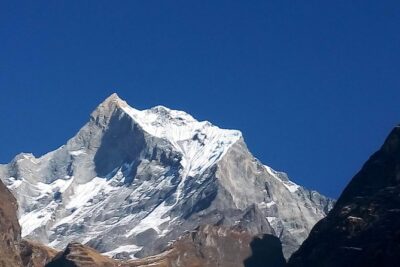
- Close mountain perspectives for Annapurna, Machhapuchhre (Fishtail), Dhaulagiri, Neelgiri, and Himchuli
- Deurali and quieter trail segments where you can hear nature, and wildlife sightings are possible
- Annapurna Base Camp lodge night at high altitude with slow-walk guidance
- Ghandruk Gurung village experience with cultural show available on request
First, settle in: Kathmandu and Pokhara as your comfort base
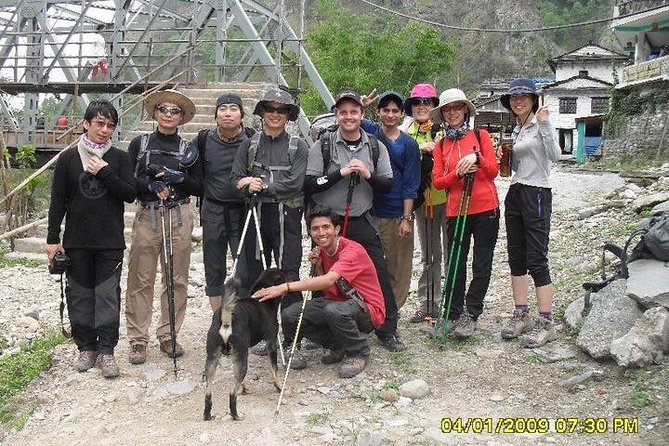
Your trip starts at Tribhuvan Airport in Kathmandu with pickup, then a transfer into town. You’ll get a short trekking briefing after you freshen up, and you’ll sleep in a 5-star hotel. That first night matters more than you might think. Jet lag plus a long flight plus immediate trekking can turn Day 2 into a struggle, so using Day 1 to reset is a smart move.
Then comes Pokhara, the gateway town for this region. You’ll travel by car for about 7 hours or take a short flight (about 30 minutes), and then overnight at Lakeside in another 5-star hotel. Pokhara is where you start seeing how the Annapurna routes work on the ground. It’s also where your plan shifts from city comfort to mountain logistics, with the support team helping you get organized.
This is also a good point for money-and-time sanity. The tour includes ground transportation between Kathmandu and Pokhara (flight or car), and airport transfers by private vehicle. That means fewer taxis, fewer queues, and less decision-making when you are tired.
If you want authentic Nepal, this kind of start helps. You arrive calm, not frazzled. And you’ll feel it later, when you’re walking past villages and forests and you’re not thinking about where the next ride comes from.
More routes into the Annapurna Sanctuary:
- Annapurna Base Camp Trek
★ 5.0 · 111 reviews - Annapurna Base Camp Trek – 10 Days
★ 5.0 · 29 reviews - 14 Days Annapurna Base Camp Trekking | Best trek for visit Nepal 2020
★ 5.0 · 19 reviews
Dhampus and Landruk: a gentle on-ramp into Annapurna trekking
After Pokhara, the trekking begins with a short drive to Phedi. Then you walk up to Dhampus at about 1,600 meters. This is your warm-up day in practical terms. You’re working a climb, but it’s not yet the high-altitude game of patience and slow steps.
Day 3 sets your trekking rhythm: steady movement, simple breaks, and learning the feel of trail time. In this region, the early hours often give you the best sense of scale. You start to understand the hills are not just hills, they are part of the mountain wall system that shapes everything ahead.
Day 4 continues the climb toward Deurali at about 2,100 meters. You’ll pass through forest, and the route includes descents to Landruk, with about 5 hours of walking. Landruk is a classic sort of stop for a reason. It’s a village setting that makes the trekking feel human, not just scenic. You get local life, views in the distance, and a sense that you’re not alone on a route.
One note to keep expectations aligned: forests and trails can mean shade one day and mist another day. If you’re the type who plans your day by photos, you’ll still want to build in time for the slower moments on trail. That is how you avoid rushing through the best parts.
Chhomrong to the Modi River: big views, village scale, and a steady climb
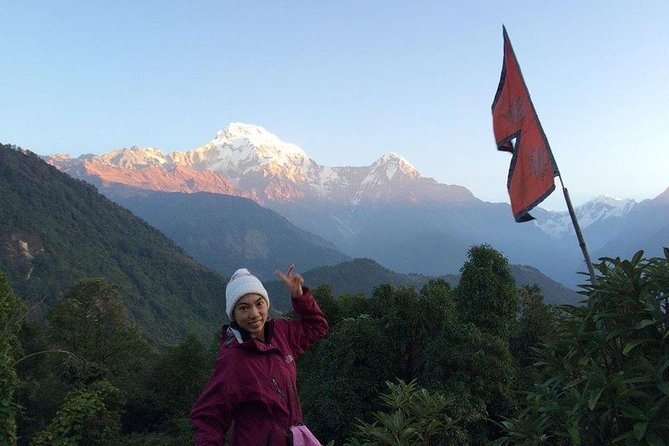
Day 5 drops you toward the Modi River area. The trail follows the river banks, passing through local villages and forest scenes. Then it turns uphill toward Jhinu Danda and continues up to Chhomrong. Walking time is about 6 hours.
Chhomrong is one of the strongest view stops on this approach, because it’s positioned for that sudden feeling of seeing mountains closer than you expected. Annapurna South, Hiuchuli, Fishtail, and more show up here, depending on cloud cover. Even when visibility is not perfect, the valley shapes still read clearly, and you’ll feel why this region has such a loyal following.
This is also where trekking rhythm becomes strategy. When the trail tips upward after Jhinu Danda, your pace matters more than your willpower. If you go fast because you’re excited, your legs can pay the bill later. A luxury trip still needs common sense, especially on longer uphill sections.
What I like about this segment for first-time or comfort-focused trekkers is that it offers a mix. You’re not stuck only on one type of terrain. You get river-side walking, village texture, forest sections, and then a viewpoint payoff that feels earned.
Suspension bridges, Sinuwa pauses, and Deurali quiet time
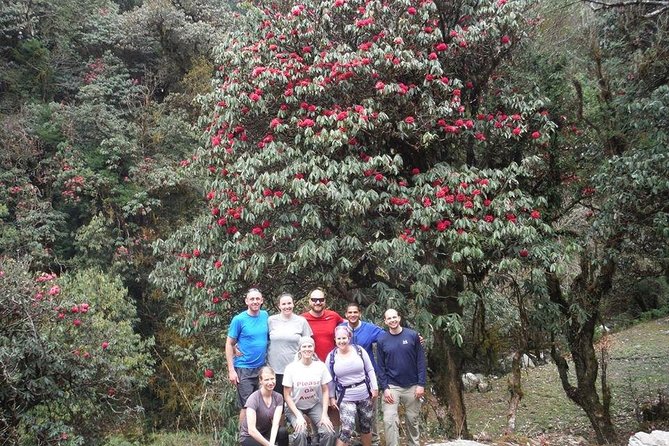
Day 6 is where the route leans into variety. You’ll descend toward a suspension bridge over the Chomro Khola, then climb steeply at first. You pass through places like Tilche, Bhanuwa, and Sherpa Lodge, with additional lodges scattered higher up, including Sinuwa. The view back down the Modi Khola can be excellent from a stop like this, and the route can also connect you with seasonal color, especially when rhododendron is in bloom.
You should also watch your timing here. The tour is built around roughly 6 hours of walking, but the pace depends on how often you stop for photos, tea, and weather checks. If you want the day to feel smooth, keep breaks short and purposeful.
Day 7 brings a more solitary feel. After Dovan, you push toward Deurali, with about 4 hours of walking. One of the most interesting details here is the wildlife possibility. If you walk without making noise, you might see animals such as wild pig or deer, and the route notes snow leopard sightings as a remote possibility. You cannot plan your day around wildlife, but the reminder is useful. Quiet listening often brings better moments than constant camera clicking.
Also, this is another high-mountain mindset day. The program emphasizes that the trail has no permanent settlement along some portions, which can feel intense if you’re used to constant villages. That’s part of why it works.
More to compare around Kathmandu
- Kathmandu: 7 UNESCO Sites with Lunch
★ 4.8 · 744 reviews - Everest Base Camp Helicopter Tour landing at Everest View Hotel
★ 5.0 · 668 reviews - Kathmandu: Local Women-Led Nepali Cooking & Momo Class
★ 4.9 · 360 reviews - Manaslu Circuit Trek
★ 5.0 · 292 reviews
Annapurna Base Camp: your slow-walk reality check at high altitude
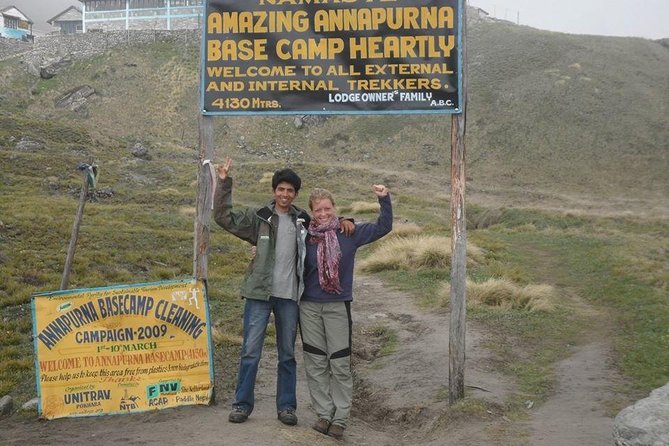
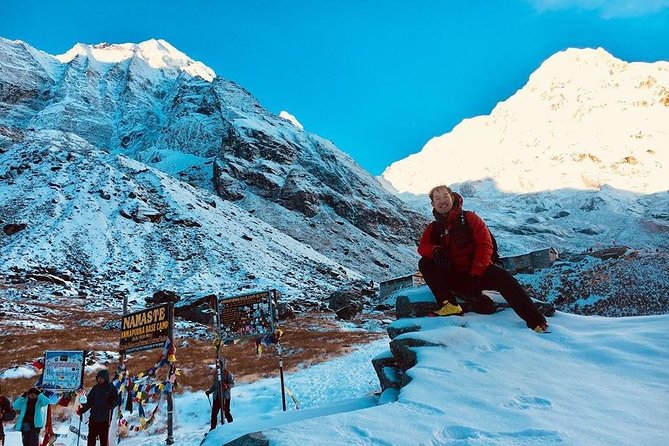
Day 8 is the big one: the trek to Annapurna Base Camp. You walk for about 3 hours on the approach segment described here, then arrive at ABC and stay in a local lodge. This is high altitude terrain, and the tour guidance specifically flags possible oxygen shortage. So yes, you should plan to go slower than your brain thinks you can.
Here’s what “luxury” usually means on a trek like this: you’re not eating only plain survival food, and you’re not sleeping in random conditions without support. The accommodations are described as luxury in lodges and tea houses, and meals during trekking are included as standard breakfast, lunch, and dinner. That makes it easier to focus on acclimatization rather than logistics.
But you still need to respect the altitude. The day is not just scenic. It’s physiological. If you feel off, you don’t win an argument with altitude by pushing harder.
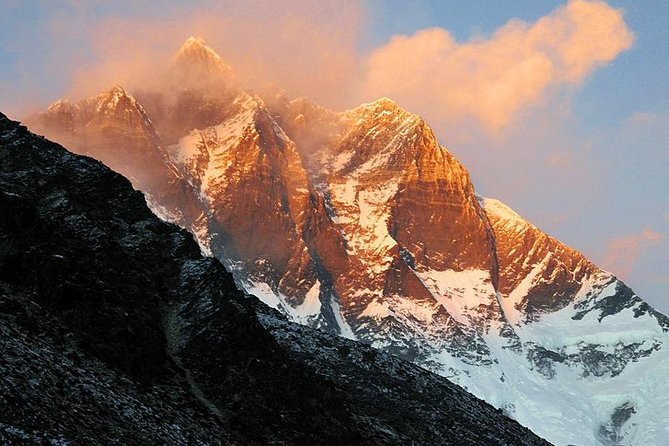
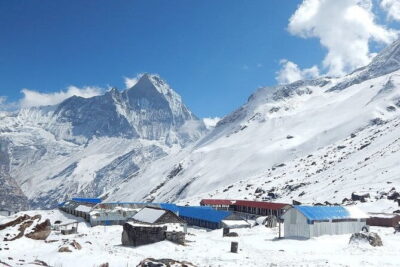
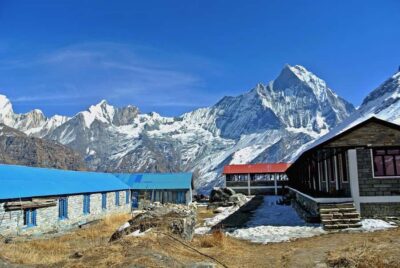
At ABC, the payoff is the closeness of mountain scenery. The trip highlights close perspectives of Annapurna and other peaks in the region. Even if you cannot see every skyline point clearly, the scale of the amphitheater area tends to land emotionally. After days of forests, villages, and river bends, ABC feels like stepping into another world.
Machhapuchhare sunrise and the return loop through Dovan and Chhomrong
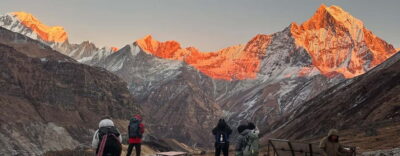
Day 9 starts early for a trek to Machhapuchhare Base Camp, with the purpose of sunrise and mountain views. The tour guidance frames this as a chance to see the sunrise, then you go back to Dovan after breakfast and stay in a local teahouse. The day includes about 6 hours of walking.
This is where the tour’s emphasis on dawn viewing pays off. Early starts can be exhausting, but they also reward you with clearer air and softer light. The Machhapuchhare area has that famous Fishtail silhouette energy, and sunrise adds mood. If you’re cold early in the morning, remember that hot drinks and rest are part of the trek rhythm. The included meals on trekking days also reduce your need to spend time searching for food.
Day 10 continues the descent-back feel: after breakfast at Dovan, you trek to Chhomrong and overnight in a teahouse. About 6 hours of walking. This return loop is a smart design for comfort-focused travelers because it breaks the emotional load. You already reached ABC, so the return becomes about savoring the familiar parts rather than chasing a single finish line.
And this is also when your legs tell the truth. Going down can be hard on knees. If you have a knee-sensitive setup, take your time on steps and keep your stride controlled.
Ghandruk Gurung village: culture that actually happens, plus UNESCO credit
Day 11 heads to Ghandruk, a famous Gurung settlement listed on UNESCO’s World Heritage Site. The walk includes a mix of downhill, crossing the Kimrung Khola, then a gradual climb. You arrive after about one hour at the “tiny village” style setting that’s culturally and naturally rich.
Walking time is about 6 hours. You’ll also pass through paces that feel local rather than only trek-focused. That matters, because it’s easy to experience Nepal only as a set of trails and lodges. Ghandruk adds the human layer: community life, architecture, and a sense of identity tied to the landscape.
There’s also an optional cultural show in the evening on request. That is one of those practical luxuries in a trek package. After a day of walking, having an organized cultural moment can be a nice way to make the evening feel complete.
If you’re the type who likes to understand Nepal beyond photos, this is one of the best points in the schedule.
Pokhara return via Nayapul and a reset with real rest
Day 12 transitions back into lower country. You walk through a paddy field and local settlement for about 4 hours, then reach Nayapul and drive to Pokhara. You’ll overnight in a 5-star hotel again.
This day is underrated in terms of recovery. After the Annapurna region altitude and your hiking muscles doing their thing, seeing fields and village roads feels like a release valve. You get a real shower, a proper meal without worrying about trekking hours, and time to do laundry or organize gear.
Day 13 brings your return to Kathmandu by drive or flight from Pokhara, then another overnight at a 5-star hotel. Day 14 is free time for shopping or rest, then drop to the airport by private car. It’s a clean finish: you don’t end the trek and immediately jump into another unknown logistics puzzle.
Where the $2,666.67 price makes sense, and where it might not
At $2,666.67 per person for about 14 days, you’re paying for a bundle. You get private transport between key hubs, deluxe 5-star accommodation in Kathmandu and Pokhara, standard meals during trekking, guides and porters, and conservation-related permits and paper work.
You also get a Porter setup of 1 porter for 2 people, plus guide and porter salaries, food, drinks, accommodation, transportation, and insurance for the team. That’s real value if you want the mountain part without the weight-carrying stress.
Where you should be mentally ready: major city meals in Kathmandu and Pokhara are not included. Personal expenses like bar bills, water, tea or coffee, snacks, and shower costs are not included either. Trek gear like sleeping bag and down jacket is not included, and you’ll need to handle personal clothing and other essentials.
So the value depends on your travel style. If you would otherwise pay for private guides, deluxe hotels, and porter support, this price starts looking more reasonable. If you prefer to do city hotels on the cheap and handle trekking logistics yourself, you may feel the cost is high.
For me, the deal-breaker question is simple: do you want the comfort layer in the cities and the support layer on trail? If yes, this package is built for that.
What you should expect from “luxury” on an Annapurna trek
“Luxury” on a mountain trek is not the same as luxury at a beachfront resort. Still, this program is explicit about better standards where it counts: deluxe 5-star hotels in Kathmandu and Pokhara, and accommodation described as luxury in lodges and tea houses along the trek. It also includes your standard meals during trekking, which removes a huge chunk of decision fatigue.
The other practical luxury is the planning rhythm. Your days are structured around walk times that generally land around 5 to 7 hours. You’ll have short drives, consistent overnight stops, and an experienced guide to keep you moving at an appropriate pace. On high altitude days, the advice is to walk slowly, which is exactly the kind of guidance that protects you from common mistakes.
One more detail I like from the feedback: the service quality. Prior hikers praised excellent arrangements from start to ending, with friendly guide and porter teamwork. Mr Hari is specifically mentioned with thanks for caring and keeping things running smoothly. That doesn’t mean everything will be perfect every minute, but it does mean the human side of the trip seems solid.
Finally, note the trek includes a duffel bag if necessary. That can help you keep your personal items organized when you’re managing a porter system.
Who this trek is best for, and who should think twice
This trip suits you if you want the Annapurna Base Camp experience but prefer to avoid heavy logistics. It’s also a good match for you if you have moderate physical fitness and want a private setup, not a crowded group hike. The route includes walking days and you should be prepared for stairs, stone steps, and altitude. But the support structure helps.
This trip may not be ideal if you are ultra-budget driven, because city hotel upgrades and porter support raise the price. It also may not be ideal if you hate early mornings, since sunrise viewing is a named feature, and Machhapuchhare Base Camp is reached early.
If you are deciding between DIY trekking and a guided luxury-style package, I’d lean toward this if you want less mental work and more focus on the actual hiking and scenery. If you want to learn the region by yourself and manage everything in real time, then you might feel boxed in by the schedule.
Also, one practical note from the kind of memories shared by past hikers: some people called Tilicho Lake life changing. Your exact route may or may not include it, so if that’s a must for you, ask your operator directly before you lock in your dates.
Should you book the 14-day Luxury Annapurna Base Camp trek?
Book it if you want a comfort-forward version of Annapurna Base Camp, with 5-star hotels, included trekking meals, and strong human support from guide and porters. This is especially appealing if you value sunrise views, want close mountain perspectives, and prefer a private experience with fewer unknowns.
Don’t book it if you want the cheapest possible trek, or if you are not willing to slow down for altitude. The mountains do not care about your hotel star rating, so your body needs to be part of the plan.
If you match those two points, this sounds like a smart way to do one of Nepal’s signature high-altitude treks, with the kind of care that tends to make the whole experience smoother.
FAQ
Where does the tour start and what time does it begin?
The tour start point is Tribhuvan Airport in Kathmandu, Nepal, and the start time is 9:15 am.
How long is the Luxury Annapurna Base Camp trek?
It’s listed as 14 days approximately.
Are airport transfers included?
Yes. The package includes airport pickup and drop by private car, van, or bus.
What accommodations are included in Kathmandu and Pokhara?
Deluxe 5-star accommodation is included in Kathmandu for the arrival day and after the trekking. Deluxe 5-star accommodation is also included in Pokhara for the arrival day and after the trekking (including two nights deluxe accommodation).
Are meals included during the trek?
Yes. Standard meals during the trek include breakfast, lunch, and dinner, while major meals in Kathmandu and Pokhara are not included.
Do you get a guide and porter support?
Yes. An experienced guide and porters are included, with 1 porter for 2 people.
Are trekking permits and paper work included?
Yes. All necessary paper works and conservation entry permits are included.
What is not included, and do I need my own sleeping bag or jacket?
Personal expenses like bar bills, water, tea or coffee, snacks, and shower costs are not included. Sleeping bag and down jacket are also not included, along with personal clothing and gear.
Latest Kathmandu write-ups
- 16 Days Island Peak Climbing With Everest Base Camp Private Trip★ 5.0 · 3 reviews
- 15 Days Round Annapurna Trek with Poon Hill from Pokhara★ 5.0 · 5 reviews
- Private Nepal round trip including Ghorepani Poonhill trek★ 5.0 · 3 reviews
- Everest Base Camp Trekking 16 Days★ 4.0 · 7 reviews
- Everest Base Camp Trek★ 5.0 · 32 reviews
- Everest Base Camp Trek★ 5.0 · 87 reviews
- Everest Base Camp Trek★ 5.0 · 97 reviews
- 14 Days Annapurna Base Camp Trekking | Best trek for visit Nepal 2020★ 5.0 · 19 reviews
Annapurna Base Camp Trek, compared.
5 Day Annapurna Base Camp Trek & Natural Hot Spring
Read our review →
14 Days Annapurna Base Camp Trekking | Best trek for visit Nepal 2020
Read our review →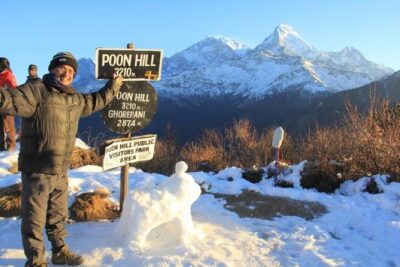
7-Day Annapurna Base Camp Trek & Natural Hot Spring
Read our review →Browse the lists this tour appears in