
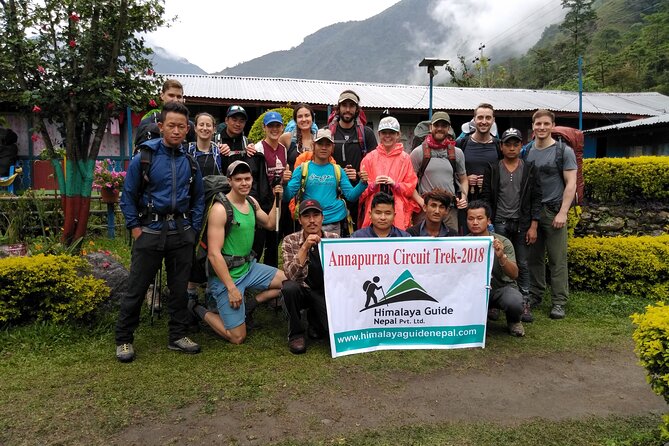
Reviewed · ANNAPURNA CIRCUIT TREK
15-Day Private Annapurna Circuit Trek from Kathmandu
This private Annapurna Circuit trek is interesting because it blends big Himalayan effort with day-to-day support: pickup from Kathmandu, permits handled, and a family-run team vibe where you can even pick up some basic Nepali along the way. I especially like that the trip is built around the classic rhythm of the circuit, including a proper acclimatization day in Manang and the famous early-morning views from Poon Hill.
One thing to think about: the itinerary still asks you to handle high-altitude hiking, including the long push around Thorong La, and the price does not include travel insurance or extra drinks, so you need to plan those costs and pack smart for altitude.
Key highlights to look for
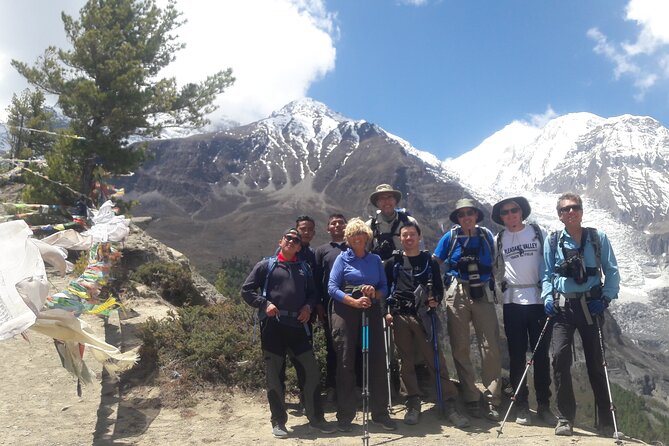
- Family-run guidance with Nepali lessons, so the trip feels less like a factory and more like real people running the show
- Permits included (ACAP and TIMs), which saves you time and hassle before you even start hiking
- Acclimatization in Manang, built in before the high pass effort
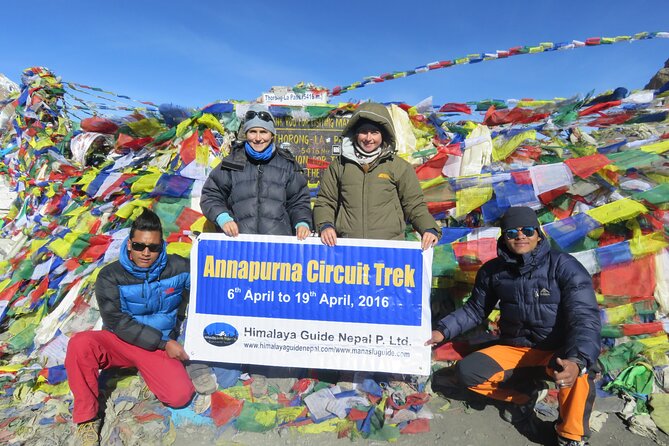
- Thorong La timing with an early start on the big day, plus a last overnight setup before the crossing
- Hot spring stop and Kaligandaki crossing days that break up the climb-heavy rhythm
- Poon Hill sunrise from Pokhara, with standout viewpoints across multiple major peaks
From Kathmandu to Bulbule: the transport day that sets your whole pace
Your trek starts with a real-world logistics day, not a dreamy one. You meet at Tribhuvan Airport in Kathmandu at 10:15 am, and the company includes airport-to-hotel-to-airport pickup and drop. From there, you take a bus ride to Bulbule (listed as about 6 to 7 hours), which is a big deal because it gets you out of Kathmandu stress and into the trekking mindset.
This kind of start matters. When you know you are not scrambling for buses, tickets, and directions, you waste less energy on day one. It also helps you keep sleep and hydration more consistent, which is huge before you start climbing at altitude.
One more small plus: you get a mobile ticket, so you are not juggling paper during a busy travel day. And because this is a private tour, it is only your group, which tends to make pacing and comfort decisions much easier for your guide.
More of the Annapurna Circuit:
- Annapurna Circuit Trek with Tilicho Lake
★ 5.0 · 368 reviews - Annapurna Circuit Trek
★ 5.0 · 94 reviews - Annapurna Circuit Trek
★ 5.0 · 67 reviews
Marshyangdi River trail days: villages, bridges, and the work happens gradually
After the transport leg, the circuit builds momentum with a sequence of village-to-village trekking days along the Marshyangdi River. The vibe here is practical: dirt paths, local crossings, and steady effort rather than constant steep punishment.
Ghermu to Ngadi: village walking before the first real climbs
On day two, after breakfast you walk through villages and roads, then work your way toward the east bank of the Marshyangdi River. You continue uphill to a Brahmin settlement at Bahun danda (listed at about 1270 meters), then reach Ngadi. This is a good day for learning how your body reacts to hiking time, not altitude max pressure.
Chamje: suspension bridges and a steep push
Day three highlights a classic circuit rhythm: you cross to the west bank of the Marshyangdi via a suspension bridge, then you climb steeply again. You also pass through familiar foothills scenery, including the kind of cliff-edge terrain that makes the circuit feel remote even when you are still relatively low.
A practical tip for days like this: keep your breaks short. If you stop too long early, you can feel stiff later. Your guide’s job here is not just route knowledge, it is also keeping your day flow steady.
More to compare around Kathmandu
- Everest Base Camp Trek – 14 Days
★ 5.0 · 1,499 reviews - Everest Base Camp Trek
★ 5.0 · 842 reviews - Private Kathmandu Sightseeing Tour | UNESCO World Heritage sites
★ 5.0 · 756 reviews - Kathmandu: 7 UNESCO Sites with Lunch
★ 4.8 · 744 reviews
Chame: chortens, Karte, and a bridge crossing that resets the scenery
Day four starts with another suspension bridge crossing to Karte, then you pass through places like Dharapani and Bagarchhap (listed at about 1960 meters) before reaching Danque (about 2300 meters), marked by a stone entrance chorten. That chorten detail is more than decoration. It signals that you are entering more culturally layered trekking territory where you will see small religious features repeatedly on the trail.
Chasing the river’s drama into Manang
Day five starts to feel bigger. The trail goes through dense forest and a narrow valley, then you cross the south bank of the Marshyangdi Khola at about 3038 meters. You are also walking past a dramatic curved rock face rising around 1500 meters from the river. When a day gives you that kind of terrain, it becomes a mental checkpoint. It is not just hiking, it is seeing how dramatic Nepal can get even before you reach the high pass.
Manang acclimatization: the day you should respect more than you think
Manang is where the Annapurna Circuit stops being a series of hikes and starts being an altitude strategy. The itinerary includes multiple nights in the Manang area, including a dedicated acclimatization day.
Two ways forward from lower Pisang country
On day six, if you stay in lower Pisang, you have two trail options: one following the Marshyangdi Khola and one crossing it, with trails meeting again at Mungji. You also pass through pine. This flexibility is useful because it lets your guide adjust to trail conditions and your group’s legs.
The acclimatization day that makes Thorong La feel less like a jump
Day seven is explicitly described as important acclimatization in Manang before pushing toward Thorong La Pass (5416 meters). This is the day you want to take seriously. Even if you feel good, you are trying to help your body adapt rather than prove toughness.
There is also an optional cultural stop: a Lama (monk) visit with a listed 100 rupees donation if you go. This is exactly the kind of small moment that turns a high-altitude trek into a human one, not just a fitness challenge.
Tanki village to Ghungsang: leaving the Marshyangdi valley rhythm
Day eight continues upward toward Tanki village from Manang, then steadily through Ghungsang. The route leaves the Marshyangdi valley and continues along the Jar sang Khola valley northward, passing pastures and scrub. This is the transition period where your scenery starts to feel drier and more open, and the trail becomes more about endurance and timing than about constant landmark tourism.
Getting ready for Thorong La: last camps, Phedi, and early starts
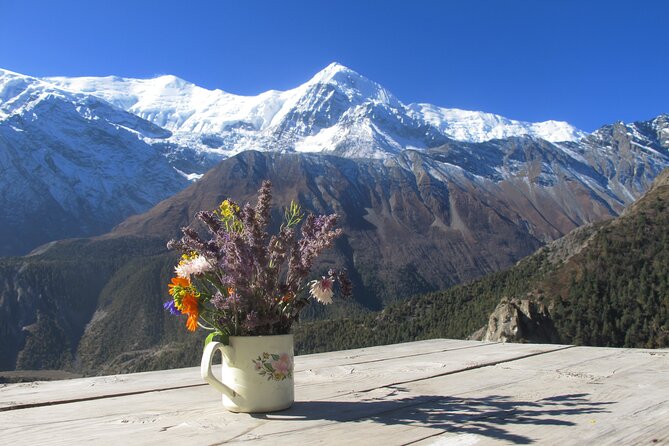
The Thorong La section is where the Annapurna Circuit earns its reputation. But what I like about this itinerary is that it does not treat the pass as a random surprise. It builds you into it with a last camp and a long-day early start.
Day nine: the last camp before the crossing mindset
Day nine is set as the last camp before crossing Thorong La Pass. You follow yak grazing ground, walk down to Jarsang Khola, then cross Jarsang Khola and head up about 20 minutes to a stop at Durali Tea shop. Even without fancy details, this day tells you what you need to know: you are moving into pass territory in stages, with a break point before the big effort.
Day ten: Phedi and the long hard start
Day ten is described as the last night in Manang District. Phedi is explained as Food of the Hill, and the day is treated as the final hard work with a long day. The key instruction is that you start early, because you need the time for the climb.
Now for the practical reality: days like this demand your best behavior with pace. If you rush early, you pay for it higher up. If you go too slow, you risk being late to get through conditions. Your guide’s pacing matters here, and this company has a track record of safety-focused service in past trek experiences, with guides called out by name such as Pratap, Dinesh, and Bashudev in earlier journeys.
Jomsom and Shikha: options after the pass, hot springs as a reset button
After Thorong La, the route drops you into a different feel: the Kaligandaki River corridor and the lower-altitude trekking days that let your legs breathe again.
Day eleven: Muktinath to Tatopani or Pokhara, with route choices
Day eleven is listed with Jomsom, and it comes with route options. The itinerary notes three optional routes from the Muktinath area toward Tatopani or Pokhara. One option mentioned is a short route flight from Jomsom to Pokhara, followed by walking through Tatopani. That walking segment is described as taking about three days, passing places like Marpha, Ghasa, and Tatopa.
This matters because it gives you a way to balance time and fatigue. If the high pass already drained you, having choices can keep the rest of the trek enjoyable instead of merely survivable.
Day twelve: Shikha hot springs and the Kaligandaki crossing
Day twelve starts with a wonderful day at the hot spring in Shikha, then you trek down. You cross a suspension bridge over the Kaligandaki River and follow the path by Burung Khola to a junction. A hot spring day after the pass is more than comfort. It helps you recover muscle soreness, and it gives your brain a calmer day to process what you just did.
Ghorepani and Pokhara: Magar villages, rhododendron, then Poon Hill sunrise
The final hiking phase moves toward the Annapurna foothill scenery and the classic sunrise payoff that people talk about for a reason.
Day thirteen to Ghorepani: villages, terracing, and a hard-working day
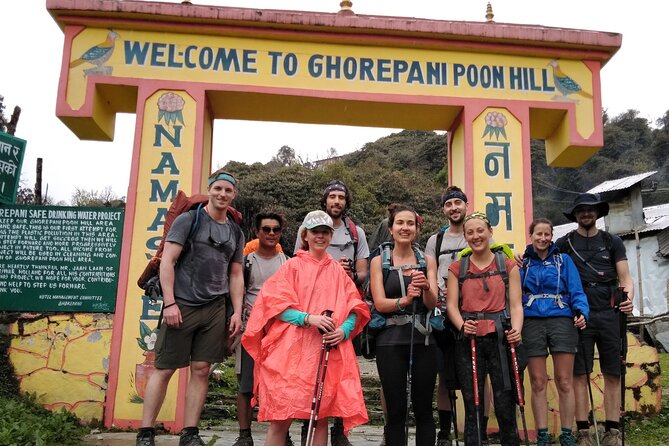
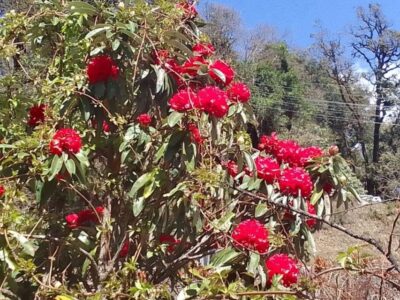
Day thirteen is described as quite hard. You walk through Magar villages of Phalate and Chitre, pass terraced fields, then move through dense rhododendron and pine forest before reaching Ghorepani. This is where the trail often feels more lush and textured, so your feet might feel less dry and dusty than the high pass days.
It is also a day where you should watch your energy. When the trail turns into forested ups and downs, it can feel slower than open country, which tricks you into pushing harder.
Day fourteen: the short hike up to Poon Hill at 3210 meters
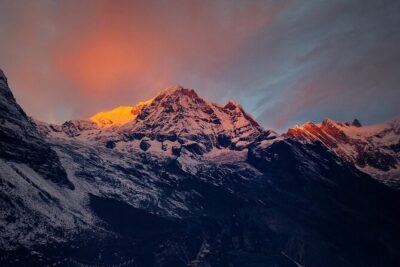
Day fourteen is an early-morning hike to Poon Hill (3210 meters) to see sunrise. The views listed are big: Dhaulagiri, Tukuche Peak, Nilgiri, Annapurna South, Himchuli, and peaks between them. Even if you have seen photos, the sunrise moment is about atmospheric light and how layers of mountains stack.
After sunrise, you head through your final downhill and travel plans into Pokhara, with the trek ending in the Pokhara area.
Day fifteen: Pokhara to Kathmandu plus farewell dinner
Day fifteen brings you back to Kathmandu from Pokhara using different services, including a tourist bus. The itinerary also includes a farewell dinner that evening. This is a nice touch because it gives your group closure. If you are traveling with a partner, it is also a good moment to compare notes about what felt hardest, what felt best, and what you wish you packed earlier.
Lodges, meals, and guides: what the included package actually covers
This trek is priced at $995 per person for about 15 days. That number gets more interesting when you look at what is included.
What is included:
- International airport pickup and drop (airport to hotel to airport)
- Bus ticket to Bulbule (listed around 6 to 7 hours drive)
- Public transportation from Muktinath to Tatopani
- Nayapul to Pokhara by car
- Deluxe tourist bus Pokhara to Kathmandu
- Lodge accommodation on the trek (described as normal)
- An experienced guide, with guide salary, equipment, insurance, transportation, lodging, and food covered
- Legal documents: ACAP permit and TIMs card
- All government taxes
- Breakfast, lunch, and dinner listed for each day (15 each)
- A token of love and farewell lunch or dinner as suitable time
What is not included:
- Extra night accommodation and food in Kathmandu and Pokhara
- Travel insurance
- Porter (but they say they are happy to organize one per request)
- Hot and cold drinks like Coke, mineral water, beer
- Personal expenses like laundry, bar bill, telephone, battery charges, shower and boiled water
So where is the value? It is in the way the essentials are handled for you. Permits, major transport legs, daily meals, and the guide workload are built into the price. If you tried to piece it together yourself, you might save a little, but you will also lose a lot of time and certainty.
Practical fit: who should choose this private Annapurna Circuit trek
You should consider this if you have moderate physical fitness and you want the classic Annapurna Circuit with support. Because it is private, it suits:
- Couples who want privacy and a calmer pace discussion with the guide
- Small groups or families that prefer fewer moving parts
- Travelers who value a homely environment and a family-run team approach, including Nepali language teaching
If you are brand new to high-altitude trekking, the big pass segment is not something to treat casually. You will want to take the acclimatization days seriously and follow your guide’s pacing advice.
One last practical note: the itinerary is heavy on day-to-day walking, and drinks are not included. Plan for a hydration budget and pack your basics so you are not buying everything at trail stops.
Should you book this Annapurna Circuit trek?
I would book it if you want a private, guided Annapurna Circuit that handles the big moving pieces for you, especially ACAP and TIMs, daily meals, and the key transport links between Kathmandu, Pokhara, and the trekking spine. The inclusion of Manang acclimatization and the structured lead-in to Thorong La makes this feel more thoughtful than a rushed version of the circuit.
I would pause and compare if you already have strong logistics skills and you prefer to self-arrange permits and transport. Also, if you do not already have travel insurance, build that into your budget before you commit, because it is not included here.
If you want a trek where the guides are repeatedly described as caring and safety-minded in past experiences, and where you get the added human touch of family-run hospitality and even some Nepali practice, this one fits that style well.
FAQ
Where do we meet, and what time does the trek start?
You meet at Tribhuvan Airport in Kathmandu at 10:15 am. Airport pickup and drop service is included (airport to hotel to airport).
What permits and documents are included?
The package includes legal documents: ACAP permit and a TIMs card.
What transport is included from Kathmandu and back to Kathmandu?
The trip includes a bus ticket to Bulbule from Kathmandu (listed as 6 to 7 hours). It also includes Nayapul to Pokhara by car and a deluxe tourist bus from Pokhara to Kathmandu, plus options for Pokhara to Kathmandu services on the final day.
Are meals and lodge stays included during the trek?
Yes. Lodge accommodation is provided on the trek, and breakfast, lunch, and dinner are included for 15 days.
Is a porter included, and can one be arranged?
Porter service is not included, but they state they are happy to organize a porter per request.
What is the cancellation policy?
You can cancel for free up to 24 hours before the experience start time for a full refund. If you cancel less than 24 hours before, the amount paid is not refunded.
Latest Kathmandu write-ups
- Visit Swayambhunath and Bauddhanath Stupa with Guide★ 5.0 · 5 reviews
- 10 days Annapurna Base Camp Trek★ 5.0 · 5 reviews
- Langtang Trek from Kathmandu 7 Days★ 5.0 · 5 reviews
- Island Peak Climbing with Everest Base Camp★ 5.0 · 5 reviews
- 7 Day Kathmandu Pokhara Tour★ 4.5 · 5 reviews
- Chandragiri Hill Cable Car Tour with Hotel Transfers from Kathmandu★ 4.5 · 5 reviews
- Everest Mountain Flight★ 5.0 · 5 reviews
- Kathmandu city day tour (4 world heritage sites)★ 5.0 · 5 reviews
Annapurna Circuit Trek, compared.
8 Days Private Guided Trekking in Annapurna Circuit with Pickup
Read our review →
10-Day Annapurna Circuit Trek via Thorong La Pass
Read our review →Browse the lists this tour appears in