
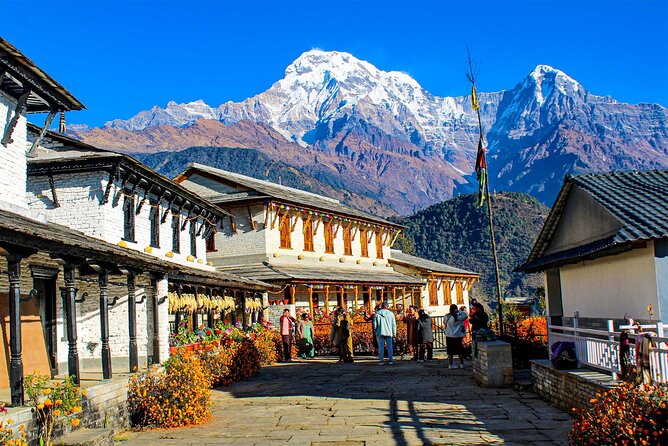
Reviewed · ANNAPURNA BASE CAMP TREK
Annapurna Base Camp Trekking 09 Days
Annapurna Base Camp is interesting because you get the big-mountain feeling without the longest slog compared to Everest routes, and you still reach the dramatic Annapurna Sanctuary. I like that the plan is built around road access to Jhinu Danda, so your trekking starts sooner and wastes less time. You also get standout views of Annapurna peaks along the way, plus classic village walking and tea-house nights.
What I really like is the human side. Guides such as Milan and Tony show up in feedback as calm, professional, and safety-minded, with enough personality to keep long days feeling manageable. On top of that, the itinerary is timed for sunrise moments across the Annapurna range, which is exactly when the mountains can look their most striking.
One possible drawback is weather. Clear views are not guaranteed, and some groups report haze early on, plus the experience is explicitly weather-dependent, so you should be ready for changes if conditions are poor.
Key Things I’d Focus on Before You Go
- Road to Jhinu Danda first means less logistical stress and earlier trekking time
- A peak-view route with named highlights like Annapurna I, Annapurna South, and Mt. Fishtail
- Machhapuchhre Base Camp passing day adds variety and a strong sense of place
- Sunrise is part of the rhythm, not an optional bonus
- Tea-house food is built into the schedule so you’re not constantly figuring out meals
- Small-group feel (private tour activity, only your group) helps the guide move at your pace
Why Annapurna Base Camp Feels Like the Main Event
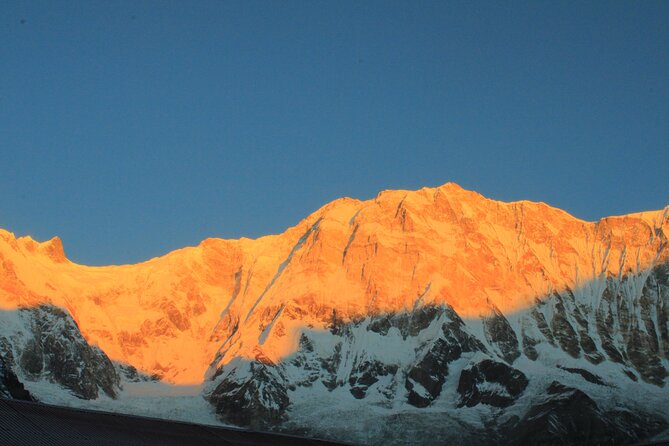
The Annapurna Base Camp trek is a smart choice if you want high-altitude drama but prefer a route that is described as easier and shorter than Everest Base Camp. You still climb into a big Himalayan zone, and you still get that moment when the mountains feel close enough to touch, even though you’re sleeping in simple mountain lodges.
This specific 9-day format also keeps the trip moving in a logical loop: Kathmandu, Pokhara, a road transfer to the farthest accessible point, then trekking to the base camp area and back to where you started the hike. That pacing matters because it reduces the “where are we going next” feeling that can make treks feel longer than they are.
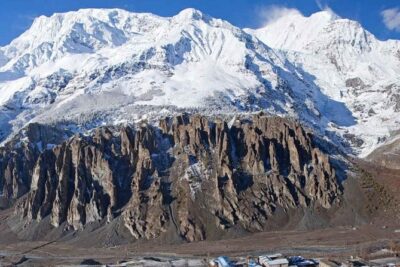
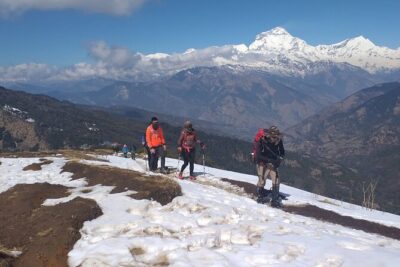
I also appreciate that the views are not vague. You’re guided toward peak highlights like Annapurna I, Annapurna South, Annapurna III, Gangapurna, Barachuli, Himchuli, and Mt. Fishtail. Even when clouds roll in, the route still gives you multiple chances to catch the clear windows.
More routes into the Annapurna Sanctuary:
- Annapurna base camp trek 5 Days
★ 5.0 · 252 reviews - 14-Day Private Annapurna Base Camp Trek
★ 5.0 · 180 reviews - Annapurna Base Camp Trekking
★ 5.0 · 116 reviews
Kathmandu to Pokhara: Getting Your Bearings in Nepal
The experience starts with an airport pickup in Kathmandu, which immediately helps you settle in. After that, the plan moves to Pokhara in the morning using a tourist coach, then gives you an evening to roam.
Pokhara is your decompression stop. You get Lake-side time and a chance to wander at your own pace before trekking begins. Even with a trek that is physically demanding, this day is set up so you can sleep, eat, and get gear sorted without rushing.
From a practical standpoint, this layout is good value. You’re paying for a guided trek, but you’re also getting two major logistics pieces handled: the Kathmandu-Pokhara coach ride and the built-in transition day in Pokhara. It’s one less chain of decisions you have to make after a flight.
Jhinu Danda to Sinuwa: The Start That Doesn’t Feel Too Abrupt
On trek Day 1, you ride from Pokhara to Jhinu Danda. This is a key part of why the itinerary feels efficient. Jhinu is described as the trekking starting point for Annapurna Base Camp, so you’re not wasting your first day on long rural transfers or multiple repositioning stops.
Then you begin trekking toward Chhomrong, with a lunch stop along the way. Chhomrong is a known waypoint on ABC-style routes, and in this itinerary it acts like a “first checkpoint” that helps you measure how your body is handling the altitude climb, even if you are not chasing numbers.
The day finishes with you trekking to lower Sinuwa and then upper Sinuwa, with an overnight at Sinuwa. Time-wise, it’s listed around 6 hours, so it’s a solid on-ramp. If you tend to overdo the first trekking day, this is still a manageable length that gives you room to find your pace.
Potential watch-out here: you’ll start early enough to feel the climb. But that’s also the point. You’re building momentum without turning the first day into a suffer-fest.
Deurali Guest House: Bamboo, Dovan, and the Slow Shift Up
The next trekking day takes you from the Sinuwa area up to Deurali. The route passes through Bamboo, Dovan, and Himalaya before reaching Deurali, and your overnight is at Deurali Guest House.
This portion of the trek is valuable because it keeps things varied. Instead of one long, repetitive grind, you’re walking through multiple named environments, which helps the day feel like more than just “up, up, up.” It also gives you plenty of chances to pause, refuel, and check in with how you’re breathing.
The listed time is around 6 hours. For many people, that’s a comfortable balance on an early-middle day: enough time to feel like you earned the progress, but not so long that your energy is drained before tomorrow’s Annapurna Sanctuary approach.
This is also the point where weather can change the whole mood. When the air clears, you get strong mountain presence. When haze moves in, the route still works, but the dramatic views take a back seat until conditions improve.
More to compare around Kathmandu
- Everest Base Camp Trek – 14 Days
★ 5.0 · 1,499 reviews - Everest Base Camp Trek
★ 5.0 · 842 reviews - Private Kathmandu Sightseeing Tour | UNESCO World Heritage sites
★ 5.0 · 756 reviews - Kathmandu: 7 UNESCO Sites with Lunch
★ 4.8 · 744 reviews
Annapurna Sanctuary and Base Camp: The Day You Wait For
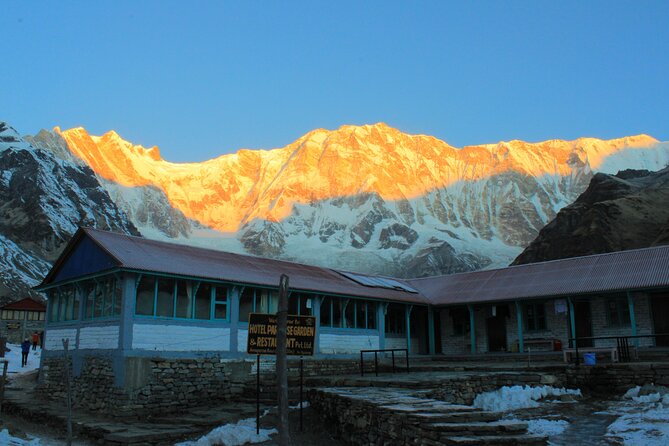
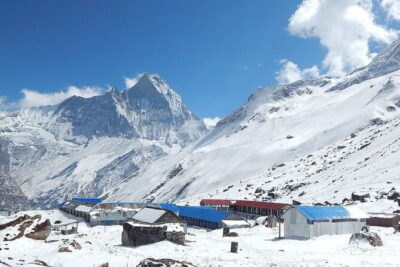
The Annapurna Sanctuary day is the core payoff. You start from Deurali, pass Machhapuchhre Base Camp (MBC), and then continue on to reach Annapurna Base Camp (ABC). You overnight at ABC.
That overnight piece matters. If you only arrive and immediately turn back, the base camp area can feel like a quick photo stop. With a night there, you experience it as a place: the rhythm of lodge life, the slower pace, and the feeling that you’ve reached something real rather than just passing through.
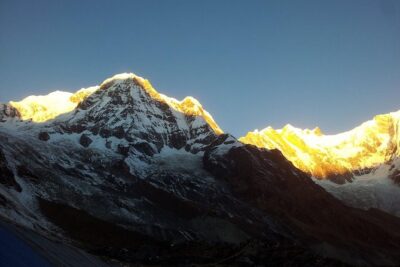
The itinerary also highlights exactly what you’re walking toward: a view-focused peak experience. Peaks mentioned in the tour overview include Annapurna I and Annapurna South, plus the surrounding heavyweights that give this area its fame. You’ll likely feel the scale as much as you see it.
In terms of effort, the listed duration for this day is about 5 hours. That shorter time is a relief in planning terms, but don’t treat it as a “light day” guarantee. Your pace still depends on altitude, rest breaks, and weather.
Sunrise Morning and the Descent to Bamboo
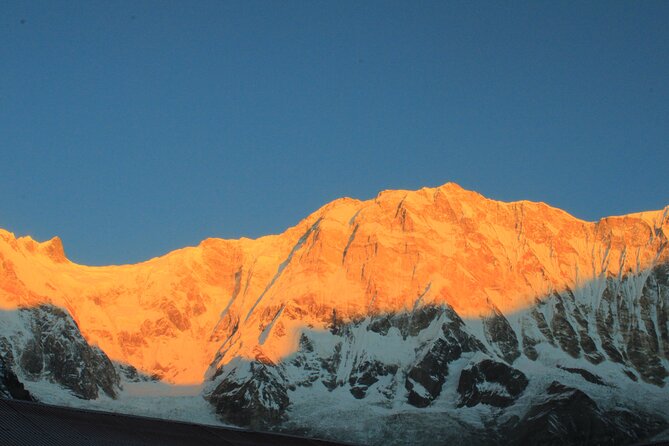
After your ABC overnight, the next morning is built around sunrise. The plan calls for an early start to see sunrise at the Annapurna range, then trekking down to Bamboo. You’ll pass Machhapuchhre Base Camp again, then continue through Deurali, Himalaya, and Dovan on the way.
From an energy perspective, this is a clever schedule. Sunrise is something many treks cram in and rush. Here, it’s treated like part of the flow of your day.
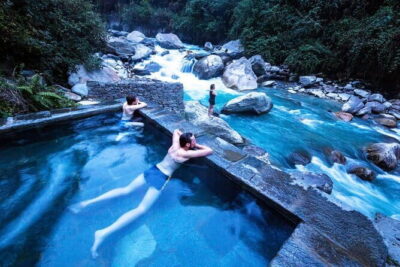
You overnight at Bamboo (Bamboo Hotel). The trekking time listed is around 7 hours. This is where you’ll feel the return phase. Descents can be harder on your legs than your brain expects, especially if you’re tired or your footing is tricky.
The good news is the day structure is clear. You know where you’re headed, you know the lodge stop, and you can focus on controlled movement instead of constantly re-planning the next hour.
Bamboo to Jhinu Danda, Then Back to Pokhara and Kathmandu
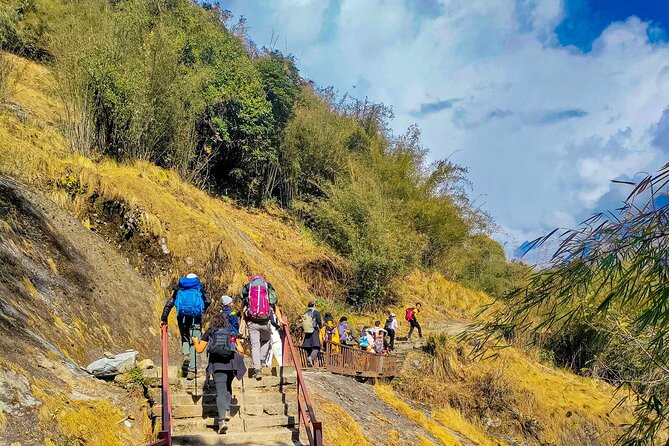
The following day starts with breakfast and then a trek down to Jhinu Danda, after which you take a vehicle ride to Pokhara. You overnight in Pokhara.
This is an underrated part of the itinerary. Getting back to the road makes the whole trek feel complete. And you’re not left stuck trying to hitch rides or negotiate transport after your final day.
Pokhara is also where you get your “post-trek brain” back. You’ve done the climbing, you’ve hit base camp and sunrise, and now you get to relax. Meals in Pokhara are not included, so you can choose what feels good instead of being forced into tour-provided options.
On the final full day, you return to Kathmandu by tourist coach early in the morning and then enjoy a farewell dinner in Thamel, hosted by Adventure Vision Treks. Thamel is a classic base for Nepal travel, and a group meal there is a decent way to tie the trek into a last urban evening.
Guides, Tea Houses, and Meals: What’s Actually Included
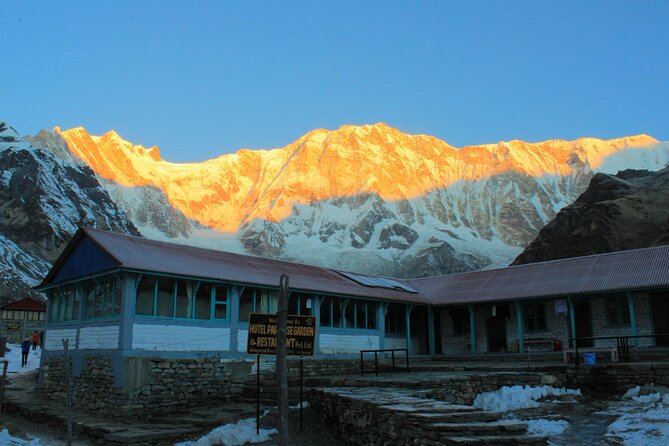
The included plan is built to make food and logistics less stressful while you’re trekking. You’ll travel with a guide during the trek. You’ll also have permits and local taxes covered, plus tea house breakfast as part of the included trek meals.
During trekking days, lunch and dinner are included, which means you’re not constantly deciding where to eat at elevation. That can sound minor until you’re tired and cold and just want the day to move forward.
In real-world feedback, guide quality is a repeated theme, with names like Milan and Tony standing out. People also mention guides being professional and easy going, and that they help with safety throughout the trek. One group even notes their guide arranging a helicopter ride near the end, which tells you the operator is willing to discuss options if you want to alter the ending.
One caution: meals in Kathmandu and Pokhara are not included. So you’ll want to budget for those meals on your own. The trek itself handles a lot of your daily calories, but the city days are DIY.
Also, if you’re traveling as a pair, small group, or family, the private tour format helps. Only your group participates, and there are group discounts mentioned, so price planning can work out better when you’re not traveling solo.
Price and Value: Is $900 Fair for This 9-Day Plan?
At $900 per person for a roughly 9-day trek, you’re paying for a package that handles the big moving parts. The itinerary includes the guide, trekking permits and local taxes, key transport legs (Kathmandu to Pokhara and back by tourist coach), plus the Pokhara to Jhinu Danda public vehicle fare, both directions.
You’re also getting built-in food coverage on trekking days, which can quietly add up over multiple days at altitude. When a tour includes tea house breakfast and both lunch and dinner during trekking days, it reduces both cost surprises and decision fatigue.
So is it a bargain? It’s not the cheapest possible way to do ABC, but it’s positioned as good value because the schedule is complete. You’re not only buying the hike. You’re buying planning and risk reduction through permits, taxes, and guided pacing.
If you want a more comfort-forward version, customization is mentioned, including options to fly to or from Pokhara to reduce the itinerary by 2 days. That kind of swap can change the cost and effort dramatically, so it’s worth discussing if your goal is to shorten time in transit.
Weather, Fitness, and the Realistic ABC Expectations
This trek is aimed at people with moderate physical fitness. That phrase is important. It’s not described as a technical climbing expedition, but it is still a multi-day trek with several hours of walking most days.
You should also accept that weather controls the views. The experience is described as requiring good weather. And in feedback, haze can hit the early part of the trip, with better visibility later on. That’s normal in mountain areas, but it should shape your expectations, not your plans.
Cancellation is described as free up to 24 hours in advance for a full refund, and if poor weather forces changes, you’re offered a different date or a full refund. In other words, you’re not locked into a single outcome if the skies don’t cooperate.
Finally, service animals are allowed. That matters if you rely on one for mobility or emotional support, and it’s good to see that included in the experience notes.
Should You Book This 09-Day Annapurna Base Camp Trek?
Book it if you want a well-structured ABC trek that handles the hard parts of logistics for you. I’d especially recommend it if you value a guided experience with permits handled, trekking meals included, and a route that starts at Jhinu Danda so you can get moving quickly.
You should think twice if you are very view-dependent and can’t handle haze or a weather-related date change. This trek sounds straightforward on paper, but the mountain atmosphere is the wildcard, and clear photos are not guaranteed on every day.
One more decision tip: if you’re trying to minimize total transit time, ask about the customization that flies to or from Pokhara to reduce the itinerary by 2 days. That can be a game changer if you get tired of long travel days.
FAQ
Where does this Annapurna Base Camp trek start and end?
It starts and ends in Kathmandu, with pickup offered from your international airport on arrival and a return coach ride to Kathmandu at the end.
How long is the Annapurna Base Camp trekking package?
The duration is listed as 9 days, approximately.
What does the tour include for trekking support?
You get a trekking guide during the trek, plus a trekking permit and all local taxes.
What meals are included during the trek?
Tea house breakfast is included. During trekking days, lunch and dinner are included as part of the daily meal plan.
Are meals included in Kathmandu and Pokhara?
No. Meals in Kathmandu and Pokhara are not included.
Is transportation included from Kathmandu to Pokhara and back?
Yes. Kathmandu to Pokhara and back is included by tourist coach.
How do you get from Pokhara to Jhinu Danda?
The Pokhara to Jhinu Danda transfer uses a public available vehicle, with fare included both ways.
Is this trek physically demanding?
It’s recommended for travelers with moderate physical fitness levels.
Can the itinerary be shortened by flying?
Yes. There are options to fly to/from Pokhara, which can reduce the itinerary by 2 days.
What is the cancellation policy?
You can cancel up to 24 hours in advance for a full refund. If the experience is canceled due to poor weather, you’ll be offered a different date or a full refund.
Are service animals allowed?
Yes, service animals are allowed.
Latest Kathmandu write-ups
- Langtang Valley Trek★ 5.0 · 3 reviews
- Khopra Danda Trek★ 5.0 · 3 reviews
- Langtang Valley Trek from Kathmandu★ 5.0 · 3 reviews
- 5 night / 6 days Kathmandu Nagarkot Chitwan Pokhara tour★ 5.0 · 3 reviews
- Nepal Highlights Tour: 5 Nights 6 Days Kathmandu & Pokhara Tour★ 5.0 · 3 reviews
- Kathmandu Valley Private Day Tour★ 5.0 · 3 reviews
- Conquer the Himalayas: The Ultimate 16-Day Annapurna Circuit Trek★ 3.5 · 3 reviews
- Kathmandu Heritage Day Tour★ 5.0 · 3 reviews
Annapurna Base Camp Trek, compared.
Browse the lists this tour appears in