
Reviewed · ANNAPURNA BASE CAMP TREK
Annapurna Base Camp Trekking
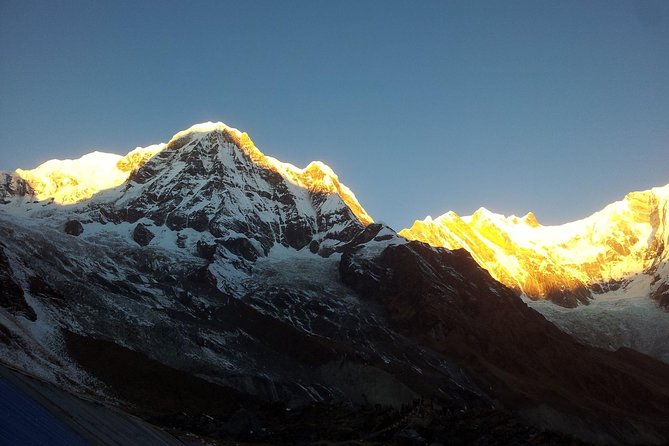
What makes the Annapurna Base Camp trek so interesting is the mix of easy-to-follow village trails and big high-mountain payoff, ending at Annapurna Base Camp (4,130m). You get a real sense of quiet as the trees thin out and the mountains take over the view.
Two things I particularly like: the trek’s variety, from rhododendron and oak forests to bamboo and alpine terrain, and the way the trip includes a certified English-speaking local trekking guide to keep you moving confidently. In the support side, guides such as John Shrestha have been highlighted for practical help in Kathmandu and staying attentive to how you’re doing.
One consideration is that even when daily walks are described as moderate, you still face altitude, long stair-and-step days, and cold stretches. You should plan for a moderate fitness level and expect the final days to feel more demanding than the early forests.
Key highlights you’ll care about
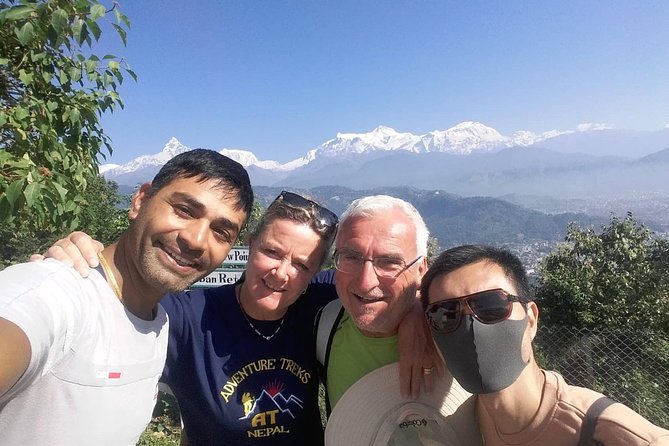
- Annapurna Base Camp at 4,130m, with major peaks in view once you reach the sanctuary area
- Poon Hill viewpoint area plus classic ridge-to-village trekking through Ghorepani and Tadapani
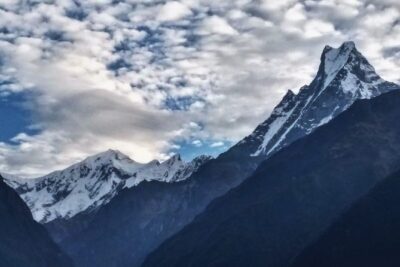
- Gurung villages time in Chhomrong, with views toward Annapurna South and Machhapuchhre
- A full-board plan on trek days, with tea/coffee included, so you’re not hunting meals
- ACAP permit and TIMS card included for the trek (so you’re not juggling forms last minute)
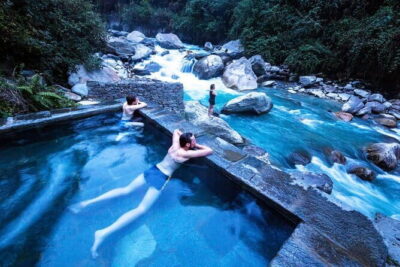
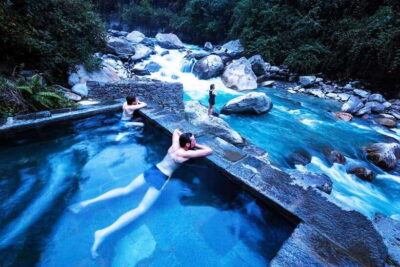
- Jhinu Danda hot spring stop on the return, a simple reward after long descents
Annapurna Base Camp at 4,130m: what you’re really signing up for
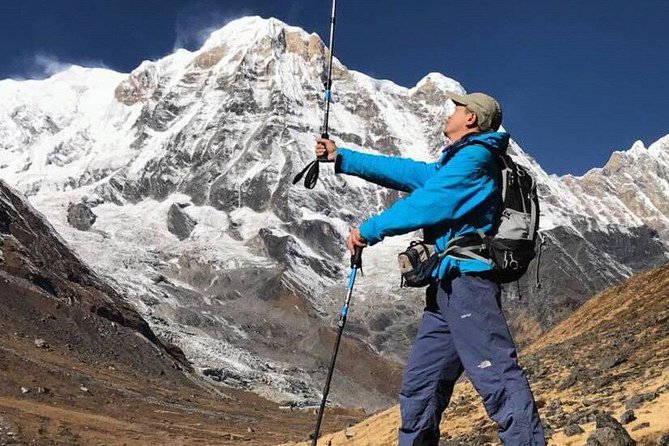
This trek is famous for a reason. You’re not just walking through scenery, you’re changing zones day by day. Start among terraced hillsides and forest paths, then gradually move into higher, thinner vegetation until the Annapurna massif feels close enough to touch with your eyes.
The last pull to Annapurna Base Camp matters because of the payoff in your own head, not just your camera. At 4,130m, the air changes, the sky looks sharper, and that wide bowl of the sanctuary area pulls you into a slower pace. If you like mountain quiet, this part is the point.
You’ll also notice that the route gives you frequent “good enough to stop” moments. You’re not waiting until the very end to feel like you’re in the right place.
More routes into the Annapurna Sanctuary:
- Annapurna base camp trek 5 Days
★ 5.0 · 252 reviews - 14-Day Private Annapurna Base Camp Trek
★ 5.0 · 180 reviews - Annapurna Base Camp Trekking
★ 5.0 · 116 reviews
Kathmandu and Pokhara prep: Thamel time, UNESCO sights, and a realistic launch
Your trip begins in Kathmandu, with airport pickup and a drop at your hotel. If you arrive during the day, you’ll have time to wander Thamel, the practical hub for trekking gear and easy access to food.
The next day is organized Kathmandu Valley sightseeing, focused on UNESCO World Heritage Sites grouped as stupas, temples, and palaces. The plan can be personalized based on your interests, and a city guide handles route planning. That matters because Kathmandu traffic is its own sport, so having someone map the most efficient path saves time and stress.
Then you move to Pokhara, the lake city used as a staging base for many treks. You travel by tourist bus and arrive after passing towns, terraced farmland, rivers, and hillsides. Pokhara gives you a calmer rhythm, plus the option to stroll around Phewa Lake in the evening if you feel good.
What I like here is that the trip builds in support on both ends of the trek. You get a structured orientation in Kathmandu, then a soft landing in Pokhara before the first walking day. You’re less likely to start tired or underprepared.
The trek starts softly: Ulleri stairs to Ghorepani views
The first walking day takes you from Pokhara to Naya Pul, then into the trail toward Ulleri. The vibe on this section is all about forest and foothills: oak and rhododendron, winding paths, and that classic staircase feel described as the Ulleri Stairs. There are steps, boulders, cliff edges, bridges, and village moments along the way.
When you reach Ulleri, you’re arriving in the afternoon. That’s a smart pacing choice. Instead of hammering a long day, you get enough time to settle and start building your trekking rhythm.
Next comes Ghorepani, via Banthanti and Nangethanti, again through oak and rhododendron forest. Lunch happens at Nangethanti, and the goal is Ghorepani, a village with views that open up toward Dhaulagiri and the Annapurna ranges. This is one of those days where the trail keeps you busy, but the scenery keeps reminding you why you came.
If you’re the type who enjoys feeling your legs warm up gradually, this is a good stretch to start. It’s a trek that lets you ease in.
Poon Hill viewpoint area and Tadapani down-to-up rhythm
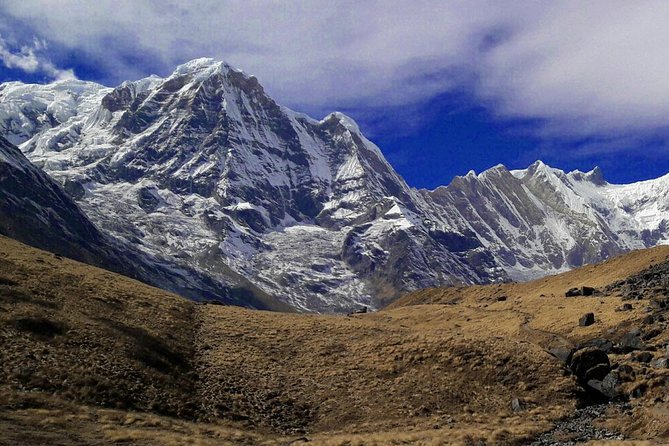
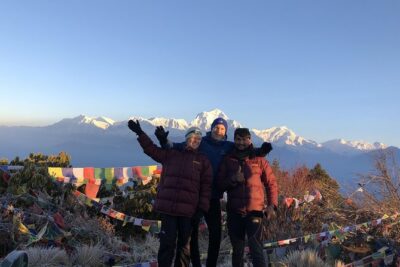
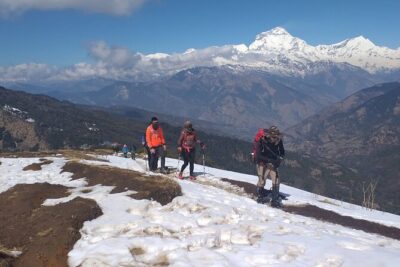
After breakfast, you head toward the Poon Hill viewpoint area, described as rewarding and panoramic with mountains including Dhaulagiri, Annapurna, and Manalsu. Even if you don’t chase sunrise or dramatic “timed” photos, this viewpoint stop is a clean way to confirm that the trek is working.
Then you move on to Tadapani, with walking uphill and downhill through forests and rocky steps. This section is where you feel the mix of steady altitude gain and the constant stop-start of typical mountain trails.
What I find useful about this part is that the trek doesn’t lock you into one style of walking. You get a viewpoint moment, then you’re back on a varied trail. That keeps your mind engaged and helps you avoid the mental fatigue that comes from monotony.
More to compare around Kathmandu
- Everest Base Camp Trek – 14 Days
★ 5.0 · 1,499 reviews - Everest Base Camp Trek
★ 5.0 · 842 reviews - Private Kathmandu Sightseeing Tour | UNESCO World Heritage sites
★ 5.0 · 756 reviews - Kathmandu: 7 UNESCO Sites with Lunch
★ 4.8 · 744 reviews
Chhomrong: Gurung village life plus big Annapurna and Machhapuchhre views
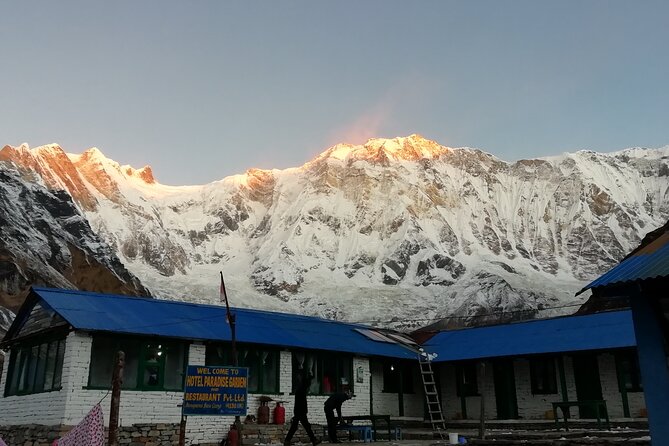
On the way to Chhomrong, you follow a trail that goes downhill first, then transitions through rhododendron and oak forest. Chhomrong is a Gurung village, set on the lap of the Annapurna massif. That setting matters because it gives you a sense of “ground truth.” You’re not just hiking; you’re meeting people who live within the trekking world.
In the afternoon, you get time to explore Chhomrong. You can also look for views toward Annapurna South and Machhapuchhre. This is one of those stops where I think it helps that the schedule leaves space for decompression. A half day in a real village makes the trek feel grounded.
If you like cultural stops that don’t feel forced, this is the kind of village time that fits.
Ghandruk and Sinuwa: stairs, rivers, and a glacier view from your hotel area
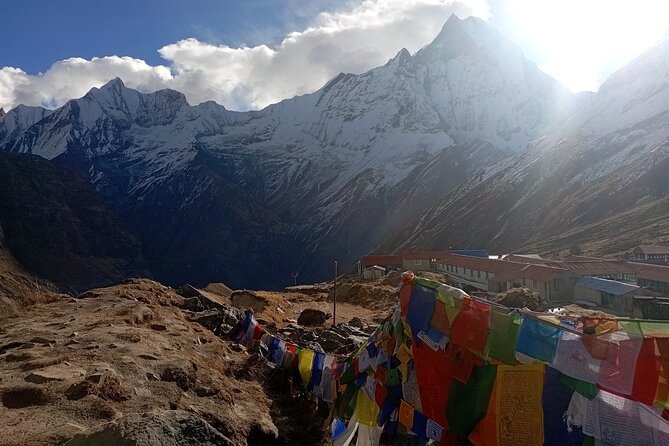
From Chhomrong you reach Ghandruk after a day that includes 2500 steps. There’s a downhill stretch toward Chhomrong Khola, a river, followed by an up-trail toward Khuldighar (2,380m) and onward to Sinuwa.
Then you get a “forest and cold damp” segment described around bamboo, followed by an uphill trail through rhododendron forest. You finish near the Himalaya Hotel area, with views described as stunning toward glaciers.
This part of the trek can feel like the hinge point. Early days are about finding your legs and your trail rhythm. Mid-trek days start asking more of your body, and you feel it in legs and lungs.
But you’re also getting rewarded with changing scenery and structured stops. After 2500 steps, the view and the hotel arrival matter.
The sanctuary climb: Hinko Cave, Deurali, Machhapuchhre Base Camp, then base camp
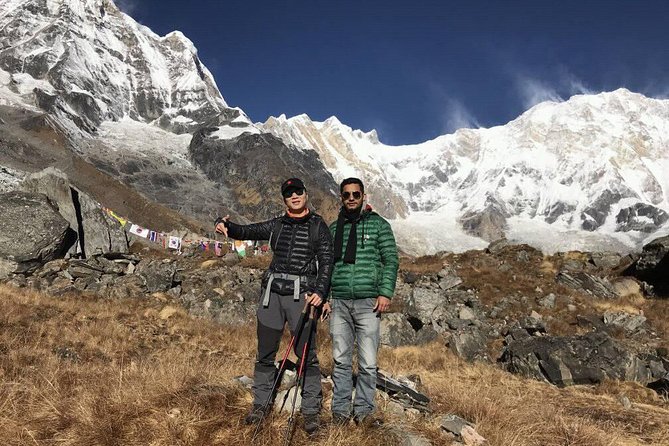
This is the day that turns the whole trip into a mountain story. You trek toward the Annapurna Sanctuary, passing Hinko Cave, Deurali, and Machhapuchare Base Camp. Vegetation thins, the climb gets more noticeable, and you travel past waterfalls with valley views showing through.
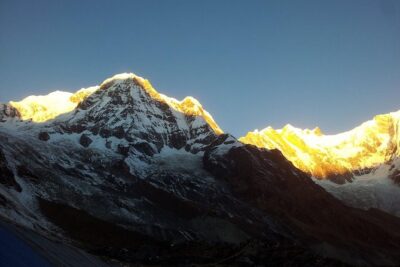
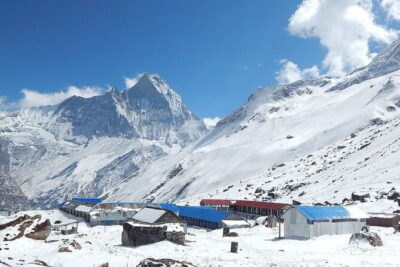
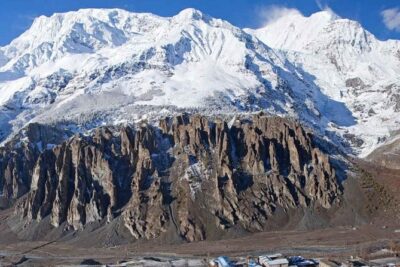
After about two hours from Machhapuchhare Base Camp, you reach Annapurna Base Camp. From there, the views are described as unobstructed toward Machhapuchhre, Annapurna South, Annapurna I, Hiunchuli, and other peaks such as Gandharvachuli and Gangapurna. It’s not just one mountain. It’s a whole set of them, framed by the sanctuary bowl.
One practical thing I’d keep in mind: expect slower movement on this day. Even if your hiking time is not the longest on the calendar, this is where altitude and effort stack up.
Back down through the bamboo and rhododendron: the return that still has rewards
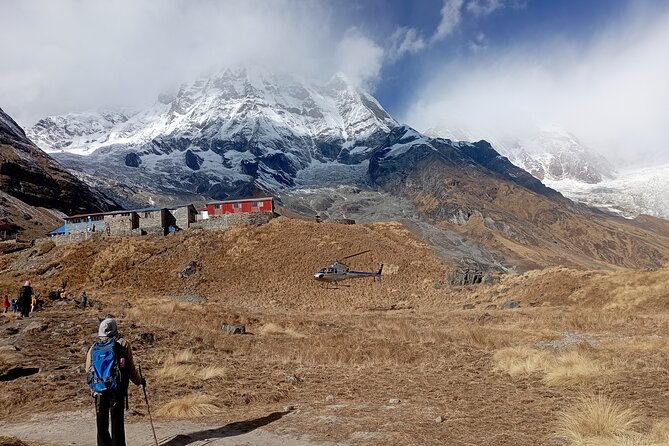
You don’t just “repeat” the trek on the way back. Yes, you retrace sections, but the focus shifts from reaching to recovering.
On the return toward Ghandruk, the trail is described as easier than the sanctuary day because it’s downhill, and you can still see Annapurna and other mountains along the route. You’ll pass through bamboo, rhododendron, and oak again, and the forest days start to feel like a long exhale.
Then the route continues toward Jhinu Danda. After bamboo, you walk uphill to Chhomrong Khola, then descend toward Jhinu Danda. Here you get the chance to dip into hot springs, a simple, memorable reward after days of trekking.
Ghandruk museum visit, then Pokhara and Kathmandu dinner
As you head back down to Pokhara, you stop in Ghandruk again and visit its museum, described as offering information on Gurung culture and tradition. This is a nice add-on because it turns village scenes into something you can interpret, even if you only spend a short amount of time there.
After that, you descend via Kimche and then toward Nayapul, from where you head to Pokhara by jeep or bus. When you reach Pokhara, the trip keeps your logistics simple so you can rest without planning.
On the final Kathmandu days, you drive back and check in to your hotel. In the evening, you’ll have a farewell dinner in a typical Nepali restaurant, with Nepali dance. It’s a gentle close to the journey, not a hard sell.
Price and value: what $1,600 covers, and what you still need to budget
At $1,600 per person, the value here is mostly in what’s handled for you. The trip includes:
- Twin sharing accommodation in Kathmandu and Pokhara (breakfast plan), plus guesthouse lodging during the trek
- Full board meals during trekking (breakfast, lunch, dinner) with tea/coffee
- Permits: ACAP permit and TIMS permit card
- A Nepal Government certified English-speaking local trekking guide
- Airport pickup and hotel drop in a private vehicle
- Tourist bus Kathmandu to Pokhara and back
- Medical kit, plus insurance for guides covering meals, salary, lodging, and transport
- A farewell dinner and a trip accomplishment certificate
That means you’re not piecing together permits, guiding, and meal planning separately. For many trekkers, that single combination is worth real money because it reduces guesswork.
What you should plan to pay for separately includes:
- international flights and Nepal entry visa
- travel and rescue insurance
- personal expenses like water, laundry, phone, and bar bills
- tipping your guide and porter (tipping is expected)
If you’re comparing costs, don’t only look at the headline. Look at whether your price includes guiding, permits, and a full meal plan. This one does.
Day-by-day pacing: how this trip handles effort and recovery
The trip is built around a typical rhythm: forest trails early, then viewpoint days, then village stops, then one big push into the sanctuary area, followed by descent and recovery.
You’ll spend multiple days around oak and rhododendron forests, which helps because it means shade and a steady trail feel early on. Later, vegetation thins and you get more exposed walking, then colder segments around bamboo. That shift is normal on this route and it’s part of the trek’s charm.
Because it’s described for moderate physical fitness, you should still expect stair work and uneven steps. The Ulleri stairs and the 2500 steps toward Ghandruk are the kind of effort that adds up, even when the distances feel manageable on paper.
If you’re comfortable with daily hikes and can handle long stair segments, this schedule is a good fit. If you hate stairs, you’ll still have to face them here.
Private group feel: comfort, attention, and why that matters on a trek
This is listed as a private tour, meaning only your group participates. That matters on a trek because pacing can be adjusted to your comfort level, and you avoid the “everyone waits” feeling that can happen in mixed groups.
The support structure also helps: you’re assigned a local trekking guide, and the trip includes guide coverage (meals, lodging, and transport). A medical kit is on hand. That doesn’t remove risk, but it tells you the operator is thinking about practical needs.
I also like that the trip includes Kathmandu Valley guidance and airport transfers. Those are the parts that often go sideways when you arrive tired or unsure.
Who should book Annapurna Base Camp with Travel Max Guide
I think this is a strong choice if:
- you want a classical Annapurna Base Camp route with the mix of villages, forests, and the sanctuary payoff
- you prefer a trip where meals and permits are already handled
- you like the idea of cultural stops like Ghandruk museum and Gurung village time in Chhomrong
- you’re looking for a supportive guide pairing, with examples of hands-on help from guides like John Shrestha
You might choose differently if:
- you want a more flexible, do-it-yourself trek where you book every hut directly
- you dislike high-altitude days and long descents back-to-back
- your goal is low effort and mostly flat walking, because this route includes stairs and uphill segments
Should you book this Annapurna Base Camp trek?
If you want a guided trek that reduces logistics, hits the main scenic beats, and ends at 4,130m with major peaks around you, I’d say yes. The price makes more sense when you look at what’s included: permits, an English-speaking guide, full board meals, and the core transport between Kathmandu, Pokhara, and the trailhead.
Just be honest with your fitness and your cold tolerance. If you can handle stair days and a slower high-altitude effort, this is the kind of trip that stays with you for the quiet views as much as for the final destination.
FAQ
Where does the experience start and end?
It starts at Tribhuvan International Airport, Ring Rd, Kathmandu 44600, Nepal and ends back at the same meeting point.
How long is the Annapurna Base Camp trek?
The duration is 14 days (approximately).
Is Nepal entry visa included in the price?
No. A Nepal entry visa is listed as not included.
What permits are included for the trek?
The package includes an ACAP permit and a TIMS permit card for trekking.
What meals are included during the trek?
The trek includes full board meals with breakfast, lunch, and dinner, plus tea/coffee during trekking days.
Are tips included?
No. Tips for your guide and porter are not included, and tipping is expected.
Can I cancel and get a full refund?
Yes. You can cancel up to 24 hours in advance for a full refund, and cancellation times use the experience’s local time.
Latest Kathmandu write-ups
- Langtang Valley Trek★ 5.0 · 3 reviews
- Khopra Danda Trek★ 5.0 · 3 reviews
- Langtang Valley Trek from Kathmandu★ 5.0 · 3 reviews
- 5 night / 6 days Kathmandu Nagarkot Chitwan Pokhara tour★ 5.0 · 3 reviews
- Nepal Highlights Tour: 5 Nights 6 Days Kathmandu & Pokhara Tour★ 5.0 · 3 reviews
- Kathmandu Valley Private Day Tour★ 5.0 · 3 reviews
- Conquer the Himalayas: The Ultimate 16-Day Annapurna Circuit Trek★ 3.5 · 3 reviews
- Kathmandu Heritage Day Tour★ 5.0 · 3 reviews
Annapurna Base Camp Trek, compared.
Browse the lists this tour appears in