
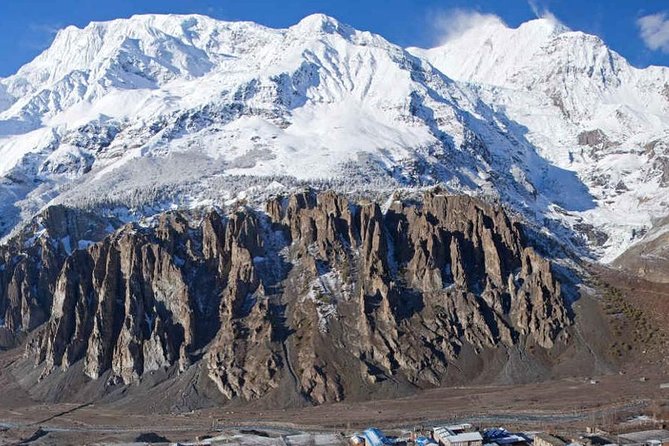
Reviewed · ANNAPURNA BASE CAMP TREK
Annapurna Base Camp Trek- 11 Days
Annapurna Base Camp is interesting because you get that classic Himalaya feeling in a trek that is tough enough to matter, but structured enough that you are not guessing every step. I love the teahouse nights built into the route, and I also like that you travel with an English-speaking, licensed local guide and a porter system that keeps the focus on walking and scenery.
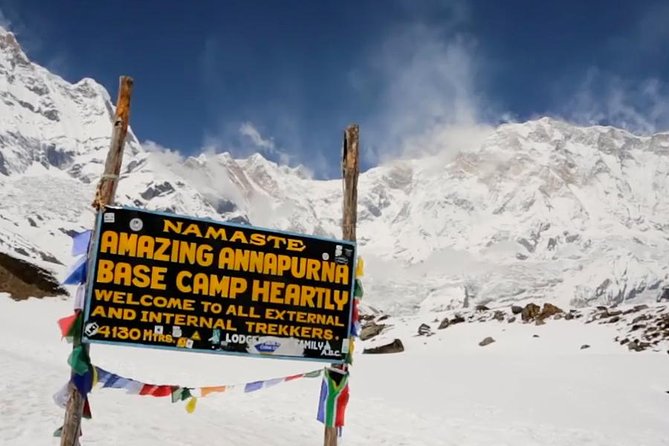
The one real consideration is altitude and weather. You start low in Kathmandu and Pokhara, but you still reach 4,130m at ABC, and that means you need to pace yourself and take cold, cloud, rain, or delays seriously.
Key takeaways before you go
Private guided experience: you are traveling as one group, not squeezed into a big shuffle.
Teahouse trekking with full trek meals: breakfasts, lunches, and dinners are included on the trail, plus tea or coffee.
A well-built altitude progression: you climb step by step through Ghandruk, Chhomrong, Bamboo, and Deurali before reaching ABC.
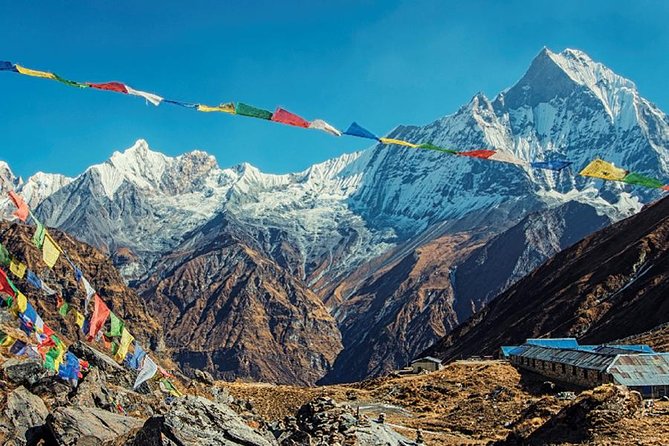
Machhapuchhre Base Camp included: Day 6 routes you through a scenic stop on the way to ABC.
Smooth logistics in and out of the mountains: airport transfers, Kathmandu and Pokhara stays, and domestic flights are part of the package.
Village culture along the way: the trek passes through Gurung, Magar, and Thakali communities, not just empty ridgelines.
A smooth start in Kathmandu, with real Nepalese welcome energy
Your trip begins in Kathmandu at the Alpine Club of Himalaya meeting point. From there, you get private airport pickup and an in-city welcome dinner, so you are not trying to figure out Nepal on day one. The itinerary also includes two nights in Kathmandu, which matters more than it sounds. Arrival days can be slower than you expect, and you want time to get oriented, eat something comforting, and let your body adjust before you start climbing.
Kathmandu also gives you a cultural primer. During the Kathmandu portion of similar trips with this operator, people have had time for stops like Boudha Nath and walking around Thamel. Even if your schedule shifts slightly for your exact dates, the general idea holds: Kathmandu is not just a waiting room, it is part of the Nepal experience.
What to watch for: Kathmandu traffic and timing can be unpredictable. If you have a tight international connection before arriving, build in breathing room so you are not stressed on arrival.
More routes into the Annapurna Sanctuary:
- Annapurna base camp trek 5 Days
★ 5.0 · 252 reviews - 14-Day Private Annapurna Base Camp Trek
★ 5.0 · 180 reviews - Annapurna Base Camp Trekking
★ 5.0 · 116 reviews
Flying into Pokhara, then walking into the Annapurna foothills
Day 2 is a short 30-minute flight to Pokhara, followed by a trek to Ghandruk. That combination is smart. You save the long ground transfer and you start your trek at a point that already feels like mountain life. Pokhara sits at a lower elevation (823m), so you ease into the higher terrain without “straight to the deep end” fatigue.
The Day 2 trek is listed at about 5 to 6 hours to Ghandruk, reaching 1,940m. This is one of those early days where you feel the altitude gently. The climb is steady, and it is a great time to lock in your walking rhythm, not burn energy.
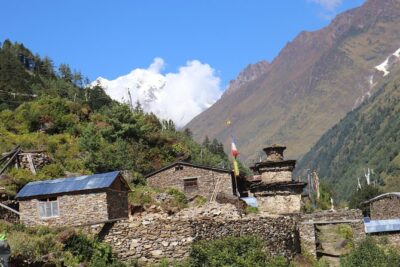
Ghandruk itself is one of those villages that gives context fast. Your highlight list says you will pass through Gurung, Magar, and Thakali villages on the route. That means you are not just walking through geography, you are walking through communities, daily routines, and local ways of making a living in the mountains. You will see it in how people live, how tea houses operate, and how trails connect homes to bigger trade routes.
Tiny practical note: early trek days set your gear habits. This is when you decide how often you will stop, how you will manage sunscreen, and how you will keep water intake steady.
Ghandruk to Chhomrong: the first big “Himalaya wow” day
Day 3 runs from Ghandruk to Chhomrong, around 5 to 6 hours, climbing to 2,170m. This is where the Annapurna region starts feeling real. You move from “I’m trekking” into “I’m in the hills of Nepal.” The trail undulates enough that it will test your pacing a bit, and that is good, because it helps you learn your pace before higher altitudes later.
Chhomrong is also a place where the trek becomes more social. Teahouses mean common areas, people traveling in both directions, and more chances to compare notes on weather. That can help you mentally, even when you are focused on your own route.
The benefit of the schedule: the Day 2 and Day 3 distances are long enough to build strength, but they are not yet the brutal hours you face later. If you are doing this as a first big trek, this is a practical ramp-up.
Bamboo and Deurali: where you start earning that ABC summit feeling
Day 4 goes from Chhomrong to Bamboo (4 to 5 hours) at 2,310m. Bamboo is not “the highlight name” like Base Camp, but it is where you build endurance. These mid-trek stops are part of the value of the package: you get overnights in teahouses with meals included, so you spend your brainpower on walking, not planning.
Day 5 takes you from Bamboo to Deurali, about 3 to 4 hours, and up to 3,230m. Shorter time, higher altitude. That combination is the quiet test. You may feel breathing changes even if your legs feel okay. The best strategy here is simple: keep moving at a slower pace, take breaks before you feel worn out, and do not treat each hour like a race.
Day 5 also sets up the “big Day 6” jump. Deurali is one of those places where you can feel the cold more sharply. Even when skies are clear, it can feel like the mountains are saving their bite for the evenings.
What I like about this design: it uses a gradual climbing pattern, which is exactly what you want before going to 4,130m. You are not thrown into a steep altitude leap without time to adapt.
More to compare around Kathmandu
- Everest Base Camp Trek – 14 Days
★ 5.0 · 1,499 reviews - Everest Base Camp Trek
★ 5.0 · 842 reviews - Private Kathmandu Sightseeing Tour | UNESCO World Heritage sites
★ 5.0 · 756 reviews - Kathmandu: 7 UNESCO Sites with Lunch
★ 4.8 · 744 reviews
Day 6 to Annapurna Base Camp: the route through Machhapuchhre Base Camp
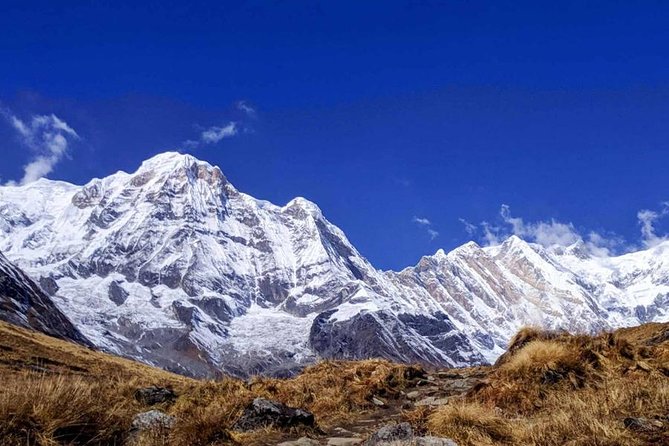
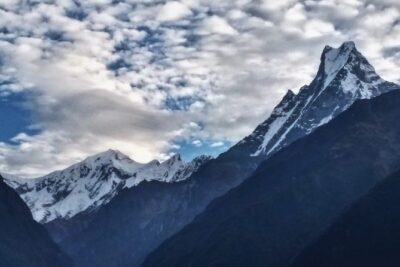
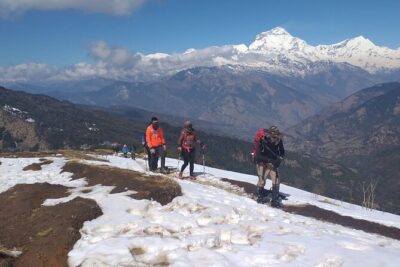
Day 6 is the big moment: Deurali to Annapurna Base Camp, about 5 to 6 hours, reaching 4,130m. The route goes via Machhapuchhre Base Camp at 3,700m. This is a huge deal for a few reasons.
First, Machhapuchhre Base Camp is a satisfying milestone that breaks the day up mentally. You are not just staring at the final number, you have an intermediate “almost there” goal. Second, it typically delivers the kind of wide-open mountain views you came for, and third, it gives you a physical rhythm as the altitude tightens.
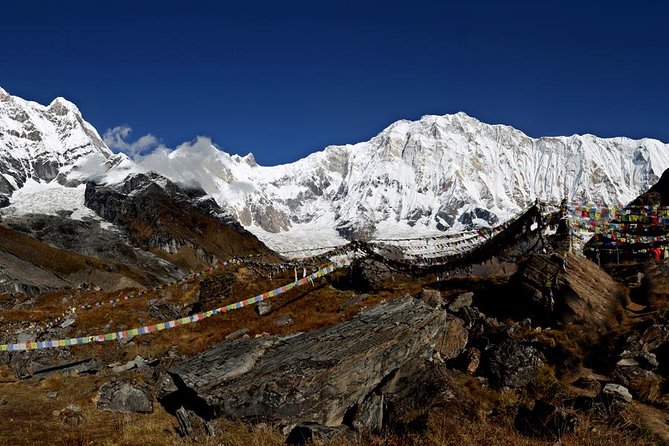
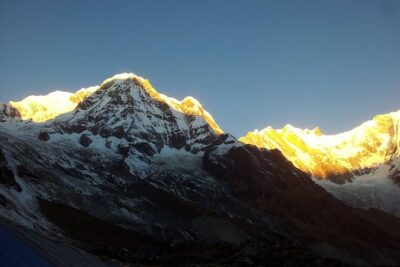
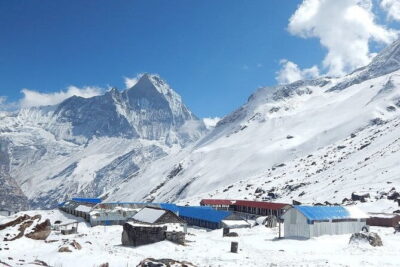
When you finally arrive at Annapurna Base Camp, you are standing at one of the region’s iconic destinations. The trek’s structure is what makes it feel earned. You did not rush. You climbed in stages: Ghandruk, Chhomrong, Bamboo, Deurali, then ABC.
Reality check: at ABC, cold can hit fast, and energy can dip. If you rush your time there, you miss the point. Take your photos, but also take a moment to just sit, breathe, and notice how quiet the place feels compared with the lower hills.
The long way back to feel stronger, not broken
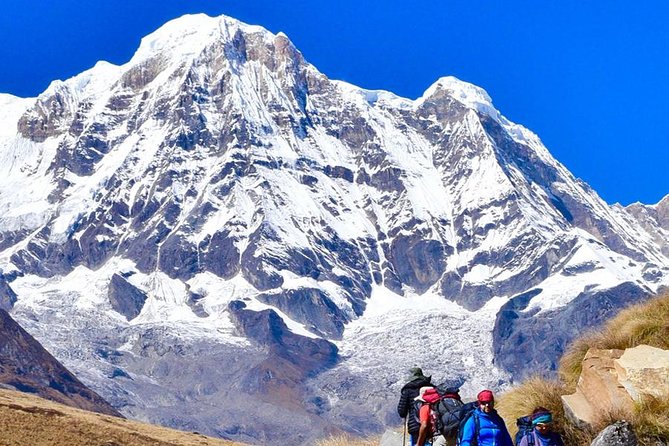
Day 7 is ABC back to Bamboo, listed at 7 to 8 hours. That sounds long, and it is. The good news is that descending is often easier on your lungs than climbing, but it can still beat up your knees and shins. Plan for frequent foot-care pauses and shorter steps. You want your descent to feel controlled, not frantic.
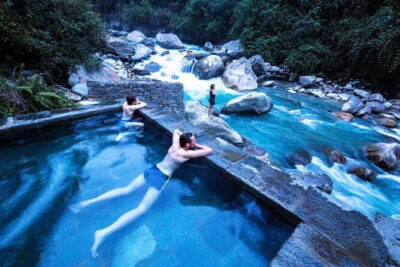
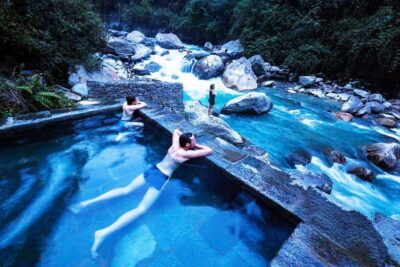
Day 8 goes from Bamboo to Jhinu Danda, about 5 to 6 hours, dropping to 1,760m. This is a nice change of pace. Jhinu Danda is known in many trekking plans for the hot springs experience. The itinerary here stops at Jhinu Danda, so you get the chance to enjoy the lower-altitude relief and possibly the feel-good side of soaking sore legs. Even if you do not go into the springs, the elevation change helps you reset.
Why this matters for value: a trek is not only “reach the goal.” It is how you return. Having a day dedicated to getting down to a more comfortable elevation makes the whole trip feel more balanced.
Trek to Naya Pul, then drive and fly home
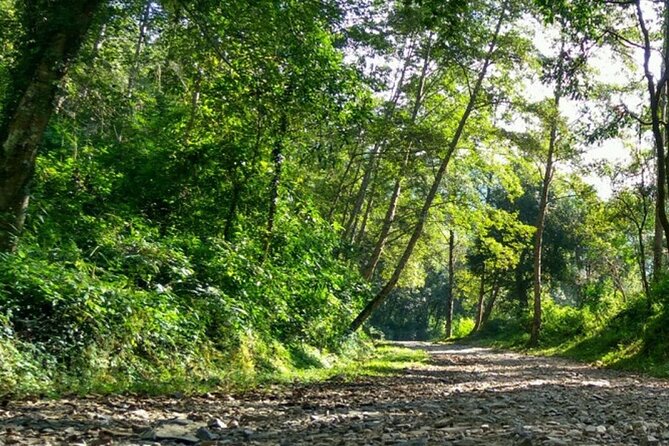
Day 9 is a hybrid day. You trek to Naya Pul, then take a private vehicle to Pokhara. Total time is about 6 hours trekking plus 1 hour driving. That is a long travel blend, but it also means you get out of the mountains smoothly without doing an extra night of trekking.
Day 10 flies back to Kathmandu. That means you do not spend two full days moving between city and trail like a slow coach tour. When you reach Kathmandu again, you can finally think like a normal tourist: eat well, sleep in a real bed, and review your photos with a hot shower you earned the hard way.
Day 11 is final departure back to the meeting point.
What to watch for: domestic flights can be weather-sensitive. If you are the type who hates uncertainty, keep your day flexible mentally and do not pack fragile emotions into a tight connection.
Price and logistics: what $999 really buys, and what you still need to budget
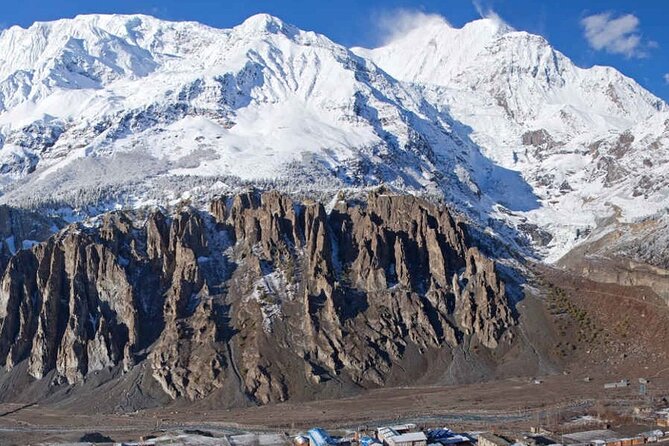
At $999 per person for an 11-day Annapurna Base Camp trek, this package is competing in the “mid-range but structured” zone. The value comes from what is included, not just the headline number.
Included items that directly reduce your hassle:
- Airport pickups and drops in a private vehicle
- 2 nights in Kathmandu and 1 night in Pokhara, with breakfast
- Teahouse accommodation during the trek
- All trek meals (breakfast, lunch, dinner) plus tea or coffee
- Welcome or farewell dinners
- Kathmandu to Pokhara to Kathmandu by flight
- Pokhara to Nayapul to Pokhara by private vehicle
- Government-licensed, English-speaking guide
- Porter service with a clear ratio: 2 trekkers to 1 porter
- Staff costs, equipment, food, insurance, and all local taxes
Now the stuff you must plan for, because it is listed as not included:
- Nepalese visa fee
- International airfare to and from Kathmandu
- Travel and rescue insurance
- Tips for guide and porters
- Excess baggage charges
- Lunch and dinner in Kathmandu and Pokhara
- Extras like bottled or boiled water, showers, battery recharge, laundry, phone calls, and similar conveniences
My practical take: if you hate logistics, this sort of all-in-trek structure is worth it. If you already have gear, insurance, and a strong tolerance for planning meal purchases during downtime, you might be able to do it cheaper elsewhere. But for most first-timers, paying for coordination saves stress at the exact time you need energy for altitude.
Trek reality check: fitness, altitude, and the “days that happen”
This trek is described as suitable for people with moderate physical fitness. That is a good match for many first-time trekkers, especially if you are consistent with walking and you manage pacing. The itinerary days range from about 3 to 8 hours, and several are in the 5 to 6 hour band. That is doable, but it is not a stroll.
Altitude increases across the trek:
- Kathmandu at 1,300m
- Pokhara at 823m
- Ghandruk at 1,940m
- Chhomrong at 2,170m
- Bamboo at 2,310m
- Deurali at 3,230m
- Machhapuchhre Base Camp at 3,700m
- Annapurna Base Camp at 4,130m
- Jhinu Danda at 1,760m
That climb profile matters. You climb, you spend time higher, then you go up again. The trek’s pacing is built around that, and it is why you should take it seriously when your guide tells you to slow down or rest.
Weather is the other factor. Rain, cloud, and travel disruptions can happen. One past experience included mention of heavy rain and a landslide during a road traffic lane, so the mountains and approaches can affect schedules. This is not something you can control, but you can prepare for it by keeping your plans calm and your expectations flexible.
The service style you feel on the trail: guidance, helpers, and quick problem solving
The operator’s biggest strength shows up in the human layer. People have described the team as friendly and caring, with fast responses to specific needs during the trek. That does not mean the trek becomes easy, but it does mean small issues do not snowball.
You also get an experienced English-speaking, government-licensed guide and a porter service ratio that is clear and fair. For many trekkers, that porter support is the difference between enjoying the views and being stuck in a constant “too heavy” fight with your own pack.
In peak season, there has also been effort to secure private rooms at teahouses when possible. That matters because tea houses can vary a lot in comfort, and a private setup can turn a rough evening into a restful one.
Who should book this Annapurna Base Camp trek, and who should skip it
This is a solid match if:
- You want a private guided experience with clear logistics
- You like the idea of teahouse nights instead of complicated camping planning
- You are first-time or returning to Nepal and want a structured itinerary with meals handled
- You value a porter system (2 trekkers per 1 porter) to keep your pack manageable
This might not be the right match if:
- You want total freedom to change routes daily with no guidance. The itinerary is built and timed, and it is designed to run smoothly.
- You are not willing to handle altitude effects, cold, and rain risk.
- You are trying to travel as cheaply as possible. Even though $999 is reasonable for what is included, you still need to budget visas, insurance, tips, and personal items.
Should you book this one?
Yes, if you want a well-run, classic Annapurna Base Camp trek with meals, teahouses, a licensed guide, porter support, and domestic flights already handled. This package is especially attractive for first-timers because it removes the guesswork at the times when you need mental space for altitude and rhythm.
I would say skip or compare options if you dislike any uncertainty about mountain weather, you hate paying for insurance and tips, or you prefer to self-organize every day. For most people walking into the Annapurna region for the first time, this is a smart way to spend your effort on the trail, not on logistics.
FAQ
Does the tour include airport pickup and drop-off?
Yes. You get airport transfers and also returns connected to the itinerary in private vehicle transportation.
Are flights included in the trip?
Yes. The package includes flights from Kathmandu to Pokhara and then back to Kathmandu.
What kind of accommodation do you get during the trek?
You stay in teahouses during the trek. Kathmandu and Pokhara nights are covered as well, with breakfast included for those stays.
How are guide and porter services handled?
You travel with an experienced English-speaking, government-licensed guide. Porter service is included with a ratio of 2 trekkers to 1 porter.
Are meals included on the trek?
Yes. Breakfast, lunch, and dinner are included during the trekking days, along with tea or coffee.
What important items are not included in the price?
Not included are the Nepal visa fee, international flights, travel and rescue insurance, excess baggage charges, lunch and dinner in Kathmandu or Pokhara, extra accommodation if you change arrival or return plans, and tips for the guide and porter(s). Water, showers, and some personal services are also not included.
Latest Kathmandu write-ups
- Visit Swayambhunath and Bauddhanath Stupa with Guide★ 5.0 · 5 reviews
- 10 days Annapurna Base Camp Trek★ 5.0 · 5 reviews
- Langtang Trek from Kathmandu 7 Days★ 5.0 · 5 reviews
- Island Peak Climbing with Everest Base Camp★ 5.0 · 5 reviews
- 7 Day Kathmandu Pokhara Tour★ 4.5 · 5 reviews
- Everest Mountain Flight★ 5.0 · 5 reviews
- Kathmandu city day tour (4 world heritage sites)★ 5.0 · 5 reviews
- Chandragiri Hill Cable Car Tour with Hotel Transfers from Kathmandu★ 4.5 · 5 reviews
Annapurna Base Camp Trek, compared.
Browse the lists this tour appears in