
Reviewed · ANNAPURNA BASE CAMP TREK
Annapurna Base Camp Trek
This trek is interesting because it stitches together the famous Poonhill sunrise and a finish at Annapurna Base Camp in the Annapurna Sanctuary.
I love the variety in the route, with Kathmandu and Pokhara set-up, classic hill villages, then a hot springs stop at Jhinu Danda. I also like the support structure built into the trek, including an experienced guide and porters, plus pre-arranged transport so you can focus on walking and timing your sunrise views.
One possible drawback is the altitude. You reach about 4,130 meters at ABC, and you start very early (around 2:15am), so you need to be serious about pacing and sleep.
Key things to know before you go
- Poonhill sunrise timing at about 3,210 meters is built into the itinerary.
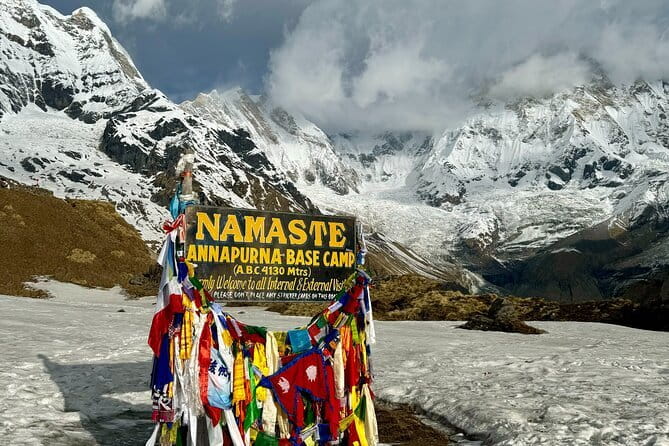
- Annapurna Base Camp at 4,130 meters is the high point of the trek.
- Village walking + forests: you go through rhododendron, oak, bamboo, and river valley trails.
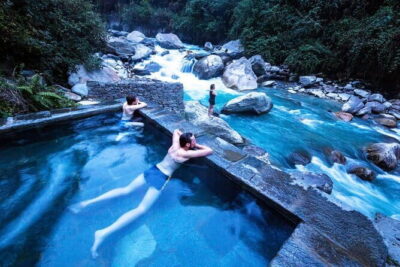
- Hot springs recovery: Jhinu Danda is on the route, so your sore legs get a payoff.
- Permits and triage support included: an Annapurna Conservation Area Permit, first aid kit, plus guide and porter coverage.
- Transport is pre-planned: private car transfers in Kathmandu plus drives to and from the trek areas.
Why this Annapurna Base Camp route feels like two treks in one
The big reason this itinerary works is that it doesn’t treat Annapurna Base Camp as an isolated event. You get there through the popular Ghorepani and Poonhill corridor, so your climb builds step by step with multiple “stop and look” moments.
You start with lower elevation sightseeing in Kathmandu and then Pokhara, which helps you get your bearings before the real altitude work begins. Then the trek unfolds like a story: first forest trails and village rhythm, then sunrise at Poonhill, then higher ridgelines and finally the day you reach the Annapurna Sanctuary at ABC.
For me, the best part is the way the schedule creates natural recovery. After the Poonhill morning, you descend for breakfast and keep moving. After ABC, you go back down to Sinuwa for another village night, then you shift to Jhinu Danda for hot springs. It is not just “go up, go down.” It is “go up, pause, adjust, and then return.”
More routes into the Annapurna Sanctuary:
- Annapurna base camp trek 5 Days
★ 5.0 · 252 reviews - 14-Day Private Annapurna Base Camp Trek
★ 5.0 · 180 reviews - Annapurna Base Camp Trekking
★ 5.0 · 116 reviews
Kathmandu to Pokhara: the quiet work of setting you up for the trek
You land in Kathmandu at about 1,400 meters, and you do an airport transfer straight to your hotel. That matters more than it sounds. After international travel, the easiest way to ruin a mountain trip is to lose time on logistics.
The Kathmandu time also gives you a gentle on-ramp. Your route includes Kathmandu Valley sightseeing time on Day 1, then a Phewa Tal evening stroll on Day 2 in Pokhara. Even if you think you will be “too tired” for sightseeing, that early evening walk around the lake is a good mental reset. You get to look at Nepal beyond the trek map.
On Day 3 you shift into trek mode in a very practical way: after breakfast you drive toward the Annapurna region, ending up at Birethanti before your hike starts toward Ulleri. This is a smart setup day because it puts the effort on your legs where it belongs, not on long transfer hassles.
Ulleri to Ghorepani: villages, fields, and the rhododendron payoff
Once you start from Birethanti, the hike toward Ulleri climbs uphill through villages and terraced fields. This is where the Annapurna region feels human. You are not walking through a theme park. You are walking through working countryside where you might see farmland patterns that follow the steep slopes.
Then the route continues to Ghorepani. Expect rhododendron forests, plus mountain and valley views between stretches of forest trail. Ghorepani is a classic resting point for good reason: it is well placed for both the trekking flow and the sunrise plan that comes later.
One thing I appreciate about this part of the trek is that it keeps your pace flexible. The itinerary frames Days 3 and 4 as time on the trail with village stops and scenery, not a day of max-stress climbing back to back. You are building stamina before you start stacking elevation hours.
Poonhill sunrise at 3,210 meters: planning the best light, then moving on
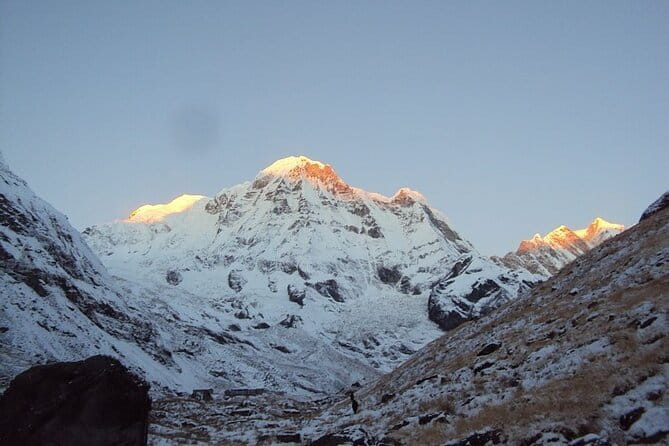
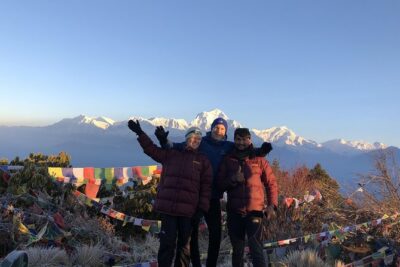
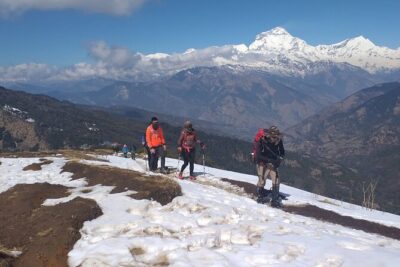
Poonhill is your headline morning. You rise early for a sunrise hike to Poonhill at about 3,210 meters, then you descend for breakfast in Ghorepani before trekking to Tadapani.
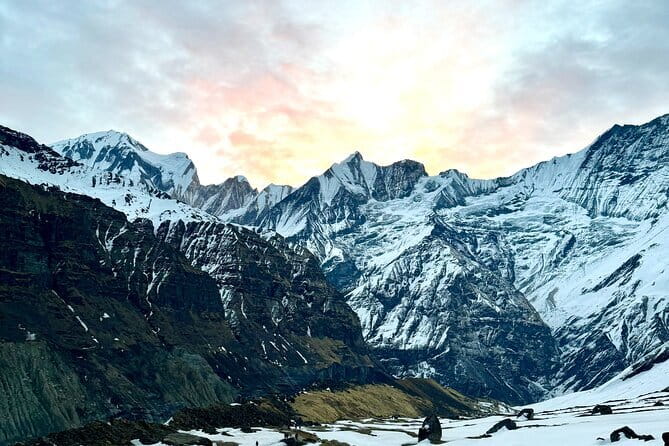
This is a great format for two reasons. First, sunrise views over the Annapurna and Dhaulagiri ranges can be spectacular. Second, the itinerary does not leave you stuck hanging around in the cold. You go up for the key moment, then you’re back down for food and a warm restart to your day.
Tadapani comes right after, at around 2,630 meters, and the trail shifts into dense oak and rhododendron forest. If you like days that feel like a “walk through the hills” rather than nonstop ascent, Tadapani is a good balance after Poonhill’s early start.
More to compare around Kathmandu
- Everest Base Camp Trek – 14 Days
★ 5.0 · 1,499 reviews - Everest Base Camp Trek
★ 5.0 · 842 reviews - Private Kathmandu Sightseeing Tour | UNESCO World Heritage sites
★ 5.0 · 756 reviews - Kathmandu: 7 UNESCO Sites with Lunch
★ 4.8 · 744 reviews
Chule to Sinuwa, then Sinuwa to Deurali: higher air and a changing trail feel
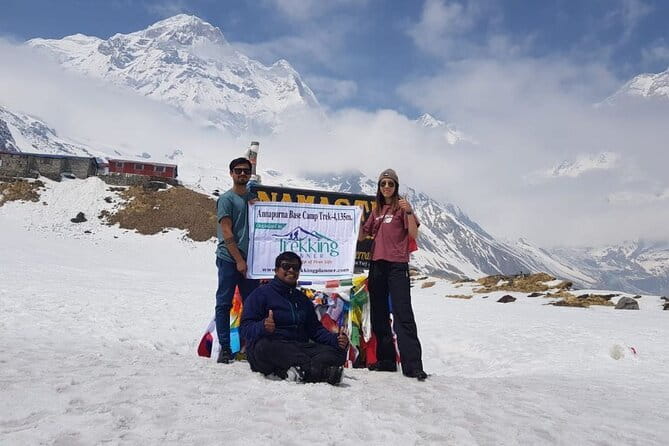
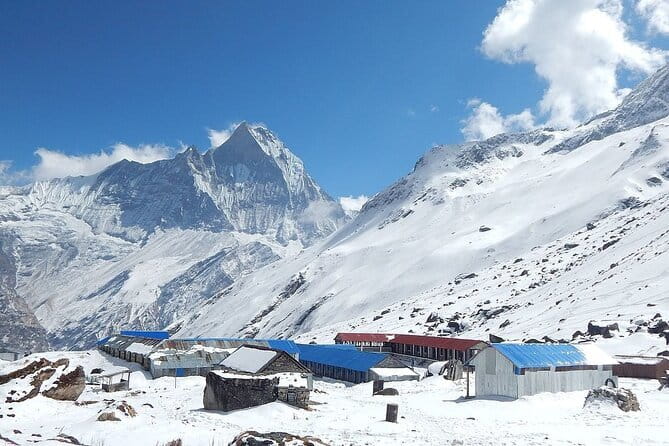
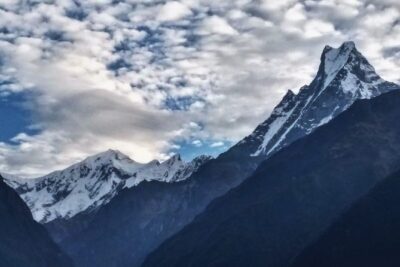
Day 6 is a climb from Chule up to Sinuwa. You get panoramic views, including Machhapuchhre, also known as Fishtail. Sinuwa is described as a small village and a quieter night in the hills, which is useful if you want to recover calmly before the big ABC day.
Day 7 continues from Sinuwa to Deurali. The route shifts again: bamboo forests, rocky terrain, and scenic river valleys. Higher elevation changes the way you feel on the trail. Even if the daily walking time is similar, your breathing can get heavier, and you may want to pace more slowly than you did earlier days.
This is also where an experienced guide and porters can make your trek feel smoother. Your schedule includes government-authorized guide and porters, and the support matters most when the body starts asking for slower steps.
Annapurna Base Camp at 4,130 meters: the day the trek earns its name
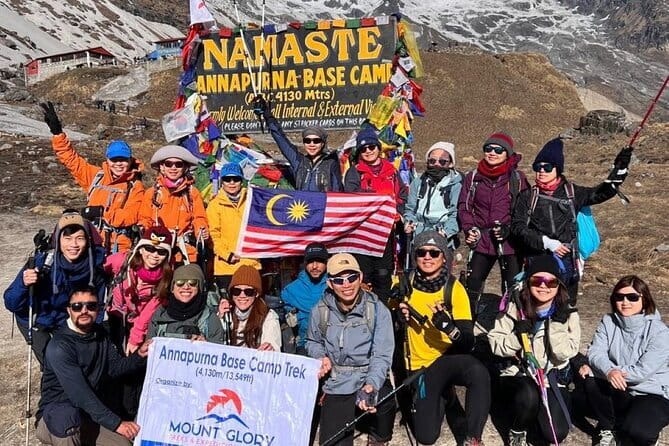
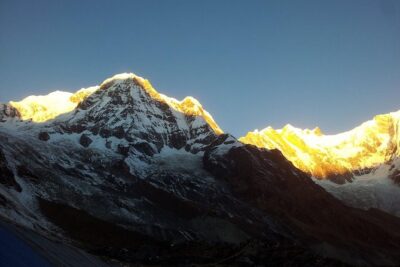
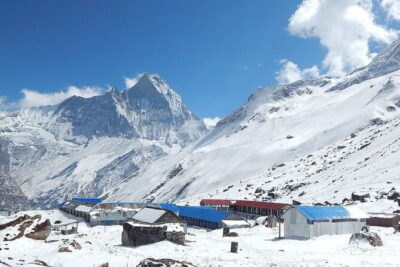
Day 8 is the highlight: Deurali to Annapurna Base Camp, reaching about 4,130 meters. This is the moment many people dream about because you are walking into the heart of the Annapurna Sanctuary.
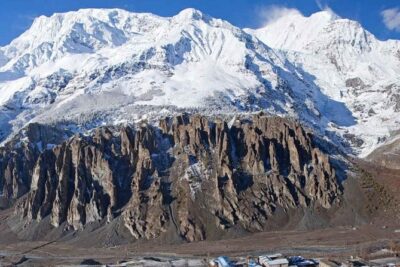
The views here are described as including Annapurna I, Annapurna South, Hiunchuli, and Gangapurna. That is a big lineup. Even if you are not a mountaineering expert, the sheer scale of the peaks around ABC tends to make the day feel cinematic.
What I like about this trek’s way of getting to ABC is that the day-to-day build-up prepares you for the reality of elevation. You do not jump straight from lower trails to the highest point. You get forest days, ridge days, and a final push.
Also, remember that at this altitude, your win is not speed. Your win is reaching the destination and taking in the views without running yourself flat. A sunrise earlier in the trip helps, but ABC is its own emotional payoff.
Coming down to Sinuwa: easier on the legs, richer on the scenery
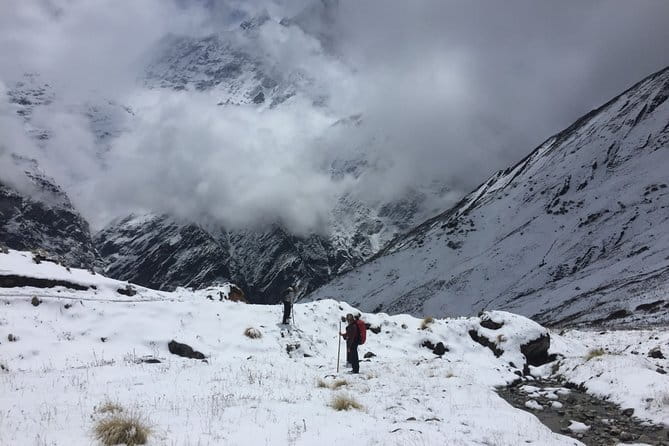
Day 9 is a descent from Annapurna Base Camp back to Sinuwa at about 2,340 meters. The itinerary notes that walking down is easier on the legs than the uphill, which is true, but it also brings a different kind of focus. Your knees and balance matter more on descents, so careful steps win.
The route is not just a repeat trail. You pass suspension bridges over rushing rivers and the scenery shifts as you walk out of the rocky snow zone into greener terrain. That change is one of the underrated parts of mountain trekking: your eyes keep getting new “oh wow” moments, even when you think you already had them on the way up.
You end the day in Sinuwa, where the teahouses are described as warm and village life feels calmer. That matters because the next day includes Jhinu Danda, which benefits from a night where you can sleep without rushing to recover.
Jhinu Danda hot springs at 1,780 meters: recovery with a view
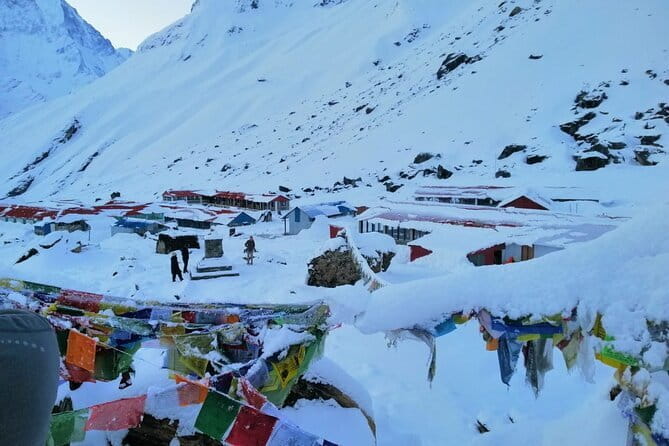
On Day 10 you trek to Jhinu Danda at around 1,780 meters, known for natural hot springs. You go through lush forests and terraced fields to get there, which helps break up the transition from higher stone paths to a lower-elevation routine.
The hot springs stop is a smart addition because it gives your body an actual reason to loosen up. After days of ascending and then descending, you will likely feel tightness in calves and thighs. Even if you do not go full soak mode, a warm water break can change your mood for the rest of the trip.
Jhinu Danda also resets the trip energy. You spend the night in a tranquil village atmosphere, and the itinerary positions it as a place to unwind and enjoy the beauty of the region after the hard climb.
Kathmandu return and the last-mile ending
Day 11 returns you to Kathmandu by drive for about 7 hours. Day 12 then ends back at the meeting point in Thamel, with time to proceed to your onward destination from Kathmandu.
This is one of those logistical details that matters for comfort. You are not trekking until the last day of your trip window. Instead you get a car ride after the final mountain day, so you can rehydrate, eat meals on the city schedule, and rest properly.
Just keep in mind that meals in Kathmandu are not included beyond breakfast, so you will want to plan for that on Day 11 and Day 12.
Price and value: what $940 covers and what costs show up later
At $940 per person for a 12-day trek, the value comes from what is bundled in rather than the headline number alone.
Included items that affect real cost and stress:
- Guide and porters (government-authorized) plus their wages covered.
- An Annapurna Conservation Area Permit included.
- Hygienic meals (breakfast, lunch, dinner) during the trek days.
- Accommodation: hotels in Kathmandu and Pokhara for two nights each, plus local guest house stays in the mountains.
- Sleeping bag and duffel bag included, with the duffel returning after the trek.
- Private car arrival and departure in Kathmandu, plus drives to and from trek points.
- First aid kit and service charges and government taxes.
What is not included, and you should budget for it:
- International airfare.
- Meals in Kathmandu and Pokhara besides breakfast.
- Shower and electronic charging fees during the trek (approx. $5 in some guesthouses).
- Alcoholic drinks, chocolates, and packaged beverages.
- Tips for guide and porter.
- Travel insurance, which is mandatory.
So is it a good deal? For me, yes if you want a “less-admin” trip. You are paying for permits, staffing, and the daily meals that keep the trek moving. If you are the type who hates paying for pre-arranged logistics, you might compare against do-it-yourself options. But if you want the mountain days to feel organized, this price mostly buys peace of mind.
Guides, group flow, and pacing support you should care about
This is a private tour/activity, meaning only your group participates. That typically makes the experience feel more flexible and less chaotic than large multi-group trekking schedules.
The meeting point is Thamel, Kathmandu 44600, Nepal, and the start time is 2:15am. That early start is a strong clue that the itinerary is built around sunrise. It also tells you to plan sleep and packing the night before. You do not want to be sorting gear at 1:30am.
One name that shows up in the strongest praise for this operator’s trekking support is Dambar Thapa, highlighted for being attentive and for helping with altitude pacing. You cannot guarantee you will get the same guide, but you can ask who you are matched with and how they plan for altitude adjustment. A good sign is if the guide talks about pacing early, not just about speed.
Porters matter too. The trek includes porters, and that changes how you will feel on long walking days. Even if you are physically fit, carrying less can turn “survive the trek” into “enjoy the trek.”
What to expect each night: hotels, guesthouses, and real mountain routines
Your nights are split between comfort and mountain simplicity.
- In Kathmandu, you get two nights at Hotel Simal or similar.
- In Pokhara, you get two nights at Hotel Trekkers Inn or alike.
- During the trek, you stay in local guest house accommodation.
That guest house style is the norm for Annapurna treks. You should expect shared spaces and basic rooms, with warm meals and hot drinks likely available. The inclusion of sleeping bags helps a lot with comfort at higher elevation.
Charging and showers cost extra in some guesthouses, and the estimate given is around $5. That is normal for trekking regions. Plan to conserve battery, bring offline maps or downloads, and assume you will not always get a quick wall plug fix.
Fitness, altitude, and practical preparation for 4,130 meters
The route climbs to 4,130 meters at Annapurna Base Camp. It also includes Poonhill at around 3,210 meters, plus a return day that descends to about 2,340 meters.
Your itinerary description asks for moderate physical fitness. I think that is accurate for most hikers who can handle a steady uphill effort for multiple days. The walking times listed for days 3 through 9 are in the ballpark of about 5 to 6 hours most days, with some days slightly more, depending on trail pace and breaks.
Altitude is the real wildcard. Even fit people can feel it. The smart approach is pacing, hydration, and not treating every uphill like a race. When altitude hits, you often need slower steps and more frequent rest pauses.
Also, note that service animals are allowed, and confirmation is received at booking. If you have specific needs, ask early so the operator can plan properly.
Should you book this Annapurna Base Camp trek?
Book this tour if you want a structured, value-packed Annapurna Base Camp experience that includes permits, meals during the trek, and mountain lodging, plus the big visual moments at Poonhill sunrise and Annapurna Base Camp.
Think twice if:
- You dislike early mornings, because the start time is 2:15am.
- You have a hard time with altitude or need an ultra-slow schedule. The itinerary goes to 4,130 meters, so you need to be honest about your comfort level.
- You prefer to manage every detail yourself, because the included organization is a major part of the price.
If you want the Annapurna region in one coherent package, with a guide and porter team and built-in recovery touches like Jhinu Danda hot springs, this is the kind of trek that makes the hard parts feel manageable and the views feel earned.
FAQ
Where is the meeting point for this trek?
The meeting point is Thamel, Kathmandu 44600, Nepal.
What time does the experience start?
The start time is 2:15am.
How long is the Annapurna Base Camp trek?
It is listed as 12 days (approx.).
What is the highest elevation on the itinerary?
Annapurna Base Camp is reached at about 4,130 meters. Poonhill is about 3,210 meters.
Is airport transfer or transport included?
Yes. Arrival and departure are included by private car, and there are also drives mentioned to Birethanti and from Jhinu Danda back toward Pokhara and Kathmandu.
Are meals included during the trek?
Yes. The trek includes hygienic meals: breakfast, lunch, and dinner during the trek days.
Are meals included in Kathmandu and Pokhara?
Meals in Kathmandu and Pokhara are not included besides breakfast.
What permits are included?
An Annapurna Conservation Area Permit is included.
Do I need travel insurance?
Yes. Your travel insurance is mandatory, even though the package includes insurance.
What should I budget for that is not included?
Not included costs include shower and electronic charging fees during the trek (about $5 in some guesthouses), tips for guide and porter, and alcohol and packaged beverages.
Latest Kathmandu write-ups
- Langtang Valley Trek★ 5.0 · 3 reviews
- Khopra Danda Trek★ 5.0 · 3 reviews
- Langtang Valley Trek from Kathmandu★ 5.0 · 3 reviews
- 5 night / 6 days Kathmandu Nagarkot Chitwan Pokhara tour★ 5.0 · 3 reviews
- Nepal Highlights Tour: 5 Nights 6 Days Kathmandu & Pokhara Tour★ 5.0 · 3 reviews
- Kathmandu Valley Private Day Tour★ 5.0 · 3 reviews
- Kathmandu Heritage Day Tour★ 5.0 · 3 reviews
- Conquer the Himalayas: The Ultimate 16-Day Annapurna Circuit Trek★ 3.5 · 3 reviews
Annapurna Base Camp Trek, compared.
Browse the lists this tour appears in