
Reviewed · ANNAPURNA BASE CAMP TREK
10 Days Private Annapurna Base Camp Trek
A private Annapurna Base Camp trek is interesting because it threads together village life, forest trails, and a river corridor before it finally turns into that big glacier-and-peak moment. You get Modi River walking days, then the Annapurna Sanctuary feeling that you are heading for something real.
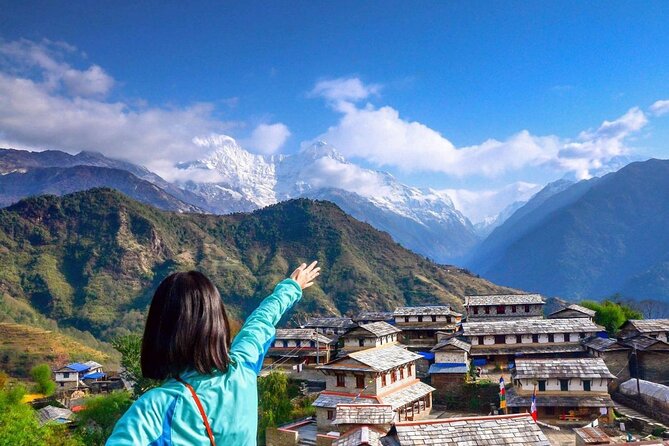
I love the private setup with a licensed guide and porter, plus the way guides like Kumar and Sukman are praised for matching their pace to your level. I also like the route through places such as Ghandruk and Chomrong, where Gurung culture shows up in daily life and the views land close and clear, especially toward Annapurna South and Machhapuchare.
One drawback to plan for is that this trek depends on good weather, and that can affect flights and what you see along the way.
Key takeaways before you go
- Modi River valley trekking keeps your trail feeling connected to the landscape, with bridges, gorges, and constant movement.
- Gurung villages, stone steps, and local museums mean your days are not only about walking, but also about people and culture.
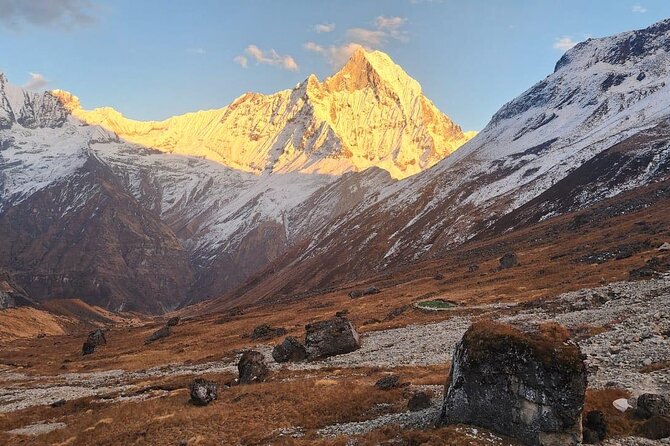
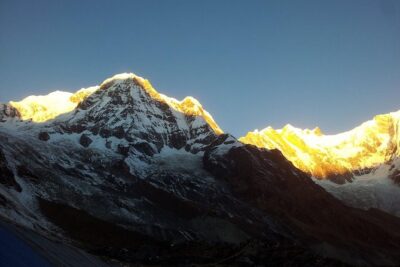
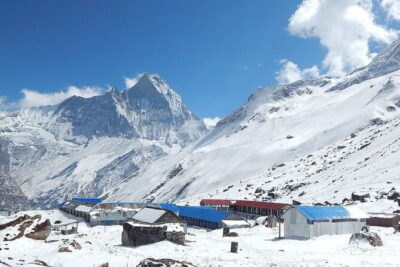
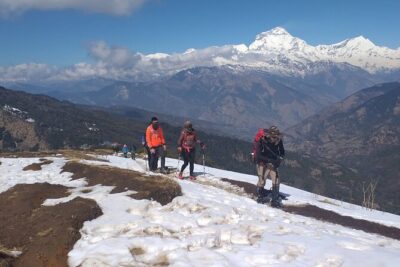
- Annapurna Base Camp and the Sanctuary approach builds in changing vegetation, then rewards you with the Annapurna glacier and a ring of white peaks.
- Forest lodge nights like Bamboo and Himalaya Hotel help break up effort, with real downtime between long days.
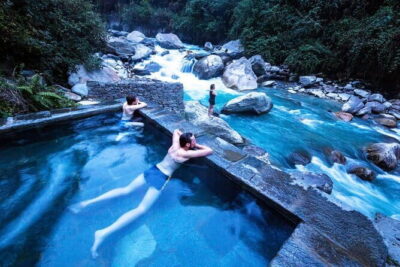
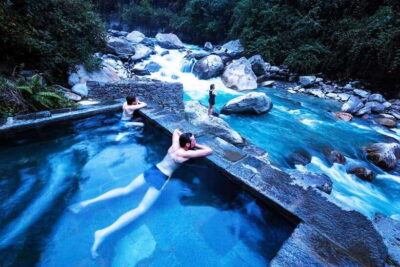
- Hot springs at Jhinu Danda are a great recovery target after ridge and forest descents.
- Dhampus views before you leave give you a final big panorama on the way down to Pokhara.
What makes this Annapurna Base Camp trek feel special
This trek has a good “story arc.” Day one is about getting you into the valley. Days two and three bring you into classic Gurung territory. Days four and five are the transition from settlement trails into forest and Sanctuary walking. Then days six through nine focus on descent, recovery, and viewpoints that pop right before you head back to the cities.
What I like most is how the route keeps giving you something besides just uphill. You walk along the Modi River through different-looking sections of the gorge, then you hit villages where you can actually see how people live, not just pass through. That mix makes the trek feel more grounded.
Also, it’s a true private trip. You are not stuck waiting for a big group. With a licensed guide and a porter system (set up as two clients to one porter), it’s much easier to keep the whole day feeling comfortable, even when the trail gets steep for a short stretch.
More routes into the Annapurna Sanctuary:
- Annapurna base camp trek 5 Days
★ 5.0 · 252 reviews - 14-Day Private Annapurna Base Camp Trek
★ 5.0 · 180 reviews - Annapurna Base Camp Trekking
★ 5.0 · 116 reviews
Price and logistics, what $1,100 buys you (and what it doesn’t)
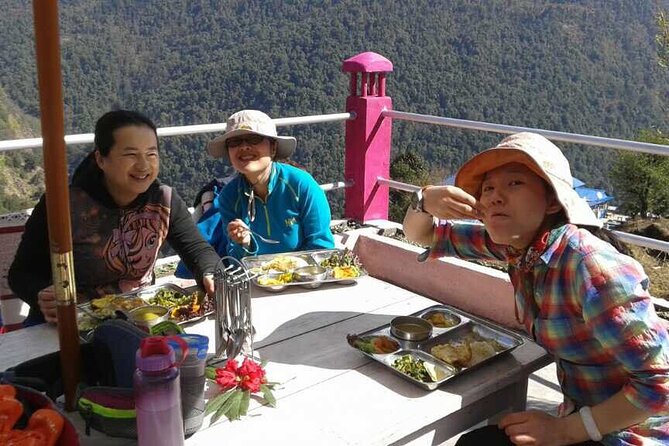
The price is $1,100 per person for about 10 days, and the value comes from what is included rather than what is left out. In your package, you get a guide plus a porter, and your trekking meals are covered (breakfast, lunch, and dinner). You also get trekking permits and a TIMS card, plus trekking accommodation along the route. On top of that, there are private-transport nights in the Pokhara area, including two nights in Pokhara and transport connected with Nayapul and Phedi.
You should budget for the items that are not listed as included. Drinks, personal snacks and grocery items, and tips are your responsibility. If you need an extra night in Kathmandu, it’s listed as an additional $40 USD per night.
Transportation is also part of the overall plan, but it’s not identical for everyone. You either take a scenic flight back to Kathmandu or use a tourist bus option, depending on the situation on the last day.
For me, the best way to judge this price is simple: you are paying for organization, permits, meals, and the people who keep your days running on time. If you can use that support well, the package makes a lot of sense.
Kathmandu to Pokhara by road, then into the mountains
Day 1 is a long, scenic drive from Kathmandu to Pokhara, about six hours. The route is designed for views as you pass local villages, the Trisuli River, and the Marsyangdi River, with hills and mountain sightings along the way.
This matters more than it sounds. Pokhara is where your trek starts to feel real. After the drive, you are not jumping straight onto a steep trail without context, and you get time to settle, sort gear, and mentally switch from city pace to mountain pace.
The Modi River start: Bhirethati, Syauli Bazaar, Kimche, and Ghandruk
On Day 2, you drive beyond Pokhara valley into the Annapurna region, then begin walking with a flatter start that follows the Modi River. The first part is described as easy and gentle, which is exactly what you want after a travel day.
You move toward Syauli Bazaar on the river route, then you hit stone-paved steps as the trail climbs up to Kimche. From there it’s another gentle uphill to Ghandruk, one of the most satisfying village stops on this route because the views are strong and the village is active.
Ghandruk also has cultural anchors. You can visit a Gurung local museum, see the ACAP headquarters area, and spend time with local people. The best part is that you are not just looking at buildings, you’re walking into a lived-in community, including the Gurung cultural identity that shapes the region.
What to watch for: even when one day starts easy, you still need to handle steps and short climbs. Wear shoes that feel stable on stone and plan to go slowly on the uphill sections.
More to compare around Kathmandu
- Everest Base Camp Trek – 14 Days
★ 5.0 · 1,499 reviews - Everest Base Camp Trek
★ 5.0 · 842 reviews - Private Kathmandu Sightseeing Tour | UNESCO World Heritage sites
★ 5.0 · 756 reviews - Kathmandu: 7 UNESCO Sites with Lunch
★ 4.8 · 744 reviews
Chomrong and the gateway feeling for Annapurna Sanctuary
Day 3 is a shorter-feeling day in time, but it still does the job of building your trek legs. You walk with some uphill toward Kyomrong and Chomro, then you descend toward the river before climbing again toward Gurjung village. After that, you gradually climb into Chomrong.
Chomrong is called the last permanent Gurung village and gateway to Annapurna Sanctuary and Base Camp trekking, and you feel that shift. The village setting is familiar in a human way, but the terrain around you gets steeper and more dramatic. It’s a perfect place to pause and take stock before the Sanctuary days begin.
A practical note: this is also where a lot of treks start to feel like a rhythm. If you push too fast early, you pay for it later. If you go steady now, you’ll enjoy Day 4 and Day 5 much more.
Forest to Bamboo, then Himalaya Hotel in the Modi gorge
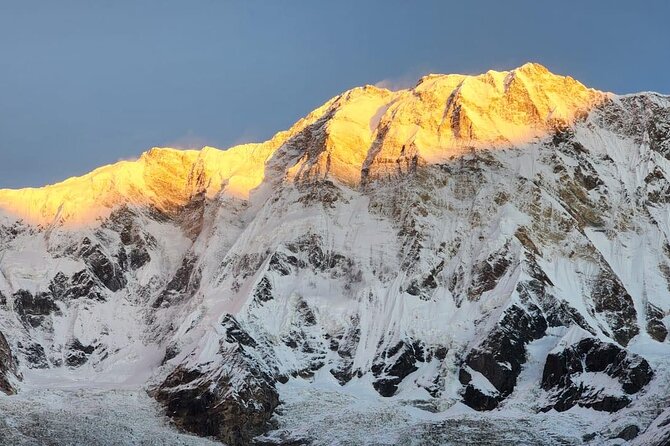
Day 4 transitions from village edges into dense forest. You start with a short downhill from Chomrong, cross a bridge, then climb up toward Sinuwa-Danda. After that, the route continues into dense forest, reaching Bamboo, a lodge area in the middle of bamboo, rhododendron, and oak forest.
Bamboo matters because it’s a recovery-friendly location. The trail still asks for effort, but the setting is calmer. You then walk on a gradual up trail for about an hour to Himalaya Hotel via Dovan, which is described as being situated in the middle of the forest Modi River gorge.
Why I like this day: it’s a clear change of scenery that helps break up the mental load. After a couple of village days, forest walking feels like a reset, even when your legs are tired.
Annapurna Sanctuary and Base Camp, the day the peaks show up close
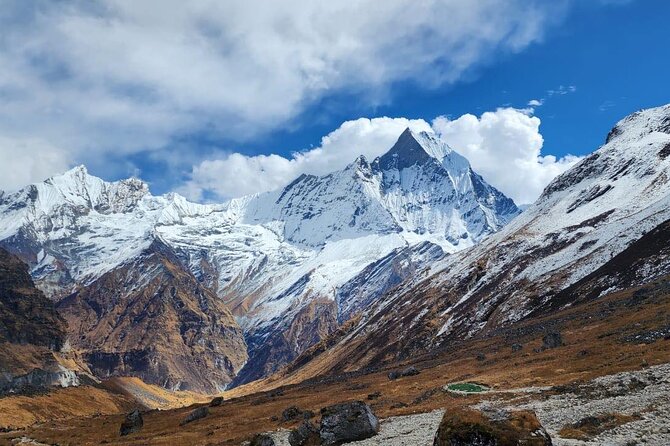
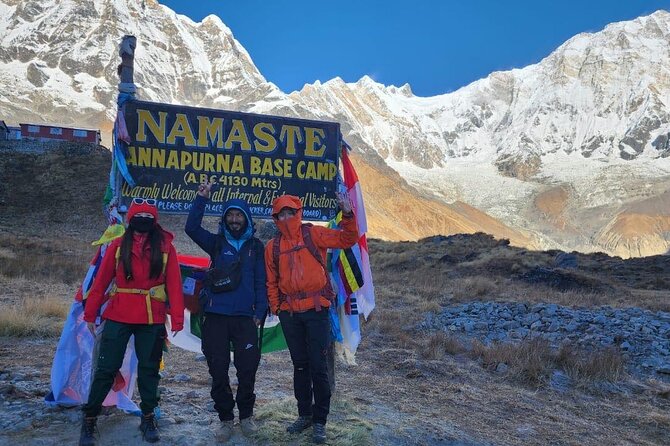
Day 5 is the big push toward the main destination. After a night at Himalaya Hotel, you walk higher where vegetation drops and you move into alpine bushes and shrubs. Then you follow the raging Modi River upstream, described as right up to its source at Base Camp.
As you approach Annapurna Base Camp, the Sanctuary framing starts to feel dramatic. The route is described as surrounding you with giant walls of Mt. Annapurna I and a ring of white peaks, including Annapurna III and other named summits in the region such as Annapurna South and Fishtail.
There’s also an important intermediate highlight. You pass through sections leading to Machhapuchare Base Camp, including a last steep climb to reach it. From there, the final walk brings you to Annapurna Base Camp.
What to expect: this is not only a sightseeing day. It’s the day your pace, footing, and breathing matter most. Your guide can help you keep a steady rhythm, and the porter setup helps reduce the load you carry yourself.
Downhill days that still feel active: Sinuwa to Bamboo
Day 6 is a long downhill walk back to lower areas. You descend toward Deurali, including passing Machhapuchare Base Camp again, then continue through a winding trail back into green forested sections until you reach Bamboo for the overnight stay.
Downhill days can trick you. Your heart rate might feel lower than on climbs, but your knees do real work, especially on rocky steps. Still, this day is valuable because you get time in the forest again and you are resetting for later climbs.
Ridge work and the hot spring payoff at Jhinu Danda
Day 7 starts with a short steep climb to Khuldi Ghar, then moves through dense forest on winding descents back toward Sinuwa-Danda. You descend further to Chomrong khola, cross a bridge, and climb uphill for less than an hour to Chomrong village for a short rest or lunch stop.
After Chomrong you tackle a short climb to the top of the ridge, then the trail drops into Jhinu-Danda. The best reward here is the nearby hot springs, described as about 20 minutes’ walk downhill near the Modi River.
This is one of those moments that makes you grateful you didn’t rush the whole trek. Hot springs give your legs a chance to loosen up, and it’s an easy way to turn an otherwise tiring travel day into something memorable and relaxing.
Landruk and Tolka, views toward Huinchuli and Annapurna South
Day 8 is described as a long descent all the way to the Modi River, with a suspension bridge crossing. Then you have a short climb to Landruk, followed by gentle winding walking to Tolka village.
Tolka is a good “in-between viewpoint.” The route notes views of Annapurna South and Huinchuli, so you get mountain context without needing to reach the highest points again.
What to watch for: long descents can be mentally dull if you rush. A steady, scenic approach keeps the day from feeling like punishment.
Deurali, Pothana, and Dhampus, your final panorama before Pokhara
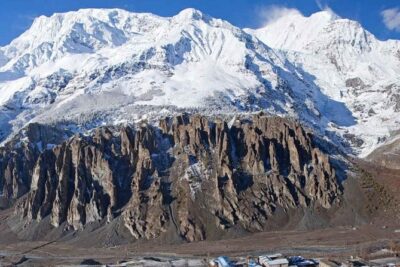
Day 9 sets up your last day of walking with a gradual trail out of Tolka, plus short ups and downs. You pass places like Bheda Kharka, then climb into cool forest to Deurali for grand views of Dhaulagiri, Annapurna South, Huinchuli, and Machhapuchare, and a view back toward Ghandruk.
From Deurali you descend through forest to Pothana village. The final portion heads downhill toward Dhampus, and that’s where you get an excellent panorama of Annapurna-Manaslu-Lamjung with Machhapuchare.
Dhampus to Phedi is downhill again, then a short drive of about half an hour brings you back to Pokhara. The day is tiring, but the end is satisfying because your views keep coming until the moment you stop walking.
Back to Kathmandu by flight or bus
Day 10 is your exit day. You either take a scenic flight back to Kathmandu or a tourist bus in the morning, arriving in the afternoon. Once you’re back, there’s time for final shopping and to relax in the evening.
This is a nice touch of convenience. Trekking days can mess with your schedule, but having a direct return plan keeps the trip from turning into an extra travel project.
Guides and porters: why people keep praising Kumar, Sukman, and the team
The guides and organization are the standout repeated theme from the feedback you shared. Several names show up again and again, especially Kumar and Sukman, with consistent praise for being responsible, helpful, funny in a good way, and able to adapt to different walking levels.
That adaptation is not a small detail. A private trek can still feel brutal if your guide expects a faster pace than your body wants. When your guide adjusts to your ability, the trek feels like you are participating, not suffering.
You also get support from a porter, and the structure described as two clients per porter helps keep the workload manageable. Less weight on your back means you can focus more on footing and pace, which is exactly what you want on forest slopes and rocky step sections.
Overall, this is the kind of trip where good guiding changes the whole experience, especially on the steep and longer days.
How to pace yourself on this specific route
This trek is built around a realistic rhythm: easy or gentle starts, then short climbs and steps, then forest stretches that keep you moving. Your best strategy is to treat the steep segments as short efforts, not a sign that you should rush.
Here are practical pacing ideas that fit the route you’re walking:
- Go slow on stone steps and short steep climbs, especially in the Ghandruk approach.
- Take your breaks at natural points, like near villages and lodge areas, rather than stopping randomly.
- Expect downhill to be its own workout. Even when you descend all day, your legs still need care.
If you are moderately fit, the trek should work well for you. If you are an absolute beginner, you may find certain days challenging, but a good guide can help you manage time and effort.
Who this private trek is for
This is a strong choice if you want:
- Private guiding and personal pacing support
- A route that mixes culture and nature, not just views
- A classic Annapurna Base Camp approach that includes Gurung villages, forest lodge nights, and a Sanctuary day
It is also a good fit if you like river valleys. The Modi River corridor is a recurring element, and it gives the trek a sense of continuity.
If you dislike long days on foot or you cannot handle steep steps and ridges, you might want a shorter or less demanding alternative. This trek includes multiple uphill moments and at least one last steep push toward key checkpoints.
Should you book this 10-day private Annapurna Base Camp trek?
I’d tell you to book if you want a well-organized private trek where the route hits the highlights, and the guiding support is a priority. The price makes sense because meals, permits, trekking accommodation, and guide and porter help are baked in, and that takes a lot of guesswork out of the experience.
I would pause before booking if weather uncertainty would stress you out. This is the type of trek where conditions matter, and your schedule can shift. Also, if you are new to multi-day trekking, take the moderate fitness guidance seriously and ask your guide how they plan to pace the steep parts.
If you book, you’re likely to walk away feeling you got both the mountain and the human side of the region, from Gurung village mornings to the hot springs recovery and the final panorama at Dhampus.
FAQ
How long is the trek and when does it end?
The trek is listed as approximately 10 days. It starts in Kathmandu at the View Nepal Treks & Expedition meeting point in Thamel Marg 24, and it ends back at that same meeting point.
Is this a private tour?
Yes. It is described as a private tour or activity, so only your group participates.
What is included in the price?
The included items are a licensed guide and porter, trekking breakfast, lunch, and dinner, accommodation during the trek, and two nights in Pokhara. Permits and a TIMS card are also included, and transport related to Pokhara, Nayapul, and Phedi is included by private transport. Guide, food, salary, transport, and insurance are listed as included too.
What transport do I get to and from Pokhara?
You drive from Kathmandu to Pokhara on Day 1. On the final day, you return to Kathmandu either by scenic flight or by tourist bus in the morning, and you arrive in the afternoon. The trek also includes private transport connected with Pokhara, Nayapul, and Phedi.
Do I need trekking permits and a TIMS card?
Yes. The package includes trekking permit and TIMS card.
What about Kathmandu nights?
If you need accommodation in Kathmandu, it costs $40 USD extra per night. The basic package includes certain nights around Pokhara and the trek itself, but Kathmandu add-on nights are not included.
What fitness level do I need?
You should have a moderate physical fitness level.
What happens if the weather is bad?
The experience requires good weather. If it is canceled due to poor weather, you are offered a different date or a full refund.
Is cancellation free?
Yes, free cancellation is listed. You can cancel up to 24 hours in advance for a full refund, and changes within 24 hours of the start are not accepted.
Latest Kathmandu write-ups
- Langtang Valley Trek★ 5.0 · 3 reviews
- Khopra Danda Trek★ 5.0 · 3 reviews
- Langtang Valley Trek from Kathmandu★ 5.0 · 3 reviews
- 5 night / 6 days Kathmandu Nagarkot Chitwan Pokhara tour★ 5.0 · 3 reviews
- Nepal Highlights Tour: 5 Nights 6 Days Kathmandu & Pokhara Tour★ 5.0 · 3 reviews
- Kathmandu Valley Private Day Tour★ 5.0 · 3 reviews
- Conquer the Himalayas: The Ultimate 16-Day Annapurna Circuit Trek★ 3.5 · 3 reviews
- Kathmandu Heritage Day Tour★ 5.0 · 3 reviews
Annapurna Base Camp Trek, compared.
Browse the lists this tour appears in