
Reviewed · ANNAPURNA BASE CAMP TREK
Annapurna Base Camp Trek
Annapurna Base Camp is interesting because you end up standing at the foot of Annapurna Base Camp while the route feeds you big mountain moments on the way, including the famous Poon Hill sunrise setup. It is one of those trips where the hiking is the story, but the scenery is what keeps you moving.
I love two things here. First, the trek is built around classic viewpoints, from Poon Hill sunrise to the climb up through Machhapuchhre area viewpoints before you push to Base Camp. Second, the support setup is practical, with a small group (max 10) and a porter system of 1 porter for 2 trekkers, plus guide support like people named Niren, Gobinda Subedi, and Nawin, with porters such as Keshab mentioned for their help.
One consideration: this is not a casual walk. You need strong physical fitness for long days with early starts, and you are relying on good weather for safe, smooth trekking.
Key things to know before you go
- Small group size (max 10) keeps the trip feeling manageable on busy trek days.
- Poon Hill sunrise includes a pre-dawn start, then about an hour uphill from Ghorepani.
- Machhapuchhre base camp day is a major highlight, with views listed for many nearby peaks.
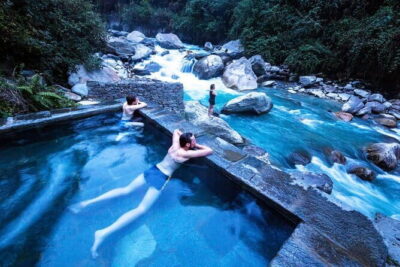
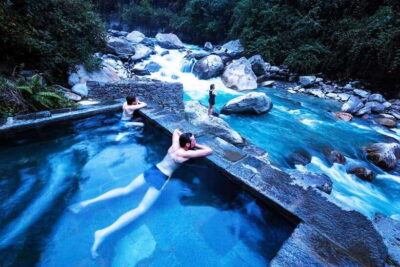
- Jhinu Danda hot spring is your recovery reward after downhill trail days.
- Tea house meals are planned on most trek days, and meals in Kathmandu are not included.
- Gear is partly handled with a provided down jacket and sleeping bag you return after the trek.
Entering Kathmandu at Thamel Park and Temple Time
Your trip starts in Kathmandu, with an airport greeting and a transfer to your hotel in Thamel. After a briefing, you get time to roam. If you want an easy win on Day 1, walk toward Ason, one of Nepal’s older markets, and grab a simple dinner close to your hotel.
Day 2 is classic Kathmandu sightseeing, and it matters because it helps you understand the place before you disappear into the mountains. You’ll visit Swayambhunath (Monkey Temple), Pashupatinath crematory area, Boudhanath Buddhist monastery, and Kathmandu Durbar Square. You should expect a mix of stairs, crowds in popular spots, and plenty of photo angles if you like people watching as much as scenery.
If you hate wasting time, use Day 2 for pacing. You will be up early the next morning, and Kathmandu walking on old stone steps is good training without being too intense.
More routes into the Annapurna Sanctuary:
- Annapurna base camp trek 5 Days
★ 5.0 · 252 reviews - 14-Day Private Annapurna Base Camp Trek
★ 5.0 · 180 reviews - Annapurna Base Camp Trekking
★ 5.0 · 116 reviews
Pokhara Transfer Options: Bus, Private Vehicle, or a 30-Min Flight
On Day 3 you head toward Pokhara, which is the practical launchpad for the trek. The standard plan is a bus leaving early at 7:00 am from the Tourist Bus Station, with a lunch stop along the way. The overland ride is long, but it gives you a Nepal road view as you pass settlements along the Trishuli River.
If you want to skip the long, bumpy road, you can choose a flight option that takes around 30 minutes to Pokhara. If you prefer comfort and control, the itinerary also allows a private vehicle transfer on request.
For me, this is where you should match the transfer to your trekking style. If you’re nervous about early starts, the flight can reduce fatigue and help you start the trail feeling fresher. If you enjoy road travel and want to see Nepal changing as you go, the bus day can feel like part of the adventure.
From Nayapul to Ulleri: Easy Steps That Set the Tone
Day 4 begins with an early breakfast and a short drive from Pokhara to Nayapul. From there, your trekking starts on what’s described as an easy trail with stone paved steps through small villages. This is exactly what I want on Day 1 of a trek, because your legs wake up gradually and you get your breathing under control.
Just below Ulleri, you get your first real glimpses of Annapurna South and Himchuli. That moment is more important than it sounds. Even if you are not feeling strong yet, the promise of named peaks is the kind of motivation that turns a steady walk into a goal.
Practical tip: start slowly. Stone steps feel friendly early, but your knees can get irritated if you power uphill too hard on the first trekking day.
Rhododendron Forest to Ghorepani: The Day Views Steal Your Focus
Day 5 is a tougher day, but it is also one of the most “Nepal” feeling parts of the trek. You hike through a dense rhododendron forest, and if you’re trekking in spring, the rhododendron blooms are described as adding seven colors. You’ll pass through Ghorepani, where the mountain views are described as perfect and refreshing.
Then you do a very trekking thing: you stop for tea and let the view catch up with you. This is one reason I like routes like this. They build in small moments where you can recover, sip something warm, and reset your pace before the next climb.
If you’re the type who gets mentally tired, use this day to practice patience. The trail can feel like it takes forever until you look up, then it all makes sense.
More to compare around Kathmandu
- Everest Base Camp Trek – 14 Days
★ 5.0 · 1,499 reviews - Everest Base Camp Trek
★ 5.0 · 842 reviews - Private Kathmandu Sightseeing Tour | UNESCO World Heritage sites
★ 5.0 · 756 reviews - Kathmandu: 7 UNESCO Sites with Lunch
★ 4.8 · 744 reviews
Poon Hill Sunrise to Tadapani: Torchlight Work Pays Back Fast
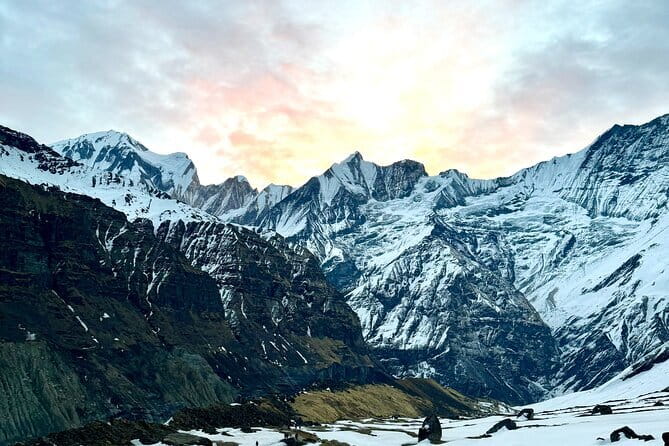
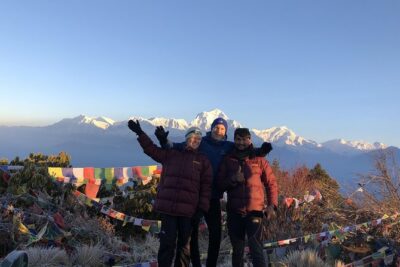
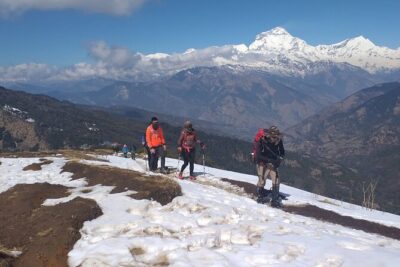
Day 6 is the best kind of early-morning effort. You wake up, take torch light, and hike up to Poon Hill, which takes about an hour from Ghorepani. The payoff is a sunrise view across the Dhaulagiri and Annapurna Himalayan ranges.
After you enjoy the sunrise, you head back down to Ghorepani for breakfast, then trek onward toward Tadapani. The hike continues with mountain views as your “background soundtrack,” which helps keep the day from feeling like a long slog after sunrise excitement.
A small reality check: torchlight starts can feel intense. Bring a headlamp if you have one, and do not go out too fast just to beat your fear of the dark. The goal is steady, not heroic.
Kimrong to Chhmommorng, then Bamboo and Ghandruk Views
Day 7 keeps your body working. The trail up to Kimrong is ascending, then you trek gently to Chhmommorng, a small Gurung village. Village stops are useful because they break the trail into sections, and they help you understand what kind of life the mountains support.
Day 8 shifts into an easier trekking day. You pass Sinuwa (2360m.) with wonderful views of Annapurna and you also get views of Ghandruk village. Bamboo is where you head for the day, and bamboo stops often matter because they give you a predictable place to settle, eat, and sleep.
If you like cultural context, these days are where it shows. You are not just walking through scenery, you are walking through communities that have adapted to mountain travel.
Stone Stair Realities to Deurali: Dobhan, Himalaya, Hinku Cave
Day 9 is described as a long, steep stone staircase day, and it helps to go into it mentally prepared. You start with an early breakfast, then trek up to Dobhan (2600m.). After that you continue to Himalaya (2920m.), pass the Hinku Cave, and reach Deurali.
This is the kind of day where altitude can start to play with you, not because you are doing the highest peak on earth, but because the effort is consistent. Keep your pace controlled and breathe like you mean it. Drink water even when you feel fine, because later you’ll thank yourself.
Machhapuchhre Base Camp and Annapurna Base Camp: The Route Tightens
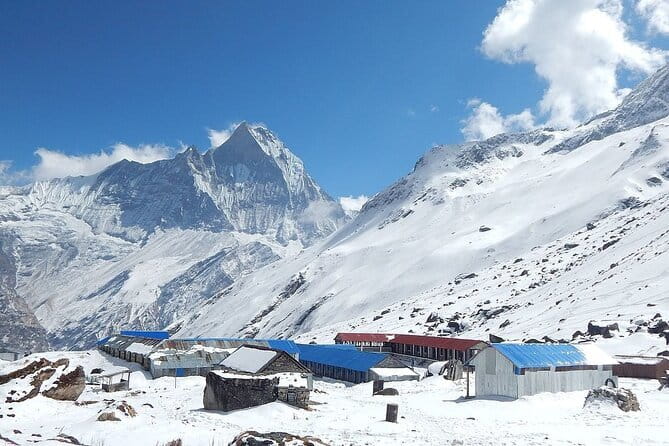
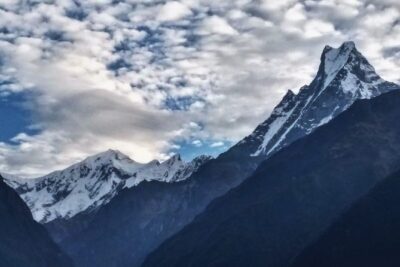
Day 10 is where the trek turns from “good hike” into “big mountain day.” You climb up to Machhapuchhre base camp, which the itinerary describes as offering stunning views of Machhapuchhre along with Mt. Hiunchuli, Annapurna South, Annapurna I, Annapurna III, Gandharvachuli, and Gangapurna.
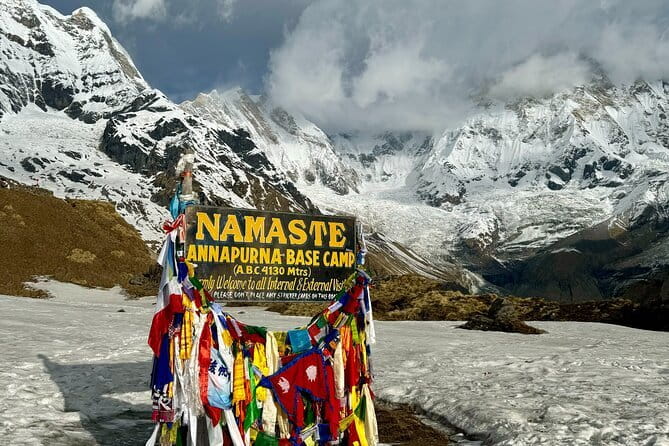
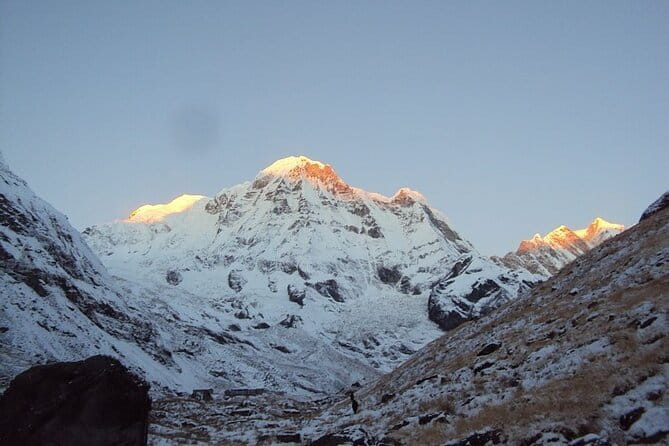
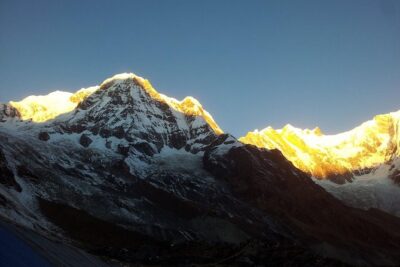
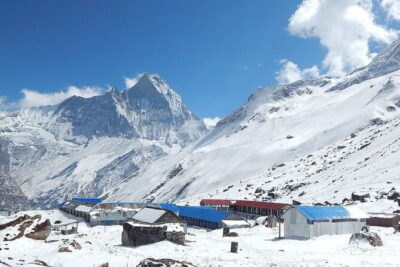
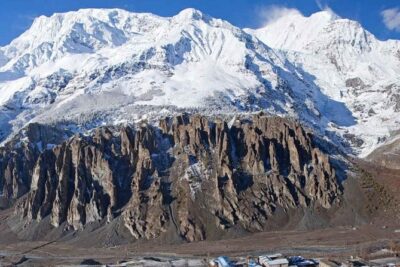
Then you push yourself up to Annapurna Base Camp itself. The views here include Annapurna South, Machhapuchhre, Annapurna I, Hiunchuli, and other peaks. Even if you are not a hardcore peak counter, seeing how many names sit in one panorama helps you understand why this trek is so famous.
This is also a day to respect the weather. Mountain fog or wind can make the “famous views” plan feel less cinematic, but it does not mean the effort was wasted. You’re still doing the same journey to the same destination, just with changing light.
Downhill to Bamboo, then Jhinu Danda: Recovery Is Part of the Achievement
Day 11 is described as long yet easy, with most of the trail downhill as you trek to Bamboo. That is not a “rest day,” but it is easier on your breathing and can help you recover your legs from the earlier climbs. If you’ve been managing your pace well, this is where you start feeling the benefits of not racing.
Day 12 continues the rhythm: early breakfast, trekking to Khuldighar (2540m.), then downhill through Chhomorng to Jhinu Danda. Jhinu Danda is the natural hot spring area, and the plan includes time to take a dip in a hot water pond. For sore calves and tense feet, this is the kind of reward that feels unfair in the best way.
Day 13 is your final trekking day down to Nayapul, and then a drive back to Pokhara. There’s free time to walk around Pokhara on your own, which is great because you can finally stretch without thinking about the next climb.
Kathmandu Return: Buses, Lunch Stops, and Last-Minute Thamel Time
Day 14 sends you back to Kathmandu with a bus leaving early at 8:00 am from the Tourist Bus Station, including a lunch stop. Private vehicle and flight options back to Kathmandu are also available on request, and the flight is described as about 30 minutes.
Once you’re back in Kathmandu, you have time for last shopping in Thamel. This is the smart moment to pick up small souvenirs and snacks for your flight home, because the trek days leave less room for browsing.
Day 15 is straightforward, airport transfer to catch your returning flight, then the trip ends back at the meeting point.
What’s Included on the Trek, and What You’ll Pay for Yourself
This trek is planned with a lot of basics handled, which matters because your energy should go to walking. Included items include a down jacket and sleeping bag (to be returned after the trek), walking poles, a medical kit, entrance fees for sightseeing, and necessary paperwork and trekking permits.
You also get meals on the trek: breakfast is included 14 times, lunch 10 times, and dinner 9 times. Lunch and dinner in Kathmandu are not included, so plan for those city meals yourself.
Tea house stays are part of the experience, and the itinerary notes that personal expenses during tea house stays are on you. Also, travel and rescue insurance is not included, and tipping is not included. If you skip insurance, you’re making a risk decision, not a money decision.
On staffing: you’ll have a porter (1 porter for 2 trekkers). That is a big deal because it helps you avoid turning “the hike” into “the hike plus carrying everything.”
Price and Value for About $1,623
At $1,623 per person, the value comes from three areas: logistics, permits, and reducing your day-to-day friction. You get airport pickup and drop off in a private vehicle, planned city sightseeing with entrance fees, and trekking permits handled through paperwork. You also get key trek gear like the down jacket and sleeping bag and practical trekking tools like walking poles.
The price does not include international airfare, Nepalese visa fee, travel and rescue insurance, or Kathmandu lunches and dinners. So your true total cost depends on your travel home setup and what you choose to spend in Kathmandu and tea houses.
In plain terms: if you want less stress around paperwork and equipment, this package style is easier on your brain. If you already have trekking gear and prefer to arrange your own transport and permits, the cost comparison gets more complicated. But for most people, the bundled support is what makes the trek feel doable.
Who Should Choose Annapurna Base Camp, and Who Should Rethink
This trek is a good fit if you are comfortable with steady hiking and want a clear route that hits the major “Annapurna classics.” The itinerary repeatedly points to strong physical fitness as the requirement, and that matches how the days are described, especially the steep stair segments and the early-morning sunrise climb.
I think it also fits solo travelers or couples who want the structure of a group without feeling swallowed by crowds, since the group maximum is 10 travelers. If you like villages and viewpoint stops as much as endpoint bragging rights, the route gives you both.
Rethink it if early mornings and long travel days make you miserable. Day 3 includes early departure, Day 6 includes torchlight hiking, and Day 14 includes an early bus. Also, if you have tight flexibility on dates, keep in mind the experience requires good weather.
Should You Book? My Practical Take
If you want a high-impact trek without building the logistics yourself, this is a strong option. The route gives you meaningful checkpoints, Poon Hill sunrise, a Machhapuchhre viewpoint day, then the payoff at Annapurna Base Camp, followed by a very human recovery stop at Jhinu Danda hot springs.
Book it if you’re ready for physical work and early starts, and if you want a small-group setup with porter support and key gear provided. Think twice if you are hoping for a relaxed, flexible hike schedule, because weather and trekking rhythm are part of the deal.
FAQ
What is the meeting point and start time for this trek?
The meeting point is Hotel Thamel Park Pvt. Ltd., Chaksibari Marg 594-16, Kathmandu, Nepal. The start time listed is 6:15 am.
How long is the Annapurna Base Camp Trek?
The duration is listed as 15 days (approx.).
What sightseeing is included in Kathmandu before the trek?
Kathmandu sightseeing includes Swayambhunath (Monkey Temple), Pashupatinath, Boudhanath, and Kathmandu Durbar Square.
How do you get from Kathmandu to Pokhara?
You can take a bus that leaves at 7:00 am, travel by private vehicle on request, or fly (about 30 minutes).
How do you get from Pokhara to the start of the trek?
On trekking Day 4, you take a short drive to Nayapul from Pokhara, then begin trekking from Nayapul.
What trekking highlight happens early in the morning?
The early-morning highlight is the hike to Poon Hill for sunrise. It takes about one hour from Ghorepani, and you start with torch light.
Are meals included?
Yes. Breakfast is included 14 times, lunch 10 times, and dinner 9 times. Lunch and dinner in Kathmandu are not included.
What gear is included, and what do you need to return?
A down jacket and a sleeping bag are included, and both are to be returned after the trek.
Is there porter support?
Yes. A porter is included at a ratio of 1 porter for 2 trekkers.
If I cancel or the trek is affected by weather, what happens?
The experience is non-refundable and cannot be changed for any reason. If it is canceled due to poor weather, you will be offered a different date or a full refund.
Latest Kathmandu write-ups
- Langtang Valley Trek★ 5.0 · 3 reviews
- Khopra Danda Trek★ 5.0 · 3 reviews
- Langtang Valley Trek from Kathmandu★ 5.0 · 3 reviews
- 5 night / 6 days Kathmandu Nagarkot Chitwan Pokhara tour★ 5.0 · 3 reviews
- Nepal Highlights Tour: 5 Nights 6 Days Kathmandu & Pokhara Tour★ 5.0 · 3 reviews
- Kathmandu Valley Private Day Tour★ 5.0 · 3 reviews
- Conquer the Himalayas: The Ultimate 16-Day Annapurna Circuit Trek★ 3.5 · 3 reviews
- Kathmandu Heritage Day Tour★ 5.0 · 3 reviews
Annapurna Base Camp Trek, compared.
Browse the lists this tour appears in