
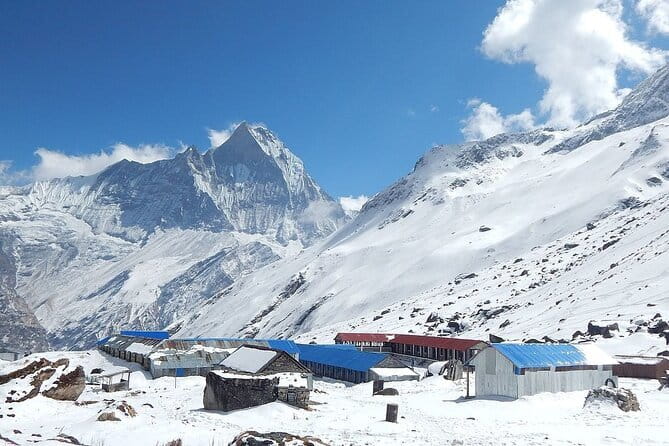
Reviewed · ANNAPURNA BASE CAMP TREK
Annapurna Base Camp Trek
Annapurna Base Camp draws people because it turns a long Himalayan walking route into one tight, unforgettable payoff of mountain views at the end. Add in the extra movie-scenes of an early Poon Hill sunrise and you get a trek with multiple “can’t believe this is real” moments, not just one.
I like this plan for two very practical reasons. First, the guide support is a big deal, and the team namechecks show up again and again, like Pradeep, Bikas, and Santosh, with other guides such as Birendra and Aashman mentioned too. Second, the trek is run with a focus on being taken care of day to day, including a gear check and a steady rhythm of meals, which matters when you are tired.
One consideration: this route is physical. You will face hard work like 3400 steps early on, plus long days of climbing and stone steps when you are already feeling the altitude and cold. The trip does note a need for moderate physical fitness, so if you have knee issues, plan to talk it through early, the way the guide team supports people who mention problems like knee pain.
Key things I’d pay attention to before you go
- Two sunrise moments: Poon Hill at dawn, then sunrise at/near Annapurna Base Camp.
- A structured Kathmandu start: major sites like Pashupatinath, Boudhanath, Swayambhunath, and Kathmandu Durbar Square, plus a trek briefing and equipment check.
- A real guide team, not a handoff: names like Pradeep, Bikas, Santosh, Birendra, Aashman, and Lal show up in the guide stories, with care for comfort and pacing.
- Stone steps are part of the deal: Tikhedhunga to Ulleri includes 3400 steps, and the return includes more step climbing and descending.
- Lodge trekking with included meals: breakfast 14 times, lunch 10 times, dinner 10 times, so you can focus on the trail.
Why Annapurna Base Camp hits hard, even if you hate hype
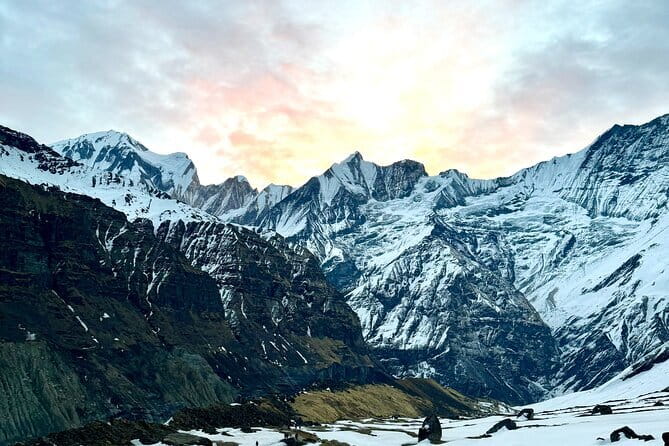
The Annapurna Base Camp trek works because it balances effort with payoff. You get days that move through forests, villages, waterfalls, and bridge crossings, then you finish with a setting where the Annapurna massif feels close enough to touch with your eyes.
This itinerary also gives you more than one headline moment. Poon Hill is built in for those early views over the Annapurna and Dhaulagiri ranges. Then the ABC day layers on even more peaks in the frame, including Annapurna South, Annapurna I, Annapurna III, Hiunchuli, and views toward Gandharvachuli and Gangapurna, with a stop at Machapuchare Base Camp (MBC) before reaching ABC.
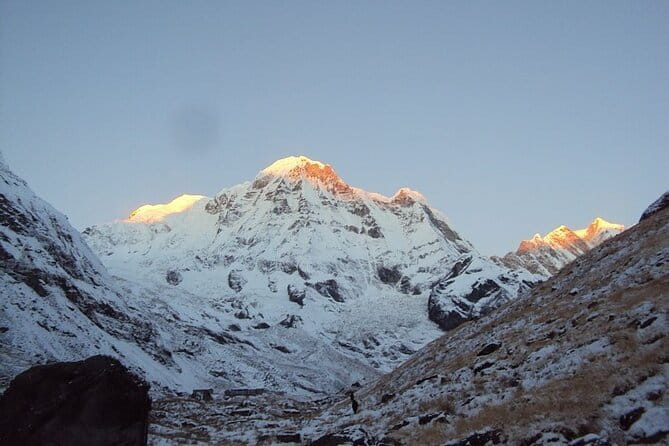
The best part for most people is that the trek ends with a true overnight at the base camp. One night at ABC changes the whole experience. You are not just rushing through for photos. You get time for sunrise views and that slow, quiet mountain feeling.
The 15-day rhythm: walking days, lodge nights, and where your energy goes
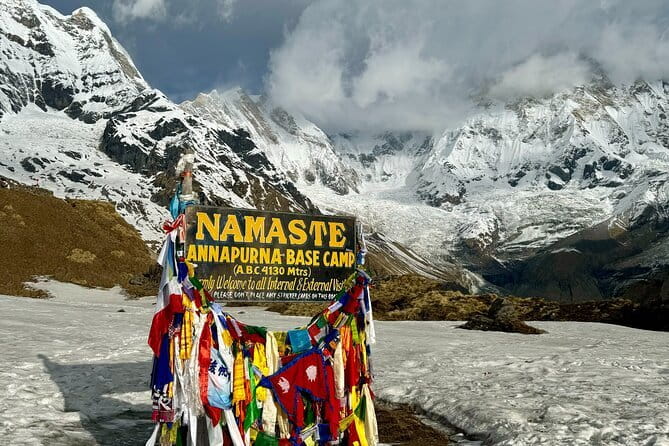
This is a 15-day trek (approx.) with Kathmandu and Pokhara before and after the walking portion. The daily trek style is “moderate to challenging” in practice, with long-ish hiking days and repeated ups and downs.
A few route clues matter for how you should pace yourself:
- Early days include big stair work, especially going toward Ulleri.
- Middle days swing between forest trekking and open viewpoints, often with some steep sections.
- The ABC approach is described as steady with rocky cliffs and occasional steep sections, then you descend for the return loop.
You’ll also notice that the itinerary uses lodge stops, meaning your day is built around arriving, eating, and resting. That is a value point. It reduces decision fatigue. You don’t have to map every meal stop or figure out where to sleep, especially when weather shifts or you are dealing with cold mornings.
Also, this is listed as private, meaning only your group participates. That usually helps with pacing and comfort, especially if someone needs a slower rhythm or extra encouragement.
More routes into the Annapurna Sanctuary:
- Annapurna base camp trek 5 Days
★ 5.0 · 252 reviews - 14-Day Private Annapurna Base Camp Trek
★ 5.0 · 180 reviews - Annapurna Base Camp Trekking
★ 5.0 · 116 reviews
Day 1 to Day 2 in Kathmandu: temple power plus the gear reality check
Kathmandu is not just a random layover here. It is where you reset and get your bearings before the trekking grind.
On Day 1, you get an airport pickup with a representative holding a sign with your name. From there it is private car transfer to your hotel, then a welcome dinner at a top cultural restaurant with traditional Nepalese food and a Nepali dance show. After a long travel day, it is a good way to have one organized evening, then sleep.
Day 2 is your temple and briefing day. You’ll visit:
- Pashupatinath Temple (world heritage site)
- Boudhanath (a famous Buddhist stupa)
- Swayambhunath (Monkey Temple)
- Kathmandu Durbar Square
Then comes the part that actually helps once you hit the trail: the trekking briefing, introduction to the trekking guide, and a check of your equipment. That equipment check matters because this trek is not a “rent boots and wing it” kind of hike. Even if you already have gear, you benefit from having someone point out gaps before you spend days in cold and wind.
If you like your travel start with meaning and structure, Kathmandu in this itinerary does that.
Day 3 to Pokhara: the long ride that saves your hiking legs later
Day 3 is a scenic drive from Kathmandu to Pokhara on a tourist bus. Expect about 7 to 8 hours of travel, with a lunch pause near Malekhu and Ghansikuwa. You arrive around 3 pm.
Why this day matters: Pokhara is the gateway to the Annapurna region. So you are physically closer to the trail area, and mentally you switch from city pace to “tomorrow we walk” pace.
Once you arrive, you stay near Fewa Lake, and you get time to explore local restaurants and cafes. This is one of those days where rest actually means something. You can eat early, sleep well, and start the trek with less stress.
Day 4 to Ulleri: the step-count day that tells you what you are in for
Day 4 marks the jump from sightseeing into trekking. You move from Nayapul to Tikhedhunga, crossing the Bhurungdi Khola River and passing through a valley forest.
Then the day adds a classic ABC challenge: 3400 steps plus boulders. The hike is described as a true endurance test. That is your early warning system. If you rush, your calves will remind you all week.
The reward is that you end the day in Ulleri, with an afternoon arrival and lodge sleep. In other words, this day sets the tone, but it also stops before you burn out completely.
If you have knee concerns, this is the time to speak up. The guide teams in the stories are shown adjusting plans when people struggle, including mentions of knee pain and flexible changes when conditions like snow show up.
More to compare around Kathmandu
- Everest Base Camp Trek – 14 Days
★ 5.0 · 1,499 reviews - Everest Base Camp Trek
★ 5.0 · 842 reviews - Private Kathmandu Sightseeing Tour | UNESCO World Heritage sites
★ 5.0 · 756 reviews - Kathmandu: 7 UNESCO Sites with Lunch
★ 4.8 · 744 reviews
Poon Hill at dawn, then rhododendron forest days: why the middle of the trek feels magical
Days 5 and 6 are the trekking “wow” sequence, and it is not just about views.
Day 5 starts with breakfast, then an ascent to Ghorepani. Along the way, you catch glimpses of Mt. Annapurna South. The route weaves past waterfalls and small villages, then reaches Ghorepani, and continues to upper Ghorepani for panoramic mountain views including Mt. Annapurna South and Nilgiri.
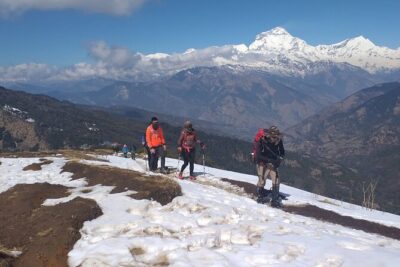
Day 6 ups the wow factor with an even earlier start. You go up to Poon Hill at dawn for sunrise over the Annapurna and Dhaulagiri ranges. The itinerary even mentions hot coffee while you watch. After breakfast back in Ghorepani, you descend and trek through rhododendron forests and cascading waterfalls to Tadapani.
This is where the trek becomes less about suffering and more about sensing the place. Rhododendron forests in season bring color and scent, and the waterfall rhythm breaks up the “long uphill slog” feeling.
Chhomrong to Bamboo: rhododendrons, terraces, and the suspension bridge moment
Day 7 takes you through vast rhododendron forest, then you break out into terraced fields. You climb about 5 km uphill, passing waterfalls and reaching a suspension bridge. It is a very common Nepal trek scene, but in the Annapurna region it tends to land well because the views start to open up as you get deeper into the route.
You end in Chhomrong, a village tucked below Mt. Annapurna. Staying in Chhomrong is useful because it places you near one of the key “turn-the-corner” zones on this trail.
Day 8 is a descent from Chhomrong with numerous stone steps to Chhomrong Khola River, then a swinging bridge crossing. After that, you climb to Sinuwa through forest paths and Kuldihar, then it gently descends to Bamboo for the night.
This section matters because you start feeling the pattern: the trek is not one long climb. It is a repeated cycle of descend, cross, climb, and arrive.
Deurali and the Himalaya Hotel area: when cold and sun fights for control
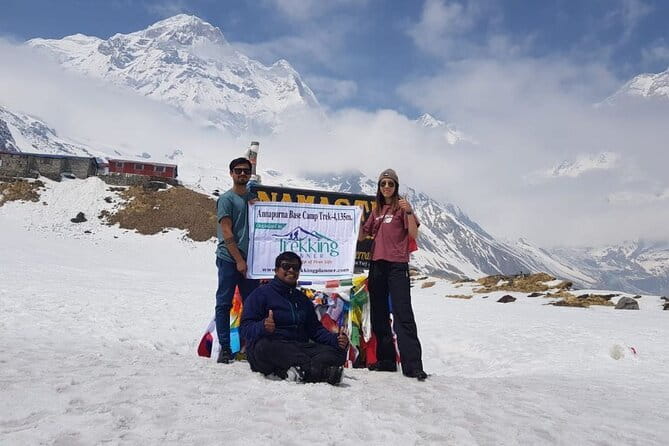
Day 9 moves through a chilly bamboo forest, then includes a steep ascent toward Himalaya Hotel. After the forest opens up, you get sunlight and views, including a glacial river below.
Then the description shifts from lush greenery to drier forest and drier climbs as you head toward Hinku Cave. From there, you descend to a river and ascend to Deurali, with views of nearby mountains and Mt. Dhaulagiri.
The key detail for your expectations: this day is where the trek starts to feel colder and more serious. The itinerary calls out chilly conditions and changing vegetation, which usually means your layers and pace need to be sensible.
The good news is that you finish in Deurali, with lodge sleep. That sets you up for the big ABC day without forcing you into an all-night push.
The ABC day: Machapuchare Base Camp first, then sleeping at the base camp
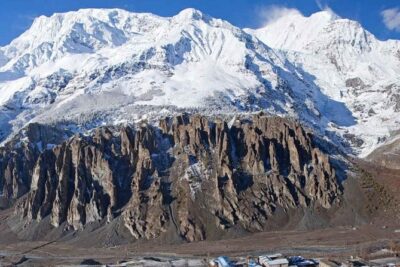
Day 10 is the centerpiece. You ascend steadily along the valley trail, navigating rocky cliffs and occasional steep sections. The route includes stretches on flatter ground, then more climbing again.
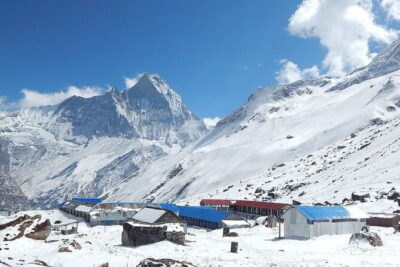
Then you reach Machapuchare Base Camp (MBC). From MBC, you get breathtaking views of multiple peaks: Mt. Hiunchuli, Annapurna South, Annapurna I, Annapurna III, Gandharvachuli, and Gangapurna.
After that, you walk to Annapurna Base Camp itself. The itinerary describes ABC as a lifetime experience, and it emphasizes that the only access is through the gorge you just traversed. That matters because it explains why the area feels enclosed and special when you arrive. It is not just open trail walking. You approach a place that feels like a destination in itself.
You spend the night at ABC on Day 10. That sets up the best “watch the mountain change” moment.
Day 11 is an early rise again, this time for a sunrise that the itinerary calls the pinnacle of the ABC journey. After breakfast, you descend to MBC, then continue down through Deurali and Himalayan Hotel, and finally to Doban for the night. The day is described as a relatively easy downhill trek.
That downhill is a gift. Even if your legs are tired, the motion is gentler than climbing.
The return loop: Jhinu Danda for a calmer end to a hard month
The return path is still active, but it is designed to bring you back through recognizable places.
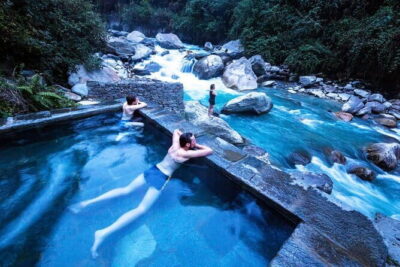
Day 12 starts with breakfast, then you retrace steps back to Chhomrong for lunch. After negotiating those challenging stone steps again, you continue on a descent to Jhinu Danda for overnight.
The itinerary describes farmland and rainforest along the way, which usually makes the final hiking days feel more relaxed than the higher, colder segments.
Day 13 is the full “finish the trek” day. You leave Jhinu Danda in the morning, hike toward Nayapul, and enjoy lunch along the route. Once you reach Nayapul, it is a drive back to Pokhara. This is where you get celebration built into the schedule. You spend the night in Pokhara.
Then Day 14 brings you back to Kathmandu. You can take a flight or drive back. Once in Kathmandu, you have a free day to explore or do souvenir shopping, plus a farewell dinner planned for sharing trekking stories. This is a nice touch because it gives closure, not just transport.
Day 15 finishes with airport departure, with a representative meeting you about three hours before your flight.
Price and value: what $995 buys you, and what it does not
The price is $995. On paper, that is not cheap. In practice, this package looks designed to protect you from decision stress and to handle the big moving parts.
Included in the package:
- All fees and taxes
- Required permits and entrance fees as per the itinerary
- Breakfast (14), lunch (10), and dinner (10)
- Guided trekking structure with meals built in
- Pickup offered, plus hotel transfers (airport sign meet-up in Kathmandu, and transport between Pokhara and Kathmandu)
Not included:
- Travel insurance
- Tipping
- Bars and beverage bills
- Personal nature expenses
- Anything not mentioned in the program
Here is how I think about value for a trek like this. If you pay for a guided itinerary, you should expect more than just walking advice. You want someone to manage the flow, handle permits, keep logistics moving, and provide real support when bodies feel off. The guide names and stories you have here lean into that, especially around comfort, information, and flexible changes.
Also, private tour plus group discounts can change the math. If you have a small group that wants a tailored pace, the cost can feel more reasonable.
Who this trek is best for, and who should think twice
This is a good fit if you want:
- A classic Annapurna Base Camp route with lodge nights
- A structured pre-trek start in Kathmandu with a clear briefing
- A sunrise focus (Poon Hill and ABC)
- A guided experience that emphasizes care and pacing
It is also explicitly aimed at people with moderate physical fitness. If you are new to trekking, or if your knee history is shaky, you can still potentially do it, but you should plan for slower sections and tell your guide early. The stories in the provided info include knee pain support and plan adjustments when people cannot keep the original pace.
If you hate long days, lots of stairs, and cold starts, you might feel drained. This is not a casual nature walk.
Should you book Annapurna Base Camp with Mission Himalaya Trekking?
If you want a guided ABC trek that comes with real organization, included permits, and meals that keep you fueled, I’d say it is a smart choice. The itinerary is built around sunrise moments, solid trekking structure, and a guide team that is repeatedly described as attentive, including support for issues like knee pain and flexibility for kids when conditions change.
If you are very sensitive to physical strain, or you are planning with zero trekking stamina, I’d be cautious. The route includes intense step sections like 3400 steps and repeated stone steps on both ways.
My quick advice: if you can handle moderate to challenging hiking and you value a calm, handled logistics experience, book it. If your plan depends on everything being easy and smooth, you might want a gentler trek first and come back for ABC when you are ready for the full stair-heavy reality.
FAQ
How long is the Annapurna Base Camp trek?
The duration is 15 days (approx.).
What does the tour cost?
The price is $995.00 per person.
Where does the experience start?
It starts in Kathmandu, Nepal, with airport pickup and a transfer to your hotel.
Do you include pickup or transfers?
Yes. Pickup is offered, and the itinerary includes airport and hotel transportation in Kathmandu and other transfers between Kathmandu and Pokhara.
Are meals included?
Yes. Breakfast is included 14 times, lunch is included 10 times, and dinner is included 10 times.
Are permits and entrance fees included?
Yes. All fees and taxes are included, along with required permits and entrance fees as per the itinerary.
Is travel insurance included?
No. Travel insurance is not included.
What about tipping?
Tipping is not included.
What is the cancellation policy?
You can cancel up to 3 days in advance for a full refund. If you cancel less than 3 full days before the experience start time, the amount paid is not refunded.
Is this tour private or shared?
It is a private tour/activity, and only your group will participate. Service animals are allowed.
Latest Kathmandu write-ups
- Langtang Valley Trek★ 5.0 · 3 reviews
- Khopra Danda Trek★ 5.0 · 3 reviews
- Langtang Valley Trek from Kathmandu★ 5.0 · 3 reviews
- 5 night / 6 days Kathmandu Nagarkot Chitwan Pokhara tour★ 5.0 · 3 reviews
- Nepal Highlights Tour: 5 Nights 6 Days Kathmandu & Pokhara Tour★ 5.0 · 3 reviews
- Kathmandu Valley Private Day Tour★ 5.0 · 3 reviews
- Conquer the Himalayas: The Ultimate 16-Day Annapurna Circuit Trek★ 3.5 · 3 reviews
- Kathmandu Heritage Day Tour★ 5.0 · 3 reviews
Annapurna Base Camp Trek, compared.
Browse the lists this tour appears in