
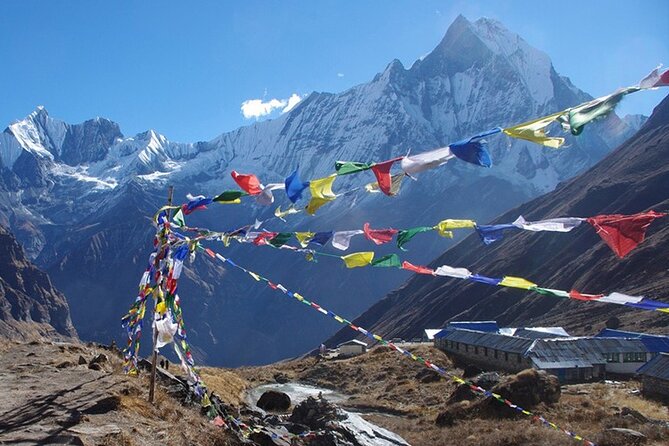
Reviewed · ANNAPURNA BASE CAMP TREK
Annapurna Base Camp Trek -13 Days
A 13-day Annapurna Base Camp trek sounds like a big mountain mission, but this one is interesting because it’s built to feel structured from day one. You get two 3-star hotel nights in Kathmandu and Pokhara with breakfasts, then you’re sent onto the trail with the heavy logistics handled. That means you can spend your time on the trail and the views, not figuring out paperwork.
Two things I really like about this package are that TIMS and ACAP permits are included and trek meals are covered. You’ll also hike with an experienced guide, plus a porter system designed for real-life packing needs. The main consideration: once you’re on the trek, it’s tea house living, so expect basic rooms and some tough stair sections, not resort comfort.
One more reason this feels “worth it” on paper is that the company’s team shows up in consistent patterns, including owner Bhagwat Simkhada’s responsiveness and guides such as Prakash Adhikari or Bharat Simkada, with porters like Perlad and Surman showing up in past trekking groups. If you want a smoother, lower-stress start and someone watching details along the way, that’s the vibe you’re booking.
Key highlights worth your attention
- Private trekking with guide and porters, including 1 porter for every 2 clients
- Poon Hill sunrise included early morning at about 3,210 m
- Annapurna Base Camp day with breakfast and then descent to Bamboo
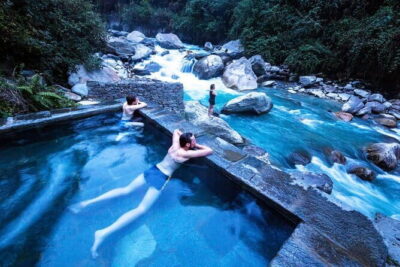
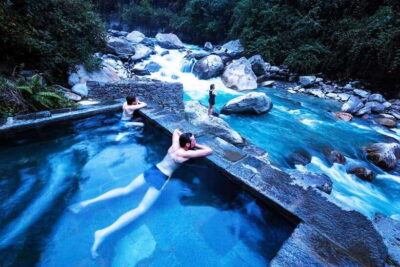
- Hot spring stop near the Modi Khola after a steep descent
- Permits handled via TIMS and ACAP paperwork
- Kathmandu and Pokhara comfort nights with breakfast before and after trekking
Kathmandu to Pokhara: the comfort before the climbing starts
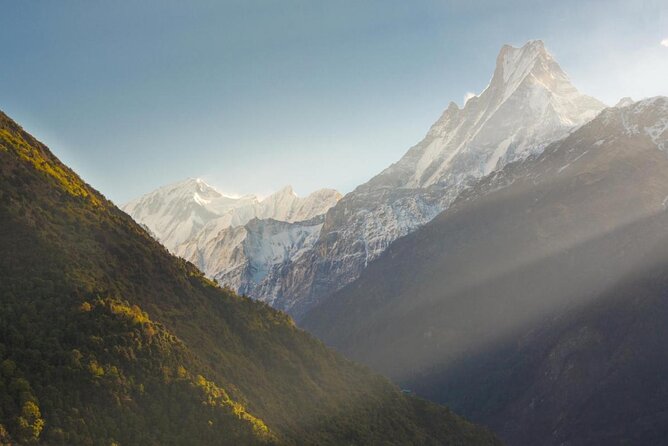
Your trip kicks off at Tribhuvan International Airport in Kathmandu. A company representative meets you, then you’re transferred by private vehicle to your hotel. Day two includes a drive to Pokhara that takes most of the morning, leaving you time in the afternoon to ease into Nepal with a first look at the Annapurna and Dhaulagiri ranges from the Pokhara Valley area.
Pokhara is the kind of place where you can re-center your brain before a trek. I like that this schedule doesn’t throw you straight uphill. You’ll do an evening walk around Phewa Lake, plus you’ll get those big Himalayan views that make you start believing the hike is real. It’s also useful for practical reasons: you can pick up a few last bits you forgot, confirm you’re hydrated, and get a feel for how your body handles altitude before the real days begin.
If you arrive tired, you’ll appreciate that the package provides two nights in Pokhara at a 3-star hotel with breakfast. Trekking is easier when you sleep well and eat something familiar before switching gears to tea house meals.
More routes into the Annapurna Sanctuary:
- Annapurna base camp trek 5 Days
★ 5.0 · 252 reviews - 14-Day Private Annapurna Base Camp Trek
★ 5.0 · 180 reviews - Annapurna Base Camp Trekking
★ 5.0 · 116 reviews
Price and value: what $1,200 covers (and what you still pay)
At $1,200 per person for about 13 days, the big question is value. Here’s what you’re paying for, in plain terms: the cost is tied to real services, not just a scenic route.
Included that matters:
- Private airport pickup and hotel transfers in Kathmandu and Pokhara
- Four hotel nights total (2 in Kathmandu, 2 in Pokhara) at 3-star level with breakfast
- TIMS and ACAP permits taken care of
- All lodge and tea house accommodations during the trek
- All meals during the trek (breakfast, lunch, dinner)
- Guide and porter support, including porter allocation for two clients
- Duffle bag return after the trek
- Travel rescue arrangement plus a first aid kit on hand
- Last night farewell dinner with a cultural performance
Not included, so budget for it:
- Your Nepal visa fee if you need it
- International flights to and from Kathmandu
- Travel and rescue insurance
- Personal expenses like phone calls, laundry, bottle or boiled water, charging, and anything you want beyond included meals
- Tips for guide and porter
My quick take: $1,200 is competitive for a private guided trek that includes permits, meals, and porter support. It’s also a clearer deal than many “cheap” trekking packages, because permit handling, meals, and consistent logistics are where stress and hidden costs usually show up.
Day-by-day on the trail: Ulleri to Poon Hill to the first big valleys
After the Pokhara hotel nights, you drive about an hour and a half to Nayapul, then begin trekking. Day three is your launch day. You start around 1,050 m and head toward either Tirkhedhunga or Ulleri, passing through Birethanti. This is a good day to go slow. Even when it’s not the hardest day, your legs are still figuring out what they signed up for.
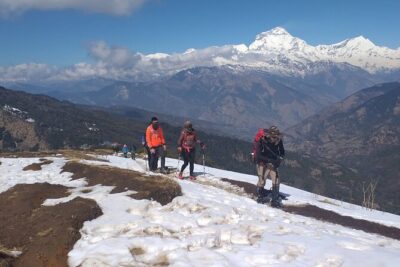
Day four adds the feel of the region. The trek includes a steep climb early, then you pass through Magar villages around Ulleri and Banthati. This is also your first chance to “collect” major names of peaks in view, including Machhapuchhare (Fish Tail), Himchuli, and Annapurna South, plus other snowcapped peaks.
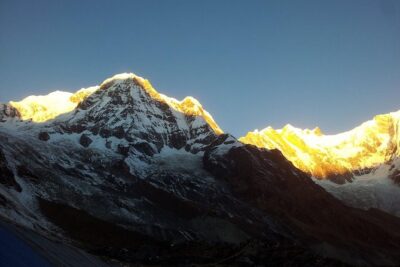
Day five is your early morning payoff: Poon Hill (about 3,210 m) for sunrise. The route is timed for a spectacular morning, with views of peaks that include Mt. Dhaulagiri, Annapurna I and II, Machhapuchhare, and more. I like that this isn’t only about reaching the highest point. It’s about getting you up early for a single shared moment, then letting you continue the trek with that motivation still in your system.
Practical tip: sunrise hikes usually mean cold hands and quick breathing. Keep water on you, snack-ready, and don’t sprint. You’re there for the light show, not a personal speed record.
Chhomrong to Sinuwa to Himalaya: the middle stretch that sets up Base Camp
Day six brings you from Tadapani to Chhomrong in about 5 to 6 hours over roughly 7 to 8 km. This day is a mix of forest walking, village scenes, and mountain views. Chhomrong sits under the Annapurna range, and it’s a well-known rest point on this route. One fun detail: Chhomrong is described as a popular Gorkha village, and it’s also known for pizza, which can feel wildly funny and wonderful after days of dal bhat and tea.
Day seven is where the trail mood changes. Leaving Chhomrong, the path descends on stone stairs, crosses rocky terrain, and you’ll want to watch your step for stinging nettles. You reach Sinuwa around 2,350 m, then descend into bamboo and rhododendron forests before arriving at Himalaya (about 2,920 m).
This is also an important day for pacing and safety. Stone stair sections can punish your knees if you go too fast. On a private trek, you can set a rhythm that fits your body. Don’t feel pressured to match the pace of whoever seems more energetic.
Day eight is one of those “getting close” days. The views expand, including Hiunchuli and multiple Annapurna peaks, as you trek through alpine forest toward the approach area around 4,170 m. You’re not at Base Camp yet, but the terrain and perspective change enough that you’ll start feeling the final push is really happening.
More to compare around Kathmandu
- Everest Base Camp Trek – 14 Days
★ 5.0 · 1,499 reviews - Everest Base Camp Trek
★ 5.0 · 842 reviews - Private Kathmandu Sightseeing Tour | UNESCO World Heritage sites
★ 5.0 · 756 reviews - Kathmandu: 7 UNESCO Sites with Lunch
★ 4.8 · 744 reviews
Annapurna Base Camp: sunrise, breakfast, then the long descent to Bamboo
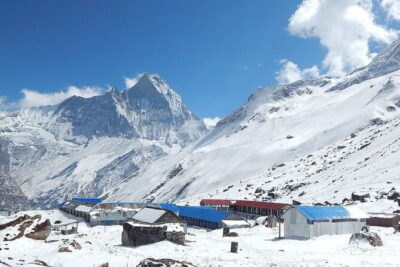
Day nine is Base Camp day. You’ll get morning sunrise over the Annapurna ranges and the surrounding glacial and valley views, then you’ll have breakfast at Annapurna Base Camp (noted at about 4,170 m). After that, you walk down to Bamboo for about 5 to 6 hours.
This day is emotionally intense, even if you’re the practical type. You work hard to get there, then you have a moment of reward, and then you keep moving. That sequence matters. If you rush the first half, you’ll feel it during the descent.
Going down also helps your altitude adaptation. You don’t stay high for a long time in this plan. You drop toward Bamboo, which should make later days easier on your body.
Hot springs, waterfalls, and Modi Khola: the return days that feel like a different trek
Day ten keeps the route interesting. After descending through forests and then heading steeply up to Kuldi Ghar, the trail levels until you reach Sinuwa again, then descends toward Chhomrong Khola. There are stone stairs involved, and the day finishes with a steep descent to Jhinudanda. From there, you walk about 20 minutes to reach Hot Spring on the bank of the Modi Khola.
Honestly, this stop is more than a comfort break. It’s a smart way to recover after days of uneven footwork and stair climbing. Your legs will likely feel it. A hot soak can turn a hard day into a manageable one.
Day eleven shifts back to the “trail scenery engine.” The route includes waterfalls early on, then you cross streams and terraces as you climb gently. You reach Birethanti (about 1,025 m) and then continue to Nayapul through forest while following the Modi River.
If you’re thinking, Great, how do I keep energy for the last day, this is why the trek works. You’re not pushing peak-to-peak every single day. The return days have variety, and the descent keeps the end realistic.
Day 12 back to Kathmandu: Manakamana cable car and farewell dinner
Once you reach Nayapul on day eleven, the end is near, but day twelve is where you get a fun cultural transition. Instead of going straight back to Kathmandu with no stops, you travel via Damauli, Dumre, Muglin, and Kurintar, where you can connect with Nepal’s first cable car linked to Manakamana Temple. From Naubishe, you climb up to Thankot, described as the gateway to Kathmandu.
I like this part because it turns the trek ending into a story, not just a transport day. You’ll get a different kind of Nepal sightseeing that doesn’t require trekking hours.
In the evening, you finish with a farewell dinner at an authentic Nepalese restaurant and a cultural performance. That’s a nice punctuation mark for a long hike.
Day thirteen is straightforward: a representative takes you to the airport about three hours before your scheduled flight. You have time to plan your next adventure without feeling rushed.
Guide and porter support: how private service changes your day
This is a private tour/activity, so your pace is yours. You’re not trying to keep up with a larger group, and you can manage breaks based on how you’re feeling. That matters on ABC routes where altitude and stair sections can make one day feel tougher than it looks on paper.
The practical support is clearly spelled out:
- An experienced, helpful guide
- Porters with the ratio 1 porter for 2 clients
- Paperwork managed for the permits
- Travel rescue arrangement
- Medical supplies with a first aid kit
Based on the company’s past staff mentions, you might be guided by people such as Prakash Adhikari, Bharat Simkada, or Badri Kakri and supported by porters like Perlad, Surman, or Parlad. Those are examples from earlier trekking experiences, not a guarantee that your guide will be the same person, but they do show the operator builds consistent relationships with specific trekking professionals.
About tips: tips are not included. Since you’re getting real service, plan to budget for them.
Tea houses and meals: what included food means for your comfort
This package includes all meals during the trek. That’s not a small thing. On trekking routes like these, having breakfast, lunch, and dinner arranged means you can spend mental energy on pacing and footing, not hunting menus.
Tea houses vary in comfort, but the plan covers:
- All accommodations in lodges or tea houses during the trek
- Included trekking breakfast, lunch, and dinner
- Duffle bag handling, with your bag returned after the trek
What you should still expect to pay for out of pocket:
- Personal expenses like phone calls and charging
- Water beyond what is handled for you (you’ll likely need bottle or boiled water)
- Extra costs tied to showers or laundry, depending on where you stay
If you have dietary needs, you’ll want to tell the operator at booking. The package states that a vegetarian option is available if you request it.
Altitude and fitness: moderate level, but respect the stairs
The trek is described for travelers with a moderate physical fitness level. That doesn’t mean it’s easy. It means the route design is meant to be achievable with preparation and sensible pacing.
You’ll be moving through a climb and descent pattern. You also hit high points like:
- Poon Hill around 3,210 m
- Annapurna Base Camp around 4,170 m
- Several days in the 2,900 m range and above
Practical altitude reality: you can feel fine one day and sluggish the next. Keep your effort steady. With a private trek, your guide can help you match your pace to your breathing and comfort, and porters reduce the load so you can focus on walking, not compensating for a heavy pack.
Stair-heavy sections show up multiple times, especially near Chhomrong and later near Jhinudanda. Slow down on the descents to protect your knees and ankles.
What to pack for this ABC plan (without inventing extra rules)
The package includes a duffle bag return after the trek and a company t-shirt, so you don’t need to overthink everything. But you should bring your own layering system because tea house trekking gets cold fast, especially early mornings for sunrise.
You’ll also want to plan for basics:
- Footwear that handles stone stairs and muddy sections
- A small daypack for water and snacks
- Rain protection, just in case
- A way to handle cold mornings (hat and gloves usually matter)
Anything beyond that that you personally want, like extra layers, trekking poles, or charging tools, is on you. Personal expenses are not included, so plan for the small purchases that happen when electricity and Wi-Fi exist only intermittently.
Should you book this Annapurna Base Camp trek?
I think you should book this tour if you want:
- A private guide-led trek with porter support (1 porter per 2 clients)
- Permits and paperwork handled with TIMS and ACAP included
- Meals and tea house accommodations covered, so your energy stays on trekking
- The comfort of 3-star hotels in Kathmandu and Pokhara, rather than roughing it before you start
I would hesitate if you’re someone who needs hotel-level comfort every night, or if you’re very sensitive to early starts and stair-heavy hiking. This route is built for the trek experience. Tea houses are part of the deal.
If you do book, do one thing that makes everything smoother: communicate your dietary needs ahead of time, and be honest with your guide about your pace and any aches early. That’s how you turn a challenging route into a satisfying one, and keep the Base Camp moment feeling earned.
FAQ
What does the tour include for airport and hotel transfers?
You get pickup from Tribhuvan International Airport in Kathmandu and transfer to your hotel by private vehicle, plus land transfers as part of the overall route between Kathmandu, Pokhara, and the trek start and end areas.
Are trekking permits included?
Yes. The package includes TIMS and ACAP permit and covers the necessary paper works.
What about hotels before and after the trek?
You stay two nights in Kathmandu and two nights in Pokhara at 3-star hotels, each with breakfast.
Is a guide and porter support included?
Yes. The tour includes an experienced guide and porters, with the stated ratio 1 porter for 2 clients.
Are meals during the trek included?
Yes. Breakfast, lunch, and dinner are included during the trekking days, with breakfast listed as 12, lunch as 9, and dinner as 9.
Do they offer vegetarian meals?
Yes. A vegetarian option is available if you advise the company at the time of booking.
If my plans change, can I cancel for a refund?
The tour offers free cancellation if you cancel at least 24 hours before the experience start time for a full refund.
Latest Kathmandu write-ups
- Langtang Valley Trek★ 5.0 · 3 reviews
- Khopra Danda Trek★ 5.0 · 3 reviews
- Langtang Valley Trek from Kathmandu★ 5.0 · 3 reviews
- 5 night / 6 days Kathmandu Nagarkot Chitwan Pokhara tour★ 5.0 · 3 reviews
- Nepal Highlights Tour: 5 Nights 6 Days Kathmandu & Pokhara Tour★ 5.0 · 3 reviews
- Kathmandu Valley Private Day Tour★ 5.0 · 3 reviews
- Conquer the Himalayas: The Ultimate 16-Day Annapurna Circuit Trek★ 3.5 · 3 reviews
- Kathmandu Heritage Day Tour★ 5.0 · 3 reviews
Annapurna Base Camp Trek, compared.
Browse the lists this tour appears in