
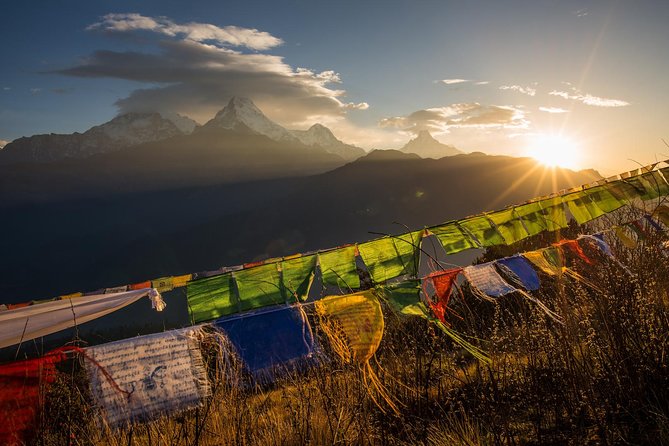
Reviewed · ANNAPURNA BASE CAMP TREK
14 days Annapurna Base Camp Trek
Annapurna Base Camp is one of those treks that feels both epic and doable, and this 14-day route nails that balance. You get mountain drama plus real village days, with a proper jumpstart in Kathmandu before you start climbing.
I especially like the way the itinerary builds in memorable viewpoints, like Poon Hill sunrise and the Annapurna Sanctuary setting at Base Camp. I also like that you are not just dumped on a trail, you hike with an experienced, English-speaking trek leader plus a porter to take the bulk of your load.
One consideration: the trek is long-distance hiking with early starts, and you should budget for costs not included, like World Heritage entrance fees and day-to-day meals and drinks beyond the listed breakfasts.
Key highlights to look for
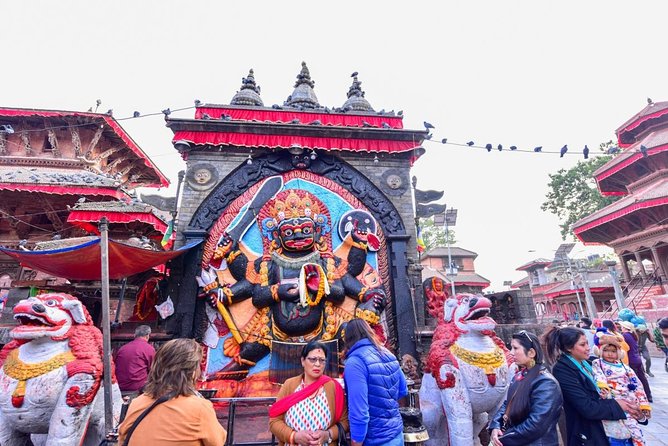
- Poon Hill sunrise for early-morning mountain views without making the whole trek feel rushed
- Annapurna Sanctuary feel at Base Camp, with big, ring-like mountain views described on the route
- Professional guide and porter support to keep you moving when the steps get tiring
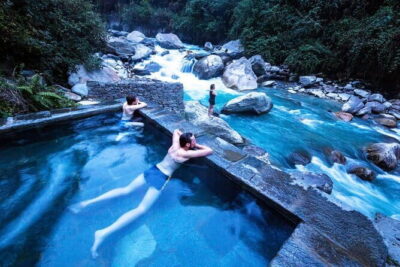
- Jhinu hot springs on the return for a practical recovery moment
- Plenty of culture on the way up and down through villages tied to Gurung, Magar, and Thakali communities
Annapurna Base Camp Trek at a glance, and what 14 days adds up to
This is a moderate trekking itinerary aimed at travelers who like the mountains but do not want a technical climbing challenge. The schedule mixes full hiking days with shorter, more scenic segments, so you are not only grinding uphill every hour.
It is also a “big walk” plan in the real sense. You will be hiking about 6 to 8 hours on many days, and at least one day includes a major leg-bender of 2000+ stone steps as you drop toward the river and then climb again.
Logistics are mostly handled for you. You get pickup at Tribhuvan Airport with a stated start time of 8:30 am, and you move between Kathmandu, Pokhara, and trailheads with the transportation listed in the itinerary. Your trek group is described as private, meaning it is meant for your group only, not a random crowd experience.
One more practical note: your tour includes a mobile ticket, and it also requires your passport details at booking. That matters for permits, which this trek includes.
More routes into the Annapurna Sanctuary:
- Annapurna base camp trek 5 Days
★ 5.0 · 252 reviews - 14-Day Private Annapurna Base Camp Trek
★ 5.0 · 180 reviews - Annapurna Base Camp Trekking
★ 5.0 · 116 reviews
Kathmandu before trekking: Durbar Square, Swayambhunath, Boudhanath, and a real orientation
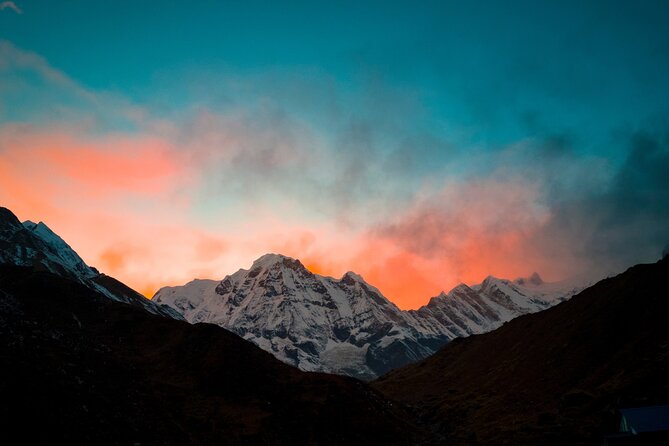
Your first day is built around settling in. You land at the airport, transfer to Thamel (the handy Kathmandu base for many trekking groups), then you have time to explore and get your bearings.
The afternoon briefing is one of those small things that ends up mattering a lot on trek day. You get the info you need up front, and that reduces the “wait, what now?” feeling later, especially when you are dealing with trail schedules and permits.
Day 2 keeps it classic with three major sites:
- Kathmandu Durbar Square, an ancient, UNESCO-listed complex in Kathmandu’s center.
- Swayambhunath Temple, the Monkey Temple, famous for the stupa on a hill and wide valley views.
- Boudhanath Stupa, another UNESCO site, known for its large white dome and prayer flags.
Entrance fees for those World Heritage sites are explicitly not included. That is a detail I like knowing early because it keeps your budget honest. You are still getting guided time at the sites, but you should carry extra cash for entry if you plan to go inside.
Pokhara lakeside reset: why that calm day is smart
After Kathmandu, you shift to Pokhara for a lighter day. The itinerary uses a Lakeside block with about 4 hours to enjoy the area, usually a breather before the trekking starts in earnest.
This kind of day is not just downtime. It is a chance to sort gear, do laundry, and eat something satisfying without thinking about tomorrow’s altitude or stair counts. Even if you feel energetic on arrival, that buffer helps.
Also, you will be doing plenty of “up and down” in the Annapurna region. A calm day in Pokhara can make your first trekking morning feel less like a shock and more like a transition.
Nayapul to Ulleri: terraced farmland and that first uphill sting
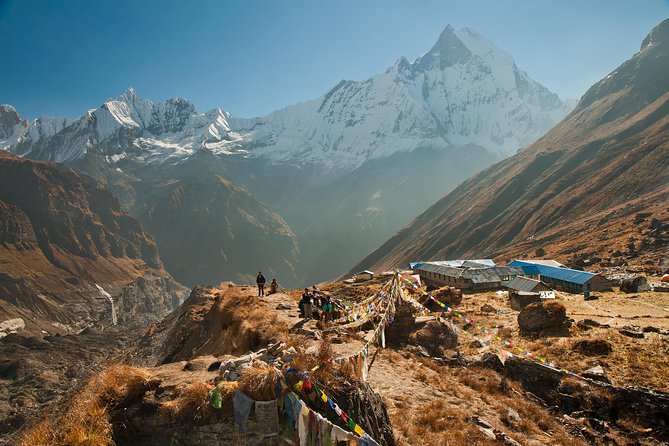
On trek Day 4, you drive to Nayapul, which is described as the gateway into the Annapurna region. Then you start walking to Ulleri.
What makes this day worth your energy is the mix of views and work. The trail goes through terraced fields, and the description highlights a steady uphill. You can also expect hard segments after Tikhedhunga, when the route turns into a more direct climb to Ulleri.
Time-wise it is about 6 hours of hiking, and it sets the rhythm for the rest of the trek. If you pace yourself and treat it as a warm-up for the bigger step days later, you will feel better when the trail gets steeper.
More to compare around Kathmandu
- Everest Base Camp Trek – 14 Days
★ 5.0 · 1,499 reviews - Everest Base Camp Trek
★ 5.0 · 842 reviews - Private Kathmandu Sightseeing Tour | UNESCO World Heritage sites
★ 5.0 · 756 reviews - Kathmandu: 7 UNESCO Sites with Lunch
★ 4.8 · 744 reviews
Ghorepani forests and Poon Hill sunrise: the morning that sells the whole trek
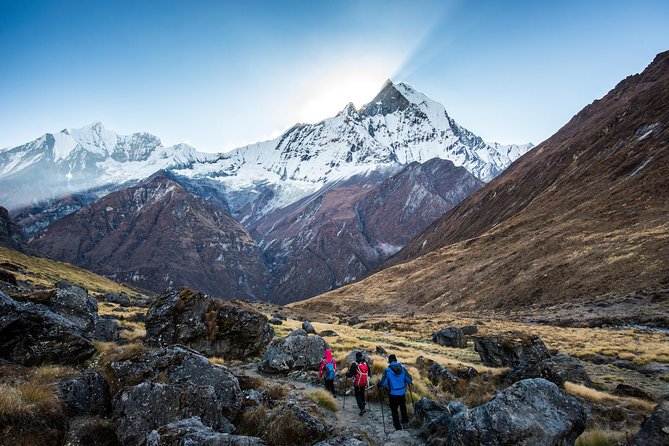
Days 5 and 6 are the “forest and viewpoint” engine of this itinerary. You head toward Ghorepani through rhododendron and pine forests, plus small bridges and a trail that is described as easier than the day before. That is a good trade: you get time in nature without an endless grind.
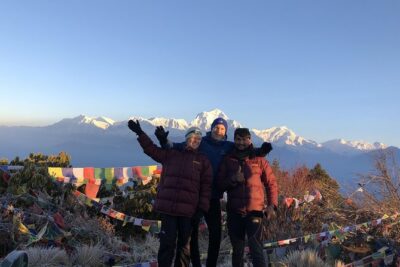
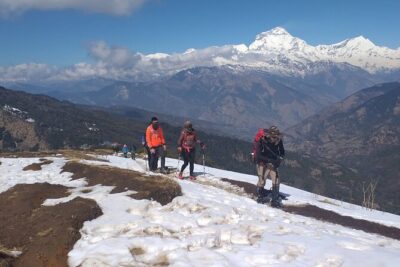
Then comes Poon Hill (3210m). The itinerary focuses on catching sunrise, with an early start to get that first light across the mountains. You then walk back, eat breakfast in Ghorepani, and continue onward.
Why I like this section: Poon Hill is one of the few places on the route where you are rewarded fast. You do the early morning effort, but you also get a big payoff with panoramic views listed in the itinerary, including Mt. Annapurna and Mt. Dhaulagiri.
It is also a cultural walk. The route passes culturally rich villages along the way, which helps the trek feel connected to people, not just scenery.
A possible drawback: sunrise treks test patience. You will be up early and moving before breakfast. If you hate early mornings, you might find this day mentally harder than its physical hours suggest.
Chhomrong to Bamboo Village: steps, rivers, and a bamboo-forest vibe
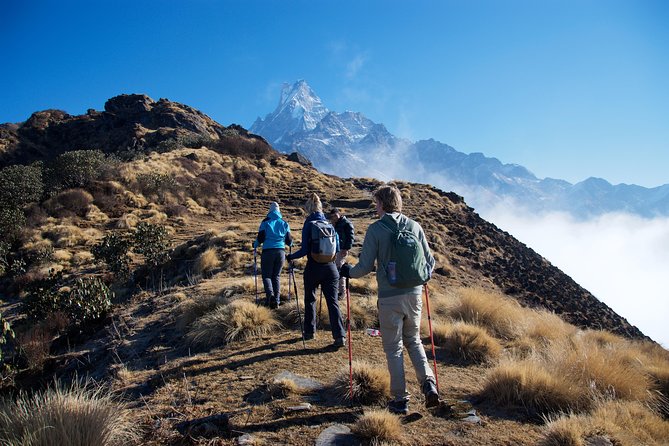
Day 7 brings you from Tadapani to Chhomrong, with a strong payoff for effort. You get descending, then crossing the Kimrung River area, plus rice fields and settlements. From Chhomrong you get great views noted for Fishtail (Machhapuchhre) and Annapurna South.
Day 8 is the tough one. The itinerary calls out a long, tiring day, including a climb down 2000+ stone steps to cross the Chhomrong River and then a long ascent to Sinuwa. After resting in Sinuwa, you keep moving through rocky steps and bamboo forests toward Bamboo Village (2300m).
This is also where the itinerary turns fun. Bamboo Village is described as famous for large lemur colonies, and the route suggests you might see them hanging around trees if you are lucky. Even if you do not spot them, bamboo forest walking has a calming rhythm that many hikers enjoy after the bigger stair days.
Deurali, Hinku Cave, and the long climb toward Machhapuchhre Base Camp
Day 9 pushes you higher again. You trek toward Deurali, cross through rhododendron and bamboo forests, and then transition into a drier forest as you climb.
You also pass Hotel Himalaya and reach Hinku Cave along the way. The route then drops closer to the river and climbs again to Deurali (2920m).
What I like here is the variety. You are not just walking in a single “same trail” zone. You alternate forest types and you get changing views as the trail works around ridges.
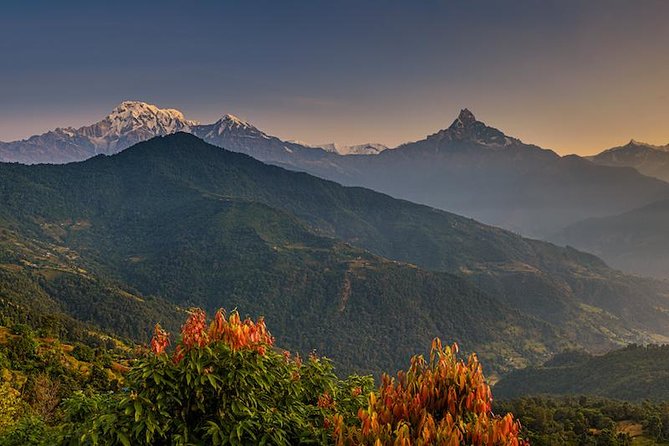
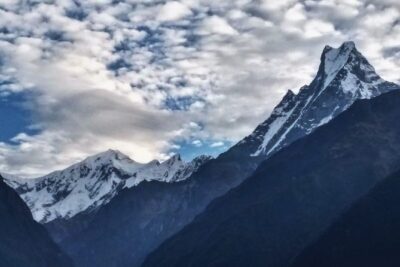
Then the day continues to Macchapuchare Base Camp (MBC). The itinerary highlights amazing views of Fishtail Mountain, with its shape described as changing depending on the angle. That is a good reminder to keep looking around, not only at the path under your feet.
Annapurna Base Camp day: early wake-ups, the Sanctuary setting, and big listed peaks
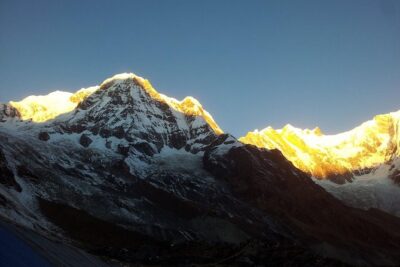
Day 10 is the main event. There is an optional sunrise approach where you wake around 3 A.M. and hike toward Annapurna Base Camp. The route describes the ascent as about 2 hours and asks you to be careful with breathlessness due to altitude.
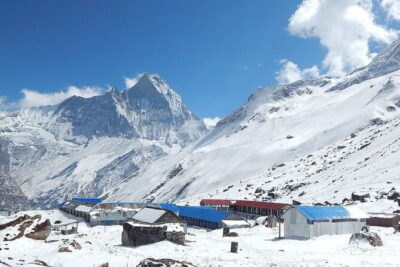
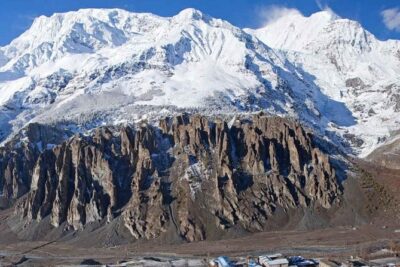
When you arrive, the itinerary describes Annapurna Base Camp as uniquely spectacular, calling it the Annapurna Sanctuary. You are on an oval-shaped plateau surrounded by a ring of mountains, which is exactly the kind of terrain that makes “tucked in” feel like the right word.
The view list here is detailed: Machhapuchhre, Hiunchuli, Annapurna South, Annapurna I, Annapurna III, Gandharvachuli, and Gangapurna. Even if clouds change what you see, having so many named peaks gives you something concrete to point your eyes at.
If you do not want the 3 A.M. effort, the itinerary still keeps Base Camp as the focus of the day. Either way, plan for low patience on the walk up, because the reward is for your eyes, not your energy.
The return route, Jhinu hot springs, and how recovery actually fits
On Day 11, you work your way back through the villages and trail segments you used earlier: Himalaya, Dovan, Bamboo, then steps to Sinuwa, and down toward the Chhomrong River.
The itinerary then notes a key recovery stop: as you ascend, you follow a trail to Jhinu, where hot springs are available to melt away fatigue. This is not just a nice-to-have. On a trek with many stone steps, a warm break is the difference between feeling okay and feeling wrecked for the last hiking days.
Day 12 shifts you toward an easier walk. You descend and pass villages and farmlands with tea houses, then reach Nayapul. The Asian Heritage private jeep is waiting to take you to Pokhara.
Then Day 13 completes the loop: breakfast in Pokhara, drive back to Kathmandu, and an arrival in the late afternoon for your final night.
Price and logistics: what you get for $1,028.41, and what you must budget
At $1,028.41 per person for a 14-day Annapurna Base Camp trek, this package is not “cheap,” but it includes a lot that actually protects your time and stress level.
Here is the value breakdown that matters:
- Permits included: Annapurna Conservation Area permits and TIMS, plus other necessary permits.
- Transportation handled: airport transfers and the moves between Kathmandu, Pokhara, and trek access points.
- Lodging during the trek: 8 nights on a room-only basis in local lodges.
- Porter support: one porter carries up to 18 kilo, shared between two clients. Practically, this means you can pack lighter than you would on your own.
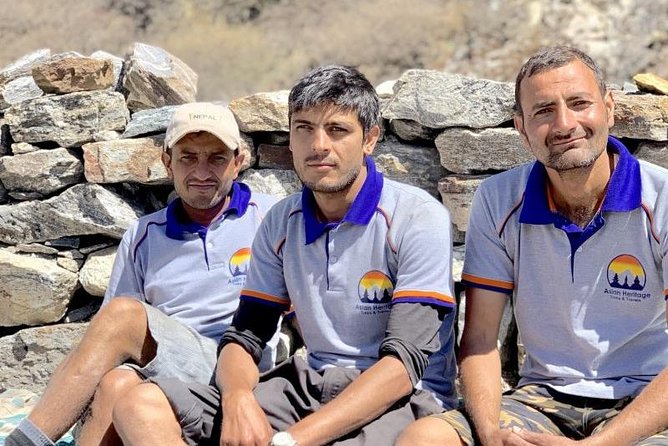
- A licensed trek leader: experienced, English-speaking, government-licensed.
- Kathmandu hotels included: 3 nights in 4-star Yatri Suites & Spa or similar on breakfast basis, plus 2 nights in Hotel Crystal Palace or similar on breakfast basis.
Breakfast is included 5 times, and that is a standard setup for trekkers, but it also means you should plan to pay for additional meals and drinks while on the trail.
Not included items are equally important to know up front:
- Your personal trekking gear and personal expenses.
- Food and drinks beyond included breakfasts.
- Tipping for guide, porter, and drivers.
- Entrance fees for the UNESCO World Heritage sites in Kathmandu.
- Donations at schools or monasteries or temples.
- Upgrades, if you request them.
- Emergency rescue evacuation insurance.
If you are budgeting carefully, this package is easier than self-planning, because the permits, major transport legs, and lodge structure are already handled. The cost you still need to manage is meals, drinks, tipping, and UNESCO site entries.
Guide and porter support: the difference between struggling and progressing
The most repeated praise in the feedback for this style of trek is simple: the guide and porter make tough moments less scary. People highlight that the guidance was professional and that the porter and leader helped them with difficulties.
On this route, difficulties are not just “hard hiking.” They are also:
- long days that ask you to keep moving even when your legs are tired
- early mornings around sunrise schedules
- altitude caution on the Base Camp approach
The porter setup makes the biggest practical difference. With porter weight support capped at 18 kilo shared, you can keep your body happy by not hauling everything in your pack. You will still carry a day pack, but the heavy items are off your shoulders.
Also, the team is described as responsive by email, which matters if you have questions before you arrive. That kind of communication reduces last-minute uncertainty.
Fitness, altitude reality, and packing for a long stair-heavy route
This trek asks for moderate physical fitness, and the itinerary directly notes a large distance hiking requirement. That combination is what makes the Annapurna Base Camp trek a good fit for many people, but not for everyone.
A big reality check is the stair work. The route includes a clear “stone steps” day on the way down from Chhomrong, and the rest of the trek includes repeated ups and downs. If you know you get shin splints or knee pain on step-heavy routes, you might want to plan your pace and use trekking poles if you already do.
Altitude is handled with caution rather than drama. The itinerary specifically mentions being careful of breathlessness on the early morning Base Camp ascent. That means you should listen to your trek leader on pace and stop when you need to.
Gear is your responsibility, because personal trekking gear is not included. But the itinerary does give you timing cues, like the early 3 A.M. wake-up option, and that should guide your packing decisions for warmth and comfort on cold mornings.
Who should book, and who should think twice
This itinerary fits best if you:
- like a guided trek with permits sorted and transportation organized
- want the Poon Hill sunrise experience and not just a generic mountain walk
- enjoy village trails and want cultural context as part of the trek
- are comfortable with moderate hiking days that often run 6 to 8 hours
You might think twice if:
- you dislike early starts, especially on the Base Camp day option around 3 A.M.
- you are not prepared for stairs and long walking days
- you want an all-inclusive budget, because drinks, many meals, tips, and UNESCO entrance fees are not included
Service animals are stated as allowed, and the tour is described as private for your group only, which is helpful if you want a calmer experience.
Should you book this Annapurna Base Camp trek?
I think you should book it if you want a structured Annapurna Base Camp trek that hits the key viewpoints and does the moving parts for you: permits, transport, lodging structure, and the human support that helps when the trail gets tiring.
I would not book it blindly if you are trying to keep the trip ultra-budget. There are real add-ons, especially meals, drinks, tipping, and UNESCO site entrance fees in Kathmandu. Still, if you plan for those costs and you are ready for long walking days, this route looks like strong value for what is included.
FAQ
FAQ
What is the meeting point and start time for this trek?
The start meeting point is Tribhuvan Airport in Kathmandu, Nepal, with a stated start time of 8:30 am.
How long is the Annapurna Base Camp trek?
The itinerary is described as approximately 14 days.
What is included in the price?
The package includes Kathmandu hotel stays as listed, lodge accommodation on the trek (room only), Annapurna Conservation Area permits and TIMS, transportation as mentioned in the itinerary, porter service, and an experienced, English-speaking, government-licensed trek leader. Breakfast is included 5 times.
What is not included that I should plan for?
You should plan to pay for personal trekking gear and personal expenses, food and drinks beyond the listed breakfasts, tipping for guide, porter, and drivers, UNESCO entrance fees, and any upgrades or extras you request. Emergency rescue evacuation insurance is also not included.
What fitness level do I need?
The information says travelers should have moderate physical fitness, and that a large distance hiking effort is required.
Do I need to provide passport details in advance?
Yes. Passport name, number, expiry, and country are required at the time of booking for all participants.
What if I need to cancel?
The policy says you can cancel up to 6 days in advance for a full refund. A 50% refund is available when canceling 2 to 6 days in advance, and refunds are not available if you cancel less than 2 days before the experience starts.
Latest Kathmandu write-ups
- Langtang Valley Trek★ 5.0 · 3 reviews
- Khopra Danda Trek★ 5.0 · 3 reviews
- Langtang Valley Trek from Kathmandu★ 5.0 · 3 reviews
- 5 night / 6 days Kathmandu Nagarkot Chitwan Pokhara tour★ 5.0 · 3 reviews
- Nepal Highlights Tour: 5 Nights 6 Days Kathmandu & Pokhara Tour★ 5.0 · 3 reviews
- Kathmandu Valley Private Day Tour★ 5.0 · 3 reviews
- Conquer the Himalayas: The Ultimate 16-Day Annapurna Circuit Trek★ 3.5 · 3 reviews
- Kathmandu Heritage Day Tour★ 5.0 · 3 reviews
Annapurna Base Camp Trek, compared.
Browse the lists this tour appears in