
Annapurna Base Camp trekking pulls you through a big slice of the Annapurna region, from low hills to the high thin-air world around Annapurna Base Camp. I like that the plan combines classic viewpoint hiking with the long, satisfying day up to base camp, and that lodge stays plus meals are part of the deal. One real consideration: you’ll be walking at altitude, including a pass over Machhapuchhre Base Camp at 4130m, so moderate fitness and a slow, steady pace are non negotiable.
This trip is also practical for first-time trekkers. You start with the Kathmandu to Pokhara tourist deluxe bus, get two nights in Pokhara, then head out on foot with a licensed guide and lodge accommodations lined up. In multiple shared experiences connected to this company, guides such as Suman, Roman, Santosh, Robin, Bibek, Raj, and Suresh Aryel show up again and again for being caring, well organized, and good at keeping the group moving at a pace that feels human.
The value angle here is clear: you’re paying for the whole structure, not just the hike. You still need to budget for personal expenses and your own trekking gear, but a lot of the heavy logistics are taken care of for you, including permits and the core trekking meals.
Key Highlights You’ll Actually Feel On the Trail
- Licensed, supportive guide focus: multiple guides named, consistently praised for safety, organization, and keeping the group comfortable.
- Classic altitude ladder: Ulleri to Ghorepani to Poon Hill, then the climb toward Deurali and on to Annapurna Base Camp.
- Gear included for the cold: sleeping bag and a down jacket are provided, with the option to return after the trip.
- Meals and lodges handled: breakfast, lunch, dinner during the trek, plus lodge accommodation each night.
- Route includes Machhapuchhre Base Camp: you go high before you arrive at base camp, which makes the day feel earned.
- Transport is baked in: bus Kathmandu to Pokhara, plus taxi and a shared jeep for the return from Jhinu Danda.
Getting In The Rhythm: Kathmandu to Pokhara, 6:45am Start
Day one begins with a tourist deluxe bus from Kathmandu (1400m) to Pokhara (822m). The start time is listed as 6:45am, so plan to be ready early, not rushed, especially if you’re coming from another part of the city.
The upside of this timing is that it sets you up for an easier arrival day in Pokhara. You’re not doing an all-nighter, and you can settle in, eat normally, and get your bearings before the first trek day.
Also, you’re told pickup is offered. In at least one experience with this operator, that meant airport pickup coordination. If you’re flying in, ask early about pickup timing so you’re not solving logistics on arrival.
More routes into the Annapurna Sanctuary:
- Annapurna base camp trek 5 Days
★ 5.0 · 252 reviews - 14-Day Private Annapurna Base Camp Trek
★ 5.0 · 180 reviews - Annapurna Base Camp Trekking
★ 5.0 · 116 reviews
Pokhara Two Nights: Your Buffer Before Thin Air
You get 2 nights in Pokhara in standard category accommodation. That matters more than people think. Treks like Annapurna Base Camp are not just about strength, they’re about breathing room, hydration, and sleeping before your body starts paying the altitude tax.
Pokhara also acts like a gear and morale checkpoint. You can sort clothing layers, confirm what you’ll carry, and make sure your boots feel good on walking days before you hit the trail.
Trail Day 1 and 2: Birethanti to Ulleri, Then Up to Ghorepani
After arriving in Pokhara, you take a taxi to the trek start point. Then the hiking begins from Birethanti (1263m) and you walk to Ulleri (1960m) on day two.
This first hiking segment is a nice opener. It’s not trying to crush you, it’s building rhythm and letting your legs wake up gradually. Ulleri is also part of what makes the overall route feel like a journey, not just a straight line uphill.
On day three you trek from Ulleri (1960m) to Ghorepani (2880m). That’s a big climb day, and Ghorepani sits high enough that you’ll feel the altitude as you walk. This is where you’ll want to keep your effort smooth, short steps, and no hero moments.
Poon Hill and Tadapani: Big Views, Then a Downshift
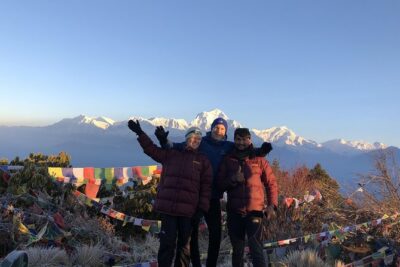
Day four takes you from Ghorepani (2880m) to Poon Hill (3210m), then onward to Tadapani (2630m). Poon Hill is a high stepping stone in this route, and it sets up some of the best photo moments of the early trek.
Then comes the smart part: you don’t stay at the peak altitude all day. Tadapani at 2630m is a “drop enough to recover” kind of stop. That recovery matters because the trek keeps rising after this.
If the weather is cloudy, you might not get the full spectacle. That said, the day still has value: you’re building trekking altitude exposure while keeping the schedule steady enough to continue comfortably.
More to compare around Kathmandu
- Everest Base Camp Trek – 14 Days
★ 5.0 · 1,499 reviews - Everest Base Camp Trek
★ 5.0 · 842 reviews - Private Kathmandu Sightseeing Tour | UNESCO World Heritage sites
★ 5.0 · 756 reviews - Kathmandu: 7 UNESCO Sites with Lunch
★ 4.8 · 744 reviews
Tadapani to Sinuwa: The Quiet Climb Toward Deurali
Day five goes from Tadapani (2630m) to Sinuwa (2340m). Day six is Sinuwa to Deurali (3230m). This part of the trek is all about energy management.
Sinuwa is lower than Tadapani, which gives your lungs a chance to reset slightly. Then Deurali is where you feel like the trek is taking you seriously. At 3230m, cold and breathlessness can show up faster, especially if you push pace too hard.
This is a good stretch to lean on your guide. Multiple experiences connected to this operator highlight that guides can adjust pacing to match the group, which is a big deal when everyone’s fitness level is slightly different.
The Big Day: Deurali to Machhapuchhre Base Camp, Then Annapurna Base Camp
Day seven is the signature climb: Deurali (3230m) to Annapurna Base Camp (3700m), via Machhapuchhre Base Camp (4130m). That means you’re not only going to base camp, you’re going high first, and the route is staged so you arrive with the feeling that you’ve worked for it.
Machhapuchhre Base Camp at 4130m is a demanding altitude. Even if you keep walking steadily, you might feel your breathing change on the way up. The key is to keep movement consistent and not spike effort when the trail feels steep.
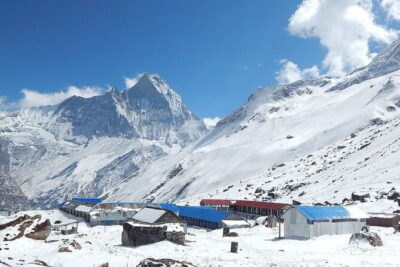
When you reach Annapurna Base Camp (3700m), you’re in the heart of the experience. Your day eight start is also telling: you don’t stay stagnant. You continue the journey, which helps you avoid the trap of feeling stiff after a big effort day.
Day Eight to Nine: Bamboo, Then Jhinu Danda for a More Human Landing
Day eight goes from Annapurna Base Camp (4130m) to Bamboo (2345m). That’s a major descent on paper, and it usually feels like a relief in the lungs while still working the legs hard in the knees and shins. This is why descent days are not “easy days,” they’re “different work days.”
Day nine continues from Bamboo to Jhinu Danda (1780m), then you drive back to Pokhara (822m). Jhinu Danda sits much lower, and it’s the kind of ending that helps your body reset. You’re not immediately jumping back into city life, but you’re dropping enough altitude that you can feel more normal again.
In short: you finish strong with an easier altitude profile before the return drive.
Lodges, Food, and That Licensed Guide Advantage
The trek includes lodge accommodation and three meals per day during the trek: breakfast, lunch, and dinner. That takes a lot of decision fatigue off you. You’re not constantly figuring out where to eat, what to pay, and whether something will upset your stomach.
You also get a gov-licensed guide, described as experienced and friendly. From the experiences tied to this operator, the guides tend to be the difference between a tough hike and a safe, confident hike. People have highlighted guidance styles like being attentive to extra needs, keeping the group safe, and staying ready to help.
And yes, you’ll likely meet different personalities. Names that come up often include guides like Suman, Roman, Santosh, Robin, Bibek, Raj, and Suresh Aryel. If you have a strong preference, ask if it’s possible to match you with a specific guide when booking.
Price and Logistics: What $999 Buys You, and What It Doesn’t
At $999 per person, this trek isn’t the cheapest option on the map. But it’s built around real costs: permits, lodge nights, trekking meals, guide support, and a chunk of transportation.
Here’s what’s covered:
- Tourist bus tickets Kathmandu to Pokhara, and Pokhara to Kathmandu
- 2 nights accommodation in Pokhara (standard category)
- Taxi to trek start point from Pokhara
- Trekking permits
- Lodge accommodation during the trek
- 3 meals per day during the trek
- Sleeping bag and down jacket (with the option to return after the trip)
- First aid medicine kit
- Trekking map
- Shared jeep transport from Jhinu to Pokhara
What’s not included:
- Travel and medical insurance
- Personal expenses (phone, internet, laundry, snacks, battery recharge, bottled or boiled water, hot showers, bar bills)
- Personal trekking gear and equipment
- Porter
So the big value question comes down to you. If you want a well-managed schedule with fewer moving parts, $999 starts to look fair. If you already have gear, you can handle planning on your own, and you’d prefer fewer packaged services, you might find cheaper routes. But for many people, the included structure is exactly what turns the trip into a calm experience.
Gear Notes: Sleeping Bag and Down Jacket Help a Lot
You’re provided a sleeping bag and a down jacket, with the option to return after the trip. That is a genuine benefit because cold weather gear can be expensive and heavy to bring from home.
Still, the company does not include personal trekking equipment. That means you’ll need to plan your own essentials like daypack, trekking shoes, layers, and items for comfort.
My practical advice: don’t overpack. You’ll carry what you bring, and the trek climbs high enough that temperature swings can be real. Pack for layers, not for bulk.
Weather, Altitude, and Flexibility When Things Change
The Annapurna region is weather-driven, and some parts of Nepal involve road conditions that can shift with rainfall. In past experiences connected to this operator, road issues after heavy rain affected the Pokhara start timing, and the team helped adjust.
That flexibility is a useful thing to have. Even when the trek is planned, nature and travel logistics can nudge timelines. A guide who can adapt without turning your trip into chaos is worth its weight in warm gloves.
Altitude is the other wildcard. Your schedule includes multiple high points, including 3210m at Poon Hill, 3230m at Deurali, 4130m at Machhapuchhre Base Camp, and 3700m at Annapurna Base Camp. If you tend to go too fast when you’re excited, this trek will correct that habit for you.
Who This Trek Fits Best: Moderate Fitness, Real Confidence, No Need to Guess
This trek is listed for travelers with a moderate physical fitness level. That’s a good match for people who can handle sustained walking, but don’t want to design every detail.
It’s also a good fit if you want:
- A private tour where only your group participates
- Clear structure, including lodging and meals
- A guide who’s used to keeping trekkers safe and moving at the right pace
If you’re a beginner who’s nervous about altitude, this kind of guided, scheduled approach usually helps. If you’re an advanced trekker seeking maximum freedom, you might prefer a more independent setup, because this plan locks in a set route and day rhythm.
Should You Book This Annapurna Base Camp Trek?
I’d book it if you want a guided, organized trek where you can focus on walking and enjoying the mountains, not on permits, meal hunts, or figuring out transport between cities and trailheads. The included items, especially lodge stays, meals, and the guide, are the heart of the value.
I would think twice if you hate early starts or you’re trying to travel ultra-light without managing your own personal gear. Also, because the schedule hits high elevations including 4130m, don’t treat this as a casual hike.
If you want Annapurna Base Camp with support, structure, and a strong track record of helpful guides, this is a solid choice.
FAQ
What locations does this trek include?
You’ll be in Nepal, starting in Kathmandu, then traveling to Pokhara. The trekking route includes stops such as Birethanti, Ulleri, Ghorepani, Poon Hill, Tadapani, Sinuwa, Deurali, Machhapuchhre Base Camp, Annapurna Base Camp, Bamboo, and Jhinu Danda.
When does the trek start each day?
The listed start time is 6:45am.
How long is the Annapurna Base Camp trekking experience?
It’s listed as 10 days (approx.).
What’s included in the price?
Included items include Kathmandu to Pokhara tourist bus tickets, 2 nights in Pokhara accommodation (standard category), taxi to the trek start, Annapurna Base Camp permits, a licensed guide, lodge accommodation during the trek, 3 meals per day during the trek, shared jeep transport from Jhinu to Pokhara, Pokhara to Kathmandu tourist bus tickets, sleeping bag, down jacket (return option), a first aid medicine kit, and a trekking map.
Are meals included during the trek?
Yes. You get 3 meals per day during the trek: breakfast, lunch, and dinner.
Do I need travel and medical insurance?
Travel and medical insurance are not included.
What trekking gear is provided, and what is not?
The trip includes a sleeping bag and a down jacket. Personal trekking gear and equipment are not included.
Is a porter included?
Porter service is not included.
Is this tour private?
Yes. It’s described as private, meaning only your group participates.
Can I cancel for a full refund?
Yes, you can cancel for a full refund if you cancel at least 24 hours in advance of the experience start time. If you cancel less than 24 hours before, the amount paid is not refunded.
Latest Kathmandu write-ups
- Langtang Valley Trek★ 5.0 · 3 reviews
- Khopra Danda Trek★ 5.0 · 3 reviews
- Langtang Valley Trek from Kathmandu★ 5.0 · 3 reviews
- 5 night / 6 days Kathmandu Nagarkot Chitwan Pokhara tour★ 5.0 · 3 reviews
- Nepal Highlights Tour: 5 Nights 6 Days Kathmandu & Pokhara Tour★ 5.0 · 3 reviews
- Kathmandu Valley Private Day Tour★ 5.0 · 3 reviews
- Conquer the Himalayas: The Ultimate 16-Day Annapurna Circuit Trek★ 3.5 · 3 reviews
- Kathmandu Heritage Day Tour★ 5.0 · 3 reviews
Annapurna Base Camp Trek, compared.
Browse the lists this tour appears in