
Reviewed · ANNAPURNA BASE CAMP TREK
Annapurna Sanctuary Trek ( 11 Days)
The Annapurna Sanctuary Trek is interesting because it mixes real village life with a serious high-mountain view payoff. You go from Kathmandu’s UNESCO sites to Pokhara’s lakes, then into Gurung communities and classic teahouse trekking at altitude. You’ll walk through oak and rhododendron forests, cross suspension bridges, and end up staring at Annapurna South and the Annapurna Massif from the base camp area.
I love that this trip is built around clear logistics: Buddha Air flights, private transport, and an English-speaking guide from day one. I also like that you’re not left to figure out permits and basics, since ACAP and TIMS paperwork is included, plus you get a duffel, a map, and a trip completion certificate. The only drawback to consider is altitude: the route climbs high, and you’ll want solid moderate fitness and a slow, steady pace.
In practice, this works best if you want a guided, well-paced classic trek, with support that reduces stress on the trail. You still do the hard work, though, and you’ll feel it in your legs on the stone-stair days.
Key points before you go
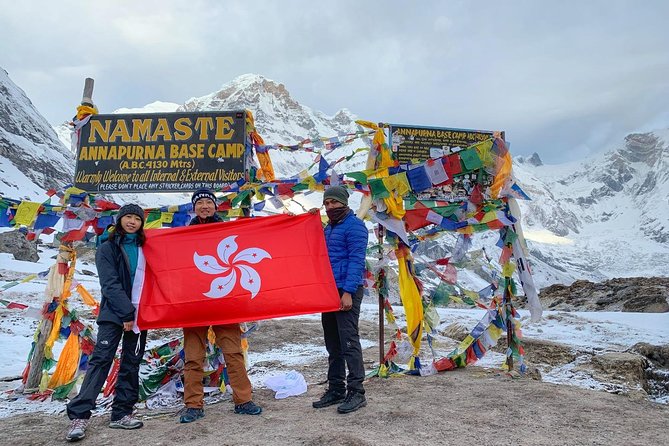
- Annapurna Base Camp views: Annapurna South plus a packed lineup of nearby peaks from the sanctuary area
- Porter support: 1 porter for 2 clients, so you can hike with less weight
- Tea-house full board: twin sharing lodges during the trek, with meals handled
- Village texture: Gurung settlements like Chhomrong and stops around Upper Sinuwa
- A “real” warm-up: Jhinu Danda hot springs are there if you want to soak after hiking
- Permits handled: ACAP and TIMS paperwork included, which saves time and guesswork
The Annapurna Sanctuary Trek: what makes it special on foot
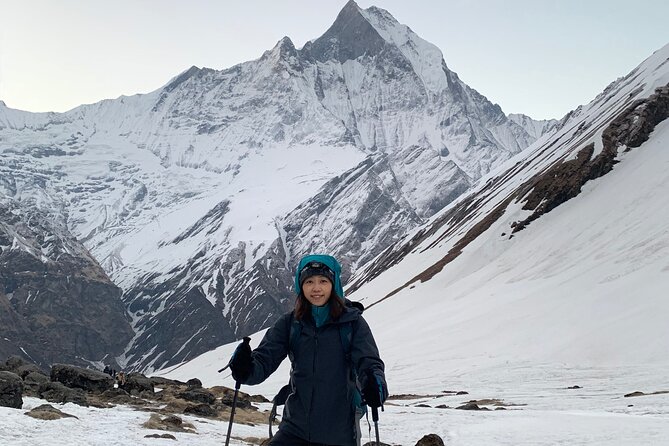
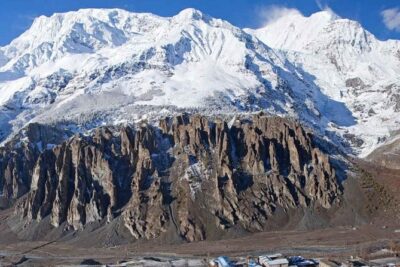
The Annapurna Sanctuary is popular for a reason. As you climb, the mountains stop being background and start feeling close, like you could reach out and touch the slopes. On this route, you’ll also get repeated looks at big names such as Machhapuchhre, Dhaulagiri, Hiunchuli, and Nilgiri while you move between ridgelines, rivers, and villages.
I also like the variety of environments along the way. You’ll walk through forested sections with oak and rhododendron, then later through drier, higher paths. That switch matters because it changes how the trek feels day to day. Add in the local culture, and it stays more than just a photo run.
One more thing: this trek runs through an area known for high biodiversity. You’re not just passing through scenery, you’re moving through a living system. The trekking corridor is described as home to hundreds of bird species and dozens of reptiles and amphibians, plus a long list of flowering plants and mammals. Even if you never “count” animals, you’ll feel the difference in how alive the forests seem.
More routes into the Annapurna Sanctuary:
- Annapurna base camp trek 5 Days
★ 5.0 · 252 reviews - 14-Day Private Annapurna Base Camp Trek
★ 5.0 · 180 reviews - Annapurna Base Camp Trekking
★ 5.0 · 116 reviews
Getting started in Kathmandu: temples, altitude prep, and easy first day flow
Your trip begins in Kathmandu with a welcome and transfer to your hotel. A representative from K.J. Adventures greets you after you land at Tribhuvan International Airport. The important practical piece here is the handoff: you check in, get a briefing, and get trekking basics explained without scrambling.
Day two is Kathmandu Valley sightseeing. You’ll visit major UNESCO World Heritage Sites, including Kathmandu Durbar Square, Swayambunath, Pashupatinath, and Bouddhanath. This day is more than sightseeing. It’s a gentle way to adjust to Nepal time, meet your guide team, and get your packing and backpack setup done for the trek start.
After sightseeing, you’ll get trekking basics and time to configure your bags. That “do it before hiking” step is worth its weight in sore shoulders. I’d rather spend one calm afternoon organizing gear than fight a messy load in the first long hike.
A practical note: the tour includes entrance fees for the Kathmandu sites on that day, so you are not budgeting on the fly for ticket lines.
Flights to Pokhara and the Matkyu start: why the timing matters
On day three, you fly from Kathmandu to Pokhara by Buddha Air. The flight is short, around 25 minutes. You then drive by private vehicle or jeep for about two hours to reach Matkyu, where trekking begins.
Why this matters: it protects your energy early. Instead of using a full day to get from Kathmandu to trailhead, you shift that effort into walking. By the time you reach the first trekking village, you’re already in the rhythm you need.
Pokhara is included as a base too. Later in the itinerary, you’ll return there for downtime, so this is not just a transfer city. It’s part of the trip’s overall arc.
Jhinu Danda: Modi River forests and hot springs you can actually use
From Matkyu, your first trekking day starts with a climb through oak and rhododendron forests, close to the Modi River. The trail includes stone stairs and dense forest walking, so even this “starter” day feels like real trekking.
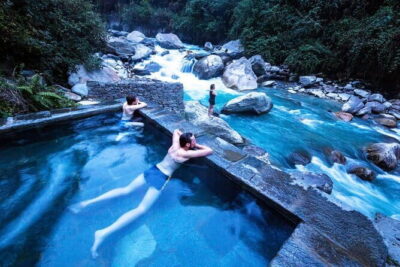
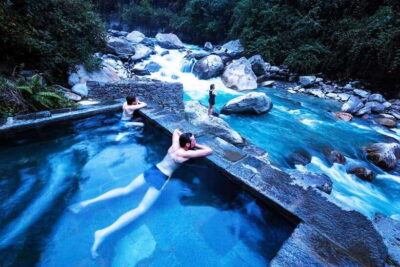
You finish at Jhinu Danda. This is where the trip adds a nice recovery option: natural hot springs in the area. The itinerary notes you can enjoy a bath if you want to wash away sweat and fatigue.
Here’s how to think about it. Hot springs at the end of day three are not magic, but they can help you feel less stiff going into the next day’s climb. If you’re serious about leg recovery, plan one calm soak session rather than rushing in and out.
More to compare around Kathmandu
- Everest Base Camp Trek – 14 Days
★ 5.0 · 1,499 reviews - Everest Base Camp Trek
★ 5.0 · 842 reviews - Private Kathmandu Sightseeing Tour | UNESCO World Heritage sites
★ 5.0 · 756 reviews - Kathmandu: 7 UNESCO Sites with Lunch
★ 4.8 · 744 reviews
Upper Sinuwa and Chhomrong: bridges, steep steps, and the Gurung feel
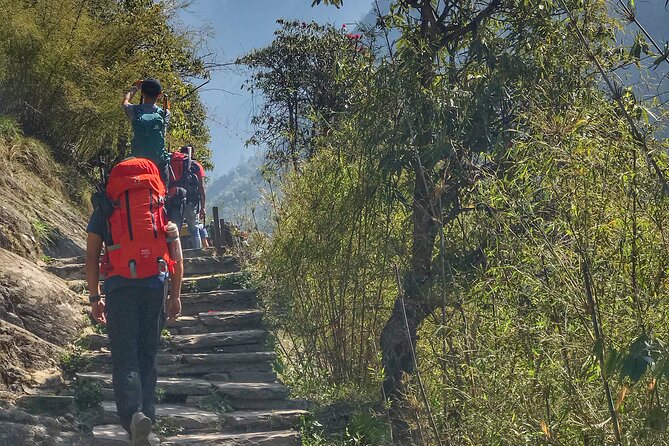
Day four pushes uphill first, roughly an hour, to reach the top area of Chhomrong village. You’ll stop briefly and get a sense of Gurung culture and daily life.
Then the trail swings into the classic rhythm: steep stone staircases down to a suspension bridge, crossing over Chhomrong Khola, and then a long climb back up. The bridge moment is one of those small things that makes trekking feel like trekking, not just walking from lodge to lodge. It also gives you a clear view of the river below.
You spend the night at Upper Sinuwa, at an elevation around 2,340 meters. This is a good altitude for settling in, not yet the top-of-the-route suffering, but enough to feel like the air changes.
If you care about cultural immersion, this is where the itinerary pays off. The route is described as reflecting ancient Tibetan culture and history in these settlements. On foot, that becomes less of a concept and more of what you see in houses, routines, and village layout.
Toward Hinku Cave and Deurali: a trek day with history baked into the trail
Day five moves you deeper into the Annapurna region. You climb through dense forest again, then the path opens as you go higher. You get glacial river views below as the scenery broadens.
A key landmark is Hinku Cave, mentioned as important historically for early Annapurna I expeditions. Even if you don’t stop long, the name itself connects the trail to decades of exploration. It’s one of those little anchors that makes you feel you’re walking on more than just a modern trail.
After Hinku Cave, you continue through a jungle trail with a slight uphill to reach Deurali for lunch. Deurali is also a pacing checkpoint. Build in time to eat slowly, drink, and avoid rushing your breath.
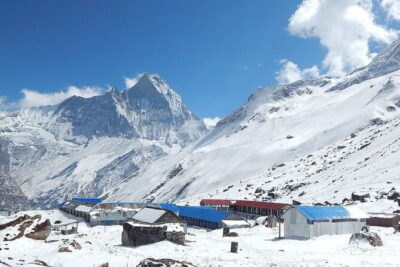
Then you continue toward Machhapuchhre Base Camp (MBC). The itinerary notes it can be strenuous, but the payoff is huge: views of Machhapuchhre and surrounding peaks from the MBC area. You sleep in a hotel in MBC on full board trekking nights.
Day six repeats the broader approach, with hiking to the Machhapuchhre Base Camp area. Practically, what matters is that your body gets time to adjust as you move higher, and the route keeps bringing you back to the same high-view staging area.
Machhapuchhre Base Camp to Annapurna Base Camp: where the trek turns cinematic
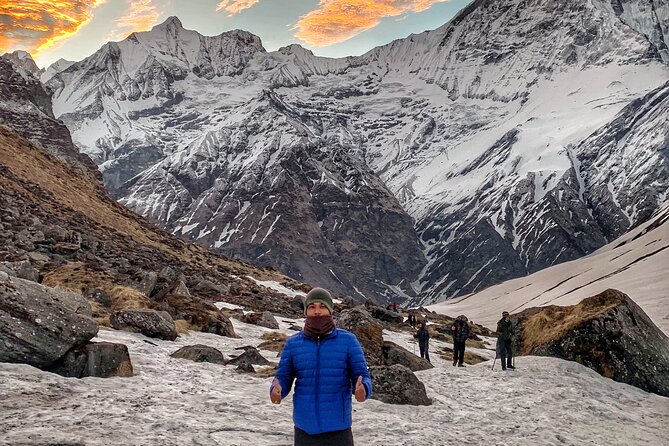
Day seven is the big push to Annapurna Base Camp, starting from the Machhapuchhre Base Camp area with about a two-hour hike. The trail is described as wide and clear, which is useful at altitude when you want fewer distractions and more focus on breathing.
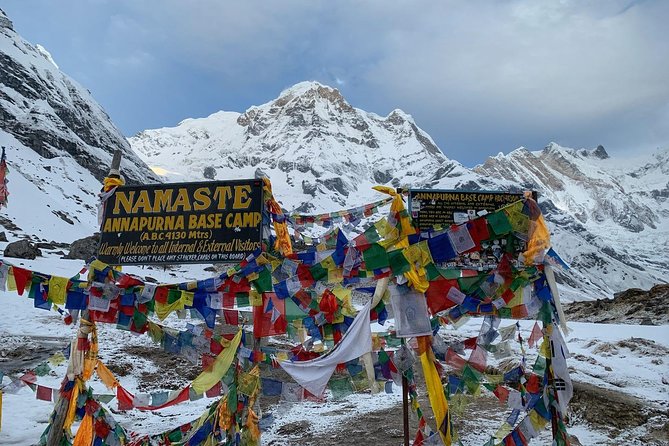
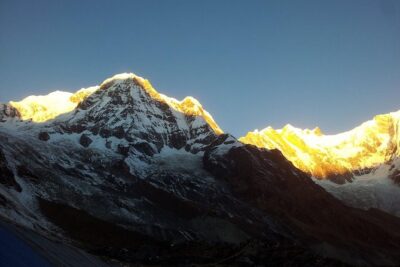
You reach Annapurna Base Camp at about 4,130 meters. The view is described as jaw-dropping for a reason. From here, you get Annapurna South front and center, plus wide views of Annapurna, Dhaulagiri, Machhapuchhre, Hiunchuli, Nilgiri, and other high peaks.
This is also where I’d watch your pace. Base Camp is not the time for macho efforts. If you get winded, stop, breathe, and let your group settle. You’ll enjoy it more if you’re not scrambling for air.
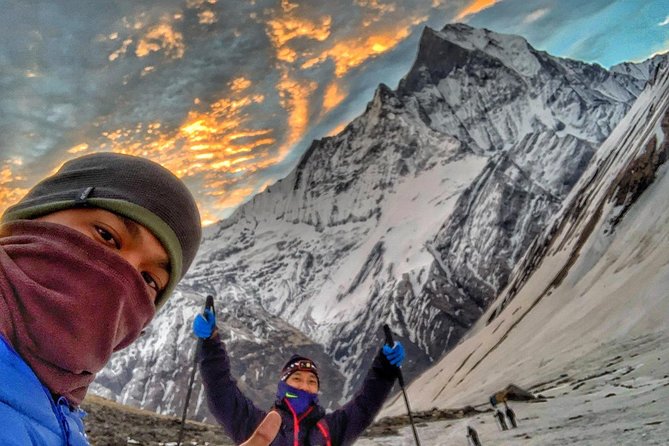
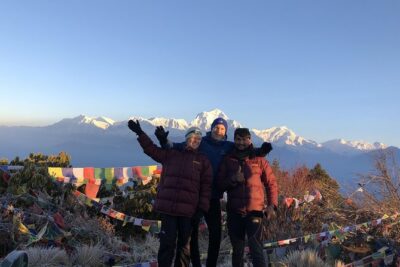
One of the most praised parts of trips like this is mornings. In accounts from the trail, people mention sunrise from the base camp area along with breakfast in good company with the guide and support crew. Even if your exact timing depends on weather, this day gives you the chance to slow down and experience the mountains rather than just pass by them.
After time at base camp, you retrace your way back down toward Dhovan, descending through MBC, Deurali, and Himalaya. You sleep at a hotel in Dhovan.
Chhomrong to Upper Sinuwa and back: bamboo, bridges, and “legs, meet reality”
Day eight starts after breakfast and is mostly downhill at first. You’ll walk through bamboo forests, then take a short ascend to reach Upper Sinuwa again. After that, it’s more downhill to Chhomrong Khola and a suspension bridge crossing.
After crossing, you walk a slightly inclined path and reach Chhomrong, where you spend the night.
Chhomrong is a highlight for many people because it feels lived-in. The itinerary notes the people there practice traditional lifestyles and older cultures, and you get a chance to interact with locals while spending the night in the village. That human scale matters after days of altitude walking.
One practical detail: the bridge and river crossings can feel dramatic, especially when you’re already tired. Take your time on approach, and you’ll cross without rushing.
Matkyu to Pokhara: hundreds of stone stairs, then real recovery
Day nine is your trek back. You retrace the route through Jhinu Danda and down toward Matkyu. The trail includes steep descents and several hundreds of stone stairs. The itinerary also repeats that oak and rhododendron forests line the route beside the Modi River.
Once you reach Matkyu, you take a jeep back to Pokhara and overnight in a hotel.
Pokhara is your release valve. The itinerary specifically calls out options like:
- boating on Phewa Lake
- renting a bicycle to explore around the city
- evenings with live concerts and city lights
I like this kind of built-in recovery day because you don’t have to plan everything from scratch. You’ll still be tired, but you can choose how active you want to be.
Return to Kathmandu and a farewell dinner
On day ten, you fly back from Pokhara to Kathmandu after breakfast. You’re then transferred to your hotel for downtime.
In the evening, the representative picks you up for a final dinner. The itinerary includes a farewell dinner, which is a nice way to compare notes, swap stories, and mentally close the loop on the trek.
Day eleven is essentially your departure buffer. Depending on your flight schedule, you’ll be escorted from your hotel to the airport for your final departure. Clean and simple.
Price and logistics: is $1,300 good value for this route?
At $1,300, the value hinges on what you get without extra fees and without extra chaos.
Here’s what’s included that normally costs money or time:
- Two-way domestic flights (Kathmandu to Pokhara and back) by Buddha Air
- Private transportation during the non-trek days
- Kathmandu hotel on BB basis and Pokhara hotel on BB basis
- Twin sharing teahouse/lodge accommodation during the trek with full board
- English-speaking trekking guide
- Porter service (1 porter for 2 clients)
- Permits and paperwork (ACAP and TIMS)
- Entry fees for Kathmandu sightseeing
- A medical kit plus a trip map, duffel, and completion certificate
What’s not included is also clear: international airfare, visa fee, travel insurance and rescue insurance, meals in Kathmandu and Pokhara beyond what’s listed, and tips.
So for me, the price makes sense if you want a guided experience that removes the common friction points: arranging permits, figuring out transport, and carrying everything alone. You’re paying for reduced decision fatigue.
The moderate fitness requirement is the other reality check. You do need to hike. This is not a couch-to-summit shortcut.
Guide, porter, and care: the support system that keeps you moving
Two things can make or break a trek like this: whether your team communicates well, and whether your load is manageable.
The trip includes an experienced English-speaking trekking guide plus porter service. Porter support at a ratio of 1 porter per 2 clients can be a huge difference in how your day feels, especially on steep sections and stair-heavy descents.
The trekking support also includes a medical kit. That does not eliminate risk, but it signals that someone planned for the basics: blisters, headaches, and common trail issues.
On the human side, one trek guide named Prajwol appears in the shared experience accounts. People praised how he gave the information you needed during the trek. Even if you have a different guide, the important take-away for you is this: the itinerary is designed around an English-speaking guide who should be able to explain what is happening each day and what to watch for.
What a “day on this trek” really feels like
Here’s the rhythm you should expect across the 11 days:
- Morning starts with breakfast, then you hike to the next lodge or village.
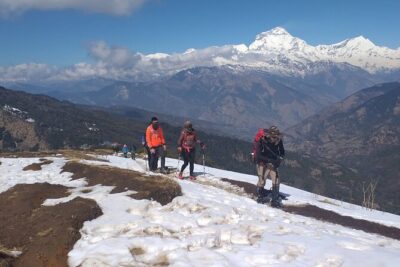
- You often encounter stone stairs, climbs, and bridge crossings.
- Lunch is typically at a stop along the trail, with rest built into the schedule.
- Even with full board teahouses, you still choose how fast you move.
Because the itinerary includes multiple days of ascents plus one major summit-feel day to Annapurna Base Camp, I recommend you treat the trek like a progression, not a sprint. Your body will do best if you hike at a pace that keeps you able to talk in short sentences.
If you’re sensitive to altitude, you’ll want to pay attention to how you feel at each overnight point. The route’s structure gives you transitions, including nights at Upper Sinuwa, MBC staging, and Dhovan.
Packing and pacing tips that match this exact route
You’re not going to be given a gear list here, but you can plan smart based on what the trek demands.
Focus on:
- Foot comfort for lots of stairs (you will walk down as well as up).
- Layering for forest mornings and higher-altitude air later.
- A water and snack routine, since long stretches happen between meal stops.
- Simple, lightweight rain protection. Weather is a factor in the Himalaya and the trek requires good conditions.
Also, keep your backpack system simple. The itinerary includes a setup briefing in Kathmandu, so use it. Pack so you can reach essentials without unpacking your whole life at 2,000 plus meters.
Finally, take advantage of recovery options when they exist. Jhinu Danda hot springs are the most obvious one in this plan, but also remember that the Pokhara days are where you should fully reset.
Who should book this Annapurna Sanctuary Trek?
Book it if:
- you want the classic Annapurna Sanctuary route with Annapurna Base Camp as the goal
- you like village trekking, bridges, and teahouses, not just mountain viewpoints
- you prefer a guided setup with permits and logistics handled
- you would benefit from porter support to keep daily hiking comfortable
- you also want a real add-on in Nepal’s two biggest pre- and post-trek cities, Kathmandu and Pokhara
Skip or consider another option if:
- you know altitude treks make you feel unwell quickly
- you want a very easy hike with minimal climbs
- you prefer designing every part yourself rather than following a structured plan
Should you book this trek?
If your dream is to reach Annapurna Base Camp while keeping your trip organized and supported, this one is a strong match. The combination of flights, private transport, permit handling, and full-board teahouse nights means you can focus on hiking and enjoying the journey instead of chasing logistics.
I’d book it if you’re prepared for altitude and you’re okay with shared lodge life in the mountains. I’d hesitate if you are expecting a gentle walk with no challenging days.
FAQ
What is the overall duration of the Annapurna Sanctuary Trek?
The trek runs for about 11 days.
How do I get between Kathmandu and Pokhara?
You take two-way domestic flights by Buddha Air, Kathmandu to Pokhara and back.
Are permits included for the trekking area?
Yes. The tour includes permits and paperwork for ACAP and TIMS.
Is a porter included?
Yes. Porter service is included throughout the trek, with 1 porter for 2 clients.
What kind of accommodation is provided during the trek?
During the trek, you stay in twin sharing teahouses or lodges on a full board basis.
Are meals included?
Breakfast is included for 10 days, and lunch and dinner are included on 7 days each. Lunch and dinner in Kathmandu and Pokhara are not included.
What fitness level do I need?
You should have a moderate physical fitness level.
Latest Kathmandu write-ups
- Langtang Valley Trek★ 5.0 · 3 reviews
- Khopra Danda Trek★ 5.0 · 3 reviews
- Langtang Valley Trek from Kathmandu★ 5.0 · 3 reviews
- 5 night / 6 days Kathmandu Nagarkot Chitwan Pokhara tour★ 5.0 · 3 reviews
- Nepal Highlights Tour: 5 Nights 6 Days Kathmandu & Pokhara Tour★ 5.0 · 3 reviews
- Kathmandu Valley Private Day Tour★ 5.0 · 3 reviews
- Conquer the Himalayas: The Ultimate 16-Day Annapurna Circuit Trek★ 3.5 · 3 reviews
- Kathmandu Heritage Day Tour★ 5.0 · 3 reviews
Annapurna Base Camp Trek, compared.
Browse the lists this tour appears in