This tour is interesting because it packs two suspension bridges into a 4-hour window, so you get real “up close” views of how people cross Nepal’s river valleys. I love the built-in wow factor of walking at 70m and 90m above the gorge, where the height makes the scenery feel extra real.
I also like that you are not just sightseeing. You have an English-speaking driver who shares what the bridges mean to daily life, and you may even get guides like Rajit or Pujan who bring context to every stop. The only drawback is the schedule stays brisk, so it is not ideal if you want long, slow wandering.
Key Things You’ll Notice on This Two-Bridge Day
- Bhalam Bridge: a 295m span over the Kali River, with walkways around 70m above the gorge.
- Damsadi Bridge: a longer 276m crossing with a height around 90m, plus big river valley panoramas.
- Satisfying walking time: about 45 minutes at the first bridge, plus another guided walk window at the next key stop.
- Scenic road breaks: photo stops on the drive, including a scheduled break at PumpHouse.
- Comfort matters: a private car experience with a clean, safe ride, leather seats, and good temperature control has been noted.
Why Two Suspension Bridges in One Half Day Feels Special
Pokhara is famous for views, but this tour adds something different. You get to experience engineering in motion, because suspension bridges are not static. The sway and the height change how you see the rivers below.
I like that the route is built around short, high-impact moments. You start early from Pokhara, then your day becomes a sequence of drive, photo, walk, and cross. At the end, you are back with your legs tired in a good way and your camera full.
The bridges also have a human side. Suspension bridges in Nepal are not only for tourists, they help remote villages connect across deep valleys, making it easier to move goods and reach services like healthcare and education. When you know that, the crossing feels less like a stunt and more like a lifeline.
More to compare around Pokhara
- ZipFlyer Nepal – The World’s Steepest Zip-line
★ 5.0 · 608 reviews - Bungee Pokhara by HighGround Adventures
★ 5.0 · 366 reviews - From Pokhara: Sarangkot Sunrise Himalayas Tour
★ 4.7 · 218 reviews
Pickup in Pokhara, Then Straight Into the Scenic Drive
You get picked up from your hotel or the airport in Pokhara, including the Lakeside area. That matters because in Nepal, the time you save on finding transport is real. With a private car, you also avoid the hassle of coordinating rides for a half-day plan.
The driving portion is part of the experience, not just the wait. You will take picturesque routes toward the Bhalam area and later continue toward Damsadi. Along the way, there are planned photo stops, so you can get shots without needing to scramble off the road.
If you are sensitive to motion, start hydrating before you leave. The tour is only about 4 hours, but you still spend that time traveling and crossing, which is enough to make a difference if you are prone to getting travel-weary.
Bhalam Bridge: 295m Across the Kali River, 70m Above the Gorge
Bhalam Bridge is the first big moment. It spans 295 meters across the Kali River, and the walkway sits around 70 meters above the gorge. That combination, length plus height, is why this bridge hits hard visually.
You will reach Bhalam after an early departure and a scenic drive. Then you get time to walk across and take in the views from the bridge itself. The Seti River valley and the surrounding greenery are part of the payoff, so this is not just “cross and go,” it is “cross and look.”
I recommend using your first minute slowly. When you step onto a swaying suspension bridge, your body needs a second to sync with the motion. Once you relax your stance and grip, you will start noticing the valley lines and how far the river system drops away beneath you.
Walking Across: Engineering Meets Everyday Life
What makes Bhalam more than a photo stop is the context you get while you are there. Suspension bridges connect communities across challenging terrain, and you will learn how this kind of crossing supports transportation of goods and everyday social ties.
This is also where your photos get better. The bridge frames the valley, and the height gives you layered views that you cannot get from a lookout. If you are traveling solo, take advantage of the fact that your guide can help with pictures, since solo travelers have been well supported with photo-taking.
A small practical note: wear shoes with solid grip. You will be walking on a structure high above a gorge, and your comfort on your feet changes everything about how confidently you move and how clean your photos look.
A different sort of day out of Pokhara:
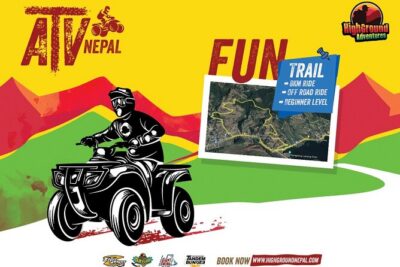
- ATV Adventure Tour in Pokhara, Nepal
★ 5.0 · 194 reviews - Full-Day Tibetan Cultural Tour to Tibetan Settlements Pokhara
★ 5.0 · 184 reviews - Pokhara: Full-Day Sharing Bus Tour on 7 Iconic Destination
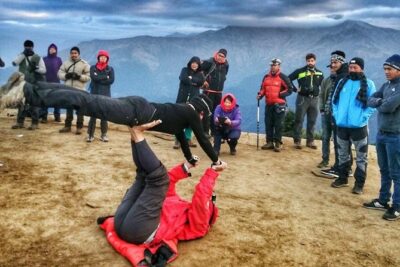
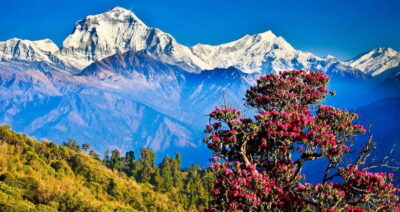
★ 4.1 · 179 reviews - Poon hill Trek 3 days
★ 5.0 · 176 reviews
PumpHouse Break: A Reset Stop With Photos and a Short Walk
After Bhalam, you have a planned break at PumpHouse. This is not just downtime, it is a chance to reset before the second bridge crossing. There is time for photos and sightseeing elements here, plus another walking window.
I like stops like this because they keep the day from feeling like nonstop motion. You get a moment to stretch, drink water, and regroup your camera strategy before you go back to heights and sway.
Keep your expectations simple at this stage. This portion is about comfort and timing, so you can arrive at Damsadi feeling ready rather than rushed. If you get cold easily, note that morning and time near river valleys can feel cooler, so layering helps.
Damsadi Bridge Near the Fusre River: 90m High, 276m Long Views
Next comes Damsadi Bridge, near the Fusre River. The crossing is about 276 meters long, and it sits around 90 meters high, which is a noticeable jump from Bhalam.
Damsadi gives panoramic views over the rugged Kali Gandaki River valley. That is the kind of scenery that makes you put the phone away for a minute, because the whole view changes when you look from the middle of the span instead of from the side.
You will cross and feel the bridge sway. The rhythm is part of the experience, so do not fight it. Instead, lean into it, keep your pace steady, and let the motion become the background while you watch the valley unfold below.
How the Bridges Connect People, Not Just Places
Here is what I think is the real value of this kind of tour: you see connectivity in action. In Nepal, crossing a deep river valley is not a small thing. Suspension bridges can be the difference between reaching services and going without, and they can make trips to market or school more realistic.
You also get cultural immersion as you interact with locals and learn about why the bridges matter. That adds meaning to the view. When you understand the role of a bridge in everyday life, it stops being a thrill ride and becomes a window into resilience and local problem-solving.
And yes, they are iconic landmarks for tourists too. The views are breathtaking, but the point is that tourism is layered on top of an essential local function. That blend is what makes the bridges feel authentic rather than staged.
Photo and Footing Tips for Swaying Crossings
You will have major photo opportunities at both bridges, plus photo stops on the drive and at PumpHouse. To get the best shots, I treat the day like this: wide views from the middle of each bridge, then close portraits on stable angles, then one or two “standing back” shots from viewpoints on land before you re-enter the bridge.
For safer-feeling walking, go slow at the entrance and avoid sudden stops mid-span. Take a deep breath before you step into the sway, and keep your body relaxed. Your photos will look better too, because you will not tense up.
If you are traveling with a partner, position yourselves so one person handles photos while the other focuses on pacing. If you are solo, ask your guide for help snapping pictures. Solo travelers have been supported with good photos, which is a big deal when you do not want to rely on self-timer all day.
Price and What You Actually Get for $28
At $28 per person for a 4-hour private tour, the value is mostly about stress reduction. You are not finding a ride, negotiating schedules, or piecing together multiple transport segments on your own.
You also get real inclusions: a private car, mineral water, entry ticket, and an English driver. That mix matters because it turns the day into a straightforward plan. You can focus on crossing, photos, and learning, instead of managing logistics.
In short, you are paying for a tight half-day with transportation handled and key experiences covered. If you are already comfortable getting around independently, the cost may feel less essential. But if you prefer a clean plan and a driver who understands timing, $28 is reasonable for what you are getting.
Who This Tour Fits Best (And Who Might Prefer Something Else)
This tour is a great fit if you want:
- A high-impact half-day without committing a full day.
- Real walking time, with both bridges giving different height and valley angles.
- A private car and English communication so you can ask questions and stay oriented.
You might think twice if you:
- Want a long, slow day with minimal driving.
- Get tired from short, frequent stops.
- Prefer to skip walkable viewpoints and stay purely in lookout areas.
If you are in Pokhara for a short visit and want something more active than lounging, this gives you a memorable “engineering meets nature” experience that still fits into a tight schedule.
Should You Book This Two-Bridge Tour from Pokhara?
I think you should book it if you are excited by height, want a private, guided plan, and like the idea of learning why suspension bridges matter to the people who depend on them. The pairing of Bhalam and Damsadi is strong because you get two distinct crossings: one around 70m above the gorge, then one around 90m, with big valley panoramas at each step.
Skip it only if you are not a fan of brisk timing. This is built for a 4-hour window, and that means you move. If that pacing works for you, this is one of the more worthwhile ways to see the river valleys around Pokhara in a way that feels practical, not just scenic.
FAQ
How long is the tour?
The tour duration is about 4 hours.
What is the price?
It costs $28 per person.
Where does pickup happen?
You are picked up from any hotel or the airport in Pokhara, including the Lakeside area.
Are entry tickets included?
Yes, entry tickets are included.
Is it a private tour?
Yes, it is a private group experience with a private car.
What language is the driver?
The driver provides English support.
What is included in the ride?
You get a private car, mineral water, and a friendly driver.
What cancellation options are available?
Free cancellation is available up to 24 hours in advance for a full refund.
Latest Pokhara write-ups
- 12 Days Annapurna Circuit Trek from Pokhara★ 5.0 · 4 reviews
- Mardi Himal Trek Fixed Departure (March 1,7; Nov 3,10,17 2023)★ 5.0 · 4 reviews
- 1 Day Trishuli Rafting from Pokhara★ 5.0 · 4 reviews
- Paragliding in Pokhara★ 5.0 · 4 reviews
- 3-Day Ghandruk Loop Trek from Pokhara★ 5.0 · 4 reviews
- Ghorepani Poonhill Trek★ 5.0 · 4 reviews
- Pokhara: Annapurna Base Camp Trek Multi-Day Guided Tour★ 5.0 · 4 reviews
- Pokhara: Budget Unguided Tour By Sharing Bus★ 4.0 · 4 reviews
Pokhara Tours, compared.
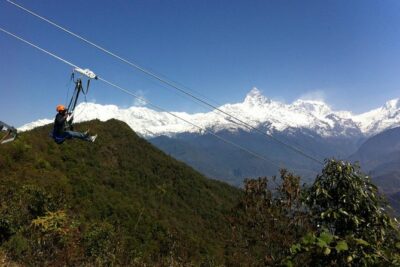
ZipFlyer Nepal – The World’s Steepest Zip-line
Read our review →
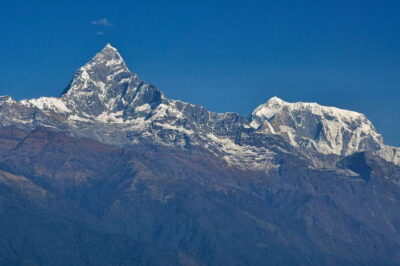
4-Day Ghorepani, Poonhill & Ghandruk Mountain Trek
Read our review →