
Reviewed · MANASLU CIRCUIT TREK
Manaslu Circuit Trek (15 Days)
The Manaslu Circuit Trek is interesting because it feels like Nepal on hard mode, in a good way: fewer crowds, big mountain days, and culture that shifts from Gurung villages toward Tibetan-influenced settlements. I especially like the quiet trail and I also like the permit and safety prep built into the trip, including clear altitude planning.
One thing to think about up front: you’re signing up for real hiking time and a high-altitude day, so your fitness and your medical readiness matter. You also need the right attitude toward simpler teahouse life, shared toilets, and days when weather can change quickly.
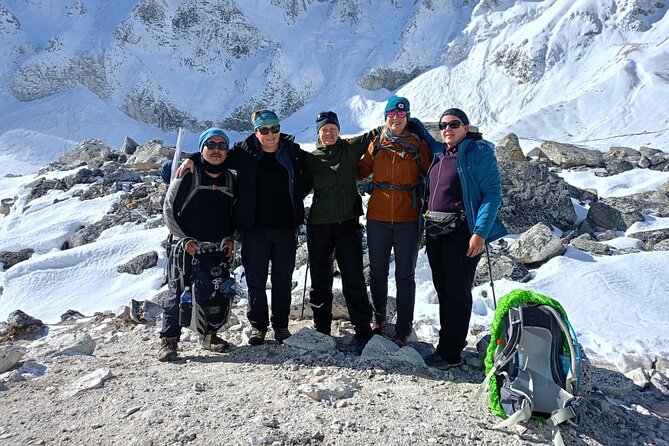
I’ve seen the human side highlighted in guides like Raj Rai and Tshering, both described as professional, caring, and safety-first. You also get support that’s more organized than you might expect, with a porter setup at a 2 trekkers to 1 porter ratio and an assistant guide for extra coverage when groups are larger.
Key things to know before you go
- Fewer crowds than Nepal’s big name treks, especially once you’re off the main routes
- Permits handled as part of the trip, including the Manaslu Conservation Area, Annapurna Conservation Area, and special restricted area permit
- Safety structure on the trail, with a first-aid trained licensed guide and additional support (assistant guide per 5 trekkers)
- Teahouse trekking that keeps you moving, rather than camping or complicated logistics
- Start-to-finish transport support, including airport transfers and drive segments that reduce fatigue before and after hiking
Why the Manaslu Circuit feels different once you leave Kathmandu
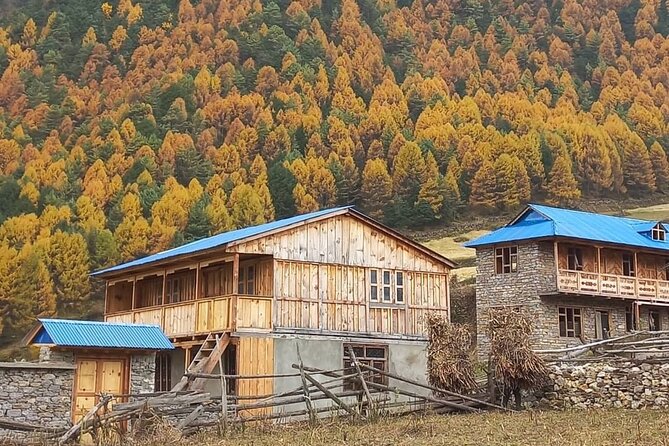
If you’ve done any classic Nepal trek, you’ll recognize the formula: gorgeous views, steep climbs, and a lot of people at the lodge level. The Manaslu Circuit changes the vibe. The trail here is remote enough that you notice the silence more than you notice other trekking groups, and the villages feel more like working communities than tourist backdrops.
You’ll also see the culture shift as you climb. Early days give you river valleys and Gurung settlements. Later, the buildings, mani walls, and monastery stops start to read more Tibetan-influenced. That contrast is part of why this circuit feels satisfying, not just scenic. Even on a day with long walking, it helps to have meaning in what you’re passing.
The other difference is how much value you get from a well-run team. This trek is not about stuffing in extra “activities.” It’s about getting you safely from valley floor to high pass country, with the right pacing and the right paperwork.
More of the Manaslu Circuit:
- Manaslu Circuit Trek
★ 5.0 · 292 reviews - Manaslu Circuit Trek:
★ 5.0 · 106 reviews - Manaslu Circuit Trek
★ 5.0 · 35 reviews
Kathmandu prep, permits, and why your passport timing matters
Your first two days in Kathmandu are built around trekking readiness. On arrival, the local team greets you and transfers you to your hotel in Thamel, in a 3-star property with breakfast included. Thamel is useful for you because it’s close to public transport, easy to find gear shops, and simple for settling in without chaos.
The second day is where the paperwork gets real. You wait for your Manaslu permits to be officially issued, and the company representative collects your original physical passport plus two passport-sized photos. That matters because Nepal’s immigration process requires the original document to issue permits. If you’ve ever traveled with scanned copies only, this is your reminder that trekking administration here is practical and paperwork-driven.
If you like clear communication, this part is a win. The trip is set up so you’re not scrambling at the last minute for photos, permit details, or altitude guidance.
Practical tip: after they collect your passport, don’t assume you’ll be able to pop out and handle anything “quickly.” Plan Kathmandu errands on the day you still have your documents.
Getting to Machha Khola: long drive, big payoff later
Day 3 is a long scenic drive from Kathmandu to Machha Khola. This isn’t a short transfer where you arrive fresh and ready to go. It’s the first chunk of time on your journey, and the payoff is that it places you on the trekking route instead of forcing you to walk for days just to reach the start.
When you start hiking after that drive, you’re immediately in the river rhythm of the Budhi Gandaki system. The idea is simple: you follow the river corridor, you gain elevation gradually, and you build stamina without pretending it’s an easy day.
By the time you reach Machha Khola to Jagat and beyond, you’ll feel why the circuit is popular with people who want mountain travel without the crowded Everest-style traffic.
Machha Khola to Jagat: river gorges, Tatopani, and first ridge walking
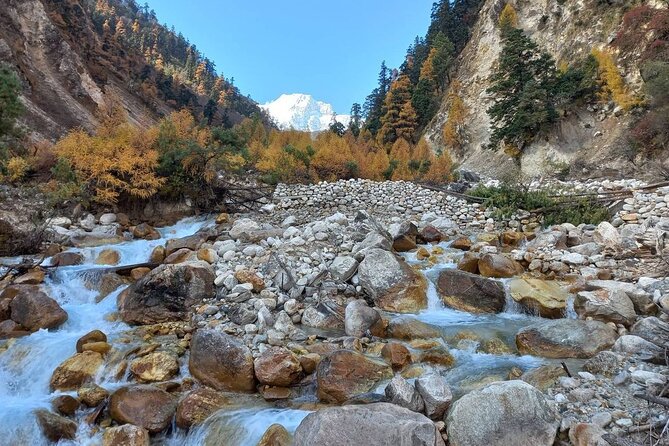
The early trek days are about feeling the terrain in your legs while you absorb the river views. As you progress along the narrow, rocky trails by the Budhi Gandaki River, you pass Tatopani, a natural hot spring site near the riverbank. The catch is you won’t stop to soak during the trek, but it’s still a cool marker of how life here is shaped by water.
As you continue, the route brings you toward Dobhan, near the confluence of the Shiar Khola and Budi Gandaki. Confluence areas often mean dramatic gorges and tighter terrain. Your day ends at Jagat after a trek of about 15 km, taking roughly 6 to 7 hours with around 600 m ascent and 250 m descent.
This is also a day where ridges and river paths can make you feel exposed when the trail is narrow. Take your time on footing, especially if conditions are slick. The scenery is worth it, but the goal is arriving with energy for the next day.
More to compare around Kathmandu
- Kathmandu: 7 UNESCO Sites with Lunch
★ 4.8 · 744 reviews - Everest Base Camp Helicopter Tour landing at Everest View Hotel
★ 5.0 · 668 reviews - Kathmandu: Local Women-Led Nepali Cooking & Momo Class
★ 4.9 · 360 reviews - Kathmandu: Food and Drink Walking Tour
★ 4.9 · 292 reviews
Jagat to Deng: a classic climb day through subtropical forest
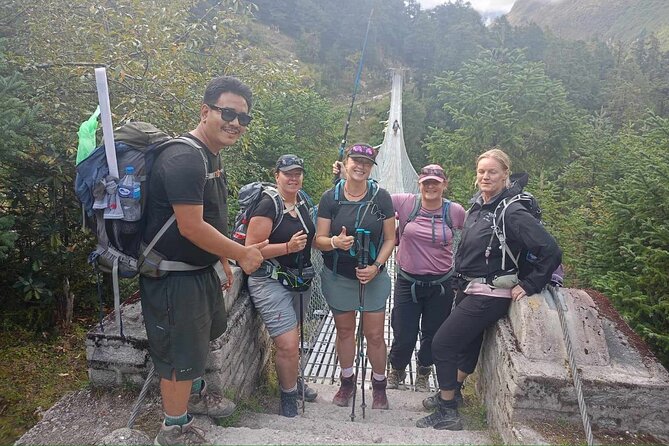
On the trek from Jagat to Deng, you’re looking at about 18 km with 7 to 8 hours of walking. Expect around 1,050 m ascent, 400 m descent, and roughly 500 m of flatter trail. It’s a day that builds real endurance, but it’s also framed by forest walking and village rhythm.
After Salleri, the route passes through a large Gurung village, and you’ll see how the trail threads between homes, fields, and the river corridor. That mix is part of what you pay for with a guided group. You’re not only following a trail line on a map, you’re moving through a lived-in region with local knowledge.
Why this day matters: your legs learn how the circuit paces. If you rush early, you’ll pay for it later, especially when altitude starts to take more interest in your breathing.
Deng to Namrung: pine and rhododendron, Tibetan-influenced stone, and steady climb
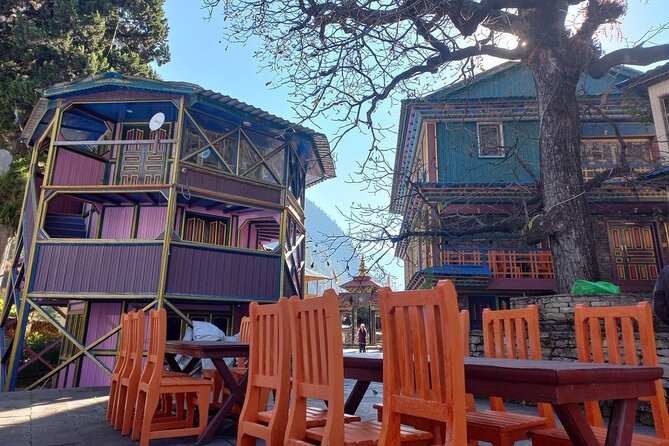
From Deng you head toward Namrung over roughly 19 km, usually 7 to 8 hours. The planned effort is about 1,100 m ascent and 150 m descent, so it’s another “work day,” but with less whiplash than a constant steep grind.
You’ll move through mixed pine and rhododendron forest and pass small settlements like Bihi and Rana. The homes and stonework here reflect the Tibetan-influenced culture you’ll see more strongly later in the route.
Namrung is a good stop to understand what’s ahead. You’re not just hiking for the view. You’re hiking for the gradual shift: from subtropical valley life toward high-altitude patterns like yak pastures and the kinds of architecture that match the cold.
Namrung to Lihi to Shyala: terraced farms, yak pastures, and big mountain silhouettes
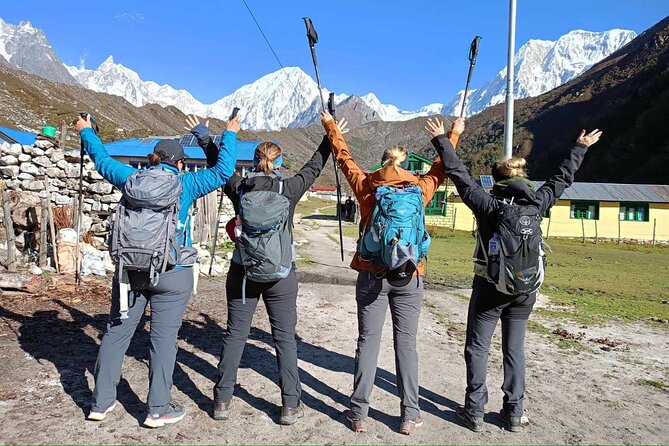
Day 7 is comparatively short in elevation terms, but not easy. The route climbs about 700 m and drops about 100 m. You’ll walk through terraced fields, forested switchbacks, and yak pastures. The “linear rise” feeling is important. It means you can keep a steady rhythm instead of stopping to recover every few minutes.
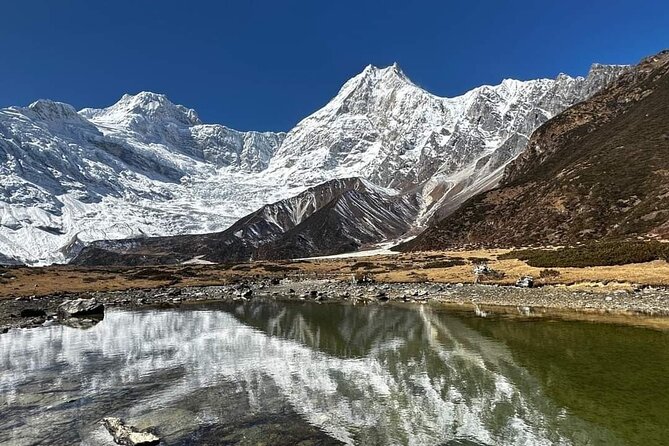
Then comes Shyala, reached after a high-altitude trek through pine and rhododendron forests. Shyala is surrounded by major peaks like Manaslu, Himalchuli, Peak 29, and Ngadi Chuli. You’ll also pass mani walls, which are a signature roadside feature in this region, and they make the culture feel concrete rather than abstract.
The Shyala area is where you’ll likely start to notice how temperature changes with elevation and exposure. Pack for cold mornings, and be ready for wind.
Shyala to Samagaun and the Pungyen Gompa round trip
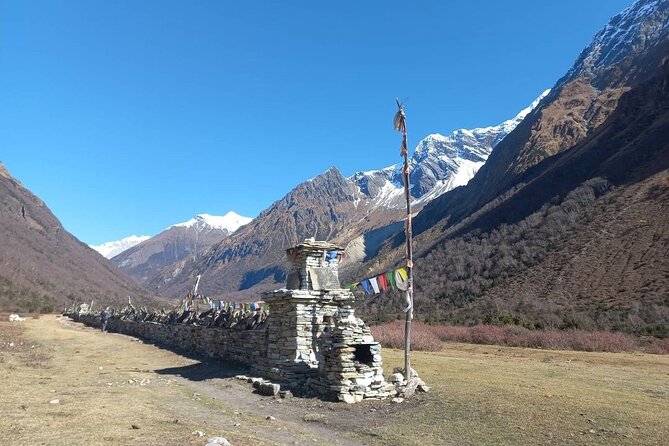
After Shyala, the trail continues over yak pastures and scrubland, then transitions into a gentle climb toward Samagaon. This section totals about 17 km, with around 500 m ascent, and it’s designed to keep you moving without overloading you right before key acclimatization time.
Samagaun is the largest village in the Nubri Valley, and it sits under Mt. Manaslu. If you like staying somewhere long enough to feel the pace of village life, this is your place. You’ll have a night here after a calmer travel day.
The standout side trip is Pungyen Gompa. It’s a 3 to 4 hour round-trip hike, anchored by a monastery perched on a ridgeline with sweeping views. Even if you’re tired, this kind of walk usually feels worth it because you’re walking with purpose, toward a spiritual site with open sightlines.
How I’d pace this day: treat the first part as warm-up hiking. Save your energy for the last stretch so you can actually enjoy the ridge views instead of just reaching them.
Samdo and Dharamsala: the acclimatization rhythm before the big pass country
From Samagaon to Samdo, you start with a gentle descent to a wooden bridge over the Budhi Gandaki River. Then the trail climbs past dry yak pastures and mani walls. This is where the trek starts to feel more “high Himalaya” and less “green valley.”
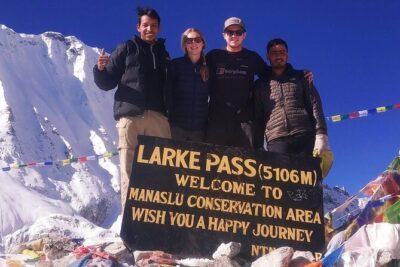
Samdo is your staging point for the acclimatization day that follows. On the way to Dharamsala, you do a short but crucial acclimatization hike before tackling the Larke Pass. The trail ascends steadily through rocky alpine terrain with sparse vegetation and sweeping views.
This is exactly where good guiding makes a difference. The goal of acclimatization is not to win a speed contest. It’s to help your body adjust while you keep yourself safe. If you feel overly breathless, don’t treat it as pride. Treat it as data.
Dharamsala to Bimthang: demanding day, start early, move smart
The trek from Dharamsala to Bimthang is described as the most demanding and rewarding day of the circuit. You start before dawn, which usually means colder air and a stronger need for layers. The route begins with a steady uphill over rocky moraine and glacier-draped terrain.
When conditions are like this, foot placement is everything. I’d rather you walk slowly and confidently than push the pace and start slipping or stumbling. The reward is that you’re moving through genuine high-altitude terrain that feels remote and serious, not just “pretty mountains.”
If you’ve never hiked on moraine or in glacier-adjacent terrain, you’ll rely on your guide’s timing, route knowledge, and pacing. This is why you want a team that’s first-aid trained and licensed.
Bimthang to Dharapani: shifting forests, then a long road back to Kathmandu
After the hardest high day, you descend from Bimthang toward Dharapani. This transition is described as moving through varied terrain: alpine scrub, then denser pine, rhododendron, and oak forests. The day also passes Yak Kharka, a seasonal grazing area where herders bring their herds.
That grazing stop matters because it changes how the trek feels. You’re not only in altitude terrain now. You’re returning toward the broader seasonal cycle of Nepal’s mountains, where people and animals move together through the year.
On Day 14, you’re back in transport. After breakfast, you board a shared jeep from Dharapani to Besisahar, then continue toward Kathmandu by private transport. The road is bumpy but scenic, following the Marsyangdi River, passing places like Tal village with cascading waterfalls.
Day 15 is your buffer day in Kathmandu. Depending on your flight time, you can spend hours in Thamel for last-minute shopping or simply relax with a café stop.
Eco-minded travel, teahouses, and why the small things add up
The trip is positioned as eco-tourism oriented: reduced waste, use of local teahouses, and reinvestment in village economies through fair wages and training. You don’t need to agree with every mission statement to feel the difference. When an operator emphasizes local teahouses and fair support, it usually means fewer empty “tour bus” moments and more real interaction with the local economy.
On the food side, the key practical point is what’s included and what isn’t. The package includes accommodation in standard teahouses during the trek, but meals during the trek are not included. That means you’ll be relying on teahouse menus and buying your own lunches and dinners along the way.
Water is not included either. The trip recommends bringing a filter bottle or purification tablets. I’ll second that. In high-altitude trekking, hydration matters, and you don’t want to gamble on water sources.
Hot showers, battery charging, and Wi-Fi can be available for extra fee at most teahouses, so plan on paying small amounts if those conveniences matter to you.
Price and logistics: where the $1,657.50 per person becomes real value
At $1,657.50 per person for 15 days, this is not a budget trek. You’re paying for the working parts that make a circuit like this safer and smoother: guide expertise, porters, permits, insurance for the trekking crew, and transport that prevents you from spending days on arrival and departure logistics.
Here’s what’s included that usually costs real money or causes headaches if it’s missing:
- Government fees and trekking permits including Manaslu Conservation Area, Annapurna Conservation Area, and special restricted area permit
- Accommodation in Kathmandu at a 3-star hotel with breakfast in Thamel
- Standard teahouse accommodation on the trek
- Private transportation for airport arrival/departure and for Kathmandu to Machha Khola, plus drop from Behisahar to Kathmandu
- Shared jeep from Dharapani to Besisahar
- A professional, government-licensed, first-aid trained trek guide
- Porters with 2 trekkers to 1 porter ratio
- Assistant guide per 5 trekkers for extra safety and support
- Insurance coverage for the trekking crew
What’s not included, and you should plan for it:
- International airfare
- Nepal visa fee, listed as $30 per person
- Travel insurance for you, specifically covering emergency evacuation and the trek’s highest altitude reached (it’s stated up to 5200 m in altitude coverage guidance)
- Travel insurance is your job, and it’s not optional in practice if you want helicopter evacuation coverage
- Personal trekking gear
- Gratuities, described as not mandatory but expected
- Extra teahouse extras like charging, hot showers, and Wi-Fi
- Trek meals during the trek are not included
- Drinking water is not included
My way to judge the value: if you were organizing all of this yourself, permits, staffing, and logistics would be the hardest parts to manage cleanly. This trip bundles them.
Also note the group size: maximum 15 travelers. That keeps the experience more manageable than giant groups and helps with trail flow.
Teahouses, packing, and altitude reality checks
Because meals and some conveniences cost extra, your packing and habits matter. Bring a way to purify water. Bring layers for cold mornings, since you start high-walk sections early, including the demanding start before dawn for Bimthang.
You’ll be in teahouses for nights, which means you should expect basics, warm beds when available, and simpler bathroom setups. The comfort level will depend on altitude and the specific lodge, so don’t build your plan around hot showers or constant charging.
Altitude reality check: this trek includes acclimatization days and a staged approach toward the pass area. Still, you must take altitude seriously. Your guide’s altitude briefings and emergency protocols are part of the safety plan, but your own pacing and hydration are part of it too.
If you want a smoother trek, the single best move is to follow the pace plan instead of trying to “feel tough” each day. On big circuit treks, the body rewards patience.
Who should book this Manaslu Circuit Trek
This trek fits best if you want:
- Remote trekking with fewer crowds and real village stops
- A culturally meaningful route, especially the Tibetan-influenced feel as you climb
- A well-supported setup with licensed guides, first-aid readiness, and porter help
- The kind of adventure where teahouses and buying your meals on the trail are acceptable
It might not be the best match if you’re looking for maximum comfort, want all meals handled for you, or want a short, gentle hike. This is moderate physical fitness plus stamina. The itinerary includes long days and a demanding high point.
Should you book?
If you want Manaslu Circuit Trek for the experience, not just the summit checkbox, this package makes sense. The mix of permit handling, structured staffing (including assistant guide support), and planned acclimatization gives you a practical backbone. And the route itself is the reward, with river valleys early, monastery views at Pungyen Gompa, and the high country build-up toward Larke Pass.
I’d book it if:
- You’re comfortable planning meals on the trail and bringing water purification
- You have solid travel insurance with emergency evacuation coverage
- You’re ready to hike daily, even when the day is long or cold
I’d think twice if:
- You want guaranteed hot showers, included meals, or constant connectivity
- You’re unprepared for altitude risks or don’t have the right coverage
FAQ
What city do I start from and where does the trek end?
The meeting point is Thamel, Kathmandu 44600, Nepal. The activity ends back at the same meeting point.
Is airport pickup included?
Yes. Private transportation is included for airport arrival and departure.
What permits are included in the trek cost?
Included permits are the Manaslu Conservation Area Permit, Annapurna Conservation Area Permit, and the Special Restricted Area Permit.
Do I need to bring my passport?
Yes. Upon arrival, the original physical passport is required because it must be presented to Nepal’s immigration department to issue the permits.
Are meals included during the trek?
No. Meals during the trek are not included. In Kathmandu, hotel breakfast and two dinners are included as part of the package, and breakfast is listed twice.
Is travel insurance included for me?
No. Travel insurance is not included. You must have coverage for accidental, medical, and helicopter evacuation up to 5200 m.
How much of the trek does the trip include for luggage carrying?
Porters are provided at a 2 trekkers to 1 porter ratio for carrying your overnight bag.
What about hot showers, charging, and Wi-Fi?
Hot showers, battery charging, and Wi-Fi are not included, but they may be available at some teahouses for an extra fee.
What are the dates and daily hours for this activity?
The tour runs from 06/22/2025 to 12/07/2026, Monday through Sunday, with opening hours listed as 7:15 AM to 7:15 PM.
What is the cancellation policy?
Free cancellation is available if you cancel up to 24 hours in advance for a full refund. If you cancel less than 24 hours before the experience starts, the amount paid is not refunded.
Latest Kathmandu write-ups
- 16 Days Island Peak Climbing With Everest Base Camp Private Trip★ 5.0 · 3 reviews
- 15 Days Round Annapurna Trek with Poon Hill from Pokhara★ 5.0 · 5 reviews
- Private Nepal round trip including Ghorepani Poonhill trek★ 5.0 · 3 reviews
- Everest Base Camp Trekking 16 Days★ 4.0 · 7 reviews
- 14 Days Luxury Annapurna Base Camp Trek★ 5.0 · 6 reviews
- Everest Base Camp Trek★ 5.0 · 32 reviews
- Everest Base Camp Trek★ 5.0 · 87 reviews
- Everest Base Camp Trek★ 5.0 · 97 reviews
Manaslu Circuit Trek, compared.
Experience the Thrill of a Lifetime:12-Days Manaslu Circuit trek
Read our review →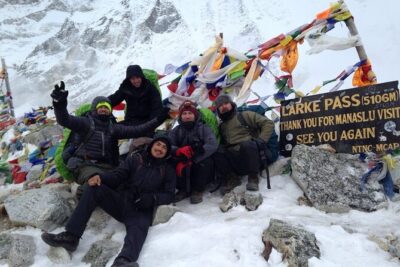
Browse the lists this tour appears in