
This trek is interesting because it keeps things human, less crowded, and still wild enough to feel like real Nepal. You go isolated and undomesticated for long stretches, yet you do not need to carry a tent thanks to teahouses along the way, plus you reach the trailhead by overland routes from Kathmandu instead of flights. The day you earn Larke-La Pass is the headline, but the smaller wins, like first real Manaslu views at sunrise, are what you remember.
I love that the route is built for comfort on the logistics side: teahouses at stop points mean you can pack lighter than classic camping treks. I also like how clearly the trip is guided, and how professionalism comes through in real life, including guides like Ganesh and a porter team that actually pays attention to your pace.
The main drawback to plan for is effort. This is not a stroll, you will face steep climbs and high passes, and near Larke-La the trail can be rocky and windy in the morning, so you want solid basic fitness and smart pacing. Also, while trekking meals are included, Kathmandu meals and drinks during the trek are not.
Key highlights worth your attention
- Teahouses throughout the circuit so you do not carry camping gear
- Larke-La Pass as the big achievement day, with early mountain views
- Overland approach from Kathmandu to skip flight juggling
- Sunrise moment at Shyala when Manaslu turns golden
- Cultural stops around Sama Gaon and Samdo, including Tibetan libraries and an old monastery
- Small group size (max 25) for a less chaotic feel
Why the Manaslu Circuit feels quieter and more real
The Manaslu Circuit has a reputation for being special, and it fits what you will experience in real time. The trail goes through stretches that feel far from mass trekking routes, yet you are not roughing it with tents. That mix is the sweet spot for a lot of people, especially if you want the mountains without the full camping lifestyle.
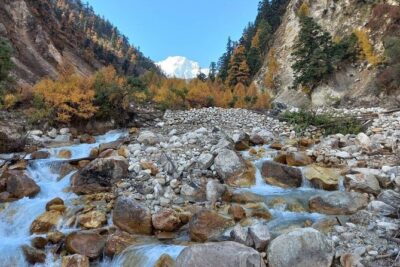
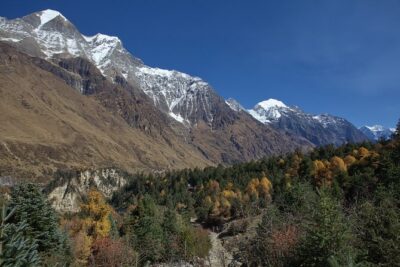
One of my favorite parts of this kind of circuit is how the scenery builds in layers. You start with river valleys and local villages, then move into higher, more remote terrain where the peaks show themselves in phases. By the time you are getting morning light on big walls of ice and rock, you feel like the trek earned it.
The other thing that matters is structure. This route gives you steady support: licensed guide time in the field, required permits, and mountain teahouse lodging for 13 nights. That keeps your brain focused on altitude, footing, and enjoying what is in front of you, not on guessing logistics at every turn.
More of the Manaslu Circuit:
- Manaslu Circuit Trek
★ 5.0 · 292 reviews - Manaslu Circuit Trek
★ 5.0 · 184 reviews - Manaslu Circuit Trek:
★ 5.0 · 106 reviews
Price and what you actually get for $227
At $227 per person for about 14 days, the value is mostly in what the package covers. You get 13 nights accommodation in mountain teahouses, a professional trekking guide with government license for the duration, and key permits for the Manaslu and Annapurna conservation areas plus the restricted area permit. It also includes an equipment setup that matters for real comfort, sleeping bag and down jacket.
The other big value piece is that you are not doing it alone in the paperwork and timing. The trip includes local transport segments from Kathmandu out to the trail region and back, and it runs to a detailed itinerary schedule so you do not have to coordinate checkpoints and overnight stops yourself.
Still, I would not treat the price as “everything is free.” Kathmandu meals are not included, and drinks during the trek are not included either, so you will likely spend on water and snacks based on your habits. Also, personal travel insurance and any rescue or evacuation beyond what the provider mentions are not included, plus international airfare and visa fees are your responsibility.
If you budget for those gaps, this can be a strong deal. If you assume the listed price covers all personal costs, you will feel the pinch later.
Getting there and back: buses that save on flights
This is an overland trek start, which I like for travelers who dislike flight stress. You begin after breakfast in Kathmandu and travel by local regular bus toward the trailhead area via towns such as Gorkha and down through the highway corridor. Day 1 then places you at Machhakhola after a long road day that follows major routes and river valleys.
That matters more than it sounds. When you avoid flights, you avoid the kind of schedule domino effect that can derail a trekking start. Overland travel gives you time to settle, stretch, and adjust before you start walking daily.
On the way back, you also travel by shared jeep to Besisahar from the trek end area and then return to Kathmandu by minibus. Day 14 is a drive with views along the Marsyangdi and Trishuli river banks. It is a good final rhythm change, from careful footwork to letting the road carry you while you replay the trek in your head.
Packing for this circuit: what you can travel-light on
This trek includes necessary equipment, specifically a sleeping bag and a down jacket. That is a big deal because winter-style insulation can be expensive to rent or buy in the wrong place. It also makes your luggage plan simpler when you are arriving in Nepal and trying to keep baggage costs under control.
You still want to carry your own core trekking layers. The data does not list every clothing item you must bring, so I suggest you plan for sensible hiking basics: a warm layer for morning starts, a rain shell, and trekking shoes that can handle rocky sections. Even if the provider supplies the big warmth items, weather on high passes and windy ridgelines can change fast.
Also, since the trek uses teahouses, you are packing for your own comfort more than for survival cooking. That usually means fewer items than a camping trek and a more relaxed daily routine.
More to compare around Kathmandu
- Everest Base Camp Trek – 14 Days
★ 5.0 · 1,499 reviews - Everest Base Camp Trek
★ 5.0 · 842 reviews - Private Kathmandu Sightseeing Tour | UNESCO World Heritage sites
★ 5.0 · 756 reviews - Kathmandu: 7 UNESCO Sites with Lunch
★ 4.8 · 744 reviews
Days 1-3: road into the valleys, waterfalls, and first checkpoints
Days 1 to 3 are your “get moving, then start earning altitude” phase. Day 1 follows the Prithvi Highway for about 5 hours along the Trisuli River, reaching places like Furke Khola, then continuing toward Dhadingbesi via the highway connection. After additional driving, you reach Machhakhola. It is a long day, and it helps to arrive ready to hydrate and snack.
Day 2 becomes your first real trekking day. You start from Machhakhola and move toward smaller villages, with Khorla Bensi and eventually Tatopani mentioned along the route. The hiking includes classic up and down terrain after you set out.
Day 3 is the “you are really on the trail now” day. After early breakfast at the teahouse, you cross the Jagat Checkpoint. The day includes a memorable waterfall scene, then a steep climb over a ridge toward Salleri and a descent that brings you to Deng. This is where you learn your trekking pace quickly, because your legs will get an early lesson about not rushing.
Days 4-6: Namrung, pine forest, and the Manaslu sunrise at Shyala
By Day 4 you are in the Budhi Gandaki valley rhythm. You cross the Budhi Gandaki, then hike on a steep, impressive valley route westward up the river. Namrung is your stop, and it is the kind of place where you start noticing how the trek’s character changes from village life to higher, more mountain-focused travel.
Day 5 begins early and includes a Namrung Checkpost crossing. You then work through pine forest terrain, heading toward Bhanjam, a village on the trek route. After a steep climb for about an hour, you are described as coming across a major landmark, Lhi mo (the details cut off in the itinerary text), but the point is clear: this day is about gaining elevation with changing scenery.
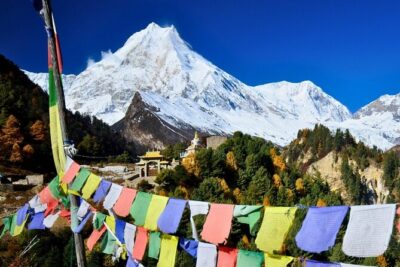
Day 6 has the kind of moment people talk about because it is real and simple. Sunrise from Shyala gives views of the top of Manaslu shifting into golden color. After breakfast, you head to Pung Gyen Gompa for a short segment, then descend for 2 to 3 hours to Sama Gaon, where you spend the night in a teahouse. If you like mountain mornings, this is one of your easiest days to justify being awake early.
Days 7-9: Sama Gaon, Manaslu Base Camp, Birendra Taal, and Samdo views
Day 7 is a major commitment day. From Sama Gaon, you go toward Manaslu Base Camp with an initial hour of almost flat walking, then a steep climb that takes roughly 3 hours. Once you reach the base camp area, you spend time there, then return to Sama Gaon for lunch and a visit around the village.
That village visit matters. The itinerary explicitly mentions seeing the culture and lifestyle of Tibetan people in the area. Even if you are not seeking a cultural program, these short moments often give you context for why the mountains matter to the people living nearby.
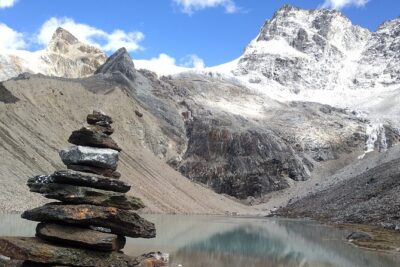
Day 8 moves you into the lakes and monasteries zone. You trek from Samgaun toward Samda, with Birendra Lake and an older monastery at Samagaon mentioned, plus a Tibetan cultural library. After the lake visit, you descend back toward Samdo, passing Kermo Kharka, which is described as famous for panoramic views of Manaslu and Pangpoche.
Day 9 is a high-view day that starts with close looks at Mount Samdo and Gyala Peak, plus the wider Larkya Bazar area. You then ascend for roughly 4 to 5 hours from Samdo to Layung La. This is a day where your reward is not one single peak photo spot. It is the steady build of views as your elevation increases and the valley walls get more dramatic.
Days 10-11: Larkya B.C., the Larke-La Pass push, and the long descent to Bimthang
Day 10 sends you toward Dharamsala, also called Larkya B.C. You hike for 4 to 5 hours, then begin your descent past the northern valley and cross the Budhi Gandaki. The itinerary notes grassy terrain with juniper above the Syacha Kh so you can expect a calmer, greener feeling compared with the very steep sections earlier.
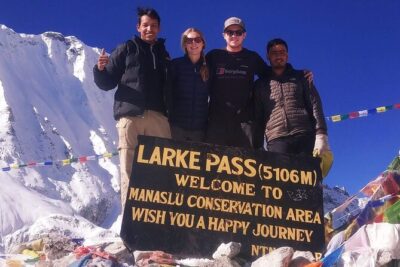
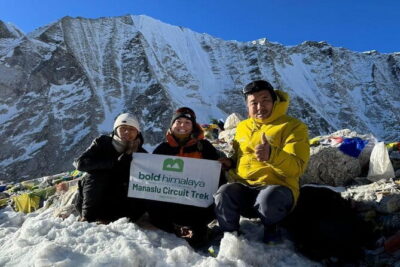
The big day is Day 11. You start early and work up steep, sometimes windy and rocky trails toward Larkya La Pass, often the core achievement on this circuit. The morning views of Larke peak (6249 m) are called out as spectacular. If the trail is windy, your strategy is simple: go steady, keep your layers managed, and accept that you might be walking longer than you want because you are focused on footing.
After you take in the pass area, you descend to Bimthang. The itinerary includes that after spending moments at the top, you walk down on a steep descent. It also highlights views of Nimjung, Himlung, and Kanguru mountains along the way. Day 11 sounds like a grind, and it is, but the payback is that you go from the highest effort to a view-rich descent that helps you feel like you did something serious.
Days 12-14: Tilche farmlands, Besisahar by jeep, and your Kathmandu reset
Day 12 is Bhimthang to Tilche, described as about 6 to 7 hours. You begin with a descent shortly after starting. The itinerary also notes splendid views of Manaslu from Tilche’s morning, so you get another morning reward even after the pass day.
Day 13 includes trekking through farmlands of Tilche, crossing to the east bank of the river, then descending gradually toward the Marsyangdi Valley. After that, you reach Dharapani and take a sharing jeep to Besisahar, about 3 to 4 hours. This is the “walk less, sit more” shift that helps your body recover.
Day 14 is the return day to Kathmandu by sharing minibus, roughly 6 hours. You travel along the Marsyangdi and Trishuli river banks and can enjoy crisp views of hills and mountains. It is a good ending because it keeps you in mountain scenery even after you stop hiking.
Teahouse life: what you gain by not carrying tents
One of the most practical reasons this trek is popular is that teahouses exist at stop points throughout the route. That saves you from carrying tents and food supplies, and it also reduces the number of things that can go wrong. Instead of worrying about camp setup, you focus on sleep, warm layers, and getting ready for the next day’s trail.
In real terms, teahouse trekking also changes your pace. You can start thinking in “day chapters” rather than planning survival logistics each night. When the itinerary calls out breakfast served early in the teahouse, that is your signal: the rhythm is usually early meals, then faster-moving hiking before the weather turns.
Food is partially covered. The package includes breakfast on 14 days, lunch on 14 days, and dinner on 13 days. Kathmandu meals are not included, and drinks during the trek are not included. So you should expect tea, water, and some meals to be your daily budget line, depending on what you order.
Guides, permits, and trust: the human side that matters on hard days
This is a guided trek with a licensed professional guide for the full 14-day duration. The itinerary also includes food and salary for the guide and porter, plus insurance for guide and porter, plus emergency rescue help that is covered by your travel insurance.
What I take from that is simple: the trekking team is part of the safety system and part of the experience quality. The reviews emphasize professionalism and helpfulness, including guide Ganesh by name. That aligns with what you need most on a high pass day, someone who manages timing and helps you avoid rushing.
Permits are included too: Manaslu and Annapurna conservation area permit and the restricted area permit. In practical terms, that keeps the trek within the rules of the area and avoids the situation where you are scrambling to sort paperwork late.
Finally, group size is capped at 25. You will still share meals and spaces with other trekkers, but it should feel manageable compared with large crowd treks.
Who should book this, and who should rethink it
This trek suits you best if you want a less crowded circuit, love mountain scenery that builds day by day, and you prefer teahouse comfort over camping. You also benefit if you like the idea of cultural stops near Sama Gaon and Samdo, with monastery and Tibetan library mentions.
You might rethink it if you are looking for an easy walk or you are not comfortable with steep climbs and rocky, windy sections near Larke-La. The itinerary states a moderate physical fitness level is required. If you are already at a moderate baseline, you will likely enjoy the pacing and the satisfaction of reaching the pass.
Should you book this Manaslu Circuit trek?
I would book it if you want a real circuit with authentic village and Tibetan cultural moments, and you want the logistics handled well enough that you can focus on the walk. The value here is in the package: permits, licensed guiding, teahouse lodging for 13 nights, and key gear like sleeping bag and down jacket.
I would pause before booking if you dislike long road days, because Day 1 starts with a major bus journey. Also check your personal budget for drinks during trekking, Kathmandu meals, and your own travel insurance plus any rescue coverage you want.
If you go in prepared, pace yourself on the steep sections, and treat the pass day with respect, this can be the kind of trek that sticks for years. Not because it is perfect, but because it feels earned.
FAQ
What is included in the trek price?
The package includes 13 nights in mountain teahouses, a professional trekking guide (government licensed) for 14 days, trekking permits (Manaslu and Annapurna conservation area permit plus restricted area permit), necessary equipment (sleeping bag and down jacket), and the program as per itinerary. It also includes meals during trekking: dinner (13), lunch (14), and breakfast (14), plus first-aid kit and guide and porter food, salary, and insurance.
Are meals in Kathmandu included?
No. All meals in Kathmandu are not included, and drinks during trekking are also not included.
How long is the trekking portion and what is the overall duration?
The trip runs for 14 days (approx.). It includes 13 nights accommodation in mountain teahouses, plus travel days to and from Kathmandu.
Do I need permits for this trek?
Yes, and they are included: Manaslu & Annapurna conservation area permit and a restricted area permit.
Does the itinerary include returning to Kathmandu by transport?
Yes. After finishing the trekking route, the plan includes a shared jeep ride to Besisahar and then a minibus drive back to Kathmandu.
What fitness level do I need?
The guidance states you should have moderate physical fitness to do this trek.
Latest Kathmandu write-ups
- Langtang Valley Trek★ 5.0 · 3 reviews
- Khopra Danda Trek★ 5.0 · 3 reviews
- Langtang Valley Trek from Kathmandu★ 5.0 · 3 reviews
- 5 night / 6 days Kathmandu Nagarkot Chitwan Pokhara tour★ 5.0 · 3 reviews
- Nepal Highlights Tour: 5 Nights 6 Days Kathmandu & Pokhara Tour★ 5.0 · 3 reviews
- Kathmandu Valley Private Day Tour★ 5.0 · 3 reviews
- Conquer the Himalayas: The Ultimate 16-Day Annapurna Circuit Trek★ 3.5 · 3 reviews
- Kathmandu Heritage Day Tour★ 5.0 · 3 reviews
Manaslu Circuit Trek, compared.
Manaslu Circuit Trek 8th Highest in the World
Read our review →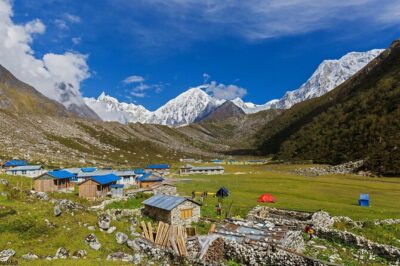
Private 12-Day Manaslu Circuit Trekking in Kathmandu
Read our review →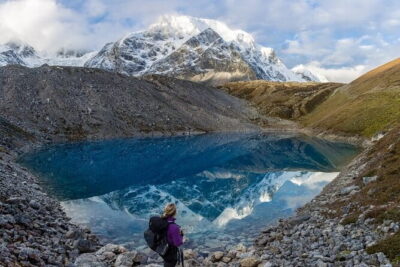
Manaslu Circuit Trek to the Beauty of 8th Highest Mountain
Read our review →Browse the lists this tour appears in