Reviewed · PRIVATE
11 Days Private Nepal and Bhutan Tour
What makes this 11-day private Nepal and Bhutan trip interesting is how quickly it switches between two countries’ traditions without feeling rushed. You start in Kathmandu, then move through Bhutan’s sacred sights in Thimphu, Punakha, and Paro, and finish with Nepal’s lake-and-wildlife highlights in Pokhara and Chitwan.
I love the Tiger’s Nest day in Paro because it is not a drive-by stop, it is a real uphill hike to a cliff-top temple. I also love the Chitwan rhythm, where you do cultural time with the Tharu community and wildlife time on the Rapti River with canoe and safari options.
One possible drawback: expect early starts and a few physical moments. The hike to Tiger’s Nest is described as about 2 hours uphill, and you will be at higher elevations like Dochula Pass (3200m) and Sarangkot (1600m), so I’d plan around a moderate fitness level.
Key highlights worth caring about
- Two-country culture switch in one smooth 11-day flow, with Bhutan monasteries and Nepal city and nature days
- Tiger’s Nest hike from the base with lunch during the trek, plus an optional hot stone bath after
- Pokhara with built-in variety: Davis Fall, Gupteshwor Cave, Tibetan Camp, Phewa Lake boating, Sarangkot sunrise, Peace Stupa
- Chitwan canoe on the Rapti River for birdwatching and the chance to see rare crocodiles mentioned in the itinerary
- Private transfers and English-speaking guides with entrance fees handled during sightseeing days
- Guides you can trust based on past guests praising specific hosts like Surindra, Lila, Liladhar, and Bashanta for warmth and flexibility
The smart route: how the Nepal and Bhutan pieces fit together
This tour works because it keeps the geography logical. You start in Kathmandu, then go into Bhutan by flying into Paro and traveling on land through Thimphu, Punakha, and back to Paro for the big day at Tiger’s Nest. After Bhutan, you return to Kathmandu and continue west to Pokhara, then down to Chitwan.
That order matters. Bhutan days focus on monuments, temples, and mountain viewpoints, which is a great match for shorter drives and scheduled guided stops. Then Pokhara brings your pace down with lake time and panoramic viewpoints. Finally, Chitwan shifts you into wildlife mode with canoe rides, jungle walks, and safari options.
Because it is private (only your group), you are not stuck waiting on a mixed-speed crowd. You can also ask the guide questions as you go, which is usually where the cultural meaning comes through, not just from the buildings.
More to compare around Kathmandu
- Everest Base Camp Trek – 14 Days
★ 5.0 · 1,499 reviews - Everest Base Camp Trek
★ 5.0 · 842 reviews - Private Kathmandu Sightseeing Tour | UNESCO World Heritage sites
★ 5.0 · 756 reviews
Kathmandu start and end: orientation first, temples later
Your trip begins at Tribhuvan International Airport. You get a welcome, meet the Going Nepal representative, and transfer to your hotel. The day includes a welcome drink and tour briefing, then you can rest.
That first-day structure is a small thing, but it helps. Nepal can feel like sensory overload on day one, so having a briefing and an easy start means you can hit the ground running without forcing yourself to do too much right away.
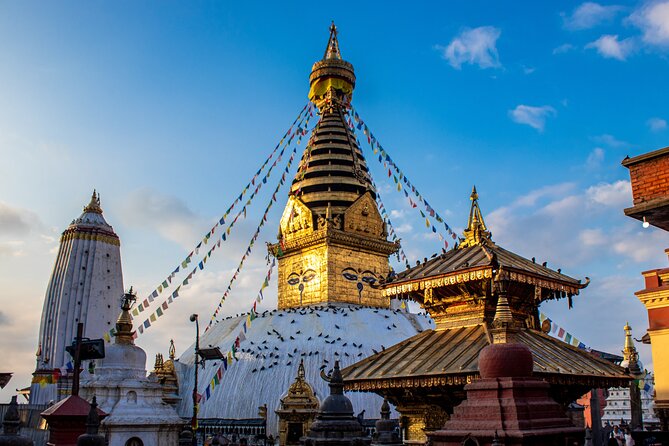
Kathmandu comes back on Day 10 with Swayambhunath Stupa, often called the Monkey Temple, where you can see primates around the complex. After that you visit Kathmandu Durbar Square, including Hanuman Dhoka. This is a good pairing. Swayambhu gives you an atmospheric, lived-in feel, while Durbar Square is about old architecture and temple-lined courtyards.
Bhutan days in Thimphu: memorials, oldest temples, and takin spotting
Day 2 moves you from Paro into Thimphu after arrival. Your Bhutan sightseeing day has a clear theme: spiritual places tied to national identity.
You start at Memorial Chorten, built in memory of the late 3rd King. Then you head to Changangkha Lhakhang, noted as the oldest temple in the valley, plus panoramic views from the surrounding area. From there, you visit the enclosure where the national animal, takins, are kept. The day ends with a look at a newly built Buddha statue with a view over Thimphu Valley.
Two details I like here. First, the takin stop is a reminder that Bhutan is not only temples and monasteries, it is also about how nature and national symbols are treated with care. Second, the viewpoints are not random, they are built into the schedule, so you do not lose time guessing where the best angles are.
A practical note: you can walk back to the hotel or be driven, so you get a choice depending on how your energy level feels that day.
Punakha via Dochula Pass: arts, medicine, nuns, and mountain views
On Day 3, you get a deeper cultural day beyond typical sightseeing. Before the drive toward Punakha, you visit the Traditional Handmade Paper School of Arts and Crafts, where students learn 13 arts commonly used in Bhutan. Then you go to the Folk Heritage Museum, the National Library, and the Traditional Institute of Medicine.
After that comes a meaningful human connection: you visit Zilukha nunnery to meet the nuns and interact with them.
Then you head to Punakha through Dochula Pass at 3200m. If the weather conditions permit, you get a spectacular view of Bhutan’s highest mountains. You also walk around the 108 stupas before continuing into the sub-tropical valley of Punakha.
Why this day feels special for me is the balance. You are not only seeing landmarks, you are seeing craft, archives, and traditional medicine, then switching to an interaction that is personal and face-to-face. That mix helps the trip feel like you are understanding how people live, not just checking off photos.
A different sort of day out of Kathmandu:
- Kathmandu: 7 UNESCO Sites with Lunch
★ 4.8 · 744 reviews - Everest Base Camp Helicopter Tour landing at Everest View Hotel
★ 5.0 · 668 reviews - Half day cooking class in Thamel kathmandu
★ 5.0 · 607 reviews - Everest Base Camp Trekking
★ 5.0 · 485 reviews
Paro basecamp: fortress walks, the wooden bridge, and old-town time
Day 4 brings you back toward Paro. After lunch, you visit Paro Dzong on foot, then cross an old wooden bridge that is still in use. The schedule also leaves time for old Paro town exploration and local handicraft stores. If you are lucky, you might even catch a traditional archery match.
This is the kind of day that lets you slow down. You get the history anchor with the fortress, then you get the everyday texture with town wandering. And because it is private, you can spend a little longer in a shop if something catches your eye, rather than feeling rushed to keep pace.
If you enjoy small cultural details, this is one of the days where that pays off. Even the archery mention adds local context, because it is not just a museum story, it is a living tradition you might glimpse in action.
Tiger’s Nest day: the uphill hike that defines Paro
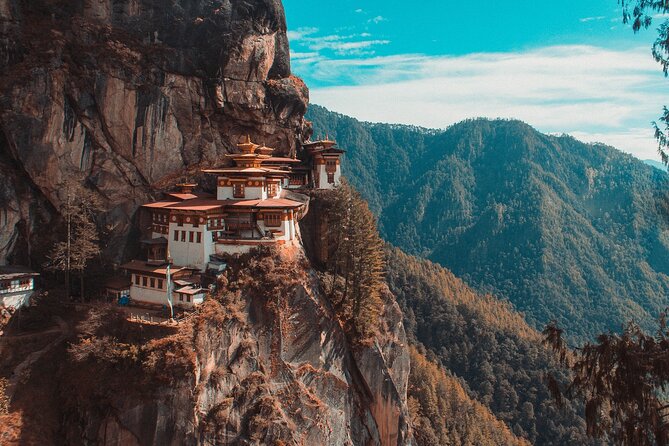
Day 5 is the big Bhutan experience. You drive to the base for the Tiger’s Nest hike, described as about 2 hours uphill. Tiger’s Nest is perched on a granite cliff overlooking Paro Valley, and it is presented as the most revered temple in the country.
You will have lunch at the cafeteria during the hike, and most of the day is spent on this journey. After returning to your hotel, there is an optional hot stone bath available at personal expense.
Then the day ends with a farewell dinner in town.
Here is how I’d plan this day if you want it to feel great, not stressful. Start with comfortable, grippy footwear and pace yourself going uphill, because it is easy to rush early and regret it midway. Also, protect your energy, because you may be hungry after the hike but you will still have dinner plans later.
From a value standpoint, this is one of the most worthwhile inclusions on the itinerary. It is not just entrance fees and a short visit. It is a guided, structured hike to one of Bhutan’s most famous sites.
Pokhara as your reset: caves, falls, lake time, and sunrise
When you reach Pokhara on Day 6, the mood changes fast. You fly from Kathmandu to Pokhara, check into a resort, and get a welcome drink plus briefing. After lunch, you do a half-day city tour that includes Davis Fall, Gupteshwor Cave, Tibetan Camp, and then boating in Phewa Lake.
This combo works because each stop gives a different kind of scenery: water features, a cave experience, cultural exhibits connected to Tibetan heritage, and then open lake time. By the end of the day, you should feel like you earned the evening around Lakeside.
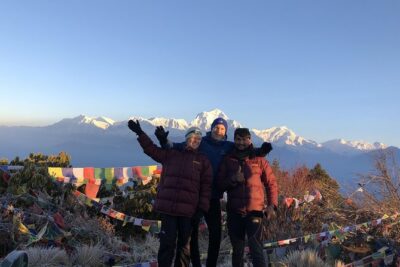
Day 7 is an early morning show. You wake up early for sunrise at Sarangkot, at 1600m. On a clear day, you can see the whole Annapurna range and Machhapuchre, also known as Fishtail. After sunrise, you drive back, breakfast, then visit Peace Stupa (Shanti Stupa) for a hilltop view over Pokhara Valley and Phewa Lake. The day also includes Pokhara International Mountain Museum before returning to the hotel.
Two things to keep in mind. First, sunrise means you need sleep and patience the night before. Second, the itinerary packs views back-to-back, so you will want to bring a calm mindset and not rush the moments just to catch every photo.
If you like nature, but also want culture and variety without long trekking days, Pokhara is where this tour feels most balanced.
Chitwan National Park: Tharu culture plus canoe and safari options
Day 8 shifts you from mountains to jungle. You fly from Kathmandu to Chitwan, arriving in Bharatpur within about 20 minutes, then check into a resort. You get a briefing about jungle activities, lunch, then head out to a nearby ethnic Tharu Village. You learn about Tharu life and lifestyle, then visit the National Park visitor’s center to understand park history and wildlife.
The day closes with a sunset view tour from the bank of the Rapti River.
Day 9 continues with Chitwan Jungle Tour. You start with a canoe ride along the Rapti River, with birdwatching and a chance to see two rare species of crocodiles mentioned in the itinerary: Marsh Mugger and the fish-eating Gharial. Then there is a jungle walk. Back at the hotel you rest and eat lunch.
In the afternoon you do an elephant safari or jeep safari. The itinerary mentions the possibility of seeing deer types, rhino, wild boar, monkey, leopard, sloth bear, and the Royal Bengal Tiger if you are lucky.
A few notes I think you should be realistic about. Wildlife viewing is never guaranteed. But this itinerary sets you up well by giving you both canoe time and vehicle or elephant safari time, plus a jungle walk and a riverbank sunset slot.
Also, I appreciate that the program includes Tharu village interaction and the visitor center. It helps you understand what you are seeing, not just chase animals for photos.
Kathmandu’s “best hits” before you fly out: Swayambhu and Durbar Square
The Day 10 combination is efficient and meaningful. You fly back from Bharatpur to Kathmandu, then go straight to Swayambhunath Stupa and Kathmandu Durbar Square.
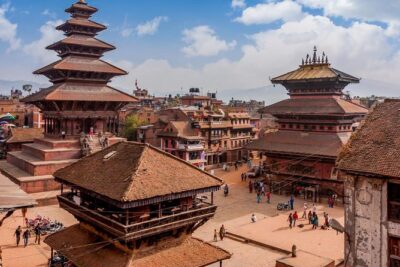
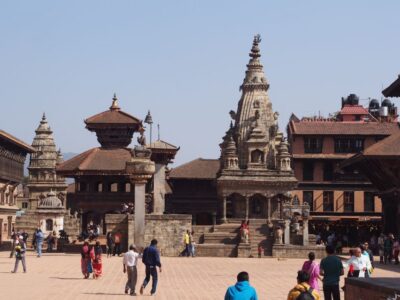
Swayambhunath is ancient, described as over 2000 years old, with a creation legend for the valley. The Monkey Temple nickname comes from resident primates. Durbar Square is presented as a treasure trove of temples and old wood carvings, with Hanuman Dhoka connected to the Licchavi era and expanded under King Pratap Malla. The complex includes palaces, temples, and courtyards, with over 50 temples in the area.
If you only have limited time in Kathmandu at the end, this is a strong use of it. You get a spiritual viewpoint moment and an architectural immersion close together, then you finish with your Day 11 airport transfer.
Price and value: what the $4,760 per person buys you
At $4,760 per person for 11 days, this is not a budget trip. But you are also getting several things that typically cost extra if you book them separately: air ticket sectors between Kathmandu and Pokhara, and between Chitwan and Kathmandu, plus private airport and transfer support by private vehicle. You also get English-speaking guide service and entrance fees handled for the sightseeing days described.
Meals are covered as full-board (BLD), with breakfast, lunch, and dinner included across the itinerary. Accommodation is included for 3 nights in Kathmandu and 2 nights in Pokhara on a twin-sharing basis, plus a 2-night, 3-day jungle package in Chitwan on a full-board basis.
Where your budgeting needs a reality check is the “not included” items: Nepal entry visa fee, travel insurance (with coverage of Covid19), and personal expenses plus tips and donations. This tour also is clear about having a full-time escort assistance, but it does not replace your own judgment about personal spending and gratuities.
If you want good value, here is what I’d look at: how much of the trip is guided versus self-planned. This itinerary is guided almost every day after arrival, with structured stops and entrance fees included. That usually saves you time and reduces decision stress, which is worth real money when you are crossing two countries.
Practical planning tips for your body, schedule, and expectations
This tour says you should have a moderate physical fitness level. I’d listen to that, especially because the itinerary includes a 2-hour uphill hike to Tiger’s Nest and early sunrise at Sarangkot.
Also, altitude shows up in two places: Dochula Pass at 3200m and Sarangkot at 1600m. You cannot control weather, but you can control how you pace yourself. Build in slow breathing on climbs, and do not try to “win the sunrise” by sprinting for the perfect viewpoint.
Finally, remember that this is a private tour. That is great for flexibility, and past experiences shared with names like Surindra, Lila, Liladhar, and Bashanta suggest hosts who are responsive and caring. Still, flexibility works best when you tell your guide what you care about, like longer town wandering, more explanation at temples, or slower breaks after hikes.
Should you book this private Nepal and Bhutan tour?
Book it if you want a high-touch, guided two-country combo where culture and nature are both treated as real priorities. The Bhutan portion gives you temple, craft, and mountain viewpoints, then the Nepal portion gives you Pokhara lake time and Chitwan wildlife plus river and village experiences. This is also a good fit if you dislike the stress of arranging domestic flights and entrance fees yourself.
I would not book it if you dislike early mornings or uphill walking. Tiger’s Nest alone is enough to make or break the trip for people who want mostly flat, short sightseeing.
One more reason I’d lean yes: people have praised the host team’s warmth and flexibility, and some even highlight guide-led hospitality and good food like Thali. If food matters to you, you might appreciate that this trip is built around included meals, not constant decision-making.
If your dream is Kathmandu to Bhutan’s monasteries to Paro’s cliff temples, then back to Nepal for lakes and jungle, this itinerary gives you a full, organized path. And since it is private, it feels like you are moving with a plan, not chasing logistics.
FAQ
What is included in the tour price?
The tour includes traditional welcome on arrival with garland, air ticket sectors Kathmandu to Pokhara and Chitwan to Kathmandu, airport to airport transfers as per the itinerary by private vehicle, guided city tours with a licensed guide and entrance fees, accommodations in Kathmandu and Pokhara, the Chitwan jungle package with jungle activities, full-time assistance by escort, all fees and taxes, and meals including breakfast, lunch, and dinner.
Does this tour cover Nepal and Bhutan?
Yes. The itinerary starts in Kathmandu, includes Bhutan sightseeing in Thimphu, Punakha, and Paro, then continues in Nepal with Pokhara and Chitwan before returning to Kathmandu.
Are flights included during the trip?
Yes. The included air ticket sectors are Kathmandu to Pokhara and Chitwan to Kathmandu. The itinerary also indicates flying into Paro on Day 2 and flying to Bharatpur on the way to Chitwan.
Is this a private tour?
It is a private tour/activity, meaning only your group will participate.
What are the main physical activities?
You can expect a hike to Tiger’s Nest described as about 2 hours uphill, sunrise viewing from Sarangkot, boating in Phewa Lake, and Chitwan jungle activities including a canoe ride and a jungle walk. There is also an elephant safari or jeep safari in Chitwan.
Are meals included?
Yes. The package is described as full-board, with meals included across the days. Breakfast and dinner are included throughout, and lunch is included on listed days in the itinerary.
What is not included?
Not included are Nepal entry visa fee, travel insurance with coverage of Covid19, personal expenses like beverages and services not mentioned in the itinerary, and tips, donations, and gratuities.
Latest Kathmandu write-ups
- Langtang Valley Trek★ 5.0 · 3 reviews
- Langtang Valley Trek from Kathmandu★ 5.0 · 3 reviews
- Khopra Danda Trek★ 5.0 · 3 reviews
- 5 night / 6 days Kathmandu Nagarkot Chitwan Pokhara tour★ 5.0 · 3 reviews
- Nepal Highlights Tour: 5 Nights 6 Days Kathmandu & Pokhara Tour★ 5.0 · 3 reviews
- Kathmandu Valley Private Day Tour★ 5.0 · 3 reviews
- Kathmandu Heritage Day Tour★ 5.0 · 3 reviews
- Conquer the Himalayas: The Ultimate 16-Day Annapurna Circuit Trek★ 3.5 · 3 reviews
Private, compared.
Private Kathmandu Sightseeing Tour | UNESCO World Heritage sites
Read our review →