
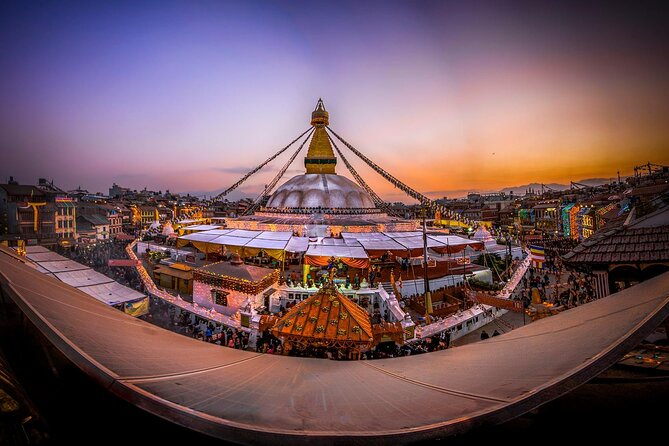
Reviewed · PASHUPATINATH TEMPLE
PashupatiNath and BoudhaNath – Private/Small Group
Kathmandu has a rare superpower: Hindu life and Buddhist practice are visible side by side, sometimes within the same walk. This small tour strings together Pashupatinath and Boudhanath in about 3 hours, and the guide keeps the meaning clear instead of letting it turn into random sightseeing.
I especially like the way it frames Hindu ceremonies with Shodasha samskaras as real-life milestones, not vague religious talk. I also like the practical, hands-on stop at the Boudhanath Thanka center, where you pick up the basics of thangka art, mandalas, and even healing bowls.
One consideration: entrance fees are extra, and you pay in cash at the sites. Also, the crematoria stop is a close look at Hindu last rites, so come ready to be respectful and steady, not squeamish.
Key highlights worth your time
- Small-group format (max 5) that makes it easier to ask questions and get straight answers
- Hindu rites explained clearly, including Shodasha samskaras at Aryaghat
- Buddhism basics at Boudhanath tied to what you actually see, like prayer flags and key teachings
- Thangka center learning time for mandala and healing-bowl basics
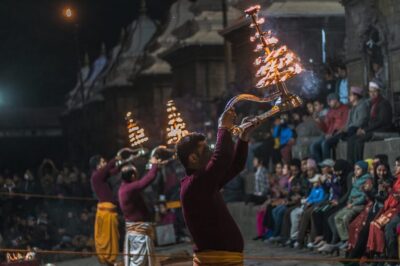
- A guide who can flex the schedule if an aarati opportunity shows up that day
Where Pashupatinath and Boudhanath make sense in one 3-hour story
This tour works because it gives you a “translation layer” between what you see and what it means. Pashupatinath is one of the most important Hindu pilgrimage sites around the world, and Boudhanath is a major center for Tibetan Buddhism, especially Vajrayana practice. When you connect the two, you start to understand how religious harmony works in Nepal on a daily level, not just as a brochure line.
You do not rush through a blur of monuments either. The schedule is short, but each stop has a clear purpose, like life-cycle rites at the crematoria, or core Buddhist ideas at the stupa. In plain terms, you leave with language for what you witnessed, instead of just photos.
More around Boudhanath:
- Kathmandu Spiritual Sites: Bodhnath & Pashupatinath Tour
★ 5.0 · 185 reviews - Bhaktapur Durbar Square and Boudhanath Stupa
★ 5.0 · 7 reviews
Santosh level guidance: what you get with a max-5 private or small group
This is designed for a small group, up to 5 people. That matters in sacred places, because you will have more time to ask the “why does it work like that” questions. It also keeps the pace humane. With a larger group, you usually get pushed forward. Here, you can slow down when something grabs your attention.
The English-speaking guide is the real engine of the experience. In past tours, the guide Santosh has stood out for explaining religion and culture with a background that includes study of culture, history, and archaeology. People also noted he answered many questions and stayed attentive to what they wanted to see, including adjusting timing to catch an aarati ceremony when possible. That flexibility is gold on days when ceremonies, crowds, and your own energy level do not behave like a calendar.
You’ll also get a mobile ticket, which helps the logistics feel less annoying on the day.
Price and entrances: the real budget for this Hindu-Buddhist route
The tour price is listed as $15 per person for this 3-hour experience. That is strong value for a guide-led route that includes multiple stops across two major religious sites, plus a learning component at the thangka center.
The catch is entrance fees. Pashupatinath and Boudhanath have separate admission costs, paid in cash at the entrance. Pashupatinath is listed as NRP 1000, about US$ 9, and Boudhanath is NRP 400, about US$ 4. So plan for roughly US$ 13 in entrance fees on top of the tour price.
Why I think this is still good value: you are not just paying to get into one place. You are paying for meaning at several stops, including the crematoria discussion and the thangka learning session. If you tried to do this route on your own, you would still see the sights, but you would likely miss the “what to look for and why” part that makes the day click.
Stop by stop: what happens from Gaushala bus stop to Boudhanath gate
The tour starts at Gaushala Bus Stop (Ring Road area in Kathmandu) and ends at the Boudhanath gate. You get about 3 hours total, and you end with free time to explore around Boudhanath or head back.
Here’s how the day unfolds, and what each stop gives you.
More at Pashupatinath:
- Kathmandu: Pashupatinath Temple Evening Aarati Tour
★ 5.0 · 36 reviews - Kathmandu: Pashupatinath Temple Aarti Night Tour
★ 4.8 · 29 reviews - Katmandu: Pashupatinath Open Cremation & Evening Aarati
★ 3.8 · 5 reviews - Kathmandu: 3 hours night Pashupatinath Aarti Tour
★ 2.7 · 5 reviews
Pashupatinath Temple: Hindu rules, first impressions, and what you can watch from outside
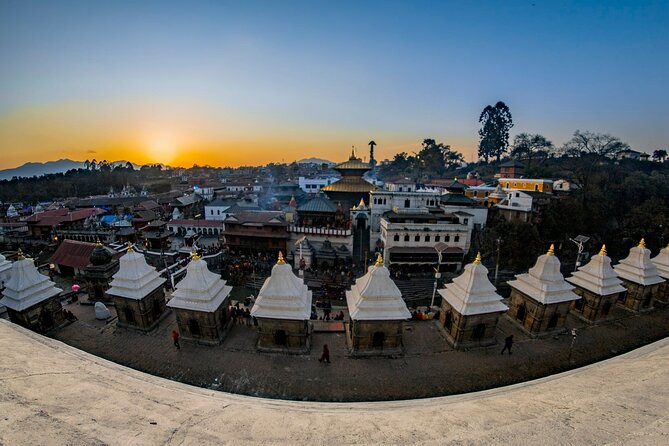
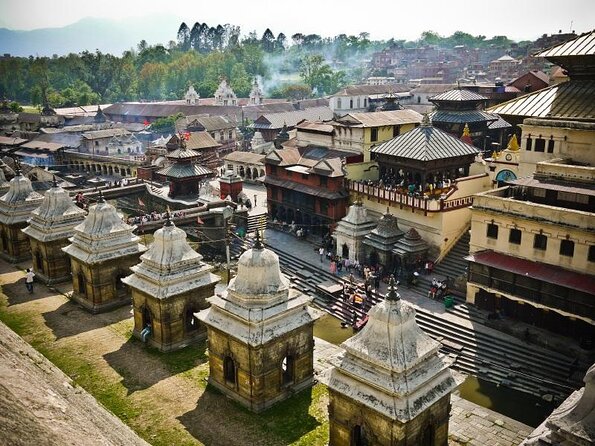
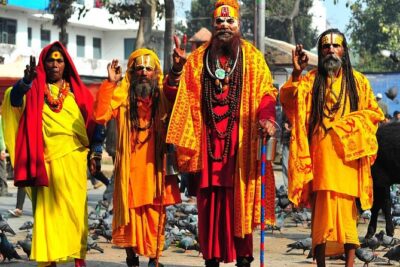
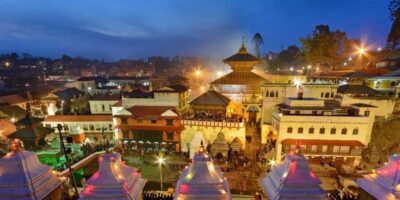
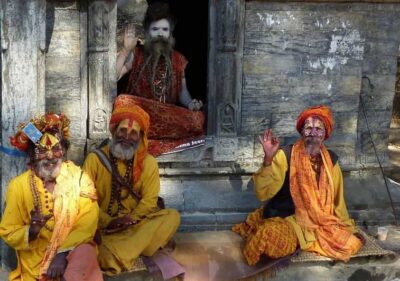
You begin at Pashupatinath Temple, the oldest Hindu temple in the Kathmandu Valley. An important detail shapes your visit: only Hindus are allowed inside the main temple. That means your experience is more about observation and understanding, rather than walking straight into the central space.
Instead of a bland exterior peek, your guide sets the stage. Expect context on why the temple matters globally and how the site functions as a living pilgrimage destination. You will also move toward the cremation area next, so this first stop helps you understand why the riverfront rituals matter.
Practical tip: dress respectfully. Even if you are not entering the main inner area, people around you are. You will feel more comfortable matching the tone.
Aryaghat crematoria: Shodasha samskaras and last rites you can’t unsee
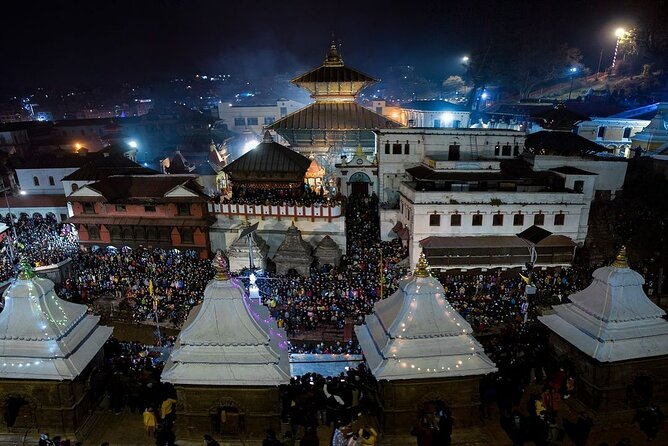
Next comes the crematoria at Aryaghat. This is one of the most intense stops on the route. It is also the reason the tour feels like more than architecture and statues.
Your guide talks about Shodasha samskaras, the 16 rites of passage in Hindu life. The core value here is interpretation. Without guidance, you might watch rituals like you are watching a performance. With guidance, you start to connect the ceremony to the life-cycle logic behind it.
Note that the crematoria stop is described with admission ticket not included. That means the tour guide is focusing on your understanding and what you should notice in the process, while you follow on-site rules.
If you are the type who needs everything upbeat, this is the part you might struggle with. If you can handle solemn moments with respect, it becomes one of the most meaningful windows into Hindu belief.
Mrigasthali Deer Park: Shiva’s story made physical
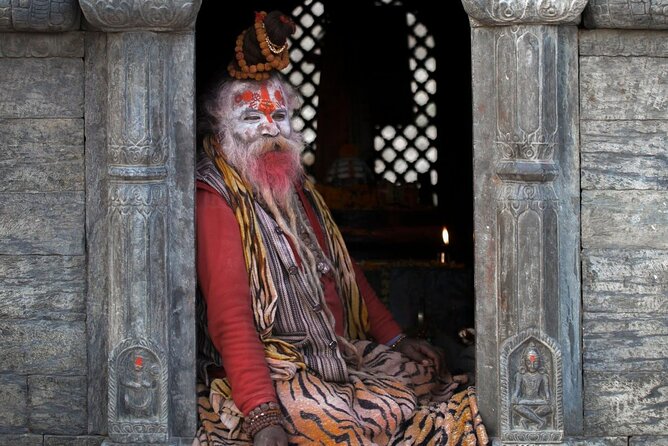
After the heavier crematoria material, the tour shifts to a calmer spot: Mrigasthali Deer Park. The guide explains the journey of Lord Shiva to this place, and how the location got its name.
This stop is short, about 15 minutes, but it works as a reset. You move from death rites to story and symbolism tied to a specific landscape. The stop includes an admission ticket, so you’ll follow the on-site process and then spend the time walking and listening.
Why it helps your day: it keeps the tour balanced. Religious education without a breather can feel like a lecture. Here, you get a leg-stretch stop with a mythic explanation.
Gorakhnath Mandir and Guhyeshwari Shaktipeeth: two legends that connect the dots
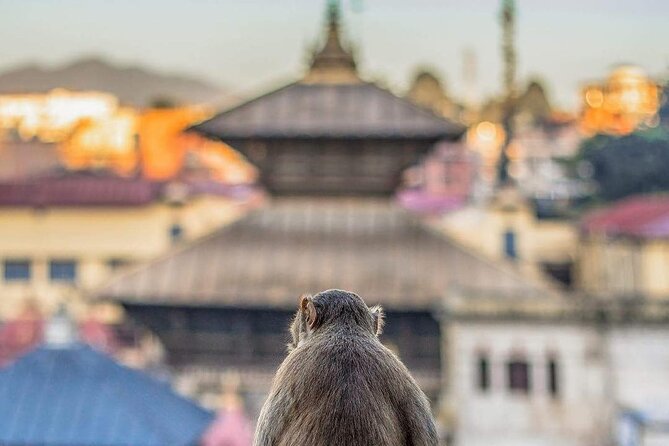
You then head to Gorakhnath Mandir, with about 30 minutes there, plus access that includes an admission ticket.
Gorakhnath gets explained through the story of Guru Gorakhnath. Your guide also takes you via Guhyeshwari Temple (mentioned in the route) while continuing those narratives. This segment is about how religious traditions build meaning through linked stories and sacred sites, not just through one isolated legend.
Afterward, you reach Guhyeshwari Shaktipeeth Temple. The guide tells the story of Satidevi and explains the Shaktipeeth concept. This stop is quick in walking time to Boudhanath (around 20 minutes of travel mentioned), and the temple itself is listed with admission ticket free.
If you like your religion with explanations, these two temple stops are where the tour helps you make sense of why sacred sites cluster and why stories matter. You get a thread that carries you from Hindu devotional space toward Buddhist space.
Boudhanath Stupa: Tibetan Buddhism basics you can spot with your eyes
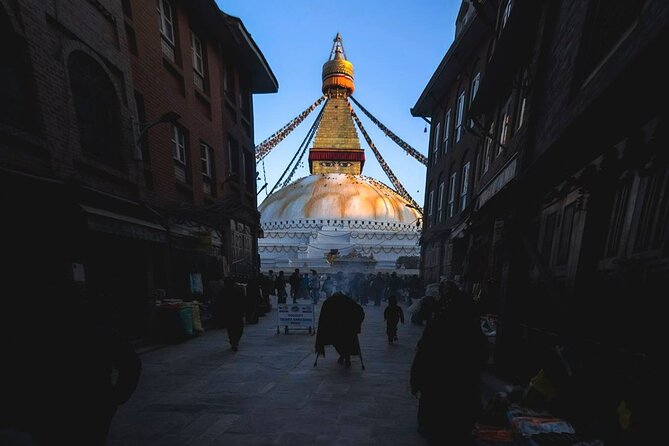
Now you land at Boudhanath Stupa, with about 45 minutes here. This stupa is described as the second largest of its kind in the world and famous for Tibetan Buddhism, specifically Vajrayana.
Your guide focuses on the basics of Buddhism in a way you can actually observe. Expect explanations tied to visible things like prayers flags, plus core teachings such as the four noble truths and the eightfold path. You also get the five elements mentioned in the itinerary notes.
Admission ticket not included here, so you’ll pay at the entrance in cash, listed as NRP 400.
This is the point where the whole day clicks for first-timers. The earlier stops taught ritual meaning and Hindu life-cycle rites. This stop gives you the Buddhist framework for compassion, practice, and the logic of the teachings you can see on and around the stupa.
Photo tip: be careful with where you stand. Sacred areas have rules, and it is easy to block sight lines for people doing their prayers. The guide can help you figure out what is respectful.
Guru Lhakhang Monastery and the thangka learning stop: practice, art, and a calm landing
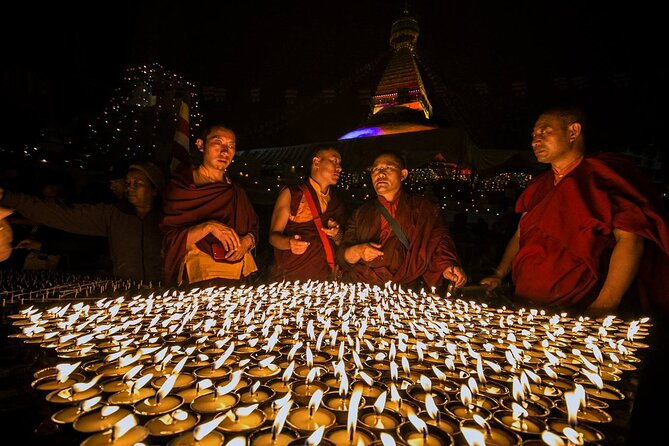
After Boudhanath, you visit Guru Lhakhang Monastery for about 10 minutes. It is free admission and adds another layer: you see what a typical Buddhist monastery setting feels like and you hear about guru Padmasambhava and Dharma Chakra Pariwartana.
Then you go to the Boudhanath Stupa Thanka Center. This is a short stop, about 15 minutes, but it is one of the most valuable because it turns passive looking into a small learning session. You learn about intricate thangka art, the concept of mandala, and the basics of healing bowls.
This is also a good “emotional landing.” After the stupa and temple spaces, art and simple practice-style explanations help you process what you saw, without pushing you into deeper technical study.
The tour ends at the Boudhanath gate. From there, you are free to explore the area on your own, or head back.
What to ask your guide, and how to make the day feel personal
If you do this tour, you will get more from it if you come with a few focused questions. A small group makes that easy.
Here are smart things to ask, based on what the guide is already trained to explain:
- What parts of the crematoria process are most important to understand first?
- Which Buddhist teaching should I watch for around the stupa, if I want to notice symbols while walking?
- Are there any special moments today, like an aarati ceremony, that we can try to fit in?
Past experiences with this guide style suggest he responds well to questions and can tweak the schedule when possible. That can turn a good tour into a tour that feels tailored.
Also, remember you are in religious working spaces. Move with care, keep voices low, and dress modestly.
Who should book this Pashupatinath and Boudhanath tour
I think this works best for you if:
- You want a short, high-meaning tour rather than a long day hopping across Kathmandu.
- You care about religion’s real-world role, including Hindu last rites and Buddhist practice.
- You prefer small group travel so you can ask questions instead of shouting over a crowd.
- You like cultural learning that includes art, not just temples.
It may be less ideal if you do not want to witness or discuss cremation rites. The crematoria stop is part of the route, and it is not a light topic.
If you are visiting Kathmandu for the first time and want a fast way to understand why these two major traditions coexist here, this route is an efficient pick.
Should you book it
Yes, I would book it if you want the meaning behind two of Kathmandu’s biggest religious anchors, in one compact 3-hour walk. The value is strong because the tour combines multiple sites with explanations that help you actually interpret what you see, plus a hands-on thangka learning stop.
I would book with a small buffer in your mind for two things: cash entrance fees for Pashupatinath and Boudhanath, and the solemn crematoria segment. If you can handle that respectfully, this tour gives you a clear, guided path through Hindu rites and Buddhist teachings without wasting your time.
FAQ
How long is the PashupatiNath and BoudhaNath private or small-group tour?
It runs about 3 hours (approx.).
What is the group size limit?
The tour has a maximum of 5 travelers.
Are entrance fees included in the tour price?
Entrance fees for Pashupatinath and Boudhanath are not included. You pay in cash at the entrance, listed as about NRP 1000 for Pashupatinath and NRP 400 for Boudhanath.
Where does the tour start and end?
It starts at Gaushala Bus Stop and ends at the Boudha Stupa (Boudhanath Gate). From there, you can explore around Boudhanath or return to your place.
Is the guide English-speaking?
Yes, the included guide speaks English.
Can I cancel and get a full refund?
Yes. Free cancellation is available up to 24 hours before the experience for a full refund. If you cancel less than 24 hours before, the amount you paid is not refunded.
Latest Kathmandu write-ups
- 16 Days Island Peak Climbing With Everest Base Camp Private Trip★ 5.0 · 3 reviews
- 15 Days Round Annapurna Trek with Poon Hill from Pokhara★ 5.0 · 5 reviews
- Private Nepal round trip including Ghorepani Poonhill trek★ 5.0 · 3 reviews
- Everest Base Camp Trekking 16 Days★ 4.0 · 7 reviews
- Everest Base Camp Trek★ 5.0 · 32 reviews
- Everest Base Camp Trek★ 5.0 · 87 reviews
- 14 Days Luxury Annapurna Base Camp Trek★ 5.0 · 6 reviews
- Everest Base Camp Trek★ 5.0 · 97 reviews
Pashupatinath Temple, compared.
Kathmandu Spiritual Sites: Bodhnath & Pashupatinath Tour
Read our review →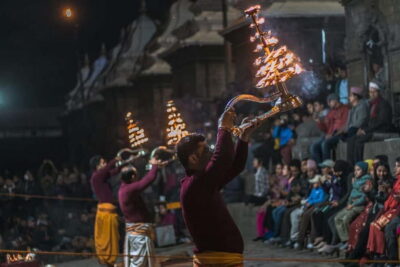
Pashupatinath: Evening tour of temple and Aarati ceremony
Read our review →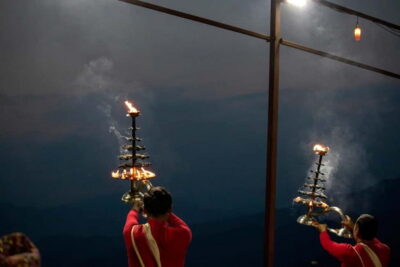
Browse the lists this tour appears in