
Reviewed · WORKSHOPS
Thangka Painting Workshop
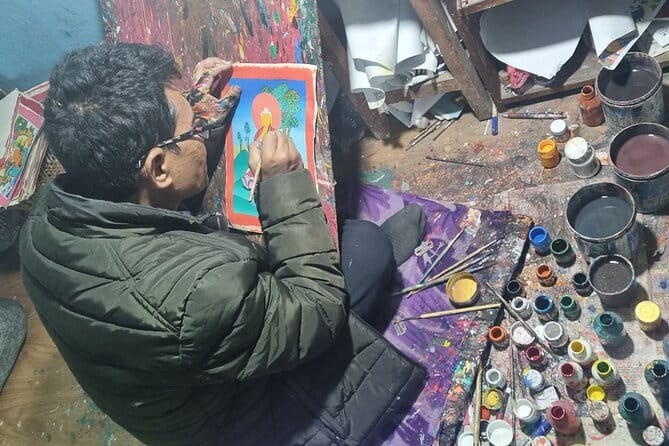
If you ever worried that a thangka in a Kathmandu shop might be less than fully made by hand, this hands-on thangka painting workshop is a smart alternative. You’re not just buying a souvenir, you’re learning how the process works, with artists who have decades of experience.
I like that you get real guidance while you work. You pick one design out of three, and an English-speaking guide named Aayam helps you through questions and confusion as you paint.
One thing to keep in mind: it’s a 4 to 5 hour session, and the pace may feel more like colouring and finishing than full sketch training, especially if you’re expecting a longer, step-by-step drawing focus. Also, snacks are not included, so plan to eat before or after.
Key things I’d circle before booking
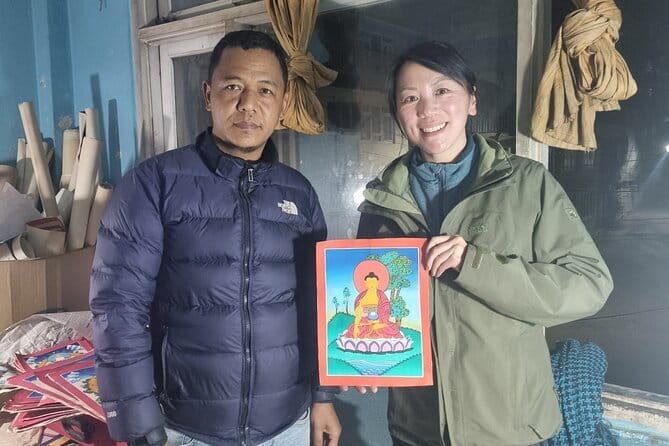
- You paint your own traditional Thangka instead of gambling on shop quality
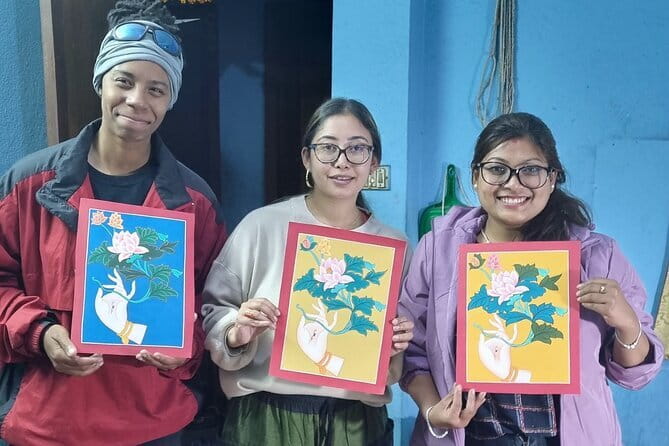
- Choose 1 design out of 3, so you’re not stuck with a random subject
- Aayam provides English support so you can ask what you do not get
- Master artists teach you as you work, including help correcting mistakes
- Pickup is flexible, and transport is handled in an air-conditioned vehicle
- Your finished thangka is yours to take home as a souvenir
Why this Kathmandu Thangka workshop feels different than shopping
Kathmandu is packed with thangka art. You’ll see framed pieces in shop corners, at prices that can look tempting, and at times you may not know what you’re actually buying. Some items are produced to look like traditional work, but the quality and method can be hard to judge fast when you’re standing in a busy stall.
This workshop flips the script. Instead of purchasing first and wondering later, you learn the process alongside the people who make the art. That matters, because thangkas are not just pictures. They follow traditions, symbolism, and technique choices that shape what the final piece looks like and how it ages.
I also like how the experience is built around control. You’re not stuck with one design or one rigid timing. You can choose your pickup location, you can choose one design out of three, and you can pick the timing that fits your day better.
And yes, the practical payoff is big. You’ll leave with a physical hand-painted souvenir you made yourself, which is more meaningful than buying something off a rack and hoping it matches your expectations.
More to compare around Kathmandu
- Half day cooking class in Thamel kathmandu
★ 5.0 · 607 reviews - Kathmandu: Local Women-Led Nepali Cooking & Momo Class
★ 4.9 · 360 reviews - Knife (Khukuri) Making Workshop- Forge of the Gurkhas
★ 5.0 · 143 reviews
The 4 to 5 hour painting session, step by step
The class runs about 5 hours total, and the painting time is typically in the 4 to 5 hour range. You’ll be in a workshop setting with a set of artists, with master painters working with apprentices, and you’ll sit down at your own area to paint your chosen design.
Here’s what the flow usually feels like, and how to plan your expectations.
1) Arrival, setup, and figuring out your design
When you arrive, you get oriented and confirm which of the three designs you selected. This part is not just administrative. It’s where you start learning what you’re painting and how the design is meant to be built up.
What to watch for: The workshop format gives you questions time early on. If you want clarity on symbols, outlines, or the order of steps, this is when to ask.
Drawback to consider: If you’re arriving hungry, this first phase can stretch, and you may be eager to start immediately. Snacks are not included, so a light meal beforehand helps.
2) Learning traditional thangka painting, while you paint
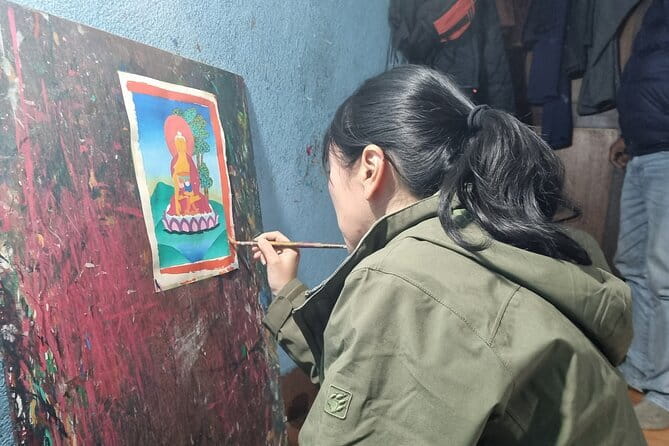
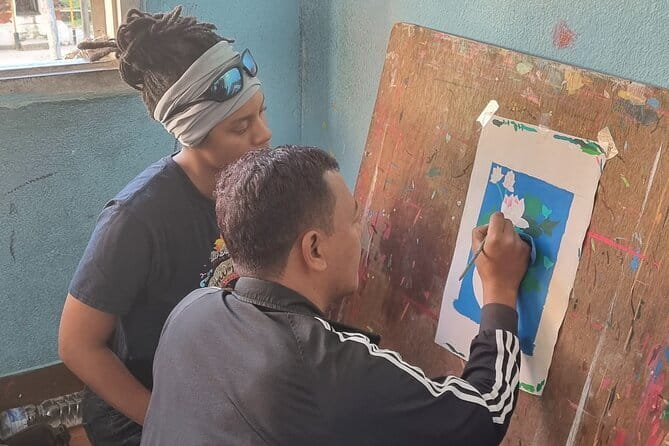
This is the heart of it. You learn traditional thangka painting directly from the artists. The guidance is not theoretical. It’s hands-on coaching where you follow along and then get corrected in real time.
One of the strongest themes from the experience is how patient the lead artist can be. People tend to enjoy not feeling rushed, and they like that mistakes are treated as part of the learning process rather than a problem.
What that means for you: If you’re a beginner, you should feel capable. If you are a more experienced painter, you can still benefit, but you might notice that the focus is not on turning you into a full master draftsperson in one afternoon. At least some participants found the session leaned heavily toward colouring and finishing after the initial work.
A different sort of day out of Kathmandu:
- Everest Base Camp Trek – 14 Days
★ 5.0 · 1,499 reviews - Everest Base Camp Trek
★ 5.0 · 842 reviews - Private Kathmandu Sightseeing Tour | UNESCO World Heritage sites
★ 5.0 · 756 reviews - Kathmandu: 7 UNESCO Sites with Lunch
★ 4.8 · 744 reviews
3) Help correcting mistakes as you go
You will make at least a few small errors, especially if you’re new to the style. The workshop includes support to help you correct those issues while you still have time to fix them.
This is a real value point. Fixing something in the middle of a project is easier than trying to repair a finished piece after the fact. It also reduces the stress, so you can actually enjoy the process.
4) Finishing and taking your thangka home
At the end, you take your souvenir with you. The workshop is built around producing a finished piece you can keep, not just doing a taste of the craft and leaving empty-handed.
What to expect practically: You’ll want to handle your finished thangka carefully on the way back. If your Kathmandu plans include more walking or crowded transport after class, plan for an easy transfer.
Aayam, English support, and what you can ask without feeling awkward
A big part of why this works for many visitors is communication. The workshop includes one English-speaking guide, and Aayam is specifically named in the experience details as the person helping throughout.
In a traditional craft setting, it’s common to feel lost if instructions are rushed or vague. Here, the structure gives you time for questions. That changes how much you get out of the workshop. You’re not just copying steps, you’re understanding them enough to make decisions about your own painting.
Good questions to bring into the workshop
You do not need to study before you go. But if you walk in with curiosity, you’ll likely get more out of the time:
- What do the symbols or design elements represent?
- What is the correct order for outlining and colouring?
- What changes when a detail is off, and how do you fix it?
- How can you spot quality differences when you see thangkas for sale later?
The guide can help translate the craft context while the artists teach the technique.
If you’re worried about language
You’re not expected to speak Nepali or Tibetan-based artistic terminology. The guide supports the questions and confusion, so your experience stays about painting, not guessing.
Pickup, timing, and how to plan your half day in Kathmandu
This is a private tour/activity, meaning only your group participates. That’s a quieter experience than joining a big group where you have to wait your turn for help.
It also includes pickup, and you can choose your pickup location. Transport is handled by an air-conditioned vehicle, which is a real relief in Kathmandu’s heat, especially if you’re working seated for hours afterward.
Start time matters: 12:45 pm
The workshop starts at 12:45 pm. For most people, that means you get a relaxed morning for sightseeing, shopping, or just catching up on rest.
How I’d plan it:
- Eat a decent lunch before you start, or at least have a snack ready before pickup. Snacks are not included.
- Wear comfortable clothes that handle sitting and painting at a worktable.
- Keep the rest of your evening flexible. Even though the session is about 5 hours, you’ll still want time to get back and store your thangka safely.
Near public transportation
The meeting point area is near public transportation. That’s useful if your pickup plans change or you want a backup way to get there.
Price and value: why $72 can make sense for a hand-painted souvenir
At $72 per person, this is not a budget craft activity, but it’s also not priced like a luxury cultural experience. The value comes from what you actually get.
You’re paying for:
- Access to a real workshop setting and skilled artists
- Time with instruction while you paint
- A guide who can support you in English
- Pickup and air-conditioned transport
- Inclusion of all fees and taxes
You might think, why not buy a thangka in a shop and be done? The answer is quality uncertainty and learning. In many markets, you can find attractive items quickly, but it’s hard to verify whether what you’re buying matches the craft process you want. In this workshop, you see how the work is made, you learn what attention to detail looks like, and you produce something you can trust as a genuine personal souvenir.
Who feels the value most
- Beginners who want instruction, not just materials
- People who care about cultural authenticity and want more than a random purchase
- Anyone who likes hands-on travel, even if you are not an artist
A fair drawback on value
You’re in the workshop for a long seated session. If you’re expecting a super detailed, draft-heavy training program, the experience may feel more like a guided making session than a full technical education. It’s still a strong way to create an artwork, but set expectations for what can realistically happen in one afternoon.
Authentic craft, practical takeaways, and what to do with your thangka later
The best part of taking a thangka home is that it becomes more than a decoration. You understand the effort behind it, and that changes how you display it and how you talk about it to friends later.
Here are practical takeaways you can expect to carry out of the workshop, even if you do not become a thangka painter overnight.
You’ll learn what to look for next time you shop
After seeing the process, it’s easier to judge things like:
- How clean lines appear when outlined carefully
- How colouring is layered and handled
- How much attention goes into small details
- How the finished piece should feel visually, not just look pretty in a shop under bright light
You’ll appreciate the difference between selling art and making art
A store sale is fast. A workshop is slow, careful, and interactive. Even if your artwork is not perfect, you gain respect for the process, and that tends to make you buy better souvenirs later in Kathmandu.
Handling your finished piece
The workshop includes taking your souvenir home, but you still need to protect it during your day afterward. If you’re heading to other activities after class, consider how you’ll carry and store it.
Who should book this workshop, and who might prefer something else
This is a great choice if you want an authentic Kathmandu art experience you can participate in, not just watch.
You’ll likely enjoy it if you:
- Like hands-on activities
- Want an English-supported class with a guide, Aayam
- Want to understand quality and process instead of buying blind
- Prefer a private format for a more relaxed pace
You might think twice if you:
- Want a long, advanced art course with heavy drawing instruction
- Expect snacks included
- Are short on time, since you’ll be in the workshop for about half the day
The experience lists a moderate physical fitness level. Practically, that usually means you should be comfortable sitting and participating without needing special mobility accommodations.
Should you book the Thangka Painting Workshop?
Yes, I’d book it if your goal is to leave Kathmandu with a meaningful, hand-made souvenir and a clearer sense of what traditional thangka art actually involves. The strongest reasons are practical: you choose the design, you get English guidance from Aayam, and you paint with master artists who can help you correct mistakes as you go.
It’s also a good value when you compare it to buying uncertain quality in a shop. You’re not just paying for materials. You’re paying for instruction, time, and the confidence that comes from making the piece yourself.
Just go in with the right expectations. This is a guided making experience, not a multi-week art program. If you can accept that the day may include more colouring and finishing than intensive drawing training, you’ll probably have a very satisfying time.
FAQ
How long is the Thangka Painting Workshop in Kathmandu?
The workshop lasts about 5 hours (approximately), with the painting class time described as 4 to 5 hours.
Is pickup included?
Yes. Pickup is offered, and you can choose your pickup location.
Does the tour include an English-speaking guide?
Yes. The experience includes one English-speaking guide who helps throughout the workshop.
Can I choose which Thangka design I paint?
Yes. You choose one design out of 3.
Do I take my artwork home?
Yes. After the workshop, you take the souvenir Thangka painting that you made.
Is transport provided, and is it air-conditioned?
Yes. The experience includes an air-conditioned vehicle.
Are snacks included?
No. Snacks are not included.
Is this a private tour?
Yes. It is a private tour or activity, and only your group participates.
Is there free cancellation?
Yes, free cancellation is available. You can cancel up to 24 hours in advance for a full refund.
Latest Kathmandu write-ups
- Langtang Valley Trek★ 5.0 · 3 reviews
- Khopra Danda Trek★ 5.0 · 3 reviews
- Langtang Valley Trek from Kathmandu★ 5.0 · 3 reviews
- 5 night / 6 days Kathmandu Nagarkot Chitwan Pokhara tour★ 5.0 · 3 reviews
- Nepal Highlights Tour: 5 Nights 6 Days Kathmandu & Pokhara Tour★ 5.0 · 3 reviews
- Kathmandu Valley Private Day Tour★ 5.0 · 3 reviews
- Conquer the Himalayas: The Ultimate 16-Day Annapurna Circuit Trek★ 3.5 · 3 reviews
- Kathmandu Heritage Day Tour★ 5.0 · 3 reviews
Workshops, compared.
Nepalese Momos or Dal Bhat Cooking Class (Cook with Delight)
Read our review →
Nepalese Kitchen in Pokhara: Momos or Dal Bhat Cooking Class
Read our review →
Browse the lists this tour appears in