
Reviewed · WORKSHOPS
Knife (Khukuri) Making Workshop- Forge of the Gurkhas
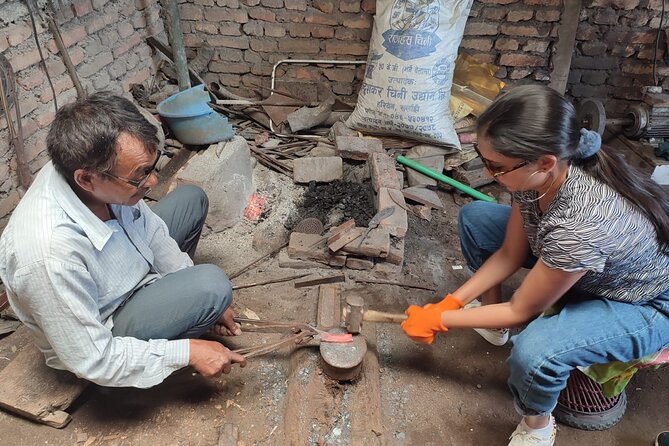
A khukuri is more than a souvenir knife in Nepal. It is tied to Gurkha identity, made with a distinct curve, and traditionally carried in a wooden-and-leather scabbard. In this workshop, you get to turn raw iron into a 6-inch blade with help from master blacksmith Indra and guides like Swoyam or Namrata.
I especially love the hands-on hammering and the feeling that you are doing real work, not just watching. The other big win for me is meeting the people behind the craft in their home workshop, where the process feels personal and practical, not stage-managed. You’ll also hear how the design is meant to perform, from the tempered steel blade to the handle materials and the symbolic notch near the tang.
One possible drawback: parts of the forging and grinding process are handled by the host for safety, so you may not get every step of spark-making and wheel grinding. Also, finished blades can occasionally have issues that only show up later, so you’ll want to be clear on how replacements are handled if something goes wrong.
Key highlights
- Hammer your own iron blank and feel the pace of the forge like it is real production work
- Watch Indra at the anvil, then join in on the safer stages such as buffing and polishing
- A small group size (max 5) that keeps the experience focused and interactive
- You take home a finished 6-inch khukuri, not a half-made prop
- Hotel pickup is offered, so you spend less time wrestling with Kathmandu traffic
Why a 6-Inch Khukuri Workshop Feels Like Craft Time, Not a Sales Pitch
This is one of those Kathmandu activities where the value is not just the final knife, it is the making. The khukuri has a reputation for being multipurpose, from shaping wood to chopping vegetables and meat. The blade shape, its slight curve, and its sharp edge are all part of why people still respect this design today.
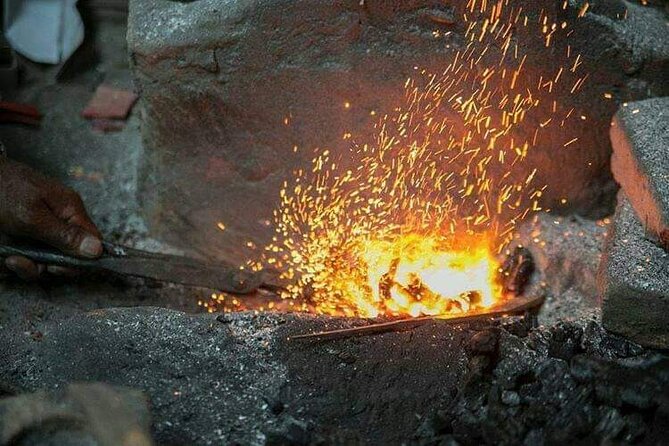
In a typical workshop, you can end up making a small craft object while someone else does the hard part. Here, the structure is more honest: you hammer and work through the steps that make up the early shaping and the finishing stages. The host handles the parts that create the most risk, especially when grinding throws sparks. That balance is a big deal because it lets you participate without turning the experience into a safety lecture.
I also like that this isn’t just about holding a tool and smiling for photos. You get context about the khukuri’s parts and symbolism, including the traditional use of wood or buffalo horn for the handle and the notch near the blade base that is described as preventing blood from reaching the handle. Even if you do not care about symbolism, you will understand the design logic and why the details matter.
More to compare around Kathmandu
- Half day cooking class in Thamel kathmandu
★ 5.0 · 607 reviews - Kathmandu: Local Women-Led Nepali Cooking & Momo Class
★ 4.9 · 360 reviews - Local Women Lead Nepali Cooking Class
★ 5.0 · 125 reviews
Meeting Indra and the Forge Crew in Kathmandu
The workshop centers on blacksmith Indra, a long-time maker who runs the forge in a more rustic, village-like setting outside the city center. Getting out of the dense streets is part of the appeal. You ride up into the hills, and once you arrive, you feel like you are stepping into someone’s working home rather than a craft shop showroom.
Guides such as Swoyam and Namrata play an important role. They coordinate pickup, keep the group moving, and help translate what Indra is explaining about the knife and the craft. More than once, the experience feels like a conversation between a professional craftsperson and curious visitors. It is also a family environment in the sense that assistants and apprentices may join in to help and make sure everyone can keep up or take a break when needed.
One detail I think you’ll appreciate is the small group limit of up to 5 people. That means your questions do not get lost, and your hands are more likely to be on the tools at the right moments. It also makes the experience calmer if you are traveling with kids, since you are not competing for attention with a crowd.
The 4-Hour Making Flow: Hammer, First Grind, Polish, Take Home a Real Knife
Plan on about 4 hours, give or take. The pace depends on how many people are in the group and how quickly the metal work moves, but the goal stays consistent: you end up with a finished 6-inch khukuri.
Here is how it typically unfolds, with the steps you are able to do directly.
Hammering your iron blank
You start by hammering a raw piece of iron into the basic shape of the blade. This is where you get the strongest sense of what forging really means. You are not just decorating; you are moving metal with heat and force until it starts to look like the blade form you recognize.
If you like practical work, this is the moment that will hook you. It turns the idea of a khukuri from a product into a process you can understand with your own hands.
A different sort of day out of Kathmandu:
- Everest Base Camp Trek – 14 Days
★ 5.0 · 1,499 reviews - Everest Base Camp Trek
★ 5.0 · 842 reviews - Private Kathmandu Sightseeing Tour | UNESCO World Heritage sites
★ 5.0 · 756 reviews - Kathmandu: 7 UNESCO Sites with Lunch
★ 4.8 · 744 reviews
First grinding handled by the host
After the rough shaping, the process includes grinding. For safety, the host does the blade grinding and you are advised to stay clear of sparks. This is a good reminder that a workshop like this is not a DIY class. It is more like learning alongside a professional while they run the risky equipment.
You still benefit, because watching the grinding stage clarifies why the blade geometry matters. You’ll see how the maker moves from rough form to a cleaner edge profile.
Buffing and polishing you join at the end
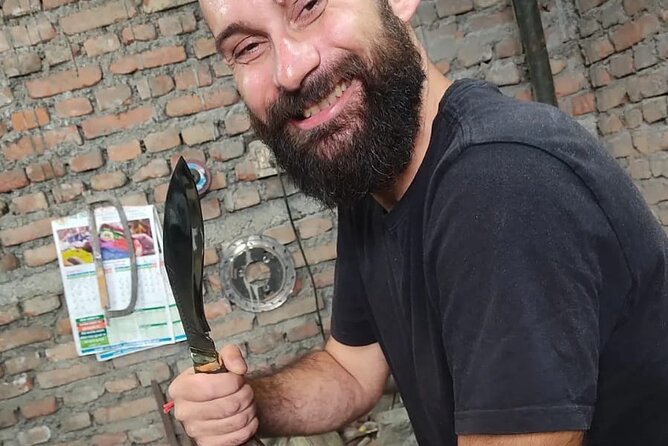
The finish stage is where your work becomes visible fast. You get to take part in the buffing and polishing steps at the end. That final transformation is why most people walk away smiling, even if they felt nervous at the start.
In the end, you do not leave with a toy. Multiple experiences describe knives that are super sharp and genuinely made from scratch, using the workshop’s described steps.
What You Learn About Khukuri Design, Materials, and Symbolic Details
Even if you only care about getting home with a knife, the explanations during the workshop make the souvenir make sense. The khukuri is described as a multipurpose tool, and the design elements are connected to function.
A few details you’ll hear about include:
- Tempered steel and the blade’s slight curve
- Handle materials such as wood or buffalo horn
- A traditional notch near the handle that is described as symbolic and functional
- The idea that the blade is traditionally carried in a wood and leather scabbard
You might not spend time choosing your exact handle material, since the workshop is set around a 6-inch blade, but you will learn how the different parts fit together. That helps if you want to buy or admire khukuris later, because you can read the knife like a system instead of just seeing a cool curve.
It also changes how you value the final product. If you understand that the blade gets shaped, ground, and finished through multiple stages, then the result feels earned, even though you had safety support on the grinding.
Price and Value at $68: What You Really Pay For
At $68 per person, this workshop is priced like a meaningful half-day experience, not a cheap one-off show. The value comes from four things you cannot fake.
First, you get transport support because pickup is offered and the activity has been coordinated with hotels in Kathmandu. That alone can save time and stress if you are staying in central areas.
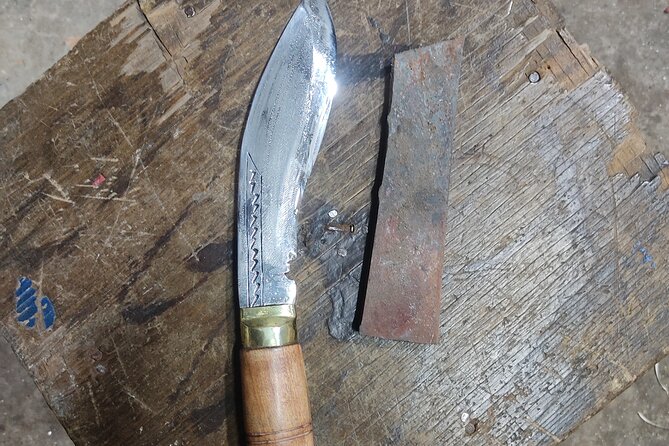
Second, you are not just learning. You make a 6-inch khukuri blade and take home a finished knife. That transforms the cost into something physical you can use and keep.
Third, the group size stays small, max 5. That tends to improve the hands-on share of the time. In a big group class, you might spend most of your 4 hours holding a phone. Here, you are more likely to be hammering, then polishing.
Fourth, you get access to craft knowledge from Indra and the crew, plus translation support from guides like Swoyam or Namrata. You’re paying for the human expertise, not just the metal.
If you want a longer or bigger project, there is an option described for making a 10-inch khukuri for an additional fee. That is a nice upgrade if you want a more substantial blade souvenir and you have the patience for extra work.
Safety Rules That Actually Improve the Experience
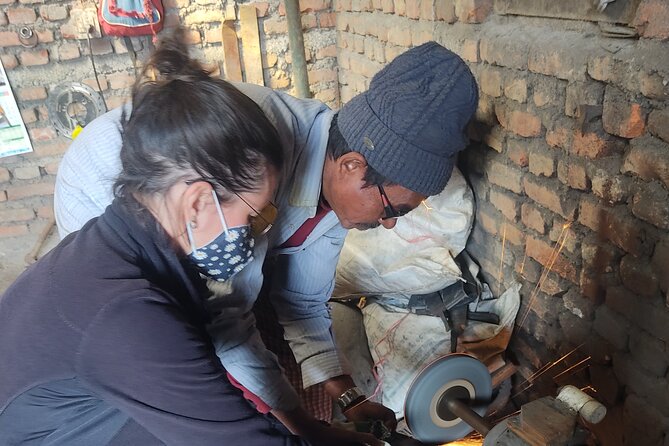
A forge has real risks, and the workshop respects that. The host does the blade grinding, and you are told to keep clear of sparks during that part.
This is not just for liability. It also changes how you participate:
- You hammer the metal yourself while still getting guidance
- You observe the spark-heavy steps safely
- You get hands-on during finishing, when your efforts show up in the shine and feel of the knife
If you are worried about safety because this is a hands-on blacksmithing activity, you can relax a bit. The workshop design is built to include you while keeping the dangerous stage controlled by the professional.
One more practical point: if you are bringing kids, keep in mind the making takes time. Some families report kids losing patience during the slower parts. That does not mean the workshop is bad for families, but it does mean you should bring distractions, snacks, or plan for breaks.
Getting There: Pickup, Small-Group Size, and How the Day Feels
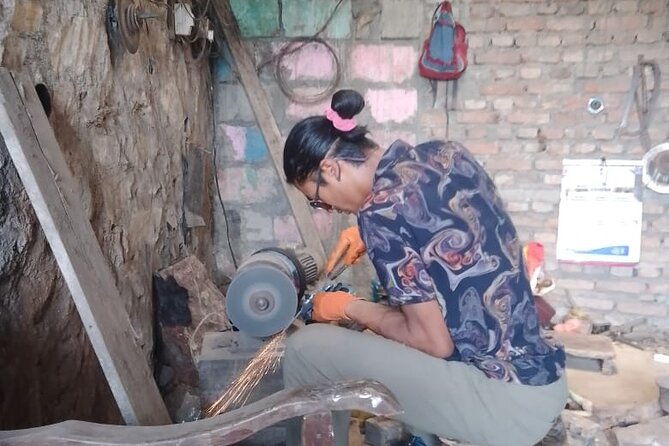
The day usually starts with hotel pickup offered, and you then travel to the blacksmith’s home/workshop in the hills. In Kathmandu, that sounds simple until you remember traffic and distance. The pickup option is a big value add, especially if you want a smooth half-day without negotiating taxis.
The workshop runs about 4 hours. With a small group and a maximum of 5 travelers, it feels like a focused class rather than a timed stop on a busy route. Even when the session includes travel time, you get enough attention from the guide to understand what you are doing and why it matters.
You’ll likely also receive a mobile ticket, and you should get confirmation at booking time. That helps you plan your day without wondering whether the workshop is truly locked in.
Who This Workshop Suits Best, and Who Might Prefer Something Else
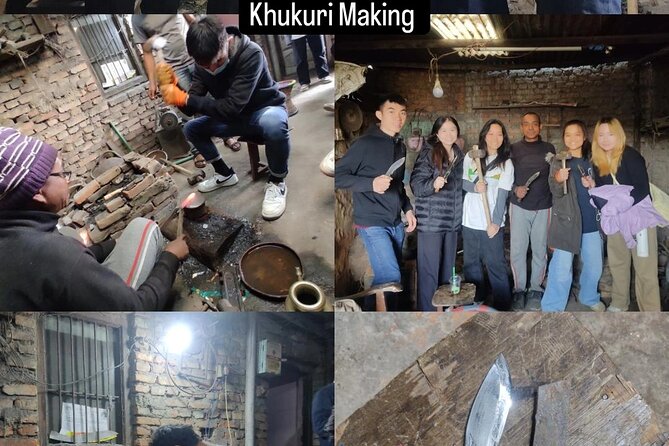
This works best if you like hands-on work and you appreciate craft. If you enjoy learning by doing, you’ll probably get more out of the experience than someone who only wants a shopping-style cultural stop.
It also suits:
- Couples looking for a memorable, non-touristy Kathmandu activity
- Travelers who want a real souvenir with a story
- People curious about Nepalese craftsmanship and the Gurkha connection
It might be less ideal if:
- You want to grind sparks yourself, because grinding is done by the host for safety
- You are short on patience for a multi-step process, especially if traveling with small children
- You dislike the idea that a small batch craft process can sometimes produce issues that only appear later
On that last point, one review described that some knives had cracks that showed up after making. The response included making a new knife and delivering it. So while you should expect quality focus, you should also know this is real handmade work, not a factory line.
Should You Book the Khukuri Making Workshop at Forge of the Gurkhas?
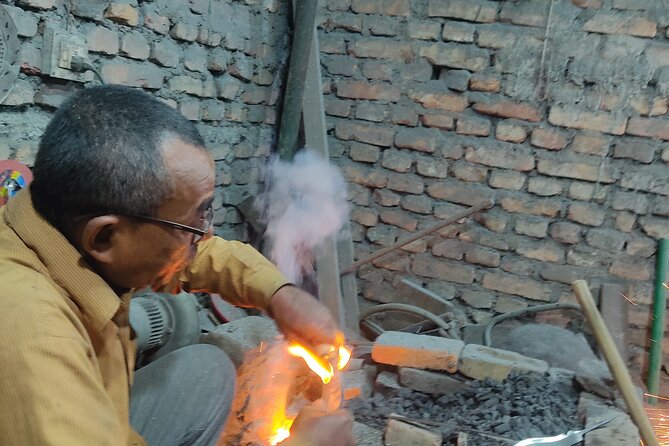
If you want a Kathmandu activity where you leave with a crafted knife and a real understanding of how it becomes what it is, I’d book it. This workshop has strong value because it combines hands-on forging steps, small-group attention, and a finished 6-inch khukuri that you take home. The craft connection to Indra and the guides’ translation support turn it into more than a one-hour story.
Book it if you can comfortably spend about 4 hours working at a slower, forge pace, and if you are okay with the host running the spark-heavy grinding for safety. If you want the chance to actually hammer and polish your own knife, this hits that goal.
Skip it only if you are mainly looking for a quick sightseeing stop, or if you are very sensitive to the idea that handmade items can have rare defects that require a fix. Otherwise, this is one of the few workshops in Kathmandu where the craft feels personal, practical, and worth your time.
FAQ
How much does the Knife (Khukuri) Making Workshop cost?
The price is $68.00 per person.
Where is this workshop located?
It takes place in Kathmandu, Nepal.
How long does the workshop take?
It runs for about 4 hours.
What size khukuri knife do I make in this workshop?
In this workshop you make a small 6-inch blade.
How many people are in the group?
The workshop has a maximum of 5 travelers.
Do you get hotel pickup?
Pickup is offered.
What parts of the knife making can I do myself?
You can participate in hammering the iron, the first grinding, and the buffing and polishing at the end. For safety, blade grinding is done by the host and guests are advised to stay clear of sparks.
Is the workshop suitable for most travelers?
Yes, most travelers can participate.
What happens after I book?
Confirmation is received at the time of booking, and you get a mobile ticket.
What is the cancellation policy?
Free cancellation is available. You can cancel up to 24 hours in advance of the experience for a full refund.
Is there an option to make a bigger knife?
Some experiences mention an additional option to make a 10-inch khukuri for an extra fee.
Latest Kathmandu write-ups
- Langtang Valley Trek★ 5.0 · 3 reviews
- Khopra Danda Trek★ 5.0 · 3 reviews
- Langtang Valley Trek from Kathmandu★ 5.0 · 3 reviews
- 5 night / 6 days Kathmandu Nagarkot Chitwan Pokhara tour★ 5.0 · 3 reviews
- Nepal Highlights Tour: 5 Nights 6 Days Kathmandu & Pokhara Tour★ 5.0 · 3 reviews
- Kathmandu Valley Private Day Tour★ 5.0 · 3 reviews
- Conquer the Himalayas: The Ultimate 16-Day Annapurna Circuit Trek★ 3.5 · 3 reviews
- Kathmandu Heritage Day Tour★ 5.0 · 3 reviews
Workshops, compared.
Nepalese Momos or Dal Bhat Cooking Class (Cook with Delight)
Read our review →
Nepalese Kitchen in Pokhara: Momos or Dal Bhat Cooking Class
Read our review →
Browse the lists this tour appears in