
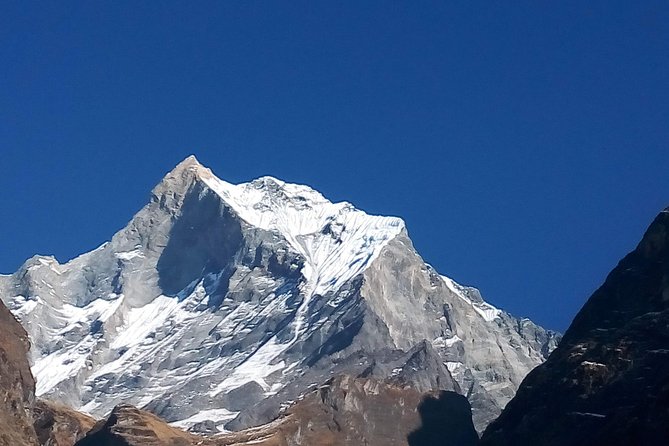
Reviewed · ANNAPURNA BASE CAMP TREK
Annapurna Base Camp Trek – 10 Days
Annapurna Base Camp is interesting because it mixes big mountain drama with real village days, all in a trek that ends at 4,130m under Annapurna’s towering walls. I love that this package builds in comfort where it counts, with tea-house nights and solid meals, not just a sketchy “walk and hope” plan. I also love the human side, including a government-licensed guide and the way local support teams help you feel steady on steep, uneven sections. The one consideration is the altitude and the weather swings, so you need to treat the climb seriously, not romantically.
This is also a great fit if you want a small-group trek that still feels personal. The romantic angle is real, too, because the days are paced enough to notice details, chat with tea-house hosts, and catch sunrise views without rushing everyone into one big blur. Still, if you want a fully cushy vacation with no demanding hiking days, ABC will test your legs.
Key Things That Make This ABC Trek Worth Your Time
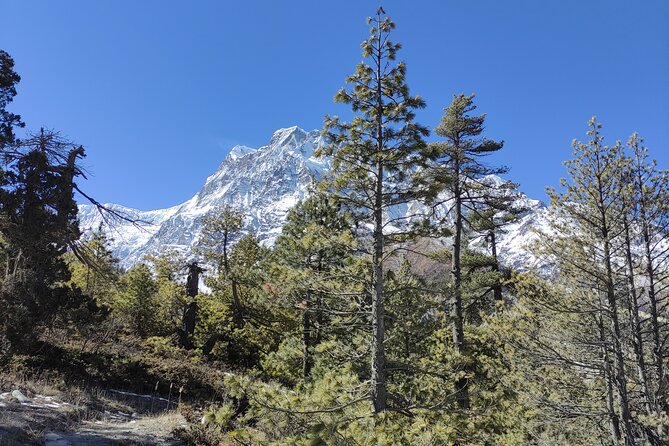
- 4,130m Annapurna Base Camp is the goal, with a practical plan for getting there safely with a licensed guide
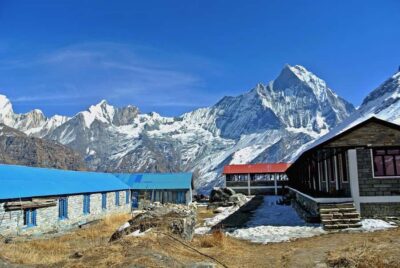
- Tea-house comfort for 6 nights during the trek, so you are not carrying your whole life on your back
- Guides you can trust, including the kind of hands-on support people praised from Santosh, Dibo, Varat, Asok, and Rash
- Food and warmth included during the trek time, plus a farewell dinner with a cultural show
- Small-group feel, with a maximum of 12 people per booking and a private-group setup for your party
- You get sightseeing time in Kathmandu and Pokhara, not only trail time
What You’re Really Booking on This 10-Day ABC Trek
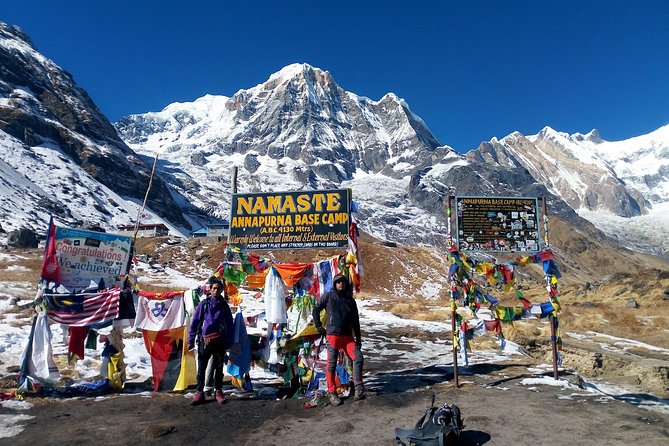
Let’s talk value first, because $699 is only the starting line. The big reason this trek can feel like a good deal is what’s bundled: airport transfers, city hotel stays (2 nights in Kathmandu, 2 nights in Pokhara), tea-house lodging for the trekking days, and the guided experience with food support during the trek. You also get transport between cities using tourist bus and car legs, instead of hunting for schedules mid-trip.
A big plus for me is the guide setup. You are not just getting someone who points at the trail. The trek includes a government license holder guide plus responsibility for food, drinks, accommodation, insurance, salary, equipment, transportation, and local tax. You also get a first aid kit and basic first aid training among leaders, which matters when you are climbing into thin air.
The trek is rated for people with moderate physical fitness, and it stays at a demanding altitude zone around 4,130m. That means you should expect uneven trails, stone steps, and days that feel tough even if you are fit. If you are comfortable with hiking and can pace yourself, this format is a smart way to do ABC without building the trip from scratch.
More routes into the Annapurna Sanctuary:
- Annapurna Base Camp Trek
★ 5.0 · 111 reviews - 14 Days Annapurna Base Camp Trekking | Best trek for visit Nepal 2020
★ 5.0 · 19 reviews - 13 Days Annapurna Base Camp Trek
★ 5.0 · 13 reviews
Kathmandu Warm-Up: Arrival, Thamel, Durbar Square, and Pashupatinath
Day 1 in Kathmandu is your low-stress reset. You land at Tribhuvan International Airport, get met by a staff member, and get taken to your hotel. You will also meet your guide and get oriented, which is the kind of behind-the-scenes help that prevents early-trip confusion later.
You then get a taste of Kathmandu’s core vibe in Thamel, the neighborhood most people use as a base. It’s where you can pick up last-minute items, ask a few gear questions, and feel human before your body turns into a climbing machine.
Two of the included highlights are classic Kathmandu sights:
- Kathmandu Durbar Square, which gives you the sense of old power and architecture that still shapes the city
- Pashupatinath Temple, a major Hindu site that shows how religion and daily life sit close together in Nepal
One practical tip: don’t over-plan your sightseeing. You want your sleep to be good before the mountain days. Use the sightseeing as a gentle introduction, not a second day of physical training.
Pokhara Setup and the Ride to Nayapul: Where the Trek Starts Feeling Real
On the Pokhara side, you’ll get your first “mountain air” moment. The plan includes getting from the city area toward Nayapul, the typical trail start point, using schedule bus driving plus local connections. The route is part of the experience because it moves you from city pace into countryside rhythm.
Pokhara itself is included as Lakeside time, and you’ll likely have the chance to shift gears right away. If you’re the type who gets antsy before a big hike, Pokhara is the place to breathe.
This trek also includes viewpoints around the broader Kathmandu area in the schedule, including Swayambhunath and Chandragiri Hills. If timing lines up, those are great for early acclimation of the brain, not the lungs. You’ll get a sense of how the terrain works before you commit to trail days.
Then comes the moment that makes everything click: you start moving toward the trailhead, and the trip stops being a plan and becomes a rhythm.
Chhomrong Day: Forest Trail Tension and the First Real Trek Test
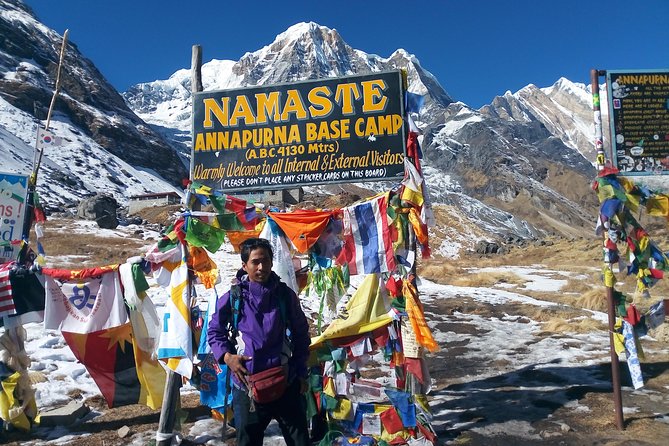
Day 3 is where trekking starts to feel like trekking. You walk through lush stretches and rhododendron-laden trail toward Chhomrong. This day matters because it introduces the type of hiking ABC uses: long enough to tire you, uneven enough to make you pay attention to footing, and varied enough to keep you from feeling bored.
You’ll also deal with the kind of “steady but relentless” effort that doesn’t show up in fitness stats. The trails can be uneven, and the effort is more about managing your pace than about sprinting to the next view.
Chhomrong is also a psychological milestone. Once you’re in that zone, the mountain starts to feel closer, even if it’s still far on the map. The tea-house life begins to become normal, which is a big comfort factor for the rest of the trek.
More to compare around Kathmandu
- Kathmandu: 7 UNESCO Sites with Lunch
★ 4.8 · 744 reviews - Everest Base Camp Helicopter Tour landing at Everest View Hotel
★ 5.0 · 668 reviews - Kathmandu: Local Women-Led Nepali Cooking & Momo Class
★ 4.9 · 360 reviews - Manaslu Circuit Trek
★ 5.0 · 292 reviews
Sinuwa and the Stone Steps: The Section Where Lungs Learn Patience
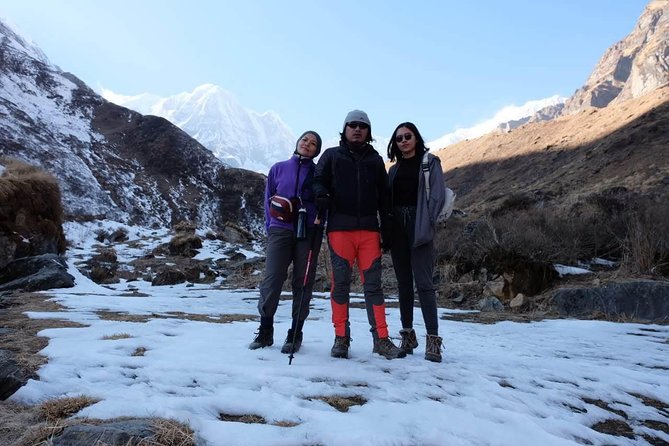
Day 4 brings Sinuwa. The route continues toward the Chhomrong Khola and includes crossing the river, then climbing through 2,500 stone steps carved into the hillside. That detail is the whole story: this is not flat walking. It’s stair climbing in a mountain disguise.
You’re also moving through a zone where you can catch great views of the Himalayas. Even when the weather isn’t perfect, you will still get that “this is real” feeling as the trail turns upward.
If you want a simple strategy, it’s this: short steps, slow breathing, and no hero moves. You’re not trying to finish early. You are trying to arrive feeling functional for the next day. That approach is how you make altitude feel manageable instead of scary.
Annapurna Base Camp Day: The 4,130m Goal and Weather Reading 101
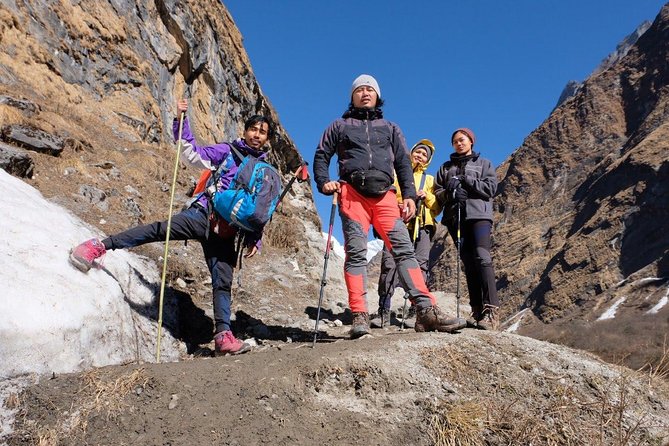
Day 5 is the big one: Annapurna Base Camp. The trek climbs gently alongside a riverbed and heads toward Bagar, and from there the trail leads you deeper into the Annapurna world. You will also pass by the area associated with Machhapuchhre Base Camp, which adds another layer of mountain drama even if your target is ABC.
This day can be strenuous, and that’s where altitude reality takes over. The trek is built for a target around 4,130m, and the altitude guide notes that extreme variations in weather can happen, with adverse health effects possible regardless of age or gender. Translation: listen to your body, and do not treat ABC like a treadmill workout.
Here’s what I think people underestimate: the summit day is not only physical. It’s also mental. You’ll feel better when you accept that your breathing may be slower, your pace may be slower, and that is normal. The goal is to finish feeling proud, not wrecked.
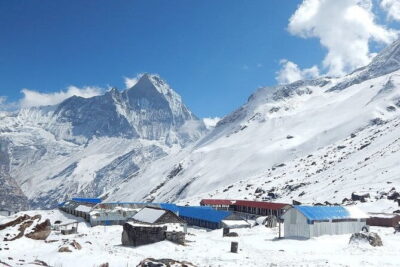
When you finally reach base camp, the payoff is the scale of the place. ABC doesn’t just feel like a viewpoint. It feels like a mountain workstation, with the wind, the cold, and the big shapes changing the way you understand the word huge.
The Return: Sinuwa Back Down and Jhinu Danda’s Steps Again
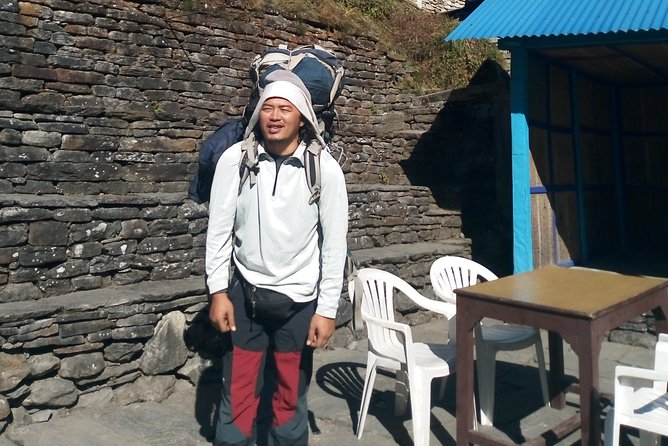
Day 6 is part recovery, part regroup. You retrace your steps back toward bamboo and trek through the sanctuary area. This is a good day to slow down. You’re going downhill on some parts, but you can still feel fatigue because your body has already started learning altitude.
Day 7 is Jhinu Danda, and it’s another “legs will complain” day. You’ll trek uphill from bamboo toward Kuldighar, then descend again toward the Chhomrong Khola, and then you climb back up to Chhomrong using stone steps. This pattern, back and forth, is part of what makes ABC both famous and challenging. It tests endurance more than speed.
You’ll likely also notice that the emotional tone improves on the return. When you already made it to ABC, the trip stops being a question and becomes a victory lap through the same villages and trail corners.
Back to Pokhara: Rice Fields, Nayapul, Phewa Tal, and Sarangkot
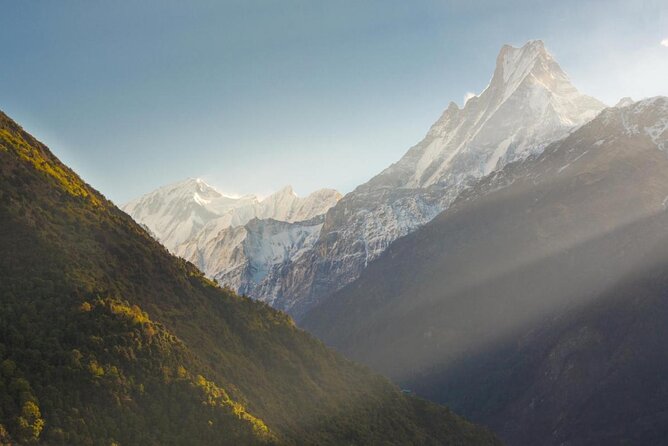
Day 8 is the transition out of the mountains. You trek from Jhinu toward Nayapul, and you’re walking along countryside with distant Annapurna views and rice plantations. Even if your legs are tired, this day is a relief because you start moving toward civilization without feeling like you’re taking an extra vacation.
Pokhara is included again, including a quick visit at Phewa Tal. That’s a nice reset for your eyes, especially after days of staring at steep trail lines and rocky steps. The schedule also includes Sarangkot, which is a classic place to catch panoramic views. It’s not just a photo stop. It’s your way of seeing the whole region from above, after spending days inside it.
Practical advice: celebrate with calm. A sunset viewpoint is great, but don’t turn Pokhara into an all-night party if you need one more good day of rest.
Kathmandu Valley Finish: Patan and a Soft Landing on Your Last Day
Day 9 includes a drive back to Kathmandu from Pokhara. You also have Patan Durbar Square in the schedule, which is a strong cultural way to finish. Patan’s detail and craft feel different from Kathmandu Durbar Square, and it’s a good choice if you want one more layer of art and architecture without starting over.
Day 10 ends with Garden of Dreams and then help to get to the airport. That kind of final-day easing matters. You’ve already done the hardest part, and you want your last hours to feel smooth, not complicated.
Guides and Porters: The Human Factor That Makes ABC Feel Safer
One of the most praised parts of this trek is the support system. People singled out guides who were attentive, friendly, and professional, including Santosh and Asok, plus additional team members like Dibo and Varat. Another name you’ll hear in the support stories is Raju Simkhada, often called Rash, who came up in a lot of warm, personal feedback.
What this means for you: the trail gets complicated when you are tired. A good guide helps you keep moving without panicking when the path seems rough or when weather changes. You also get the kind of team energy where porters and guides feel like partners, not just logistics.
There were also notes about the experience feeling friendly enough for people to sing and dance together on long journey days. That’s not mandatory. But it tells you the team knows how to keep morale up when the work is hard.
And because the leaders have first aid training and there’s a first aid kit, you aren’t feeling like you’re on your own if anything goes sideways. That’s the difference between “I completed a hike” and “I had a safe trek.”
Altitude, Gear, and Insurance: Don’t Skip the Boring Stuff
This trek climbs to around 4,130m, and the information is clear that altitude effects can happen. You are strongly encouraged to talk with your doctor before departure. If you have a medical history or you’re sensitive to altitude, do not treat that advice like a footnote.
You also need travel insurance that covers medical expenses and emergency repatriation, and you must show proof to the tour leader on the first day. That’s essential. It’s also one of those details that makes the whole experience more responsible.
On gear: the trek includes that required trekking gear is available in Kathmandu to buy or rent, with your guide helping you arrange it. That’s practical if you’re not coming with a full kit. Extra luggage can be left at the office or hotel and picked up later, which reduces the weight stress that can ruin your confidence.
The other practical thing to remember is weather swings. Cold snaps, wind, and sudden changes can make the final hours feel harsher than expected. Bring layers, and plan for the fact that mountain conditions do not follow city calendars.
Price and Value: What’s Included, What’s Extra, and Why It Adds Up
At $699 per person, the core package includes:
- dinners during the trip as listed
- airport transfers
- 2 nights in Kathmandu and 2 nights in Pokhara with breakfast in 3-start hotels
- 6 nights tea-house accommodation
- Kathmandu to Pokhara by tourist bus, plus Pokhara to Nayapul by private car
- a licensed guide and support for food, drinks, accommodation, insurance, equipment, transportation, and local taxes
- first aid kit and a Himalayas Recreation t-shirt
- farewell dinner with cultural show
That is a lot of friction removed. You do not have to design bedding, coordinate internal transport, or bargain for guides and porter costs separately.
What costs extra:
- Lunch and dinner in Kathmandu and Pokhara are listed as $150 per person
- Gratuities are listed as $50 per person
- If you prefer a guide speaking another language, there is an extra $200 per group
My take: if you can accept the trekking effort and plan for the listed extras, this price looks fair because the high-cost parts are already handled. The biggest variable for your budget will be meals outside the included trek coverage and what you add for personal comfort.
Who This Trek Fits Best (And Who Might Need a Different Plan)
This ABC trek suits you if:
- you can handle uneven trails and stone steps
- you have moderate fitness and you can follow a slower pace
- you want the romantic, couple-friendly vibe that comes from group pacing and shared days
- you want a guided trip with reliable support, not a solo self-navigation mission
It may not be ideal if:
- you want an easy walk with no altitude challenges
- you are unsure about medical fitness and you have not talked to a doctor
- you dislike cold weather and unpredictable mountain conditions
Also, because the trek is set up with a maximum of 12 people per booking, the group stays small enough for support, but you still get the social energy that helps on long days.
Should You Book This Annapurna Base Camp Trek?
If you want an ABC trek that feels organized, supported, and still authentic, this is a strong choice. You get the key ingredients: guided safety, real tea-house living, and enough structure to keep your focus on the trail, not on logistics. The support stories around guides like Santosh and Rash, plus the warm service notes from Dibo, Varat, and Asok, point to the kind of teamwork that makes a tough hike feel doable.
Book it if you’re ready for altitude and steps, and you like the idea of comfortable lodging that keeps you steady. Skip it or compare options if you’re looking for a purely relaxed vacation style, because this is a real trekking program, not a scenic drive.
FAQ
What altitude does Annapurna Base Camp reach on this trek?
Annapurna Base Camp is listed at an altitude of 4,130m (13,550 feet).
Where does the trek start, and how do you get there from the cities?
You start the trekking portion after traveling from Kathmandu to Pokhara and then onward toward Nayapul, using a schedule bus drive and then a private car leg from Pokhara to Nayapul.
Are airport transfers included?
Yes. Transfers from and to the airport are included, and you need to send your Nepal arrival details for pickup.
What is included in the $699 price?
Included items cover airport transfers, hotel nights in Kathmandu and Pokhara with breakfast, tea-house accommodation during the trek, guided trekking support, transport between Kathmandu and Pokhara and onward to Nayapul, a first aid kit, and a farewell dinner with a cultural show.
Do I need travel insurance?
Yes. Travel insurance that covers medical expenses and emergency repatriation is required, and proof must be shown to the tour leader on the first day.
What are the age limits and group size?
The minimum age is 7 years, and the maximum is 12 people per booking. This is also set up as a private activity for your group.
If you want, tell me your hiking experience level and whether you’re going as a couple or solo, and I’ll help you sanity-check if 10 days feels like the right pace for you.
Latest Kathmandu write-ups
- 16 Days Island Peak Climbing With Everest Base Camp Private Trip★ 5.0 · 3 reviews
- 15 Days Round Annapurna Trek with Poon Hill from Pokhara★ 5.0 · 5 reviews
- Private Nepal round trip including Ghorepani Poonhill trek★ 5.0 · 3 reviews
- Everest Base Camp Trekking 16 Days★ 4.0 · 7 reviews
- 14 Days Luxury Annapurna Base Camp Trek★ 5.0 · 6 reviews
- Everest Base Camp Trek★ 5.0 · 32 reviews
- Everest Base Camp Trek★ 5.0 · 87 reviews
- Everest Base Camp Trek★ 5.0 · 97 reviews
Annapurna Base Camp Trek, compared.
5 Day Annapurna Base Camp Trek & Natural Hot Spring
Read our review →
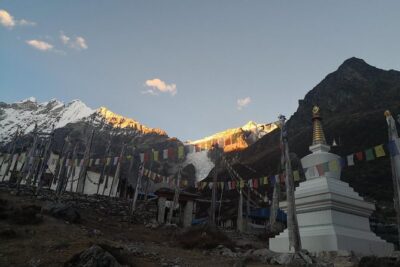
14 Days Annapurna Base Camp Trekking | Best trek for visit Nepal 2020
Read our review →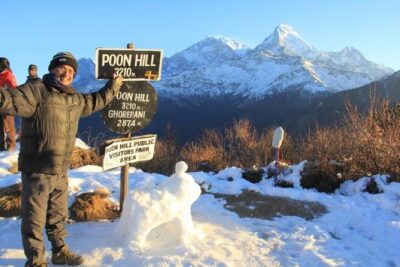
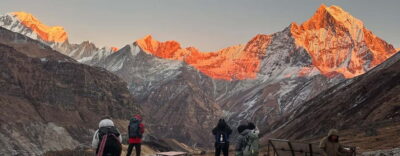
7-Day Annapurna Base Camp Trek & Natural Hot Spring
Read our review →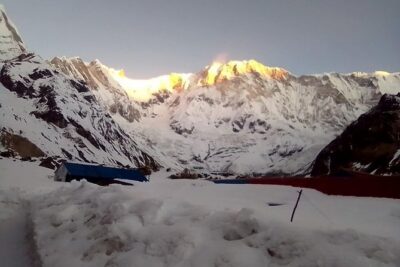
10 Days Annapurna Base Camp Trek from Kathmandu
Read our review →Browse the lists this tour appears in