
Reviewed · MANASLU CIRCUIT TREK
Experience the Thrill of a Lifetime:12-Days Manaslu Circuit trek
What makes the Manaslu Circuit Trek so interesting is the way it trades typical trail congestion for quieter villages, then saves the big wow moments for the high passes like Larkya La. I especially like the route’s mix of Gurung and Tibetan-influenced villages, and I like that the itinerary builds in an acclimatization day before the toughest sections.
One consideration: this is not an easy hike. You’ll be dealing with altitude and long days on uneven trails, so moderate fitness and smart pacing matter more than fancy gear.
Key things to know before you go
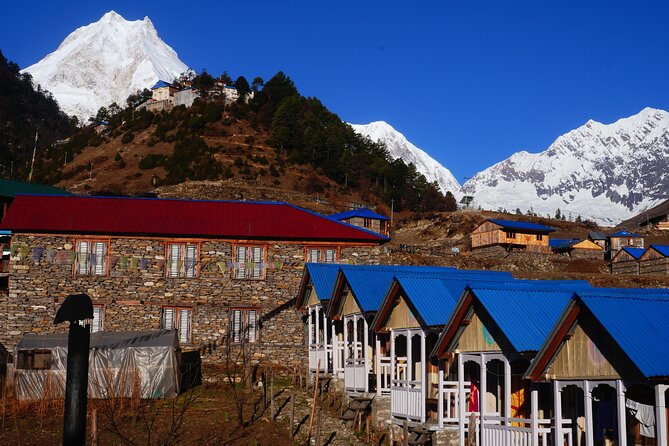
- Tea house trekking with included breakfast and most meals, so your daily logistics stay simple
- Permits handled up front, including Manaslu Special, MCAP, and Annapurna ACAP
- Acclimatization day in Samagaun, with a hike to Pungyen Gompa before going higher
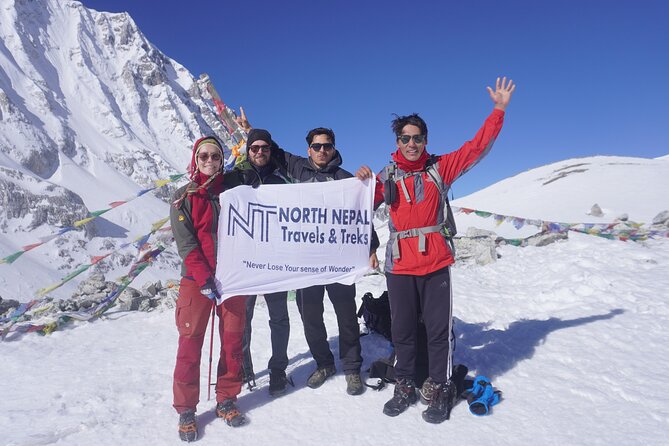
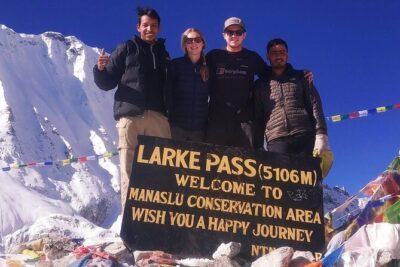
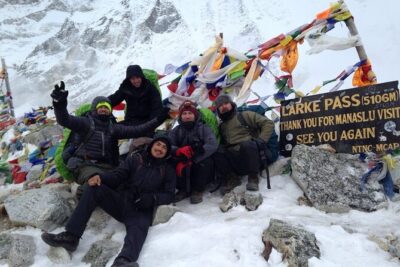
- High-altitude pass day at Larkya La (about 4,470 m), with classic views like Manaslu and Ratna Chuli
- Cultural stops that feel lived-in, from Tatopani hot springs to prayer flags and chortens in Buddhist villages
- Wildlife chances in a biodiverse region, including the possibility of Himalayan Thar and snow leopard (not guaranteed)
Why the Manaslu Circuit feels special (and less crowded)
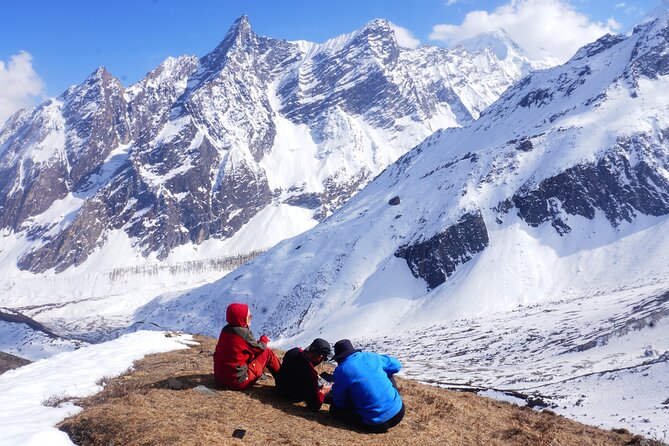
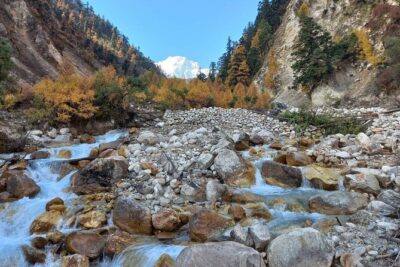
Manaslu Circuit Trek is a Nepal classic for one main reason: it’s a full-on Himalayan circuit with enough altitude and weather exposure to feel real, but enough village travel to keep it human-scaled. The trail threads through forests, farm country, and high, rocky terrain, so each day has a different “mood.”
You’ll also get the kind of scenery people chase in Nepal, but with fewer bottlenecks than the more famous routes. The best parts are the “in-between” moments: river crossings, prayer flags you can’t stop staring at, and small villages that don’t feel like they exist only for hikers.
If you care about getting away from crowds, this is the route you pick. If you only care about checking boxes, you might find it takes patience. The pass days demand it.
More of the Manaslu Circuit:
- Manaslu Circuit Trek
★ 5.0 · 292 reviews - Manaslu Circuit Trek:
★ 5.0 · 106 reviews - Manaslu Circuit Trek (15 Days)
★ 5.0 · 50 reviews
Price and value: what your $1,500 covers in real life
At $1,500 per person for an ~12-day trek, the value comes from what’s included, not just the headline number.
This package covers:
- Required trekking permits (Manaslu Special, MCAP, Annapurna ACAP)
- Tea house accommodations during the trek
- A registered experienced trekking guide (with food, accommodation, salary, and insurance)
- Most meals: 12 lunches, 12 dinners, and 11 breakfasts
- Transport support, including pickup offered and public transport connected to the start and end of the route
What you should budget separately:
- Personal expenses like laundry, bar bills, Wi-Fi, shower costs, and bottles or boiled water
- Tips for guides and porters
- Travel and rescue insurance
For me, the key value is that permits and daily food planning are handled. When you’re hiking for nearly two weeks, saving time on logistics matters. It also reduces the risk of last-minute surprises when you’re already tired.
Permits in plain English: Manaslu Special, MCAP, Annapurna ACAP
Manaslu is not a free-for-all trail. This circuit requires multiple permits, which this tour includes:
- Manaslu Special Permit
- MCAP (Manaslu Conservation Area Permit)
- Annapurna ACAP (for the related protected area coverage)
Why you should care: permits are part of what keeps the region managed and monitored. It also means you can focus on hiking instead of trying to sort paperwork while you’re traveling.
Day-by-day route: from Budhi Gandaki rivers to Larkya La
Below is the real rhythm of the trek, and what each section tends to feel like in your body and your eyes.
More to compare around Kathmandu
- Kathmandu: 7 UNESCO Sites with Lunch
★ 4.8 · 744 reviews - Everest Base Camp Helicopter Tour landing at Everest View Hotel
★ 5.0 · 668 reviews - Kathmandu: Local Women-Led Nepali Cooking & Momo Class
★ 4.9 · 360 reviews - Kathmandu: Food and Drink Walking Tour
★ 4.9 · 292 reviews
Days 1 to 5: starting along the Budhi Gandaki and meeting Gurung villages
Day 1, Soti Khola
You start with an early road transfer, moving along the Prithivi highway before turning onto a branch road at Malekhu. Then you hike the flatter path along the Budhi Gandaki River to Soti Khola. It’s a long travel day, but it’s also your chance to settle into walking posture and gear basics.
Tip: treat day one as “practice day.” Keep your pace easy and avoid the urge to race just because you’re not yet at altitude.
Day 2, Machhakhola
After breakfast in Sotikhola, the trail continues through greener stretches and villages. You pass through Lapu Besi, which is inhabited by Gurungs, then climb and zigzag toward Machha Khola. This is where the route starts getting more “trek-like,” with more elevation work than day one.
Day 3, Jagat (via Tatopani and hot springs)
You hike upstream early, passing Khola Besi and then reaching the hot springs area of Tatopani. After crossing a suspension bridge, you go through forest sections and then climb toward Jagat via places like Doban and Lauri.
This is also a good day to slow down. Suspension bridges and steeper segments can trick you into overexerting if you’re impatient.
Day 4, Philim and Deng
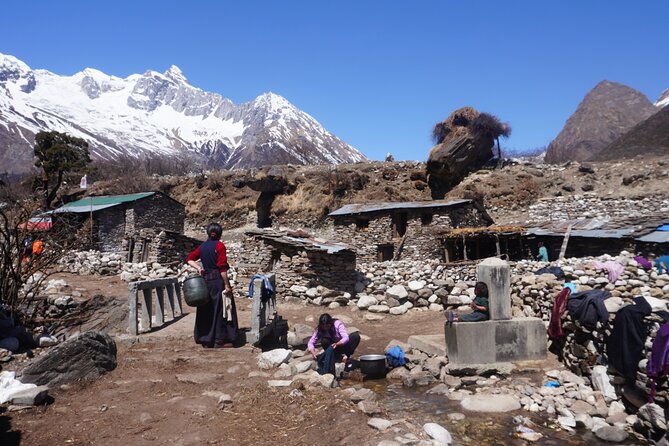
Today you keep moving through river-crossing rhythm and arrive in Philim, a Gurung community known for traditional houses, serene monasteries, and chortens. You then continue onward to Deng, famous for agriculture.
In practice, these village days are a nice contrast to the higher terrain. They help you stay oriented and remember why you’re on a circuit, not a single big climb.
Day 5, Namrung
You start on a flatter trail before ascending through a green forest to Namrung. Manaslu views start showing up, along with ridges and valleys. Namrung is Buddhist, and you’ll see monastery areas, chortens, and prayer flags.
This is a great day to test your altitude comfort. You’re still not at the pass yet, but you’re getting closer to colder nights and thinner air.
Days 6 to 8: Samagaun, acclimatization to Pungyen Gompa, and Tibetan border country
Day 6, Samagaun (with multiple Himalayas in view)
The hike trends upward through scenery changes: rhododendron forests shift into pasture grasslands. You also pass through Lhogaun, described as a Tibetan-style village, then continue to Samagaun. Views can include Gorkha Himal, Lajing Himal, Saula Himal, and Manaslu.
Day six matters because it sets you up for the “high altitude routine.” Wear layers for quick weather shifts. The air gets colder as you gain height.
Day 7, acclimatization in Samagaun, hike to Pungyen Gompa
This is your built-in buffer day, and it’s one of the best parts of the itinerary. You hike to Pungyen Gompa on the east side of the Nubri Valley. You can bring lunch and eat at rest stops for energy.
You’ll also cross the roaring river multiple times along the way, with about a 2-hour stretch on the trail that can keep you focused and moving. It’s a smart way to gain altitude gradually without stacking your risk.
Practical mindset: acclimatization days are not “free days.” Treat it as training for the pass day, not a casual stroll.
Day 8, Samdo (desert path feel near the border)
Now you climb uphill through a mostly desert-like path to Samdo, about 4 km from the Tibetan border. There’s also a Tibetan refugee camp in the area.
This is when the trek starts feeling more remote. The higher the trail gets, the more you’ll notice wind, temperature drops, and how quickly the light changes.
Days 9 to 11: Larkya La, icy lakes near the top, and down to Dharapani
Day 9, Samdo to Dharmashala (Larkya Phedi), via Larke Bazar
You hike from Samdo to Dharmashala, also called Larkya Base Camp, around 4,470 m. The distance is about 11.7 km, often taking 3 to 4 hours, and you pass Larke Bazar, described as a seasonal Tibetan market.
This day is about getting your altitude routine solid and reaching a place where you can sleep, eat, and prep. Don’t overspend energy. Save it for the pass.
Day 10, Dharmashala to Larkya La and down to Bimthang
You start early after breakfast and climb to Larkya La Pass. The climb is described as moderately difficult, and you’ll be on a winding, rocky trail. At the pass, you’re rewarded with mountain views like Ratna Chuli, Cheo Himal, and Manaslu.
Then you descend, and you may encounter icy lakes before reaching Bimthang. This is the day where trekking poles matter, foot care matters, and your planning matters more than raw speed.
If the weather is poor, conditions can feel harsher than you expect at this altitude. That’s why starting early is built into how the route runs.
Day 11, to Dharapani via Tije and orchard country
You begin by walking across pasture land and descending to the Budhi Khola valley. You cross rivers and pass through rhododendron forest sections. After a couple hours, you reach Tije, which has an apple orchard and is noted for wine.
From there, you continue about another hour or so to Dharapani.
This is a nice psychological landing day. You’re still trekking, but you’re already through the high pass. It helps you transition from “survive and focus” mode back into “enjoy the circuit” mode.
Day 12: the 4WD jeep exit to Besisahar, then Kathmandu or Pokhara
After breakfast, you take a 5-hour 4WD jeep drive from Dharapani to Besisahar, then transfer to Kathmandu or Pokhara.
That vehicle ride is not just convenience. It’s how you keep the trip from turning into a miserable final-day slog. You get your legs back, and you’re not forcing another long hike to finish the trek.
Guides and team culture: what to expect beyond the trail
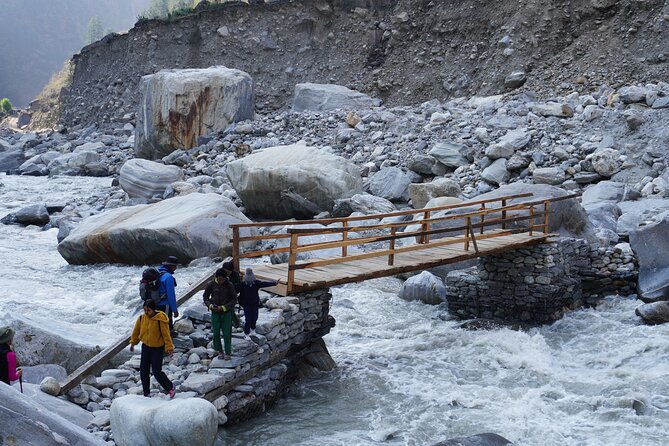
The trek’s quality usually comes down to the humans running it day to day. In the feedback patterns tied to this route, the coordination is often credited to Mohan, with guides such as Jeewan, Lalu, Zeewan, Raj, and Raj Rai showing up in positive notes.
Across those comments, the themes are consistent:
- Professional communication, including English skill called out as a genuine advantage
- A safe, steady pace, especially when altitude is in play
- Guides who act like real companions, including caring attention that makes long days feel manageable
Also, you should expect a guide who can explain what you’re seeing and keep the rhythm working for the group. On a route like Manaslu, that matters as much as the view at Larkya La.
What to pack and how to handle altitude without overthinking
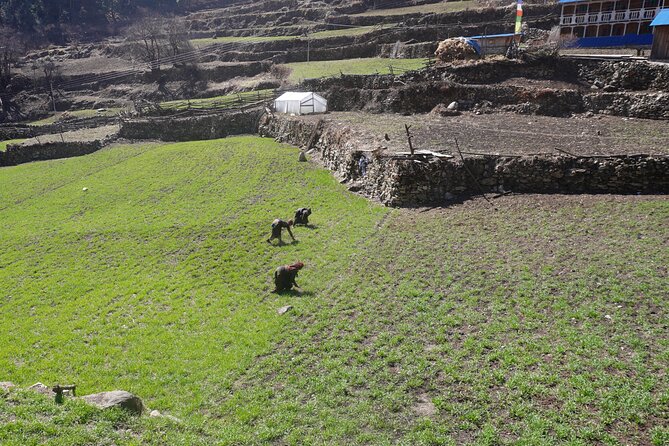
This trek is physically demanding, and that means your “system” has to work every day.
Bring layers. The itinerary includes cold, higher sections after Samagaun, and you’ll go through rocky and icy zones near the pass. Even when the day starts warm, temperature can drop fast at altitude.
You’ll also want gear for comfort on long walking days:
- A solid day pack and comfortable boots for uneven trail
- Trekking poles if you use them (helpful for descents)
- Basic sun protection and something for wind
On water and food: the package includes meals, but bottled water and boiled water costs are personal expenses. Plan to carry a method for safe drinking and accept that the simplest approach usually wins on trek days.
Finally, remember the acclimatization day in Samagaun is not a random add-on. It’s there to reduce stress on your body before the pass. Treat it seriously.
Wildlife and nature: what you might see, and what to expect
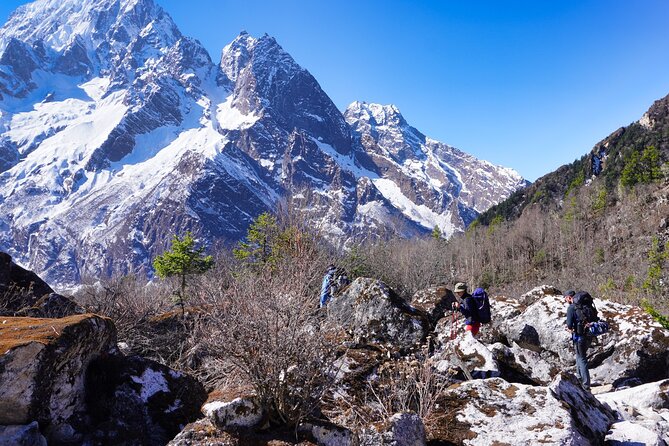
Manaslu is described as biodiverse, and there’s a chance for wildlife sightings like Himalayan Thar, snow leopard, and various bird species. You should treat wildlife sightings as luck-based, not guaranteed.
The more reliable “nature experience” here is the daily change in terrain and the way the trail keeps pulling you between forest stretches, village life, and high, exposed routes. That rhythm is what makes the circuit feel rewarding.
Who should book this trek, and who should rethink it
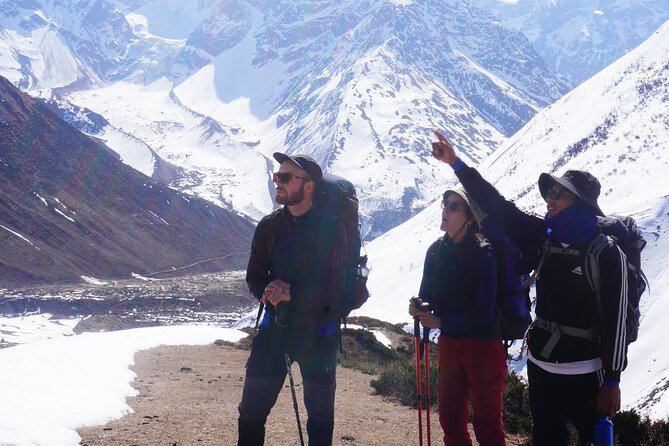
This trek fits best if you want:
- A circuit trek with big mountain moments and real cultural stops
- Tea house lodging and meals handled for you
- A route that includes acclimatization rather than just forcing altitude climbs back-to-back
It may not be ideal if you:
- Struggle with long hiking days
- Get easily rattled by cold and rocky trail conditions
- Prefer fully guided, city-style comfort every step of the way
If you have moderate physical fitness and the patience for gradual climb, this route can feel like one of the best ways to experience the Manaslu region.
Should you book this Manaslu Circuit Trek?
I’d book it if you want a well-run 12-day trek where the heavy admin work is handled (permits, lodge stays, meals, guide support) and the itinerary has a clear logic: build up in the lower circuit, acclimatize in Samagaun, then take on Larkya La with your eyes open.
I’d think twice if you want a relaxed vacation pace or you’re not comfortable with altitude. This is not a stroll, and the pass day will ask for real effort.
FAQ
What permits are included for the Manaslu Circuit trek?
The package includes required permits, including Manaslu Special, MCAP, and Annapurna ACAP.
What kind of accommodation is included during the trek?
You’ll stay in trekking lodges (tea houses) during the trek.
Are meals included?
Yes. Lunch is included for 12 days, dinner for 12 days, and breakfast for 11 days.
Is a guide included?
Yes. A registered experienced friendly trekking guide is included, with food, accommodation, salary, and insurance.
How does transportation work on the first and last days?
Pickup is offered, and public transport is included to Setokhola and back to Kathmandu or Pokhara from Dharapani. On the last day, you also take a 5-hour 4WD jeep from Dharapani to Besisahar, then transfer onward.
Is this trek private or shared with other groups?
This is a private tour/activity. Only your group participates.
What’s the fitness level needed?
The trek is for travelers with moderate physical fitness.
What’s not included in the price?
Personal expenses like laundry, bar bills, Wi-Fi, extra porters, bottled or boiled water, shower costs, plus tips for guides and porters, and travel or rescue insurance are not included.
What are your changes and cancellation options?
Free cancellation is available. You can cancel up to 24 hours in advance for a full refund, and cancellations within 24 hours do not receive a refund.
Latest Kathmandu write-ups
- 16 Days Island Peak Climbing With Everest Base Camp Private Trip★ 5.0 · 3 reviews
- Private Nepal round trip including Ghorepani Poonhill trek★ 5.0 · 3 reviews
- Everest Base Camp Trekking 16 Days★ 4.0 · 7 reviews
- 15 Days Round Annapurna Trek with Poon Hill from Pokhara★ 5.0 · 5 reviews
- 14 Days Luxury Annapurna Base Camp Trek★ 5.0 · 6 reviews
- Everest Base Camp Trek★ 5.0 · 32 reviews
- Everest Base Camp Trek★ 5.0 · 87 reviews
- Everest Base Camp Trek★ 5.0 · 97 reviews
Manaslu Circuit Trek, compared.
Browse the lists this tour appears in