
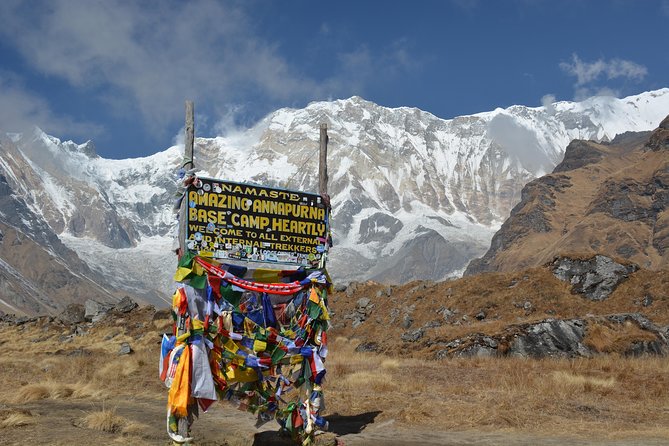
Reviewed · ANNAPURNA BASE CAMP TREK
Annapurna Base Camp, Nepal 10 days
This Annapurna Base Camp trek feels special because it is a private climb into the Annapurna Sanctuary area, not a cattle-call hike. You get to set a rhythm that fits your body, while a guide helps you connect the walking to the spiritual and environmental meaning of the region.
Two things I really like: first, the mix of hotels and teahouses keeps the trip human, not just wilderness survival. Second, you get most meals included so you can focus on moving uphill and staying steady in the cold.
One possible drawback to weigh first: this is a high-altitude trek with long days (often 4 to 8 hours of hiking), so you should be ready for tired legs, chilly mornings, and limited creature comforts. If you hate the idea of paying extra for basics like hot shower and charging, plan ahead.
Key highlights worth your attention
- Private pacing that you can customize, so you do not feel rushed on the tougher sections
- Hotels plus teahouses, which makes this trek easier to stomach for 10 days
- Meal coverage is strong (breakfast 10, lunch 8, dinner 7), helping control daily costs
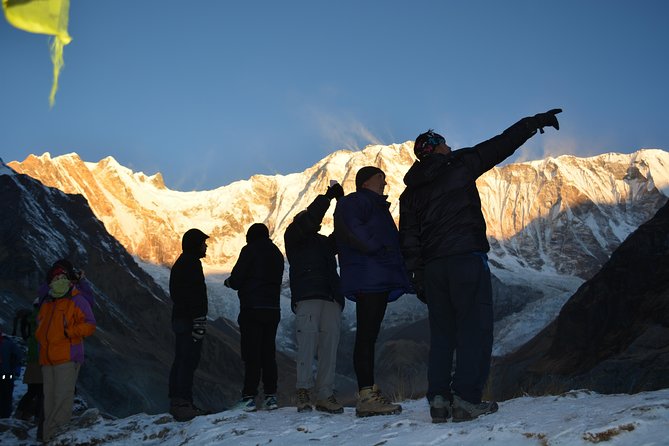
- Early start rhythm with a 6:15 am start time, which matters for weather and trail flow
- Guides have been praised by name, including Sandip and Resham GC for caring, helpful support
- Altitude climb is real, with Deurali reached at 3230m (10,595 ft) during the route
Annapurna Base Camp, the private way, with time for the Sanctuary
Annapurna Base Camp is the kind of trek that pulls you in with scenery, but what makes this version stand out is the pacing and the explanation along the way. The walking is the obvious part, yet I also like that your guide frames the Annapurna Sanctuary’s spiritual and environmental significance, so you are not just counting steps.
Because it is private, you are not stuck with strangers setting the pace. If you need shorter breaks for breathing, or you want to slow down on a steep section, you can do it. That matters on routes like this one, where the day length can stretch into long hiking windows.
The hiking itself is described in a practical way: typically three to eight hours each day and lots of up and down. Translation: you should treat this as a real fitness challenge, not a gentle sightseeing walk.
More routes into the Annapurna Sanctuary:
- Annapurna base camp trek 5 Days
★ 5.0 · 252 reviews - 14-Day Private Annapurna Base Camp Trek
★ 5.0 · 180 reviews - Annapurna Base Camp Trekking
★ 5.0 · 116 reviews
Day 1 Kathmandu to Pokhara, then you start working your muscles
Day 1 is a scenic but long transfer: you drive from Kathmandu to Pokhara by tourist bus, about 7 hours. Pokhara starts low at around 820m, which is a good reality check. You ease into Nepal’s travel pace, then you are ready to begin the trek the next day.
What I like about putting this drive early in the trip is that it reduces chaos. You are not trying to squeeze sightseeing and gear chaos into the first afternoon. The next morning is already built around a trekking start time, so you can focus on sleep and hydration.
If you dislike long rides, take it as a planning clue. You might want to keep your first day simple, then go to bed early in Pokhara.
Days 2 to 4: Ghandruk, Chhomrong, and the part where the trail gets serious
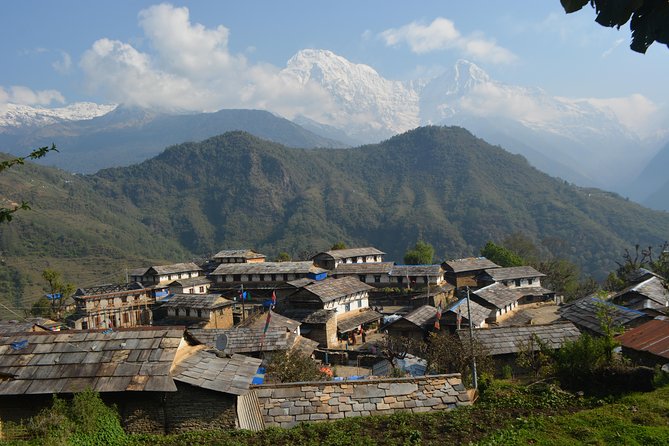
You begin Day 2 with an early morning drive to Siwai (about 2.5 hours), then you start trekking to Ghandruk. The trek time is around 4 hours, and Ghandruk is described as a village mostly inhabited by the Gurung community. That community feel is a nice change of pace after the transfer day, because you get a more grounded sense of where people live in the Annapurna region.
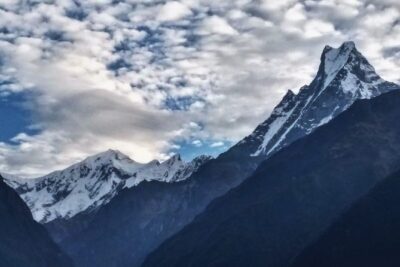
Day 3 brings the first big “wow” viewpoints: you climb toward Kimrungdanda and you can enjoy views of Annapurna South, Hiunchuli, Fishtail Mountain (Machhapuchhre), and Ganggapurna. Trek time is about 6 hours, and it includes climbs and steeper walking. This is one of those days where steady effort beats speed. I would rather arrive sweaty than red-faced.
Day 4 is where hikers learn about stairs in a physical, not theoretical way. The trail out of Chhomrong descends via about 2500 stone steps, then crosses the Chhomrong Khola on a suspension bridge. After that, you climb uphill to Sinuwa, then pass through forest toward Kuldihar (the day is about 5 hours).
Here is the key consideration: if your knees do not love step-downs, Day 4 can feel like a lot. Bring trekking poles if you use them, and take the steps slowly. Suspension bridges also add a mental layer, because your brain focuses on balance while your legs do the work.
Day 5 Bamboo to Deurali at 3230m, a cold wet-feeling day
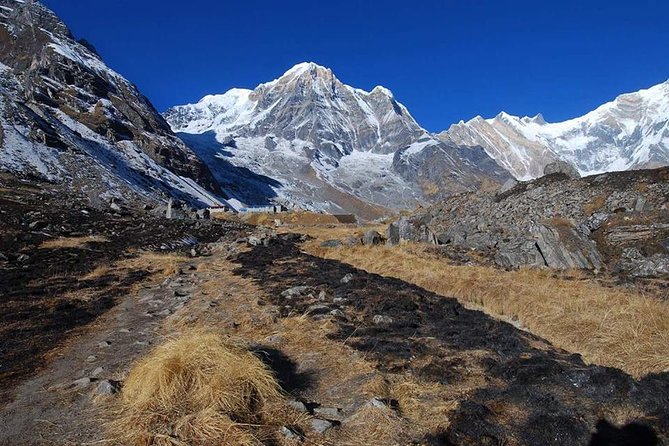
Day 5 moves from Bamboo to Deurali (3230m / 10,595 ft), about 4 to 5 hours. The route goes through a bamboo forest described as damp and cold, then you ascend steadily with fewer steep sections after that.
This day is valuable because it shows you how the trek handles altitude. You are not just sprinting upward in one brutal push, you are ramping. That matters for comfort and for keeping your body calm.
A practical note for this section: because the bamboo forest is damp, plan for clothing that can handle moisture and wind. Even without inventing gear lists, you can assume you will feel colder if you are wet. If you run warm, you can still end up chilled by shade and humidity.
More to compare around Kathmandu
- Everest Base Camp Trek – 14 Days
★ 5.0 · 1,499 reviews - Everest Base Camp Trek
★ 5.0 · 842 reviews - Private Kathmandu Sightseeing Tour | UNESCO World Heritage sites
★ 5.0 · 756 reviews - Kathmandu: 7 UNESCO Sites with Lunch
★ 4.8 · 744 reviews
Day 6 into the Annapurna region: Machhapuchhre Base Camp is strenuous
Day 6 takes you deeper into the Annapurna region, trekking about 6 hours. The route begins with gentle climbing through a river bed, then turns onto a steeper trail along the mountain side. A key point on this day: the hike from Bagar to Machhapuchhre Base Camp is described as somewhat strenuous.
I like this kind of phrasing, because it warns you without sugarcoating. You are not promised an easy stroll. You are being told to expect work.
From Machhapuchhre Base Camp, you then continue into the broader Annapurna area for further trekking highlights. The exact next movement is truncated in the info you gave, so I will keep this practical: you should expect a strong scenic pay-off as the day positions you closer to base camp terrain.
If you want to make Day 6 easier on yourself, keep your effort controlled. When you go too hard early, altitude and fatigue show up later, and that is when you feel it.
Day 7 Annapurna Base Camp day, then retrace your steps downhill
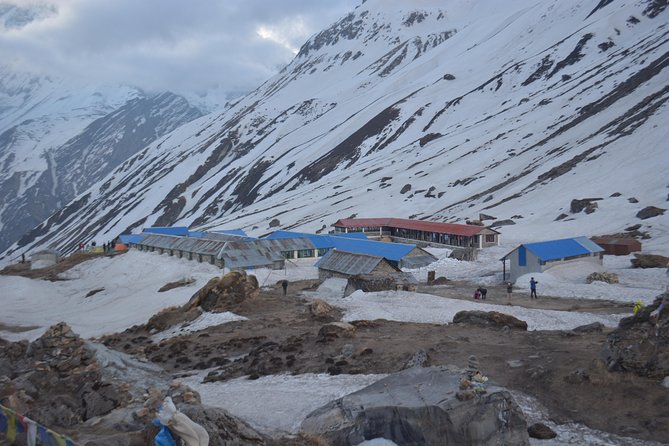
Day 7 is built around returning from Annapurna Base Camp to Bamboo. The trek time is listed as 8 hours, and it is described as downhill so it should not be very difficult.
This is the part I think many people misunderstand. Downhill can be easier on breath, but harder on knees. So you can think of it as “less cardio, more leg fatigue.”
The good news is that you get to enjoy the extraordinary scenery again while you head down. Since it is retracing your steps, you are also less likely to feel lost or uncertain. Your guide is already there to keep the pacing right, and private trekking means you are not forced to match someone else’s downhill style.
Day 8 Bamboo to Jhinu Danda via Kuldighar and a return to Chhomrong
Day 8 starts with Bamboo, and the route is about 6 hours. You climb uphill to Kuldighar, then walk downhill to Chhomrong Khola, climb stone steps back up to Chhomrong, and then descend again to Jhinudanda for rest.
That pattern, climb, descend, climb, descend, is typical of the Annapurna region and it is why this trek is often tiring even when you think the route is short. Your legs keep getting reassigned to new tasks all day.
If you are sensitive to repetitive stairs, this is another day to pace carefully. Stone steps can be hard on the same muscles again and again, even if it is technically “only” a 6-hour day.
Day 9 trek to Siwai, then the ride back toward civilization
Day 9 ends the trekking part at Siwai and brings you back toward Pokhara. You trek for about 6 hours while enjoying western Nepal hill scenes, and the route mentions wild bee hive under the cliff as something you might notice along the way. You stop for lunch on the way, then your trek ends at Siwai where you board your vehicle.
This is a good day to keep an open mind. A trek like this does not just change you on mountain days. It also changes how you see small moments, like roadside cliffs and busy villages. The “small detail” nature of this day is one reason I enjoy doing the full circuit.
Day 10 Pokhara to Kathmandu and a final reset, with an extra-cost flight option
Day 10 drives you back to Kathmandu, about 7 hours after breakfast. You get time to look around shops, pick up souvenirs, and rest. There is also a flight option you can take instead, which costs an extra $100.
This “last day buffer” is more than just logistics. It helps you transition out of trek mode without immediately stacking another hike or hard day of travel. If you are coming home soon after the trek, you will probably appreciate the rest time.
Price and logistics: does $848 feel fair for this 10-day trek?
At $848 per person for about 10 days, the big question is value: what is actually handled for you.
From the included items, you get:
- Accommodation in hotels and teahouses
- Air-conditioned vehicle use
- A meal plan with breakfast 10 times, lunch 8 times, and dinner 7 times
That meal coverage is a real cost saver. It also helps you stay on schedule because you are not hunting for food every day.
What costs extra:
- Hot water, hot shower, WiFi, and battery charging are not included
- Tipping for the crew member is not included
- If you want the optional flight for the Kathmandu return, it is extra $100
Here is my take on the money: paying this amount makes the trek feel like a supported experience rather than a DIY operation. Private trekking means you are paying for flexibility and attention, not just for miles. If you want to move at your own pace on a high-altitude route, that kind of control is worth real money.
Teahouses, meals, and sleep: comfortable enough, but not a hotel spa
This trek uses teahouses and hotels, and most meals are included. In plain terms, you should expect simple comfort, not modern luxury. The upside is that you are fed and housed without needing to plan every stop.
The not-included items are important because they shape expectations:
- Hot shower is not included
- WiFi is not included
- Battery charging is not included
So you will want to protect your devices and your patience. I would treat the charging limit as a reminder to pack a small power solution if you rely on your phone for navigation, photos, or communication. You also should plan for washing to be limited, especially as temperatures drop.
Food on this route being largely included is a big plus. You still need to drink and eat enough to climb, but you do not have to gamble on finding the “right place” each day. It also helps with energy management, because you can eat on a routine.
Guides, pacing, and the human touch at high altitude
The “private” part is not just marketing. It changes how the trek feels on tough days. When your guide supports you, you can slow down without awkwardness and you can ask questions without feeling like you are holding up a group.
You also get guidance about the Annapurna Sanctuary’s spiritual and environmental importance, which adds meaning to the route. I find that can reduce the mental fog that sometimes hits near base camp, when your body is tired and your brain wants to only think about breathing.
One more practical note: guides and support staff on this operation have been praised by name in past experiences, including Sandip and Resham GC. Those same names show up across different treks, which suggests the operator takes guiding seriously rather than treating it as interchangeable labor.
If you care about how the trip runs day-to-day, I would pick a private trek like this for the way it gives you a consistent point of contact.
Who this Annapurna Base Camp trek fits best
This trek is described as best for travelers who can handle a high-altitude mountain trek with moderate physical fitness and daily hiking of 3 to 8 hours. That means it fits people who are already walking regularly and who can enjoy long days without needing constant entertainment.
It also fits best if you value:
- A pace that can adjust to you
- A guide who explains more than just directions
- A structured support system for meals and lodging
It may not be ideal if you want a short, easy hike, or if you hate the idea of cold mornings, stairs, and limited amenities like WiFi and charging.
Should you book this private Annapurna Base Camp trek?
If you want Annapurna Base Camp with support, a paced route, and a meal plan that keeps you moving, I think booking makes sense. The value is strongest if you are paying attention to what is included, especially lodging plus most meals, and if you want private flexibility on a high-altitude trek.
I would not book blindly if you are very budget-driven or if you strongly expect hot showers, charging, and WiFi during the trek. Plan for basic comfort, take the stairs seriously, and choose this if you want a guided experience that feels like it was designed for real people, not just hikers who love pain.
FAQ
How long is the Annapurna Base Camp trek?
The trek is listed as 10 days (approx.).
Where does the tour start and what is the main location?
The tour is based out of Kathmandu, Nepal, and it includes driving and trekking through the Annapurna region.
Is this tour private?
Yes. It is a private tour/activity, so only your group participates.
What time does the tour start each day?
The start time is listed as 6:15 am.
What meals are included?
The package includes breakfast 10 times, lunch 8 times, and dinner 7 times.
What accommodation is included?
You get accommodation in hotels and teahouses.
Are hot water, hot showers, WiFi, or battery charging included?
No. Hot water, hot shower, WiFi, and battery charge during the trekking are not included.
What is the trek altitude detail provided?
The itinerary specifically mentions reaching Deurali at 3230m (10,595 ft).
What does the price include and what does it cost extra?
The price is $848 per person and includes the listed accommodation, meals, and vehicle transport (air-conditioned vehicle). It costs extra for hot shower, WiFi, battery charge, and tipping to the crew member. There is also an optional flight back to Kathmandu for an extra $100.
Is free cancellation available?
Yes. Free cancellation is available. You can cancel up to 24 hours in advance for a full refund, and if canceled due to poor weather you are offered a different date or a full refund.
Latest Kathmandu write-ups
- Langtang Valley Trek★ 5.0 · 3 reviews
- Khopra Danda Trek★ 5.0 · 3 reviews
- Langtang Valley Trek from Kathmandu★ 5.0 · 3 reviews
- 5 night / 6 days Kathmandu Nagarkot Chitwan Pokhara tour★ 5.0 · 3 reviews
- Nepal Highlights Tour: 5 Nights 6 Days Kathmandu & Pokhara Tour★ 5.0 · 3 reviews
- Kathmandu Valley Private Day Tour★ 5.0 · 3 reviews
- Conquer the Himalayas: The Ultimate 16-Day Annapurna Circuit Trek★ 3.5 · 3 reviews
- Kathmandu Heritage Day Tour★ 5.0 · 3 reviews
Annapurna Base Camp Trek, compared.
Browse the lists this tour appears in