
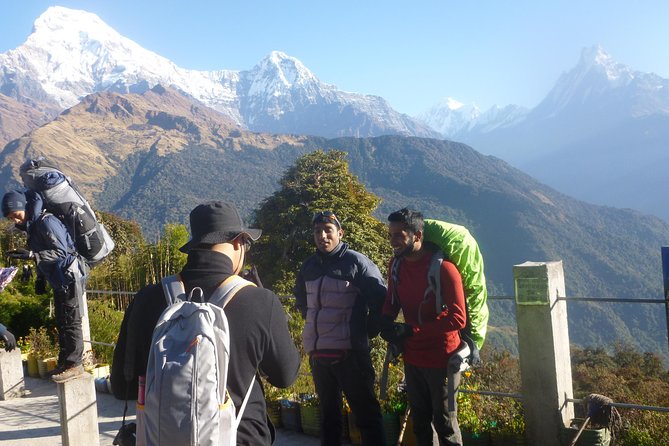
Reviewed · ANNAPURNA BASE CAMP TREK
Annapurna Base Camp Short trek
This trek is interesting because you’re hiking from village trails up to the foothills of the Annapurna massif, then waking up for sunrise at Annapurna Base Camp (4,130m). It also has that classic Nepal mix, rhododendron and oak forests one day, grassland and river crossings the next, plus the big-name Himalayan views.
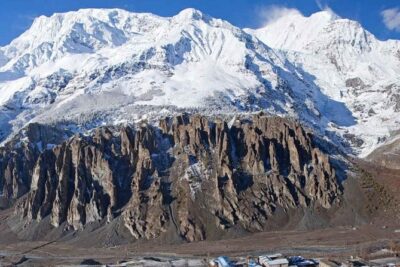
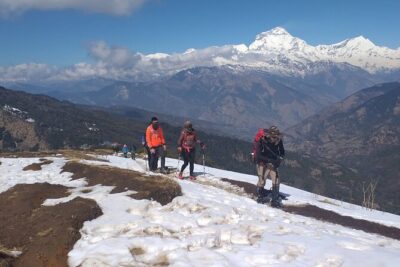
Two things I really like about this route are the chance to see major peaks in one sweep, including Annapurna Range, Mt. Macchapuchhre, and Mt. Dhaulagiri, and the way the days are built around long views, not just distance. One possible drawback is that it includes plenty of staircase hiking and 6-8 hour walking days, so it is short, but not easy.
Key Things You’ll Actually Care About
- Sunrise at Annapurna Base Camp (4,130m) with morning views over the Annapurna range
- Forest and village variety, from rhododendron, oak, and bamboo to Gurung villages like Ghandruk
- Real river action, with sections running alongside fast, noisy water and suspension bridges
- Machhapuchhre Base Camp stop, a satisfying halfway-feeling moment before pushing on
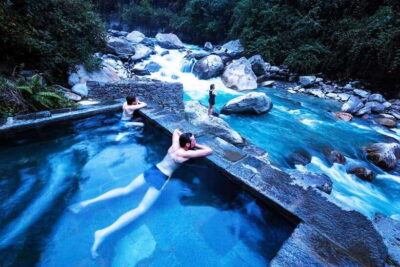
- JhinuDanda hot spring dip, a rare chance to recover your legs the natural way
- A professional guide and included meals/lodge, so you spend less time planning and worrying
Kathmandu to Pokhara First, Then the Annapurna Trail Starts
Your trip kicks off in Kathmandu, with the start point listed as Tribhuvan Airport. You’ll have pickup offered, and the tour uses a mobile ticket, which keeps the front end simple. After you settle in Kathmandu, you’re not stuck there long. The schedule pushes you quickly toward the mountains through a full day of travel, then right into trekking.
The Kathmandu to Pokhara drive runs via the Prithvi highway. Expect a long ride, plus plenty of countryside views: terraced farmland, moving city-to-city scenery, and the Trishuli river along the way. This part is not the highlight for everyone, but it’s useful. It gets you out of traffic and into rhythm, and it also positions you well for the trekking start the next day.
Then comes Pokhara, with two nights in a hotel and breakfast included. This matters more than it sounds. After Kathmandu, Pokhara gives you a proper decompression window, and it’s also where you set your luggage. You’ll have time to do casual lake-area wandering and even options like boating or cycling, depending on what you feel like doing. No meals are included on the Pokhara day you first arrive, so plan to grab something easy when you land.
One practical note: since this is a short trek by Nepali standards, the schedule packs energy into your first days. I’d treat Pokhara as your time to eat well, sleep early, and get your legs ready, because once the hiking begins you’ll be on the move for hours at a time.
More routes into the Annapurna Sanctuary:
- Annapurna base camp trek 5 Days
★ 5.0 · 252 reviews - 14-Day Private Annapurna Base Camp Trek
★ 5.0 · 180 reviews - Annapurna Base Camp Trekking
★ 5.0 · 116 reviews
Ghandruk and the First Big Taste of Annapurna Views
The next day starts with a drive from Pokhara all the way to Gurung village of Ghandruk. This is one of those places where you see why the Annapurna region is famous. Ghandruk is known for excellent views of the Annapurna range, and the information also calls out Mt. Macchapuchhre. If cherry blossoms are in season, the area can get extra pretty too, which is a nice bonus if your timing lines up.
From Ghandruk, you descend into forest and reach the Kimrong river area, then climb back up to Kimrong village. This is your first real trekking day, with a mix of descent and ascent and about four hours of walking, plus driving time before you even start. You’ll have BLD included on this day, which usually means breakfast, lunch, and dinner are handled while you’re on the trail.
Why this day works: it eases you into altitude and hiking without pretending it’s effortless. You also start noticing the texture of the region. The trail doesn’t just go up. It threads through river valleys and forest, then gives you those open moments where the mountains look close and dramatic.
The possible drawback is obvious in the moment you feel it, the combo of driving and walking. If you’re prone to getting motion-sick, take it easy on the road and avoid going hard right after arrival. Otherwise, this day sets the tone well.
Chhomrong, Sinuwa, and the Bamboo-forest “Breather”
Later you head toward Chhomrong (2,310m), then deal with the signature Annapurna feature: long stair sections. The schedule notes a long descent via a stone staircase, crossing a suspension bridge, then a long climb up to Sinuwa. After that you trek through bamboo forest and hillside sections, crossing bamboo again as you continue on to Deurali. This day is listed at about six hours of walking and includes BLD.
What I like here is the mix. You’re not hiking the exact same footpath all day. You transition between open and sheltered, between stairs and bridges, between river-adjacent moments and bamboo-covered stretches. That keeps the mental load lower, even when your legs feel it.
This is also where you start to understand the rhythm of lodge trekking in Nepal. You’ll walk, rest, then walk again. Meals are timed to the trail day, not to some restaurant schedule. That’s a gift when you’re tired and just want to eat, recover, and sleep.
If you’re sensitive to cold, bamboo and forest shade can feel cooler during mornings. Bring layers you can adjust while you’re stopping, because you might get warm during climbing and then cool quickly when the path levels out.
Rock Trails, Open Grassland, Machhapuchhre Base Camp, and ABC
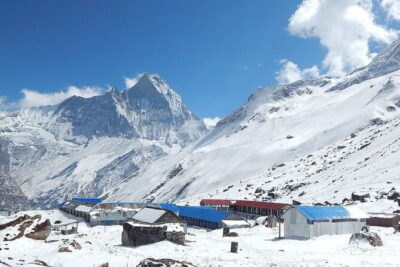
This is the day you’ll remember. The route begins early with ups and downs on rocky trails. Then you enter a wide open grassy land for miles, and the mountains look shiny in the distance, with peaks highlighted by sunlight. It’s described as peaceful, with walking alongside the river before you reach a long staircase to Machhapuchhre Base Camp. After resting there and checking out Mt. Machhapuchhre up close, you continue slowly toward Annapurna Base Camp for a total walking time of about eight hours. You’ll have BLD on this day.
A big reason this works, even for a short trek, is that you get a psychological checkpoint. Machhapuchhre Base Camp is not the final goal, but it feels like a halfway moment. That helps you pace yourself instead of charging like the finish line is a wall you can punch through.
At Annapurna Base Camp, you’ll be at the trek’s highest point listed: 4,130m. This is high enough that you should treat breathing seriously. The schedule doesn’t claim it’s gentle. You’ll be moving, and you may feel the air thin out.
One more practical point: sunrise is the headline in your minds, but the approach day is the real foundation. Go slow on the last push. If you arrive grumpy, your sunrise will be less enjoyable, even if the sky behaves perfectly.
More to compare around Kathmandu
- Everest Base Camp Trek – 14 Days
★ 5.0 · 1,499 reviews - Everest Base Camp Trek
★ 5.0 · 842 reviews - Private Kathmandu Sightseeing Tour | UNESCO World Heritage sites
★ 5.0 · 756 reviews - Kathmandu: 7 UNESCO Sites with Lunch
★ 4.8 · 744 reviews
Sunrise Magic at Base Camp, Then a Faster Return Down
The next morning is the payoff: early morning views of sunrise reflecting on the Annapurna ranges. You’ll take breakfast and then start walking back the way you came. It’s downhill, and that matters for your knees. The schedule says you’ll reach Sinuwa by dawn and have BLD included.
Downhill trekking can still be hard. Your quads work overtime, and stairs can feel worse on the way down than on the way up. But compared with the uphill grind, it’s usually a relief. This is the day where you should allow yourself a slower pace, especially when you spot rocks and step edges. Your goal is clean footing, not speed.
Also, enjoy the contrast. The day before, you climbed toward big views. Today you’re watching those views slide away while the trail opens and closes around you. It’s a different kind of experience, and it often feels calmer.
Chhomrong Again, Then JhinuDanda and the Hot Spring Reset
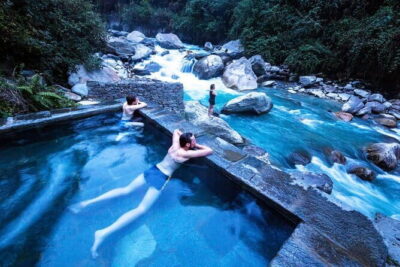
After returning to Sinuwa, the schedule moves you down through arduous stairs to a suspension bridge, then up again to Chhomrong. From there, you take a different path back home, descending steeply to JhinuDanda for the natural hot spring. The plan is simple and brilliant: dip, recover, and then overnight at an inn. This walking day is about six hours with BLD included.
This is where your body will tell the truth about the trek. After base camp and the return, your legs may feel stiff. The hot spring is not a gimmick. It’s a chance to loosen up, calm discomfort, and get better sleep at night. And because it’s on the itinerary, it’s one less thing for you to plan.
The other reason this day is valuable is that it gives you route variety. You’re not retracing every step identically. You still hit major points like Chhomrong, but you’re not stuck in a mirror track.
Nayapul Back to Pokhara, Then Kathmandu and Thamel Time
The next morning starts with farmland walking, described as pleasant with no climbs. You walk about two hours to reach Nayapul, then drive back to Pokhara for about three hours along the Modi Khola. You’ll rest your luggage at the hotel and have time to enjoy Pokhara before the final drive.
This final trekking day is a mental exhale. When you’ve been hiking with elevation and stair rhythms, flat-ish farmland walking feels like someone turned the difficulty down by one. It’s a nice way to reach Nayapul without ending the trip on a struggle.
Then comes the final transfer: drive from Pokhara back to Kathmandu through winding roads. You can stop for lunch and toilet breaks on the highway. Once you return to Kathmandu, you’ll have time to freshen up and stroll around Thamel, including the nightlife and souvenir shopping.
If you want a practical way to handle the last day, plan for an early evening. You’re tired from walking, and Kathmandu nights are more fun when you’re not falling asleep mid-conversation.
Your Guide and Team: The Part That Makes It Feel Smooth
The trek includes one professional trekking guide, plus overnight accommodation at hotels or lodges along the trail. Meals are included on the trekking portion, and the guide’s insurance and allowances are part of the package. That’s the logistics layer.
But the human layer is what people consistently praise. The reviews you shared repeatedly highlight a professional, attentive guide style. Names that show up with specific credit include Jog Gurung and Ganesh for guiding, and porters such as Osman and Hori for being helpful and present throughout the trek. Another recurring theme is friendliness and a careful attitude toward the group, including getting questions answered in detail and keeping the mood supportive.
Here’s how that translates into value for you: a good guide helps you keep a realistic pace, manage breaks, and handle the small problems that always pop up on trail days, like timing meals, managing weather shifts, or answering altitude concerns before they become panic.
One more detail I like from your information: the tour is private, meaning only your group participates. That matters if you want flexibility with pace and stops, and you don’t want to feel like you’re hiking with random strangers who move like different species.
Price and Value: What $897.44 Really Buys
At $897.44 per person, the price is not about luxury. It’s about paying for the structure you’d otherwise have to piece together yourself. What you’re getting that usually costs time and money on your end:
- Two nights in Pokhara with breakfast included
- TIMS permits handled as part of the package
- A professional guide with insurance and allowances
- Three meals per day and overnight lodge or hotel accommodation along the trekking trail
What’s not included is also important. You’ll need to cover travel and medical insurance and any emergency evacuation costs yourself. Personal expenses are on you, and tips for guides and porters are expected.
So is it good value? For most hikers, yes, because the package handles the core trekking expenses that are hard to coordinate on short timelines. If you’ve ever tried to arrange a multi-day guide, permits, and lodge support after you land, you know how quickly it becomes a research project.
If you’re the kind of traveler who loves doing everything independently, this might feel like paying for convenience. But if you want to focus on the trail and not the paperwork, this is the right kind of spend.
Who This Annapurna Base Camp Short Trek Fits Best
This is a strong match if you want:
- A classic Annapurna signature route without committing to a longer trek
- Good mountain viewing time, including sunrise at Annapurna Base Camp
- Village culture stops and forest walking, not just altitude drills
- A planned recovery moment with the JhinuDanda hot spring
It may not be the best match if:
- You have low tolerance for long stair sections and rocky uneven walking
- You want a gentle, flat hike with minimal physical strain
- You’re expecting luxury accommodations on the trail, since lodge or hotel stays are included but trekking style is still trekking style
FAQ
FAQ
What is the highest altitude on this Annapurna Base Camp trek?
The highest point listed is Annapurna Base Camp at 4,130m.
Where does the trip start?
The start point is Tribhuvan Airport in Kathmandu, Nepal.
How many nights in Pokhara are included?
You get two nights in Pokhara, with breakfast included.
What permits are included?
TIMS permits are included.
Are meals included during the trekking days?
Yes. The trek includes 3 meals per day and overnight accommodation in hotel or lodge along the trekking trail.
Does the price include a guide?
Yes. The package includes one professional trekking guide, and the guide’s insurance, meals, and allowances are included as well.
Is this a private tour?
Yes, it is private. Only your group will participate.
Is there free cancellation?
Yes, free cancellation is offered. You can cancel up to 24 hours in advance for a full refund.
Should You Book This Annapurna Base Camp Short Trek?
If you want a focused Nepal trek with sunrise at base camp, strong mountain viewing, and a route that includes villages, forests, bridges, and a real hot spring recovery, I’d book it. The value is solid because the package handles permits, guide support, and most meals and lodges, so you can spend your energy on walking and enjoying the views.
If your main goal is a low-effort hike with minimal stairs, or if you are not comfortable with 6-8 hour walking days, consider another route with a gentler profile. But for most people who are fit enough to handle long stair sections and rocky trails, this one hits the sweet spot of effort and payoff.
Latest Kathmandu write-ups
- Langtang Valley Trek★ 5.0 · 3 reviews
- Langtang Valley Trek from Kathmandu★ 5.0 · 3 reviews
- Khopra Danda Trek★ 5.0 · 3 reviews
- 5 night / 6 days Kathmandu Nagarkot Chitwan Pokhara tour★ 5.0 · 3 reviews
- Nepal Highlights Tour: 5 Nights 6 Days Kathmandu & Pokhara Tour★ 5.0 · 3 reviews
- Kathmandu Valley Private Day Tour★ 5.0 · 3 reviews
- Conquer the Himalayas: The Ultimate 16-Day Annapurna Circuit Trek★ 3.5 · 3 reviews
- Kathmandu Heritage Day Tour★ 5.0 · 3 reviews
Annapurna Base Camp Trek, compared.
Browse the lists this tour appears in