
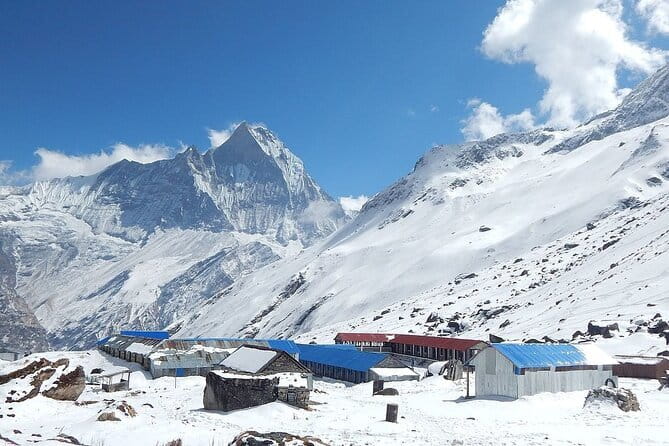
Reviewed · ANNAPURNA BASE CAMP TREK
Annapurna Base Camp Trek
The Annapurna Base Camp trek is interesting because it swaps big-city life for day-after-day mountain walking, then cashes it all in at one dramatic finish: Annapurna Base Camp. You’ll go from Pokhara’s lake views to Gurung villages, bamboo and rhododendron country, and finally a high-altitude amphitheater of peaks.
Two things I really like about this style of ABC trip are the built-in support and the rhythm of the route. You get airport and hotel transfers, a government-certified English-speaking trekking guide, and a shared porter (1 porter for every 2 trekkers), which makes the hard parts feel more manageable. You also get daily meals on the trek, so you spend less time negotiating and more time actually hiking and enjoying tea-house stops.
One possible drawback is that the itinerary includes the most strenuous push on the route around Day 7, when you’ll move to Machhapuchre Base Camp and then continue on to Annapurna Base Camp. If you’re not used to steep, cold hiking, you’ll want to be honest about your fitness and expect sore legs.
Key highlights worth caring about
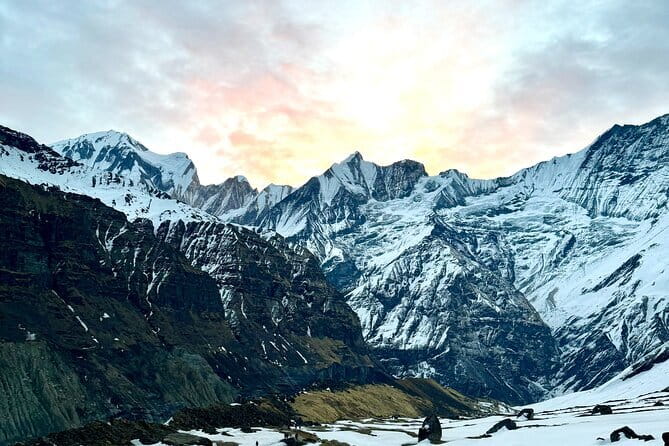
- ABC’s 360 panorama is the whole point, and the day you reach it is planned as the peak effort of the trip.
- Pokhara start with Fewa Lake gives you a soft landing before trekking, plus a temple visit and views when weather cooperates.
- Gurung village culture shows up at Ghandruk and Chhomrong, with options to visit places like the Gurung Museum.
- Tea-house route with meals included keeps the planning simple for lunch and dinner after long walking days.
- Himalayan Hotel, Hinku Cave, and the bamboo forests add variety beyond just “go uphill, repeat.”
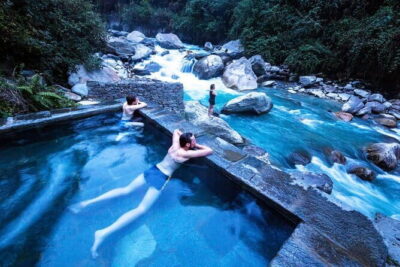
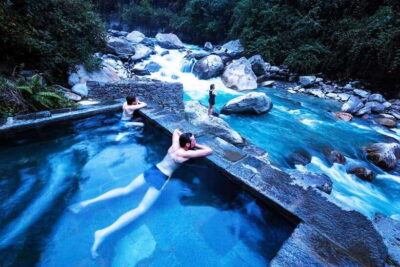
- Jhinu Danda hot springs are a great payoff after the hike back down.
Why Annapurna Base Camp feels special when you’re actually walking there
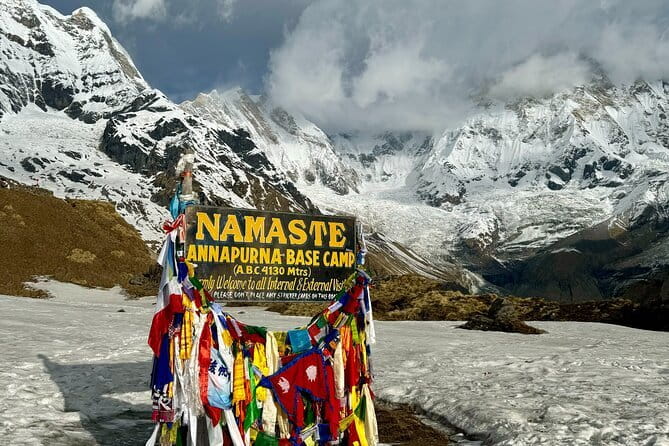
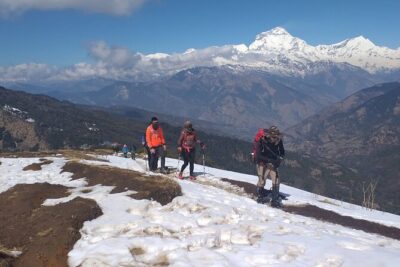
This is the kind of trek where your “trip photo” isn’t one single view. It’s the slow accumulation of them. Start in lowland warmth, then step into cooler air under forest shade. As you gain altitude, the air tightens, the trails get steppier, and mountain walls start appearing in more than one direction. By the time you’re near the base camp, the mountains don’t sit politely at the end of the day. They surround you.
I also like how this trek is not just about reaching a point on a map. It’s about the approach: dense forest segments, bamboo groves, and village mornings where you can watch daily life rather than sprint past it. The route goes through places like Ghandruk and Chhomrong, where the local Gurung community is a visible part of the experience, not an afterthought.
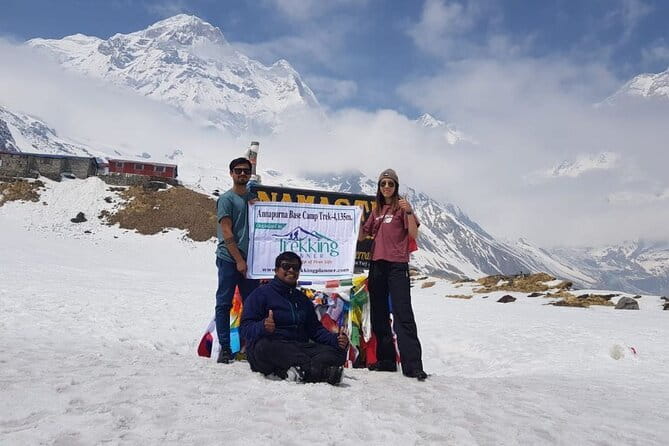
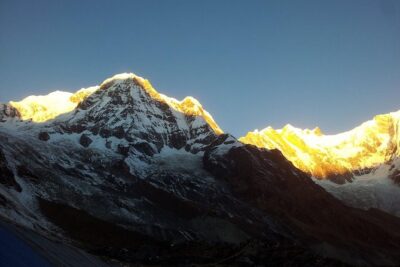
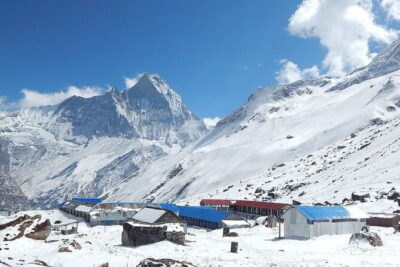
And then there’s the day itself, the one that people plan their whole calendar around: the Annapurna Base Camp (ABC) day. It’s described as the most strenuous day on this itinerary, but the reward is a 360-degree panorama. When the weather is clear, that’s the moment you’ll understand why people keep coming back to this region.
More routes into the Annapurna Sanctuary:
- Annapurna base camp trek 5 Days
★ 5.0 · 252 reviews - 14-Day Private Annapurna Base Camp Trek
★ 5.0 · 180 reviews - Annapurna Base Camp Trekking
★ 5.0 · 116 reviews
Price and logistics: what $810 buys you and what you still need to handle
For $810 per person, you’re not just paying for “guided hiking.” You’re buying a bundle that covers the big operational headaches that can turn a trek stressful.
Here’s what’s included that matters most:
- Hotels: 2 nights in Kathmandu and Pokhara on a bed-and-breakfast plan.
- Trek lodging: 8 nights at trekking lodges/tea houses in the Annapurna trekking areas.
- Meals: daily breakfast, lunch, and dinner during the trek.
- Permits and entry fees, plus trek-related planning support.
- A guide: professional, government-certified, English-speaking.
- Porter support: shared porter service, 1 porter for 2 trekker basis.
- Duffel bag included.
- Transfers: private car for airport and hotel transfers, plus long-distance transport Kathmandu to Pokhara and back on a tourist bus.
- A cultural farewell dinner in Kathmandu with local cuisine and performances.
What’s not included is equally important:
- Your own drinks and personal expenses.
- Tips for guide and porter.
- Trip cancellation charges.
- And a big one: your travel insurance must cover helicopter rescue in an emergency.
So, if you want a straightforward trek where you don’t have to organize permits, meal plans, or logistics day by day, this package model makes sense. If you’re the kind of traveler who wants full freedom to change routes, this might feel a bit structured, because the itinerary is set.
Kathmandu orientation, then Pokhara’s calm, lake, and temple morning
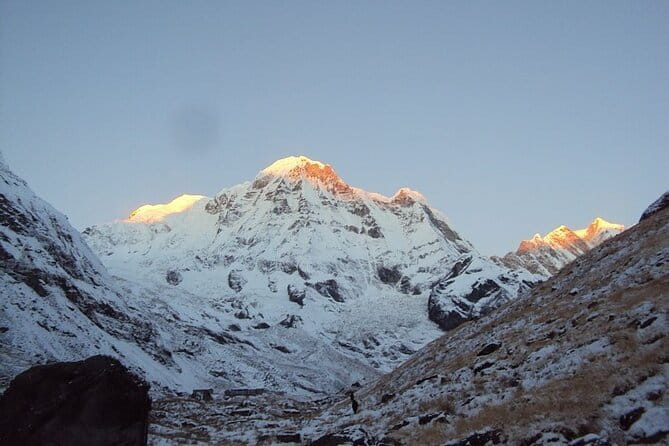
Day 1 is all about settling in. When you arrive at Tribhuvan International Airport, you get pickup and hotel drop-off. Later in the evening, around 7 pm, you’ll have a pre-trip orientation and briefing with your trek leader at the hotel. This is the time to clarify questions you’ve been carrying around since booking, especially about pace, cold weather expectations, and what the trail days generally feel like.
If you arrive early, you have room for easy Kathmandu browsing. Thamel is an obvious starting point, and you can also walk to the ancient market of Ason, or watch a Nepali film if you want a low-effort evening.
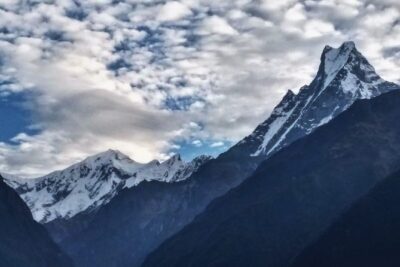
Then you shift gears on Day 2. After breakfast, you drive to Pokhara, check in, and take advantage of a day that’s mostly about easing into the trip. There’s a Fewa Lake boating stop and a visit to Tal Barahi Temple. If the sky is clear, you might see Mt. Fishtail plus Annapurna and Dhaulagiri mountain views from the lakeside. Even if weather hides the peaks, the lakefront area gives you good energy for the next day of trekking.
The trek route, day by day, from Nayapul to Ghandruk to Chhomrong to Bamboo
Day 3 starts at Naya Pul, the trail origin point. You’ll drive to Nayapul, then begin walking through forests with some steep terrain before reaching Ghandruk. Ghandruk is a major Gurung settlement, and it’s one of those villages where you get culture without needing to hunt for it. If you have time, you can explore the village and even visit the Gurung Museum.
This day is a “transition day” in the best way. It doesn’t try to throw you into the deepest altitude challenge. Instead, it gets your legs used to walking in a new rhythm, still with the comfort of village stops and lodge nights.
Day 4 brings you to Chhomrong. The route includes a sequence of descents and ascents: reaching Kimrung Danda, descending toward Kimrung Khola, then climbing again before continuing on to Chere Danda and finally walking to Chhomrong. In practical terms, this day teaches you something useful: even when the trail is “only” a few hours longer, the up-and-down profile can make it feel heavier.
Day 5 has a famous-feeling feature on this route: about 2,500 steps down from Chhomrong to Chhomrong Khola, then a steep climb onward to Sinuwa, passing through forest to Kuldihar and finally into Bamboo. Bamboo is where the trip’s mood starts changing. The air gets cooler, the vegetation feels different, and you’ll be walking more consistently under a forest canopy.
Day 6 continues that shift. You trek through dense, cold, damp bamboo forest, with steep ascents along the way. You reach the Himalayan Hotel, which is an iconic landmark for trekkers in the region. After that, you’ll pass sections with strong visual payoff, including views toward a glacial river below (as the forest opens). The route also takes you to Hinku Cave, then back toward the river before a gentle ascent brings you to Deurali.
Day 7 is where the itinerary hits its hardest moment. It’s labeled as the most strenuous day. The sequence starts early with a hike to Bagar, then continues to Machhapuchre Base Camp (MBC). From there you move on to Annapurna Base Camp (ABC), the primary highlight of the trip. Trails around the Annapurna sanctuary can feel wide and exposed in places, and that means the wind and cold can feel sharper. But when you arrive, the payoff is described as phenomenal 360 panorama.
If you’re planning mentally, the key is to treat this day like a two-stage push, not one big sprint. Get through MBC, then settle into the final approach to ABC. Your effort will make more sense when you pace it this way.
More to compare around Kathmandu
- Everest Base Camp Trek – 14 Days
★ 5.0 · 1,499 reviews - Everest Base Camp Trek
★ 5.0 · 842 reviews - Private Kathmandu Sightseeing Tour | UNESCO World Heritage sites
★ 5.0 · 756 reviews - Kathmandu: 7 UNESCO Sites with Lunch
★ 4.8 · 744 reviews
The big ABC day and the “how it should feel” mindset
When people talk about Annapurna Base Camp, they usually focus on the photo moment. But what matters on the mountain is the last stretch and the way you feel when you stop moving.
On this route, your ABC day includes:
- Early hiking to reach Machhapuchre Base Camp first.
- Then a continuation to Annapurna Base Camp itself.
- And an expectation of a full 360 view when conditions are right.
That combination matters because it shapes your energy. If you go out too fast, the MBC-to-ABC part can feel like “the second half got harder.” If you go out steady, ABC feels earned instead of rushed.
Also, note that the trek’s design includes return movement that’s mostly downhill afterward. Day 8 retraces your route back to Bamboo, described as primarily downhill and relatively easy. That doesn’t mean it’s effortless, but it means the trail is working with you after the biggest effort.
Coming down through Bamboo, then Jhinu Danda hot springs as your reward
Day 8 is your downhill recovery. You walk from Annapurna Base Camp back toward Bamboo. This is the day that lets sore legs calm down a bit and gives you time to notice details you might have missed earlier, like how the forest changes as you go lower.
Day 9 adds a scenic change and a literal comfort stop. The route works uphill toward Kuldighar, descends to Chhomrong Khola, climbs back to Chhomrong, then continues down to Jhinu Danda. From Jhinu Danda, it’s a 20-minute walk to one of the region’s most popular natural hot springs. This is a rare kind of trek payoff, one that feels practical instead of just scenic.
Day 10 keeps things moving. You trek downhill from Jhinu to Naya Pul, about 6 hours, then drive back to Pokhara and transfer to your hotel. After days of tea-house living, this is when a proper shower and a warm bed start sounding like a plan, not a luxury.
Day 11 shifts back to Kathmandu. You take an early drive back, then you can explore Thamel for souvenirs and Nepali handmade products. It’s also a chance to pick up a few last pieces you might have wished you brought earlier, like warmer layers or small trail comforts.
Day 12 is the wrap. Your representative drops you off at the airport around 3 hours before your scheduled flight.
Tea houses, meals, bridges, and the small human moments that drive satisfaction
This trek runs on tea houses and lodge nights. On paper, that sounds simple. In real life, it changes your day in a good way: your lunch and dinner plans are handled, and you’re not constantly deciding where to eat while your legs are tired.
Meals are included throughout the trek: daily breakfast, lunch, and dinner. That removes a lot of risk, especially if you’re traveling in a group and don’t want to split up just to find food.
One thing I’d take from the experience as a whole is the sense that the trail is social even when it’s quiet. People cross paths on wooden and metal bridges, pause for river views, and share small moments with locals and fellow hikers. In the descriptions of this trek, you’ll also see mentions of waterfalls and spotting animals like yaks along the way. Those details matter because they hint at variety, not just “rock and dust.”
And culture is woven in at multiple points. Gurung village stops like Ghandruk and Chhomrong make it easier to understand the region beyond the altitude numbers. On the Kathmandu side, there’s also a Nepali cultural farewell dinner with local cuisine and performances, which is a nice closing note if you want to end the trip feeling connected rather than just exhausted.
Who should choose this ABC trek, and who should reconsider
This itinerary is best for people with moderate physical fitness. It’s not a flat stroll. You’ll be walking in forests, dealing with steep climbs and descents, and handling step-heavy days like the 2,500 steps segments.
It’s also a strong fit for travelers who want a guided experience with support but still want the authentic mountain feel of villages and tea houses. The shared porter system can reduce the load you carry, and a government-certified English-speaking guide can help keep you oriented and moving efficiently.
If you’re prone to getting knocked around by steep trails or cold, take this seriously. Day 7 is the “big push,” and the cold can be real as you climb. If you’ve never trekked before, you might still be able to do this, but you’ll want to train beforehand and talk to your guide about pace, rest stops, and how your body is reacting.
Small tips that help you enjoy the route more
Here are a few practical ways to make this trek feel smoother.
First, treat the start days as skill-building. Days in and out of Ghandruk and Chhomrong teach your legs the trail pattern. By the time Bamboo and Deurali arrive, you’ll already know what your body likes.
Second, keep an eye on weather. Your ability to see peaks from lakeside Pokhara and enjoy clear views near ABC depends heavily on conditions. Since this trek requires good weather, it’s not just your fitness that matters.
Third, if you get a guide like Khem or Shree, lean on that relationship. Some travelers specifically praised Khem and Shree for making things simple, being professional and responsive, and helping tailor the experience to preferences. A good guide is not just navigation, it’s also pace control and comfort decisions when the trail feels tough.
Finally, plan your recovery days mentally. Day 8 and Day 10 are where you can breathe, enjoy the scenery without fighting your heart rate, and get your legs back for the hot springs day and the Pokhara return.
Should you book this Annapurna Base Camp trek package?
I’d book this ABC trek package if you want:
- A guided route with permits, meals, and lodging handled
- Porter support so you can focus on enjoying the trail
- The classic Annapurna approach, with Ghandruk, Chhomrong, Bamboo, and the signature ABC 360 panorama
- A balanced end with Jhinu Danda hot springs and time back in Pokhara and Kathmandu
I would hesitate if:
- You’re not comfortable with a tough day around Day 7
- You don’t have insurance that covers helicopter rescue in emergencies
- You need a fully self-paced, flexible route without a set itinerary
If you’re aiming for value, this package looks solid because so much core logistics is included. You’re paying for less stress, and then paying for the real cost, effort. And the mountains handle the rest.
FAQ
Is pickup in Kathmandu included?
Yes. You get private car transfers for airport pickup and hotel drop-off in Kathmandu, and you’ll also be dropped at the airport before your flight on the last day.
How do we get to Pokhara from Kathmandu?
The long-distance transport between Kathmandu and Pokhara, and back to Kathmandu, is included on a tourist bus.
What kind of accommodations are included on the trek?
You get 8 nights in trekking lodges or tea houses in the Annapurna trekking areas, plus 2 nights in standard tourist hotels in Kathmandu and Pokhara.
Are meals included during the trek?
Yes. Daily breakfast, lunch, and dinner are included during the trek.
Do I need a trekking guide and porter?
Yes. A professional, government-certified English-speaking trekking guide is included, and you also get a shared porter service on a 1 porter to 2 trekker basis.
Which days include the most challenging hiking?
Day 7 is described as the most strenuous day. It includes hiking to Machhapuchre Base Camp and then onward to Annapurna Base Camp.
Are trekking permits and entry fees included?
Yes. Trekking permits and entry fees are included in the package.
What about travel insurance?
Travel insurance must cover helicopter rescue in case of emergency.
If weather cancels the trek, do I get refunded?
The experience requires good weather. If it’s canceled due to poor weather, you’ll be offered a different date or a full refund.
Latest Kathmandu write-ups
- Langtang Valley Trek★ 5.0 · 3 reviews
- Khopra Danda Trek★ 5.0 · 3 reviews
- Langtang Valley Trek from Kathmandu★ 5.0 · 3 reviews
- 5 night / 6 days Kathmandu Nagarkot Chitwan Pokhara tour★ 5.0 · 3 reviews
- Nepal Highlights Tour: 5 Nights 6 Days Kathmandu & Pokhara Tour★ 5.0 · 3 reviews
- Kathmandu Valley Private Day Tour★ 5.0 · 3 reviews
- Kathmandu Heritage Day Tour★ 5.0 · 3 reviews
- Conquer the Himalayas: The Ultimate 16-Day Annapurna Circuit Trek★ 3.5 · 3 reviews
Annapurna Base Camp Trek, compared.
Browse the lists this tour appears in