
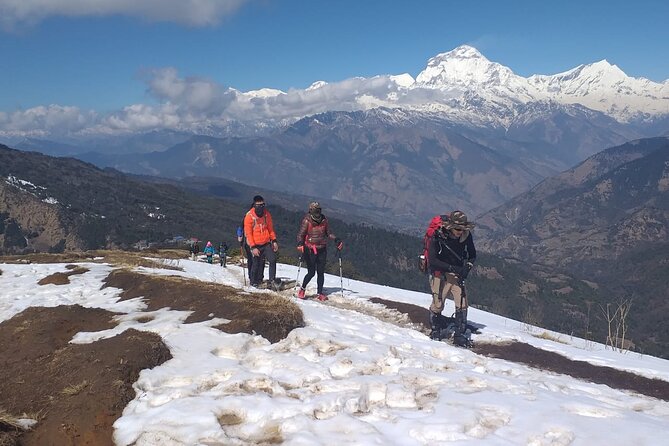
Reviewed · ANNAPURNA BASE CAMP TREK
Annapurna Base Camp Trek 12 Days
Annapurna Base Camp is the kind of trek that turns your weather app into a daily mood ring. What makes this version especially interesting is the focus on getting you there safely, while still building in cultural time with Gurung and Magar communities. I also like that the company backs up the plan with real help from people like Dil Prasad Sapkota when flights or timing get messy, plus the trip includes the practical trek-day rhythm you need for places like Chhomrong and the Base Camp route. One thing to consider: this is a hike with altitude and long days, so you will want a moderate fitness level going in, not just good intentions.
The route also has a smart “view payoff” section, Poon Hill sunrise included, where the effort feels totally worth it. And if you luck into a guide like Arjun (and a porter team like Krishna), you get more than navigation, you get someone who can help you read the trail and adjust calmly. The only drawback I see for some budgets is that Kathmandu and Pokhara accommodation is not included, so you’ll still plan for a couple nights on your own dime.
Finally, I like that you aren’t left guessing about permits and meals. You get lodge en-route with breakfast, lunch, and dinner, plus tea or coffee with meals during trekking, and your team handles the essentials like ACAP and local permits. Just remember, beverages, tips, and your own travel insurance are on you.
Key highlights worth paying attention to
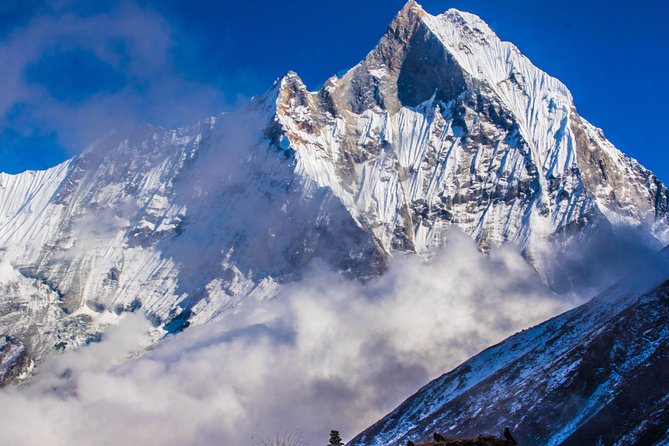
- Poon Hill sunrise built into the early trekking hours so you’re not wasting the cold just to scramble for views
- Gurung village time in Chhomrong where you can talk to people in a real community setting
- Altitude-aware pacing from Dovan up toward Deurali where you feel the elevation effects
- Route adjustments near the Base Camp approach because the Deurali to Fishtail area can be avalanche-prone
- A well-timed hot spring finale at Jhinu after you finish the hard part
- Service that reacts when plans break, with examples of problem-solving when weather disrupts transport
First Steps in Kathmandu: Thamel start, briefing, and getting your bearings
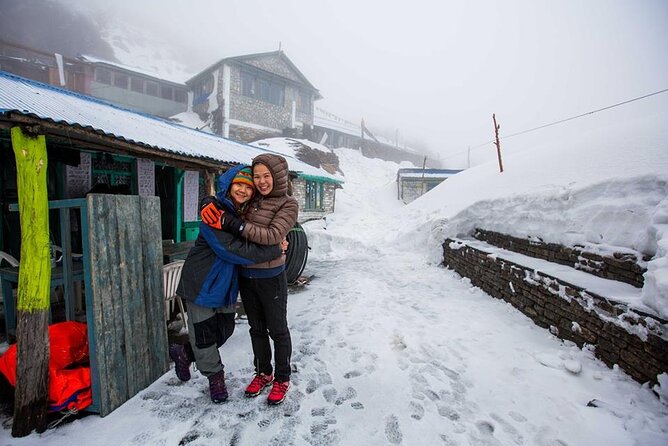
You begin in Kathmandu, with the practical kind of welcome that actually helps. An airport representative meets you at Tribhuvan International Airport, Tribhuvan, and you’re transferred to a hotel. After that comes a briefing, the part of the trip that saves you from that new-country confusion later, like not knowing where your paperwork is or what time you need to be ready.
You’ll also spend your first day near Thamel, which is convenient because it’s close to public transport. That matters when you want to grab a few last-minute essentials, like a warm layer or a simple snack for the trek days when you might not feel like trekking to a shop.
One more “don’t ignore this” note: accommodation in Kathmandu isn’t included, so you’ll want to plan which hotel you’re using on that first night (and any extra nights). The trek company gets you started, but you should budget for your stay in the city.
More routes into the Annapurna Sanctuary:
- Annapurna base camp trek 5 Days
★ 5.0 · 252 reviews - 14-Day Private Annapurna Base Camp Trek
★ 5.0 · 180 reviews - Annapurna Base Camp Trekking
★ 5.0 · 116 reviews
Kathmandu to Pokhara by tourist bus: not glamorous, but useful
Next you ride from Kathmandu to Pokhara on a tourist bus. It’s usually a 6 to 7 hour day depending on road conditions, and those timings are real. You’re not just traveling for sightseeing, you’re also setting your body up for the trek start by getting you based in Pokhara.
After arrival, you check into the hotel and rest. This day is about recovery, not heroics. If you’ve never hiked in Nepal before, I strongly recommend you use this time to hydrate and keep your gear organized. You want less rummaging later when the trek schedule starts rolling.
If you’re prone to travel sickness, the road to Pokhara can test you, so pack what you need. The plan gives you the ride, but how smooth it feels depends on traffic and weather that day.
Trek Day 3: Nayapul to Tikhedhunga, the first real climb
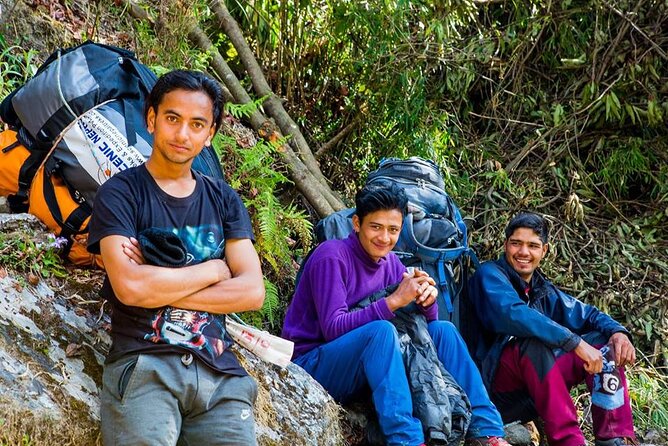
Your trek begins after breakfast, with a private vehicle getting you from Pokhara toward the trailhead at Nayapul. From there, you head into the first section that includes Tikhedhunga.
This is where your legs start learning the language of the trek. The trail is not just walking on a flat. It’s early steps, rhythm, and learning how often to stop without turning it into a snooze festival. You’ll feel it most if you go out too fast. I like that this day functions as a on-ramp, not a sudden wall.
For value, this early stage matters because it helps you get used to lodge life too. You’ll sleep in trekking lodges en route, so you’re already building the routine of charging headlamps, stretching your feet, and settling into the basic comfort of mountain guesthouses.
Trek Day 4: Ulleri and those famous steps up to Ghorepani
Day four goes after Ghorepani, with a big uphill lead-in to Ulleri. Here you climb roughly 3,000 stone steps. The route is about 2 hours up, and yes, you’ll earn your view.
This day is both tough and useful. Tough, because step days can be rough on knees. Useful, because it gets your heart pumping early, before the bigger altitude days. If you take it steady, the steps teach you a skill that pays off later: walking slowly enough that your breathing stays under control.
You’ll then continue toward Ghorepani, a classic trekking base for the views you’ll chase the next morning. So by the end of day four, you’re not just tired. You’re positioned.
More to compare around Kathmandu
- Everest Base Camp Trek – 14 Days
★ 5.0 · 1,499 reviews - Everest Base Camp Trek
★ 5.0 · 842 reviews - Private Kathmandu Sightseeing Tour | UNESCO World Heritage sites
★ 5.0 · 756 reviews - Kathmandu: 7 UNESCO Sites with Lunch
★ 4.8 · 744 reviews
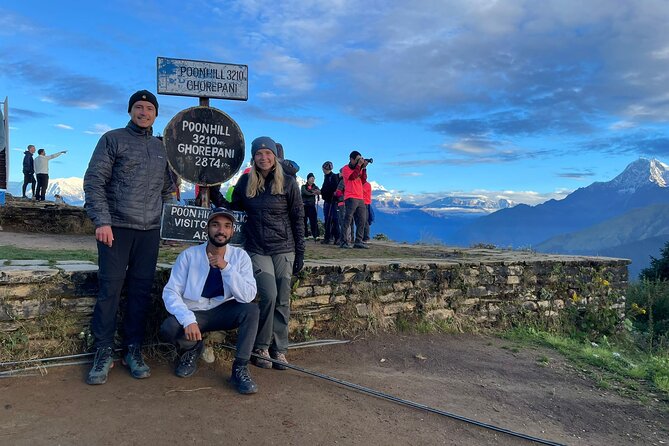
Trek Day 5: Poon Hill sunrise at 3,200m, where planning beats luck
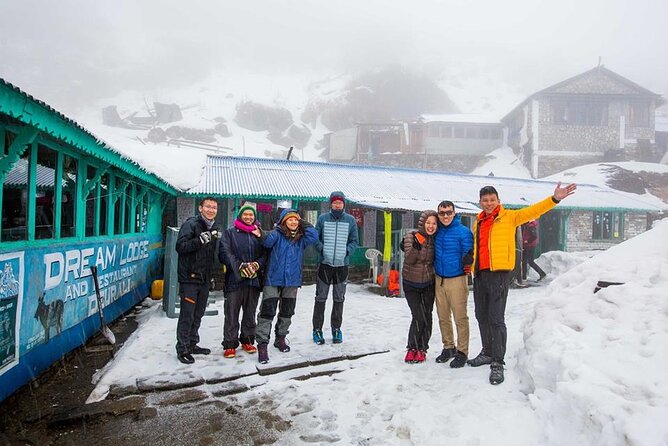
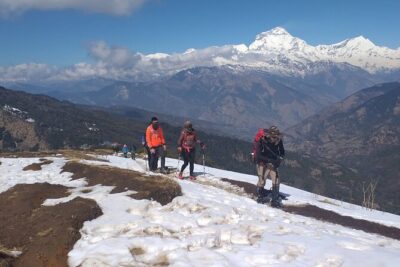
Day five is Poon Hill, and this is the part most people remember. You’ll trek about 50 minutes to Poon Hill at around 3,200m to catch sunrise. The point is simple: you want the light on the snowy peaks, not a cloudy maybe.
From this viewpoint, you can see a range of Himalayan peaks, often quoted as around 15 in the Annapurna region. Whether every peak shows clearly depends on weather, but sunrise at Poon Hill is still a strong bet because the timing is built into the schedule.
Practical tip: don’t assume you’ll feel warm just because the sunrise looks pretty from your bed. It’s cold up there. Wear layers you can move in, not just bulky coats you can’t breathe in.
This is included as a key “payoff day,” and it’s a smart use of your effort. You get major views without needing technical climbing gear or extra days.
Trek Day 6: Chhomrong, Gurung village life, and a good place to slow down
Day six brings you to Chhomrong, after descending about 900 metres from Tadapani into the Gurjung River valley and then climbing along the ridge. Chhomrong is a large Gurung village, and this matters more than it sounds.
Why? Because this is where you’re not only traveling through the mountains. You’re walking through an actual community corridor where people live, work, and manage their lodges and trails every day. If you ask questions, you’ll learn names, routines, and how daily life adapts to altitude and seasons.
It’s also a ridge position, so you’ll get that feeling of being partway between the valley and the high country. In my experience, Chhomrong is a great place to mentally switch from sightseeing to trekking focus: you’re in the right world now.
Trek Day 7: Dovan and the steep valley grind toward Annapurna Sanctuary
Day seven continues the rhythm: trekking down Chhomrong Khola, then up Sinwa for about 3 hours. After that, you enter a steeper valley heading toward Annapurna Sanctuary at the foothills of Annapurna South and Fishtail.
This is a key day for two reasons. First, the walking becomes more “mountain trekking” and less “easy village trail.” Second, you start feeling like you’re getting closer to the Base Camp zone, even if the final distance still takes time.
The schedule here is built to keep you moving, not just stopping for photos. That’s good because over-stopping can mess with your pace and energy. Still, don’t ignore fatigue. If your breathing is off, tell your guide. Slow is always better than proud.
Trek Day 8: Deurali, where altitude effects become real
Day eight goes to Deurali. Above Dovan, you enter an area where the altitude effects are felt. The climb is described as slow, about 2 hours to another Himalayan hamlet, and the trail is peaceful with green forest.
This is exactly what you want on an altitude transition day. Slow pace. Shorter feeling intervals. A trail that helps your mind focus on the next step instead of the whole distance.
One practical point: bring layers you can control. Cold can change fast as you climb, and lodge evenings can be chilly. This day helps you acclimatize without turning it into a punishing slog.
Trek Day 9: The avalanche-prone Base Camp approach and the Modi River route change
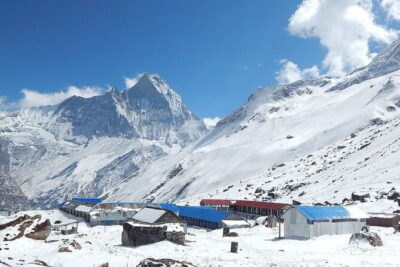
Day nine is Annapurna Base Camp itself, plus the Fishtail Base Camp area depending on conditions. This is where the trip shows real operational thinking.
The trail from Deurali to the Fishtail Base Camp area is described as avalanche-prone, so the route can change across the Modi River depending on the situation and season. That’s an important detail, because it’s a reminder you’re not on a theme park trail. Nepal mountains have rules, and your guide’s job is to respect them.
The plan estimates about 2 hours to reach the fishtail base camp area after your start. Even with shorter travel time on paper, you’ll likely feel the altitude in your effort. Keep moving steadily, hydrate, and let your guide decide the route.
Also, while the Base Camp moment gets the headlines, I find the value is also in arriving with the right expectations. You’re looking at big mountains, not magical postcards that require perfect weather. If the sky cooperates, great. If not, you still get the achievement of reaching the zone.
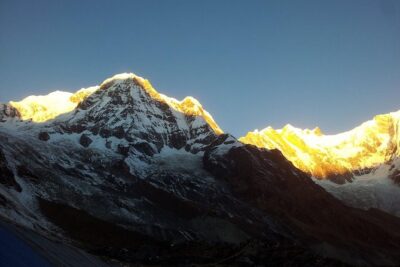
Trek Day 10: Sunrise over Annapurnas, then back to Dovan
Day ten starts with sunrise over the Annapurnas, then you trek back toward Doban, with some steep sections before it turns into more gradual downhills.
This is a good day because it balances reward and recovery. You get the view again, then you work your way down to lower altitude, which often feels like your body can breathe a bit easier afterward.
Dovan is described as a river junction of two streams. That usually means a quieter, cooler spot with water nearby and a more sheltered trekking lodge vibe than higher positions.
Mentally, day ten can be tougher than day nine because you’ve already seen the big thing. Don’t let “I’ve done it” trick you into moving fast. Keep the same careful pace downhills.
Trek Day 11: Sinuwa Hill, a lodge night, and a gentler penultimate day
Day eleven takes you toward Sinuwa, with an overnight at the trekking lodge. The day is described as following a path along the river and through peaceful forest with sounds of waterfalls and birds, then hiking up toward Sinuwa Hill.
This is one of the nicer transitions. You’re not stuck with steep altitude climbing all the way. Instead, you get a more scenic, slower penultimate day that sets up the last push.
If you’re bringing fatigue with you, this day is your chance to recover just enough to enjoy the finale. I like the fact that the route still has movement, but not in a way that screams you’ll regret it tomorrow.
Trek Day 12: Jhinu hot springs and finishing in Pokhara
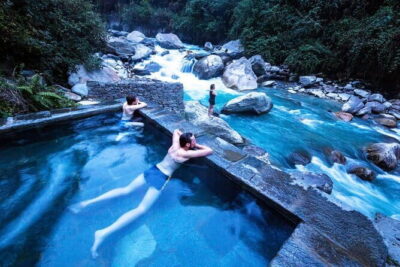
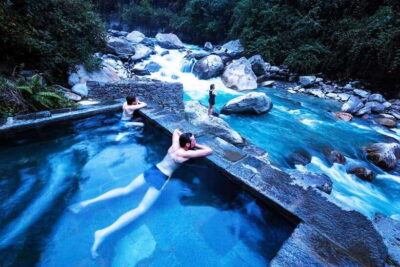
Your final day mixes trekking and relaxation. You trek about 2 hours to Jhinu, the natural hot spring. You spend some time bathing, have lunch there, then drive back to Pokhara or, if you want extra time, you can trek further before heading back.
This hot spring ending is not a small detail. It’s a smart reward after days of pounding feet into stone steps and downhills. Your calves and ankles will appreciate it more than you think, especially if you’ve been walking on down slopes with sore knees.
When you reach Pokhara, you’re back in a city environment where you can eat what you want and sleep like a normal person. Also remember: meals in Pokhara after the trek days may not be included in the package beyond what the trek provides.
Price and value: what $799 includes, and what you should budget
The price is $799 per person for about 12 days. For a trek like this, the biggest value question is what’s actually covered, because most costs hide in small stuff.
Here’s what you get:
- lodge accommodation en route
- three meals a day during trekking (breakfast, lunch, dinner) with tea or coffee
- professional guide and their expenses, including insurance and equipment
- airport pickup and drop
- ground transportation
- permits and fees, including ACAP and local permits
What you should budget separately:
- beverages
- tips for your guide
- your own travel insurance
- trekking porter only if you need one (not included)
- breakfast, lunch, dinner in Kathmandu and Pokhara, plus accommodation in those cities
To judge value, compare this to the cost of piecing the trek together yourself, especially the guide and permit handling. Trek permits and the time saved from having experienced coordination usually add up fast. Also, the reviews you provided emphasize smooth service and quick solutions when plans change due to weather. That kind of responsiveness can be worth real money, because delays cost you energy and sometimes extra nights.
If you’re traveling as a small group and want a private tour, you’re also getting control. You’re not sharing the trekking schedule with strangers.
Guides, professionalism, and why that matters on an ABC trek
You’re trusting your guide with route choices in tricky terrain, timing, and pacing around altitude. In the feedback you shared, the company’s responsiveness and professionalism come up again and again.
Names that show up in the experiences include Dil Prasad Sapkota, plus guides like Arjun and Sudip. You also mentioned a porter, Krishna, and another porter-guide named Ram. The common thread is helpfulness during the lead-up and during the trek, plus the ability to solve problems when things shift, like when weather cancels a flight to Pokhara.
That matters most in moments you cannot control, like cloud cover for sunrise timing or transportation disruptions. A trek is physical, but it’s also logistical. The best guides don’t panic when plans wobble.
Practical packing and pacing tips that fit this exact plan
Because your itinerary includes early mornings (Poon Hill sunrise) and steady altitude changes (Deurali and the Base Camp zone), you’ll want to pack for temperature swings and sore feet.
What I recommend you bring:
- layered clothing that you can adjust in cold mornings
- trekking shoes with grip for stone steps and downhills
- a light daypack for water and layers
- simple sun protection, since mountain sun can bite even when it feels cool
- small snacks only if your stomach handles them well, since main meals are already included during trekking
Pacing wise:
- don’t chase speed on step days like Ulleri
- slow down on altitude transitions, especially approaching Deurali
- hydrate consistently, not only when you feel thirsty
If you plan to hire a porter, remember it isn’t included. If you’re carrying a heavy pack, think about whether your knees and back will enjoy the trade.
Should you book this Annapurna Base Camp trek?
I’d book this if you want a well-structured 12-day ABC experience with lodge comfort, meals handled, and permits sorted, plus the cultural connection around Gurung villages. The added value of guides who can respond when weather disrupts travel is real, and the route choices near avalanche-prone sections show they take safety seriously.
You might choose something else if you want a more DIY style, lower costs by managing permits and lodging yourself, or if you need Kathmandu and Pokhara accommodation bundled into the price.
If you’re aiming for the sweet spot, a strong middle class trek package, good guides, sunrise views, and a hot spring finish, this one makes sense.
FAQ
What is the duration and location of this Annapurna Base Camp trek?
It runs for about 12 days and starts in Kathmandu, Nepal, with your trekking route through the Annapurna region and a finish back in Pokhara.
How much does the trek cost?
The price is $799.00 per person.
What does the package include for meals?
It includes three meals a day (breakfast, lunch, and dinner) during the trek, with cup of tea or coffee en route.
Are airport transfers included?
Yes. There is airport pick up and drop included.
Are permits included?
Yes. The tour includes applicable permits and fees, including ACAP and local permits.
Is accommodation in Kathmandu included?
No. Accommodation in Kathmandu is not included.
Is porter service included?
A trekking porter is not included unless you need one.
How physically demanding is this trek?
Travelers should have a moderate physical fitness level.
Is this a private tour?
Yes. It is described as a private tour/activity, with only your group participating.
What is the cancellation policy?
Free cancellation is available if you cancel up to 24 hours in advance for a full refund. If you cancel less than 24 hours before the start time, the amount paid is not refunded.
Latest Kathmandu write-ups
- Langtang Valley Trek★ 5.0 · 3 reviews
- Khopra Danda Trek★ 5.0 · 3 reviews
- Langtang Valley Trek from Kathmandu★ 5.0 · 3 reviews
- 5 night / 6 days Kathmandu Nagarkot Chitwan Pokhara tour★ 5.0 · 3 reviews
- Nepal Highlights Tour: 5 Nights 6 Days Kathmandu & Pokhara Tour★ 5.0 · 3 reviews
- Kathmandu Valley Private Day Tour★ 5.0 · 3 reviews
- Kathmandu Heritage Day Tour★ 5.0 · 3 reviews
- Conquer the Himalayas: The Ultimate 16-Day Annapurna Circuit Trek★ 3.5 · 3 reviews
Annapurna Base Camp Trek, compared.
Browse the lists this tour appears in