
Reviewed · ANNAPURNA BASE CAMP TREK
Annapurna Base Camp Trek
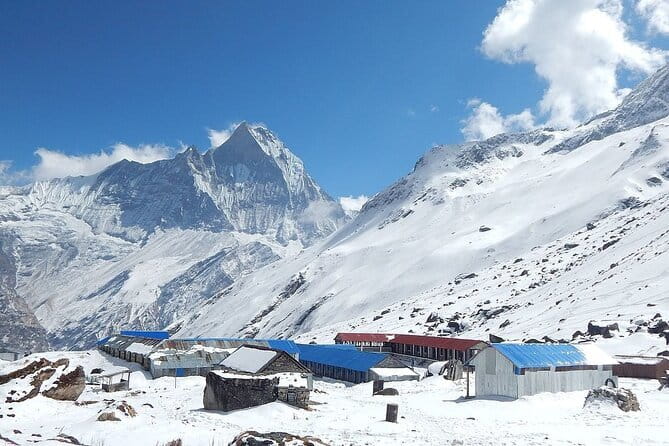
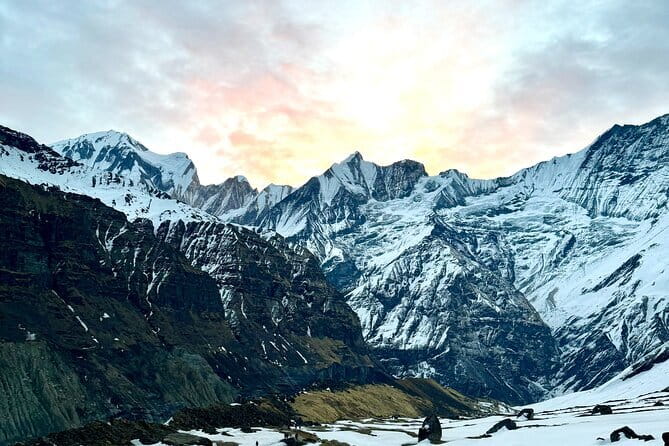
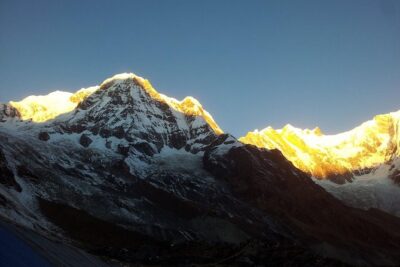
Annapurna Base Camp has a way of feeling bigger than a checklist. You leave Kathmandu and Pokhara behind, pass hilltop villages and forest paths, then reach a spot locals treat like a divine destination at 13,550 feet. The Annapurna massif is always looming, and the trekking rhythm makes the views feel earned, not rushed.
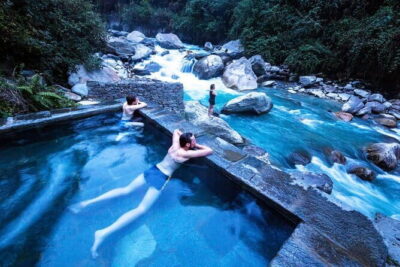
I especially like the two big highlight days: the Poon Hill sunrise hike with wide-mountain views, and the Jhinu Hot Spring stop to ease your legs after long walking days. It is a classic mix of high drama and real recovery.
One consideration: even though many days sit in the lower Himalaya, you still climb to over 10,000 feet and spend hours pushing uphill. Also, you are responsible for bringing your trekking gear, with only limited help if you forget something.
Key things to know before you go
- Licensed guides and porter support for a trek that stays manageable day to day
- Poon Hill as a dedicated viewpoint day, not just a random detour
- An Annapurna Base Camp overnight so you are not sprinting in and out
- Jhinu Hot Spring for a practical recovery moment
- A route with lots of village time, which makes the trek feel human, not just scenic
- Most nights in guesthouses and twin-share lodging during the trek
Entering the Annapurna Base Camp route from Kathmandu and Pokhara
This trek earns its reputation by blending a cultural ramp-up with big-mountain payoff. You start in Kathmandu, take time for Kathmandu Valley sightseeing, then head to Pokhara by tourist bus, where the Annapurna story feels close at hand. From there, you trek through hilltop villages and stretches above gorges, with forests that can feel surprisingly cool after busy city days.
The itinerary is also designed to help you arrive at altitude without going from zero to hero. You spend several days moving gradually upward before the highest point, and the structure gives your legs time to adjust. That matters because even when days are described as easier, you still do long uphill walks, which tests your endurance.
Another plus is that you travel as a private group, so you are not squeezed into a massive crowd rhythm. That makes it easier for your guide to match the pace to your group and keep the trek feeling personal.
More routes into the Annapurna Sanctuary:
- Annapurna base camp trek 5 Days
★ 5.0 · 252 reviews - 14-Day Private Annapurna Base Camp Trek
★ 5.0 · 180 reviews - Annapurna Base Camp Trekking
★ 5.0 · 116 reviews
Price and what you actually get for $1,300
At $1,300 per person for a 14-day trip, what you are paying for is not just the hiking. Your package covers a three-star Kathmandu hotel on a twin-sharing basis with breakfast, guesthouse stays during the trek, and local government-licensed guides. You also get porter support, with one porter per pair of travelers, plus local support staff who help make daily logistics smoother.
Where the value gets real is in the staffing. On an Annapurna trek, having an experienced guide and porters can mean the difference between enjoying the scenery and constantly wrestling with your own planning. The trek also includes a guided rhythm through the main villages and viewpoints, rather than you needing to figure out every stop on your own.
What you must budget separately is the big stuff: travel insurance, international airfare to and from Kathmandu, Nepal visa fees, and trekking equipment. The trip also notes that travel insurance is mandatory and cannot be arranged once you are in Nepal, so plan that early.
Altitude reality check: where your legs feel it most
Altitude climbs from about 4,600 feet in Kathmandu up to 13,550 feet at Annapurna Base Camp. Most trekking days are in the lower Himalaya, so the early part is not about extreme thin air. Still, you go over 10,000 feet, and there are long uphill hours that put pressure on your legs.
Here is the practical way to think about the difficulty. Even if you are not gasping for air, steep climbs plus packed mountain paths can still fatigue you hard. You want moderate fitness, and you should expect to train your hiking muscles before you go, especially for repeated ascents.
A smart mindset: treat every uphill segment as something you earn, but do not treat it as a race. A good guide will help you find a pace you can hold without burning out too early in the trek.
Kathmandu Valley setup day: sightseeing and pre-trek rhythm
Your first days in Kathmandu are built for getting your bearings. You arrive and overnight at a hotel, then spend day two on Kathmandu Valley sightseeing. That sightseeing time is not just sightseeing for its own sake, it helps you settle in and understand the geography and culture before you leave the city.
You also get a pre-trip meeting before heading out. That is where you confirm basics like timing, how the trek will run, and what you need from your side. If you have any medical conditions that could affect the trek, you are asked to inform the guide and your local support team ahead of time, and to discuss precautions with your doctor before you arrive.
Even if you are feeling confident, this is the day to ask direct questions. If you know your limits on stairs, if you get headaches at altitude, or if you need medication access points planned, this is when you say it.
More to compare around Kathmandu
- Everest Base Camp Trek – 14 Days
★ 5.0 · 1,499 reviews - Everest Base Camp Trek
★ 5.0 · 842 reviews - Private Kathmandu Sightseeing Tour | UNESCO World Heritage sites
★ 5.0 · 756 reviews - Kathmandu: 7 UNESCO Sites with Lunch
★ 4.8 · 744 reviews
Driving to Pokhara, then Nayapool: changing worlds fast
Getting from Kathmandu to Pokhara is a transition from hectic roads to mountain pace. You travel by tourist bus and overnight in Pokhara, which makes the next day’s trekking start feel more logical and less stressful.
Day four begins with a drive to Nayapool, around 3,477 feet, then a trek to Tikhedhunga, at about 5,060 feet. Day five continues to Ghorepani, reaching 9,416 feet. This is where you feel the trek building, because you are not just walking on flat paths. You are gaining altitude while still learning how the day’s pace feels under a full pack.
As a travel hack, I like this kind of approach. You get to experience village life early and you do not jump to the hardest elevations before your body is ready. If you are anxious about altitude, the early days help you stay grounded.
Tikhedhunga to Ghorepani: village trekking with real altitude gain
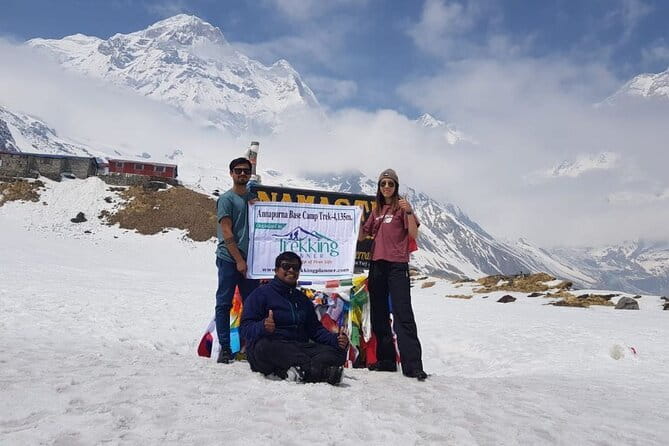
This part of the trek is the “settle in and start working” segment. You pass hilltop villages along the way, and the route includes forest trekking and stretches above gorges, so the scenery changes without feeling like a constant uphill grind with no breaks.
Ghorepani is also a viewpoint staging point, which helps you understand what is coming next. One of the best things about this setup is that it keeps the trek from feeling like you are only walking toward a single end goal. You are building momentum, learning the terrain, and setting yourself up to enjoy the next days properly.
If you tend to overpack mentally, this is where you learn to pack by need. Bring what you truly use, because carrying extra weight makes each step harder, especially as elevation climbs.
Poon Hill day: the sunrise viewpoint that earns its place
Day six is a standout because it is not vague. You hike to Poon Hill, around 10,535 feet, then continue on to Tadapani, at about 8,628 feet.
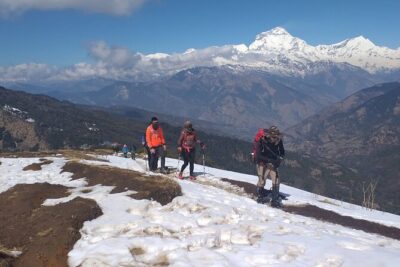
Poon Hill is one of those places where the effort feels instantly justified. You are going for panoramic views and the sense of scale when the mountains fill your horizon. And because you do it as a focused day, it is easier to manage energy and timing than when sunrise is thrown into the middle of a long travel day.
This day is also a useful lesson for new trekkers: going up for a view does not have to mean exhausting yourself all day. With the right pace and breaks, you can enjoy both the viewpoint and the later descent toward a lower-altitude overnight.
Chomrong and Himalaya Hotel: preparing for Base Camp
Day seven brings you to Chomrong, around 7,120 feet. Day eight continues to Himalaya Hotel, around 9,678 feet. These days matter because they are your bridge into the core high-elevation experience, when the trek feels more serious and your altitude management has to be on point.
Chomrong tends to feel like a turning point village, and it helps you understand why people get emotional about this area. The trekking corridor stays busy enough with other trekkers and tea-house stops that you never feel lost, but it still feels remote in the way mountains do.
By the time you are heading for Himalaya Hotel, you are walking with the knowledge that tomorrow pushes toward the top. That is why the overnight here is valuable. It gives you a chance to recover, hydrate, and mentally prepare for the Base Camp day.
Annapurna Base Camp day: 13,550 feet and a sense of arrival
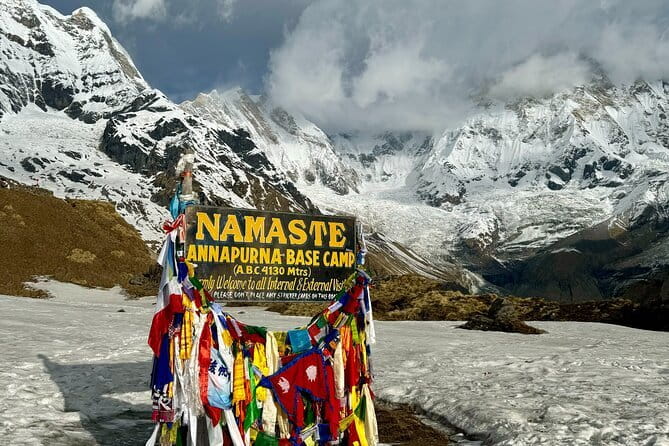
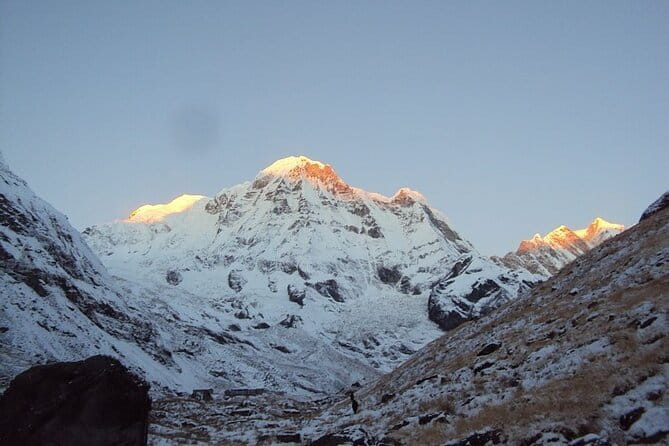
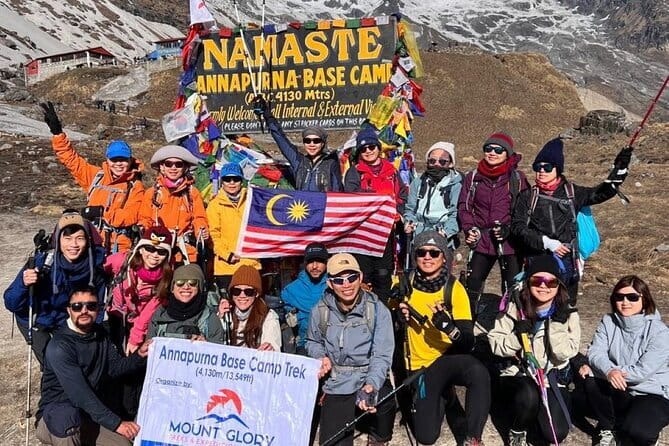
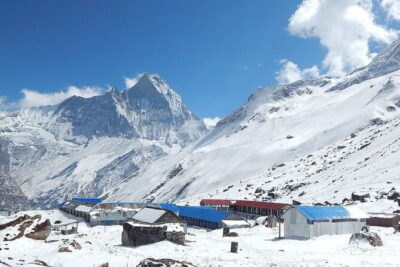
Day nine is the big moment: trekking up to Annapurna Base Camp at about 13,550 feet, then overnight at a guesthouse. This is where the trekking starts to feel like more than effort. The information notes that locals consider Annapurna Base Camp the home of the gods, and when you arrive, it really does feel like there is something sacred in the air.
Practically, what you should expect is a slower pace and a stronger focus on how your body is working. Even if the route is planned to reduce strain, you still need to respect the altitude. Take breaks early, sip water regularly, and keep your breathing steady.
The overnight is also key. If you only visited for a quick photo and left immediately, the whole experience would feel thin. Here, you stay long enough to absorb the space, watch the mountains shift with the weather, and let the day land in your mind.
Bamboo, Jhinu Hot Spring, and the value of recovery time
After the Base Camp high point, the trek shifts from climbing to regaining comfort. Day ten goes to Bamboo, around 7,695 feet. Day eleven brings you to Jhinu Hot Spring at about 5,840 feet.
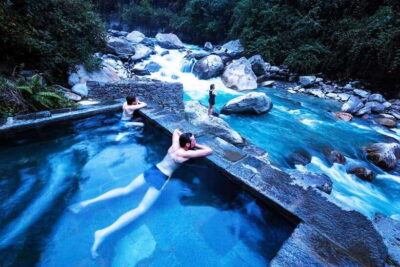
Jhinu Hot Spring is a clever inclusion because it is not just scenic, it is functional. After days of uphill walking, warm water can make a noticeable difference in how your legs feel the next day. It also changes the mood of the trek, moving you from altitude focus to body recovery.
Then day twelve goes back to Nayapool, around 3,477 feet, and you drive to Pokhara with time to do Pokhara sightseeing. This is where you get to come down fully, take off the trek mindset, and remember you are on vacation.
The ride back to Kathmandu, plus your farewell dinner
Day thirteen takes you from Pokhara back to Kathmandu, then you have a farewell dinner and overnight at a hotel. Day fourteen is your final departure.
This final stretch matters more than it sounds. Good trekking trips do not end on day nine with one peak photo and a chaotic scramble home. You get a buffer, you get to wash and reset, and you end the trip with a social moment that helps you process the whole journey.
Also, a farewell dinner is a small thing that can make the group feel like a real unit, especially on a private trek where you are not constantly merging with strangers.
Guides and support on the ground: what quality looks like
One of the most praised aspects in the experience is the human part. Guides like Kumar and Jeevan are highlighted for being excellent at showing you the right places, staying patient, and running the trek with respect and honesty. There is also clear appreciation for flexibility, including pacing that matches preferences and how support handles issues beyond their control.
That quality shows up in simple ways. When something changes in the mountains, the real value is not just fixing the problem, it is keeping the day calm and organized so you do not lose your focus. It is also why porter support matters: you are more likely to enjoy the walking instead of constantly managing your load.
If you are traveling as a group with mixed ages or first-time trekkers, this kind of guide approach can be especially helpful. One of the strengths is planning that still feels adaptable.
Lodging style and what you should expect at night
You sleep in a three-star Kathmandu hotel on a twin-sharing basis with breakfast. During the trek you stay in guesthouses, again on a twin-sharing basis.
The guesthouse rhythm is part of what makes the trek feel real, because you are eating and resting within the trekking corridor rather than in isolated, scripted settings. Based on how the trek is described, the food is generally a big part of what people enjoy, including strong meals after hard walking days.
In practical terms, plan to pack with comfort in mind. Your nights are about recovery, so choose layers you can adjust easily and keep your sleep routine simple.
Equipment and packing: don’t get caught short in Kathmandu
You bring trekking equipment yourself. If you forget something, you can purchase items in Kathmandu or rent gear from the trip provider for a small fee.
This is one of those “seems obvious, still trips people up” rules. If your boots are not ready, if you lack basic rain protection, or if you did not test your daypack system at home, the trek will feel harder than it needs to. The route includes uphill climbing and changing conditions, so be practical and bring gear you already know.
Also, plan a little buffer time before and after. The trip notes that flight delays, accidents, and natural hazards can force itinerary changes. You will feel better if your schedule has slack rather than relying on perfect timing.
Who this Annapurna Base Camp trek is best for
This trek suits people with moderate physical fitness who want the classic Annapurna Base Camp experience with Poon Hill and Jhinu Hot Spring included. It is especially good if you want structured support, with licensed guides and porter help, instead of doing everything solo.
It is also a strong fit for groups who value a private setup. You are not blending into a big tour crowd, and guides can adapt pacing to the group.
If you are seeking a relaxed walk with no climbs, this is not that. This trek asks for grit on the uphill days, particularly as elevation climbs past 10,000 feet.
Should you book this Annapurna Base Camp trek?
I would book it if you want a well-supported Annapurna experience that hits the main emotional beats: hill villages, Poon Hill, an overnight at Annapurna Base Camp, and a real recovery stop at Jhinu Hot Spring. The inclusion of licensed guides, porter support, and guesthouse stays is what turns a demanding trek into something you can actually enjoy.
I would think twice if you know you struggle with sustained uphill effort or if your gear situation is uncertain. Get your equipment sorted, buy mandatory travel insurance before you fly, and build your fitness for climbs. Do those things, and this itinerary has enough structure and flexibility to make the mountains feel close and memorable.
FAQ
What is the duration of the Annapurna Base Camp trek?
The trek is listed as 14 days approximately.
Where does the trip start and what time does it begin?
The meeting point start time is 7:45 am.
Do I get to see Kathmandu before the trek?
Yes. Day two includes sightseeing around the Kathmandu Valley, plus a pre-trip meeting, and you overnight in a hotel.
How do you get to Pokhara?
You drive from Kathmandu to Pokhara by tourist bus on day three.
What are the highest and starting altitudes mentioned for the trek?
Altitude starts around 4,600 feet in Kathmandu and goes up to 13,550 feet at Annapurna Base Camp.
Is the trip private?
Yes. It is a private tour/activity, and only your group participates.
Are guides and porters included?
Yes. The tour includes local government-licensed guides and porters, with one porter for each pair of travelers, plus local support staff.
What lodging is included during the trip?
In Kathmandu, you stay in a three-star hotel on a twin-sharing basis with breakfast. During the trek, you stay in guesthouses on a twin-sharing basis.
What trekking equipment do I need to bring?
You must bring all trekking equipment yourself. If you forget items, you can purchase them in Kathmandu or rent from the trip provider for a small fee.
Is travel insurance included, and when do I need it?
Travel insurance is not included, and it is mandatory. The trip notes you cannot take it in Nepal, so you need to arrange it before arriving.
Latest Kathmandu write-ups
- Langtang Valley Trek★ 5.0 · 3 reviews
- Khopra Danda Trek★ 5.0 · 3 reviews
- Langtang Valley Trek from Kathmandu★ 5.0 · 3 reviews
- 5 night / 6 days Kathmandu Nagarkot Chitwan Pokhara tour★ 5.0 · 3 reviews
- Nepal Highlights Tour: 5 Nights 6 Days Kathmandu & Pokhara Tour★ 5.0 · 3 reviews
- Kathmandu Valley Private Day Tour★ 5.0 · 3 reviews
- Conquer the Himalayas: The Ultimate 16-Day Annapurna Circuit Trek★ 3.5 · 3 reviews
- Kathmandu Heritage Day Tour★ 5.0 · 3 reviews
Annapurna Base Camp Trek, compared.
Browse the lists this tour appears in