
Reviewed · ANNAPURNA BASE CAMP TREK
Annapurna Base Camp Trek
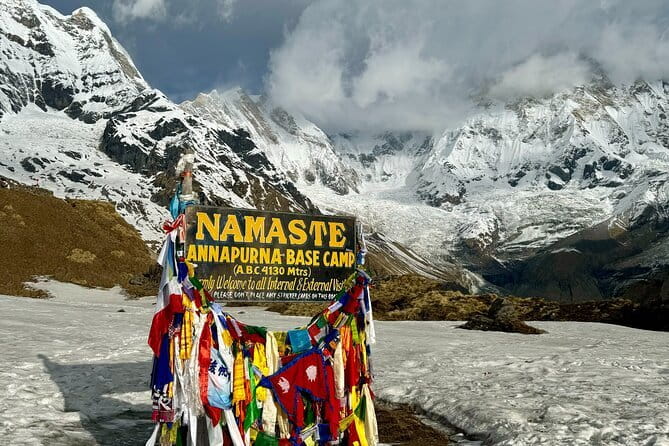
Annapurna Base Camp is interesting because you’re not just chasing views, you’re walking into the Annapurna Sanctuary, ending at ABC (4,130 m) surrounded by huge peaks. I love the Poon Hill sunrise start, plus the feeling that the logistics are handled from airport pickup to the end drop-off. You also get a real window into daily hill life, not a sealed-off tourist bubble.
The only real drawback is the physical side of it. This is steep in places, and the altitude climb is no joke, so you’ll want moderate fitness and a calm pace that respects acclimatization. You’ll also carry a packed body to crowded guesthouse days, so pack light and don’t assume you can bring everything you own.
One more practical point: this runs with a small maximum group of 15, and you get a licensed English-speaking guide plus a porter ratio of 1 porter for every two clients. That usually means better rhythm, faster problem-solving when weather shifts, and more attention from your team when trails get slow.
Key points I’d plan around
- Poon Hill sunrise: early hike to a classic viewpoint, then a hot breakfast before you continue.
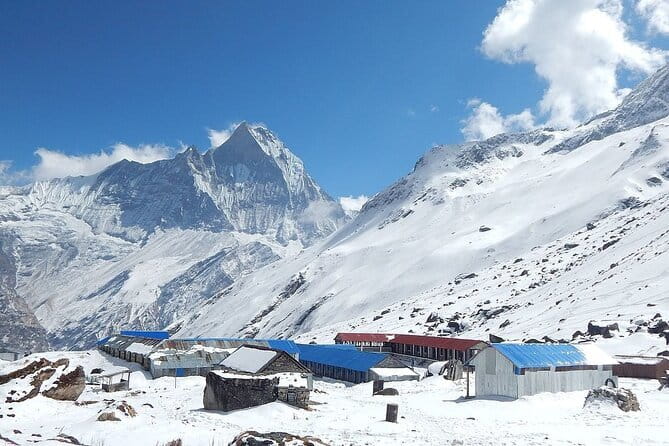
- Annapurna Sanctuary feel: the route moves through forests, villages, and high basins before arriving at ABC.
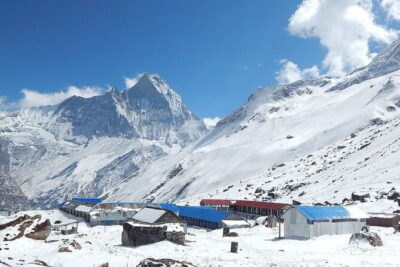
- Machhapuchhare Base Camp stop: you reach the area even though climbing Machhapuchhare is not permitted.
- Porter support: 1 porter for every two clients, plus a free duffel/kit bag and sun hat.
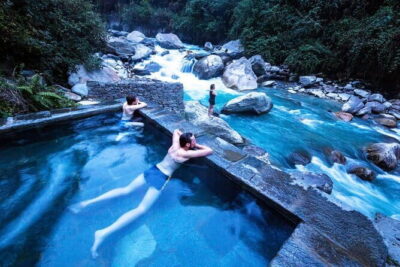
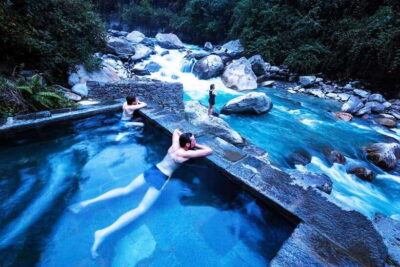
- Jhinu Danda hot springs: a rare, soothing end to a steep descent day.
- Small group size: up to 15 travelers, which keeps the experience more personal and manageable.
Annapurna Base Camp: why the “sanctuary trek” is so popular
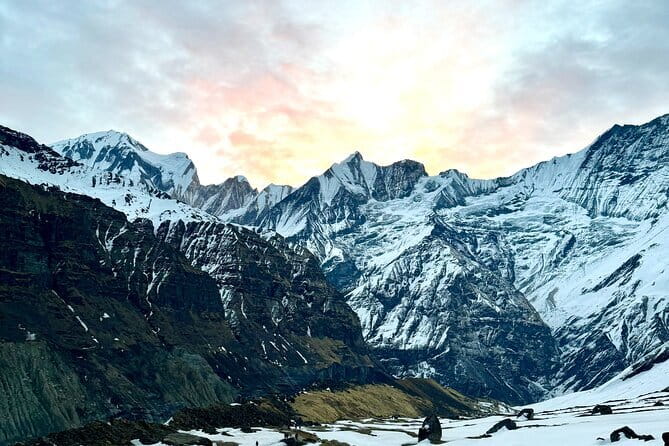
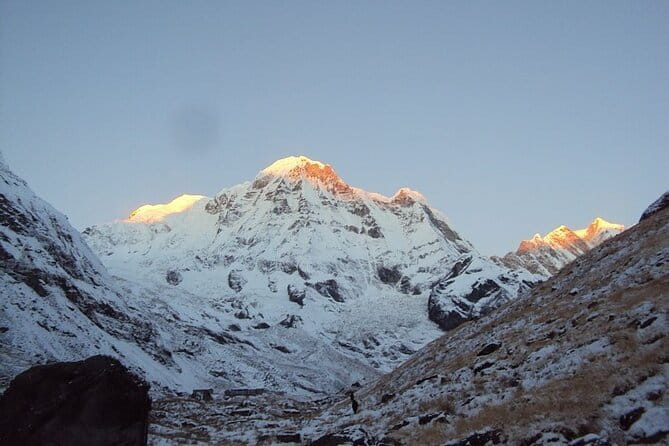
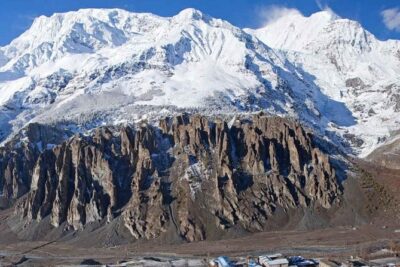
If you’re drawn to Nepal for mountains and culture, Annapurna Base Camp is one of the cleanest ways to get both. The trek’s end point at 4,130 m is framed by Annapurna I and Annapurna South, plus Machapuchhre and Hiunchuli around the sanctuary bowl. That setting matters. When you arrive, you’re not guessing what all the hype was about, you can see the scale immediately.
What I like about this particular itinerary is that it builds the trip in sensible layers. You start in Kathmandu, reset in Pokhara, then gradually climb through villages and forested ridges before the big push to the higher altitudes. Even when you’re moving at a steady pace, you’re not thrown straight into maximum altitude stress on day one.
This is also a trek where culture is not an afterthought. You pass through communities linked to the Magar and Gurung peoples, and you’ll spend nights in villages with teahouses and lodges along the Modi Khola and surrounding valleys. The rhythm is simple: walk, eat, sleep, repeat, with occasional “wow” moments that feel earned.
More routes into the Annapurna Sanctuary:
- Annapurna base camp trek 5 Days
★ 5.0 · 252 reviews - 14-Day Private Annapurna Base Camp Trek
★ 5.0 · 180 reviews - Annapurna Base Camp Trekking
★ 5.0 · 116 reviews
Price and value: what $1,350 covers (and what it doesn’t)
At $1,350 per person for about 13 days, the value comes down to what’s already bundled. Your package includes airport transfers, hotel stays in Kathmandu and Pokhara (two nights each in three-star hotels), and accommodation in guesthouses for the trekking portion (eight nights). You also get a licensed English-speaking trekking guide, plus the porter structure (1 porter for every two clients).
From a logistics standpoint, you also get transport between Kathmandu and Pokhara by tourist bus, then a tourist vehicle from Pokhara to Nayapul for the trek start. Permits are included, and the package covers government taxes, VAT, and official trekking service charges. That’s the kind of “paperwork friction” that can waste time if you try to DIY it.
Food is partly included too, which is a big deal on trek days. The plan lists breakfast (12), lunch (9), and dinner (9). It’s not every meal everywhere, but it is enough that you won’t be negotiating where to eat every single day at elevation.
What’s not included is just as important. You’re responsible for travel insurance that covers emergency high-altitude rescue and evacuation, international airfare, and the Nepal entry visa. Alcohol and personal drinks are also not included. Finally, tipping for trekking staff and drivers is expected, so set aside a budget in advance.
Before you start: the pre-trip meeting and paperwork rhythm
On Day 1 or Day 2, you’ll have a pre-trip meeting in Ace the Himalaya’s office. This is one of those moments that feels boring until you realize it helps the trek run smoothly.
Bring your passport, three copies of passport-size photos, and a readable copy of your travel insurance policy. During the meeting, you’ll meet your trek leader/guide, settle any due balance if needed, and sign the legally binding trip form plus a non-liability disclaimer.
This matters because it sets expectations early. You’re not walking blind into permits, guide roles, and trek rules. You also get a clear picture of your team. From past ABC treks with Ace the Himalaya, lead guides you might be paired with have included people such as Ramesh Karki, Maddy, and Ganesh, with assistant guides like Bhawishya showing up on some itineraries.
Day 1 in Kathmandu: arriving calm, not chaotic
You land at Tribhuvan International Airport, and your airport representative meets you holding an Ace the Himalaya signboard. Then you’re transferred to your hotel in a private tourist vehicle.
The practical value here is you start the trip with less uncertainty. After a long flight, that matters. Your first job is rest, hydration, and making sure your documents are ready for the meeting the next day or the one after.
If you’re the kind of person who likes a plan, you’ll likely appreciate the structure: the meeting is scheduled, the guide introductions come early, and you’re not doing last-minute scrambling for gear or permits right before the mountains.
More to compare around Kathmandu
- Everest Base Camp Trek – 14 Days
★ 5.0 · 1,499 reviews - Everest Base Camp Trek
★ 5.0 · 842 reviews - Private Kathmandu Sightseeing Tour | UNESCO World Heritage sites
★ 5.0 · 756 reviews - Kathmandu: 7 UNESCO Sites with Lunch
★ 4.8 · 744 reviews
Day 2 Kathmandu to Pokhara: the starting line for the Annapurna region
Day 2 is about changing the “city brain” into “trek brain.” You leave your Kathmandu hotel at 6:30 am, then head to the tourist bus station. The bus to Pokhara departs around 7:30 am, and Pokhara is your base for a lighter start.
Pokhara Lakeside is quieter than Kathmandu. It also gives you a preview of what’s coming. On clear days, the north views include Annapurna and Machapuchhre, while other directions show Dhaulagiri and peaks like Manaslu and Lamjung Himal. Even if clouds roll in, the setting helps you understand the geography of what you’ll later walk through.
You’re not trekking yet. Instead, you’re building momentum. Eat early, sleep early if you can, and keep an eye on how your body feels after the drive.
Days 3 to 6: from Nayapul to Ghorepani, forests, and Chomrong
The itinerary begins the trek at Nayapul after the Pokhara to start transfer. You walk along the Modi Khola for about 15 minutes to Birethanti, a large village with shops and teahouses, then climb through valley sides.
Day 3: Tikhedhunga, a warmup day
Today ends in Tikhedhunga (1,570 m). The day is described as relatively short and easy, and that’s exactly what you want right before the climb accelerates. You’ll pass through villages and follow riverbanks, so the walking is varied rather than all one steep grind.
Day 4: Ghorepani, climbing into rhododendron country
You continue toward Ulleri, a Magar village at 2,070 m, then move through oak and rhododendron forests. The day climbs gradually to Ghorepani (2,840 m).
This is where the trek starts to feel like a mountain journey instead of just a walk. If you’ve trained with stairs, you’ll feel the benefit here. You’ll likely also notice how much time is spent on repeated ups and downs of the trail.
Day 5: Poon Hill sunrise, then the route shifts higher
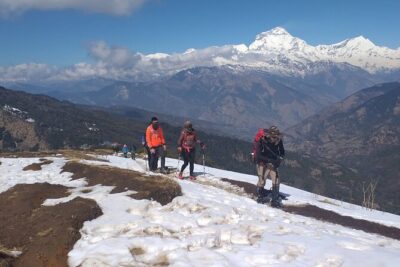
This is a big highlight day. You start very early for an hour hike to Poon Hill (3,210 m) for sunrise views. You spend about an hour there, then return for a hot breakfast.
From there, you climb along ridges through pine and rhododendron forests toward Deurali (2,960 m). Then you descend to Banthanti, and continue toward Tadapani.
This day is popular for a reason, but it also comes with trade-offs. Starting early means sleep is limited. Bring something warm for the early hours and keep your pace steady so the altitude doesn’t hit you harder than it should.
Day 6: Chomrong, a steep transition
Day 6 starts with a steep downhill through rhododendron forests, then eases as you reach Chomrong (2,140 m). Chomrong is a major junction in the Annapurna region and often feels like a turning point: the villages are still there, but the terrain starts pushing toward higher basins.
If you’re a first-timer, I’d treat this as a day to manage your effort. Don’t sprint the downhills, and keep your legs ready for the next climb.
Day 7 to 9: Khuldighar, Machhapuchhare Base Camp, and reaching ABC
Day 7: Dovan and the Khuldighar check-post clearing
You drop toward the Chomrong Khola, then climb to Khuldighar (2,380 m). This is the site where there used to be an ACAP check post, and it’s also described as having a forest clearing a little further on that shapes how the trail funnels.
After that, the route travels very steeply down a rock bank, then levels out through bamboo thickets in the gorge area. You keep to the west side of the river and finish near the Himalayan Hotel.
This is a day where your walking comfort matters. Bring trekking poles if you use them, and watch your footing on steeper sections. A calm rhythm here sets you up for the high-altitude push later.
Day 8: the Annapurna Sanctuary day, through Hinko Cave to ABC
Day 8 is the dramatic one. You climb past Hinko Cave, then Deurali, then reach Machhapuchare Base Camp. The itinerary notes that Machhapuchhare climbing is not permitted, but you still get to the base camp area and the surrounding mountain walls.
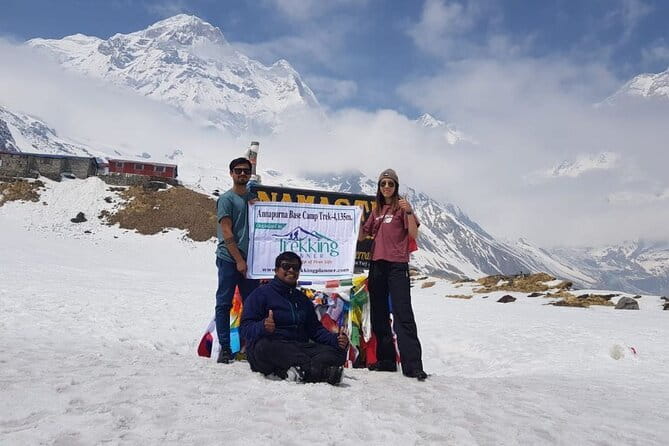
From there, it takes about two hours to reach Annapurna Base Camp (ABC) at 4,130 m. This is your payoff. Expect unobstructed mountain views and the classic “sanctuary” feeling of being ringed by towering peaks.
This is also where I’d go slow. The goal isn’t just to arrive, it’s to enjoy the arrival. Take breaks, sip water, and avoid treating ABC as a photo stop only. Spend time looking around, because the angles change quickly if clouds shift.
Day 9: down to Bamboo, resetting after the high point
You follow the same trail down, dropping by a big chunk in altitude to Bamboo (2,345 m) where there are teahouses or lodges. This is part recovery, part rhythm-building. Your breathing will likely feel easier than at ABC, but you still have to walk.
I like this design because it keeps the return trip from feeling like a random descent. You’re still moving through varied terrain, so the hike stays interesting, not just repetitive.
Day 10 to 11: Jhinu Danda hot springs and the return to Pokhara
Day 10: from Chomrong area to Jhinu Danda
You keep following the trail until Chomrong again, then pass Khuldighar and continue through rhododendron and bamboo areas. The plan mentions an experimental sheep farm in this section.
Then the big descent comes: from Chomrong you descend very steeply to Jhinu (hot springs area). The reward is natural hot springs, where you can bathe. This is one of the rare times on the trek when the body gets a real “reset.” If your legs feel cooked, this day can turn the mood around fast.
Day 11: a relaxing walk to Birethanti, then boating on Fewa Lake
From Jhinu, you walk on the right side of Modi Khola for about 4.5 hours to Birethanti, then continue to Nayapul. After an hour drive, you return to Pokhara.
Once you check into your hotel, you walk to Fewa Lake for a boating trip to Barahi Temple. This is a smart emotional shift. After steep days, the lake lets you come back to Earth without needing a strict schedule.
Day 12 to 13: Kathmandu again, cultural farewell, and flight home
Day 12: drive back to Kathmandu and a farewell dinner
You drive back to Kathmandu in the morning. In the evening, there’s a farewell dinner at a traditional Nepalese restaurant with cultural performances.
This is where your photos finally make sense. The dance and music aren’t separate from the trek, they’re part of the same lived culture you saw on the trail.
Day 13: airport drop-off
Your trip ends with an airport representative dropping you at Tribhuvan International Airport for your departure.
How the Ace team structure affects your day-to-day experience
A lot of treks advertise guides. This one also bakes in a porter ratio: 1 porter for every two clients. That choice shows up in how you can walk with less dead weight on your shoulders, which helps on the steeper days like those leading into and out of Chomrong and toward Jhinu.
From experiences shared by earlier ABC hikers, the support has been consistent: lead guides and assistant guides like Maddy, Ramesh Karki, Ganesh, Shyam, and assistant Bhawishya, paired with porters often named Ram Prasad, Tika Ram, Lumbu Dai, Prakash, Bhagwan, Tenzing, Shantiraj, and Dilip. The common thread is encouragement and attention during tough moments.
One more practical tip that showed up clearly in real trekkers’ advice: do not overpack. The trek is easier when you’re not hauling extra clothes, because porters are carrying your load but you still have to manage layers and daily rest points. Pack for function, not for every possible weather mood.
Who should book Annapurna Base Camp with this plan
I’d say this trek fits you best if:
- You have a moderate fitness level, can handle long days of walking, and can deal with stairs and steep stretches.
- You want a guided, organized trek where permits, meals (most days), and transport are handled.
- You like a classic route with big viewpoint moments like Poon Hill and a clear mountain goal at ABC.
It might not fit you as well if:
- You need maximum privacy, since guesthouse accommodations include twin-share and dormitory rooms.
- You’re expecting an easy hike every day. Even with porter support and a structured plan, the trek still has meaningful climbs and descents.
- You rely on complex comfort. Mountain guesthouses and high-altitude weather mean you’ll adapt.
Should you book this Annapurna Base Camp trek?
Yes, with a few smart checks.
Book if you want a well-run route that includes permits, guide support, porter help, and a clear plan for the classic highlights: Pokhara acclimation, Poon Hill sunrise, sanctuary arrival at ABC, and hot springs at Jhinu. Also book if you appreciate structure, because the pre-trip meeting and early guide introduction reduce guesswork.
Skip or at least reconsider if you’re not comfortable with altitude or you haven’t trained for lots of climbing. In this trek, your best friend is pacing. If you treat every uphill like a race, you’ll feel it.
Finally, do yourself a favor: pack light, bring a solid water and layer plan, and plan to enjoy the small stops too. ABC is the headline, but the trail is where the trek becomes real.
FAQ
How long is the Annapurna Base Camp trek?
The tour is listed as about 13 days.
What is the highest point on the trek?
The itinerary reaches Annapurna Base Camp at 4,130 m (13,549 ft).
What does the price include?
It includes airport transfers, hotel stays in Kathmandu (2 nights) and Pokhara (2 nights), guesthouse accommodation during the trek (8 nights), a licensed English-speaking guide, porter support (1 porter per two clients), permits, transport between Kathmandu and Pokhara and from Pokhara to Nayapul, meals (breakfast 12, lunch 9, dinner 9), and some gear like a duffel/kit bag and sun hat.
What is not included?
International airfare, Nepal entry visa, travel insurance (including emergency high-altitude rescue and evacuation coverage), alcoholic drinks, personal trekking equipment, and tips for trekking staff and drivers.
Is Machhapuchhare climbing part of the trip?
No. Machhapuchhare Base Camp is part of the route, but climbing Machhapuchhare is not permitted.
What fitness level do I need?
The tour states you should have a moderate physical fitness level.
Can I cancel for a refund?
You can cancel up to 3 days in advance of the experience for a full refund. If you cancel less than 3 full days before the start time, the amount paid is not refunded.
Latest Kathmandu write-ups
- Langtang Valley Trek★ 5.0 · 3 reviews
- Langtang Valley Trek from Kathmandu★ 5.0 · 3 reviews
- Khopra Danda Trek★ 5.0 · 3 reviews
- 5 night / 6 days Kathmandu Nagarkot Chitwan Pokhara tour★ 5.0 · 3 reviews
- Nepal Highlights Tour: 5 Nights 6 Days Kathmandu & Pokhara Tour★ 5.0 · 3 reviews
- Kathmandu Valley Private Day Tour★ 5.0 · 3 reviews
- Conquer the Himalayas: The Ultimate 16-Day Annapurna Circuit Trek★ 3.5 · 3 reviews
- Kathmandu Heritage Day Tour★ 5.0 · 3 reviews
Annapurna Base Camp Trek, compared.
Browse the lists this tour appears in