
This trek is interesting because you get the famous Annapurna Base Camp payoff without the headache of organizing permits, lodging, and daily logistics. You start in Kathmandu, roll into Pokhara, then hike through villages and mountain scenery until you reach the base camp area.
I especially like that it is set up as a small group (up to 10 people), so the pace and planning feel more human than a big tour. I also like the built-in support, including a guide and included meals and overnights, which keeps your budget and day-to-day decisions simple.
The one consideration is altitude and effort. It is a moderate physical fitness trek, and even with help, you will be climbing and descending many hours while your body adjusts to thin air.
Key things I’d circle on the calendar
- Small-group format (max 10) keeps attention on your pace and questions
- Airport pickup and drop-off removes the first-stress, last-stress problem in Nepal
- Permits included for the Annapurna Conservation Area and TIMS
- Gear support includes a sleeping bag and down jacket (returned after the trek)
- Guided first-time friendly feel, including route and weather know-how from past guides like Indra
Why Annapurna Base Camp works so well for a first big trek
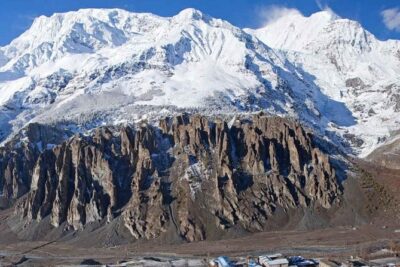
Annapurna Base Camp is one of those goals people talk about for a reason. You are not just hiking from one point to another, you are moving through changing terrain and village life, then ending in a high-altitude basin where the views feel close enough to touch.
What makes this version appealing is the balance between structured hiking and breathing room. You are not spending your whole day guessing where to sleep or how to handle the next trail section. Instead, you can focus on walking, stopping, eating, and looking up when the mountains finally show themselves.
And because you also get Kathmandu and Pokhara time, it is not only “trail, trail, trail.” You get a proper Nepal warm-up before and a recovery base after the trek. That matters if this is your first time in the region.
More routes into the Annapurna Sanctuary:
- Annapurna base camp trek 5 Days
★ 5.0 · 252 reviews - 14-Day Private Annapurna Base Camp Trek
★ 5.0 · 180 reviews - Annapurna Base Camp Trekking
★ 5.0 · 116 reviews
Price and what you really get for $785.72
At $785.72 per person, the value depends on how you compare it to doing this independently. If you self-organize, the expensive bits are not only lodging, they are permits, a guide, transportation timing, and the little expenses that add up when things shift.
Here, key things are included: a guide, transportation Kathmandu to Pokhara and back by tourist bus, lodging for 10 nights, and most importantly, your meals across the trek days. The trek package also covers the guide’s salary and insurance and includes all fees and taxes.
Two practical value items many people forget to price separately:
- Your permits are included (Annapurna Conservation Area and TIMS)
- You get a sleeping bag and down jacket, plus a trekking map if necessary, with gear returned after the trek
Not included items are also pretty clear: international flights, Nepal visa fee, travel insurance (required), tips, alcohol and dessert, and a porter if you want one. If you already planned a careful budget, this package style usually makes life easier.
Getting from Kathmandu to the trail: bus time that is actually useful
The trek meeting point is Tribhuvan Airport in Kathmandu, with pickup and a start time of 7:15 am. That early timing is your gift to the schedule, because you lose less time to traffic and waiting.
From there, you spend a long drive day heading toward Pokhara, with a stop at Malekhu. It is described as a scenic route along the Trisuli and Marsyangdi rivers, with views of peaks like Ganesh Himal and Manaslu. Even if you are tempted to sleep the whole time, I’d encourage you to look out at least part of the way.
Why this matters: the first day sets expectations for what Nepal road travel feels like. If you go in relaxed, you will enjoy it more. If you go in annoyed, you will carry that mood into the trek.
Days 2 to 6: Tikhedunga, Ulleri, rhododendron trails, and Poon Hill lighting
Day 2 is the bridge between “city Nepal” and “trail Nepal.” You breakfast in Pokhara, then drive to Nayapul (about an hour and a half). From there, you hike to Tikhedunga via Birethanti. This day is your first real climbing rhythm, and it is a good moment to slow down and get your steps consistent.
Day 3 includes an early steep start, then a steadier climb passing through places like Ulleri and Banthanti. This is a common pattern on ABC routes: the first climb feels like a test, then the trail finds a tempo that is easier to manage. Expect views to start showing up when the weather cooperates.
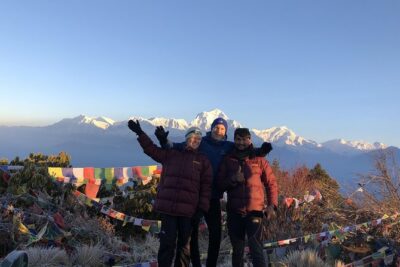
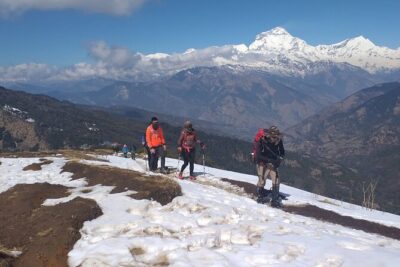
Day 4 is where the trek turns into a “camera up” day. You hike toward Poon Hill at 3,232 m to chase sunrise views. The description includes a long list of dramatic names visible from Poon Hill, including Dhaulagiri and Annapurna peaks. You will also pass through the kind of scenery that changes quickly with altitude, from village edges toward higher ridges.
Day 5 shifts into a gentler descent through rhododendron, oak, and denser forest. This is the day I like for mental reset. You are still moving, but the trail is less aggressive, and the forest sections can make the day feel shorter than the clock says.
Then Day 6 is the practical realism day. It starts with a hot breakfast at the lodge, includes a stone stair descent for the first part of the morning, then a suspension bridge across the Chhomrong Khola. After that, you climb out again. If you do ABC in a single word, it is this: stairs, bridge, climb.
More to compare around Kathmandu
- Everest Base Camp Trek – 14 Days
★ 5.0 · 1,499 reviews - Everest Base Camp Trek
★ 5.0 · 842 reviews - Private Kathmandu Sightseeing Tour | UNESCO World Heritage sites
★ 5.0 · 756 reviews - Kathmandu: 7 UNESCO Sites with Lunch
★ 4.8 · 744 reviews
Days 7 to 9: Chhomrong into the sanctuary, then bamboo and the return rhythm
Day 7 focuses on Chhomrong and the approach into the sanctuary feeling of the route. The description emphasizes how the valley widens and becomes less steep, plus the moment when you can see gates to the sanctuary area. It also notes crossing avalanche-related terrain sections, which is a reminder that this trail lives in a mountain system that moves.
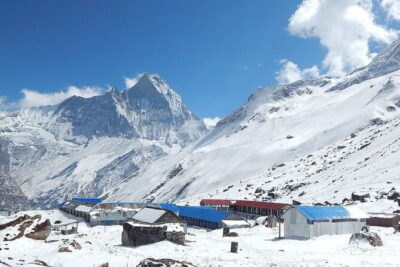
Day 8 is the day you reach the base camp area. You go to Annapurna Base Camp and check out the surrounding views, then hike back toward Dovan. The base camp itself is the headline, but I like that this plan also builds in time for the walk to and from it, so the day is not only a quick in-and-out.
Day 9 continues the return. You hike from the lodge, descend through rhododendron, oak, and bamboo plants, and then continue onward after Bamboo. The description also hints at a steep climb after Bamboo. This matters because the “return” can trick you. Your legs may be tired, and steep sections feel sharper on the way back.
Day 10: ending the trek, Birethanti lunch, and a smoother off-ramp
Day 10 starts with breakfast and the trail becomes a descent first, then stretches into flatter walking until Birethanti. You stop for lunch at Birethanti, then continue about 30 minutes to Nayapul.
This is a good day to plan your energy. It’s not just your last trail day, it is the day your body transitions from “trek mode” to “transport mode.” If you come in tight and impatient, you might rush. If you go in relaxed, you’ll finish feeling like you actually ended the trip, not just escaped it.
Day 11: Kathmandu by tourist bus, plus a final day of breathing space
On Day 11, after breakfast, you take a tourist bus at 7 AM to Kathmandu. The drive is described as around 7 hours, passing many satellite towns and rural settlements, plus plenty of rivers and gushing water.
Then you’re done with the trek portion and back in the city rhythm. This is also where that Kathmandu time you get with the package becomes useful. You can rest, shower properly, and eat something that is not “survival stew” comfort food.
The hot spring stop, and why I think it’s more than a gimmick
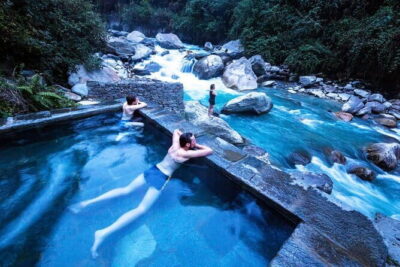
The trek overview includes a dip in a natural hot spring. That might sound like a tiny detail, but in practice it can be a real recovery tool after long days on trail.
If you are new to trekking, your body often hurts in two ways: sore muscles and “stiff joints.” A hot spring stop helps both, and it can also give you a mental reward during the final stretches.
Just remember: hot springs are not a substitute for sleep and hydration. Treat it as icing on the hike cake.
Meals, lodges, and how the included stuff helps your brain
All meals and overnights are included during the trek portion. That sounds straightforward, but it has a huge mental effect. You do not need to constantly ask where you will eat, what you will pay, and whether the schedule will work.
The package includes dinner and lunch and breakfast counts across the trek days, and you also get accommodation for 10 nights. That means you can walk, then focus on warming up, eating, and getting your gear sorted without extra planning.
Gear support is another underrated comfort feature: a sleeping bag and down jacket are provided, plus a trekking map if needed, and returned after the trek. If you do not already own trekking gear for cold mountain nights, this can save you money and storage hassle.
Altitude reality check: moderate fitness, but still take it seriously
The experience is described for travelers with moderate physical fitness. That usually means you do not need to be a marathon runner, but you do need the stamina to walk for long stretches and handle elevation changes.
The first time at high altitude is usually where people struggle, not necessarily the legs. That’s why a good guide matters. One past guide named Indra was noted as attentive and knowledgeable about different routes, terrains, and weather conditions, especially for someone doing high altitude trekking for the first time.
You can support your success with basic choices: go slower than you think you should, drink water consistently, and take breath breaks before you feel desperate.
Kathmandu and Pokhara time: make your recovery count
This itinerary is not only trail. It includes time to explore Kathmandu and Pokhara, and it also includes transportation that links those cities to the trekking area.
I like this approach because it helps you do two things:
- You adjust from altitude and hiking back to city life gradually
- You get a chance to see Nepal beyond the trail without adding extra complicated logistics
Pokhara is also the emotional reset point for many people. You get a more relaxed vibe before the first big hike day, and you get a real base to gear up and settle nerves.
Who should book this Annapurna Base Camp trek
This trek is a good fit if you:
- Want a hassle-free, small-group plan to Annapurna Base Camp
- Prefer having meals, lodging, permits, and main transport sorted
- Like the idea of guided route support and learning how to read trail and weather cues
- Do not want to buy or pack every cold-weather trekking item, since a sleeping bag and down jacket are included
It might be less ideal if you:
- Want total independence and zero structure
- Have strict dietary needs that require special arrangements beyond what the included meals cover
- Think you will be fine skipping altitude pacing
Also, at max 10 travelers, it is not a private trek, but it also is not a crowd. You get the benefits of a group while still having space to think.
Should you book it or keep planning on your own?
If you value simplicity, the answer is usually yes. The price includes key items that are annoying to organize yourself: permits, guide, transportation, meals, and lodging. It also saves you time and brainpower, especially if you are not already familiar with ABC logistics.
If you are an experienced trekker with your own gear and you enjoy solo planning, you could do it cheaper on paper. But the “cheaper” version often costs you time, coordination stress, and sometimes the wrong trail pacing.
My practical take: this is a strong booking option if you want to focus on the walking and the views, with the confidence that the logistics are handled by people who know the route.
FAQ
Do I get picked up at the airport in Kathmandu?
Yes. The meeting point is Tribhuvan Airport in Kathmandu, with a start time of 7:15 am, and airport pickup and drop-off are included.
How long is the Annapurna Base Camp trek?
It is listed as 11 days approximately.
What is included in the trek package?
You get a guide, transportation Kathmandu to Pokhara and back, accommodations for 10 nights, meals (breakfast, lunch, and dinner), permits (Annapurna Conservation Area permits and TIMS), plus insurance for the guide and some gear like a sleeping bag and down jacket (returned after the trek).
What is not included?
International flights, Nepal entry visa fee, tips, travel insurance, personal expenses, and alcohol and non-alcoholic drinks and dessert are not included. A porter is also not included, but you can hire one for 20 USD per day if you need it.
How big is the group?
The trek has a maximum of 10 travelers.
Is travel insurance required?
Yes. Your travel insurance is listed as compulsory, and it is not included in the package.
Latest Kathmandu write-ups
- Langtang Valley Trek★ 5.0 · 3 reviews
- Langtang Valley Trek from Kathmandu★ 5.0 · 3 reviews
- Khopra Danda Trek★ 5.0 · 3 reviews
- 5 night / 6 days Kathmandu Nagarkot Chitwan Pokhara tour★ 5.0 · 3 reviews
- Nepal Highlights Tour: 5 Nights 6 Days Kathmandu & Pokhara Tour★ 5.0 · 3 reviews
- Kathmandu Valley Private Day Tour★ 5.0 · 3 reviews
- Conquer the Himalayas: The Ultimate 16-Day Annapurna Circuit Trek★ 3.5 · 3 reviews
- Kathmandu Heritage Day Tour★ 5.0 · 3 reviews
Annapurna Base Camp Trek, compared.
Browse the lists this tour appears in