
Reviewed · ANNAPURNA BASE CAMP TREK
Annapurna Base Camp Trek
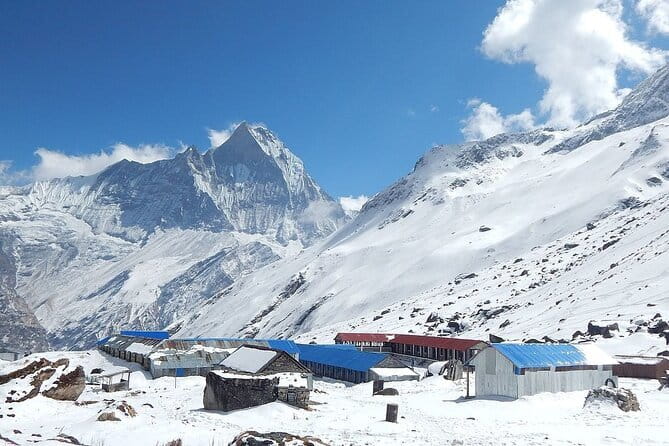
The Annapurna Base Camp trek is interesting because it takes you from village trails and rhododendron forests into the Annapurna amphitheater, with the payoff of mountain sunrise views and the feeling of standing right under the big faces of the range. The route is also famous for changing scenery fast, so one day you’re walking past farms and another you’re looking up at Annapurna South, Machhapuchhre, and Hiunchuli.
What I like most is that the trek package covers real logistics, not just a route. You get three meals a day during the trek, plus the key permits handled up front (ACAP and TIMS). One consideration: the hiking days are long and active, so even though this is a moderate trek region, you should plan on steady climbing and descending for multiple days.
Key things that make this trek worth your time
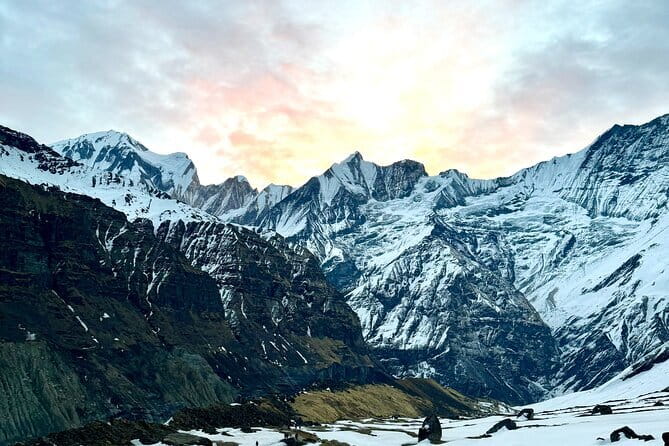
- Base camp focus: You’re trekking specifically for the moment you reach Annapurna Base Camp, with time built in for enjoying the views.
- Licensed guide and permits included: Your mountain guide is a government license holder, and ACAP plus TIMS are part of the package.
- Meals and seasonal fruits included: Three meals each trek day plus seasonal fruits helps you travel lighter and eat on schedule.
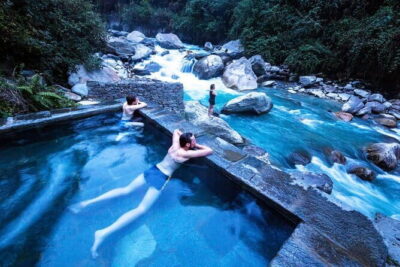
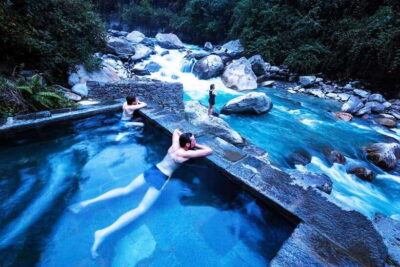
- Hot springs on the return: Jhinu Danda hot spring adds a real recovery break with grand scenery nearby.
- Concrete itinerary flow: You move through Ghandruk, Chhomrong, Sinuwa Danda, bamboo areas, and back out toward Pokhara without needing to plan day to day.
- Guide care shows up in feedback: Names like Suraj, Anos, and Laku show up again and again for being friendly, attentive, and easy to work with.
Entering the Annapurna amphitheater: Nayapul to Ghandruk in one long setup
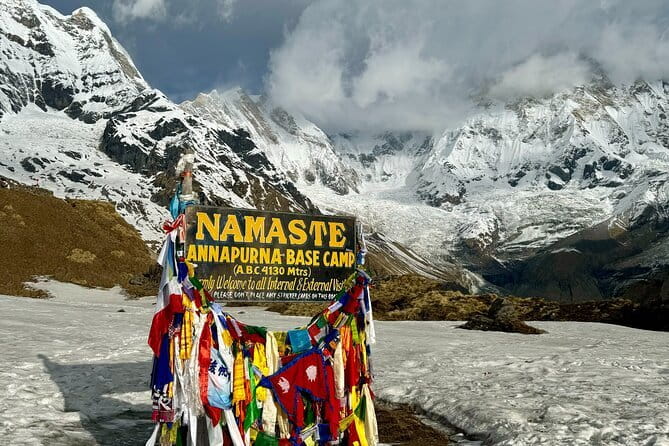
Most Annapurna Base Camp treks feel like a slow fade-in. This one starts with that practical rhythm: you get an overnight in Pokhara with views of the Annapurna Himalaya range and Machhapuchhre (the Fish Tail), then you eat breakfast and transfer out to start walking toward Ghandruk.
Day 1 is about getting your legs and your expectations lined up. The walk out of the lower zones tends to feel steady rather than brutal, and Ghandruk is a great first “wow” stop because it’s a village with mountain presence. You’ll feel like you’ve started the trek for real, not just climbed into a new trail system.
The best part here is that you’re not guessing. With pickup offered and the trek tied into scheduled ground transport between Pokhara and the trek area, you’re dealing with one plan, not five separate plans. If you’ve ever tried to string together a trek yourself, you already know how calming that is.
More routes into the Annapurna Sanctuary:
- Annapurna base camp trek 5 Days
★ 5.0 · 252 reviews - 14-Day Private Annapurna Base Camp Trek
★ 5.0 · 180 reviews - Annapurna Base Camp Trekking
★ 5.0 · 116 reviews
Ghandruk to Chhomrong, then Sinuwa Danda to bamboo: where the days get long
Day 2 works like a classic ABC building block. You leave Ghandruk and head toward Chhomrong with a gradual section, then the climb kicks in as you reach Kimrong Danda (a ridge). After a short break, the trail drops into cooler, forested paths and leads you to Kimrong River and a farm village area.
Day 3 continues the rhythm. After descending from Chhomrong to a bridge, you climb again up to Sinuwa Danda (another ridge). From there, the trail winds through deeply forested areas, with ups and downs, before you reach a bamboo area within the Modi River gorge.
Here’s the honest reality: the magic of this trek is partly in those long, working days. You’ll be hiking for hours and you’ll have both climbing and descending. That’s not a complaint, it’s just what you’re signing up for when your goal is to reach base camp. The upside is that your body adapts along the way, and the effort makes later views feel earned.
Practical tip for your comfort: expect early-morning starts and plan for layers. Even in warmer seasons, mornings on the trail can be chilly, then you warm up as you climb. Pack for temperature swings, not just daytime averages.
The approach toward the Annapurna sanctuary: Himalaya Hotel and Hinko cave country
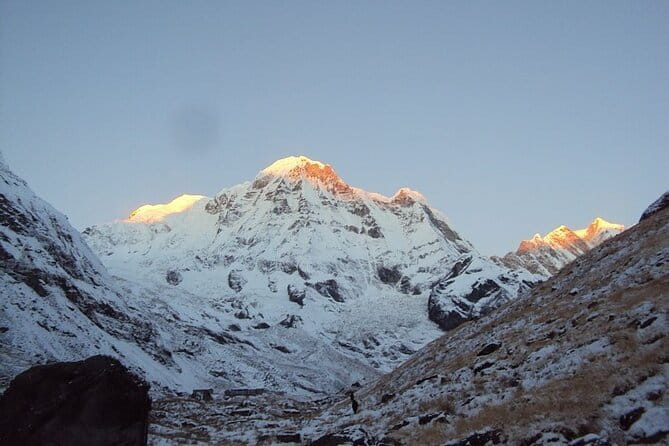
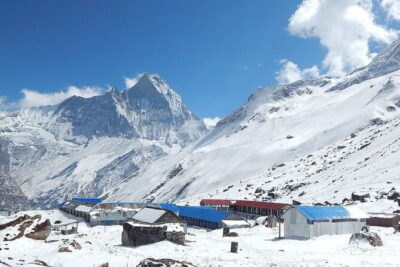
Day 4 is where the trek starts to feel like it has one clear destination. Your route takes you close to the highlight, and you pass the Himalaya Hotel area, which sits near a large Hinko cave. From there, you’re walking under the Annapurna South and Hiunchuli peaks, with the trail turning into a more serious “high focus” zone.
What I like about this section is how it changes your attention. Instead of only watching your footing and counting steps, you start looking up more often. The peaks feel closer, and even when you can’t see everything at once, the route gives you repeated mountain cues.
This is also a good day to slow down your pacing mentally. You’ll still be moving, but you’ll likely want short pauses to take in what’s around you. If you’re the type who gets distracted and forgets to eat, this is where you’ll benefit from staying disciplined with meals and water, since the next day includes big base camp time and then a long-ish return.
Annapurna Base Camp: reaching the goal and doing the return loop right
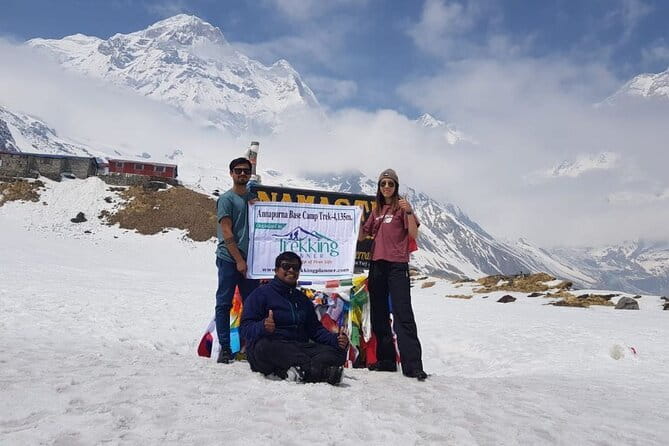
Day 5 is centered on the base camp moment. You’ll spend time at Annapurna Base Camp, and the pacing here matters. Your schedule includes a long walk close to six hours that brings you downhill, with short ups, back toward bamboo areas and lush vegetation.
That return is not wasted time. It’s part of the trek’s emotional arc. Base camp is the peak experience, but the descent through recognizable areas helps you process the achievement. You also get a practical benefit: you’re moving back into lower zones where it’s easier to keep your energy steady.
One thing I appreciate about routes like this is that they don’t rush you to the goal then vanish. They build in time so you can enjoy sunrise and your surroundings. The whole point is to arrive and actually be there, not just pass through.
If you’re traveling during a busier season, keep your expectations realistic. Your experience at base camp will depend on weather and cloud cover, and that matters on the Annapurna side of things. The best move is to stay flexible in the days when visibility can change.
More to compare around Kathmandu
- Everest Base Camp Trek – 14 Days
★ 5.0 · 1,499 reviews - Everest Base Camp Trek
★ 5.0 · 842 reviews - Private Kathmandu Sightseeing Tour | UNESCO World Heritage sites
★ 5.0 · 756 reviews - Kathmandu: 7 UNESCO Sites with Lunch
★ 4.8 · 744 reviews
Jhinu Danda hot spring on the way back: the reward that also helps your body
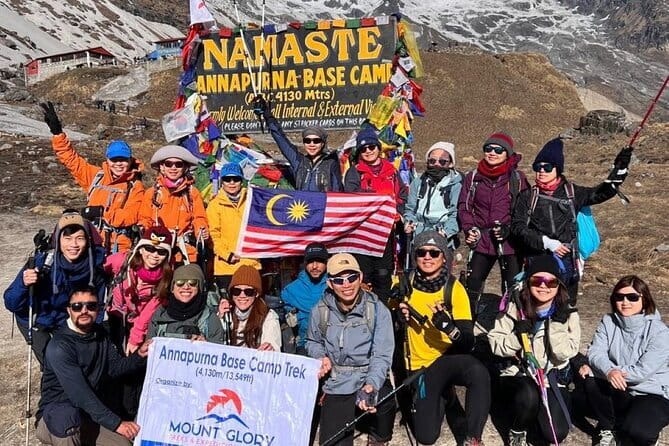
Day 6 turns from “goal focus” to “recovery and homecoming.” You return back toward Chhomrong with ups and downs on the trail, and then your route diverts toward Jhinu, a ridge-side village known for the hot spring at Jhinu Danda.
This is a big deal if you’ve trekked before and know what sore legs feel like. Hot springs are one of the simplest recovery tools you can build into a trek. Even if you don’t go all in, soaking in warm water can help you feel more human before the final travel day.
And the scenery helps, too. The hot spring area is described with grand scenery nearby, and you’ll likely feel like you’re transitioning out of the high-intensity days. In other words, it’s not just a bath stop. It’s a morale stop.
Finish day into Pokhara: Siwai walk and a museum stop for a calmer landing
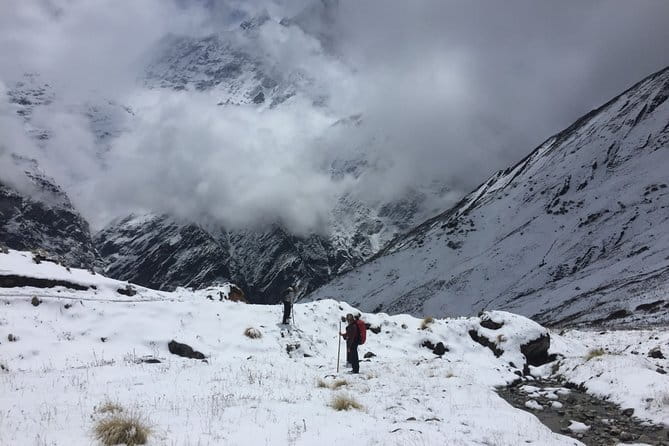
Day 7 keeps it easier compared to the middle days. You trek toward Siwai, roughly four hours, then drive back to Pokhara for about two hours. The day ends with a pleasant downhill walk through low and warm farm areas, and then a stop at Pokhara Museum.
This kind of ending is smart. After a week of mountains, you need a buffer that lets your brain cool down. A museum stop, plus some easier walking, is a way to land in Pokhara without turning your final hours into another workout.
Also, since you started with views around Machhapuchhre and the Annapurna range, it’s satisfying to close with a more urban rhythm. You get to shift from hiking logistics back to Nepal life and food, and it feels like a complete story arc.
Price and value: what $699.67 buys you in the real world
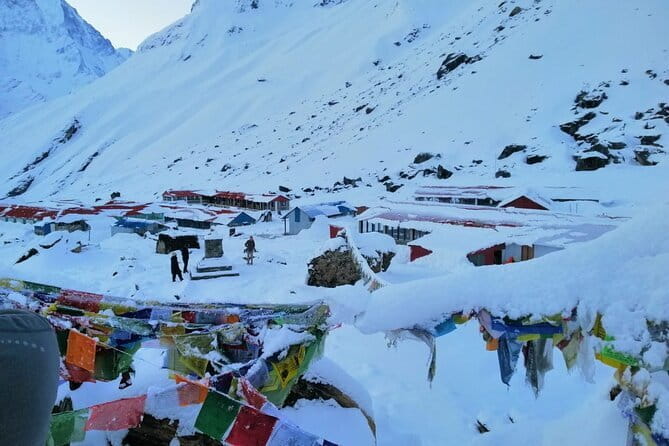
At $699.67 per person for a 7-day experience, the value is mainly in the package coverage. This isn’t a “just hand you a map” deal. Your price includes:
- Three meals each day on the trek (breakfast, lunch, dinner)
- A government license holder mountain guide
- Annapurna Permit (ACAP) and TIMS card
- Trek accommodation for seven nights
- Seasonal fruits during the trek
- Ground transportation tied to getting you between Pokhara and the trek area, and returning you to Pokhara
That package coverage matters because permits and transport are often where independent planning turns expensive or messy. When those are handled, you can focus on choosing good gear, training a bit, and showing up ready to hike.
Could you do it cheaper solo? Maybe. But the cost of mistakes is real in trekking. Wrong timing, missing paperwork, or unclear lodging arrangements can turn a budget trip into a headache. For many people, the $699.67 price feels reasonable because you’re paying to remove uncertainty.
Guides and communication that keep the trip smooth
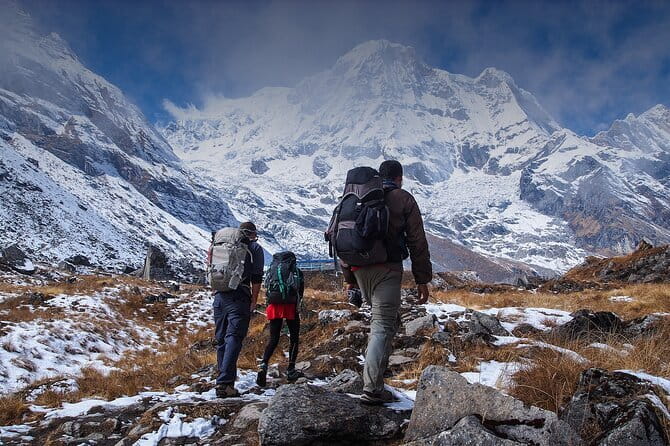
One of the most praised parts of this trekking experience is guide care. In the feedback I reviewed, names like Suraj, Anos, and Laku come up repeatedly, and the themes are consistent: friendly, attentive, and genuinely helpful with planning, meals, and accommodation.
Suraj is described as exceptional at making sure the group’s best interests come first, including planning and how meals and lodging were handled. Anos is also praised for being professional and attentive to details. Laku is noted as friendly and helpful, with porters Sonam and Necha taking care of people well.
A practical note that I think matters for you: communication with the organizer is described as easy, including moving from email to WhatsApp for convenience. That kind of clear communication reduces pre-trek stress, especially when weather and timing can shift.
Also, one smart takeaway: if you want a specific guide or porter, request it in advance, especially during hiking season. That’s not a guarantee, but it’s a simple step that can improve your match with the team.
What your days feel like: moderate effort, active route, real time on your feet
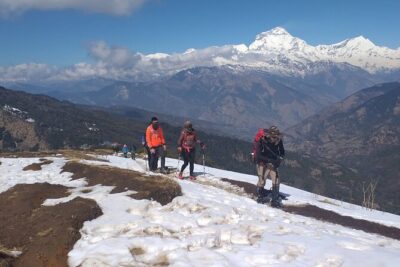
This is rated for travelers with moderate physical fitness. That wording is useful because ABC can be tempting for people who think it’s only a short hike. The reality is that the itinerary includes full hiking days with long trekking time and repeated climbs and descents.
So here’s my practical guidance. If you can comfortably handle an all-day walk with hills, you’ll likely do fine. If you struggle with stairs or get winded quickly, you may find the longer days tough, even if the trek is considered moderate for this region.
The good news is that the trek has built-in pacing through stops like ridges (Kimrong Danda, Sinuwa Danda), forested sections, and recovery points like Jhinu Danda hot spring. Those breaks matter. They help you keep going without sprinting.
What’s included on the trek, and what you’ll need to plan for yourself
This package includes the big things you do not want to juggle: meals, guide, permits, trek accommodation, and ground transportation.
What’s not included is also important. You should plan to cover:
- Travel and rescue insurance
- Bar bills
- Phone calls, laundry
- Battery recharge
- Bottled water
- Hot water and shower access
- Tips for your guide
That list sounds small on paper, but it’s the kind of stuff that adds up fast. If you want predictable spending, budget for basic extras like water access and charging. And do set aside tip money for your guide, since it’s specifically not included.
Who should book this Annapurna Base Camp trek
This trek fits best if you want a guided, structured ABC experience with a clear focus on reaching base camp and doing the loop back efficiently. It’s also a good choice if you prefer not to worry about permits, meal timing, and lodging.
I’d especially consider it if you value:
- A licensed guide and proven local support
- Full meal coverage so you can hike without hunting for food
- A schedule that includes a recovery stop at Jhinu Danda hot spring
- A private group setup, since the tour states only your group participates
If you like flexibility in route planning, the feedback about guide adjustment is encouraging. That doesn’t mean every plan can change, but it does suggest the guide team takes your needs seriously.
Should you book this Annapurna Base Camp trek?
Book it if you want a solid, all-in plan for ABC with meals, permits, and a licensed guide handled for you. The base camp focus plus the hot spring recovery stop make it feel like more than just walking from point A to point B. The strongest reason to say yes is how often guide support shows up as a highlight, with names like Suraj, Anos, and Laku paired with friendly, attentive service.
Skip it or pick a different style if you hate long hiking days or you’re not ready for repeated uphill and downhill. Also, if you’re trying to travel with the least possible extra spending, budget for the items not included, like bottled water and hot shower access.
FAQ
Where does the Annapurna Base Camp trek start?
The trek starts from Nayapul, and it connects to ground transportation from Pokhara to the trek area.
What time is the meeting point?
Start time is 4:45 am.
How long is the trek?
It’s listed as 7 days (approx.).
Are permits included?
Yes. The Annapurna Permit (ACAP) and TIMS card are included.
What meals are included?
You get three times meals during the trek: breakfast, lunch, and dinner. Seasonal fruits are also included.
Is accommodation included during the trek?
Yes. The price includes 7 night accommodation on the trek.
What about pickup?
Pickup is offered.
What is not included in the price?
Travel and rescue insurance, bar bills, phone call costs, laundry, battery recharge, bottled water, hot water, shower, and tips for the guide are not included.
Is this a private tour?
Yes. This is a private tour/activity, and only your group will participate.
What is the cancellation policy?
You can cancel up to 24 hours in advance for a full refund. It may also be canceled due to poor weather, with an offered different date or a full refund.
Latest Kathmandu write-ups
- Langtang Valley Trek★ 5.0 · 3 reviews
- Khopra Danda Trek★ 5.0 · 3 reviews
- Langtang Valley Trek from Kathmandu★ 5.0 · 3 reviews
- 5 night / 6 days Kathmandu Nagarkot Chitwan Pokhara tour★ 5.0 · 3 reviews
- Nepal Highlights Tour: 5 Nights 6 Days Kathmandu & Pokhara Tour★ 5.0 · 3 reviews
- Kathmandu Valley Private Day Tour★ 5.0 · 3 reviews
- Conquer the Himalayas: The Ultimate 16-Day Annapurna Circuit Trek★ 3.5 · 3 reviews
- Kathmandu Heritage Day Tour★ 5.0 · 3 reviews
Annapurna Base Camp Trek, compared.
Browse the lists this tour appears in