
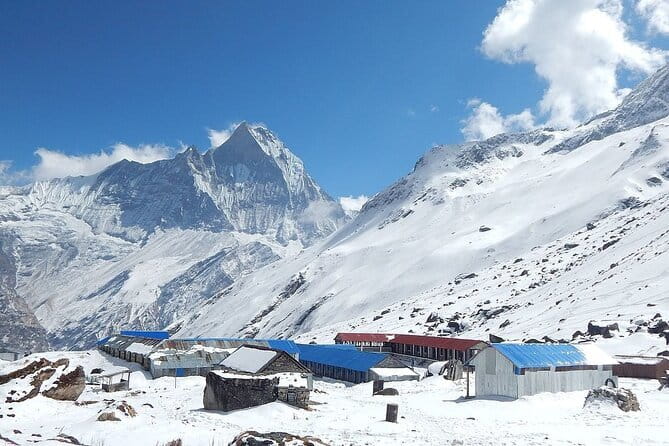
Reviewed · ANNAPURNA BASE CAMP TREK
Annapurna Base Camp Trek
Annapurna Base Camp Trek stays interesting because it blends Gurung culture with high-alpine scenery in Nepal’s protected Annapurna Conservation Area. I like that this route builds your excitement in layers, from Pokhara viewpoint mornings to the big day at the base camp. You get classic “warmup” trekking around Poon Hill before the trail pushes higher.
I also like the way the trip is structured for real-world bodies. You spend time moving up and then dropping back down, which matters when you’re hiking at altitude. The long drives are handled with an air-conditioned vehicle, so you’re not just burning energy before you even start walking.
One drawback to plan for: you’ll hike long days at thinning air, and the trek price does not include lunch and dinner. That means you’ll need to budget for meals on the trail, and you’ll want to pack smart so food and water aren’t an afterthought.
Key things that make this Annapurna Base Camp Trek worth your attention
- Poon Hill sunrise style payoff, with an early hike before you settle into the main trekking days
- Altitude stages that step up gradually, including time near 3,230m before the push to 4,130m
- A private setup, so your group can move at a pace that fits you
- Damu and team focus on planning, including day-to-day support and practical adjustments
- Comfort on the transfer days, with air-conditioned drives between Kathmandu, Pokhara, and trailheads
- Weather can change fast, including at least one case of unexpected snow during the trek season
Why Annapurna Base Camp still gets people to lace up their boots
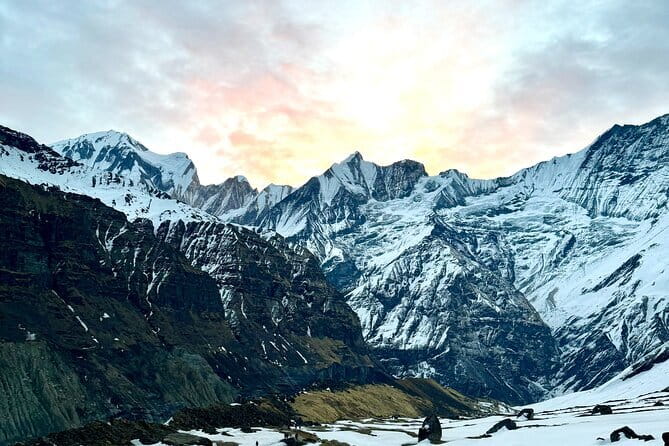
The Annapurna region has a special kind of pull. You’re not only chasing a famous destination name, you’re walking through a living cultural zone in the Annapurna Conservation Area. The villages you pass through connect to the Gurung communities of the Ghandruk Valley, and that gives the trek more texture than just mountain photos.
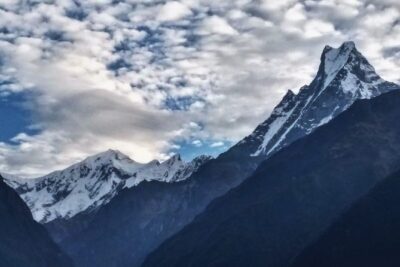
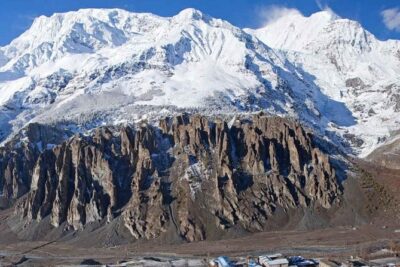
On top of that, the Annapurna range is visually dramatic in a very practical way. You’re surrounded by giant peaks all day, including views tied to Annapurna’s skyline, plus other famous neighbors like Dhaulagiri and Machhapuchhre, the fish-tail mountain that dominates the horizon near Pokhara. Even when the weather turns, the sense of “you are actually surrounded by the Himalaya” keeps things compelling.
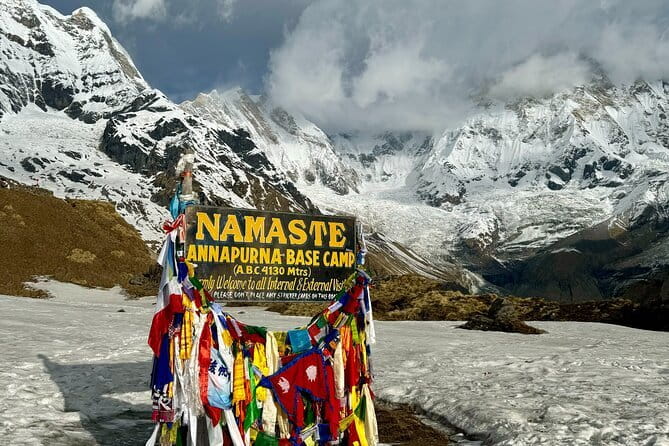
This trek also has a good emotional arc. You start at lower elevations near Kathmandu and Pokhara, build up through villages and viewpoint country, then reach Annapurna Base Camp itself at 4,130m. It’s a steady climb with real payoff, not a one-day sprint to the highest spot.
More routes into the Annapurna Sanctuary:
- Annapurna base camp trek 5 Days
★ 5.0 · 252 reviews - 14-Day Private Annapurna Base Camp Trek
★ 5.0 · 180 reviews - Annapurna Base Camp Trekking
★ 5.0 · 116 reviews
Price and logistics: what $769.24 covers, and what you’ll pay for anyway
At $769.24 per person, you’re paying for a package that does several important things correctly: meals coverage for mornings, transport on the transfer days, and the official fees and taxes.
Here’s what you do get:
- Breakfast included throughout
- Air-conditioned vehicle for the drives
- All fees and taxes covered
Here’s what you should plan to pay yourself:
- Lunch and dinner
- Snacks
- Bottled water
- Coffee or tea
- Alcoholic beverages
That matters because teahouse-style meals along the route are often where your daily spending happens. If you’re the type who likes a warm meal after a hard climb, you’ll still be fine. Just don’t assume lunch and dinner are built in.
Also, this is a private tour/activity. That’s a value point for couples, small groups, or anyone who wants less waiting around. You’re only moving with your group, not sharing the trek logistics with strangers.
You’ll also receive a mobile ticket, which is a small thing until you’re in a time crunch. It’s one less piece of paperwork to misplace in Nepal.
Day 01 to Day 03: Kathmandu, then the Pokhara transfer, then your first steps
Day 01 is straightforward: you arrive in Kathmandu at about 1,350m. This is your acclimation buffer day, even if it feels more like a “get settled” day than a trekking day.
Day 02 is the long move to Pokhara. It’s about 220 km and roughly 6 hours of driving, and Pokhara sits lower at about 860m. This drop in elevation is useful because it gives you a mental reset after Kathmandu, and the air-conditioned ride helps a lot if you’re coming in tired.
Day 03 is where your trek officially begins: you drive to Nayapul, then trek to Hille (about 1,496m) for around 4 hours. This day is not just distance, it’s rhythm training. You’re learning how your legs respond after transport, how you handle small climbs, and how you pace yourself when the trail starts to feel real.
What to watch for here: start slowly. On early trek days, your legs often feel okay until hour three, then your pace starts to cost you. Let your guide set the tempo if they suggest a slower start.
Day 04 and Day 05: Ghorepani and the Poon Hill morning
Day 04 is a solid day: trek from Hille up to Ghorepani (about 2,840m) for around 7 hours. That’s a big day on paper, and it’s also mentally big because you’re moving toward viewpoint country. You’ll feel the altitude as you climb, even if the scenery is doing its job of distracting you.
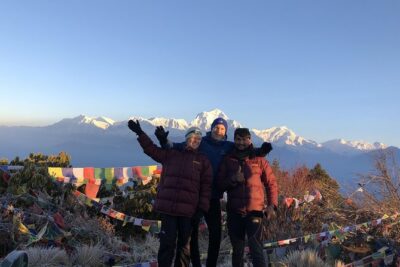
Day 05 begins with a morning hike to Poon Hill, then continues trekking to Tadapani (about 2,520m) in about 5 hours. Poon Hill is the sort of stop that gets people talking because it’s a viewpoint moment you earn. You’re up early, moving steadily, and then you get that reward before the day fully settles into trekking mode.
The practical benefit of doing Poon Hill before your deeper climb is that it gives you a “checkpoint win.” Even if you’re tired, you’ve already had your first major payoff before Day 06 and 07 start asking more of you.
A consideration: the early hike means cold hands and faster breathing in the morning. Layer up, and treat breaks like part of the plan, not interruptions.
More to compare around Kathmandu
- Everest Base Camp Trek – 14 Days
★ 5.0 · 1,499 reviews - Everest Base Camp Trek
★ 5.0 · 842 reviews - Private Kathmandu Sightseeing Tour | UNESCO World Heritage sites
★ 5.0 · 756 reviews - Kathmandu: 7 UNESCO Sites with Lunch
★ 4.8 · 744 reviews
Day 06 to Day 07: Sinuwa, then Deurali at 3,230m
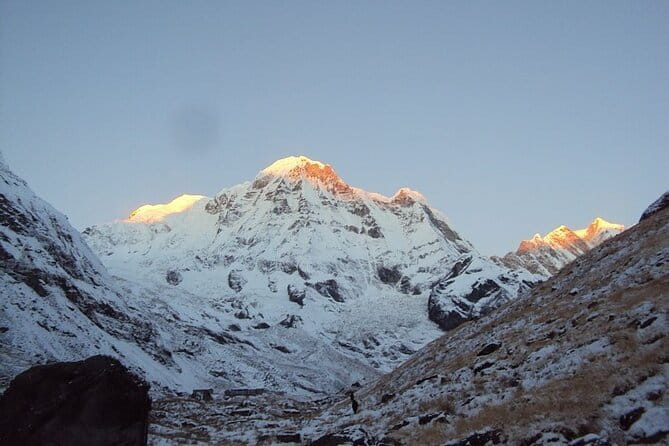
Day 06 takes you to Sinuwa (about 2,340m) for roughly 5 hours. This is a step that can feel like a recovery day compared with what came before, but don’t let that trick you. It’s still walking uphill at elevation, and your stamina is now being tested in thinner air.
Day 07 pushes higher to Deurali (about 3,230m) for around 7 hours. This is an altitude marker day. It’s high enough that you’re less likely to feel “normal,” even if you’re fit. The goal here is steady movement, not speed.
This is also the kind of day where weather matters. One group noted unexpected bad weather, and it affected travel logistics later. Even without going into details, the lesson is simple: pack for changing conditions and expect that timing can shift.
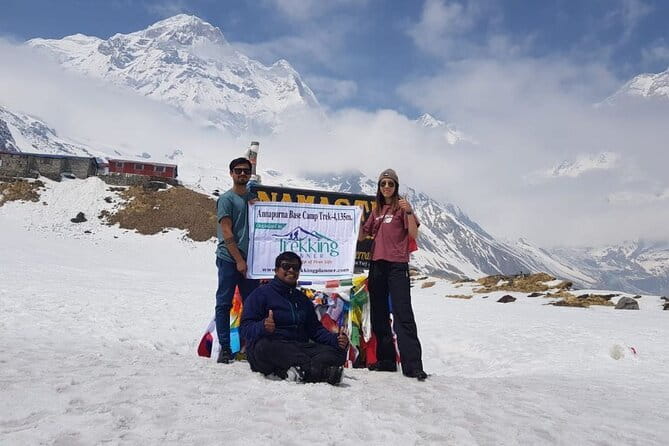
Day 08: Reaching Annapurna Base Camp at 4,130m
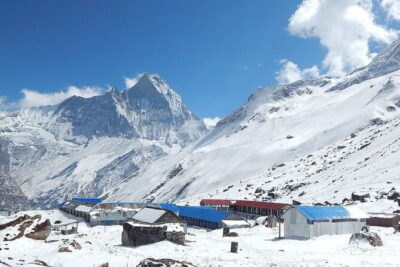
Day 08 is the big one: trek to Annapurna Base Camp at about 4,130m for around 4 hours. The shorter hiking time compared with earlier days is common on trek itineraries, but the altitude makes it feel heavier.
This is the day where your planning pays off. If your early pace was sensible, you’ll have the energy to enjoy the base camp moment instead of only surviving it. You’re going from the “climb to a village” mindset to the “we did it” mindset.
What to bring into this day psychologically: treat it as a slow day for your brain. Sit when you need to. Hydrate. Don’t turn this into a sprint toward photos. The cold can creep in quickly at 4,130m.
One more thing: the trek price includes breakfast, but it does not include lunch and dinner. So if you tend to skip meals when you’re cold, fix that habit early. You’ll want consistent fuel today.
Day 09 to Day 10: Bamboo, then Chomrong, then Jhinu-Danda at 1,700m
Day 09 takes you to Bamboo (about 2,050m) for roughly 6 hours. This is where the trek starts balancing the high points with real relief. You’ll likely feel your legs loosen as you drop, but the hiking still takes time. Going downhill can be just as demanding on knees and ankles.
Day 10 is a longer recovery-and-transition day. You trek to Jhinu-Danda (about 1,700m) via Chomrong for around 6 hours. Chomrong is a key pass-through area on this kind of route, so you get that “we’re moving through the Annapurna story” feeling rather than only walking from one camp to another.
Also, the elevation change is meaningful. You go from over 2,000m terrain down toward 1,700m. That makes the post-altitude part of the trek easier, but don’t assume it’s effortless. Your body is tired, and you’ll want to keep your stride controlled.
Day 11 to Day 12: Nayapul to Pokhara, then back to Kathmandu
Day 11 is the end of the trekking loop: trek to Nayapul and then drive back to Pokhara for around 8 hours. That’s a long day because it mixes walking and a big transfer. Hydrate well before you start the drive, and if you get motion sickness, this is where you’ll be glad you planned for it.
Day 12 is the drive back to Kathmandu. The itinerary doesn’t list the exact hours here, but the tradeoff is clear: after a full day, you’ll want an easy evening and an early bedtime.
This “move day” structure is one reason I like this itinerary type. You get to finish the trail with a downhill feel, then you transition to city comfort without needing extra complicated logistics.
Day 13 to Day 14: Rest in Kathmandu and your final departure
Day 13 is a rest day in Kathmandu. This is your buffer to wash clothes, eat what you’ve been craving, and let sore muscles calm down. It also gives you breathing room if you’re sensitive to travel fatigue, which is common after multi-day trekking.
Day 14 is your final departure. Ending in Kathmandu is convenient because it’s the main hub for flights and onward travel.
If you’re planning other activities, keep them light on Day 13. You’ll thank yourself.
The human factor: what Damu and the team do well on this trek
On the Annapurna Base Camp trail, the “how” matters as much as the “where.” In the groups that have done this route with Damu and his team at Mission Summit Treks and Expedition, the most consistent praise is about planning and day-to-day support.
Damu is described as:
- responsive during planning
- organized and punctual with schedules
- humorous and friendly, which matters on long days
- careful about answering questions and checking needs
- supported by porters who help carry load and keep the trek manageable
There’s also mention of customization, so if you have preferences about pacing or how you want the days to feel, it’s not just a rigid conveyor belt. One group also mentioned an unexpected situation where bad weather affected transport planning, and the team adapted. That kind of flexibility is what you want when mountain conditions change.
If you’re new to long treks, this matters even more. A solid guide helps you avoid common mistakes like going too fast early, under-planning for cold, or treating slowdowns like failures.
Fitness reality check: moderate is fine, but don’t confuse it with easy
The itinerary is listed for moderate physical fitness. That’s encouraging, and I agree with it, as long as you understand what “moderate” means in practice.
You’re looking at many days of hiking that range from about 4 to 7 hours. Some are longer. And the altitude climb is real, from around 860m up through 2,840m, 3,230m, and finally 4,130m.
So the key question for you is not whether you’ve trekked before. It’s whether you can hike for multiple hours for several consecutive days, and whether you can keep a steady pace when you feel winded.
If you’re the type who gets breathless quickly, focus on training your legs and your pacing more than chasing speed. You’ll get further with a slower, controlled effort.
What to pack and how to handle cold, altitude, and meal gaps
Since lunch and dinner are not included, you’ll want a simple food strategy. Eat lunch and dinner even when you feel busy, and don’t rely on just snacks. If you run low on energy, the last part of a climb can feel twice as steep.
Water is also not included in bottled form. You’ll need to plan for water availability on the days you’re walking, and then keep a steady intake on higher elevation days.
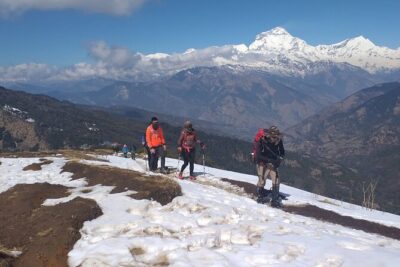
Cold is another practical issue. One group reported unexpected snowfall during the trek season, so don’t assume it will only be chilly. Even if snow isn’t guaranteed, cold rain and wind are plausible at higher altitudes.
Pack for cold mornings and cooler nights:
- a warm layer you can put on quickly during breaks
- gloves or something similar if you get cold hands
- a hat or head covering for early starts like Poon Hill
And remember: you’re at 4,130m. Even fit people can feel off. Plan for slow breaths, slower pace, and more frequent short breaks.
Should you book this Annapurna Base Camp Trek?
If you want a classic Annapurna experience with a route that balances viewpoints and altitude, I’d say yes. The biggest reasons are practical: you have private support, the itinerary has a clear rhythm, and you’re getting the key high points like Poon Hill and Annapurna Base Camp without needing to reinvent logistics.
Book this trek if:
- you’re okay hiking 4 to 7 hours most days
- you want a team that focuses on planning and care, including Damu and porter support
- you understand you’ll budget separately for lunch, dinner, snacks, and drinks
Skip it or consider a different plan if:
- you’re looking for short walking days with minimal altitude exposure
- you dislike paying for most meals along the route
- you’re very sensitive to cold, and you don’t want to prepare for changing weather
Overall, this is a strong value choice for the Annapurna Base Camp Trek category because transfers and breakfast are handled, and the trekking is guided and organized around real pacing needs.
FAQ
How long is the Annapurna Base Camp Trek?
The trip is listed as approximately 14 days.
Where does the tour start and end?
It starts in Kathmandu, Nepal at the meeting point and ends back at the same meeting point.
Is this trek private?
Yes, it is described as a private tour/activity, so only your group participates.
What is included in the price?
Breakfast is included, along with an air-conditioned vehicle and all fees and taxes.
What is not included?
Lunch, dinner, snacks, bottled water, coffee and/or tea, and alcoholic beverages are not included.
Can I cancel for a full refund?
Yes, you can cancel up to 24 hours in advance for a full refund. If you cancel less than 24 hours before the start time, you do not receive a refund.
Latest Kathmandu write-ups
- Langtang Valley Trek★ 5.0 · 3 reviews
- Langtang Valley Trek from Kathmandu★ 5.0 · 3 reviews
- Khopra Danda Trek★ 5.0 · 3 reviews
- 5 night / 6 days Kathmandu Nagarkot Chitwan Pokhara tour★ 5.0 · 3 reviews
- Nepal Highlights Tour: 5 Nights 6 Days Kathmandu & Pokhara Tour★ 5.0 · 3 reviews
- Kathmandu Valley Private Day Tour★ 5.0 · 3 reviews
- Conquer the Himalayas: The Ultimate 16-Day Annapurna Circuit Trek★ 3.5 · 3 reviews
- Kathmandu Heritage Day Tour★ 5.0 · 3 reviews
Annapurna Base Camp Trek, compared.
Browse the lists this tour appears in