
Reviewed · ANNAPURNA BASE CAMP TREK
Annapurna Base Camp Trekking – 14 Days
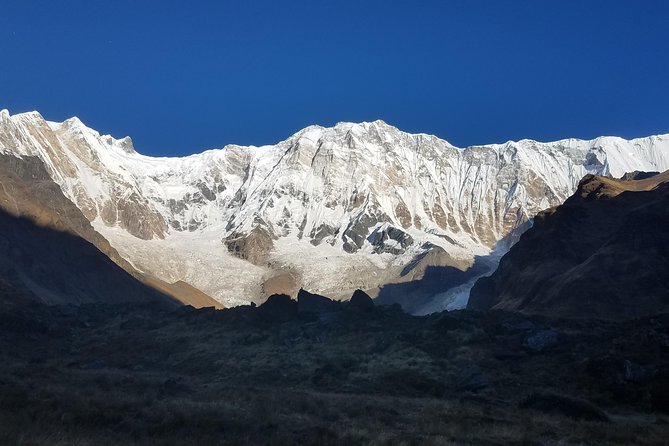
Annapurna Base Camp is interesting because you are not just hiking toward a view. You are walking into a high glacial basin where you get very close to big-wall faces and the staging area for 7000m and 8000m dreams. This version of the trek is also built for real-world breathing, not speed runs, with an itinerary that helps you acclimatize along the way.
I especially like the balanced pacing and the way the route steps upward, then gives you time to absorb altitude before the highest day. I also like that the package covers the nitty-gritty: permits, conservation fees, guide, porter support, and full-board tea-house lodging, so you are not doing math on the mountain. One possible drawback to consider is that this is a tea-house lodge trek at high elevation, so you still have to be ready for basic rooms and the fact that cold, weather, and altitude can change how you feel, even on a good plan.
Key highlights worth your attention
- Smart acclimatization rhythm built into the daily altitude gains, especially around 3700m and 4130m
- Experienced English-speaking Sherpa leadership (names like Ngima, Dawa, Mingma, Tashi, and Pasang show up in past teams)
- Tea-house lodging included with full-board meals on the trek, plus B&B in Kathmandu and Pokhara
- Permits and the Annapurna Conservation Fee included, so you are not chasing paperwork at the last minute
- One porter per 2 trekkers, which helps keep the load realistic for a 14-day trek
- Water plan with Euro-guard filters, plus a clear hydration target of about 3 liters a day
Annapurna Base Camp, and why it feels so close to the mountains
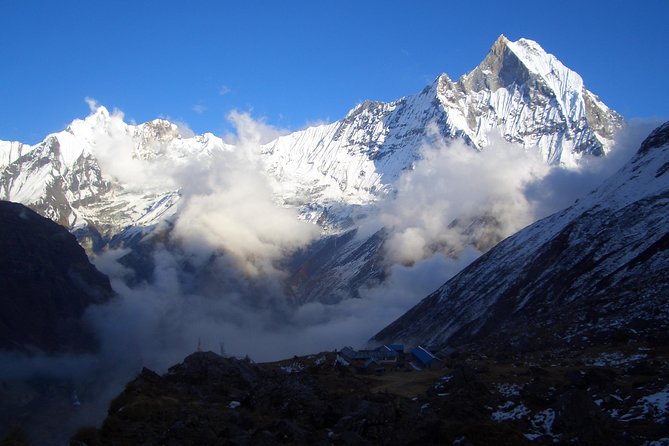
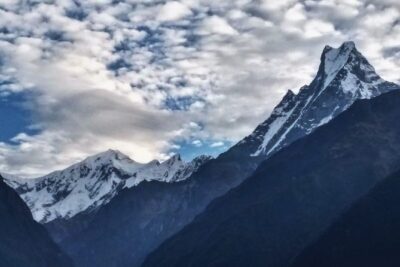
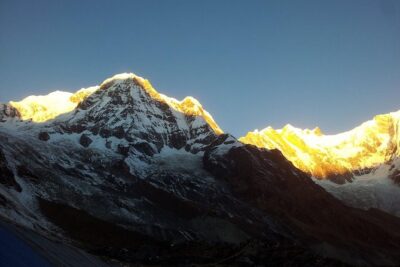
This trek works because it compresses big scale into a readable hiking progression. You start in cities, roll into the river gorge world, and then climb until you are surrounded by high, glaciated terrain at the base of Annapurna peaks. One day you are stepping beyond rice paddies and forests, the next you are in a harsher zone with thinner air and the kind of silence that makes every footstep feel louder.
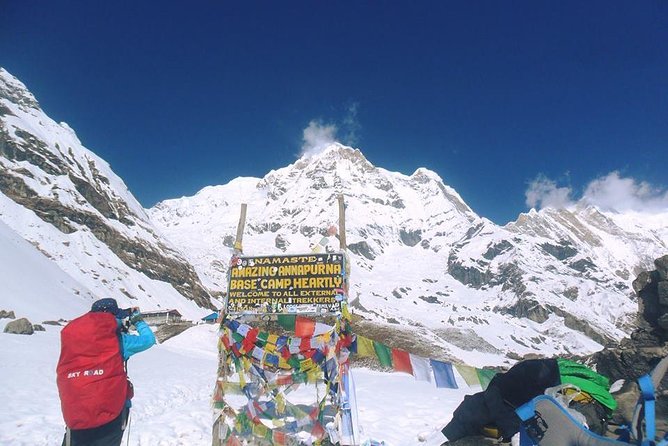
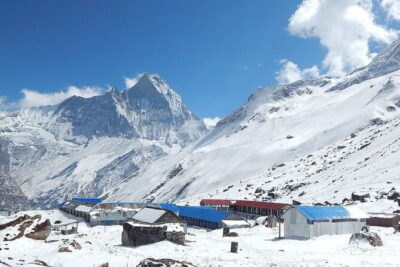
At Annapurna Base Camp (a little over 4000m, about 4130m on the plan), the goal is not to conquer altitude. The goal is to arrive without wrecking yourself. That matters because the trek is designed around slow walking, breaks, and altitude awareness, so you can actually enjoy the moment instead of just surviving it.
More routes into the Annapurna Sanctuary:
- Annapurna base camp trek 5 Days
★ 5.0 · 252 reviews - 14-Day Private Annapurna Base Camp Trek
★ 5.0 · 180 reviews - Annapurna Base Camp Trekking
★ 5.0 · 116 reviews
Price and value: what your $1,250 actually buys
At $1,250 per person, this package is not cheap, but it also is not “mystery-tour expensive.” You are paying for real coverage of the things that usually pile up on the ground.
Included items that raise the value:
- English-speaking experienced Sherpa guide (government trained and licensed holder)
- Porters with a simple ratio: one porter for every two trekkers
- Tea-house lodging for 9 nights during the trek, with full-board meals
- Kathmandu to Pokhara, and back, plus land transfers to and from Nayapul
- Permits and fees: TIMS permits and the Annapurna Conservation Fee, plus required official documentation
- Energy snacks (Snickers, Mars, Bounty) and fresh fruit during the trek
- First aid medicine kit
- Air-conditioned vehicle for the main drives and hotel stays in Kathmandu and Pokhara for two nights each
Not included items you should budget for:
- Your personal travel insurance (important for remote areas and possible emergency evacuation)
- Nepal entry visa fee
- Lunch and dinner in cities (plan about $10 to $14 per meal at tourist restaurants)
- Beverages like soda, mineral water, boiled water, and beer
- Tips for guide, porters, and driver, which are customary
If you want a trek where most of the “logistics friction” is handled, this package is built for you. You spend your energy on walking, eating, and acclimatizing, not on chasing permits or wondering who pays for what.
Day by day: from Kathmandu to Pokhara to Nayapul, your first altitude lessons
Day 1 is arrival in Kathmandu, with pickup and a focus on settling in. You stay in Kathmandu at Hotel Holy Himalaya (two nights total before and after the mountains). This hotel stop matters because it gives you a soft start before the long drive and the first hike days.
Day 2 brings the drive to Pokhara at about 900m. You are not gaining altitude by force yet. You are transitioning your body from city rhythms to mountain ones, and you are getting ready for the trekking start with a change of scenery and cooler air.
Day 3 starts the real climb. You drive to Nayapul (about 1010m) and then trek to Hile (about 1400m), roughly a 3-hour walk. This is the “wake up your legs” day. It is also your first chance to practice trekking habits: slow steps, steady breathing, and taking breaks before you feel stressed.
Days 4 to 7: Ghorepani and Chhomrung, where the route gets steeper
Day 4 takes you to Ghorepani at 2855m over about 6 to 7 hours. This is a jump in elevation compared with day 3, so pace matters. Ghorepani sits in the region where you feel the thin-air shift. You will notice it most when you stop. That is fine, it is part of the training.
Day 5 goes from Ghorepani to Tadapani at about 2610m (around 5 hours). This down-then-up feel is a useful acclimatization tool. You are not just marching upward each day. You are letting your body adjust to changing elevation while still moving forward in the direction of base camp.
Day 6 is to Chhomrung at about 2040m, around 4 hours. Chhomrung is one of those key points where the region starts to feel more “mountain dramatic” and less “gentle trail.” The air can be sharp, and the footing can require attention, so take your time.
Day 7 is to Dovan at about 2550m (roughly 4 to 5 hours). This day nudges you upward again, and it sets you up for the higher section that follows. By now, you should be comfortable with the tea-house rhythm: hike, eat, warm up, sleep, repeat.
More to compare around Kathmandu
- Everest Base Camp Trek – 14 Days
★ 5.0 · 1,499 reviews - Everest Base Camp Trek
★ 5.0 · 842 reviews - Private Kathmandu Sightseeing Tour | UNESCO World Heritage sites
★ 5.0 · 756 reviews - Kathmandu: 7 UNESCO Sites with Lunch
★ 4.8 · 744 reviews
Days 8 to 10: Machhapuchre Base Camp and the push to 4130m
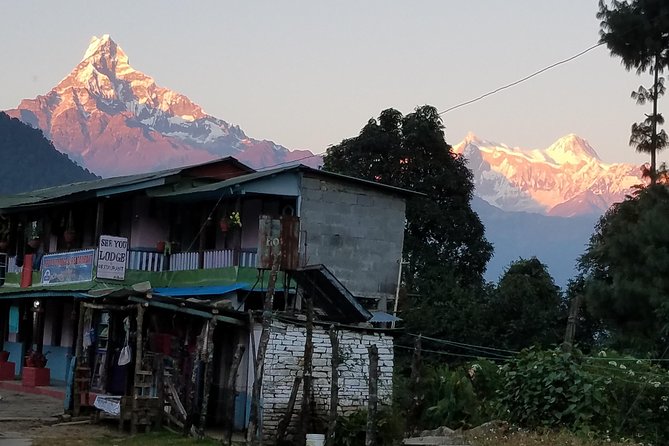
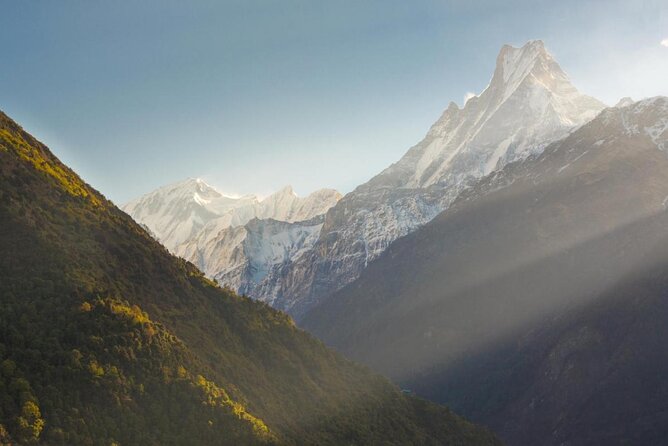
Day 8 takes you to Machhapuchre Base Camp at about 3700m in 4 to 5 hours. This is a big deal day because you get high without yet reaching the hardest altitude. It is like your body’s warm rehearsal before the main stage. If you have ever underestimated altitude, this is where you learn fast. The good news: the trek plan is built for slow walking and breaks, and that is where the experienced guide earns their keep.
Day 9 is the day you have been building toward: Annapurna Base Camp at about 4130m (about 2 to 3 hours). Even with the shorter hiking time, this is still a high-altitude effort. Your success here depends on how you manage effort earlier in the trek. If you have been going steady, not sprinting between stops, you will feel more like a visitor to the mountains and less like a patient in a survival test.
Day 10 drops down to Bamboo at about 2340m (around 4 to 5 hours). That drop matters. A lot of people think the peak day is the hardest. For many, the real relief comes after base camp, when you can descend and let your body recover. You also start getting back into a more comfortable hiking zone.
Days 11 to 14: bamboo down, Jhinu Danda, and the return to Kathmandu comfort
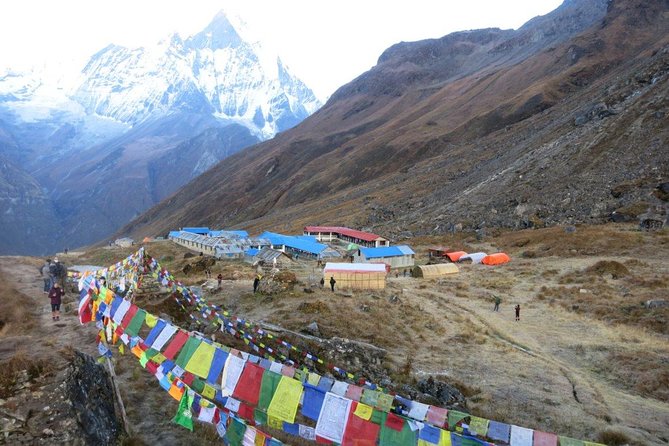
Day 11 goes to Jhinu Danda at about 1780m over around 5 hours. This is lower elevation, and it is where morale often improves. You are still trekking, but your breathing has room to settle. In lodge treks, those mid-late days can feel like the sweet spot: you still have views and movement, but you are not paying the same altitude tax.
Day 12 goes to Nayapul-Pokhara area at about 900m over 5 to 6 hours, and you start transitioning back toward city life. The change from mountain air to warmer lower-elevation weather can feel dramatic, so drink water and keep your pace sensible even if it feels easier.
Day 13 is the drive back to Kathmandu at about 1345m. You are trading trail time for road time, which most people welcome after 10-plus mountain days.
Day 14 is departure from Kathmandu.
Tea-houses, full-board meals, and how to budget smart
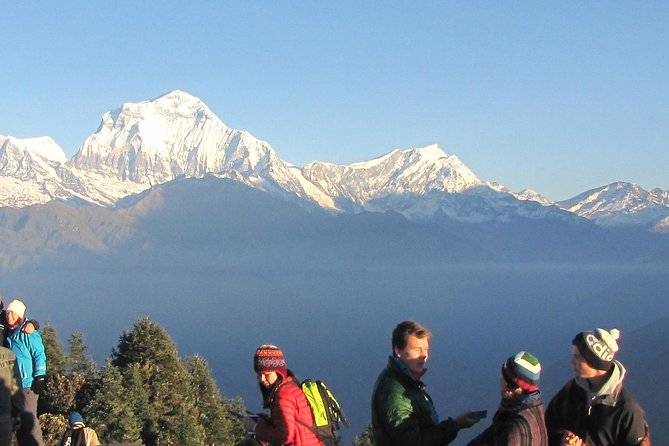
This is a tea-house lodge trek, meaning you do not carry a tent. You sleep in simple, local lodges, usually with two narrow beds in twin-share rooms, and you eat in the lodge kitchen area.
Food on the trek is full board, so breakfast, lunch, and dinner during hiking days are included. That is a real value perk, because it removes the hardest budgeting variable from high elevation travel. Still, you will probably want extra snacks or drinks sometimes, and those are not included.
In Kathmandu and Pokhara, you get two nights each on twin-share bed and breakfast. Lunch and dinner in the cities are on your own, so plan about $10 to $14 per meal at tourist restaurants.
One small but useful detail: the trek includes energy supplies like Snickers, Mars, and Bounty plus fresh fruit on the trek. You will feel better about long hiking stretches when you do not have to treat candy like a guilty secret.
Altitude, water, and safety: the practical stuff that makes or breaks the trip
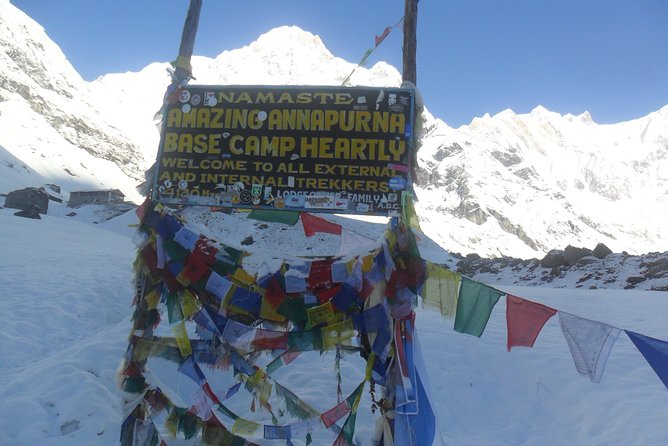
Altitude is the main character on this trek. Annapurna Base Camp is a bit over 4000m, so the plan is designed to allow acclimatization and reduce risk of altitude problems. The daily schedule is not random. The elevations rise, but the trek also gives you down days and recovery days, especially around Machhapuchre Base Camp and after base camp.
How hydration is handled:
- The plan advises you to drink about 3 liters per day
- In the Annapurna region, you can refill with Euro-guard filters
- Bring your own water bottle so you can refill easily
That combo is practical. It reduces the hassle of buying water everywhere and helps you keep your energy up.
Safety is also addressed directly. Weather and health can force changes, so the guides may adjust or cancel parts of the route if conditions demand it. That is not a failure. That is good mountain management.
Best season for Annapurna, and who should choose this trek
Best trekking seasons are spring (February to late April) and autumn (late September to late November). Winter trekking is possible for some parts of the route, including Ghorepani, Poonhill, Ghandruk, Annapurna Base Camp, and Kali Gandaki, but the full experience you are taking depends on the conditions on your dates.
This trek also works well for people traveling with a group. It is a private tour, meaning only your group participates. That is a big deal if you want flexibility with pace and if you dislike feeling swallowed by a huge group.
Physical fit requirements are moderate. The trek says it is manageable if you have a reasonable fitness level, with a slow pace and plenty of breaks because altitude becomes more noticeable as you go higher.
What I’d watch for before you book
Here are the considerations I think matter most:
- Tea-house treks mean basic rooms and shared dining spaces. If you expect hotel-grade comfort up high, you will be disappointed.
- Altitude can affect sleep, appetite, and energy even with good planning. Go slow, and do not treat the trek like a fitness event.
- Weather affects the high portion. The trek needs good conditions, and in poor weather you might be offered a different date or a full refund.
Should you book this Annapurna Base Camp trekking package?
I would book this if you want a well-supported trek that handles the hard-to-manage parts, like permits, conservation fees, guide expertise, porter help, and tea-house lodging with full-board meals. The acclimatization-focused schedule and the focus on hydration make it a strong choice for first-time ABC trekkers who want to feel taken care of, not just set loose on a route.
I would not book it if you want a luxury, high-comfort experience or if you are only comfortable with constant predictability. In the mountains, weather and health are variables, and this trek asks you to stay flexible.
If you are ready for a real mountain walk, with solid support and a route that respects altitude, this is a strong value way to reach Annapurna Base Camp.
FAQ
What is the price and how long is the trek?
The price is $1,250.00 per person, and the duration is approximately 14 days.
Where does the trek start and end?
It starts in Thamel, Kathmandu (44600), Nepal and ends back at the same meeting point.
What permits and fees are included?
The package includes the Annapurna Conservation Fee, TIMS permits, and all required permits or official documentation.
What is included for lodging and meals during the trek?
During the trek you stay in local lodges for 9 nights with full board meals and twin-share rooms. In Kathmandu and Pokhara you get two nights each on a twin-share bed and breakfast basis.
Is water provided and how do I handle drinking water on the trail?
You should drink about 3 liters per day. The trek uses Euro-guard filters so you can refill your own water bottle.
Do I need travel insurance?
Yes. Nepal entry requires a personal travel insurance you arrange yourself, and it should include coverage for emergency evacuation, injury, lost baggage, liability, and medical treatment.
Are lunch and dinner included in Kathmandu and Pokhara?
Lunch and dinner in cities are not included. The guidance is to allow about $10 to $14 per meal in tourist restaurants.
Is this trek refundable if conditions change?
This experience is non-refundable and cannot be changed for any reason. If it is canceled due to poor weather, you will be offered a different date or a full refund. If it is canceled because the minimum number of travelers is not met, you will also be offered a different date or a full refund.
Latest Kathmandu write-ups
- Langtang Valley Trek★ 5.0 · 3 reviews
- Khopra Danda Trek★ 5.0 · 3 reviews
- Langtang Valley Trek from Kathmandu★ 5.0 · 3 reviews
- 5 night / 6 days Kathmandu Nagarkot Chitwan Pokhara tour★ 5.0 · 3 reviews
- Nepal Highlights Tour: 5 Nights 6 Days Kathmandu & Pokhara Tour★ 5.0 · 3 reviews
- Kathmandu Valley Private Day Tour★ 5.0 · 3 reviews
- Conquer the Himalayas: The Ultimate 16-Day Annapurna Circuit Trek★ 3.5 · 3 reviews
- Kathmandu Heritage Day Tour★ 5.0 · 3 reviews
Annapurna Base Camp Trek, compared.
Browse the lists this tour appears in