
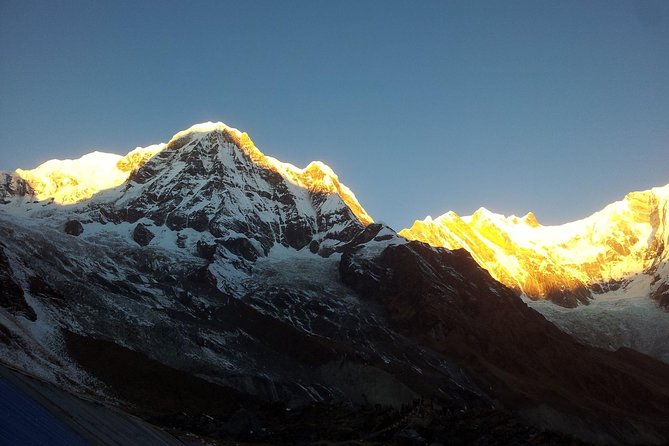
Reviewed · ANNAPURNA BASE CAMP TREK
Annapurna Base Camp Trekking
This Annapurna Base Camp trekking experience is interesting because it mixes Himalayan trekking with Kathmandu’s UNESCO temple circuit, then hands you a straightforward plan from start to finish. You get the big goal, plus a culture warm-up before your first mountain steps.
I love that your trek meals and teahouse stays are included, which keeps day-to-day decisions simple. I also like the private guide and porter support, plus the classic Poon Hill sunrise timing early on.
One drawback to consider: this is a moderate-fitness trek with plenty of hiking hours and some steep downhills, including tricky stone steps. If your knees hate stairs, plan ahead and take the pace seriously.
Key highlights worth knowing
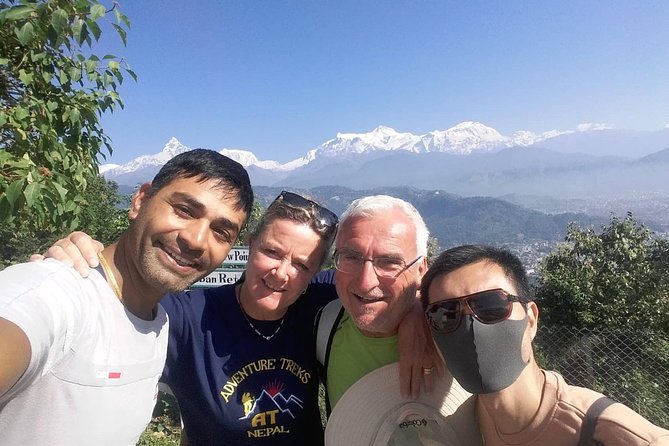
- Private guide attention plus a porter ratio of 2 trekkers to 1 porter for luggage
- All meals included on the trek (breakfast, lunch, dinner) and breakfast in Kathmandu and Pokhara hotels
- Kathmandu UNESCO day 2: Pashupatinath, Boudhanath, Patan Durbar Square, and Swayambhunath
- Poon Hill sunrise stop for close-up range views over Annapurna and Dhaulagiri
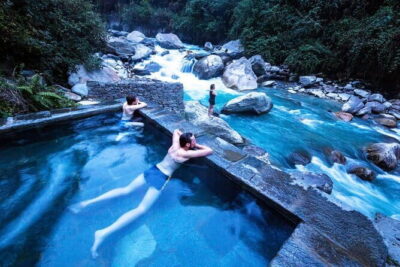
- Jhinu Danda hot springs as a rewarding recovery moment after the downhill trek days
How This Private ABC Trek Actually Runs Day to Day
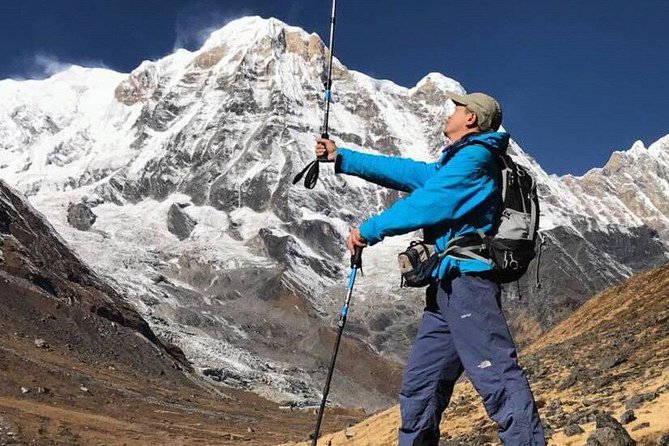
This is the kind of trek that works when you want the mountains but not the spreadsheet. You still walk hard, but you do not have to juggle transport times, permits, or who is hauling what. The tradeoff is you follow a set rhythm, with early starts and scheduled travel between Kathmandu, Pokhara, and the trail.
The tour is private, meaning only your group participates. That matters because it gives your guide real flexibility to tweak the plan, instead of running you through like a conveyor belt. Your guide is English-speaking, and there’s an emphasis on leaving logistics to someone else while you focus on walking, acclimating, and enjoying stops along the way.
Also, the support is practical: porters carry luggage (with a 2 trekkers to 1 porter setup). It will not turn this into a stroll, but it can reduce the “bag drag” feeling on longer hiking days.
More routes into the Annapurna Sanctuary:
- Annapurna base camp trek 5 Days
★ 5.0 · 252 reviews - 14-Day Private Annapurna Base Camp Trek
★ 5.0 · 180 reviews - Annapurna Base Camp Trekking
★ 5.0 · 116 reviews
Price and Value: Is $899 Fair for What’s Included?
At $899 per person for a roughly 14-day itinerary (the program describes it as about 15 days), the value depends on what you usually spend on trekking basics. The big win here is that a lot of the high-friction costs are handled for you.
What you do get for that price:
- Airport pickup in Kathmandu
- 3-star hotel accommodations in Kathmandu and Pokhara, with breakfast
- Teahouse trekking stays including breakfast, lunch, and dinner
- Kathmandu to Pokhara round-trip transport by tourist coach/bus
- An experienced English-speaking trekking guide plus porters
- Permits and paperwork for ACAP and TIMS, plus government and local taxes
What you do not get (and you should budget for):
- Hot water, cold drinks, and bottled or boiled water costs
- Phone calls, laundry, beer and bar bills
- Entrance fees for sightseeing
- Tips for guides and porters
- Extra nights in Kathmandu or Pokhara if timing changes due to mountain conditions
So is it a bargain? It’s not “cheap,” but it is transparent value for a guided, porter-supported ABC trek with meals included on the trek. For many people, the meals and tea-house lodging alone are the difference between a stressful trip and a calm one.
Kathmandu Arrival and Day 2 UNESCO Sites: A Smooth Warm-Up
Day 1: Arrive, get picked up, sleep easy
On day 1, your representative picks you up from Tribhuvan International Airport and transfers you to your hotel in Kathmandu. This is a small detail, but it matters. After a flight, the last thing you want is hunting for a driver, negotiating cash, or trying to decode traffic.
More to compare around Kathmandu
- Everest Base Camp Trek – 14 Days
★ 5.0 · 1,499 reviews - Everest Base Camp Trek
★ 5.0 · 842 reviews - Private Kathmandu Sightseeing Tour | UNESCO World Heritage sites
★ 5.0 · 756 reviews - Kathmandu: 7 UNESCO Sites with Lunch
★ 4.8 · 744 reviews
Day 2: Kathmandu Valley sights, plus trek prep
Day 2 is your cultural reset before the trail. You’ll visit four major UNESCO World Heritage sites:
- Boudhanath Stupa: one of the largest stupas in the Kathmandu Valley
- Pashupatinath Temple: a major Hindu shrine, with ritual life along the Bagmati River
- Patan Durbar Square: palace courtyards, temples, and an on-site museum
- Swayambhunath (Monkey Temple): a hilltop stupa with views over the valley and lots of monkeys
This day also functions as trek preparation in the real-life sense. You’ll be walking around crowded sacred sites, climbing hill steps, and getting used to Kathmandu’s pace. Even if you feel fine on day 1, day 2 helps your body get ready for what comes next.
A practical tip: wear shoes that can handle lots of stone steps and uneven ground. You want comfort now, because you will repeat the step life later in the mountains.
Pokhara Transfer (and why the timing helps)
Day 3: Bus to Pokhara
Day 3 moves you to Pokhara. Your trekking staff pick you up from the hotel around 6:30 am, and you go to the tourist bus station. The bus leaves around 7:30 am.
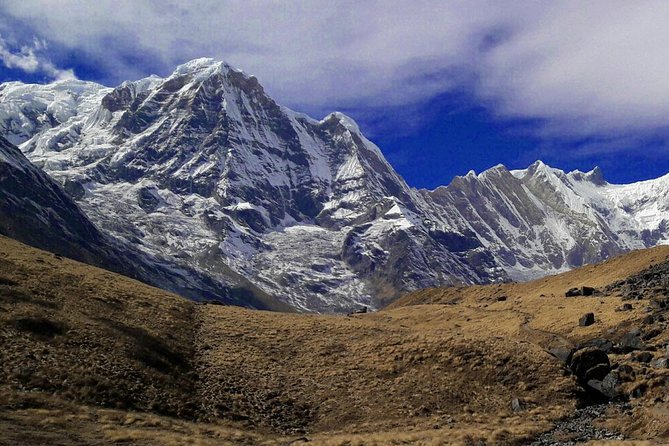
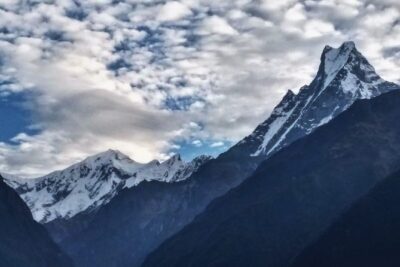
Pokhara is quieter than Kathmandu, and the program positions it as a calmer starting point for the trek. You also get a sense of why people like it here: the region offers panoramic views of Annapurna and Machhapuchhre (the fish-tail shape), plus other ranges like Dhaulagiri and Lamjung Manaslu.
The big value of this transfer day is pacing. You’re not trekking yet, but you are moving into the right zone for your first hike.
Your First Hiking Days: Ulleri, Ghorepani, and the Reality of Early Steps
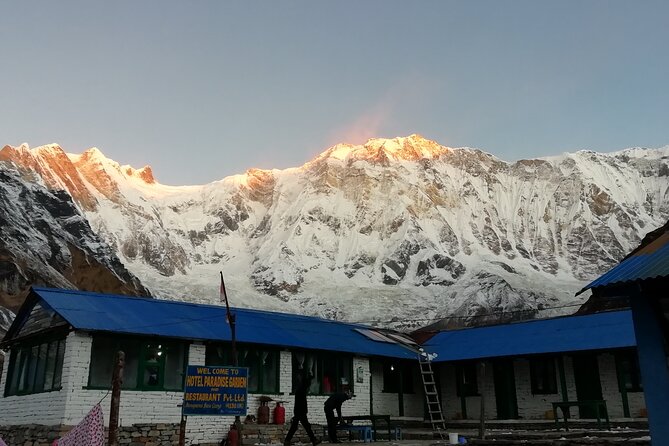
Day 4: Nayapul to Ulleri via Birethanti and the Modi Khola
You begin trekking at Nayapul, after about an hour drive from Pokhara. After a short walk along the banks of the Modi Khola, you reach Birethanti (around 1,015 m). The walk is relatively short and easy by trek standards, which is exactly what you want for day 1 on the trail.
From there the route climbs steadily up the valley side, passing through villages and reaching Hille (about 1,495 m) and Tikhedhunga (about 1,570 m), then continuing toward Ulleri.
This is a classic “legs learning” day. The terrain is manageable, but you’ll feel elevation gain.
Day 5: Ulleri to Ghorepani through oak and rhododendron
Day 5 builds a bit more effort. You start with a steep climb toward Ulleri, then things ease into a gentler ascent. The trek goes through oak and rhododendron forests toward Banthanti and then onward toward Ghorepani (around 2,840 m).
This is where you start noticing that your breathing changes. You might still feel energetic, but your pace will likely become more controlled. That is good. Slow is smart at altitude, and it helps you enjoy the scenery instead of wrestling the body.
Poon Hill Sunrise Day: The Moment You Plan For
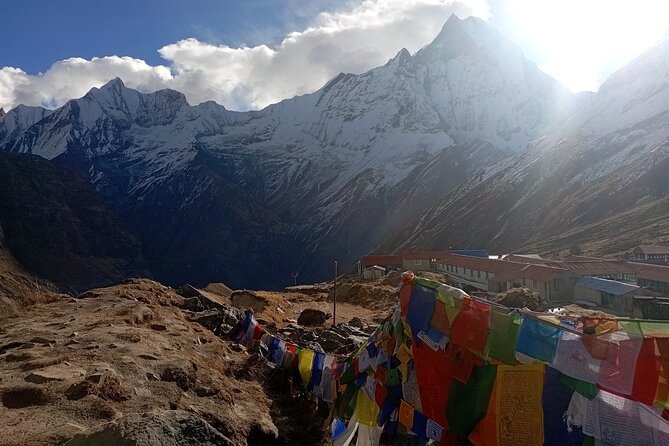
Day 6: Ghorepani to Tadapani, sunrise at Poon Hill
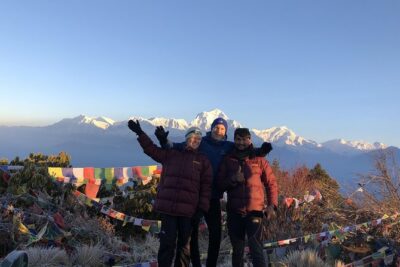
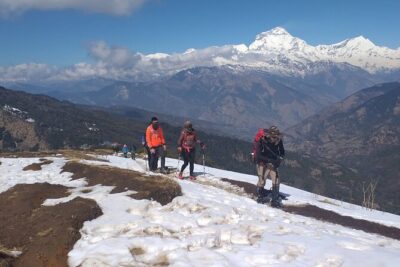
Day 6 is a highlight day. You’ll hike early to Poon Hill (about 3,210 m) to catch sunrise. The reward is close-up views of the Annapurna and Dhaulagiri ranges, plus visibility of places like Mustang and Pokhara, along with views of more than 20 high mountains.
After sunrise, you return for breakfast in Ghorepani, then trek onward toward Tadapani. The route includes a descent through rhododendron forests, with waterfalls along the way, before reaching Tadapani (around 2,700 m).
This day works because it gives you two types of rewards:
- A big payoff view at sunrise
- A calmer trekking section afterward where you can settle into the rhythm
If you hate early mornings, you might resent the alarm. But the payoff is built into the schedule for a reason.
Chhomrong to Dovan: Forests, Suspension Bridges, and Big Valley Feel
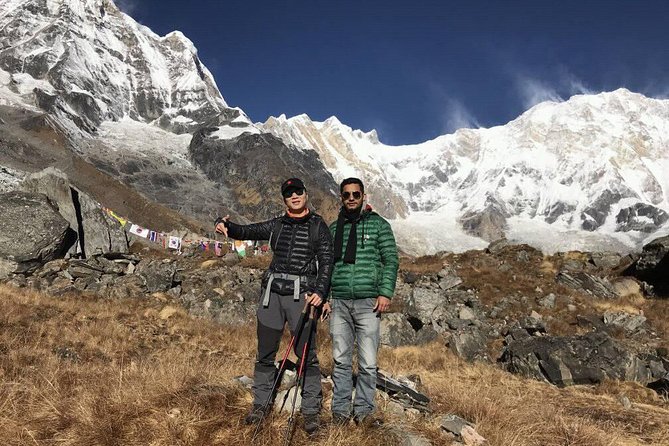
Day 7: Tadapani to Chhomrong
Day 7 starts with a descent through rhododendron forests, then opens into terraced fields. You’ll cross a suspension bridge and keep moving up and down before reaching Chhomrong (around 2,170 m).
Chhomrong sits below the giant Annapurna massif, so the vibe is different than the earlier villages. You feel closer to the core of the region, even if you’re still days away from base camp.
This day has one key tradeoff: you might feel like you’re descending most of the time, but the legs still work. It’s downhill effort, not rest.
Day 8: Chhomrong to Dovan
Day 8 leans into contrast. You’ll pass through a bamboo forest that is damp and cold. Then you climb uphill, and after reaching Himalaya Hotel, the forest opens up again, with sun and views down toward a glacial river.
You’ll also move through a steeper climb toward Hinku Cave, then descend to a river and climb again to Dovan. The route includes views toward Mt. Dhaulagiri, and the vegetation becomes sparser, which can give you that “watch your steps, enjoy the views” feel.
Deurali and Annapurna Base Camp: The Main Event
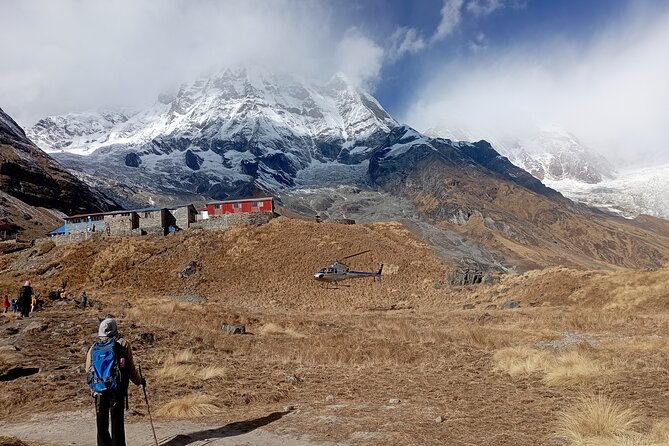
Day 9: Dovan to Deurali
Day 9 is a steady climb along the valley trail. The path sticks to a rocky cliff at times and can be steep. It’s not described as a walk you speed through. Think “steady and focused,” not “see you at lunch.”
Day 10: Deurali area to Annapurna Base Camp
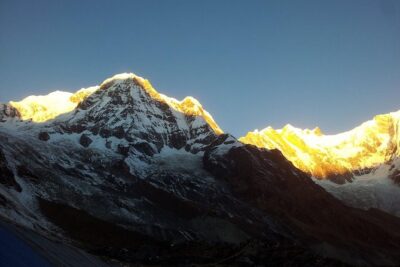
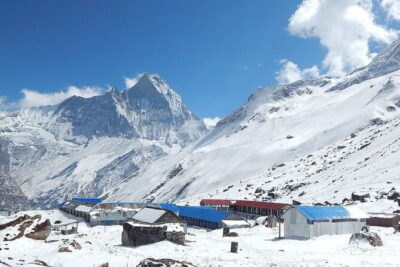
Day 10 is the day you reach Annapurna Base Camp. The schedule notes your trail rapidly ascends to base camp, with enough time set aside for a full trekking day.
This is when the whole trek starts to feel real. Before this, you’re moving through villages, forests, and tea-house routines. After this, you’re tied to the mountain goal. Even if conditions change, this is the day the trip is built around.
The Downhill Work: Bamboo, Chhomrong Steps, and Jhinu Hot Springs
Day 11: Base camp area back toward Bamboo (with a lunch stop)
Day 11 is a longer return day, retracing your steps. You head from the area where you stop for lunch back toward Chhomrong, then continue the steep descent down to the Modi Khola valley, reaching Bamboo overnight.
The program notes the stone steps to Chhomrong can be tricky, and that the descent is not gentle. If you’ve ever watched someone’s pace fall apart late in a trek, this is where it can happen. It also explains why porter support matters earlier. When your pack is lighter, you can focus on foot placement later.
Day 12: Bamboo to Jhinu Danda and hot springs
Day 12 heads to Jhinu Danda (about 5 hours). The best part is the promised recovery: you enjoy hot springs at Jhinu Danda with the hill scenery of western Nepal around you.
Even if the springs are not magic, they give you a mental goal. You’ve earned your soak after the downhill hiking.
Wrap-Up Days: Pokhara Reconnect and Kathmandu Return
Day 13: Trek to Nayapul, then drive to Pokhara
Day 13 is your return to civilization rhythm. You trek to Nayapul, then drive back to Pokhara for the night.
This is a good time to catch your breath, eat a proper meal, and reset your body for the final travel day.
Day 14: Drive back to Kathmandu
Day 14 returns you to Kathmandu by tourist bus. After breakfast in the morning, you take the tourist bus ride, which typically takes 7 to 9 hours.
By the time you land back in Kathmandu, you’ll be tired in a good way, but also ready for a hot shower and a bed that does not feel like it is part of a logistics puzzle.
What Makes This Trek Feel Stress-Free in Practice
The “stress-free” part is not marketing fluff here. It shows up in how your trip is handled.
You get:
- Hotel and trekking lodging organized for you, with breakfasts included at the hotels
- Teahouse meals organized during the trek
- Transport between Kathmandu and Pokhara covered
- Permits and paperwork handled, including ACAP and TIMS
- A guide plus porters who carry luggage so your hiking effort stays on you, not your bag
And there’s a human side too. In the feedback I read from people who did this trek with named guides such as Bishnu Bhatta and Vishnu, the tone is consistent: friendly help, care for comfort, and making the trek easier to enjoy. Some people even highlighted that they were well looked after with meals, including avoiding stomach trouble.
I also like that the itinerary is structured enough to protect you from surprises, but flexible enough for small changes. That balance matters on mountain trips.
Fitness Check: Who This Suits Best, and Who Should Think Twice
The trek requires moderate fitness. Practically, that means you should be comfortable with days that run about 4 to 7 hours of walking, plus early starts.
You’ll likely experience:
- Multiple ascent days (climbs toward ridges and villages)
- Several descent days with stone steps and uneven trail sections
- A day that starts very early for Poon Hill sunrise
- A return day that is mostly downhill effort, not a rest day
If you’re active and can handle long walks and steep parts, you’ll probably find the pace manageable. If you have severe knee issues or you know you struggle with steep descents, you can still try, but you should go in with clear expectations and focus on slow, careful footwork.
Should You Book This Annapurna Base Camp Trek?
I think you should book it if you want a guided, private, well-managed ABC trek with meals included on the mountain and real support for luggage. The Kathmandu UNESCO add-on is a bonus that turns your trip into more than just a walk toward a single destination.
I would hold off if:
- You want to control every logistics detail yourself
- You hate early starts (Poon Hill day is early)
- You know you can’t handle steep step descents without major discomfort
If you do book, plan your budget for the extras that are not included: hot water, drinks, some sightseeing entrance fees, and tips for guides and porters. Also remember that cancellation is free up to 24 hours before the start time, so you have breathing room if plans shift.
FAQ
How long is the Annapurna Base Camp trekking tour?
It runs for about 14 days (approximately 15 days). The schedule is listed across Day 1 through Day 14.
Where does the tour start, and do you pick me up from the airport?
Yes. You’re picked up from Tribhuvan International Airport on Day 1 and transferred to your Kathmandu hotel.
What’s included in the trek meals and lodging?
In Kathmandu and Pokhara, you get hotel accommodation in 3-star category hotels including breakfast. During the trek, you get teahouse accommodation including breakfast, lunch, and dinner.
Is a guide included?
Yes. The tour includes an experienced English-speaking trekking guide, plus porters to carry luggage with a ratio of 2 trekkers to 1 porter.
Do I need to arrange permits?
No. The tour includes all necessary paper work and permits, including ACAP and TIMS, plus government and local taxes.
How do you handle Kathmandu sightseeing?
Day 2 includes visits to major UNESCO World Heritage sites: Boudhanath Stupa, Pashupatinath Temple, Patan Darbar Square, and Swayambhunath.
What is not included in the price?
Not included items include hot water, cold drinks, phone calls, laundry, beer and bar bills, sightseeing entrance fees, and tips for guides and porters.
What level of fitness do I need?
You need a moderate physical fitness level to enjoy this tour.
Can I cancel and get a full refund?
Yes. You can cancel up to 24 hours in advance for a full refund, with cut-off times based on local time.
Latest Kathmandu write-ups
- Langtang Valley Trek★ 5.0 · 3 reviews
- Langtang Valley Trek from Kathmandu★ 5.0 · 3 reviews
- Khopra Danda Trek★ 5.0 · 3 reviews
- 5 night / 6 days Kathmandu Nagarkot Chitwan Pokhara tour★ 5.0 · 3 reviews
- Nepal Highlights Tour: 5 Nights 6 Days Kathmandu & Pokhara Tour★ 5.0 · 3 reviews
- Kathmandu Valley Private Day Tour★ 5.0 · 3 reviews
- Conquer the Himalayas: The Ultimate 16-Day Annapurna Circuit Trek★ 3.5 · 3 reviews
- Kathmandu Heritage Day Tour★ 5.0 · 3 reviews
Annapurna Base Camp Trek, compared.
Browse the lists this tour appears in