
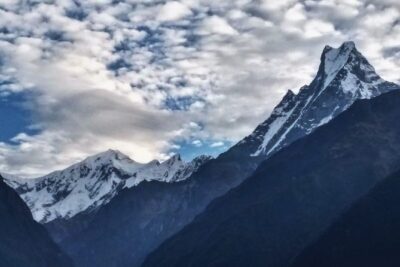
Annapurna Base Camp Trek works because it gives you two kinds of mountain wow: early views from Ghorepani Poonhill and the big finale at Annapurna Base Camp. What makes it especially interesting is the way the route walks through real village life, then gradually pushes you higher until the settlements thin out.
I love that you spend nights in basic teahouses, so each day ends with a chance to warm up, eat simply, and talk with locals. I also like that the trek includes a walk through rhododendron forests around Ghorepani and the Poonhill area in spring.
The trade-off is basic comfort and altitude. You’ll reach 4,310 meters at Base Camp, and the teahouses are straightforward, with toilet and bathroom facilities outside.
Quick Takes Before You Go
- Private-group feel with hotel pickup and drop-off in Kathmandu and Pokhara, so you are not figuring out connections alone.
- Sunrise twice on the route, first from Poonhill, then again from Annapurna Base Camp.
- Rhododendron forest option in spring, especially around Ghorepani and Poonhill.
- A cultural walk through Gurung and Pun villages, with time in and around daily Himalayan routines.
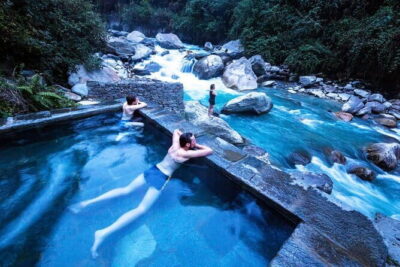
- Modi River hot spring payoff at Jhinu Danda after days of trekking.
- Meals and an English-speaking guide included, while drinks and personal costs are on you.
Why Annapurna Basecamp Trek Feels Like a Real Himalayan Journey
This trek is built around a simple idea: walk through changing terrain, meet communities along the way, then earn your views the slow way. You start with lower village paths and farmland, then climb into forests, and finally reach the high, dramatic zone around the Annapurna range.
What I like most is the rhythm. Some days are viewpoint-focused, others are about steady movement and getting used to the altitude. That mix matters, because it keeps the trip from turning into one long grind of ups and downs without breaks.
You also get a culturally active route. The trail passes through areas inhabited by Gurung and Pun communities, so it is not just a line drawn on a map. You see terraces, forests, and homesteads, and you have time to experience day-to-day life instead of rushing from one photo stop to the next.
More routes into the Annapurna Sanctuary:
- Annapurna base camp trek 5 Days
★ 5.0 · 252 reviews - 14-Day Private Annapurna Base Camp Trek
★ 5.0 · 180 reviews - Annapurna Base Camp Trekking
★ 5.0 · 116 reviews
Price and Logistics, and Why $835 Can Make Sense
At $835 per person for roughly 9 days, this is not a bargain trekking voucher. But it is also not a stripped-down budget experience where you pay extra for every little piece.
Here’s what is included in the value:
- Teahouse accommodation during the trek (with outside toilet and bathroom)
- Transportation transfers linked to the start and finish (Pokhara to Hile, and Jhinu to Pokhara)
- An English-speaking trekking guide, with their wages and expenses covered
- Government taxes and service charges, stated as no hidden costs
- Emergency rescue support, including evacuation and medication help in an emergency
- Hotel/port pickup and drop-off
- Meals included on most days: lunch 9 times, breakfast 8 times, dinner 8 times
What is not included is also clear, and that helps you budget: drinks (bottled water, tea or coffee, cold drinks), personal items, tips for the guide, travel insurance, and anything outside the listed inclusions.
In plain terms, the price feels fair if you want someone experienced to handle pacing, route flow, and safety. It feels less fair if you are the kind of traveler who already knows the trail well, can manage all bookings solo, and does not care about having English-speaking guidance.
Your 9 Days on the Trail: A Stop-by-Stop Reality Check
You will travel from Kathmandu with the trek based on the approach out toward Pokhara first. The route then feeds into the trek proper, with Day 1 starting after a drive and then walking from Ulleri. The best way to prepare is to think of this as a chain of distinct walking days, not one continuous hike.
Day 1: Ulleri via Hile, Jeep First, Then Walking
After breakfast, your guide meets you and you start the journey to Ulleri. The first part runs by private jeep, up to Hile, and then you walk the rest to Ulleri.
This is a good start day because it mixes vehicle time with a real walking segment. You also get to check in at a tea house the same day, which helps if you are carrying layers that you will want to settle into soon.
More to compare around Kathmandu
- Everest Base Camp Trek – 14 Days
★ 5.0 · 1,499 reviews - Everest Base Camp Trek
★ 5.0 · 842 reviews - Private Kathmandu Sightseeing Tour | UNESCO World Heritage sites
★ 5.0 · 756 reviews - Kathmandu: 7 UNESCO Sites with Lunch
★ 4.8 · 744 reviews
Day 2: Rhododendron Forest to Ghorepani
Breakfast first, then you hike toward Ghorepani. This day includes walking through rhododendron forest, and in spring the area can be blooming.
You should expect a forest day to feel different from a high-altitude day. It tends to be greener, cooler under trees, and often more comfortable for pacing. You get lunch at a local restaurant in between, which is a nice reset during a long walking stretch.
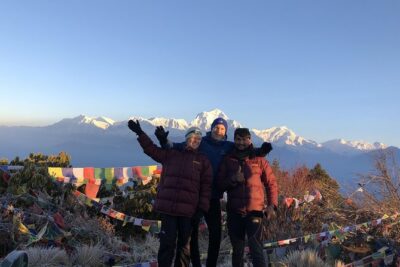
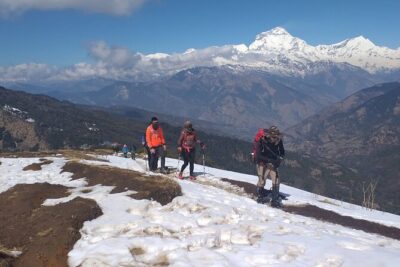
Day 3: Poonhill Sunrise, Back to Ghorepani, Then Tadapani
This is the classic early-morning day. You hike up to Poonhill for sunrise views, then trek back down to Ghorepani for breakfast. After that, you continue toward Tadapani.
Practical tip: start early and keep your layers handy. Sunrise viewing is not just about the view, it is also about the cold. Once you finish Poonhill, the day turns into a steady trekking rhythm rather than a waiting game.
Day 4: Kimrong Khola Down, Chhomrong Up, Then Sinuwa
Today is heavy on up and downs. You hike down to Kimrong khola, then climb up toward Chhomrong, and continue on to Sinuwa.
This is the kind of day that can feel longer than it is because of how often your legs switch from downhill braking to uphill climbing. If you want an experience that stays fun, keep a slow pace and let your guide set the tempo.
Day 5: Modi River Bank Walk, Less View, More Rhythm
Day 5 mostly follows the bank of the Modi river. The itinerary notes that you do not see mountain views on this day, and you finish the night at a simple lodge in Deurali.
This can be a blessing in disguise. When views pause, you get a chance to focus on movement, rest, and acclimatization. It is also a reminder that the trek is more than just photos.
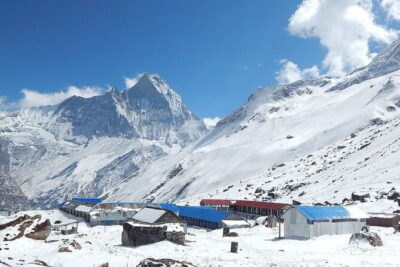
Day 6: Arrive at Annapurna Base Camp, Then Watch Sunset
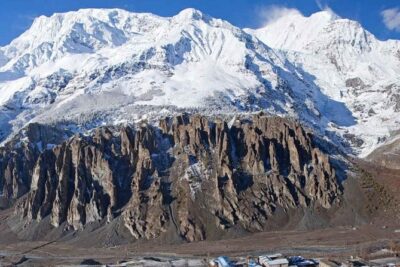
This is the summit day for the route. You walk to Annapurna Base Camp at 4,310 meters, then you catch a sunset view and sleep near the Annapurna Himalayan ranges.
Base Camp is where the trek turns from journey to destination. Even if the weather changes, the overall feeling of being at the foot of the high peaks can be unforgettable.
The practical part: expect cold. Base Camp altitude plus wind can make early evening feel much colder than you planned for, so bring warm layers you actually trust in motion.
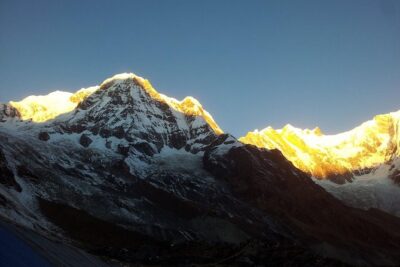
Day 7: Sunrise at Base Camp, Breakfast, Then Down to Bamboo
You wake up early for another sunrise view at Annapurna Base Camp. After breakfast, you walk down the same trail, then continue toward Bamboo for the night.
This is also a smart day. Coming down after a high-altitude peak helps your body adjust, and it lets you enjoy the mountains without stacking another big climb immediately after.
Day 8: Jhinu Danda Descent, Then Modi River Hot Spring
You keep descending toward Jhinu Danda. After checking in, you walk down to the Modi river bank to enjoy the natural hot spring.
This is one of those moments that makes the whole week feel worth it. After days of walking, warm water can help you relax and reset. It is also an easy way to switch your brain from trek mode to recovery mode.
Day 9: Short Walk, Ride Back to Pokhara, End of the Trek
You walk for about an hour and then catch your ride to Pokhara. Your guide leaves you at the hotel and departs, with farewell at the end.
The pace stays light on the final day, which helps you transition back from trail legs to real life. You can use the remaining time to eat, rest, and reflect on what the trek taught you about your own endurance.
The Teahouse Reality: Comfort Level and What to Expect
This trek uses basic teahouse accommodation. The listing-style detail that matters most is that toilet and bathroom facilities are outside.
That sounds simple, but it shapes your whole comfort planning. You will feel the difference between a trek that is comfortable because you planned well, and one that is uncomfortable because you assumed amenities would be easier.
Bring items that make night easier: warm layers, a headlight, and a plan for staying warm after dinner. If you are the type who runs cold, plan for it early, not after you have already climbed all day.
Meals, Water, and Staying Comfortable Without Overpacking
Meals are covered for most days: lunch 9 times, breakfast 8 times, dinner 8 times. That means you can focus on trekking instead of constantly searching for food options.
Drinks are not included. So you should expect to pay separately for cold drinks, bottled mineral water, and tea or coffee. I suggest budgeting for this early, because it is easy to underestimate how much you drink in the mountains.
Also, follow your guide’s advice on hydration and pacing. Even when days do not look too long on paper, altitude and cold can change how your body feels.
Guides, Team Communication, and Why It Matters on a Trek
A strong trek guide does more than lead you on a path. On this route, the guide is also the person keeping your day organized: timing sunrise hikes, coordinating lodge stops, and handling the pace.
Outdoor Himalayan Treks P Ltd. provides a professional and experienced, English-speaking trekking guide. From the names associated with this team, I have seen references to Ram, Dilli, and Tupie, and they come up because people value clear planning and flexible support around real-life needs.
If you want the trek to feel smooth, ask questions before you start. Good communication ahead of time reduces stress later, especially when the plan includes early starts and high-altitude days.
Altitude and Weather: How to Prepare Based on the Known Facts
You reach 4,310 meters at Annapurna Base Camp. That is high enough to make you feel the difference, even if you are fit.
The trek operates in all weather conditions, and the practical advice is straightforward: dress for cold and changing conditions. The recommended packing list is very specific, which is useful because it gives you a reality check about what you might face:
- Down jacket and fleece jacket
- Warm hat and gloves
- Warm socks, trekking boots, and a day-use warm layer
- Thermal under garments and full sleeve clothing
- A water bottle and day bag
- Gortex jacket for weather protection
- Sun and cold creams, sunglasses
- Head light for early mornings
Do not treat sunrise hikes as just a photo event. They are cold starts, and cold eats energy. If you come prepared, you enjoy the view more and suffer less.
Who This Trek Suits Best
This trek suits travelers with moderate physical fitness who want a manageable trekking circuit length and a strong viewpoint payoff.
You will likely enjoy it if you:
- Want both village walking and high mountain goals
- Care about sunrise views and the feeling of reaching a destination
- Prefer teahouses over camping
- Like the idea of a route that includes culturally meaningful stops, not only climbs
You might rethink it if you hate early mornings. Days tied to sunrise at Poonhill and Base Camp require you to move early and stay warm before the sun shows up.
Should You Book Annapurna Base Camp Trek, or Choose Something Else?
I think this is a solid choice if you want a classic Annapurna experience with clear structure, professional guidance, and a route that mixes culture, forests, and high views. The included guide support, transfers, and most meals make it easier to plan, and the itinerary includes a hot spring day that gives you a clear emotional reward.
Book it if you can pack for cold and you are comfortable with basic teahouse comfort where facilities are outside. I would not book it if you need full-service lodging or you expect drinks and personal costs to be included.
If your goal is to see the Annapurna range from multiple angles, spend time in Gurung and Pun communities, and finish with a natural hot spring soak, this trek is a strong match.
Latest Kathmandu write-ups
- Langtang Valley Trek★ 5.0 · 3 reviews
- Langtang Valley Trek from Kathmandu★ 5.0 · 3 reviews
- Khopra Danda Trek★ 5.0 · 3 reviews
- 5 night / 6 days Kathmandu Nagarkot Chitwan Pokhara tour★ 5.0 · 3 reviews
- Nepal Highlights Tour: 5 Nights 6 Days Kathmandu & Pokhara Tour★ 5.0 · 3 reviews
- Kathmandu Valley Private Day Tour★ 5.0 · 3 reviews
- Conquer the Himalayas: The Ultimate 16-Day Annapurna Circuit Trek★ 3.5 · 3 reviews
- Kathmandu Heritage Day Tour★ 5.0 · 3 reviews
Annapurna Base Camp Trek, compared.
Browse the lists this tour appears in