Reviewed · PRIVATE
Discover Nepal’s Treasures: A 9-Day Private Tour
This tour is interesting because it connects two totally different sides of Nepal, big culture in the Kathmandu Valley and serious wildlife time in Chitwan, then finishes with mountain-view mornings in Pokhara and Nagarkot. It is a private 9-day loop with private surface transfers, so you spend less time figuring out logistics and more time actually looking around.
I especially like the way the itinerary groups sights by mood. Kathmandu is handled in one focused day with a mix of Hindu and Buddhist landmarks, then Chitwan is its own world with jungle activities and a Rapti River canoe. A second thing I like is the support level, you get pickup help in Kathmandu and guided sightseeing in the places where you will want context. One drawback to consider is that this is a lot of travel days packed into a short trip, so you will want to be okay with early starts and road time between regions.
Key points before you go
- Private transfers connect Kathmandu, Chitwan, Pokhara, and back to Kathmandu to keep the trip smooth.
- Kathmandu guided day hits Durbar Square, Swayambhunath, Pashupatinath, and Boudhanath in one plan.
- Chitwan jungle time includes a canoe ride on the Rapti River plus naturalist-led wildlife spotting.
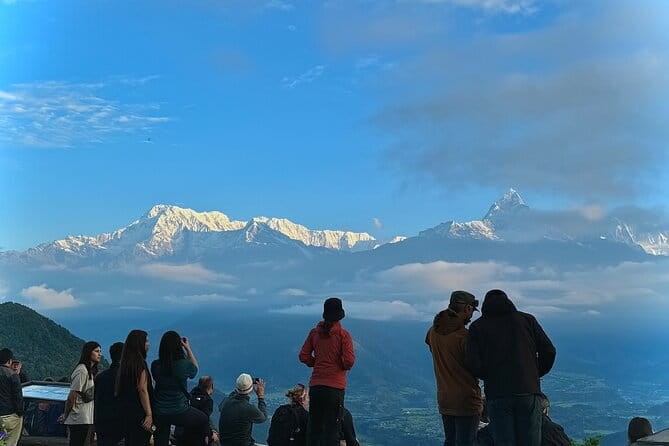
- Pokhara sunrise viewpoint from Sarangkot means you are up early for big views.
- Nagarkot sunset/sunrise area time gives you a final mountain-morning moment before you fly out.
Why this 9-day Best of Nepal loop makes sense for first-timers
If you have 9 days and want real variety, this route makes sense. You are not stuck doing only temples, and you are not stuck only on scenery. You get city sacred sites, a proper wildlife park experience, and two separate vantage points for the Himalayan feel.
The pace is a practical one. Kathmandu day is about understanding Nepal’s religious and royal-era landmarks. Chitwan day is about wildlife and river life. Pokhara and Nagarkot are about views, light, and getting your bearings in the mountains without needing a long trek. That mix is exactly what many first-time visitors want, because it turns Nepal from a list of places into a sequence of experiences.
The private format matters too. When you travel solo, it is easier to manage timing. When you travel as a pair, it still feels personal. Either way, you are not waiting on a bus and you can keep your day moving when the guide says it is a good moment to enter and explore.
More to compare around Kathmandu
- Everest Base Camp Trek – 14 Days
★ 5.0 · 1,499 reviews - Everest Base Camp Trek
★ 5.0 · 842 reviews - Private Kathmandu Sightseeing Tour | UNESCO World Heritage sites
★ 5.0 · 756 reviews
Getting started in Kathmandu: airport meet-and-transfer
Your trip starts with a representative from KJ Adventure Nepal Private Limited meeting you at Tribhuvan International Airport or at your hotel in Kathmandu. That sounds like a small line item, but it changes the first day a lot. You avoid the awkward moment of figuring out who you are supposed to call, what vehicle you should take, and where you are supposed to go with jet lag.
After the meet, you transfer to your hotel. You have 3 nights twin share accommodation with breakfast in a 3-star category hotel in Kathmandu. It is a standard level of comfort for this kind of trip, not ultra-luxury, but enough to reset your body after flights and busy days.
You also get a start time listed for the overall activity: 8:00 am. In practice, this matters because Kathmandu mornings can run quickly, and you want to be awake and ready when your guide meets you for Day 2.
Kathmandu Durbar Square to Boudhanath: one day, two religions, lots of meaning
Day 2 is the Kathmandu heavy-hitter day. You visit four major sites, with guided time and entrance fees included.
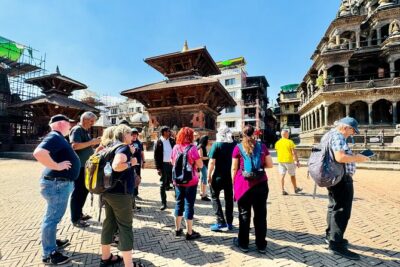
Kathmandu Durbar Square
This is where the old royal heart shows itself. Kathmandu Durbar Square is described as holding ancient royalties, with temples dedicated to Hindu gods and goddess figures. In plain terms, this is one of those places where you can see how power and religion were mixed together over centuries. Even if you are not chasing every carving, walking the square helps you understand why the Kathmandu Valley has such a strong cultural identity.
A practical tip: wear shoes you can walk in for a few hours, and expect stairs and uneven ground. You do not need to sprint, you just need steady steps.
A different sort of day out of Kathmandu:
- Kathmandu: 7 UNESCO Sites with Lunch
★ 4.8 · 744 reviews - Everest Base Camp Helicopter Tour landing at Everest View Hotel
★ 5.0 · 668 reviews - Half day cooking class in Thamel kathmandu
★ 5.0 · 607 reviews - Everest Base Camp Trekking
★ 5.0 · 485 reviews
Swayambhunath
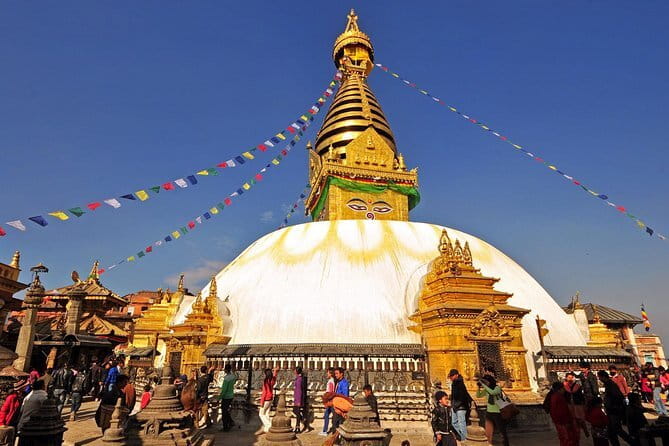
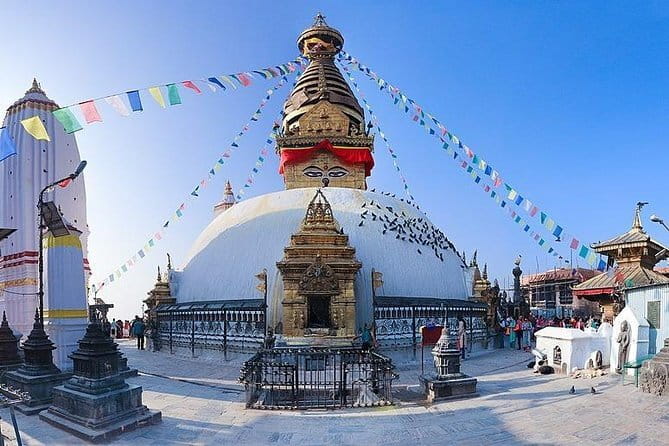
Then you shift to the Buddhist viewpoint of Swayambhunath. It is a stupa on a western hillock, and it is famous enough that you will feel the scale as you climb. The standout here is the symbolism and the old architecture. You are basically standing on a vantage point that has been used for spiritual watching for a very long time.
Bring water, and plan for crowds at peak hours. If you get motion-sick, go slow on the uphill parts.
Pashupatinath Temple
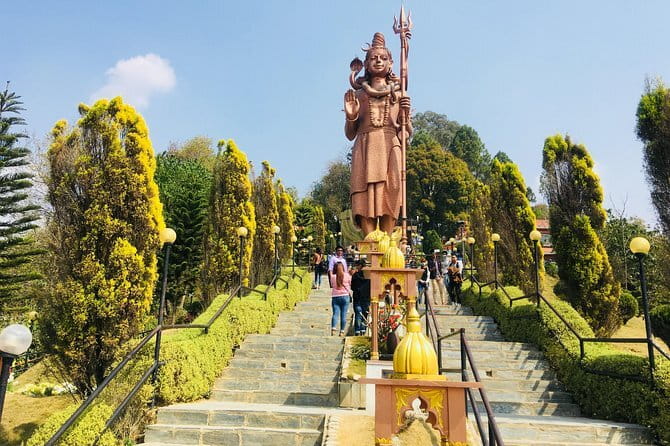
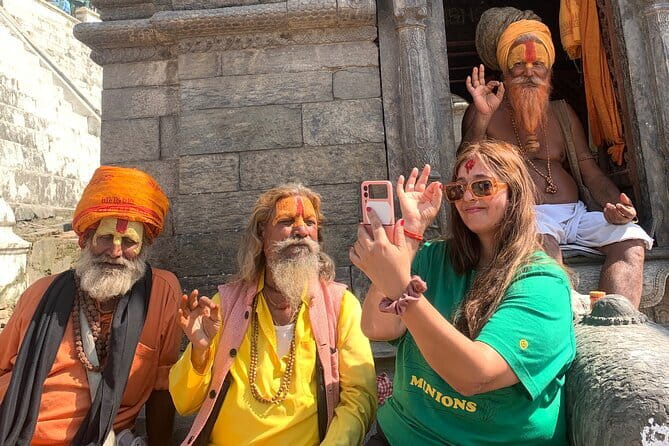
Next is Pashupatinath, one of the holiest Hindu shrines in South Asia. This site is known for lots of Shiva lingam imagery and iconic god and goddess presence. It is also a big reminder that religion in Nepal is not just something you observe from the outside. The place feels active and meaningful.
If you want to respect the setting, dress modestly. Also keep in mind photography can be tricky around certain areas, so follow your guide’s direction.
Boudhanath Stupa
Finally you reach Boudhanath Stupa, described as one of the biggest and oldest Buddhist monuments in the world. This is where the atmosphere shifts again. The stupa has a scale that is hard to explain until you are there, and you can feel why it is a significant Buddhist destination.
This is a great way to end the day because it gives you a calmer visual “pause” after the heavier energy of the Hindu sites.
Admission tickets are included for these stops, and you get an experienced English-speaking guide for Kathmandu sightseeing on Day 2. That guide piece is not a luxury here. At these sites, explanations help you notice what you would otherwise miss.
Chitwan National Park: trading temple hours for real wildlife time
Days 3 and 4 are all about Chitwan National Park. After breakfast on Day 3, you drive about 5 to 6 hours via the Mugling-Narayanghat road. This is not a quick transfer, but it is part of the experience because you leave the city behind and move into the lowland setting.
Chitwan is the reason many people come to Nepal, because it is where wildlife spotting becomes the main event. Your trip includes 2 nights in Chitwan at a twin share hotel arrangement (listed as Green Park Chitwan or similar) with all meals included.
A big value here is that you are not trying to do a half-day safari and call it done. Instead you get a full day of jungle activities on Day 4, with a local English-speaking naturalist guiding the wildlife time.
Canoe ride on the Rapti River plus jungle activities
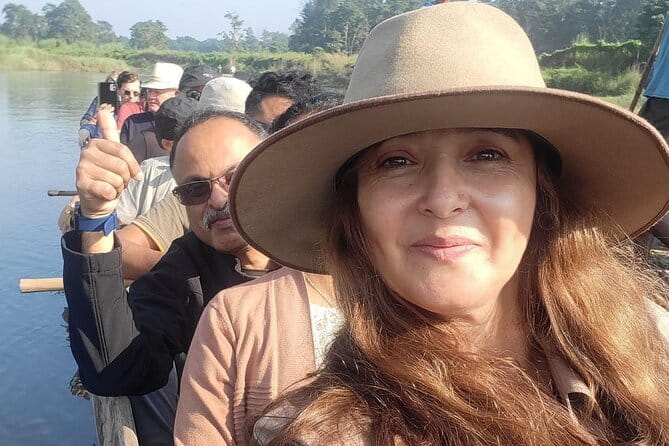
Day 4 keeps it practical. After breakfast, you do a full day exploring the wilderness with jungle activities. A key planned moment is a canoe ride along the Rapti River for bird watching and for looking for rare species, including the Marsh Mugger crocodiles and two rare crocodile species mentioned in the itinerary.
Even if you never see a specific animal, this day is still worth it because the naturalist helps you read the environment. You are learning what to look for, how to spot signs, and how to stay patient during slower wildlife moments.
The other useful piece is the jungle entry fees are included. In a place like Chitwan, fees and rules can turn into annoying delays if you are not organized. Having that handled lets your day stay focused on the activities themselves.
One consideration: this is an outdoors day, so humidity and heat can be real. Bring light layers and plan for getting a bit worn out. Then you sleep in a Chitwan-area hotel and let your body recover.
The road to Pokhara: Prithvi Highway and a different kind of Nepal
On Day 5 you drive from Kathmandu to Pokhara, another 5 to 6 hour road day. The itinerary highlights the Prithvi Highway and notes terraced fields, green valleys, and occasional bazaar scenes along the way.
Pokhara is where the trip starts to feel more relaxed. It is still Nepal, but the atmosphere changes. You get to transition from the intense cultural days into a city that is more about downtime and lake-adjacent views.
You also get 2 nights twin share accommodation with breakfast in Pokhara at a 3-star hotel category. Again, comfort is practical here, not flashy. It is the base for early mornings and sightseeing.
Entrance fees and a guide are included for Pokhara sightseeing on Day 6, which is the day that really matters for viewpoints.
Sarangkot before sunrise: why this timing is worth it
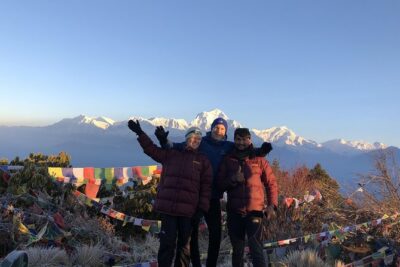
Day 6 is an early start, with an excursion to Sarangkot. It is listed at an elevation of 1,592 meters and is famous for sunrise views. You are going before sunrise because the whole point is that shifting light makes the view feel different, and you typically want a clear window when clouds decide what they are going to do.
This is where the tour nails the classic Nepal “I get it now” moment. When you stand in the right place at the right time, the mountains stop being a postcard and become real scale.
A practical caution: early mornings can be cold depending on season. Wear layers you can adjust. Also, bring cash for snacks if you want them, because the itinerary does not state that food is included beyond the planned meals.
The guide helps here too, not just for finding the viewpoint but for timing and movement so you are not wandering in the dark.
Returning to Kathmandu, then Bhaktapur and Nagarkot viewpoint time
Day 7 is the drive back to Kathmandu. After breakfast, you retrace the scenic route, then you are escorted to the hotel so you can rest and freshen up. In a trip this full, having that return day matters. It gives you mental space before your final heritage and viewpoint day.
Day 8 is a two-part day: Bhaktapur Durbar Square first, then a drive to Nagarkot.
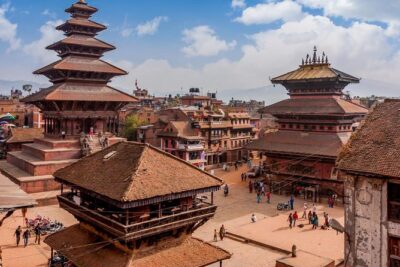
Bhaktapur Durbar Square
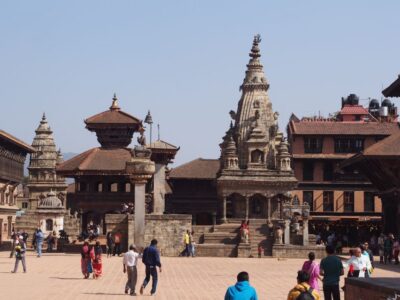
Bhaktapur is described as an ancient city on the eastern part of the Kathmandu valley and known as Nepal’s cultural capital. The sightseeing time is listed as 3 hours, with entrance fees included.
This stop works because it feels more focused and local than Kathmandu’s biggest sites. It is a chance to see another layer of the valley’s old urban design. If you like walking through history with fewer crowds than the biggest hubs, this is the part of the trip that often feels especially satisfying.
Nagarkot
After Bhaktapur, you drive to Nagarkot, described as a popular hill station about 32 kilometers north of Kathmandu. It is known for sunrise and sunset views, and the tour includes 1 night at Hotel Mystic Mountain with breakfast and dinner.
Even if you have already seen sunrise in Sarangkot, Nagarkot is valuable because it gives you another angle and another kind of evening or morning mood, often with a different cloud pattern. Think of it as a second chance at that mountain-light magic.
Farewell dinner and closing the loop back at your meeting point
Day 9 is straightforward: based on your flight time, a representative escorts you to the airport for final departure. The tour ends back at the meeting point, which is listed as Nepali Ghar Hotel, 26 Amrit Marg, Kathmandu 44600.
You also get a farewell dinner included. That matters because it gives you a structured last night instead of scrambling for something near your hotel.
If you are sensitive to travel fatigue, this “finish right” design is helpful. The trip ends with an escort to the airport, so you are not trying to guess timing or navigate a last-minute ride from a different neighborhood.
Price and what you are really paying for: the $1,250 value check
The price is listed as $1,250.00 per person for this 9-day private tour. To judge value, I look at what is included that usually costs extra when you plan yourself.
You get:
- Private surface transfers between Kathmandu, Chitwan, Pokhara, Kathmandu, and Nagarkot
- Twin share accommodations in 3-star category hotels in Kathmandu and Pokhara
- Chitwan accommodation with all meals included
- Hotel Mystic Mountain in Nagarkot with breakfast and dinner
- Entrance fees for Kathmandu and Pokhara sightseeing sites
- Jungle entry fees in Chitwan
- An English-speaking tour guide for Kathmandu sightseeing on Day 2 and Pokhara sightseeing on Day 6
- A local English-speaking naturalist for Chitwan jungle activities
- Farewell dinner
What is not included:
- International airfare
- Nepalese visa fee
- Lunch and dinner in Kathmandu and Pokhara
- Travel and rescue insurance
- Personal expenses
- Tips for guide and driver
That meal gap is the only one that can surprise people. Breakfast is included daily count-wise (listed as Breakfast (7)), and lunch is included 2 times and dinner 4 times, but lunch and dinner in Kathmandu and Pokhara are not included. So you should budget extra for eating in those cities when the itinerary does not cover it.
Overall, the value comes from fewer headaches. Private transfers, guides at key cultural moments, and park logistics bundled into the package can easily outweigh the base price if you would otherwise have to arrange everything after you arrive.
Tour style: private groups, hotels, and the kind of guidance that helps
This is a private tour/activity, meaning only your group participates. That is important in Nepal because sites often have crowd pressure, and having a driver plus guide planning route and timing helps you move efficiently.
Accommodation is standard for many solid midrange trips:
- Kathmandu: 3 nights twin share, breakfast included
- Chitwan: 2 nights twin share, all meals included
- Pokhara: 2 nights twin share, breakfast included
- Nagarkot: 1 night twin share at Hotel Mystic Mountain, breakfast and dinner included
One detail I really like is that guidance is targeted. You get an experienced English-speaking guide for Kathmandu and Pokhara sightseeing on Day 2 and Day 6. That is where interpretation matters most, because the sites are layered with meaning and you will get more out of them with context.
In Chitwan, the plan shifts to local naturalist services for jungle activities. That is exactly the right type of expertise, because wildlife spotting is less about scripted stops and more about reading cues.
From what I have seen in the tour communication style, Kunjan is the name tied to responsive pre-trip planning and on-the-ground support. For a first-time trip, that kind of contact can reduce stress fast.
Who this Nepal tour fits best (and who might want a different plan)
This is a good match if you want:
- A first-time-friendly Nepal overview across the valley, wildlife, and mountain viewpoints
- A trip with built-in guides at major cultural stops
- Private comfort with driver-managed travel days between regions
You might want a different plan if:
- You hate early mornings. You have a sunrise-focused Sarangkot outing.
- You strongly prefer to move slowly with minimal driving. You do have multiple road days.
- You want lots of flexible free time in each city. The itinerary is structured, and the value comes from that structure.
If you are traveling as a couple or a small group, this private format is especially efficient. If you are solo, it can also feel like a safety net, because you have transfers, meeting support, and guides timed to the day’s priorities.
Should you book this 9-day private Nepal tour?
If your goal is to see Kathmandu’s major sacred sites, get a full day in Chitwan, and end with sunrise or early-morning viewpoints in Pokhara and Nagarkot, I think this is a smart booking. The itinerary is tight in a good way: each destination gets the time it needs to matter, and you are not dragging your feet between stops.
The decision hinges on two things. First, you should be comfortable with driving days. Second, plan for extra meals in Kathmandu and Pokhara where lunch and dinner are not included.
If that fits you, then booking makes sense because the logistics are handled for you, and the key days have proper human guidance, not just a list of places to walk past.
FAQ
What is the meeting point and start time for this tour?
The tour starts at Nepali Ghar Hotel, 26 Amrit Marg, Kathmandu 44600, Nepal, with a start time listed as 8:00 am.
Is pickup included for arrivals into Kathmandu?
Yes. You will be received by a representative of KJ Adventure Nepal at Tribhuvan International Airport or your hotel in Kathmandu, and you will be transferred to your hotel.
What places does this 9-day tour cover?
It covers Kathmandu (including Kathmandu Durbar Square, Swayambhunath, Pashupatinath, and Boudhanath Stupa), Chitwan National Park, Pokhara, Bhaktapur Durbar Square, and Nagarkot, with transfers between all locations.
Are entrance fees included for the Kathmandu and Pokhara sightseeing?
Yes. Entrance fees for sightseeing sites in Kathmandu and Pokhara are included.
Are meals included throughout the trip?
Breakfast is included (listed as Breakfast (7)). Lunch (2) and Dinner (4) are included, but lunch and dinner in Kathmandu and Pokhara are not included.
Does the package include international airfare and the Nepal visa fee?
No. International airfare and the Nepalese visa fee are not included. Travel insurance and rescue insurance are also not included.
Latest Kathmandu write-ups
- Langtang Valley Trek★ 5.0 · 3 reviews
- Khopra Danda Trek★ 5.0 · 3 reviews
- Langtang Valley Trek from Kathmandu★ 5.0 · 3 reviews
- 5 night / 6 days Kathmandu Nagarkot Chitwan Pokhara tour★ 5.0 · 3 reviews
- Nepal Highlights Tour: 5 Nights 6 Days Kathmandu & Pokhara Tour★ 5.0 · 3 reviews
- Kathmandu Valley Private Day Tour★ 5.0 · 3 reviews
- Kathmandu Heritage Day Tour★ 5.0 · 3 reviews
- Conquer the Himalayas: The Ultimate 16-Day Annapurna Circuit Trek★ 3.5 · 3 reviews
Private, compared.
Private Kathmandu Sightseeing Tour | UNESCO World Heritage sites
Read our review →