
Reviewed · PASHUPATINATH TEMPLE
Kathmandu: Pashupatinath Evening Aarati Tour Private/Group
Pashupatinath at night is one of those rare places where faith, music, and light all hit you at once. I love the focus on the evening aarti on the Bagmati River, and I also like that you get a proper guided walk through the temple complex before the ceremony starts. One thing to consider: the viewing spot matters, and if your goal is the ritual itself, you should ask early where you’ll stand.
This is timed for late afternoon into early evening, so you’ll get Kathmandu scenery on the drive and then a calm, almost ceremonial pace once you reach the site. The guide does the heavy lifting with explanations of history and religious meaning, and you still get free time to look around at your own speed.
My only caution is simple: don’t assume every spot feels equally good for photos or sightlines. If you feel off-angle or blocked, speak up right away while you still can move.
Key things you’ll notice on this Pashupatinath evening aarti tour
- Late-afternoon pickup in Thamel so you’re not rushing across the city at the last minute
- 1.5 hours to explore with a licensed English-speaking guide before the ceremony
- Bagmati River timing around 6 pm for the main evening ritual
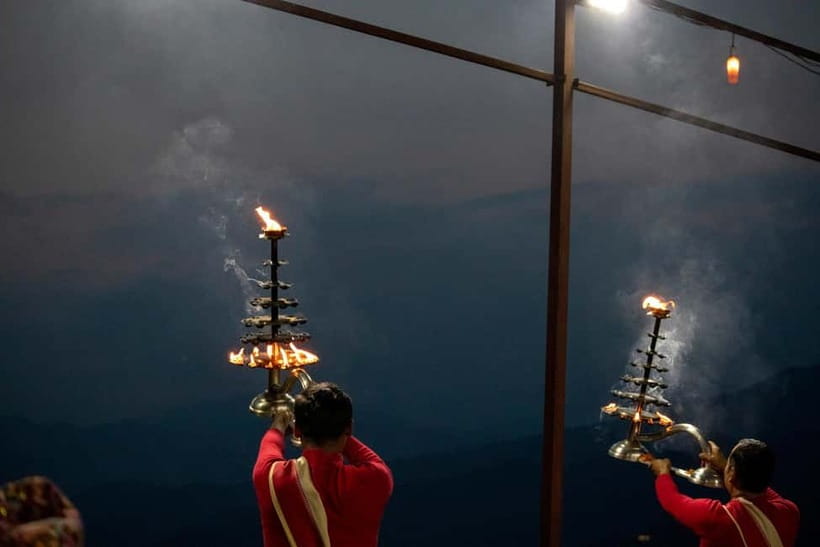
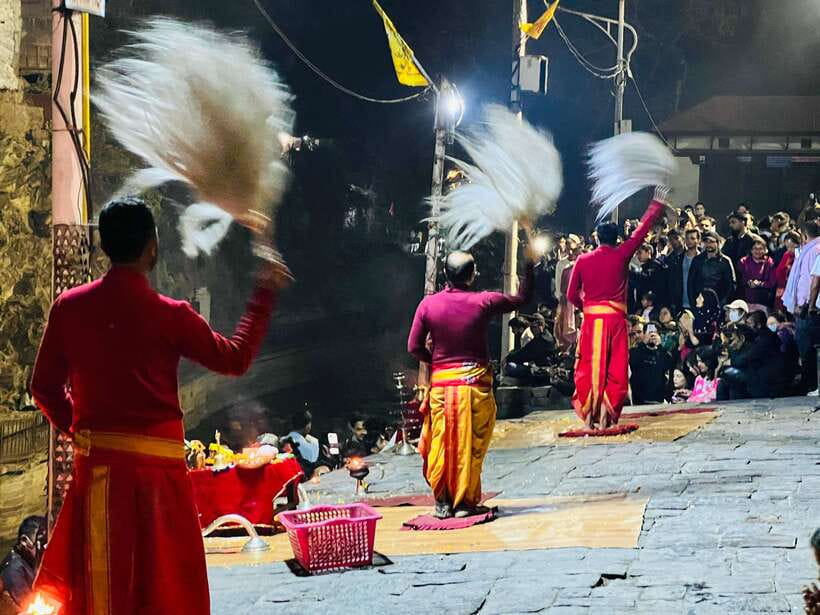
- All the ritual details you expect: bells, chanting, oil lamps, incense, and live devotional music
- Small practical touches like wearing comfortable shoes and bringing cash for what’s not included
- Private group option if you want quieter pacing and more control of your viewing spot
Why the Pashupatinath evening aarti feels so different from day visits
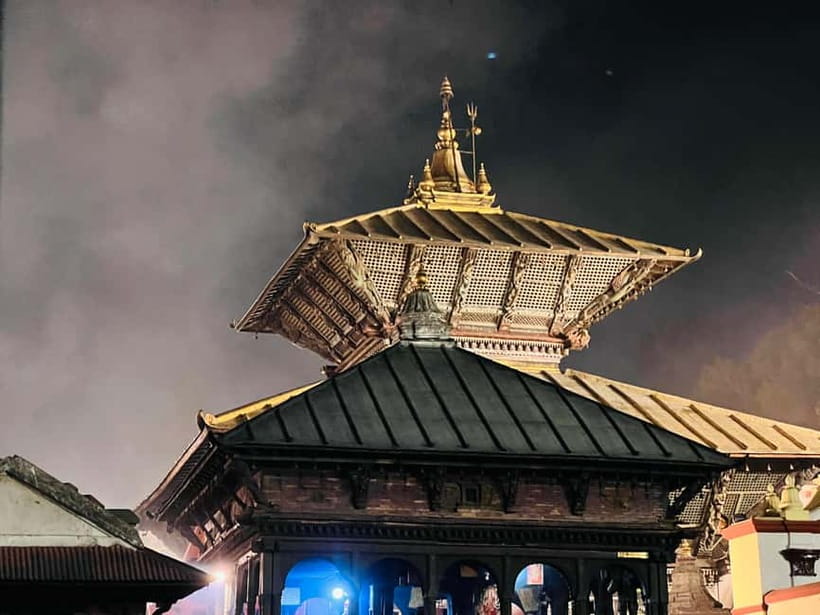
Pashupatinath is famous in Nepal for a reason. In daylight, the temple complex reads like architecture and stonework, with life moving around it. At evening, the place turns into a living ritual space. You watch priests carry out the ceremony in front of the temple, then the atmosphere shifts as the main aarti moves into the riverbank setting.
What makes this experience compelling is that you are not only observing from a distance. You’re given context first. Then you see the ceremony with your senses fully switched on: the sound of chanting and bells, the rhythm of live music, and the flicker of oil lamps that creates a moving pattern on the dark riverbank.
I also like that the tour is designed around a real sequence, not just a quick photo stop. You’ll drive in late afternoon, get a guided orientation, have time to walk, and then settle into the evening rhythm around 6 pm.
The tradeoff is that evening is also when crowds and positioning matter more. If you care about getting a clear view, you’ll want to pay attention to your spot as soon as you arrive near the ceremony area.
More at Pashupatinath:
- Kathmandu Spiritual Sites: Bodhnath & Pashupatinath Tour
★ 5.0 · 185 reviews - Kathmandu: Pashupatinath Temple Evening Aarati Tour
★ 5.0 · 36 reviews - Kathmandu: Pashupatinath Temple Aarti Night Tour
★ 4.8 · 29 reviews
Getting to Pashupatinath: late afternoon drive from Thamel
The tour picks you up in Kathmandu, specifically from Thamel or Thamel Marg (and the operator notes nearby areas too). This is a smart choice. Thamel is where most visitors naturally base themselves, so you’re not spending your precious evening negotiating transport across town.
You’ll leave in the late afternoon and drive to Pashupatinath Temple. The ride matters more than you might think. It’s long enough to switch gears from city noise to a more sacred setting, and the route offers scenic views on the way in.
If you’re traveling with jet lag, this drive is your buffer time. It gives you a chance to settle your nerves and get ready for what’s coming. And it helps you arrive before the big moment, which is key for finding a good viewing position.
The guided temple complex walk: history, significance, and what to watch for
Once you arrive, you’ll start with an on-site guided tour of the Pashupatinath complex. The visit includes guided exploration, plus free time later. The guided portion is listed as about 1.5 hours.
This is where the tour becomes useful, even if you’ve read about Pashupatinath before. A guide can point out what you should actually look for, like how the temple functions as a major Hindu shrine and how it fits into the religious significance of the area around the Bagmati.
You’ll get explanations about:
- History and religious meaning
- Architectural beauty in and around the temple complex
Here’s my practical advice: during this guided time, ask one or two questions early. You’ll get more out of the later ceremony when you understand what the priests are doing and why the ritual format looks the way it does. It’s also a good time to clarify any sensitivities.
One real-world consideration: the broader Pashupatinath site includes areas where cremation takes place. If you’re specifically focused on seeing the ceremony without that side of the complex, tell your guide early and ask where you will be positioned for the main ritual viewing. Being direct helps you stay aligned with your comfort level.
Free time inside the complex: use it for orientation, not just wandering
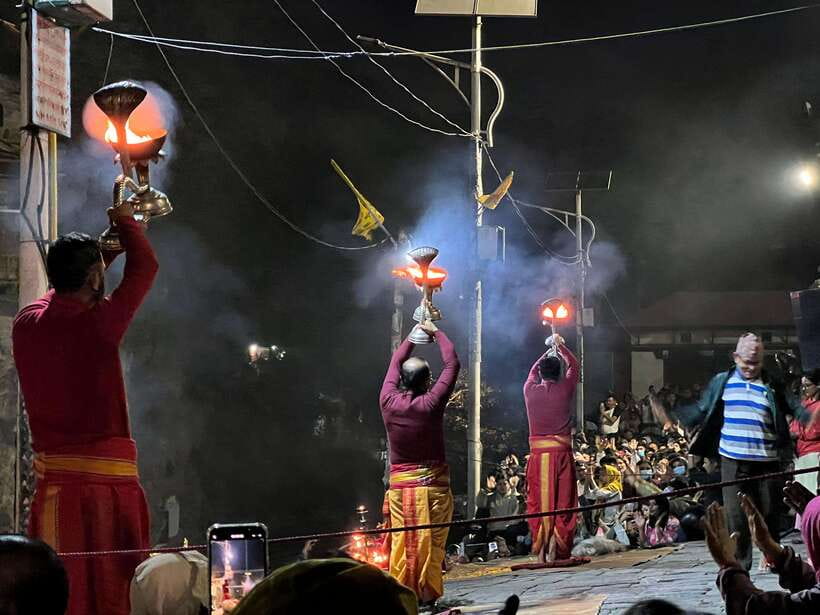
After the guided walk, you’re given free time to explore on your own and enjoy the atmosphere. Use this time to:
- Refine your bearings so you’re not guessing where to go at 6 pm
- Take photos in daylight-like conditions if you want crisp shots of temple details
- Walk slowly and notice how visitors move through the complex
You might also find that the emotional tone shifts as the evening progresses. Some people find it calming. Others find it intense. Either way, having free time lets you regulate your own pace instead of being pulled along like a checklist.
More to compare around Kathmandu
- Kathmandu: 7 UNESCO Sites with Lunch
★ 4.8 · 744 reviews - Everest Base Camp Helicopter Tour landing at Everest View Hotel
★ 5.0 · 668 reviews - Kathmandu: Local Women-Led Nepali Cooking & Momo Class
★ 4.9 · 360 reviews - Manaslu Circuit Trek
★ 5.0 · 292 reviews
The main event at 6 pm: evening aarti on the Bagmati River
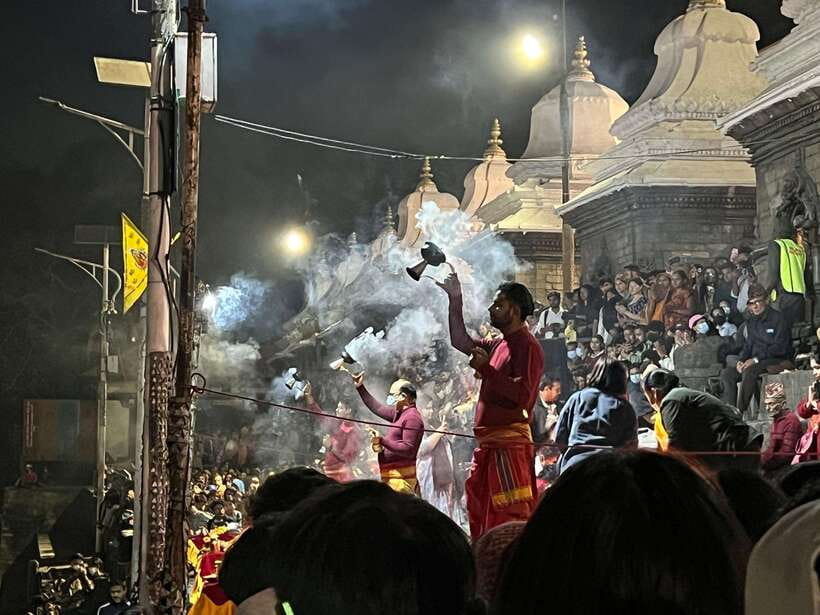
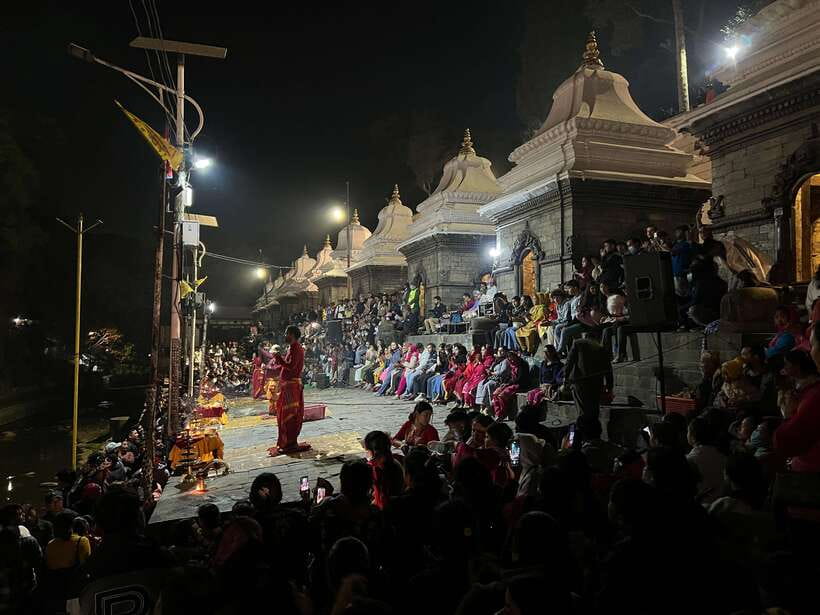
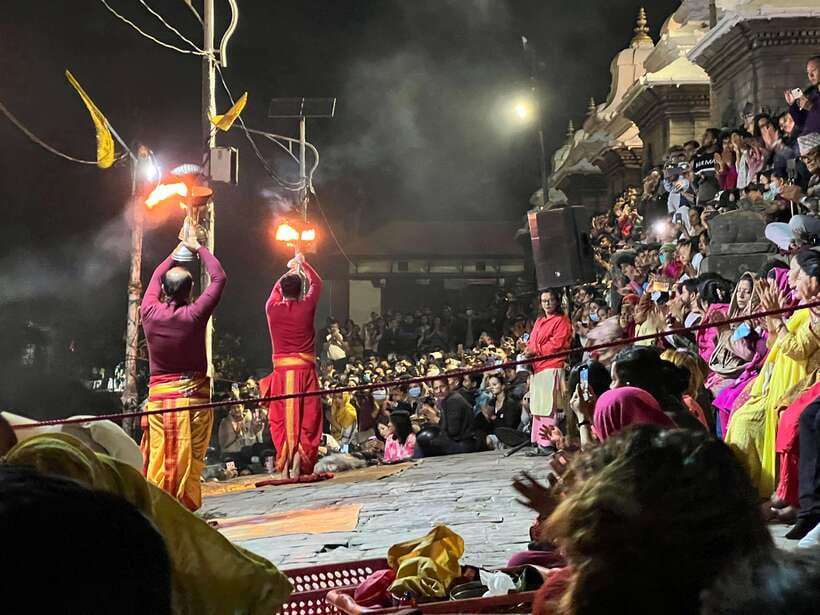
Around 6 pm, the evening aarati begins on the eastern bank of the Bagmati River. This is the core reason to book.
What you’ll experience is a combination of ritual action and sound that builds momentum. The ceremony is described as including:
- Chanting of Vedic mantras
- Rhythmic ringing of bells
- Priests waving oil lamps in intricate patterns
- Burning incense
- Live music with classical instruments and devotional hymns
Then the setting itself does the rest. The riverbank turns into a scene of flickering lights and moving reflections. The air takes on the thick, sensory feel of incense and ritual sounds. You’re not just watching something symbolic. You’re standing inside a live moment of devotion.
How to get the best view (and avoid regrets)
- Arrive at the viewing area early and settle in.
- Watch how the people around you are standing, then adjust your own position if needed.
- If your view is blocked or the angle is wrong, ask your guide quickly. One guide may suggest it’s a good spot, but the best answer is the one that matches your goals for seeing the lamps and hearing clearly.
I’ll also add this from experience with different guiding styles: guides vary in how much they explain during the ceremony. If you happen to be led by someone like Amrit, you’ll likely get strong context and clear answers while you’re there. That extra interpretation can make the lights and music feel less like noise and more like language you can follow.
Photos, sound, and comfort: small choices that make a big difference
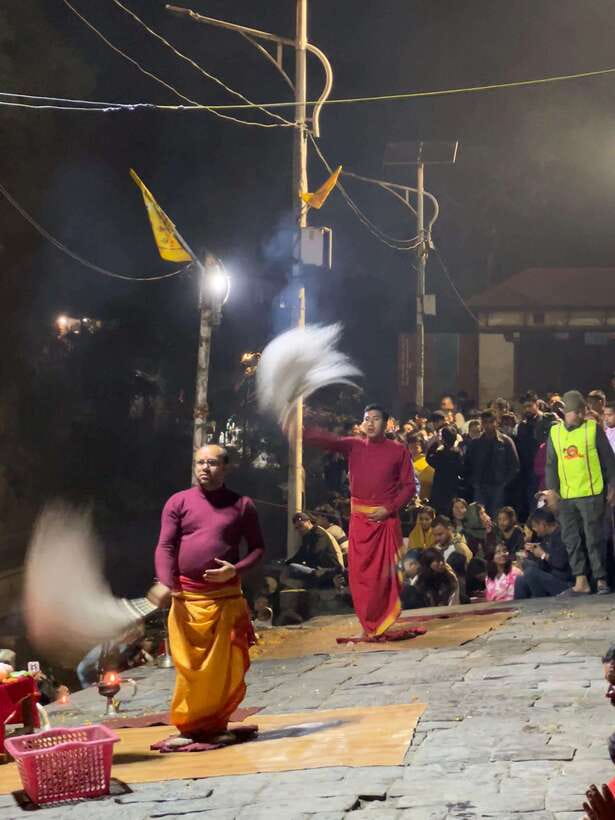
This tour is 2 to 3 hours total, so you don’t have a lot of downtime. You’ll do walking, standing, and waiting around a ceremony that starts around 6 pm. So plan your body and your gear.
Bring:
- Comfortable shoes (you’ll be standing and walking on uneven surfaces)
- Camera if you want to capture the lamps and the ceremony moments
- Cash (entry fees are not included, and you may want cash for small onsite needs)
Also, expect that the ceremony is sound-forward. Bells, chanting, and live music are part of the experience. If you’re trying to record everything on your phone without looking up, you can miss the best part. I recommend doing a quick sweep with your camera, then put it down and watch for the lamp patterns. That’s usually the moment you’ll want again later, even if you’ve already filmed it once.
Return to Kathmandu: finishing on an emotional note
After the aarti, you head back to Kathmandu. The tour includes transportation back to your hotel, so you’re not left figuring out rides in the dark after a spiritual and sensory-heavy evening.
This return transfer is more than convenience. It helps you decompress. You’re likely to feel moved, and the ride back gives you space to re-enter regular Kathmandu life without immediately scrambling for transit.
Price and value: why $22 can be a good deal if the timing works
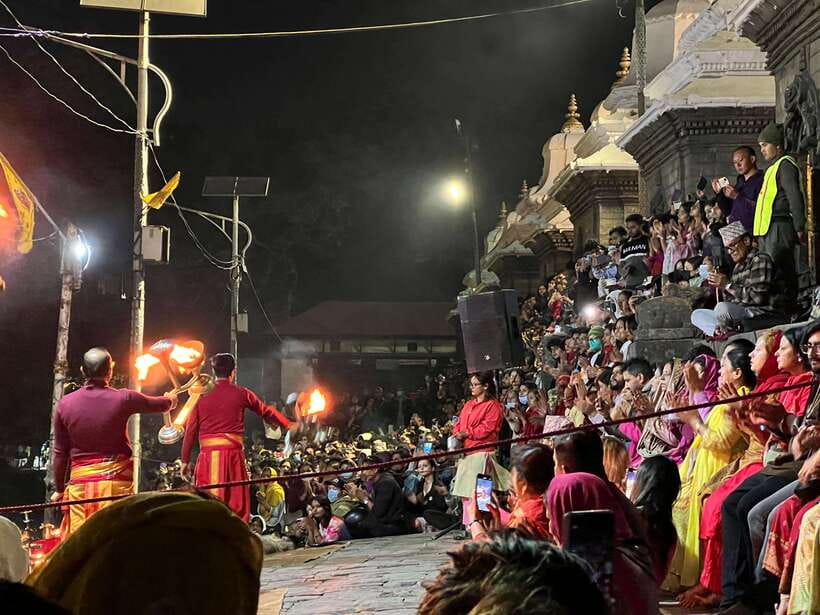
At around $22 per person for a 2 to 3 hour experience, the value depends on two things: what you get included and what you care about.
Here’s what’s included:
- Hotel pickup and drop-off (from Thamel or nearby)
- Transportation to and from Pashupatinath
- Licensed English-speaking guide
- All taxes and service charges
What’s not included:
- Entry fees
- Food and drinks
For many visitors, the biggest value is the guide plus the timing. Pashupatinath is not just a “see and leave” site. The ceremony is happening on a schedule, and your ability to understand what you’re seeing improves when someone explains the meaning and guides where you should be.
If you’re already in Thamel and you want someone else to handle the timing and logistics, $22 can feel fair. If you’d rather self-guide, you might pay less for transport. But you’d be losing the guided context and the structured move into the 6 pm aarti window, which is really the heart of this outing.
Who this tour is best for
This fits well if you:
- Want to see one of Nepal’s best-known Hindu ceremonies in a structured way
- Like guided context, then prefer to spend time looking on your own
- Are staying around Thamel and want an easy pickup
- Want a private group option for more control over pacing and seating
It may be less ideal if you:
- Need wheelchair access (this tour is listed as not suitable for wheelchair users)
- Are traveling with very young children or babies (it notes not suitable for babies under 1 year and children under 5, plus children under 2)
- Want a fully hands-off experience where you do not need to stand and wait for positioning
If you’re sensitive about what’s visible in the broader complex, speak up early. Ask your guide where you will stand for the main ceremony portion, and confirm your comfort level before the ritual starts.
Should you book the Kathmandu Pashupatinath evening aarti tour?
Book this tour if your priority is the evening aarti and you want a smooth way to get there with a guide who can explain what you’re seeing. The package is built for convenience in Kathmandu, and the ceremony itself is the kind of moment you remember because it feels like a live ritual, not a staged show.
Skip it or at least adjust your expectations if:
- You’re extremely picky about viewing angles and want guaranteed perfect sightlines. Even with a guide, you may still need to reposition.
- You want to focus only on the ceremony and not the rest of the complex. You can still do that, but you should tell your guide what you care about so they can place you better during the walk and riverbank viewing.
If you do book, come with two attitudes: be curious during the guided temple time, and be proactive about your viewing spot near the river as the ceremony begins. That’s where your experience is won or lost.
FAQ
How long is the Pashupatinath evening aarti tour?
It runs about 2 to 3 hours total.
Where does pickup happen in Kathmandu?
Pickup is available from Thamel or Thamel Marg, and the tour notes it may also include nearby pickup areas.
What happens during the tour before the evening ceremony?
You’ll drive to Pashupatinath, meet your licensed English-speaking guide, get a guided visit of the temple complex (about 1.5 hours), then have free time to explore.
When does the evening aarti start, and where is it held?
The evening aarti begins around 6 pm on the eastern bank of the Bagmati River.
Are entry fees and food included?
Entry fees, food, and drinks are not included.
Is the tour suitable for children or wheelchair users?
The tour is not suitable for wheelchair users. It also lists that it is not suitable for babies under 1 year and children under 5 (including children under 2).
Latest Kathmandu write-ups
- 16 Days Island Peak Climbing With Everest Base Camp Private Trip★ 5.0 · 3 reviews
- 15 Days Round Annapurna Trek with Poon Hill from Pokhara★ 5.0 · 5 reviews
- Private Nepal round trip including Ghorepani Poonhill trek★ 5.0 · 3 reviews
- Everest Base Camp Trekking 16 Days★ 4.0 · 7 reviews
- 14 Days Luxury Annapurna Base Camp Trek★ 5.0 · 6 reviews
- Everest Base Camp Trek★ 5.0 · 32 reviews
- Everest Base Camp Trek★ 5.0 · 87 reviews
- Everest Base Camp Trek★ 5.0 · 97 reviews
Pashupatinath Temple, compared.
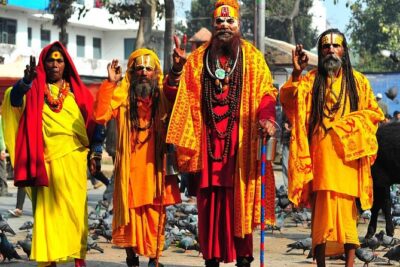
Kathmandu Spiritual Sites: Bodhnath & Pashupatinath Tour
Read our review →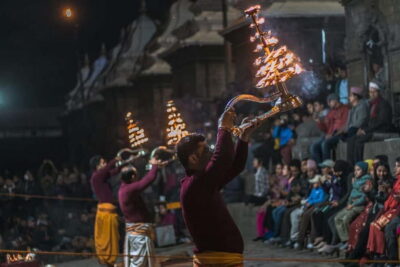
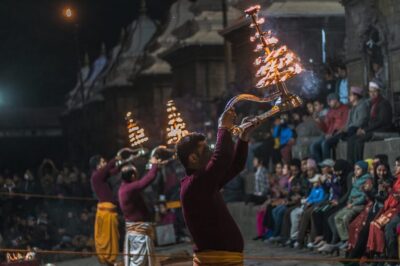
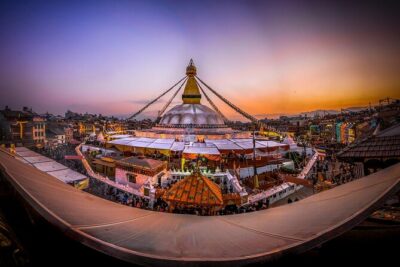
PashupatiNath and BoudhaNath – Private/Small Group
Read our review →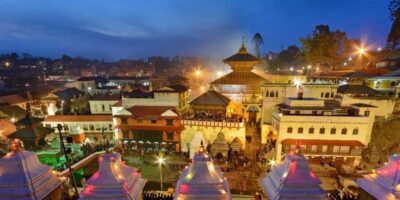
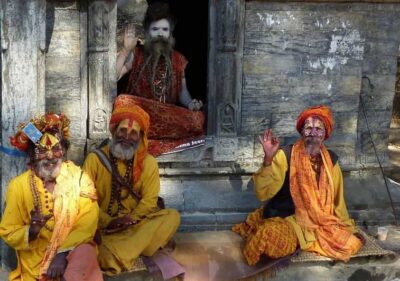
Pashupatinath: Evening tour of temple and Aarati ceremony
Read our review →Browse the lists this tour appears in