
Reviewed · THAMEL
Kathmandu: Wood Carving Workshop with Local Artisan (Thamel)
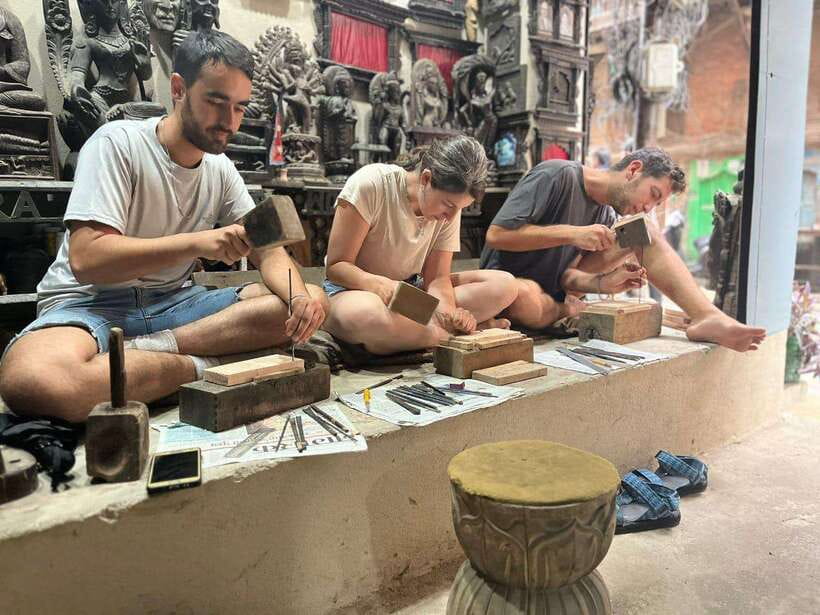
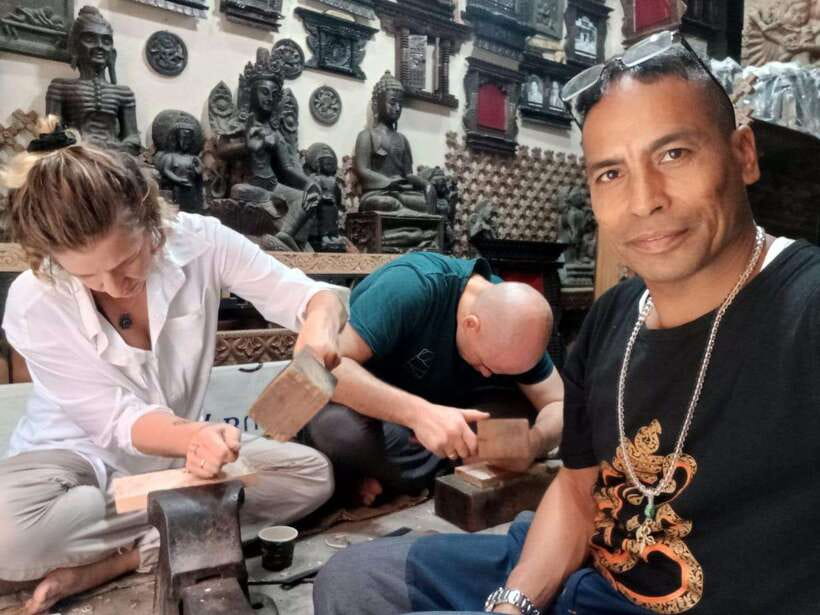
A wood carving workshop in Thamel is interesting because it turns Kathmandu’s carved temples into something you can touch, with your own hands doing the work. I love the small-group setup, and I love that you learn directly from a local artisan named Hera, with step-by-step corrections as you carve.
I also like that you finish with a real keepsake you made, not a generic souvenir. One possible drawback to consider: you’ll need to focus for the full 3 hours, and comfortable clothes help, since you may get some wood dust and wear from carving.
Key things to know before you carve in Kathmandu
- Small group of up to 4 means more attention while you learn.
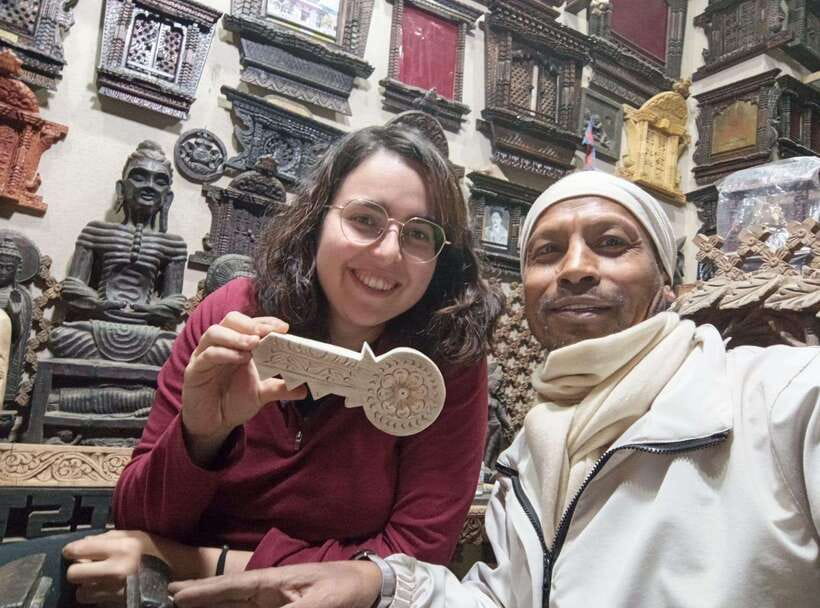
- English instruction with a local artisan, including teaching styles like Hera’s warm, funny, encouraging vibe.
- Tool and material support included, so you can start carving without hunting anything down.
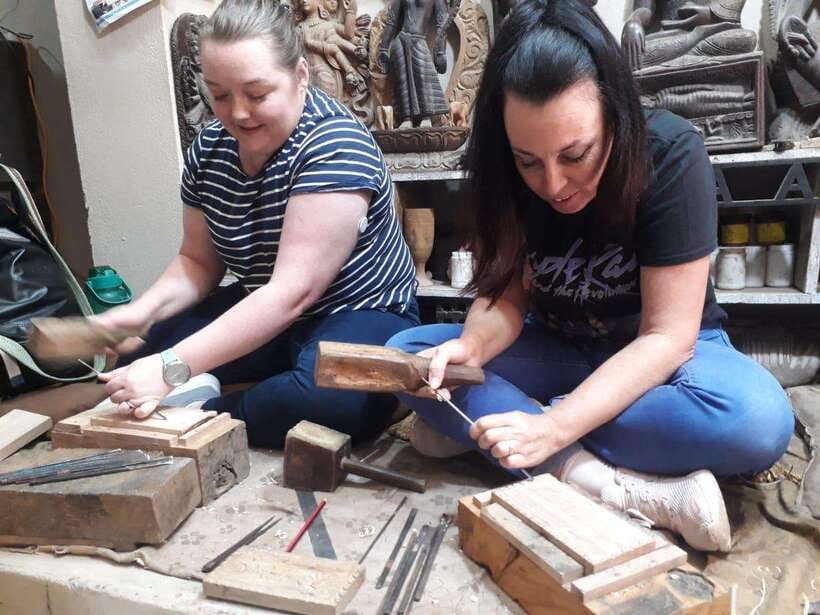
- Learn by doing: outlining, chiseling, and detailing on a pre-cut wooden block.
- Symbolic Nepal designs inspired by Hindu and Buddhist motifs, like lotus flowers and mandalas.
- Take your piece home as a personal souvenir you can actually point to later.
A hands-on workshop that feels connected to Kathmandu’s buildings
Wood carving in Kathmandu is not just craft class stuff. It is tied to the way the valley looks, especially on temple fronts, palace details, and architectural wooden elements. When you carve your own piece here, you’re basically translating centuries of design language into a shape you can hold.
You start with a guided introduction to the tools and the wood, then you move into carving. That order matters. First you learn how the chisels behave, how to control the cut, and how to avoid rushing. Then you earn the right to make decisions about your design.
You’ll get the cultural context too, not just technique. The craft is described as dating back to the Licchavi period (4th-9th century), then flourishing under the Malla dynasty (12th-18th century). The Newar community of the Kathmandu Valley is credited with preserving and mastering the art, and you can see their work in places like the Kasthamandap (House of Wood), Bhaktapur’s 55-Window Palace, and the Peacock Window.
If you like travel that has a “why,” not just a “what,” this class works because it links your hands to Kathmandu’s landmarks.
More that starts in Thamel:
- Half Day Cooking Class in Thamel with Local Market Visit
★ 4.5 · 6 reviews - Kathmandu: Guided Food/ Drink Tasting walking Tour in Thamel
★ 5.0 · 4 reviews - Thamel Rickshaw tour
★ 4.7 · 3 reviews
Price and time: what $42 buys in real workshop terms
At $42 per person for a 3-hour class, you’re paying for a focused, guided session with small-group teaching. The key part is that it’s not a quick demo. You practice carving steps like outlining and detailing, with corrections along the way.
Value-wise, the inclusions matter. You get all necessary tools and materials, plus a handcrafted wooden piece to take home. Taxes and VAT are also included in the price. That means you are not quietly hit with add-ons mid-class.
The timing is also friendly. Three hours is long enough to learn a sequence and finish something satisfying, but short enough to fit into a normal Kathmandu day. It also helps if you’re balancing temple visits with other plans.
One more detail to keep in mind: small group means the class can feel different depending on season. If you book in the off-season, you might end up with a one-on-one class, which is a huge boost for beginners or anyone who wants extra coaching.
The workshop flow: tools first, then your block in your hands
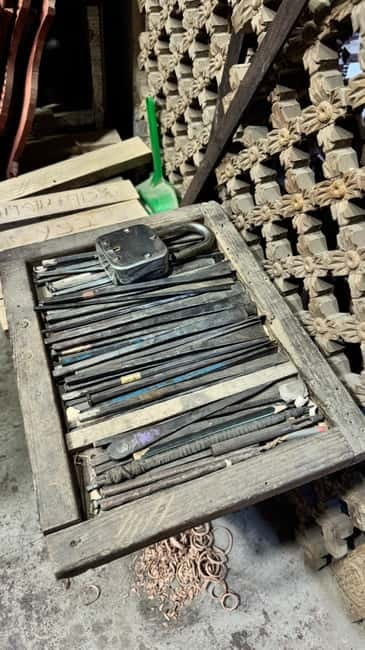
Your session typically starts in the workshop with an overview. You learn about the traditional tools used for wood carving, including chisels and hammers, plus how patterns guide the work. You also get introduced to the kind of wood commonly used in Nepal, such as sal and teak. Even if the exact wood type varies, the principle stays the same: different woods carve differently, and the instructor helps you learn that quickly.
Then comes the part you’ll remember, outlining. You start on a pre-cut wooden block and transfer or choose a design approach. Outlining teaches control. If you press too hard early, you can damage the surface. If you undercut, you lose the crisp boundaries that make detailing look clean.
After outlining, you practice chiseling. This is where the class becomes skill-building rather than just crafting. You learn how to angle the chisel, how to take controlled bites, and how to keep moving in a way that reduces mistakes.
Finally, detailing. Detailing is slower, and it is also where your carving starts looking like “a piece,” not just “a block with grooves.” The instructor offers tips and corrections as you go, which is especially helpful if you are brand new.
The workshop setting is described as serene, which is great in Kathmandu, where the city can feel loud and fast. Having a calm, focused space for 3 hours is part of the value.
Motifs and meaning: lotus, mandalas, and myth inspired carving
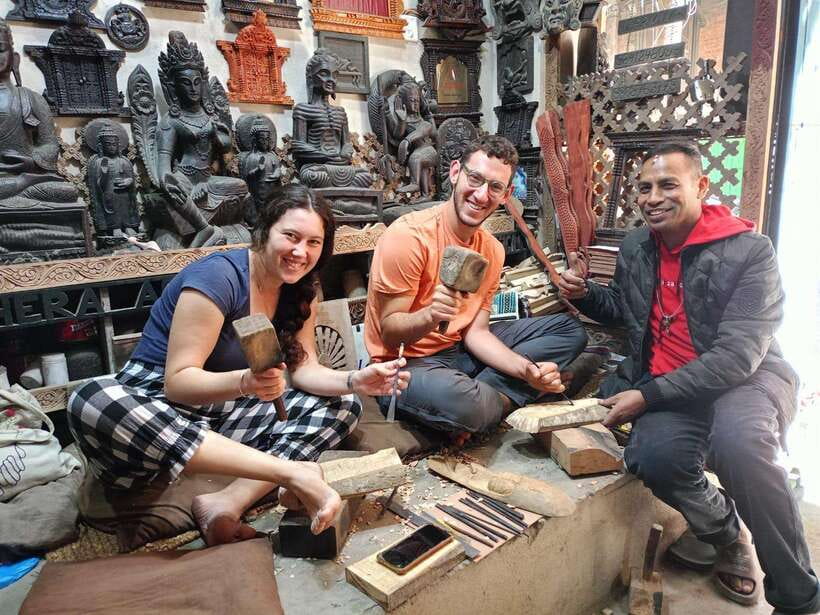
This class treats design as more than decoration. Nepalese wood carvings often carry symbolism, inspired by Hindu and Buddhist iconography. That means motifs show up with meaning, not random aesthetics.
You might look at common motifs like:
- Lotus flowers
- Mandalas
- Mythical creatures
- Symbolic patterns
The instructor also demonstrates basic carving techniques in the context of these designs. So you’re not only learning how to cut, you’re learning why certain shapes appear on temples and traditional architecture.
Here’s the practical takeaway for you: once you understand a motif’s role, your carving feels more intentional. Even if your first attempt is simple, you’re building something with a cultural logic behind it.
You also get a clearer sense of where the style comes from. The timeline matters here. Early carving traditions developed during the Licchavi period, and later refinement flourished during the Malla dynasty. Then the Newar community became a key preserver and master of the craft in the Kathmandu Valley. Even if you don’t memorize dates, you can feel the continuity when your instructor points out patterns and design rules that show up across historic sites.
If you want a souvenir that connects to the place, this is the advantage of learning the symbolism, not just the tool moves.
More to compare around Kathmandu
- Kathmandu: Local Women-Led Nepali Cooking & Momo Class
★ 4.9 · 360 reviews - Kathmandu: Traditional Momo Making Class & Pickup
★ 4.8 · 60 reviews - Kathmandu: Local Women-Lead Nepali Cooking & Momo Class
★ 4.9 · 45 reviews - Kathmandu: Local Lead Nepali Cooking & Momo Making Class
★ 4.9 · 40 reviews
Meet Hera: why the teaching style makes beginners comfortable
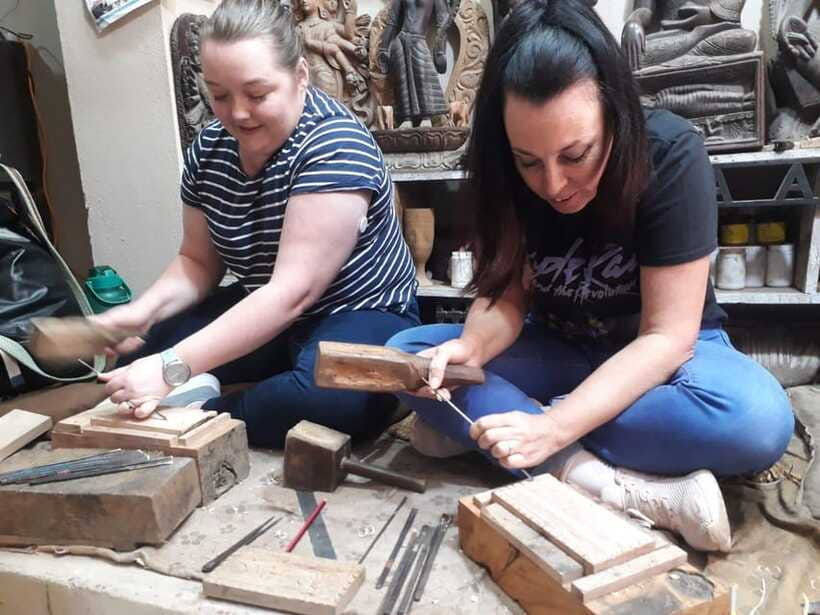
A big reason this workshop earns such high praise is teaching quality. The instructor you might work with is often named Hera, and his style comes across as warm, kind, funny, and encouraging. That matters because wood carving has a steep learning curve if you’re self-taught.
Hera’s guidance is described as step-by-step, with tips and corrections. That kind of coaching helps you avoid the two most common beginner problems:
1) carving too aggressively, which makes edges messy
2) hesitating too long, which can dull your confidence and flow
The class also works for different ages and ability levels. One family did it with a ten-year-old, and the guide was patient and helpful. That suggests the workshop can be a good choice when you want a structured activity that doesn’t just involve watching.
There is one watch-out. If you’re the kind of person who wants a longer explanation about the craft’s history and cultural context, you might find yourself wanting more than what’s provided during the carving time. The lesson definitely includes history and significance, but the center of gravity is still practical carving.
Still, if you want to leave feeling proud of what you made, the teaching approach is a major reason to book.
Your take-home piece: what you’ll carry, and how to treat it
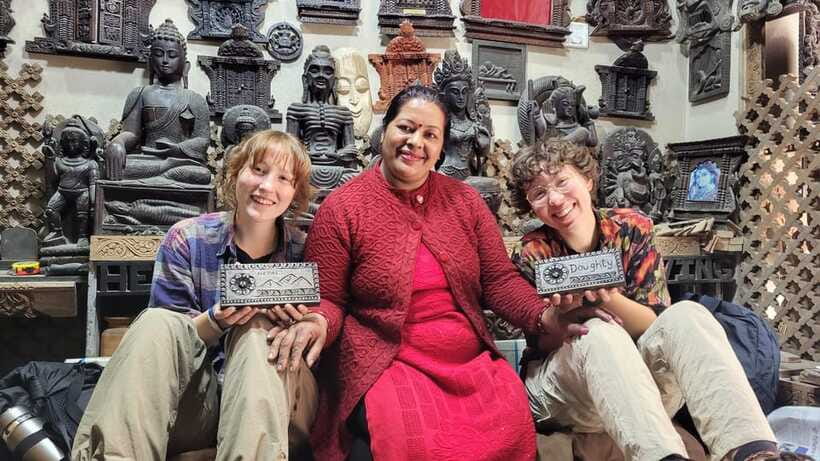
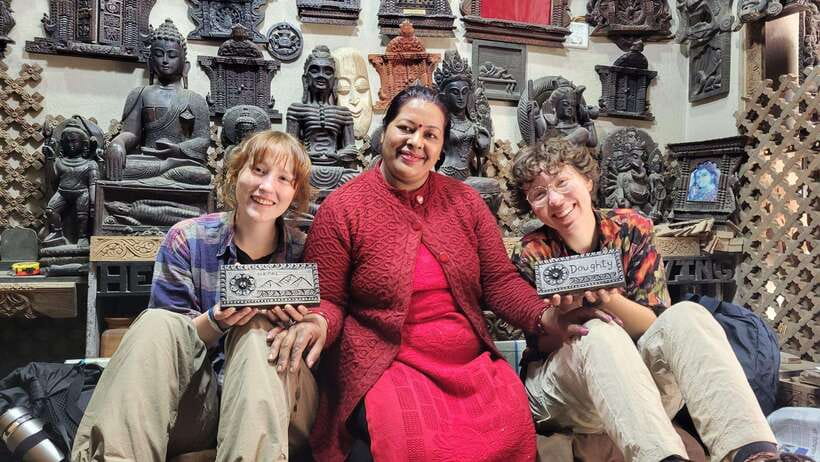
At the end, you’ll have your own carved wooden artwork that you can take home. That is not a small promise. In many “craft experiences,” the final product is more like a pre-made template you decorate. Here, the point is that you carve your own design directly from a wooden block under guidance.
The exact final item can vary based on what you choose and what your instructor helps you achieve. The workshop description suggests you could create something like a decorative panel, a small figurine, or a symbolic motif. In plain terms, you are likely to leave with something visibly carved, not just lightly scored.
How to think about the souvenir:
- It is personal. You can tell the story of the tools, the motif, and the moment you finally got the detailing right.
- It is also fragile compared to mass-made gifts. Carved wood can chip if handled roughly, especially at thin carved edges.
So treat it like a small piece of art. Keep it in a protective bag or wrap it carefully after you leave the workshop. If you plan to carry it in your bag, use extra cushioning around the carved areas.
This take-home aspect is also where the class feels like good value. You are paying for instruction plus materials plus a finished item, all in one session.
Who should book this wood carving class in Kathmandu?
This workshop is a strong match if you:
- Want a hands-on Kathmandu activity that is not just walking around
- Like learning practical craft skills, even at beginner level
- Enjoy making a souvenir with real meaning
- Travel with kids who do well with focused activities (one ten-year-old example exists in the experience notes)
It can also work if you are an art lover who likes structure. The “tools, patterns, then carving” flow is clear. You know what to do next, and you don’t feel lost.
It might be less ideal if:
- You hate paying attention for 3 straight hours
- You want a heavy lecture style class with lots of history time and minimal carving
- You’re hoping for a quick photo opportunity. This is work, not a show
Also, bring a realistic expectation about the outcome. You will learn techniques and finish something you made, but it is still a first attempt. The win is skill growth and a carved object that reflects your effort.
Should you book: the simple decision rule
Book this class if you want a Kathmandu souvenir with a story, not a generic item. The combination of small group teaching, guided carving steps, included tools and materials, and a take-home piece gives you solid value for the price.
Skip it or switch plans if you want mostly history, mostly sightseeing, or if you cannot handle a hands-on session. For most people, though, this is one of those rare travel activities where your brain and your hands both get a workout, and you leave with something real.
FAQ
FAQ
How long is the wood carving class?
The class runs for 3 hours.
How much does the workshop cost?
It costs $42 per person.
How big is the group?
It is a small group limited to 4 participants.
Is the instructor available in English?
Yes, the instructor teaches in English.
Do I get to take a wooden piece home?
Yes, you create a handcrafted wooden piece during the workshop and take it home as a souvenir.
Are tools and materials provided?
All necessary tools and materials are provided.
What should I wear or bring?
You should wear comfortable clothes.
Is smoking allowed during the workshop?
No, smoking is not allowed.
Can I cancel and get a full refund?
Yes, you can cancel up to 24 hours in advance for a full refund.
Is this class okay for beginners?
Yes, the class is tailored to all skill levels, including beginners.
Latest Kathmandu write-ups
- 16 Days Island Peak Climbing With Everest Base Camp Private Trip★ 5.0 · 3 reviews
- 15 Days Round Annapurna Trek with Poon Hill from Pokhara★ 5.0 · 5 reviews
- Private Nepal round trip including Ghorepani Poonhill trek★ 5.0 · 3 reviews
- Everest Base Camp Trekking 16 Days★ 4.0 · 7 reviews
- 14 Days Luxury Annapurna Base Camp Trek★ 5.0 · 6 reviews
- Everest Base Camp Trek★ 5.0 · 32 reviews
- Everest Base Camp Trek★ 5.0 · 87 reviews
- Everest Base Camp Trek★ 5.0 · 97 reviews
Thamel, compared.
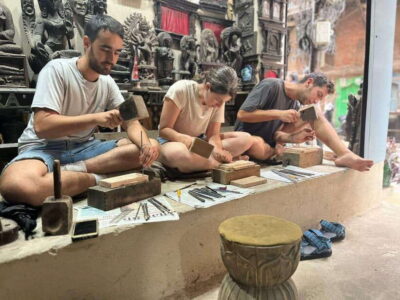
Wood Carving Workshop with Local Artisan (Thamel)
Read our review →
Half Day Cooking Class in Thamel with Local Market Visit
Read our review →
Guided Food/ Drink Tasting walking Tour in Thamel
Read our review →

About 3-hour Cooking Class Experience near Thamel
Read our review →Browse the lists this tour appears in