Reviewed · VIP
Luxury Kailash Mansarovar Yatra – 15 days
If you want a pilgrimage that feels organized on the ground but still wild and spiritual up high, this Kailash Mansarovar Yatra fits. What makes it especially interesting is the way the trip mixes practical logistics, like border-crossing help, with the real physical challenge of the Mount Kailash Parikrama (Kora).
I like that the Kathmandu start is comfortable and useful, including pickup, a welcome dinner, and actual trek prep like a down jacket and duffle bag. I also like the schedule’s focus on getting you ready step by step, with acclimatization days and a full spiritual day at Lake Manasarovar before the kora begins.
The main drawback to consider is altitude. You’ll face high passes and a big kora day at Dolma-La Pass, so this is only for people with moderate fitness who can handle cold, thin air, and long, demanding walking.
Key things that make this Kailash Mansarovar yatra worth your attention
- Passport collection and visa support at the start, so you’re not juggling forms while jet-lagged
- Down jacket and duffle bag provided, so you start the cold-weather part better prepared
- Well-paced acclimatization across Kerung and Saga, instead of rushing you into thin air
- Havan puja at Lake Manasarovar, a meaningful ritual day before Darchen and the trek
- Optional Charan Sparsh hike from Derapuk, for a closer sacred moment if you feel strong
- Contingency day in Kathmandu, which gives the trip room to breathe when weather or borders run slow
Kathmandu warm-up: Aloft by Marriott, sacred sights, and trek gear on day one
Your yatra starts in Kathmandu with a smooth airport arrival. After you land at Tribhuvan International Airport, you’re greeted and escorted to Aloft by Marriott, and you’ll get a group meeting later that day with guidance on the journey ahead.
One detail I really appreciate is that they collect your passport on arrival to help streamline the Tibet visa process. That means you can focus on being present and not stuck running around with paperwork. If you do this, I’d still keep a personal copy of key documents just for peace of mind.
Then there’s the very practical side of the spiritual journey: you receive a down jacket and a duffle bag for your trek prep. That matters because Kailash and Mansarovar can feel brutally cold, especially when the wind picks up and the day’s walking pace slows.
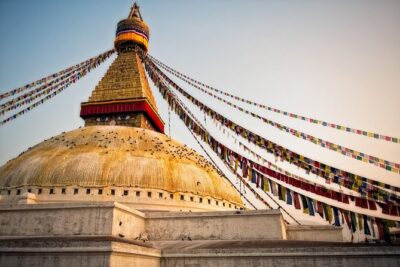
You also get a welcome dinner at an authentic Nepalese restaurant, which is a nice reset after travel. Day two continues with major Kathmandu Valley sites: Patan Durbar Square (UNESCO) with Newari architecture and places like the Krishna Mandir and Patan Museum, then Pashupatinath Temple by the Bagmati River, and finally Boudhanath Stupa with its famous prayer wheels.
This is not just sightseeing. It’s a cultural ramp-up. You’re walking into a Hindu and Tibetan Buddhist world before you ever see Kailash.
More to compare around Kathmandu
- Everest Base Camp Trek – 14 Days
★ 5.0 · 1,499 reviews - Everest Base Camp Trek
★ 5.0 · 842 reviews - Private Kathmandu Sightseeing Tour | UNESCO World Heritage sites
★ 5.0 · 756 reviews
Getting from Nepal into Tibet: Rasuwa Gadhi, Kerung, and the first taste of altitude
After a Kathmandu breakfast on day three, you begin a long scenic drive toward the Nepal-Tibet border at Rasuwa Gadhi. The trip is about 6 to 7 hours and climbs you from around 1,800m at the border area, through the Langtang region and past villages such as Trishuli Bazaar and Syabrubesi. It’s the kind of drive that makes you notice how quickly scenery changes once you leave the valleys behind.
Day four is where border work becomes the main event. You’ll do a short walk to the Nepalese immigration checkpoint to check out, then enter Chinese immigration. You’ll also have a team to assist you so the process is less stressful. Then you officially cross into Tibet and are welcomed by a Tibetan guide and driver before continuing onward to Kerung (Gyirong) at about 2,700m.
Kerung is also your first acclimatization moment. You take a short stroll around the area to help your body adjust before you start pushing higher. The altitude here is not an obstacle course yet, but it’s a warning shot, and I like that the plan acknowledges that with a gentler day.
Saga and the high-pass reality: where your body learns patience
By day five, you’re driving from Kerung to Saga, roughly 4500m. The scenery is described as rolling hills, valleys, and Tibetan Plateau plains, but the point is what altitude does to you. As you ascend, you cross several high-altitude passes with panoramic views, and that’s beautiful, but it also means your breathing rate and energy use change.
You arrive in Saga and settle into your accommodation with time to rest and acclimatize. This is a key part of why people can finish the full kora loop. If you skip these recovery days, you tend to pay for it later. This itinerary tries to prevent that.
Lake Manasarovar day: Mayum La Pass, first Kailash sighting, and the havan puja
Day six shifts the trip into “sacred horizon” mode. You drive toward Lake Manasarovar across the Tibetan Plateau, crossing Mayum La Pass at about 5,200m. The plan is built so that you get views of snow-capped peaks and vast plains, and you also get what many pilgrims live for: the first glimpse of Mount Kailash in the distance as you approach the lake.
When you reach Lake Manasarovar, you’re at about 4,590m. This is the place for stillness. You get time to take it in, and then day seven becomes more ceremonial. You begin with a havan puja at the lake, which is a ritual meant to purify and invoke blessings for the journey ahead.
Day seven also includes a drive to Darchen, the gateway area for the Mount Kailash kora, at about 4,575m. En route you stop at Raksas Tal (Lake Rakshastal). This lake is described as contrasting with the spiritual purity of Manasarovar, tied to mythology about negative forces. Even if you’re not deep into the stories, it creates a strong spiritual contrast on the route.
You spend the night in Darchen so you’re positioned to start the kora the following day.
A different sort of day out of Kathmandu:
- Kathmandu: 7 UNESCO Sites with Lunch
★ 4.8 · 744 reviews - Everest Base Camp Helicopter Tour landing at Everest View Hotel
★ 5.0 · 668 reviews - Half day cooking class in Thamel kathmandu
★ 5.0 · 607 reviews - Everest Base Camp Trekking
★ 5.0 · 485 reviews
Darchen to Derapuk: Yam Dwar to the first close-up of Kailash
On day eight, the kora starts in earnest. You begin after breakfast with a drive to Yam Dwar, known as the gateway of the god of death, where prayers and offerings happen before trekking.
Then you do the first major walking leg, a trek from Yam Dwar to Derapuk, described as relatively moderate compared to later days. You pass rugged terrain, valleys, and streams, and the atmosphere is naturally focused because everyone is moving with purpose.
The big moment here is arriving at Derapuk and getting a stunning close-up view of Mount Kailash. If you’ve waited a long time for this, this is the day your patience turns into goosebumps.
You sleep in a basic teahouse or camp in Derapuk. That’s worth noting. This is called luxury, but the “luxury” is about organization, support, and comfort where it’s realistic, not hotel-style pampering on every single night.
Optional Charan Sparsh hike: a second chance to touch the north face
Day nine gives you a choice. If you’re well acclimatized and comfortable with the altitude, you can take an optional hike from Derapuk to Charan Sparsh, meaning touch of the feet. It’s described as sacred and connected to blessings and soul purification.
This hike follows a moderately challenging trail with strong Mount Kailash views throughout. If you’re not doing it, the alternative is simply resting at Derapuk, meditating, and taking in the quiet presence of Kailash.
I like that you’re not forced into extra work. The plan respects bodies that are tired and minds that still want to be present.
Dolma-La Pass day at 5,636m: the kora’s hardest spiritual beat
Day ten is the standout day in both significance and difficulty. You start early in the morning from Derapuk with a steep ascent to Dolma-La Pass at about 5,636m. The trek here demands stamina because of the height and rugged terrain.
At the top, you reach Shiva-sthal, where pilgrims traditionally leave personal items as offerings and pray for forgiveness and liberation. After that, you see Gauri Kund (Lake of Compassion), tied to Goddess Parvati, and it’s a place for reflection and prayer.
Then comes the other half of the physical test: a steep descent into the Zutulphuk Valley. This is where you find the rhythm again. Your legs will be working, but your mindset often changes, because you’ve already done the hardest elevation piece.
Finishing the kora: Zutulphuk Monastery to Saga and that emotional exhale
Day eleven starts with a walk from Zutulphuk Monastery toward the designated pickup point, about a 3-hour trek. This is how you close the kora loop, and it feels different from a normal hike because everyone is completing the same spiritual circuit.
After you reach the pickup point, the driving crew meets you and you return to Saga. You check into your hotel and spend the night there. This “move from walking mode to resting mode” is a smart transition day. You get a real decompression window before going lower again.
Back down to Kerung and then to Kathmandu: long drives, final border work, and optional helicopter
Day twelve drives from Saga back to Kerung. The itinerary notes this as a scenic route with panoramic mountain and valley views and Tibetan settlements. Even if the road feels long, it’s often a welcome change after days of walking.
Day thirteen returns you toward Nepal. You drive from Kerung to Rasuwagadhi border, with customs and immigration formalities before entering Nepal again. After that, you continue through Langtang National Park with lush valleys, waterfalls, and Himalayan foothills.
There’s also an optional helicopter return at an additional cost. It’s described as reducing total return time to about 45 minutes and giving an aerial view of the Himalayas. If you’re thinking about protecting energy after the kora, this option can be a sanity saver, but only if it fits your budget.
Kathmandu recovery buffer: the contingency day that keeps the trip from breaking
Day fourteen is set aside as a contingency day. This is one of the most practical features in the whole plan because delays can happen due to weather, road conditions, or border disruptions.
If everything runs on schedule, you can relax in Kathmandu or add optional activities, such as Bhaktapur Durbar Square or Swayambhunath (Monkey Temple), shopping in Thamel, or an Ayurvedic spa session to recover after the trek.
I like contingency days because they reduce stress for everyone. It means you’re not constantly watching the calendar like it’s a hostage situation.
The real value in this $3,999 price: what you get beyond the headline number
At $3,999 per person for 15 days, this is a premium yatra price. But the value isn’t just the big brand name of “luxury.” It’s in the structure: you get a guided route with organized border processes, daily meals, and support designed for a high-altitude pilgrimage.
Meals are included for most days: 14 breakfasts, 11 lunches, and 12 dinners. That’s a big deal when you’re moving between places where food quality and consistency can otherwise vary. It also matters for energy management when you’re walking hard and your appetite changes with altitude.
From the experience stories shared through the years with this operator, one recurring strength is the support team’s attention to staying fed and comfortable, even in remote areas where it’s not easy to keep meals hot. I also saw repeated praise for staff who stay actively helpful, not just present on paper.
Another strong value item is group size: the maximum is 25 travelers. That tends to make the experience feel more manageable, especially during immigration days and the kora’s more crowded moments.
Finally, the people. In multiple accounts, the operator’s leader and team members like Sagarbhai and leaders such as Shankar Bhatt, along with guides including Bir Bahadur, Sanket, and Dawa Sherpa, are credited with making the trip feel cared for. There’s also mention of coordinators like Rayuna and Reezu who provide planning support. When you’re far from help, having a team that can interpret issues quickly is part of what you’re paying for.
Who should book, and who should pause
This trip fits best if you:
- Want a structured Kailash Mansarovar Yatra with real support for tough logistics
- Are spiritually motivated and also honest about fitness needs
- Like the idea of smaller group pacing and a contingency buffer
- Can handle basic teahouse or camp nights during the kora
I’d pause if you:
- Know you struggle with altitude or long, steep walking days
- Prefer fully hotel-only comfort for the entire itinerary
- Want a trip that feels fast and light, because the plan is built around gradual acclimatization and real time on your feet
Should you book this Kailash Mansarovar Yatra with Himalayan Glacier?
If you’re trying to balance devotion with organization, I think this is a strong choice. The itinerary makes sense for altitude management, gives you meaningful spiritual time at Lake Manasarovar, and schedules the hardest walking day in a way that’s supported by earlier acclimatization.
My advice is simple: if you’re a moderate-fit traveler who can commit to the cold and the climb, this kind of planning plus a helpful team can turn a once-in-a-lifetime goal into a journey you actually finish with energy left for the emotional payoff.
If that sounds like you, book it. If altitude worries you, speak with your doctor and be honest before you pay for thin-air dreams.
FAQ
How long is the Kailash Mansarovar yatra?
The tour is listed as 15 days (approximately).
Where does the trip start in Kathmandu?
It starts back at the meeting point: Himalayan Glacier Adventure and Travel Company, Amrit Marg, Kathmandu 44600, Nepal.
What is the maximum group size?
The maximum is 25 travelers.
Are meals included?
Yes. Breakfast is included for 14 days, lunch for 11 days, and dinner for 12 days.
Does the tour help with Tibet visa processing?
Yes. The plan states that your passport will be collected upon arrival to streamline the Tibet visa process, and the team assists with immigration procedures at the border.
Is there time to see Kathmandu Valley UNESCO sites before the trek?
Yes. The itinerary includes Patan Durbar Square, Pashupatinath Temple, and Boudhanath Stupa on day two.
Is there an optional hike during the Kailash trek?
Yes. On the day at Derapuk, there is an optional hike to Charan Sparsh.
Is there an alternative to the long drive back from Tibet to Nepal?
Yes. There is an optional helicopter return at an additional cost, with flight time listed as about 45 minutes.
Latest Kathmandu write-ups
- Langtang Valley Trek★ 5.0 · 3 reviews
- Khopra Danda Trek★ 5.0 · 3 reviews
- Langtang Valley Trek from Kathmandu★ 5.0 · 3 reviews
- 5 night / 6 days Kathmandu Nagarkot Chitwan Pokhara tour★ 5.0 · 3 reviews
- Nepal Highlights Tour: 5 Nights 6 Days Kathmandu & Pokhara Tour★ 5.0 · 3 reviews
- Kathmandu Valley Private Day Tour★ 5.0 · 3 reviews
- Conquer the Himalayas: The Ultimate 16-Day Annapurna Circuit Trek★ 3.5 · 3 reviews
- Kathmandu Heritage Day Tour★ 5.0 · 3 reviews
VIP, compared.
Nepal in Luxury: Kathmandu, Chitwan & Pokhara Escape – 8 Days
Read our review →
10 Day Kathmandu, Nagarkot, Chitwan, Lumbini, Pokhara Luxury Tour in Nepal
Read our review →
Best of Nepal Luxury Adventure Tour Package – 9 Days
Read our review →