
Reviewed · MANASLU CIRCUIT TREK
Manaslu Circuit Trek
If you’re craving a classic Himalayan circuit that keeps getting higher and more remote as you go, the Manaslu Circuit Trek is built for exactly that. You circle the Manaslu massif, day after day, with a route that keeps rewarding you with bigger views and smaller villages.
I especially like the step-by-step altitude plan, including a full acclimatization day at Samagaon. And I also like that you get practical support baked in, like an English-speaking government-licensed guide, a dedicated porter setup, and basic sleeping gear in the cold.
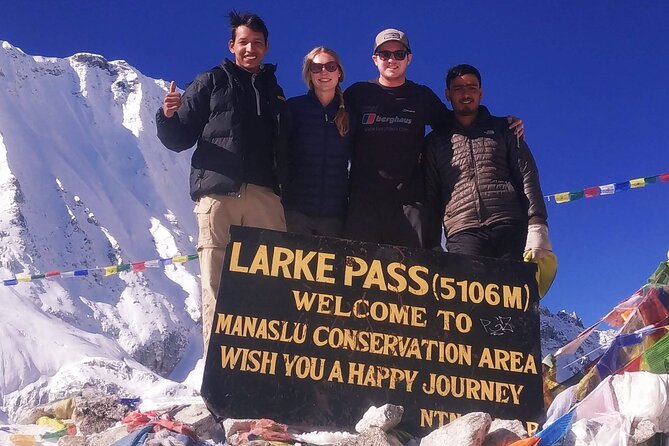
One consideration: this is a demanding high-altitude trek, with the Larkya La crossing at 5,160m. If you do not already have strong hiking fitness, or you get hit by bad weather, the whole experience can feel tougher than the photos.
Key highlights worth packing your hopes for
- A true circuit around Manaslu, from Kathmandu to Sotikhola and all the way back with a final drive and flight
- Teahouse nights on the trail, so you travel light and focus on moving
- Larkya La (5,160m) plus acclimatization, including an extra rest day at Samagaon
- English-speaking, government-licensed guidance and a porter for 2 trekkers (1 porter per 2 people)
- Gear and key paperwork handled, including a down jacket and sleeping bag provided for the trek
- Small group size (max 10), which tends to make days on the trail run smoother
Why the Manaslu Circuit feels like a real Himalayan loop
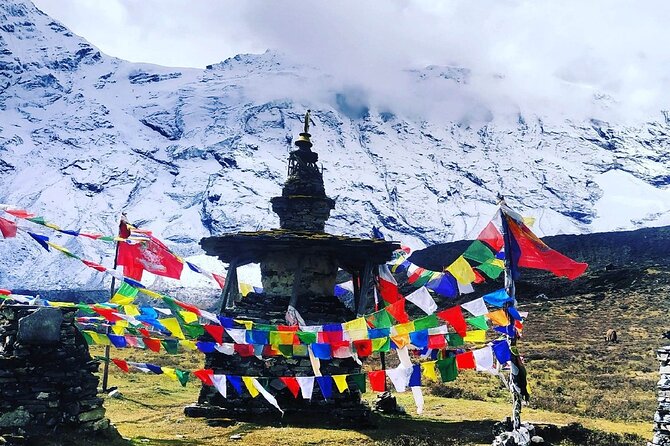
The Manaslu Circuit is interesting because it does not rush you to the highest point. It spends days building altitude gradually, then asks you to earn the big crossing. That rhythm matters. When your body has time to adjust, you’re more likely to enjoy the trek instead of just surviving it.
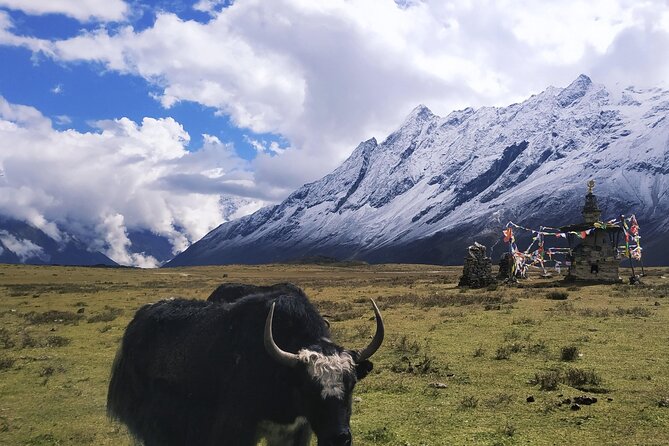
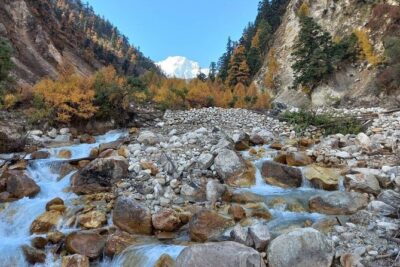
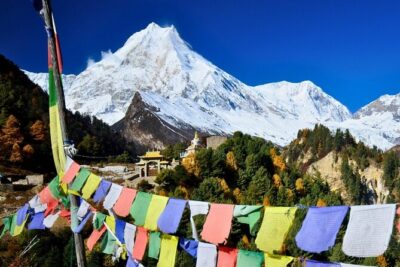
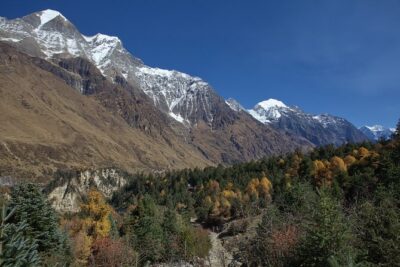
I also like that this route has a personality. You start in the Kathmandu orbit, then move into river valleys, then higher villages with a distinctly remote feel. Even when you’re tired, the day-to-day changes in elevation and air make you pay attention. The trek becomes a moving observatory aimed at the Manaslu massif and the surrounding Himalayan giants.
Finally, the operator includes enough structure that you’re not scrambling. You get the permits handled, an experienced guide on the ground, meals on the trekking days, and airport transfers. That leaves you time for what you actually came for: walking, looking, and letting the mountains do the talking.
More of the Manaslu Circuit:
- Manaslu Circuit Trek
★ 5.0 · 292 reviews - Manaslu Circuit Trek
★ 5.0 · 184 reviews - Manaslu Circuit Trek:
★ 5.0 · 106 reviews
A day-by-day walk through the route, from Kathmandu to Larkya La
Here’s the full shape of the trek in plain terms, with what each stage tends to mean for your energy and expectations.
Kathmandu start: 2 days to get ready and get your legs organized
You begin in Kathmandu, starting at the hotel meeting point in Thamel (Hotel Thamel Park Pvt. Ltd., Chaksibari Marg area), with a 6:15 am start time noted for the program. Day 1 is arrival and transfer to your hotel. Day 2 is Kathmandu Valley sightseeing plus prep.
Why that matters: Day 2 is not just sightseeing filler. It’s your window to finalize trekking readiness, get your gear sorted, and mentally switch from city life to long walking days. You’ll also have breakfast at the Kathmandu hotel on a twin-sharing basis, which helps you start the day fueled.
First hiking days: valley walking into the rhythm of the trail
After Kathmandu, you drive to Sotikhola (about 700m). The trek timing listed for that day is roughly 6 to 7 hours, covering around 150km by vehicle plus walking. From there you move to Machha Khola (around 869m), then Jagat (around 1,340m), and then Deng (around 1,860m).
What you should expect from these early days:
- Mostly “get your legs going” walking, often 6 to 8 hours with steady climbs.
- Longer distances on paper than you might think at first, like the Machha Khola to Jagat day listed at about 12 to 15km.
- A gradual shift from busier terrain to something quieter and more remote.
These days are ideal for finding your pace. Go slower than you think you need to, especially on the first climbs. You’re building a week-long rhythm, not winning a race.
More to compare around Kathmandu
- Everest Base Camp Trek – 14 Days
★ 5.0 · 1,499 reviews - Everest Base Camp Trek
★ 5.0 · 842 reviews - Private Kathmandu Sightseeing Tour | UNESCO World Heritage sites
★ 5.0 · 756 reviews - Kathmandu: 7 UNESCO Sites with Lunch
★ 4.8 · 744 reviews
Building altitude: Namrung to Lho to Samagaon
As you rise toward higher villages, the itinerary steps you through Namrung (2,630m), then Lho (3,180m), then Samagaon (about 3,520m). Walking days here are often listed around 4 to 7 hours, with distances like 8 to 12km.
This is where the trek starts to feel more “mountain mission” than “nice hike.” The air changes, the views sharpen, and your body starts to notice altitude more. The listed day from Namrung to Lho is about 4 to 5 hours, around 9km, which can feel pleasantly short after earlier days. But short does not mean easy.
The acclimatization day at Samagaon: your best insurance policy
Day 10 is a dedicated acclimatization day at Samagaon.
I like this inclusion because it shows the right priorities. At this stage, you’re high enough for altitude to matter, but you’re not yet at the top. That extra day gives you time to settle, keep hydration and pace steady, and reduce the odds that the highest day hits you harder than it should.
If you want one “rule” for the pass day later, it’s this: treat acclimatization seriously. Walk gently, drink water, and keep the rest of the day calm.
Pushing higher: Samdo and then Larkya Phedi (Dharamsala)
After acclimatization, you move on to Samdo (about 3,875m). Then you head toward Dharamsala, also listed as Larkya Phedi (around 4,460m).
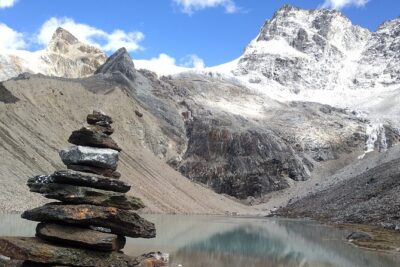
These are 4 to 5 hour walking days in the plan, around 8km each. Even when the hours look manageable, high altitude changes how heavy your legs feel. This is also the last practical moment to make sure you have everything you need for the cold crossing day.
The big day: Larkya La (5,160m) to Bimthang
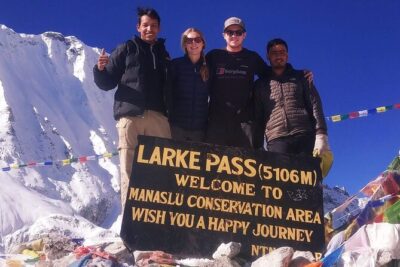
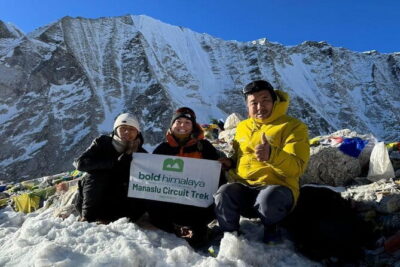
Day 13 is the heart of the trek. You go from Larkya Phedi to the Larkya La pass at 5,160m, and then onward to Bimthang (around 3,590m), with a listed walk time of 6 to 7 hours and about 12km.
How to think about it:
- The altitude gain is the challenge, not just the distance.
- You’ll likely feel the cold and thin air most on the pass itself.
- After the pass, you still have to finish the day by walking down toward Bimthang.
Practical tip: on a day like this, your goal is steady breathing, not speed. If you go out too hard in the morning, the pass can turn into a slog. Pace is your comfort gear.
Descent and closing: Dharapani, then the drive to Besisahar
Day 14 goes from Bimthang to Dharapani (about 1,963m), listed at roughly 7 to 8 hours and about 15km. Day 15 then includes a drive from Dharapani to Besisahar (around 760m), with about 80km by vehicle and roughly 5 to 6 hours.
Then you drive back to Kathmandu for your final evening and your flight home the next day.
This is a key phase, mentally. Descents can be physically hard, especially on knees and ankles. Still, you’re moving toward lower elevation, which can help you feel more human again after the pass.
Larkya La and altitude: how to use the trek plan to your advantage
The itinerary’s structure is built around altitude management: it steps up gradually, then it pauses for acclimatization at Samagaon, then it schedules the pass crossing when you’ve had time to adjust.
The most important thing you can control is how you behave on days leading up to Larkya La:
- Keep your pace conservative. The plan gives you walk hours, but the mountain decides how hard those hours feel.
- Take hydration seriously. In cold conditions, you might not feel thirsty, but your body still needs water.
- Dress for temperature changes. A down jacket is included for you during the trek, plus sleeping bags, which suggests the cold is part of the plan, not a surprise.
Also note the trek requires good weather. That’s not just a technical note. Mountain weather affects visibility, wind, and comfort on high ground. If conditions are rough, the experience can turn more challenging.
Teahouses and sleeping gear: what’s included, and why it helps
You’ll stay in teahouse accommodation during the trek. That matters for two reasons. First, it keeps you from carrying heavy camping gear. Second, it gives your day a predictable rhythm: walk in, eat, rest, and repeat.
Meals are included on the trek days: breakfast, lunch, and dinner. That’s a big value point. At altitude, choosing meals can become annoying if you have to shop for everything. Here, at least the basic food plan is covered.
The operator also provides a down jacket and sleeping bag, to be returned after the trek. This is smart for budget travelers. Nepal is not the place you want to buy a cold-weather sleeping system last minute, and you probably do not want to fly home with bulky gear.
One more practical note: you’re not just carrying your own comfort. You’re also managing your daypack so you can move well on steep terrain. With a porter arranged (1 for 2 trekkers), you can focus on your hiking essentials rather than heavy bag weight.
Kathmandu prep: hotel comfort, sightseeing time, and smooth handoffs
Your Kathmandu segment includes a 3-star hotel for 16 to 17 days depending on travel timing, with breakfast in twin sharing. There’s also Kathmandu Valley sightseeing on the second day.
Then you have airport transfers in a private vehicle. That reduces stress on arrival, which matters when you’re already tired from travel. Good logistics here can set the tone for the whole trip.
In the middle of this, you’ll also manage key items like paperwork and permits. Since permits are included, you don’t have to chase documents at the last minute.
And you get welcome and farewell dinners included. Those are not sightseeing, but they can be nice anchors: one meal where your team gathers, and another where you close the loop.
Price and value: what $2,300 buys, and what you still must handle
At $2,300 per person for roughly 17 days, this is not a cheap trek. But it’s also not “bare bones.” The value sits in the bundled support.
Here’s what’s included that you would otherwise spend time and money managing yourself:
- Transportation for the big legs: Kathmandu to Sotikhola, plus Dharapani to Besisahar, plus the return to Kathmandu
- Down jacket and sleeping bag for the trek (returned after)
- Necessary paperwork and trekking permits
- 3-star Kathmandu hotel with breakfast in twin sharing
- Kathmandu Valley sightseeing
- Medical kit
- Welcome and farewell dinners
- Entrance fees for sightseeing and monuments as per the plan
- Guide and porters, including expenses
- Three meals per trek day
- Teahouse accommodation during the trek
- Airport transfers by private vehicle
What’s not included, and you should budget for:
- Nepalese visa fee
- International airfare
- Travel and rescue insurance
- Lunch and dinner in Kathmandu
- Personal expenses like phone calls, laundry, battery recharges, WiFi charges, and bar bills
- Excess baggage charges
- Tipping
My practical take: if you need a lot of handholding, this price makes sense because it removes planning friction. If you already know Nepal trekking systems well, you might find ways to do it for less. But the included guide, permits, meals, and equipment are the parts that usually chew up time and cause headaches for DIY trekkers.
The guide and porter factor: names you might hear on your trek
What really shows up in the feedback around this kind of trip is that the guide and porter can make the difference between a tough trek and a satisfying one.
This trek includes an experienced English-speaking government-licensed guide, plus porter support (1 porter for 2 trekkers) with their expenses covered.
You may be trekking with guides who have been highlighted by name, such as Ram, Mingma, Jeet, and Madhav. Porters such as Keshap and Shiv also appear in the narrative. That’s useful information for you because it suggests consistency in the human team, not just the route on paper.
A good guide also helps you read the day. Even without overcomplicating things, a guide keeps the pace realistic, supports safe decision-making around high-ground conditions, and makes acclimatization day actually useful.
Who this Manaslu Circuit Trek is best for
This is best for you if:
- You have strong fitness and feel comfortable with long walking days, roughly 6 to 8 hours in many stages
- You want a full loop with a real high-pass goal at 5,160m
- You prefer a structured plan where permits, meals, and trekking logistics are handled
- You like small-group dynamics, since the maximum group size is listed as 10
You should think twice if:
- You are not ready for high altitude and long hours, especially on the pass day
- You hate cold-weather hiking, because a down jacket and sleeping bag are included for a reason
- You’re relying on this to be flexible day to day. This experience requires good weather, and the pass is weather sensitive
Should you book this Manaslu Circuit Trek?
I’d book it if you want the real Manaslu loop experience with a lot handled for you: permits, guide support, porter setup, meals during the trek, teahouse stays, and the cold-weather basics like a down jacket and sleeping bag.
I would hesitate if you’re undecided about your hiking fitness. The itinerary is demanding enough that “okay on a normal hike” might not cut it. Also, make sure you’re prepared for the altitude reality on the Larkya La day.
If you’re ready to train, pace smart, and respect the mountain, this trek is the kind that can leave a long-lasting impression because it combines effort with an honest sense of remoteness around the Manaslu massif.
FAQ
What city does the Manaslu Circuit Trek start in?
It starts in Kathmandu, Nepal.
What is the typical trip length?
The trek is listed as 17 days approximately.
Where do I meet for the trek?
The meeting point is Hotel Thamel Park Pvt. Ltd., Chaksibari Marg 594-16, Kathmandu 44600, Nepal.
What time does the trek start?
The start time is listed as 6:15 am.
How many travelers are on this trek at most?
The maximum group size is listed as 10 travelers.
What kind of lodging do I get during the trek?
You’ll use teahouse accommodation during trekking.
What gear is included for cold weather?
A down jacket and sleeping bag are included for the trek, and they are returned after the trek.
Are meals included during the trek?
Yes. Three meals, breakfast, lunch, and dinner, are included during the trek.
What is not included in the price?
Not included are Nepalese visa fee, lunch and dinner in Kathmandu, travel and rescue insurance, international airfare, personal expenses (like phone calls, laundry, battery recharge, and WiFi charges), excess baggage charges, extra Kathmandu accommodation if needed, and tipping.
What happens if the trek is canceled due to weather?
The experience requires good weather. If it’s canceled due to poor weather, you’ll be offered a different date or a full refund.
Latest Kathmandu write-ups
- Langtang Valley Trek★ 5.0 · 3 reviews
- Khopra Danda Trek★ 5.0 · 3 reviews
- Langtang Valley Trek from Kathmandu★ 5.0 · 3 reviews
- 5 night / 6 days Kathmandu Nagarkot Chitwan Pokhara tour★ 5.0 · 3 reviews
- Nepal Highlights Tour: 5 Nights 6 Days Kathmandu & Pokhara Tour★ 5.0 · 3 reviews
- Kathmandu Valley Private Day Tour★ 5.0 · 3 reviews
- Conquer the Himalayas: The Ultimate 16-Day Annapurna Circuit Trek★ 3.5 · 3 reviews
- Kathmandu Heritage Day Tour★ 5.0 · 3 reviews
Manaslu Circuit Trek, compared.
Manaslu Circuit Trek 8th Highest in the World
Read our review →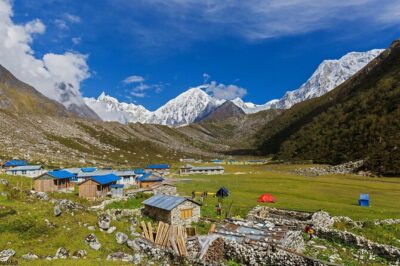
Private 12-Day Manaslu Circuit Trekking in Kathmandu
Read our review →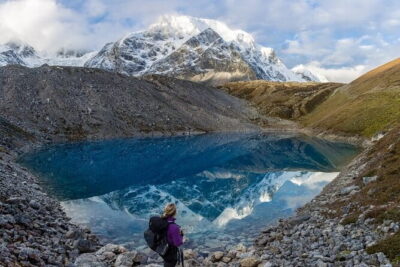
Manaslu Circuit Trek to the Beauty of 8th Highest Mountain
Read our review →Browse the lists this tour appears in