
Reviewed · MANASLU CIRCUIT TREK
Manaslu Circuit Trek
Manaslu Circuit is interesting because it sits in a controlled, lower-traffic pocket of Nepal, right along the border landscape with Tibet. You get a serious Himalayan trek feel, with big viewpoints and a real sense of remoteness, especially around the Larkya La pass area. And the trip is managed with a team that clearly knows how to run logistics, like guides such as Janu and Sushanta Neupane (based on commonly named staff on this route).
Two things I like a lot: first, the trek’s less crowded, permit-controlled nature, which helps keep the villages and teahouse rhythm more authentic. Second, the practical support baked in, from a licensed English-speaking guide to a porter ratio of 1 porter per 2 clients, plus loaner gear like a down jacket and sleeping bag. When you are carrying less, you notice the details more.
One consideration: this trek depends on weather. Cloud, rain, or snow can change what you see and how comfortable the big pass day feels, and that means you should go with a flexible mindset and moderate fitness.
Key highlights to know before you go
- Controlled access means fewer trekkers and a calmer feel in village tea houses
- Strong logistics support with a licensed English-speaking guide and a porter for every two people
- Loaner trekking gear (down jacket and sleeping bag) helps you travel lighter
- Acclimatization at Samagaun gives you a chance to adjust before the high pass day
- A big day at Larkya La with wide mountain views before a steep descent
- 4WD transport segments smooth out the roughest ground connections
Why Manaslu Circuit Feels Different, Quiet, and Purposeful
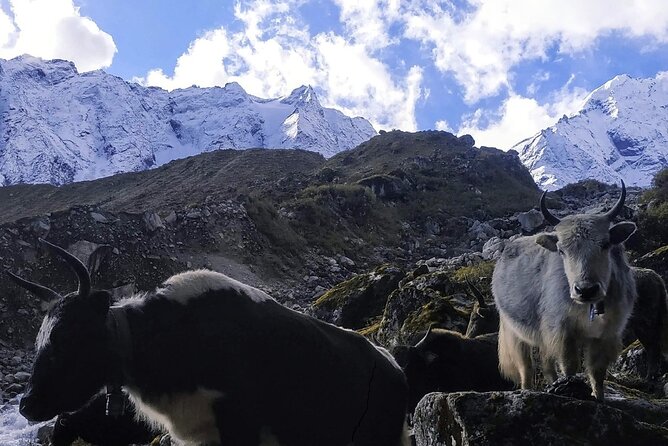
Manaslu Circuit works because it is not “anything goes” trekking. The route is controlled, with permits required to access the region as an organized trekking group. That has a real payoff for you: fewer trekkers on the trail, a slower pace in the guesthouses, and more time to talk with locals in places that still feel like they are living their daily lives, not performing for foot traffic.
This area also has a strong nature and wildlife angle. The region is described as exceptionally rich in biodiversity, and you can feel that in the variety you pass through, from forest stretches to terraced settlements and high, open sections. Even when the weather closes in, the route still holds your attention, because the trail constantly changes shape and elevation.
Finally, there is the cultural layer tied to the border-to-Tibet vibe. Manaslu trekking has the kind of monastery presence and village rhythms you usually see on fewer routes, including stops around Buddhist sites such as Ribung Gompa.
More of the Manaslu Circuit:
- Manaslu Circuit Trek
★ 5.0 · 292 reviews - Manaslu Circuit Trek:
★ 5.0 · 106 reviews - Manaslu Circuit Trek (15 Days)
★ 5.0 · 50 reviews
The Ace Setup: Guides, Porters, and Gear That Reduce Headaches
Ace the Himalaya runs this trek like a system, not a random string of hikes. You start with an airport representative meeting you at Tribhuvan International Airport in Kathmandu. On the first couple of days, there is also a pre-trek meeting in their office where you confirm details, get introduced to your trek leader, and handle paperwork. Bring your passport, three copies of passport-size photos, and a readable copy of your travel insurance policy. You may also need to sign the legally binding trip form and a non-liability disclaimer.
The staffing style is a big reason this trek scores so well. You get a licensed English-speaking trekking guide, and you do not go solo in carrying weight. The included porter support is 1 porter for every two clients, which is a big deal on a trek where your body wants energy saved for the climb and the altitude work.
You also get loaner equipment: a down jacket and a sleeping bag. They are designed for the cold nights, and you return them at the end. That means you do not have to gamble on buying or renting cold-weather gear in Nepal last minute.
One more practical detail: the trip has a maximum group size of 15 travelers. Some departures can end up very small in practice, and that matters because it changes the vibe at tea houses and makes it easier for the guide to manage timing around weather.
Kathmandu Before the Trail: Hotel Nights, Sightseeing, and a Calm Start
You do not just arrive and instantly start walking. The itinerary includes two nights in Kathmandu in a three-star hotel, with twin-share or double rooms. That is valuable because it gives you a night or two to recover from travel, organize your layers, and eat something comforting before the first long driving day.
There is also guided Kathmandu sightseeing and entrance fees included. The tour includes airport transfers and a private tourist vehicle for the hotel transfer on Day 1.
What I like about this Kathmandu setup is the way it turns the first hours into a checklist you can actually complete. You get your bearings fast, you meet the team, and you handle the documents so you are not scrambling once the trek starts.
The Long Drive Days: Machhakhola, Hot Springs, and Valley Transitions
Day 2 is one of those “real Nepal overland” days. You drive from Kathmandu toward Dhading Besi on paved road for about 3 to 4 hours, then switch to a bumpy, winding dirt road for 5 to 7 hours, depending on traffic and road conditions. The total drive lands around 8 to 10 hours. To help you deal with the roughness, the trip sends a private 4WD vehicle with an experienced driver.
By the time you reach the start of the trekking area, you will be glad you did not waste energy hiking right away in the first afternoon. The benefit here is simple: you use the day to travel, rest, and be ready to walk the next day when the trail rhythm begins.
Then Day 3 moves things forward in a satisfying way. You pass the Machha River region, then you reach Tatopani, known for hot springs. The trail also runs through a forest toward Dovan, with the massive Budi Gandaki creating a dramatic backdrop as elevation increases. This is one of those early stretches where the air changes and you start to feel the trek becoming “Himalaya time,” not just a countryside walk.
Day 4 keeps the progression steady. You ascend a terraced hill of Saguleri, which brings a view of Sringi Himal (7,177 m). You then continue through bamboo forest, follow upstream along the Deng River, and arrive in the tiny village of Deng. For me, that combination matters because it balances climbing with variety, so your legs learn the work gradually.
More to compare around Kathmandu
- Kathmandu: 7 UNESCO Sites with Lunch
★ 4.8 · 744 reviews - Everest Base Camp Helicopter Tour landing at Everest View Hotel
★ 5.0 · 668 reviews - Kathmandu: Local Women-Led Nepali Cooking & Momo Class
★ 4.9 · 360 reviews - Kathmandu: Food and Drink Walking Tour
★ 4.9 · 292 reviews
Deng to Ghap: Mustard Fields, Water Sounds, and Stone Art
Day 5 is a longer, harder-feeling day, and it earns that reputation. You walk through fields of flowering mustard, which can lift the whole day visually when the light hits right. After several hours, you reach Ghap at 2,660 m.
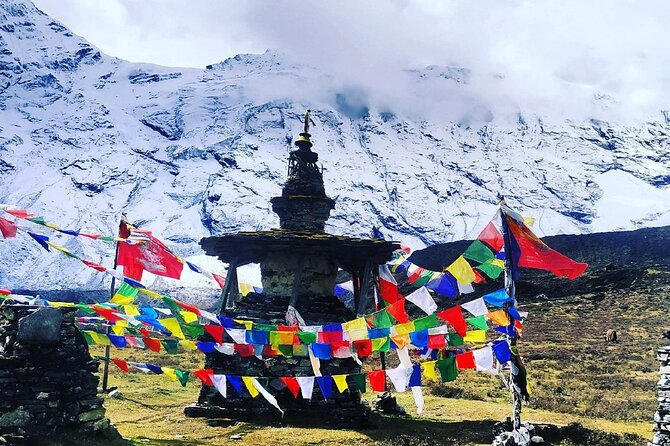
One of the more memorable details here is what you hear and what you see at the trail’s edge. You can hear a waterfall, and there are ancient writings and art in the stones. That detail is small, but it adds meaning to the walk, because you are not only moving uphill, you are passing through a living landscape of human markings.
If you are the type who gets grumpy when the days blur together, this is the day that breaks that pattern.
Lho and Namrung: Big Views, Rivers of Glacier Origin, and Better Meals
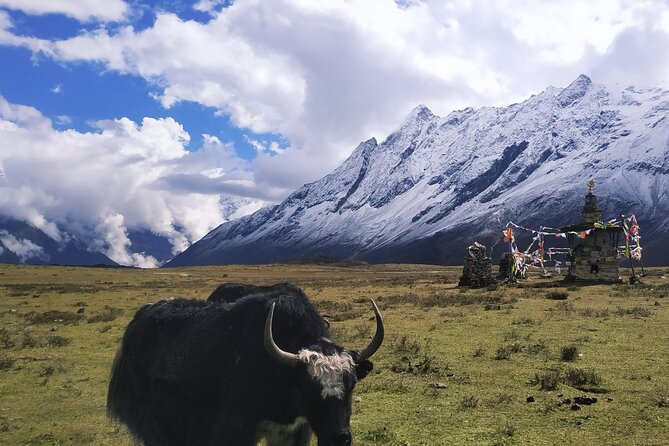
Day 6 shifts you toward Namrung village for lunch, with strong mountain views of Ganesh and Siringi Himal. Then you continue to Lho from the Lihi and Lamagaon areas, walking across the Hinan River, which originates from Linda Glacier.
This matters because it explains the scenery you see. Rivers here are not just water, they are evidence of glacier systems upstream. When you look across a valley and feel the cold air cutting down, you are seeing the route’s real altitude engine at work.
You arrive at Lho Gaon with nice views of Mt. Manaslu. This is also a village stop where you often feel the social side of trekking, with tea house conversations and shared warmth.
Day 7 is a shorter day with a strong viewpoint payoff. You head toward Samagaun, and from the top you get views of Naike Peak, Manaslu North (7,774 m), and Manaslu (8,150 m). There is also a visit around the Ribung Gompa monastery. Then you move down to your destination village, Samagaun.
The short walking day is not laziness. It supports acclimatization before the next phase.
Samagaun Acclimatization: Base Camp Options and the Best Kind of Slow Day
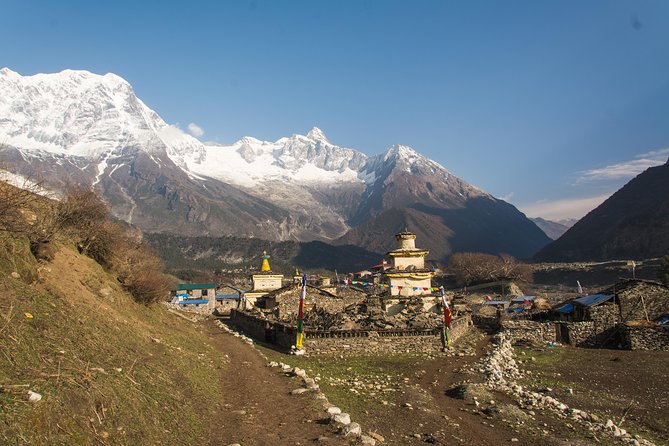
Day 8 is built for your body. You stay in Samagaun to acclimatize, and you get time to explore. Your options include visiting Pungyen Gompa and glacial Lake Birendra Tal, a trip that can take 4 to 5 hours. Or you can take a longer walk to Manaslu Base Camp and back, which can take 7 to 8 hours.
This is the kind of flexibility I like. If you feel strong and clear, you push a bit further. If clouds roll in or your breathing feels off, you still have a productive day. Either way, you are not being forced into one rigid plan when your altitude response changes.
Samdo and Dharamsala: Remote Settlements and the Start of Pass Focus
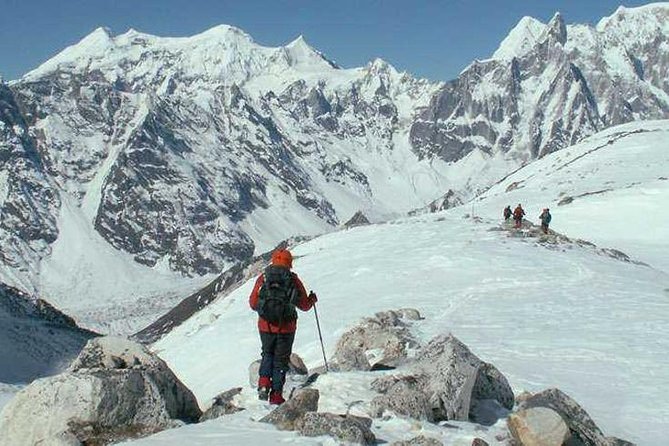
Day 9 takes you to Samdo, described as a remote permanent settlement. You climb a terraced hill on the opposite bank of Budhi Gandaki River, then continue toward Samdo. This is the route tightening, both in terms of distance between places and in terms of how “high trek” the scenery becomes.
Day 10 brings you to Dharamsala, also known as Larke Phedi. The trail is similar to the route from Sama Gaun to Samdo, and you end in a small stone guest house with basic facilities. Lodging is dormitory-styled rooms.
That dorm setup matters for planning your sleep. On pass days, the goal is rest. If you are a light sleeper, you will want to treat this as part of your gear and habits, not an afterthought.
Larkya La Pass Day: Long Climb, Big Panoramas, and Steep Descent
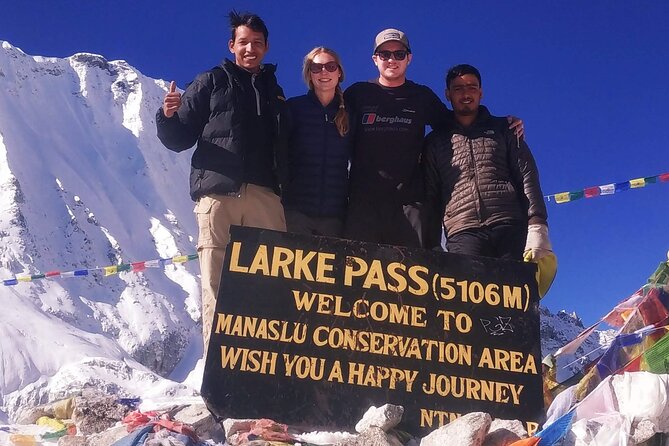
Day 11 is the signature test of the trek. You climb toward Cho Chanda, then head steeply uphill toward the snowy pass. From the top, the view is laid out with names and peaks: Himlung Himal (7,126 m), Cheo Himal (6,820 m), Gyagi Kung, Kang Kuru (6,981 m), and Annapurna II (7,937 m).
The key part for you is what happens after that. The descent is steep, through moraines, toward Bhimtang. Steep downhills are where trekking shoes and knee care matter. If you are the kind of person who tends to go too fast early, save that for the flat stretches, and treat the descent with patience.
Day 12 eases the route a bit. You head through paddy fields, pass the small Karcha La Pass, then descend through fig trees and rhododendron forests to Tilje. It is still a work day, but it feels like your body gets a chance to regroup.
Tal and the Annapurna Circuit Connection: Suspension Bridges and Waterfall Town Energy
Day 13 changes character again. You move through villages with denser population, and you pass through streams and fields of wheat. Lunch is in Dharapani (1,860 m), and then you enter the Annapurna Circuit section of the trek.
You cross a suspension bridge over the Marshyangdi River, then arrive at Tal. Tal is on the bank of the river, with a large waterfall you can enjoy watching. This kind of arrival day is underrated. After big pass pressure, you want a place where you can eat, breathe, and feel like the trail has handed you a reward.
Back to Kathmandu by 4WD: Rough Roads, Smooth Recovery, and Final Airport Drop
On Day 14, you hop onto a 4WD vehicle to reach Kathmandu via Besisahar. The road is rough and bumpy up to Besisahar, then smoother from there. You drive about 8 to 9 hours total, with hills and rivers on the highway. It is not glamorous, but it is effective, and you do it with the trek team managing the logistics.
Day 15 is straightforward: the airport representative drops you at Tribhuvan International Airport for your flight.
Price and Value: What $1,900 Covers, and What You Still Need to Plan
At $1,900 per person, the value depends on what you would otherwise pay for on your own. Here, a lot of the expensive friction is already covered.
What you get included:
- airport transfers in Kathmandu
- two nights in a three-star hotel, plus guided Kathmandu sightseeing and entrance fees
- guide support for the trek, licensed and English-speaking
- guesthouse lodging for 12 nights, with twin-share in some places and dorm-style rooms in others
- porter support at 1 porter per two clients
- trekking permits, including restricted-area requirements
- transportation segments, including 4WD between key trail connections and Kathmandu
- loaner gear: down jacket and sleeping bag (returned at the end)
- meals on the trek side, with breakfast (14), lunch (13), and dinner (13)
- taxes and government charges
- you do not need to arrange the core paper trail yourself
What is not included:
- lunch and dinner in Kathmandu
- travel insurance that covers emergency high-altitude rescue and evacuation
- international airfare
- Nepal entry visa
- alcoholic and soft drinks
- personal trekking equipment
- tips for trekking staff and driver, which are expected
My practical take: if you do not already own cold-weather gear and you do not want to handle permits and logistics, this price starts looking less like “premium” and more like “pay to reduce risk.” If you already have your equipment and you want maximum DIY control, you might find cheaper options, but they usually come with more uncertainty.
Who This Trek Fits Best, and Who Might Struggle
This trek is designed for people with moderate physical fitness. You should expect steep climbs, long hiking days, and a high pass day that can feel intense even when you are prepared.
This is a great fit if you want:
- a Manaslu route that is intentionally less crowded
- a guided experience with a strong support team
- a trek where acclimatization is built in with time in Samagaun
- loaner cold-weather gear
It may be a poor fit if you:
- get anxious about altitude and want everything to feel predictable
- dislike long driving days at the start and end
- are not willing to adapt if weather closes in around the pass
The best advice I can give is simple: treat the pass day as the centerpiece, and treat rest days and acclimatization as non-negotiable.
Should You Book This Manaslu Circuit Trek?
If you want a high-value trek where someone else handles permits, guides, and much of your cold-weather gear, I think this is a smart booking. The route’s lower-traffic feel plus the consistent staffing names people talk about, like Janu, Shyam, Sunil, Sushanta Neupane, Ganesh Khanal, and porters such as Ajit Gurung and Dilip, point to a team-first experience.
Book it if your fitness matches the “moderate” requirement and you can be flexible about weather. Skip it if you need guaranteed skies and you hate steep downhills.
Either way, if you come ready for real mountain days, you will likely love the calm, the views when they open up, and the fact that the trail still feels like it belongs to the region, not just the schedule.
FAQ
Where does the Manaslu Circuit trek start and end?
The trek starts at Tribhuvan International Airport in Kathmandu. The trip ends back at the meeting point, and the airport representative drops you at the airport for your final departure flight.
What time does the experience begin?
Start time is 8:00 am.
How long is the trek?
It runs for about 15 days.
What is included in the Kathmandu part of the trip?
You get two nights in a three-star hotel in Kathmandu, plus guided sightseeing and entrance fees. Airport transfers and guided sightseeing are included.
Are permits included for the Manaslu restricted area?
Yes. Trek permits, including restricted-area requirements, are included.
How are guides and porters handled?
You get a licensed English-speaking trekking guide. Porter support is included at a ratio of 1 porter for every two clients.
What trekking gear is provided?
The trip includes a down jacket and a sleeping bag for the trek. You return the items after the trek.
Which meals are included?
Breakfast is included for 14 days, lunch for 13 days, and dinner for 13 days. Lunch and dinner in Kathmandu are not included.
Is travel insurance included?
No. Travel insurance is not included, and you should have coverage that includes emergency high-altitude rescue and evacuation.
What happens if the trek cannot run due to weather?
This experience requires good weather. If it is canceled due to poor weather, you will be offered a different date or a full refund.
Latest Kathmandu write-ups
- 16 Days Island Peak Climbing With Everest Base Camp Private Trip★ 5.0 · 3 reviews
- 15 Days Round Annapurna Trek with Poon Hill from Pokhara★ 5.0 · 5 reviews
- Private Nepal round trip including Ghorepani Poonhill trek★ 5.0 · 3 reviews
- Everest Base Camp Trekking 16 Days★ 4.0 · 7 reviews
- 14 Days Luxury Annapurna Base Camp Trek★ 5.0 · 6 reviews
- Everest Base Camp Trek★ 5.0 · 32 reviews
- Everest Base Camp Trek★ 5.0 · 87 reviews
- Everest Base Camp Trek★ 5.0 · 97 reviews
Manaslu Circuit Trek, compared.
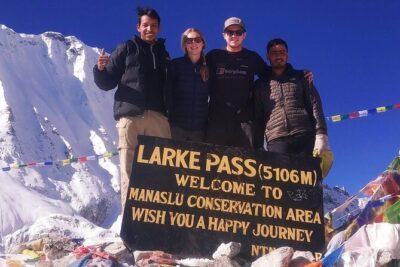
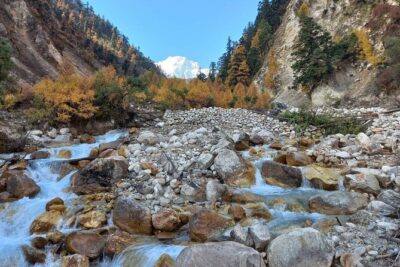
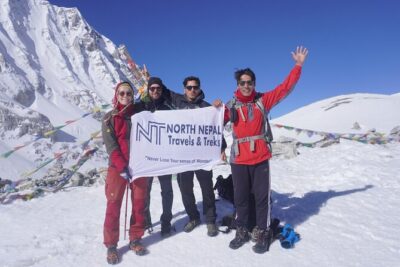
Experience the Thrill of a Lifetime:12-Days Manaslu Circuit trek
Read our review →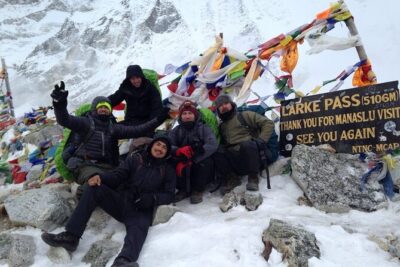
Browse the lists this tour appears in