
The Manaslu Circuit Trek grabs you because it feels like a full Himalaya ring, not a shortcut, with the Budhi Gandaki River guiding you into remote Gurung villages. I especially like how the route builds toward Larkya La Pass at 5,160 meters while also giving you an intentional acclimatization day. The main drawback is simple: this is a demanding high-altitude trek, so you really need strong fitness and a head for long days.
Two things I like about this specific tour setup are the included trekking permits and the tea house lodging, because it keeps the trail logistics straightforward. Another plus is the human support, with a licensed guide and local porters on the ground. One consideration: you are trekking in a weather dependent region, so conditions can affect timing and comfort, especially near the top.
If you want a quieter alternative to the biggest-name routes, this one is built for you. Expect rugged hiking, mountain passes, and small village life that feels more lived-in than staged.
Key highlights at a glance
- Tea house stays: included accommodation on the trek means you can pack for hiking, not for hotel-hunting
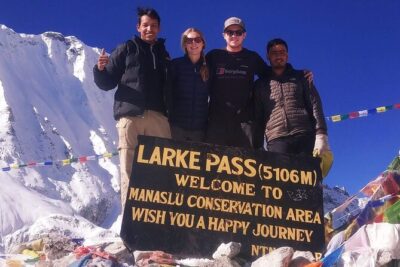
- Larkya La Pass at 5,160m: the route’s crown moment, with big mountain views
- Samagaon acclimatization day: a real pause to help your body adjust before higher ground
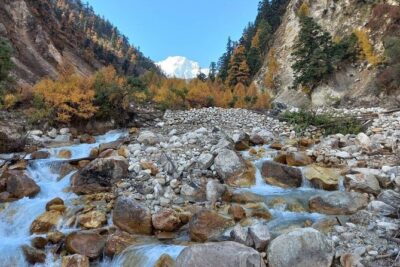
- Budhi Gandaki River corridor: the trekking flow is guided by the valley and villages along the river
- Licensed guide and local porters: professional support plus practical help with carry load
- Flexible planning when weather hits: the operation has a track record of rerouting when needed
Manaslu Circuit Trek, Manaslu Conservation Area: why this route feels different
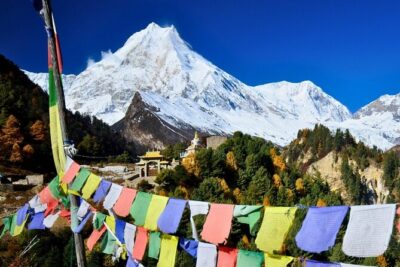
The Manaslu Circuit Trek is a classic Himalayan loop inside the Manaslu Conservation Area, built around Mount Manaslu, the world’s eighth-highest peak. Over roughly 14 days, you cover about 177 kilometers (110 miles), starting in the Soti Khola area and working your way through forested sections, terraced fields, and increasingly high, stark terrain.
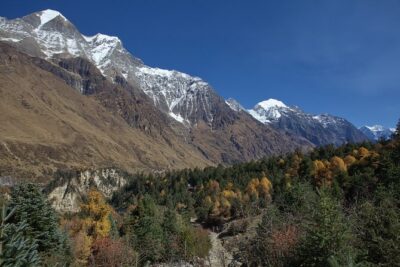
The best part is the mix. Early on, you’re moving through valleys with cultivated fields and small settlements. Later, the trail shifts into higher alpine meadows and colder, more barren high-altitude ground. That change is what makes this circuit feel like it actually travels through Nepal, instead of just checking off one view.
If you care about authentic village culture, you’ll likely enjoy the Gurung areas you pass through, including Jagat, which is described as a major Gurung trail stop in the region. And Samagaon is framed as an origin village and a place to experience local culture up close, not just walk past it.
More of the Manaslu Circuit:
- Manaslu Circuit Trek
★ 5.0 · 292 reviews - Manaslu Circuit Trek
★ 5.0 · 184 reviews - Manaslu Circuit Trek:
★ 5.0 · 106 reviews
Price and what you actually get for $1,300 per person
At $1,300 per person for about 14 days, the value hinges on what is included versus what you’ll pay separately.
Included in the trek cost:
- All trekking permits
- Tea house accommodation throughout the trek
- Three meals a day on the trek (breakfast, lunch, dinner) plus tea
- A licensed trekking guide and local porters
- Kathmandu hotel for 2 nights in a 3-star category, with breakfast
- Airport and hotel pickup and drop, plus transportation tied to the start and return (including express bus back to Kathmandu)
- Sleeping and duffle bag support (after your return to the company)
What is not included:
- Extra nights or extra Kathmandu meals if your schedule shifts
- Private jeep options (Kathmandu to Sotikhola, USD 240 per jeep for 4 to 5 seats, and a private jeep from Dharapani to Kathmandu, USD 340 per jeep for 4 to 5 seats)
- Personal expenses like wifi, mineral water, hot shower, snacks, or extra drinks
- Travel and evacuation insurance
- Tipping for guide and porter
Here’s how I would judge the value. If you want a guided circuit where permits, most meals, and tea house nights are already handled, this package removes a lot of on-the-ground uncertainty. The big extra costs are mostly optional comfort upgrades (private jeeps) and your personal spend. The real must-buy item is insurance, because evacuation coverage is not included.
Also note this tour uses a mobile ticket and offers pickup, which is small but helpful when you land jet-lagged and don’t want to puzzle out transport.
Getting from Kathmandu to the trail: roads, timing, and why day 2 matters
Your trip starts with a welcome in Kathmandu at TIA. From there, you transfer to a hotel for an overnight stay. On the next morning, you head toward Gorkha and then into the trek start zone.
The route uses a mix of ground travel: you leave Kathmandu around 7:30 AM, drive via the Prithvi Highway area (past places like Thankot), and you stop for tea and snacks at Dhading or Malekhu. You’ll also pass through Arughat, which is described as the old starting point of the trek, and after Arughat the roads get rougher, with bumpy off-road conditions expected.
That matters because the first true day of hiking is coming soon, and your body tends to remember bad roads. If you want a smoother ride, the tour offers private jeep options for an added fee, but the included plan uses public express bus transport on the start and return legs.
Bottom line: if you’re prone to motion sickness or you hate rattling vehicles, budget for the private jeep option or bring something to make the ride tolerable. If you’re okay with it, the included transport keeps costs down.
Day-by-day: from Soti Khola to Samagaon and into high pass country
This trek is structured like a gradual funnel. First you settle into the river valley and village trail rhythm, then you step higher through a chain of settlements and acclimatization checkpoints.
More to compare around Kathmandu
- Everest Base Camp Trek – 14 Days
★ 5.0 · 1,499 reviews - Everest Base Camp Trek
★ 5.0 · 842 reviews - Private Kathmandu Sightseeing Tour | UNESCO World Heritage sites
★ 5.0 · 756 reviews - Kathmandu: 7 UNESCO Sites with Lunch
★ 4.8 · 744 reviews
Days 1 to 3: Kathmandu to the river corridor
Day 1 is arrival, welcome, and hotel overnight in Kathmandu. Day 2 is your long travel day toward the trail area, with the journey breaking up with tea/snack stops and a lunch en route, usually centered on dal bhat for energy.
By Day 3, you enter the Manaslu Restricted area and the Manaslu Conservation Area zone. The trek segment described on this day is going toward Philim, after spending time around Jagat, described as a major Gurung trail stop. The overnight is at a lodge.
What to watch for here is patience. The early days are where you learn the pace your guide sets and whether your legs are happy with steady hiking. If you push too hard early, you’ll feel it later when the altitude climbs.
Days 4 to 6: Jagat to Deng to Namrung, then on toward Samagaon
Day 4 takes you through small villages and rivers, with a mix of climbing and bamboo forest sections. You’re headed toward Deng for an overnight lodge stay.
Day 5 is a similar village-to-village transition, moving through places like Ghap and continuing along the Budhi Gandaki corridor. The route is described with cultivated fields of millet, wheat, or barely along the way, then reaching Namrung for the night.
Day 6 continues to Samagaon, described as a highland village with impressive views. On the way, you pass near the Phungen Glacier for a couple of hours before reaching Samagaon for your lodge overnight.
This midsection is where the circuit starts to feel “Himalaya real.” You see more mountain mass, the air feels sharper, and the villages get more spaced out. It’s also the last stretch where your hiking feels more like a long countryside walk than a high-altitude push.
Day 7: the acclimatization day in Samagaon
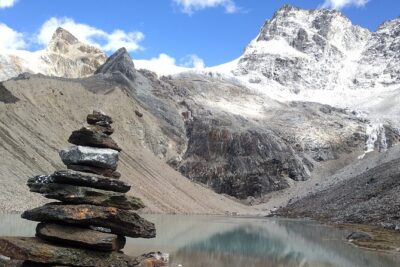
Day 7 is your acclimatization day at Samagaon. Instead of just sleeping and hoping for the best, you visit a lake and a local village as part of the day plan.
This is one of the smartest design choices in the itinerary. Your body needs time to adjust before you go up toward Samdo and beyond. You’re still moving and seeing things, but the day is not a grind.
Days 8 to 10: Samdo, Dharamsala, then Larkya La to Bimthang
Day 8 is the push to Samdo. The route is described with views, then you cross the stream and follow the corridor, reaching Samdo for the night. There’s also a note about seeing Tibetan and Chinese goods carried by yaks along trade routes in the area, which can give the trek a “through-connection” feeling instead of looking like a dead-end wilderness.
Day 9 continues toward Dharamsala and the Larkya Base Camp area. The plan includes hiking along glacier terrain, crossing streams, and then reaching Larkya Bazaar before continuing a few more hours to Dharamsala.
Day 10 is the day of Larkya La. You hike up, reach the pass, enjoy the views, then continue down toward Bimthang for the overnight.
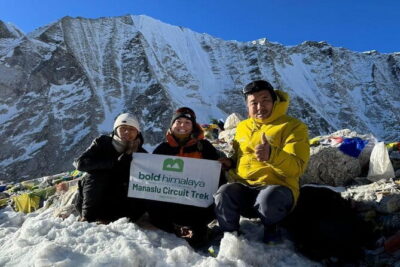
This is the make-or-break day for many people. Larkya La Pass is the highest point on the trek at 5,160 meters. Expect that summit feelings are not just about views, they’re also about breath and stamina. Your guide’s pace and your ability to keep breathing steady make the biggest difference.
Days 11 to 13: Gho to Dharani to Tal, then back to Kathmandu
Day 11 heads to Gho after Bimthang. The route is described as scenic with rest on arrival.
Day 12 moves from Dharani to Tal for another overnight lodge. Day 13 is finishing the circuit and then driving back to Kathmandu. The plan says an express bus plus local sharing, with an overnight in Kathmandu before departure.
The presence of optional private jeep pricing from Dharapani to Kathmandu suggests the return transport stage ends around Dharapani. So if you like being comfortable in the final travel day, consider the private jeep option. If you want to stay with the included plan, you’ll likely use the bus transport.
Larkya La and the acclimatization logic: how to not sabotage yourself
The itinerary uses a sensible approach: you build altitude gradually, then you add a real acclimatization day at Samagaon, and only then do you push deeper into the higher pass zone.
What I like about this plan is that it doesn’t treat acclimatization as a checkbox. Samagaon is scheduled as a proper day to explore a lake and visit a local village. That means you’ll likely move a bit, stay engaged, and still keep the day from becoming an all-out hike.
Then you get the stair-step effect:
- Samdo adds height and remoteness
- Dharamsala and Larkya Base Camp put you close to the pass zone
- Day 10 is the Larkya La effort, then descent and recovery
If you’re the type who always wants to “do more,” this is where you should resist. On high passes, the goal is steady effort, not hero moments.
Tea house nights, meals, and the comfort you get from having it handled
A major included feature is that accommodation during the trek is tea house style. In practice, that means you’re not hauling tents or doing complicated logistics. You settle into a lodge for the night, eat in a common dining area, and focus on sleep and hydration.
Meals are planned as:
- Breakfast, lunch, dinner with tea during the trek
- Lunch and dinner included in the trip setup
- You also get the Kathmandu hotel breakfasts on the 2 nights in the city
One detail I actually like in this tour setup is the mention of morning food touches that can vary from place to place. For example, one past guest noted apple porridge and honey lemon ginger tea at the start of a day. That type of small, warming breakfast helps when the weather turns cool.
Real talk: tea house food is practical, not Michelin starred. But when it’s included and consistent, you lose one of the big travel frustrations, you’re not constantly deciding where you’ll eat next.
Guides and porters: what the strong reviews point to in real life
This tour is built around a licensed guide and local porters, and it’s private, meaning only your group participates.
The high praise themes from past trips focus on guidance style:
- Guides staying caring and professional, with an emphasis on comfort and safety
- Smooth trekking days with few issues
- Clear communication before and during the hike
You’ll see names like Sandesh, Veer, Rabin, Dhansingh, Aita, Sukra Gurung, and Sushil Gurung in the record of guide experiences shared with this operator. While your exact guide can vary, the pattern is clear: the team is expected to be attentive, not just “lead and go.”
Porters matter here because Manaslu Circuit is a big physical commitment. Even if the trek is manageable for you, reducing extra carry load can help you keep energy for the long pass day.
Weather, reroutes, and how to stay sane about plan changes
This is a trek in a high mountain region, and the tour specifically notes that it requires good weather. That means plans can shift if conditions are poor, including the possibility of receiving a different date or a full refund if the experience is canceled due to weather.
I recommend treating the itinerary as a strong plan, not a fragile contract. Your guide and operator will be the ones deciding what’s safe and doable on the ground.
One practical trick: keep your schedule flexible around these dates. If you’re trying to cram this trek into a fixed travel window with no buffer, weather risk becomes much more stressful.
Should you book the Manaslu Circuit Trek with Everest Trekking Routes?
You’ll love booking this trek if:
- You want a challenging but well-supported circuit with permits, guides, meals, and tea house nights handled
- You’re drawn to the Manaslu Conservation Area and the less crowded feel of a quieter route
- You want an acclimatization day in Samagaon before the big pass push
You should think twice if:
- You do not have strong physical fitness for high-altitude trekking and long hiking days
- You hate travel uncertainty, because weather can force changes near higher elevations
- You’re hoping for a fully cushy itinerary, the plan includes trekking and mountain passes, not just scenic walks
If you’re choosing between comfort-first treks and real challenge, this one sits in the challenge category. But the way the route is staged, plus the professional guide and porter support, is exactly why it earns so much high praise.
FAQ
How many days is the Manaslu Circuit Trek?
The trek is listed as about 14 days.
What is the highest point on the trek?
The highest point is Larkya La Pass at 5,160 meters.
Where does the trek start and how do you return to Kathmandu?
The journey begins in the Soti Khola area, and you return to Kathmandu by express bus after finishing the circuit.
Are meals and trekking permits included?
Yes. The trek includes breakfast, lunch, and dinner with tea, and all trekking permits are included.
What are the main things not included in the price?
Not included are extra meals or extra nights in Kathmandu, private jeeps (Kathmandu to Sotikhola, and Dharapani to Kathmandu), personal expenses like wifi or hot shower, and travel and evacuation insurance. Tipping for the guide and porter is also not included.
Is good weather required?
Yes, the experience requires good weather. If it’s canceled due to poor weather, you’ll be offered a different date or a full refund.
Latest Kathmandu write-ups
- Langtang Valley Trek★ 5.0 · 3 reviews
- Khopra Danda Trek★ 5.0 · 3 reviews
- Langtang Valley Trek from Kathmandu★ 5.0 · 3 reviews
- 5 night / 6 days Kathmandu Nagarkot Chitwan Pokhara tour★ 5.0 · 3 reviews
- Nepal Highlights Tour: 5 Nights 6 Days Kathmandu & Pokhara Tour★ 5.0 · 3 reviews
- Kathmandu Valley Private Day Tour★ 5.0 · 3 reviews
- Conquer the Himalayas: The Ultimate 16-Day Annapurna Circuit Trek★ 3.5 · 3 reviews
- Kathmandu Heritage Day Tour★ 5.0 · 3 reviews
Manaslu Circuit Trek, compared.
Manaslu Circuit Trek 8th Highest in the World
Read our review →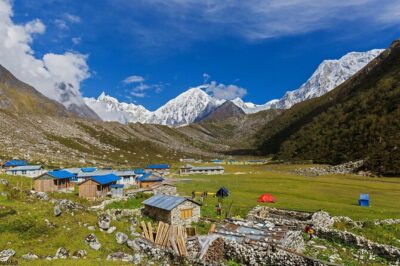
Private 12-Day Manaslu Circuit Trekking in Kathmandu
Read our review →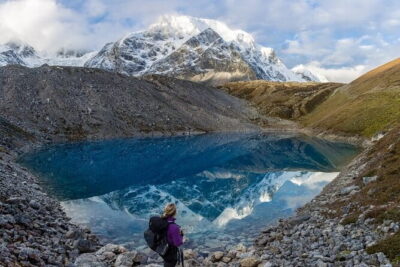
Manaslu Circuit Trek to the Beauty of 8th Highest Mountain
Read our review →Browse the lists this tour appears in