
Reviewed · MANASLU CIRCUIT TREK
Manaslu Circuit Trek
The Manaslu Circuit Trek is interesting because it swaps the crowds for a genuinely remote route and saves the big drama for Larkya La Pass. I love that the trek mixes river walks, forest trails, and high-alpine views, so the scenery keeps changing instead of repeating itself. I also like the planning side, especially the way permits and a registered guide are handled for this restricted area. The main drawback to consider is that altitude is real, and the pass plus the long hiking days will punish anyone who shows up underprepared.
If you want a trek that feels both adventurous and well-supported, this one fits. You’ll hike between Buddhist and Tibetan-influenced villages, sleep in teahouses, and move through landscapes that go from oak and rhododendron forest up toward glacier country. Just remember: the trek is remote, and that means simple lodging and basic facilities, not hotel comfort.
Key highlights I’d circle before booking
- Restricted-area route with permits sorted, so you are not scrambling for paperwork while altitude climbs
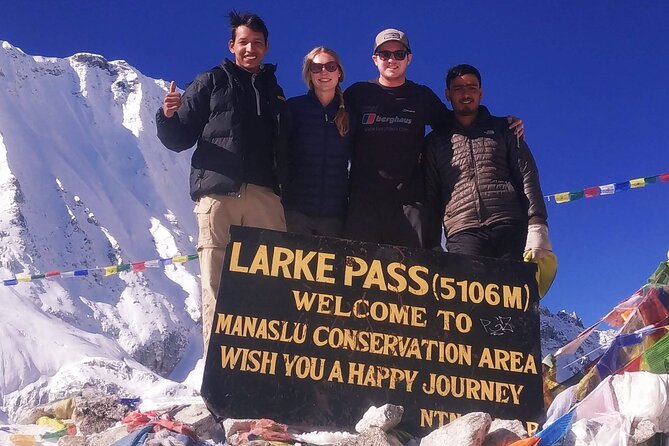
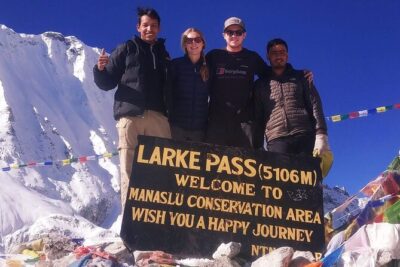
- Real “wow day” at Larkya La Pass, around 5,100 to 5,160 m, with big 6,000 m class views on the far side
- Shyala viewpoint day with a 360-degree-style Himalayan look before you reach the higher villages
- Samdo is special as a Tibetan refugee camp, with strong Manaslu views if you pace yourself
- Strong local guide support with an expert Manaslu local guide plus an assistance guide ratio of 5 trekkers per assistant
- Tea houses keep it practical, with essential services where you need them during the trek
Why Manaslu feels quieter than the big-name treks
Manaslu sits in that sweet spot where you get monumental mountain scenery without the nonstop tourist traffic you see on more famous routes. The trek is remote by design, partly because the Manaslu Conservation Area and restricted sections keep it from becoming a mass-market hike.
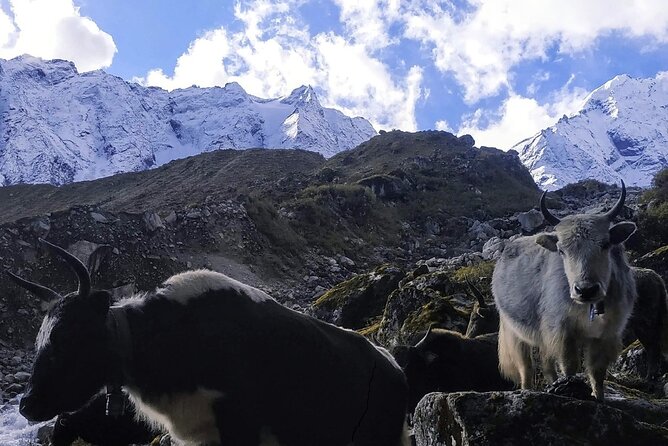
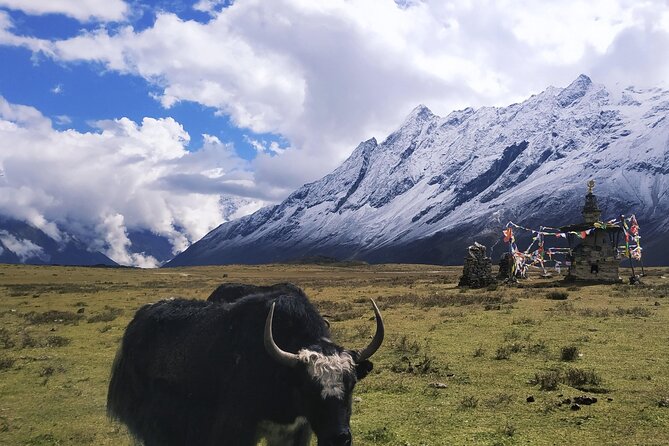
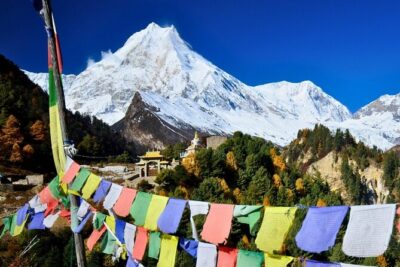
What I find most appealing is that your days feel like they have a point. One day you’re walking along the Budhi Gandaki River valley, the next you’re climbing through forest and waterfalls, then later you’re in classic high-mountain village scenery with yak-friendly vibes and prayer flags. You do not just climb to a pass and call it a day. You earn the pass with a sequence of different environments.
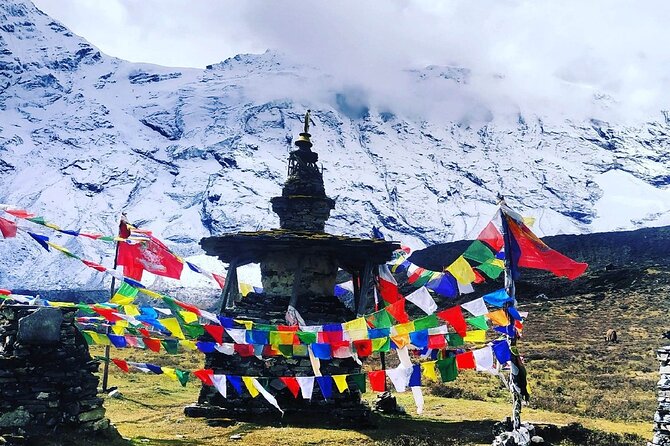
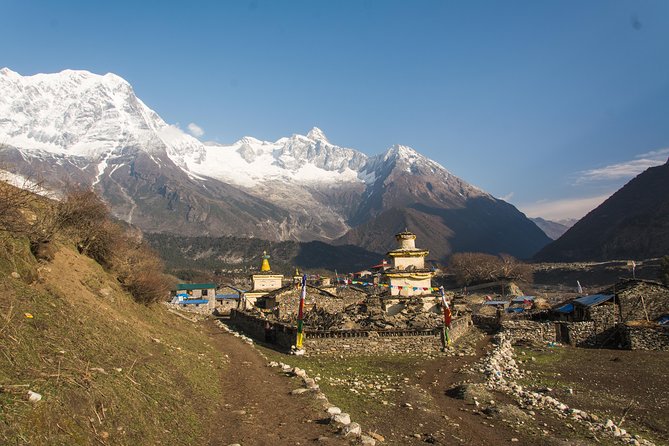
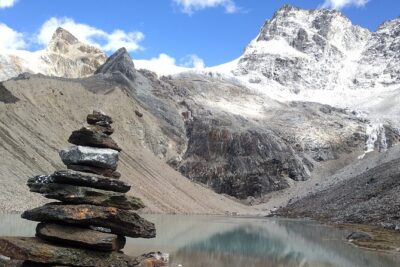
The other reason it feels special is cultural texture. You pass through places with Tibetan influence, you see monasteries, and you encounter mani walls, those stone prayer structures that make the trail feel rooted in local faith rather than just scenery.
The tradeoff is simple: “less crowded” usually means more rustic. If you need reliable hot showers, fast Wi-Fi, or fancy meals every night, plan to be disappointed. This is a trek where the value is the hiking and the views, not the amenities.
More of the Manaslu Circuit:
- Manaslu Circuit Trek
★ 5.0 · 292 reviews - Manaslu Circuit Trek
★ 5.0 · 184 reviews - Manaslu Circuit Trek:
★ 5.0 · 106 reviews
Permits, guide requirements, and why they matter for your trip
This trek is in Nepal’s restricted-area system, which changes the whole vibe. You do not just show up at a trailhead and start walking. You go with a registered guide and you receive the required trekking permissions.
Here’s what is included in the tour package on the paperwork side: ACAP permits, MCAP permit, Manaslu Restricted Area Permit, and a TIMS card. You also get an expert Manaslu local guide, and the guide’s meal, accommodation, salary, and insurance are included.
Why you should care: permits and rules are not just bureaucracy. They often affect access, timing at checkpoints, and how smoothly your route runs. With permits handled, your focus stays where it should be, on acclimatization, pacing, and enjoying the trail.
One more practical note: the tour is private, meaning it’s your group only. That matters on trek days because you’re not guessing how fast strangers will be or whether your schedule will get stretched.
Day-by-day: from Machha-khola along the Budhi Gandaki to Tilje
Below is what your route feels like day to day, with the “why it matters” behind each stop.
Day 1: Kathmandu to Machha-khola, the trek’s real starting gun
You start with an early-day setup: breakfast in Kathmandu, then pickup and a drive to the bus park or private vehicle. You travel by bus or jeep to Machha-khola, where the Manaslu trek begins.
Machha-khola is small and river-centered, on the Budhi Gandaki River. It’s also described as a tiny town known for selling locals from the northern Gorkha District, which gives you a glimpse into how these remote places function as meeting points between valleys. After dinner, you sleep at Machha-khola Hotel.
Practical tip: on day one, don’t overthink altitude. This is mostly logistics plus getting your legs ready for the steady hiking rhythm to come.
More to compare around Kathmandu
- Everest Base Camp Trek – 14 Days
★ 5.0 · 1,499 reviews - Everest Base Camp Trek
★ 5.0 · 842 reviews - Private Kathmandu Sightseeing Tour | UNESCO World Heritage sites
★ 5.0 · 756 reviews - Kathmandu: 7 UNESCO Sites with Lunch
★ 4.8 · 744 reviews
Day 2: Forest walking to Jagat, waterfalls and mani walls
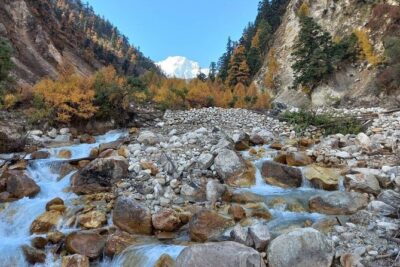
You trek from Machha-khola toward Jagat, usually about a 7-hour day. The route runs through a forest where you may see monkeys, birds, and deer. You also pass waterfalls and a mani wall, those stone prayer inscribed structures that are common in Tibetan-influenced regions.
Jagat sits at the foot of the Ganesh Himal, so even though you’re not at the highest elevation yet, the mountain presence starts to show itself. You’ll find teahouses and lodges here, so it’s a practical base for the next day.
Consideration: wildlife sightings are never guaranteed, but the forest feel is. Dress for cool shade and bring a layer you can rely on when the sun disappears under trees.
Day 3: Philim and Deng, suspension bridges and valley rhythm
Today’s trek is described as relatively easy, around 6 hours. You gradually move uphill, then reach a river crossing where you cross a suspension bridge over the Bhudi Gandaki River. You pass through Philim, then continue to Ekle Bhatti, a ridge-top settlement, and cross another suspension bridge to descend into Deng.
Deng is in a valley and again has teahouses and lodges, which helps keep the route predictable as you settle into the trek routine.
Why this day matters: suspension bridges remind you that the valley is the main transport corridor. Your pace and caution here will make later days less stressful, because you learn where the “slow down” moments are.
Day 4: Namrung day, viewpoints open up
You start by heading down to the riverside, cross a bridge, and then climb up through a sequence of stops: Ranagoan, Bihi Phedi, then the trail split. Take the right-hand option toward Ghap, pass Ghap village, and continue up to Namrung.
You’ll be doing about 6 hours of hiking. Namrung is where the view energy ramps up, with clear sightlines toward the Ganesh Himal, Shingri Himal, and Kutang Himal.
A drawback to keep in mind: this is still a working trek day, so if you go too fast out of excitement, you’ll feel it later on acclimatization days.
Day 5: Lho at 3,280 m, forest to permit-check reality
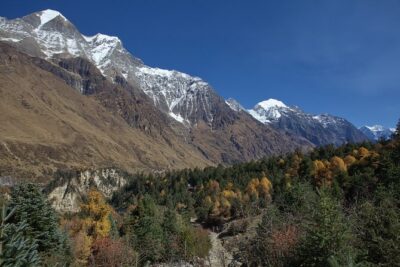
From Namrung you head toward Lho. The trail moves through oak, fir, and rhododendron forest, which is a nice break from the harsher high-altitude vibe.
There’s also a permit check post, and you’ll need to show your trekking permit. This is one of those days where the restricted-area structure becomes tangible, not theoretical.
After passing villages like Lihi Gaon and Sho Goan, you reach Lho at around 3,280 m. You stop for lunch at a local restaurant in Lho, then have a traditional Nepalese dinner at your lodge.
Practical tip: between the forest shade and early climbing, sweat can sneak up on you. A breathable base layer plus a warmer outer layer is your friend.
Day 6: Samagaun (Sama Ryo), Shyala’s wide-open views
This is a strong scenery day. You trek up to Sama (Ryo) and stop in Shyala for a 360-degree-style Himalayan view.
From there you continue to Sama (Ryo), with views of Manaslu and also Himal Chuli, Nadi Peak, Naike Peak, Kutang Himal, and Pangbuche Himal.
The reason I like this day: it helps your brain understand what kind of mountains you’re heading toward. After Shyala, the high pass feels less random and more like a destination with context.
Day 7: Acclimatization at Samagaun, you choose your altitude workout
This is your acclimatization day, and it’s built for the way your body actually works at altitude. You can hike around Birendra Lake and Manaslu Base Camp, or hike up to Pungen Gumpa, then return to Sama (Ryo).
This day is short on hours, about 2 hours noted, so it’s more of a guided body-adjustment than a grind. It’s also the day you should listen to your guide’s advice on pace and effort.
If you’re carrying extra nervous energy, use it to stay disciplined: keep the hike steady and avoid turning “acclimatization” into a second pass attempt.
Day 8: Samdo, slow climbing and the Tibetan refugee camp feeling
After breakfast, you trek up to Samdo. Because of higher elevation, the day’s message is to go slowly. You reach Samdo village by lunchtime, then you can rest or hike up to Samdo Peak if you have the stamina.
Samdo is described as a well-known Tibetan refugee camp. That matters because it changes your sense of who lives here. This is not just a stop for trekkers. It is a functioning community shaped by history.
Why Samdo is a highlight: the views of Mt Manaslu from Samdo Peak are described as incredible if you have energy for the extra climb. Even if you skip the peak, Samdo itself is often a turning point where the trek feels truly high and serious.
Day 9: Dharmasala (Larkya Phedi), Larke Bazaar and pass prep
You depart for Dharmasala, known also as Larkya Phedi. The trail slowly climbs, and you overnight near the base of the Larkya La crossing, so day 9 is about arriving, resetting, and getting sleep.
Along the route you pass a seasonal Tibetan market called Larke Bazaar beside the Budhi Gandaki River, plus traditional monasteries. This is a cultural buffer before the most physically demanding day of the route.
You’re also prepping for Larkya La, around 5,160 m. Your best move is straightforward: take rest seriously, and protect your batteries and warm layers, because mornings near passes can get cold fast.
Day 10: Larkya La Pass to Bhimtang, the crown day
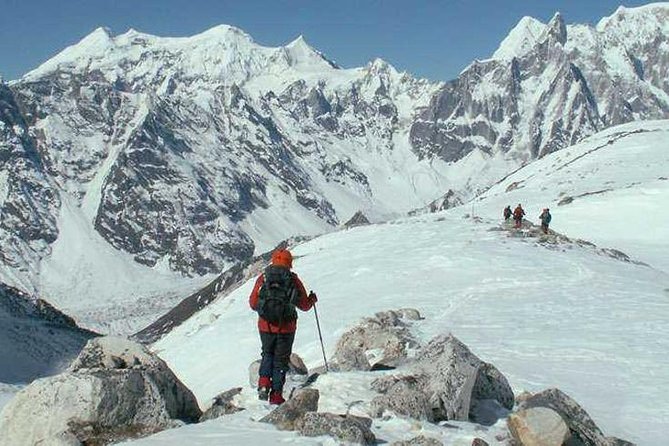
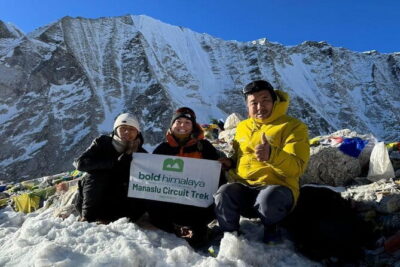
This is the crucial day. You wake early, have breakfast, and hike slowly up to the pass. At Larkya La, you take a break for the views, then descend toward Bhimtang.
The day is described as about 7 to 8 hours depending on pace and conditions. From the pass area, views include Cheo Himal, Gyaji Kung, Kang Guru, and Annapurna II, all above 6,000 m.
Why this day feels worth it: your reward is not one framed peak. It’s a panorama of multiple giants in different directions. That moment is why this circuit is famous in trekking circles.
Bhimtang is also described as possibly the best accommodation of the trek. After the pass, you’ll appreciate the relative comfort more than you think you will.
Day 11: Down to Tilje via Ghoa, sunrise vibes and a cultural reset
This is mostly downhill, which sounds easy until you remember your knees and ankles still work hard when you’re tired. You hike to Ghoa after about 4 hours, then keep descending to Tilje, where you sleep.
You can also plan for a sunrise view from the teahouse if you wake early. Tilje is described as a beautiful village with local culture, and it’s noted that you may find good hotels and free Wi-Fi after crossing the mountain.
Even if Wi-Fi matters less than views, it can be helpful for sharing photos and checking in.
Day 12: Dharapani to Besisahar by jeep, where the trek finally cashes out
After breakfast, you follow the trail down to Dharapani, at the confluence of the Marsyangdi and Trishuli rivers. You walk through pine forests and small villages, then have lunch in Dharapani.
After lunch you arrange a jeep to Besisahar, about 2 hours, and check into your hotel. It’s the end of the massive Manaslu circuit trek section, so you’ll want time for good food and a cold drink before you plan your next steps.
Tea houses, food, and the comfort level you should expect
This trek uses teahouses for lodging, which is part of the value. You get essential facilities without needing to arrange camping gear. It also means you can adjust meals based on how you feel that day.
The important catch: foods and drinks during the trek are not included in the base price. The tour does say you can buy meals at tea houses during the trek. So in your budget, assume you’ll pay for each meal and for any extras like hot drinks and snacks you want to buy.
Also, Wi-Fi, battery charging, and hot showers are not included. You can’t rely on them every night. That’s not a dealbreaker for me, but it changes how you pack: bring a power bank, plan for cold water, and decide in advance how many times you need to connect.
Porters and hot-shower expectations can also get mixed up. A personal or sharing porter is not included, though you can hire one, with a 20 kg limit. If you want a lighter backpack for the long pass day, this can be worth it.
Value for $589: what you get, what you pay extra, and what it really means
At $589 per person, this tour is positioned as a logistics and guide package, not an all-in hotel resort.
Included:
- airport pickup and drop off in Kathmandu
- transport to the trekking starting point, Machha-khola, and the return transfer
- permits for the restricted-area setup: ACAP, MCAP, Manaslu Restricted Area Permit, plus TIMS
- expert local guide, with the guide’s meal, accommodation, salary, and insurance covered
- assistance guide support, with one assistant guide per five trekkers
- government and local taxes, plus agency charges
- an achievement certificate
Not included:
- meals, drinks, and accommodation during the trek (though accommodation and meals can be provided with an additional charge)
- monastery or temple entrance fees
- porter costs (you can share a porter)
- Wi-Fi, battery charge, hot shower, and buying souvenirs
- personal trekking gear, travel insurance, and Nepal visa fees
- tips for guide and porter
How I judge the value: if you want permits taken care of and you want a competent local team carrying the day-to-day decisions, this package price makes sense. Your biggest out-of-pocket costs will be on food and basic comforts during the trek, plus any porter help you choose. If you’re the kind of traveler who likes a plan that runs on time, the guide and permit inclusion are the reason this feels fair.
If you’re on the fence because meals and trek lodging cost extra, do the math. The trek itself is teahouse-based, so most people will spend money anyway. The question is whether you want to decide meals yourself or have the option offered to bundle those costs.
The skills you need for this trek (and the ones you can borrow)
This experience is aimed at travelers with moderate physical fitness, with notes that you should have strong fitness too. Translation: the route is demanding enough that you should arrive with consistent walking ability, not just casual fitness.
The altitude profile matters:
- you’re moving from lower valleys up toward high village stops like Lho around 3,280 m, then Samagaun, then Samdo
- you have an acclimatization day at Samagaun
- you still finish with the big pass day at Larkya La around 5,100 to 5,160 m
So your best strategy is boring and effective: pace slower than you want, take acclimatization seriously, and do not treat the pass like a race.
Gear basics are also mentioned: trekking boots, warm clothes, and trekking gears. I’d also plan on the reality that weather can shift quickly in the pass zone. Layering matters more than one perfect jacket.
Group size can affect the experience. The tour requires a minimum of two travelers and is private for your group. With that structure, the guide and assistant can tailor pacing better than in a giant open-join trek.
Who should book the Manaslu Circuit Trek, and who should skip it
This tour makes the most sense if you:
- want a quieter circuit trek with Tibetan-influenced stops
- like big viewpoints, especially Larkya La day
- want permits and route logistics handled properly for a restricted area
- are happy with teahouse travel and buying meals on the trail
You might want to skip or reconsider if you:
- get nervous about altitude and long hiking days
- expect hot showers, constant charging, and high-end comfort
- are unwilling to carry layers and manage simple living during remote nights
Final decision: should you book this tour or keep shopping?
If your priority is a smooth, permission-correct Manaslu Circuit with an expert local guide and a real focus on pacing, I’d book this style of tour. The $589 price is not paying for luxury. It’s paying for the hard parts that can go wrong on restricted treks: permits, guidance, transport to and from Machha-khola, and support in the field with an assistance guide ratio.
I’d especially feel good about booking if you want a team that shows up organized. Past experiences with guides and managers connected to this operator have highlighted flexibility and attentiveness, with names like Roshan Pandey, Kumar Neupane, Arjun, and Madan showing up repeatedly as people who make the process feel controlled, not chaotic.
My practical “yes, but” is to plan your budget for trek meals and teahouse basics, and to treat acclimatization and the pass day as the main event. Do that, and you’ll likely come away with that rare feeling: a remote trek that still runs clean.
FAQ
How long is the Manaslu Circuit Trek?
The tour duration is listed as 12 days approximately.
Where does this Manaslu trek start and end?
It starts in Kathmandu, with pickup at Touch The Himalaya Treks & ExpeditionJP Rd, Kathmandu 44600, Nepal. It ends back at the meeting point in Kathmandu.
What is the price per person?
The price is $589.00 per person.
What permits are included for this trek?
The tour includes ACAP permits, MCAP permit, Manaslu Restricted Area Permit, and a TIMS card.
Is airport pickup included?
Yes. Airport pick up and drop off by car, jeep, Hiace, or bus is included depending on group size.
What is included in the trek support?
An expert Manaslu local guide is included, including the guide’s meal, accommodation, salary, and insurance. There is also an assistance guide, with one assistance guide for each group of five trekkers.
Are meals and lodging during the trek included?
Foods, drinks, and accommodation during the trek are not included in the base price. They can be provided with an additional charge. You can also buy meals at tea houses during the trek.
Do I need a porter?
A personal or sharing porter is not included. You can hire a porter, and the limit is 20 kg, with sharing possible for 2 to 3 trekkers.
Is Wi-Fi or hot shower included?
No. WiFi, battery charge, and hot shower are not included.
Is the trek suitable for kids or service animals?
Service animals are allowed. Children must be accompanied by an adult. The trek also notes that travelers should have a moderate physical fitness level (with strong fitness mentioned as well).
What is the cancellation timeframe?
Free cancellation is offered, and you can cancel up to 24 hours in advance for a full refund. If you cancel less than 24 hours before the start time, the amount paid is not refunded.
Latest Kathmandu write-ups
- Langtang Valley Trek★ 5.0 · 3 reviews
- Khopra Danda Trek★ 5.0 · 3 reviews
- Langtang Valley Trek from Kathmandu★ 5.0 · 3 reviews
- 5 night / 6 days Kathmandu Nagarkot Chitwan Pokhara tour★ 5.0 · 3 reviews
- Nepal Highlights Tour: 5 Nights 6 Days Kathmandu & Pokhara Tour★ 5.0 · 3 reviews
- Kathmandu Valley Private Day Tour★ 5.0 · 3 reviews
- Conquer the Himalayas: The Ultimate 16-Day Annapurna Circuit Trek★ 3.5 · 3 reviews
- Kathmandu Heritage Day Tour★ 5.0 · 3 reviews
Manaslu Circuit Trek, compared.
Manaslu Circuit Trek 8th Highest in the World
Read our review →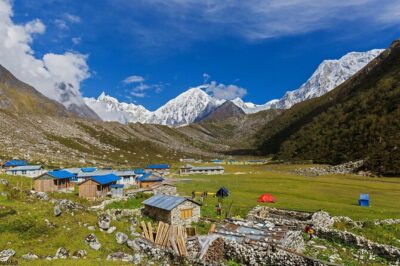
Private 12-Day Manaslu Circuit Trekking in Kathmandu
Read our review →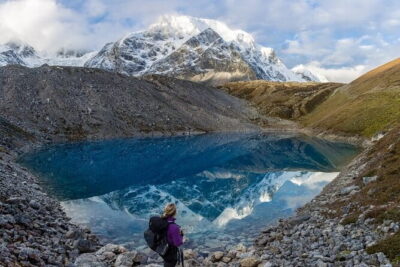
Manaslu Circuit Trek to the Beauty of 8th Highest Mountain
Read our review →Browse the lists this tour appears in