
Reviewed · MANASLU CIRCUIT TREK
Manaslu Circuit Trek
Manaslu Circuit Trek is interesting because it traces a real off-the-beaten-path Himalayan circuit, where daily life in Nepal shifts from Hindu heartland villages to Tibetan Buddhist gompas. You also get one of the trek’s main rewards, dramatic views of Manaslu and a serious high-pass moment at Larkya La (5,160m).
Two things I really like are how well the trip is set up for trekkers who want structure, not guesswork, and the care touches that show up in the small details. In particular, you get a licensed English-speaking guide (with Base Camp Adventure teams that have included guides like Prakash and Shiva), plus practical gear like a down jacket and sleeping bag, and even an oxymeter check for oxygen and pulse.
One possible drawback to plan for: the walking is demanding at altitude, with rocky, slippery sections, lots of river crossings, and a long day climbing to the pass. If you’re not used to multi-day treks or you hate cold mornings, you’ll feel it.
Key things to know before you go on the Manaslu Circuit
- Budhi Gandaki River route: waterfalls, gorges, and frequent suspension bridges shape the days
- Culture shift on the trail: Hindu villages gradually give way to Tibetan-style gompas and mani walls
- Sama Gaon acclimatization day: rest plus visits like Birendra Tal, Manaslu Base Camp area, and Punggen Gompa
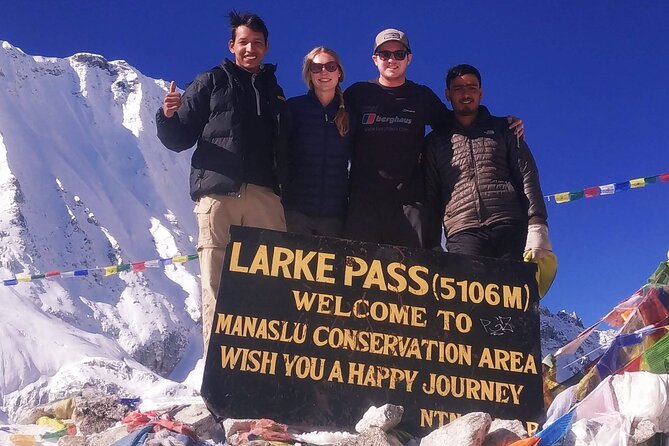
- High point drama at Larkya La (5,160m): prayer flags and big panoramas after a long climb
- Included trek kit and safety checks: down jacket, sleeping bag, duffel bag, and an oxymeter
- Private group experience: only your group participates, with porter support for luggage
Why this circuit feels special, not just scenic
The Manaslu Circuit works because it’s not only about the view. Yes, you’ll see Manaslu, and yes, the high pass gives you a huge panorama. But the better payoff is how the trail lets you watch the Himalayas and people interact, day after day.
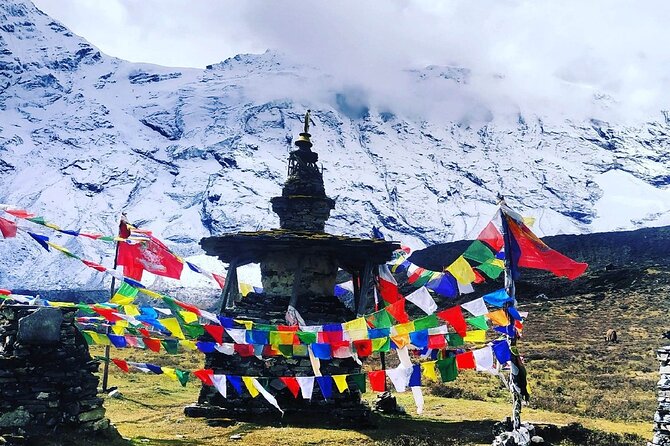
You start in river valleys and village footpaths where you’ll notice daily routines: slate-roof houses, small lodges, prayer flags, and carved stone with Buddhist imagery. As you move clockwise around the circuit, the religion on signs, in stone carvings, and in temple life shifts more clearly toward Tibetan Buddhism, especially around places like Lho with its big gompa and Shyala with its packed stone-and-wood houses.
If you like authentic travel, you’ll also enjoy that this trek spends real time in small settlements, not just quick photo stops. Your days include walking through places like Jagat with its slate-paved streets, and villages where people rely on tourism, farming, education, and government services.
The tradeoff is time and effort. This is a 13-day route with altitude climbing, and you should treat it as an active program, not a casual hike.
More of the Manaslu Circuit:
- Manaslu Circuit Trek
★ 5.0 · 292 reviews - Manaslu Circuit Trek
★ 5.0 · 184 reviews - Manaslu Circuit Trek:
★ 5.0 · 106 reviews
The start in Kathmandu: early pickup and the road to Soti Khola
Your trek begins early. Pickup is offered, and the meeting point is Tridevi Sadak in Kathmandu, with a start time of 6:00 am. The first transfer takes you out toward Soti Khola, where the roads can be dirty and rough.
Why this matters: that first day is your “wake up to Nepal trekking” moment. The ride is bumpy, and if you get motion sick easily, plan for that. But you’re also treated to a moving show of rice fields, waterfalls, and village greenery, plus chances to stretch your legs when the schedule allows.
When you reach Soti Khola, you’re already in a valley rhythm. The overnight there sets you up for the next day’s river-basin trekking, and it feels less like arrival and more like day one of real walking.
Days along Budhi Gandaki: suspension bridges, waterfalls, and stone villages
From Day 2 onward, the circuit leans hard into the Budhi Gandaki basin. Expect narrow paths, rocky footing, and several waterfall crossings as you move through jungle-like vegetation. The trail can be slippery on uneven stone, so you’ll want trekking poles and you’ll want to keep your focus.
Machha Khola is a key overnight in this stretch. It sits in a hillside setting where you find basic lodging and a medical clinic if you need it. That’s useful because you’re far from big-town services, even though this trek is well organized.
By Day 3, you reach Tatopani, then pass through Dobhan and Shyaule Bhatti, eventually arriving at Jagat. The Jagat description includes a campsite in the lower part of the village and lodges with basic accommodations, plus the feel of a working community supporting tourism alongside agriculture and other local jobs. That’s the kind of place where you get a real sense of how trekking fits into life here.
A highlight in this river-run segment is the way the route repeatedly pairs dramatic gorge scenery with practical trail decisions. You’ll climb in and out of river sections, cross suspension bridges, and keep working along the valley walls. It’s not just pretty, it’s educational, because you learn quickly how Nepal’s trails are built to work with the terrain, not against it.
Salleri to Deng: forest hiking plus mani walls and the river gorge feel
Day 4 starts with a push to Salleri, known for views of Shringi Himal (7,187m). From there you continue along the left bank of Budhi Gandaki, ascending toward Philim through thick forest.
Then comes a big thematic move for the trek: you’re walking into the narrower valley lead-up toward Larkya La at 5,160m. You pass the Ekle Bhatti area, then cross high above a spectacular gorge with pine trees, which can feel like you’re walking on the edge of the valley’s world.
By Deng, you get the sense that the trek is entering the higher, wilder mood. Overnighting here matters because it places you well for the next day’s crossing sequence and the increasing presence of Buddhist elements along the trail.
On Day 5, you’ll cross Budhi Gandaki again on a suspension bridge, climb toward Rana and Bihi, and move in and out of gorges. A memorable cultural stop appears at Ghap, where mani walls display intricate Buddha carvings in meditation poses. These details are the kind you only notice if you’re not rushing, and the circuit gives you that slow, steady pace.
Then the trail shifts into fir forest with birds, narrows again with a canyon crossing, and ends at Namrung, a picturesque village reached after about 1.5 hours of climb from Ghap. Namrung gives you the “you’re in the circuit now” feeling.
More to compare around Kathmandu
- Everest Base Camp Trek – 14 Days
★ 5.0 · 1,499 reviews - Everest Base Camp Trek
★ 5.0 · 842 reviews - Private Kathmandu Sightseeing Tour | UNESCO World Heritage sites
★ 5.0 · 756 reviews - Kathmandu: 7 UNESCO Sites with Lunch
★ 4.8 · 744 reviews
Namrung to Lho to Shyala: the Manaslu view corridor
Day 6 is about gradually opening the sky. You pass Bhanzam and barley fields with stone houses, then reach the entrance to Lihi, where you get a 360-degree view that includes Manaslu (8,163m). That moment helps you connect the big mountain name to something real, not just a number on a map.
From Lihi, you cross Hinang Khola to reach Lho, which is dominated by a large gompa on the hill above the village. This is one of those overnight areas that feels like a spiritual landmark as much as a stop for sleep. From the gompa area, you get an undisturbed view of Manaslu.
Then you climb toward Shyala through a compressed forest and continue along slopes near the Punggen Glacier area. Shyala is described as having an eccentric vibe, with stone and wood houses packed closely together. That kind of dense settlement, right on the edge of glacier terrain, is one reason trekkers come to this circuit for more than photos.
Sama Gaon rest day: acclimatization with real culture stops
Day 7 is your rest day in Sama Gaon, and it’s not just a break from walking. This is your altitude insurance, and you’ll appreciate it more than you think once the pass day arrives.
You can explore around Sama, including visits to Birendra Tal, the Manaslu Base Camp area, PemaChyolingLhakang, and Punggen Gompa. Since Sama Gaon sits under Manaslu’s shadow, even short walks around the settlement feel purposeful.
This rest day is a smart value add. You’re still moving, just not working your legs as hard. It gives you time to slow down, absorb the shift in village style, and check how your body feels before the circuit’s later altitude pushes.
Birendra Tal and Samdo: frozen lake, yak pastures, and marmots
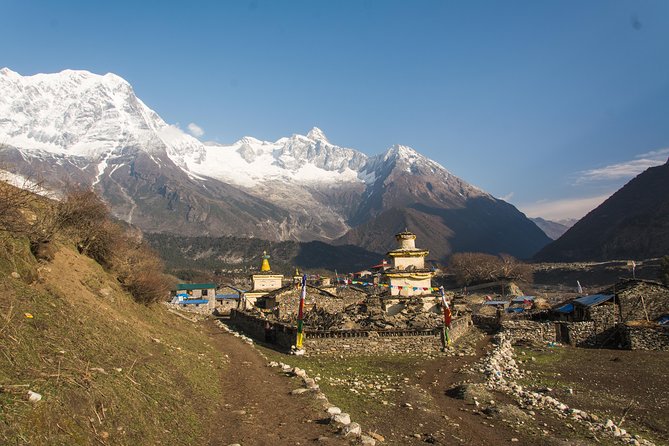
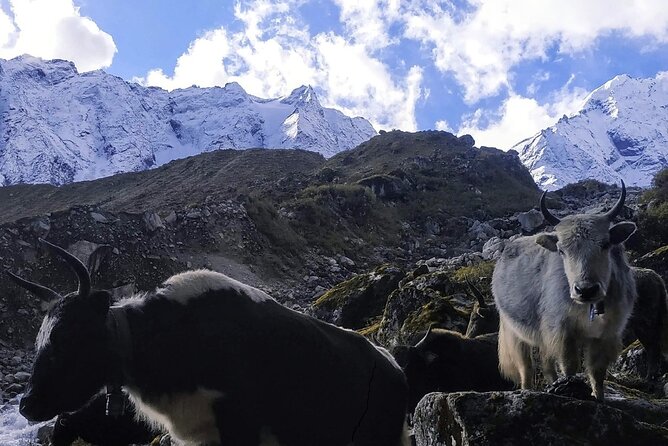
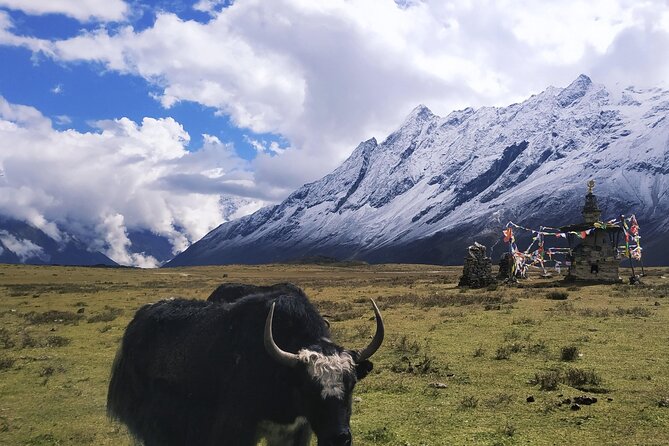
On Day 8, you head uphill via the frozen Birendra Tal (3,450m) under the Manaslu Glacier. It’s then relatively easier walking through yak pastures, with long mani walls guiding you along.
You’ll also be watching for wildlife, and the route description includes marmots standing on their burrows. That small detail is worth it, because it makes the day feel like more than a route. The circuit rewards attention.
Eventually you climb to a ridge, drop to cross Budhi Gandaki on a wooden bridge, and reach a white chorten. Samdo comes just after, and it’s described as a yak-herding village where there are more animal and hay shelters than human accommodations. That’s a clue that you’re not just hiking through scenic places. You’re entering working country where survival depends on livestock.
Overnighting in Samdo keeps you high and gives you momentum for the next day’s descent.
Dharamsala (Larke Phedi): thin tracks, gorges, and big pass views
Day 9 starts with descent past Samdo, then walking on a wider trail that dips to cross a reduced Budhi Gandaki. You pass the trail toward Tibet to the right and climb left past a mani wall through juniper with marmots.
The route includes crossing two gorges on thin tracks before you reach Dharamsala, also known as Larke Phedi. Dharamsala is described as a stone hut with three rooms and an almost integral roof. It’s basic, and that’s exactly why it matters, this is a staging area for the pass day where simple shelter beats comfort.
The views from Dharamsala are wonderful, with the whole Manaslu Himal range visible from this point. Even if you’re tired, it helps your brain understand why tomorrow matters.
Larkya La day (5,160m): long climb, then a panorama you remember
Day 10 is where the trek’s effort pays off. You climb gradually over the edge behind Dharamsala along the large adjacent moraine of the Larke Glacier. This climb is long and rocky, and it’s the kind of terrain that tests pacing.
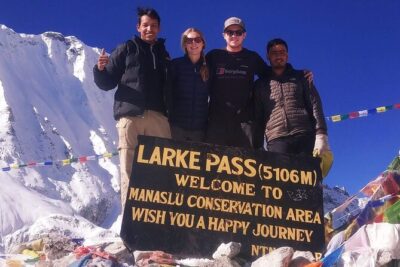
Then you descend past four frozen lakes and make a final climb to the top of Larkya La (5,160m), marked by prayer flags. From the pass, you can see an astonishing panorama of the Manaslu Himal range and the Annapurna range.
Practical note: this is the day where the included oxymeter and the guide’s pacing matter most, especially if you’re sensitive to altitude or slow to warm up in the morning. You’ll want to keep your energy steady from the start and not chase early views at the cost of your breathing.
After the pass, you incline down the moraine to the west and then drop gently toward Bimthang, where you overnight.
Bimthang to Dharapani: forests, prayer-flag spots, and quiet trail moods
Day 11 keeps you moving south with mesmerizing trail segments. Vegetation becomes lush, and the route crosses the foot of Bimthang Glacier with fantastic background views.
You climb to a beautiful spot decorated with prayer flags and experience overwhelming mountain surroundings, including Manaslu Himal range view to the south-east. Then you go into an enchanted forest rich with firs.
The day includes lunch at a lonely house in Yak Kharka, then continues through deep forest until reaching Goa and overnighting in Dharapani. This part can feel quieter than the early days by rivers, and it’s a good mental reset after the pass.
The jeep day to Besisahar: off-road reality and then Kathmandu comfort
Day 12 is a break from footwork. You take an off-road jeep for about four hours to Beshisahar, then do shorter walking segments into villages like Syange, plus an ascent to Gharmu Phant and descent back to Besisahar.
This matters because it saves your legs. After a high pass day and multiple forest trekking days, a jeep segment is not luxury, it’s recovery.
Day 13 is the exit day. You drive back to Kathmandu from Besisahar, and once you arrive, you get transferred to a 5-star hotel for an overnight stay. After days of basic accommodations, this kind of reset is one of the best feelings of the whole trek.
What you get for the price: $1,950 and why it may or may not fit your style
At $1,950 per person for an approx 13-day trek, the value is less about the mountains and more about how the logistics are handled. This price includes:
- Guest houses during the trek (mainly twin sharing)
- A local government licensed English speaking trekking guide
- A porter system (1 porter for 2 trekkers)
- Permits and entry fees
- Key gear: down jacket, sleeping bag, and a duffel bag
- Safety gear: an oxymeter for oxygen saturation and pulse, plus a first aid medical kit
- Surface transfer from and to Kathmandu
- Meals: breakfast on 12 mornings, lunch on 11 days, dinner on 12 evenings (as listed)
What that means for you: you’re paying for less gear hauling and less decision fatigue. Many trekkers underestimate how much “small stuff” adds up, like hiring permits, arranging transfers, finding reliable lodging, and having someone who knows when conditions change.
The tradeoff is personal equipment. Even though big items are included, you still need your own personal trekking gear (listed as not included). If you already own quality boots and cold-weather layers, you’ll feel the price more cleanly. If you need to buy everything new, your true total cost will rise.
Also, the trek requires moderate physical fitness and depends on good weather. That matters because the high pass timing and safe trail conditions are not fully in your control.
The guides and team support: professionalism you can feel in the hard parts
The experience is private, meaning only your group participates. That can be a quiet advantage because you’re not stuck with strangers changing the pace or pushing comfort limits.
In the reviews, Base Camp Adventure teams get praised for professionalism and support, including guides like Prakash and Shiva. The theme is simple: when you’re climbing rocky ground, crossing suspension bridges, and dealing with cold air at elevation, you want calm guidance and help with the practical stuff, not just a person who points at mountains.
There’s also a safety vibe. The inclusion of an oxymeter and first aid kits means your guide isn’t guessing if you’re struggling. They can check oxygen saturation and pulse and adjust pacing and needs more intelligently.
How this trek matches different kinds of travelers
This Manaslu Circuit Trek is a strong fit if you want:
- A mix of Hindu and Tibetan Buddhist culture on the trail
- A real circuit that uses small villages like Jagat, Namrung, Lho, Samdo, and Dharamsala
- The big pass experience at Larkya La with prayer flags and wide mountain views
- A supported trek with a porter, licensed guide, and included sleeping gear
It’s less ideal if:
- You dread cold mornings, because high altitude nights and the pass day can be chilly
- You hate simple guest house lodging, since accommodations are basic in most villages
- You have limited trekking fitness, because the route includes long climbs and rocky footing
Should you book this Manaslu Circuit Trek?
If you want a guided, well-supported Manaslu Circuit with the key safety and logistics built in, I’d say it’s worth serious consideration. The included guide, porter, permits, and trek sleeping system remove a lot of risk and hassle. And the route gives you more than one kind of reward, rivers and bridges early on, gompa and mani walls as you climb, then the Larkya La panorama when effort peaks.
I’d only hesitate if you’re planning to treat this like an easy hike or if you’re not comfortable with altitude and cold. The trek is described as intense, and the highest point is not a stroll.
If you’re ready for a proper Himalayan circuit and you like travel that feels grounded in daily village life, this one should land well.
FAQ
Where is the meeting point in Kathmandu?
The meeting point is Tridevi Sadak, Kathmandu 44600, Nepal.
What time does the trek start?
Start time is 6:00 am.
Is pickup offered?
Yes, pickup is offered.
How long is the Manaslu Circuit Trek?
It runs for about 13 days.
What lodging and meals are included?
You get guest house accommodation during the trek (mainly twin sharing). Meals are included as listed: breakfast (12), lunch (11), and dinner (12).
What trekking support and safety items are included?
A licensed English-speaking trekking guide is included, along with a porter (1 porter for 2 trekkers). You also get down jacket, sleeping bag, and duffel bag, plus an oxymeter and a first aid medical kit.
What is the highest point on the route?
The trek crosses Larkya La at 5,160m, marked by prayer flags.
Is cancellation possible if weather is poor?
The experience requires good weather. If it’s canceled due to poor weather, you’ll be offered a different date or a full refund. You can also cancel up to 24 hours in advance for a full refund.
Latest Kathmandu write-ups
- Langtang Valley Trek★ 5.0 · 3 reviews
- Khopra Danda Trek★ 5.0 · 3 reviews
- Langtang Valley Trek from Kathmandu★ 5.0 · 3 reviews
- 5 night / 6 days Kathmandu Nagarkot Chitwan Pokhara tour★ 5.0 · 3 reviews
- Nepal Highlights Tour: 5 Nights 6 Days Kathmandu & Pokhara Tour★ 5.0 · 3 reviews
- Kathmandu Valley Private Day Tour★ 5.0 · 3 reviews
- Kathmandu Heritage Day Tour★ 5.0 · 3 reviews
- Conquer the Himalayas: The Ultimate 16-Day Annapurna Circuit Trek★ 3.5 · 3 reviews
Manaslu Circuit Trek, compared.
Manaslu Circuit Trek 8th Highest in the World
Read our review →
Private 12-Day Manaslu Circuit Trekking in Kathmandu
Read our review →
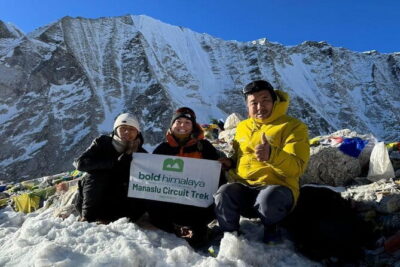
Manaslu Circuit Trek to the Beauty of 8th Highest Mountain
Read our review →Browse the lists this tour appears in