
Reviewed · ANNAPURNA BASE CAMP TREK
Private 12-Day All Inclusive Guided Annapurna Base Camp Trek Tour
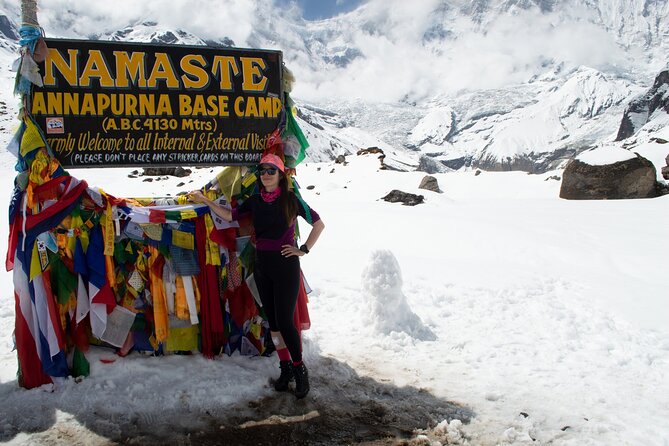
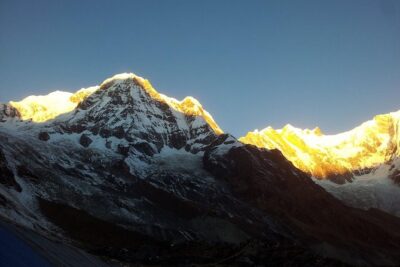
Annapurna Base Camp is interesting because it is not just about hitting a single high point. You walk into the Annapurna Sanctuary, a high glacial basin where mountains ring you from nearly every direction, and the payoff is sunrise light over the Annapurna range. This tour keeps things practical with real logistics, so you can focus on breathing, walking, and soaking up the views.
I love that your key gear is handled. The package includes a down jacket, sleeping bag, and duffle bag (returnable), plus basic first aid, a trekking map, and even a company T-shirt. I also like the way the itinerary is built around easy starts and a gradual rhythm, so you get real acclimatization time on the way up and a controlled descent on the way back.
One consideration: Annapurna Base Camp trekking is weather-dependent. If conditions turn bad, your schedule can shift, and the mountain nights at tea houses or camps are basic, not luxury. If you want heated rooms, fancy showers, and zero cold, you may feel underwhelmed.
Key things that make this trek work
- All-inclusive support that reduces stress: permits, transfers, meals, and trekking gear included so you can travel lighter
- Guides who are praised for attention and English: names like Pratip Tamang and Raj come up in the feedback
- Sunrise at Annapurna Base Camp is scheduled: early breakfast plans mean you are up before the crowds
- Village-to-village walking with Gurung culture: stops like Ghandruk and Chhomrong connect you to everyday Nepal
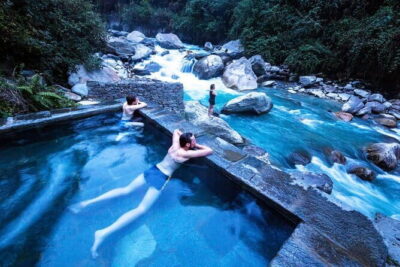
- A hot-spring detour at Jhinu Danda: a relaxing end to the descent phase
- Private group setup: only your group participates, which helps pacing and comfort
Annapurna Base Camp, minus the chaos: what you are really signing up for
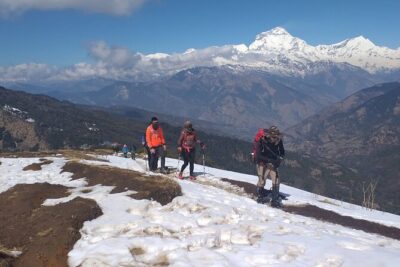
This is a guided Annapurna Base Camp trek designed to feel “organized” without making it feel like a bus tour. You start in Kathmandu with a welcome and briefing, then you base out in Pokhara before you begin hiking. Once you are on the trail, the guide and support team help you stay on track, choose the right tea house stops, and keep the day doable.
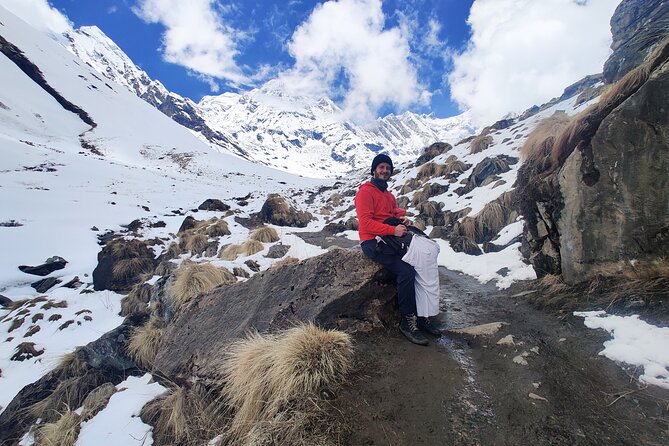
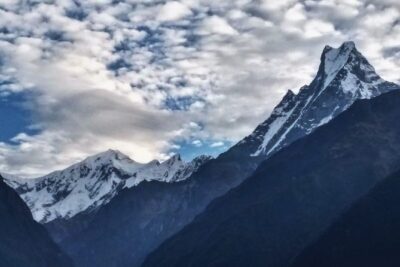
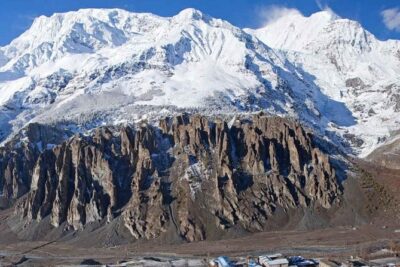
The Annapurna Sanctuary part matters. The base camp sits inside that high basin, and the experience is about being surrounded by big peaks while you move through changing vegetation, villages, and forest trails. The only entrance into the sanctuary is through a narrow valley between Himchuli and Machhapucchre, so the approach feels funnel-like. One day you are in a normal mountain trekking world, the next day you feel like you stepped into a natural amphitheater.
You do not just walk “to altitude.” You also get time to see morning light and then come back down with your energy intact. That is the difference between a tough trip and a memorable trip.
More routes into the Annapurna Sanctuary:
- Annapurna base camp trek 5 Days
★ 5.0 · 252 reviews - 14-Day Private Annapurna Base Camp Trek
★ 5.0 · 180 reviews - Annapurna Base Camp Trekking
★ 5.0 · 116 reviews
Kathmandu Day 1: arrive, meet your guide, and get your bearings fast
Day 1 is built for jet lag. You land at Tribhuvan International Airport in Kathmandu, then a Cordial Trek representative picks you up, takes you to your hotel, and sets you up with a briefing. You also meet your guide, which is useful because you can ask practical questions before the first long travel day.
This matters if you are the type who likes to know the plan before stepping into uncertainty. The easier your first day feels, the more mentally prepared you are for the trek days that follow. The package also includes “admission ticket free” on Day 1, which just means you are not paying extra for the core start.
Pokhara Day 2: the scenic reset before the trail
On Day 2 you take a scenic drive from Kathmandu to Pokhara by luxury tourist bus, roughly 6 to 7 hours. You then have time to explore Pokhara Lakeside in the evening and sleep there.
Pokhara is not required for the trekking itself, but it is perfect as a transition. You get a calmer base, a chance to buy any missing trekking odds and ends, and a buffer if you arrived on a flight schedule that makes Day 1 hectic. You also get the contrast: city and lakes first, then tomorrow you drop into the trekking workflow.
Day 3 to Day 4: Birethanti to Ghandruk and onward to Chhomrong
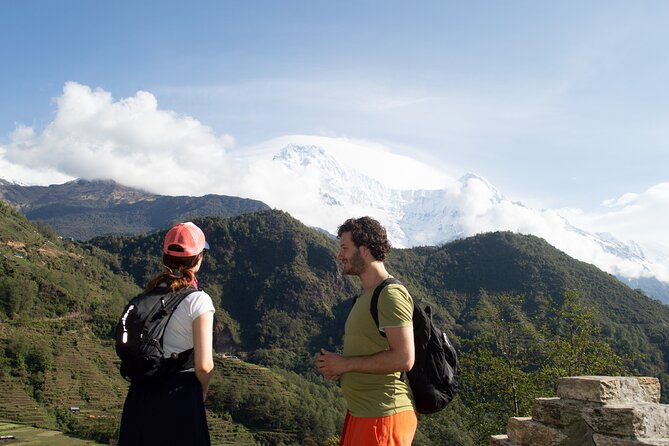
The actual trek begins on Day 3 when you reach Birethanti, then head toward Ghandruk. The hike is listed at 5 to 6 hours, and Ghandruk is where you start to feel the culture side of the Annapurna region.
Ghandruk is known for Gurung village life, hospitality, and food. Even if you do not go deep into cultural tours, being in a living village changes the trek. You are not just walking through scenery, you are moving through places where people live with the seasons, the cold nights, and the trekking economy.
The night in a Mountain Guest House in Ghandruk gives you a chance to settle in and learn the “tea house rhythm” quickly. That rhythm matters later when the altitude climbs and you want your body focused.
Day 4 heads from Ghandruk to Chhomrong, around 4 to 5 hours. Chhomrong is described as a modern Gurung village, and the trek passes farming areas and dense forest. Expect more shade and a more enclosed feel than the village view days. This is good. You need a mix of open views and forest walking to keep your energy steady.
More to compare around Kathmandu
- Everest Base Camp Trek – 14 Days
★ 5.0 · 1,499 reviews - Everest Base Camp Trek
★ 5.0 · 842 reviews - Private Kathmandu Sightseeing Tour | UNESCO World Heritage sites
★ 5.0 · 756 reviews - Kathmandu: 7 UNESCO Sites with Lunch
★ 4.8 · 744 reviews
Day 5: Sinuwa and Dobhan, forests, and the steady build
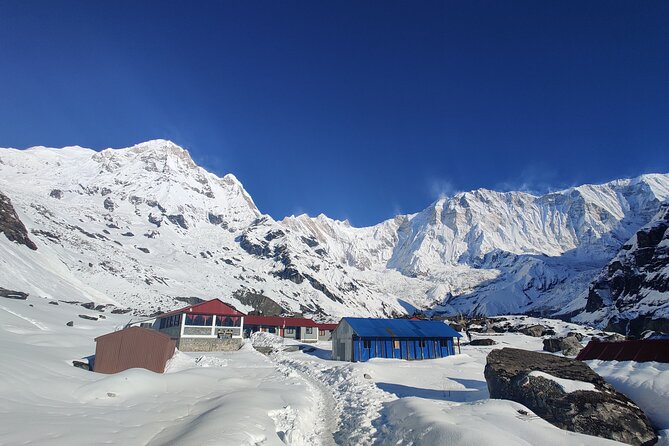
Day 5 is a longer day in two parts. First you hike from Chhomrong to Sinuwa for about 2 hours. Then you continue onward to Dobhan, around 4 hours.
This is the kind of route that helps you avoid burning out too early. Shorter segments let you stop, adjust layers, and stay present. Forest trekking also tends to reduce wind exposure, which can feel like a relief when you get colder later.
Dobhan is described as another dense forest stop, with wild floras and fauna along the way. Whether you are birdwatching or just enjoying the greenery, this is one of the better days for “paying attention” instead of just trying to survive. Your energy comes from small wins: stepping into a warmer tea house, getting a filling meal, and sleeping with fewer decisions to make.
Day 6: Bamboo to Deurali, waterfalls in the mix
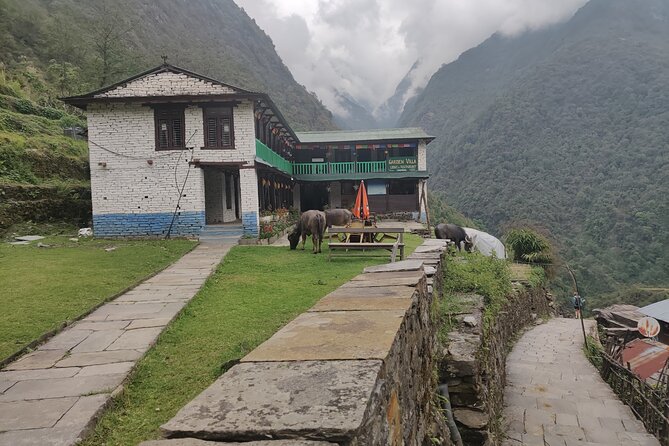
Day 6 hikes from Bamboo to Deurali, listed at 5 to 6 hours. Deurali is described as a small settlement with tea houses, and the route includes dense forest and waterfalls.
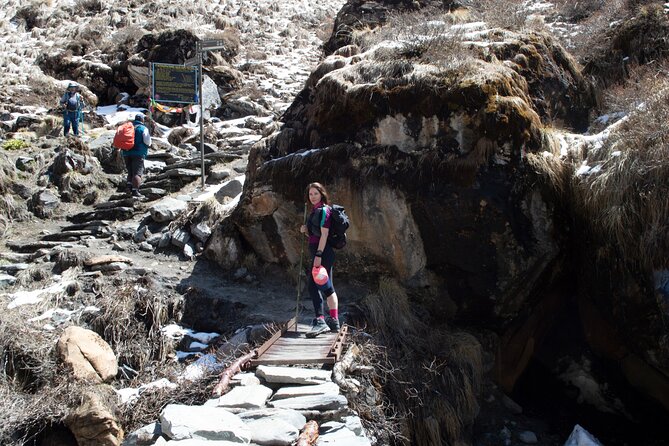
Waterfalls usually mean you are walking through wetter terrain, so bring a plan for damp socks and clothing. Even if you stay mostly on trail, mountain weather can be unpredictable. The good news is the “tea house next stop” concept works well on this trek, because you always know where the day is ending.
You sleep in a Mountain Guest House in Deurali. This is also a practical altitude check-in point. By now you are out of the easy city days, but you are still far enough along that the trek feels possible. That is how the itinerary manages the climb.
Day 7: Deurali to Machhapuchhre Base Camp, then the big jump to ABC
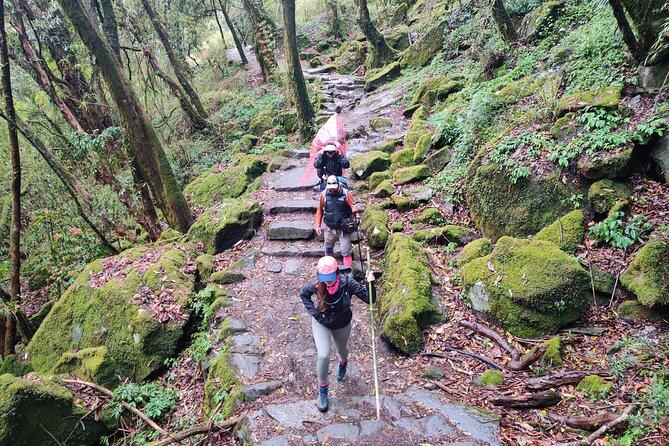
Day 7 is two major stages. You hike 3 to 4 hours from Deurali to Machhapuchhre Base Camp (MBC) via the MBC valley, then you go another 2 to 3 hours to Annapurna Base Camp.
This is one of the most exciting “turning days” because you shift from trekking support zones to a place that feels like the destination. The MBC valley is mentioned as the route, and it is a recognizable staging area that helps you feel the approach before you finally reach ABC.
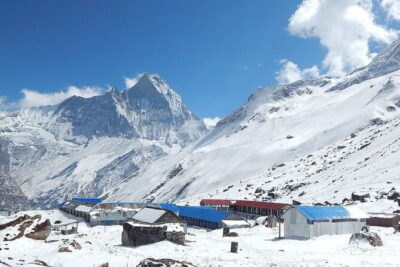
Then comes the final push to Annapurna Base Camp. The tour lists tea house accommodation at base camp for the night, and it also includes your dinner there. For most people, the mental payoff arrives when you see the mountain array and realize you are now inside the sanctuary basin.
If you want a controlled day, this is the one that asks for good pacing. Go slow on the last stretch to ABC. Your legs will thank you later, especially if you want energy for the sunrise next morning.
Day 8: sunrise and breakfast at ABC, then the long descent to Sinuwa
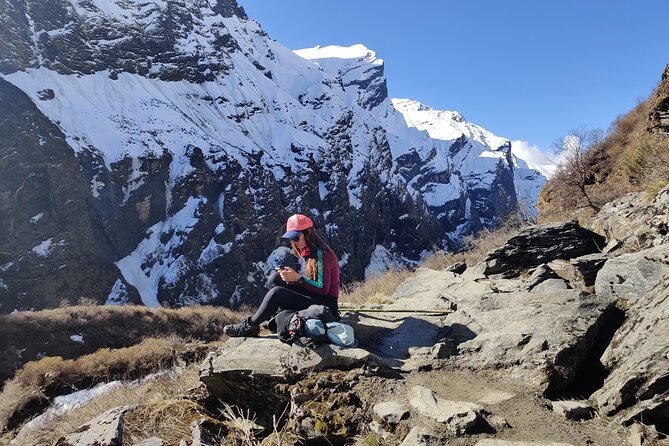
Day 8 starts at Annapurna Base Camp with sunrise and breakfast early. It is scheduled as a full experience day, not just a photo stop. You get the best kind of mountains morning, calm light across the range, and a breakfast that feels earned.
After that, you trek down 7 to 8 hours toward Sinuwa. This is a day where your knees are the main question. Going down is often harder than going up, especially if you stop too long and then feel stiff later.
Sinuwa lodging is described as a guest house for the night. Think warm layers, good socks, and short breaks that keep you moving. The longer descent is part of why the trek feels manageable overall: you do a big arrival day, then you come down gradually over multiple nights.
Day 9: Jhinu Danda and its natural hot spring recovery
Day 9 goes down 4 to 5 hours to Jhinu Danda, a highlight stop because it is known for a natural Hot Spring.
This is the trek’s “body reset” day. If you have been walking hard, hot spring time can feel like a gift. Even if you do not soak for long, dipping your legs after a descent can reduce the post-trek stiffness that ruins your final travel days.
Your accommodation is a guest house at Jhinu Danda. This day is also a good reminder that Annapurna Base Camp trekking is not only about big mountain photos. It is about recovery moments that keep you enjoying the whole trip.
Day 10 to Day 11: Birethanti to Pokhara, then back to Kathmandu
On Day 10 you hike down 4 to 5 hours toward Birethanti, then drive back to Pokhara. The day also includes a celebration in Pokhara and a farewell to your trekking crew.
That celebration is not just ceremony. It is closure. You mentally switch from trail mode to travel mode, and you get a final meal and conversation before a longer travel day.
Then Day 11 drives from Pokhara back to Kathmandu, 6 to 7 hours. The itinerary also notes you may book an optional flight for about 30 minutes. If you are done with bus time, that option is worth considering, especially after several days of trekking.
What is included, and what all-inclusive means here in real life
This package is truly set up for you to show up and start hiking without assembling the whole gear list yourself. Here is what is included:
- Down jacket, sleeping bag, and duffle bag (returnable)
- Accommodations at your stops
- Airport transfers and transport (KTM to PKR by tourist coach, PKR to Birethanti private transfers, and the return)
- Necessary trekking permits
- First aid
- Company T-shirt, trekking map, and trip certificate
- Meals: breakfast (11), lunch (8), dinner (8)
In other words, “all inclusive” here is mostly about removing friction. You are not scrambling for permits, not hunting for the right sleeping setup, and not dealing with chaotic daily transportation. That is value, especially if you are not traveling with extra time to manage the details yourself.
A smart bonus: mobile ticket is part of the features, so you are not carrying paperwork everywhere.
The meals matter too. Tea house dining can vary in quality and cost if you are on your own. With this setup, you can eat without constant menu decision fatigue.
One thing you should plan for
Not included are gratuities for your guide and porter, travel insurance (compulsory), and any unspecified meals. Also, don’t expect high-end comforts in the mountains. Most nights are tea house or guest house style, and simple is the baseline. If you treat it like a lodging stop and plan for basic conditions, you will feel comfortable.
Your guide and team: the human part that makes the trek smoother
The itinerary is the skeleton. The guide is the muscle. The feedback for Cordial Trek repeatedly highlights guide friendliness, attention, and good communication.
Names that show up in the praise include Pratip Tamang, who is noted for attentiveness and very good English, and Raj, who is described as caring and attentive. Ganesh also gets credit for staying on top of questions and knowing answers. There is even mention of a porter named Smile who helped keep the mood light.
Why does this matter to you? Because Annapurna Base Camp trekking is full of small decisions. When to start, what pace to hold, how to layer up in changing weather, and how to handle a day that feels harder than expected. A guide who is present and practical reduces stress quickly.
Also, one review-style detail that is worth your attention: real-time WhatsApp contact and quick responses show up as a positive. If you like clear communication before and during the trek, this is reassuring.
Some people even mention massage on request for a small contribution. That is not listed as part of the base package, so consider it a possible add-on rather than a guaranteed included service.
Price and value: is $1,175 a good deal for Annapurna Base Camp?
At $1,175 per person, this trek sits in a range where you are paying for convenience plus on-the-ground coordination. You are not just paying for a guide to walk beside you. You are also paying for:
- Gear you otherwise must rent or buy (down jacket, sleeping bag, duffduel bag)
- Permits and first aid
- Most transport legs, including the KTM to Pokhara coach and private transfers around the trek
- Lodging and a set meal plan
If you DIY, the cost can surprise you: permits, porter or guide, gear rental, and transport. The math depends on your travel style, but for many people, the value comes from reduced hassle and less risk of missing something important.
The private-group setup also tends to improve your experience. You are not fighting for pace, and the day plan is easier to adjust when someone is slower or needs an extra short break.
Who should book this Annapurna Base Camp trek
This tour suits you if:
- You want guided pacing and not a self-navigated trek
- You prefer an easy logistics package, gear included
- You are comfortable with moderate fitness needs and a 12-day plan that mixes walking with rest
- You want cultural village stops and hot spring recovery, not just a straight hike
It may not suit you if:
- You need constant comfort like warm private rooms and modern amenities
- You dislike weather uncertainty, since this trek depends on conditions
- You want full DIY freedom with zero scheduled structure
Should you book this tour for Annapurna Base Camp?
I would book this trek if you want the Annapurna Base Camp experience to feel organized from start to finish, especially if you value sunrise planning and a guide who is attentive and communicative. The combination of included trekking gear, permits, transport, and most meals makes the price easier to justify. You also get multiple days that support acclimatization by design, plus a recovery stop at Jhinu Danda.
If you are the type who enjoys planning every detail yourself, you might find less value here. But if you want to walk into the Annapurna Sanctuary without juggling logistics, this package is a strong choice.
FAQ
What does the $1,175 price include?
It includes returnable trekking equipment (down jacket, sleeping bag, duffduel bag), accommodations, airport transfers, necessary trekking permits, Kathmandu to Pokhara transport, first aid, a company t-shirt, a trekking map, and your trip certificate. It also includes meals (breakfast 11 times, lunch 8 times, dinner 8 times) plus PKR-Birethanti-PKR private transfers.
Are airport transfers and Kathmandu to Pokhara transport included?
Yes. You get airport transfers in Kathmandu, and you travel KTM to PKR by tourist coach. There are also private transfers for PKR to Birethanti and back.
Do I need travel insurance for this trek?
Yes. Travel insurance is marked as compulsory, and it is not included in the package.
What equipment is provided for the trek?
You get a down jacket, a sleeping bag, and a duffduel bag. They are listed as returnable necessary equipment.
What are the meals like, and are they included?
The tour includes breakfast 11 times, lunch 8 times, and dinner 8 times. Any unspecified meals are not included, so you may still pay for extras depending on where you stop.
Can I get a full refund if plans change?
You can cancel up to 24 hours in advance for a full refund. If it is canceled due to poor weather, you are offered a different date or a full refund.
Latest Kathmandu write-ups
- Langtang Valley Trek★ 5.0 · 3 reviews
- Langtang Valley Trek from Kathmandu★ 5.0 · 3 reviews
- Khopra Danda Trek★ 5.0 · 3 reviews
- 5 night / 6 days Kathmandu Nagarkot Chitwan Pokhara tour★ 5.0 · 3 reviews
- Nepal Highlights Tour: 5 Nights 6 Days Kathmandu & Pokhara Tour★ 5.0 · 3 reviews
- Kathmandu Valley Private Day Tour★ 5.0 · 3 reviews
- Conquer the Himalayas: The Ultimate 16-Day Annapurna Circuit Trek★ 3.5 · 3 reviews
- Kathmandu Heritage Day Tour★ 5.0 · 3 reviews
Annapurna Base Camp Trek, compared.
Browse the lists this tour appears in