
Reviewed · ANNAPURNA CIRCUIT TREK
10 Days Annapurna Circuit Trek
Annapurna Circuit Trek is interesting because it stitches together a huge slice of Nepal, from pine forests and Gurung villages to the high drama of Thorung La (5416m). You also get the downshift later, with the Kali Gandaki descent into arid terrain and Tibetan-style settlements. It’s the kind of trek that makes your brain do quick math, like, how can one trip include so many worlds?
I especially like the human side of this route. In past groups, the guides have been warm and practical, including people like Babo and Resham, and porters such as Rojit who keep things running smoothly when your legs start bargaining. I also like that the company keeps group size capped at 15, which usually means less crowding on the trail and more attention from your team.
The main drawback to plan for is altitude and effort. You’re going high, you’re hiking day after day, and even with good pacing you should expect days that feel tough, especially around Thorung La.
Key things that make this Annapurna Circuit stand out
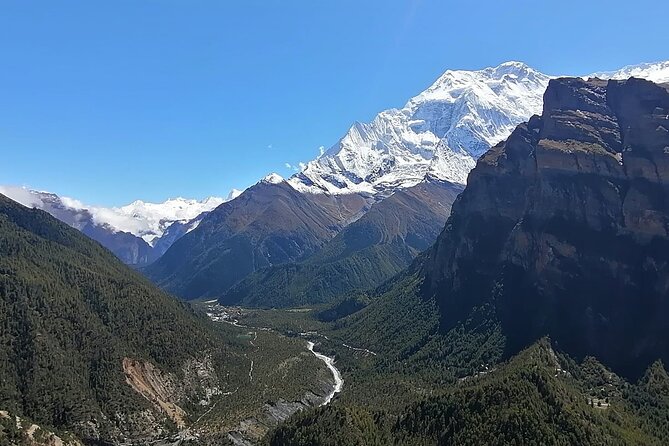
- Thorung La (5416m) day feels like a real summit moment with ridgeline hiking and big views of the Dhaulagiri range
- Manang time is built in so you get village life, views, and a calmer acclimation rhythm
- A real Kali Gandaki payoff on day 9, arid scenery plus Tibetan-style villages along the valley floor
- Guide and porter support with a porter ratio of 1 porter for 2 people, plus a sleeping bag provided
- Not just hiking, you finish with a flight to Pokhara and free time around the city (including Fewa Lake boating)
- Small group feel since the maximum group size is 15
Setting out from Kathmandu: Manakamana Temple and the first long drive
This trip starts early, with pick-up around 7am and a start time of 7:15am. You’re looking at about a 7-hour drive (185 km) to reach Besisahar. That long transfer matters because it sets your pace for the whole trek. You’ll arrive with legs intact, not already fried from the first hike, and you can focus on adjusting to Nepal time and altitude.
Day 1 includes Manakamana Temple as a stop before you settle into the trek area. Even if you’re not a temple person, this kind of pause helps you understand the Nepal you’re walking through. People travel to places like this for faith and family reasons, not just sightseeing. Then you continue onward to Besisahar, where you get your first sense that the mountains are not background here. They’re the main character.
Practical tip: keep your first day bag light. You’ll have enough mental focus to get comfortable with the routine, and you don’t want to start trekking feeling overloaded.
More of the Annapurna Circuit:
- Annapurna Circuit Trek with Tilicho Lake
★ 5.0 · 368 reviews - Annapurna Circuit Trek
★ 5.0 · 94 reviews - Annapurna Circuit Trek
★ 5.0 · 67 reviews
Days 2 to 4: Chame, narrow valleys, and those rising wall-of-mountain views
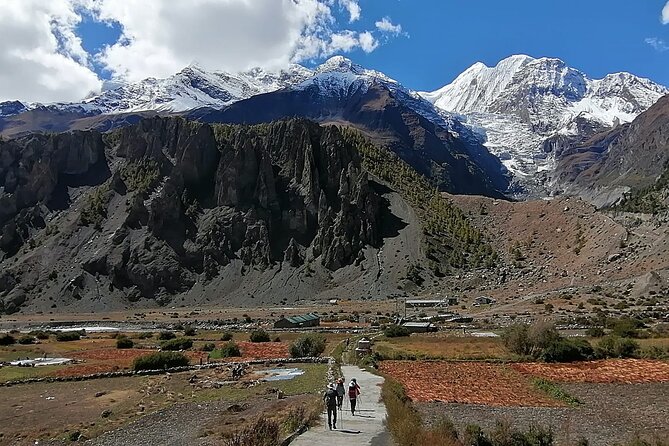
The middle of the trek begins with a classic build. Day 2 climbs from Tyanja (2,360m) toward Kopar (2,590m), and you’ll walk through forest before the route presses near the river. Then you reach Chame, the headquarters of the Manang district, where the Annapurna II views start feeling serious.
Day 3 is the kind of hiking that rewards steady steps. You’re in a deep forest with a steep, narrow valley. There’s a long bridge at about 2,910m, then you cross another bridge at around 3,040m. This day tends to hit two sweet spots for many people: it’s not just climbing, it’s also terrain variety, with river crossings that change the rhythm of your breathing.
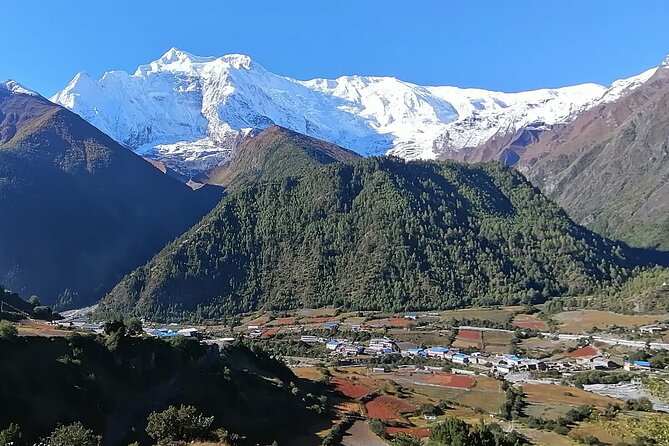
Day 4 shifts again. You pass through pine forests and near Manang you start stacking those big-name mountain views. The route is noted for close views of Gangapurna, Annapurna II and III, Tilicho, Chulu east, and Pisang peak. That’s a lot of peaks, and the key is how close you get to them. You’re not just seeing mountains from far away. The trail threads you into their visual range.
The trade-off? Forest days can feel longer. You might think you’ll be staring at snow peaks all day, but you’ll often be walking through stretches where the views come in bursts. That’s not a bad thing. It’s just how this route moves.
Day 5 in Manang: Village life and Gangapurna Lake
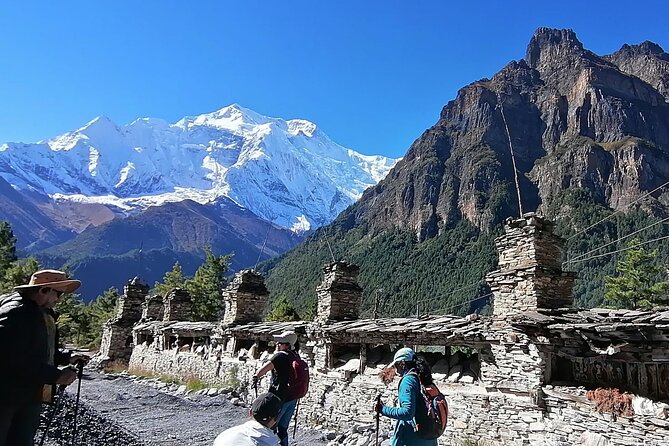
Day 5 is where the trip turns more social. You’re exploring Manang village, interacting with locals, and taking time to visit Gangapurna Lake. This is also a day where the listing notes the Gangapurna Lake admission ticket is free, which is a small but nice cost saver.
Why this day matters: long treks can feel like a long slideshow of scenery. Manang time breaks that. You get a sense of mountain life that’s practical and human, not just postcard Nepal. And because you’re still in the Manang area, it also fits the acclimation rhythm. Instead of only pushing upward, you’re walking, pausing, and resetting.
If you’re worried about hiking fatigue, make the most of the village moments. Talk to your guide about how people live up here, what changes with seasons, and which days are busiest. That turns a rest day into something you’ll remember.
Days 6 and 7: Gunsang, Yak-Kharka, and the push to Thorung Phedi
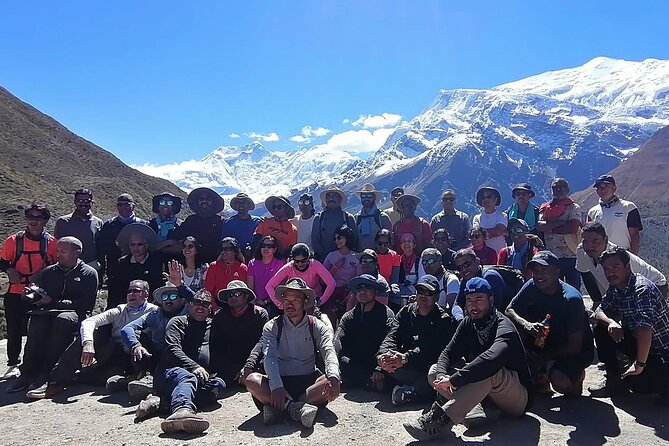
On Day 6 you leave Manang behind and start climbing again toward the Marshyangdi valley. Expect strenuous ascends, then you reach Gunsang village, continue to Yak-Kharka, and reach Ledar before sunset for overnight.
This sequence tends to work well for most first-timers because it builds effort gradually. You’re not jumping from flat-ish walking into maximum altitude all at once. It’s still demanding, but it’s a sensible ramp.
Day 7 is another turning point. You walk along the east bank of the Jorsang Khola and head toward Thorung Phedi. The trail is described as tough, with narrow paths and unstable slopes. This is one of those days where strong footwear and careful foot placement matter more than speed.
Also, remember what Thorung La means. Day 7 is about arriving ready for a high pass day, not arriving exhausted. If your guide suggests taking things slow, take them seriously. This is where you set up your success for Day 8.
More to compare around Kathmandu
- Everest Base Camp Trek – 14 Days
★ 5.0 · 1,499 reviews - Everest Base Camp Trek
★ 5.0 · 842 reviews - Private Kathmandu Sightseeing Tour | UNESCO World Heritage sites
★ 5.0 · 756 reviews - Kathmandu: 7 UNESCO Sites with Lunch
★ 4.8 · 744 reviews
Day 8: Thorung La (5416m) and Muktinath Temple, two moods in one day
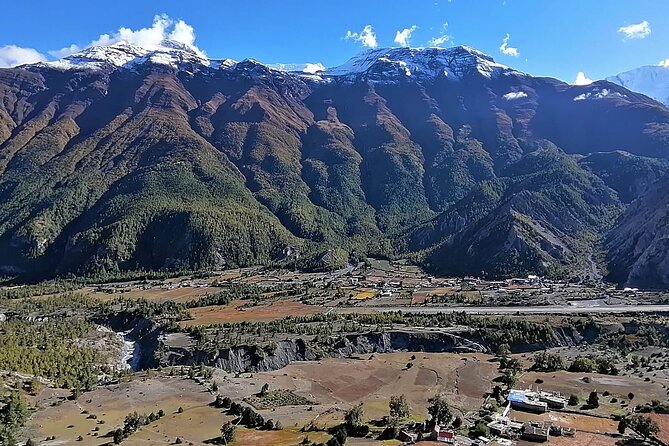
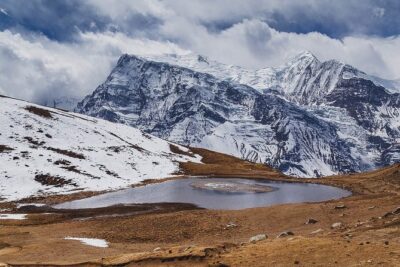
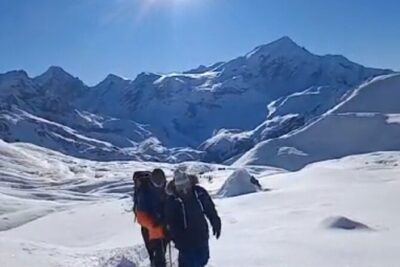
Day 8 is the big one. You hike toward Thorung La (5416m), described as the highest point of the trek, and the route follows rocky ridges. From this elevated spot, you can spot the Dhaulagiri range. The main value of this day is not just the height. It’s the feeling of being on top of a system of valleys and ridges that you spent days earning.
After the pass, the plan includes Muktinath Temple. The info notes that the admission ticket is not included for Muktinath and also marks Thorung La as admission ticket not included. Translation: budget a little for any entry fees or rituals you want to join.
How to handle this day emotionally: treat the pass like a long checklist. Breathe, move steadily, take a short snack break when you need it, and keep an eye on footing. The view will do its part if you do yours.
One extra thought based on real trekking experiences: if you or someone in your group starts feeling altitude symptoms, this is when the guide’s judgment becomes crucial. A previous trek experience with this company noted that their team supported someone when altitude trouble started. That’s exactly the mindset you want on a pass day.
Day 9: Down the Kali Gandaki, arid scenery, and Tibetan-style villages
Day 9 begins with a dramatic descent through the Kali Gandaki Valley. The route moves through arid landscapes and crosses Jharkot and Khingar, described as typical Tibetan villages. The trail then follows the valley floor for much of the way until you reach the town area that sets you up for the next morning flight.
Why this day is so satisfying: you get a change of scenery without adding more altitude stress. Descents can be hard on knees, but your body often feels more capable because you’re not gaining height. It’s also a cultural change. Tibetan-influenced villages bring a different look and feel compared to the greener forests earlier on the trek.
If you’re prone to shin or knee pain, pack your patience here. Take shorter steps, use trekking poles if you have them, and don’t chase people downhill.
Day 10: Fly to Pokhara over Kali Gandaki and get your Fewa Lake time
You finish with a practical win. After breakfast, you catch a morning flight to Pokhara. The experience notes a spectacular flight over the Kali Gandaki Gorge, with views of Dhaulagiri and Annapurna ranges. It’s a smart way to compress a long distance without turning the whole trip into a bus schedule.
Then you get free time in Pokhara, including boating at Fewa Lake. This is where you undo trek stiffness, eat a meal that tastes like a normal town again, and maybe do some souvenir browsing without stress.
Even if you’re tired, don’t skip a relaxed walk near the lake. It’s the clean reset your body will appreciate after a high pass.
Price and value: what $1,430 buys you and what it does not
At $1,430 per person, this trek isn’t cheap, but it also isn’t selling you a vague dream. The included items are substantial for a 10-day trip: guide and porters (1 porter for 2 people), sleeping bag, domestic flight (Jomsom to Pokhara), and meals (breakfast, lunch, dinner across the days listed). There are also all fees and taxes included, plus coffee or tea.
In plain terms, you’re paying for fewer gaps. You’re not worrying about food coordination, basic logistics, or whether you’ll have enough human support when trails get tricky. The reviews praise organization and delicious food plus good accommodation, and that matches the way this package is built.
What’s not included matters because it affects your daily budget:
- bottled water
- alcohol
- air-conditioned vehicle (so don’t assume A/C during transfers)
My practical advice: if you’re the kind of traveler who tends to add small purchases daily, bring a buffer for water and any temple or pass-related fees. The route includes points where admission tickets are not included, like Muktinath and Thorung La.
Comfort, food, and the human team behind the hike
I like trips where the service plan is clear. Here, you get private transportation, and you’re traveling with a guide and porters. The porter ratio is helpful because carrying is often the silent killer on multi-day treks. Offloading that load makes it easier to focus on walking, breathing, and enjoying the views.
The meal setup is also a big deal. This is not a minimalist survival trek. Breakfast, lunch, and dinner are part of the package, and the reviews specifically highlight good food and comfortable handling. That kind of support is what makes a first multi-day trek feel doable.
Guide quality shows up in the details. In prior experiences, guides named Babo and Resham were praised for warmth, flexibility, and local knowledge, with smooth teamwork and a friendly vibe. Even if your guide is someone else, look for the same traits: calm leadership, practical safety thinking, and the ability to adjust when altitude or weather gets cranky.
Altitude and fitness: how to be ready for Thorung La without drama
You should treat this trek as moderate-to-strong fitness, even if the listing says travelers should have moderate physical fitness. “Moderate” here means you can hike multiple days in a row, not that the route is easy.
Key altitude facts you can’t ignore:
- You start low and gradually gain elevation over the early days.
- You reach Thorung La at 5416m.
- There is time in Manang and nearby villages, which can help your body adapt.
If you’ve struggled with altitude before, take it seriously. One review described hitting an altitude stumbling block and then getting help from the Himalayan Trekking team when symptoms appeared. That tells you two things: the risk is real, and the support matters.
On a practical level:
- Don’t try to “win” the trek by speed.
- Keep your steps steady on steep or rocky sections.
- Stay hydrated, and use bottled water if that’s what your guide advises on the days where it’s needed.
Who this Annapurna Circuit trek is best for
This trek fits best if you want:
- a full Annapurna Circuit experience in about 10 days
- a real pass day at Thorung La
- support from a guide and porter system, not a solo DIY setup
- an ending in Pokhara with time to relax on the ground again
It’s especially suited to first-timers who want a structured plan. The reviews also point to strong organization and a good first multi-day trek experience.
If you’re an ultra-fast hiker who hates group structure, you might find the pacing a bit planned. But the small group size helps keep things from feeling like a cattle line.
Should you book this Annapurna Circuit Trek?
If you want the Annapurna Circuit with clear logistics, strong team support, good food, and a capped group size, I’d lean yes. The price includes the big-ticket items you’d otherwise have to manage yourself, like guide and porter support and the flight back to Pokhara.
Book it if:
- you want Thorung La and Muktinath as real highlights
- you appreciate village time in Manang, not just trekking all day
- you’re okay paying for comfort and coordination
Skip it or rethink if:
- you know you struggle with high altitude and haven’t handled it well in the past
- you want a totally independent, flexible schedule with zero structure
If you’re the kind of traveler who likes a plan you can trust, this one looks like a solid match. You’ll do hard hiking, see big mountains up close, and end with a very human reset in Pokhara.
FAQ
What is the duration of the Annapurna Circuit Trek?
This trek runs for 10 days (approx.).
What is included in the tour price?
The package includes guide and porters (with 1 porter for 2 people), sleeping bag, private transportation, all fees and taxes, the domestic flight (Jomsom to Pokhara), and meals including breakfast, lunch, and dinner. It also includes coffee and/or tea.
What is not included?
The listing says bottled water, alcoholic beverages, and an air-conditioned vehicle are not included.
Where and when does the trek start?
It starts at Himalayan Trekking and Tours in Kathmandu, with a start time of 7:15 am. The team arrives at your hotel around 7am for pick-up.
How many people are in a group?
The group size is capped at a maximum of 15 travelers.
Is there a cancellation option if plans change?
Yes. It lists free cancellation, with a full refund available if you cancel at least 24 hours in advance of the experience start time.
Latest Kathmandu write-ups
- Langtang Valley Trek★ 5.0 · 3 reviews
- Khopra Danda Trek★ 5.0 · 3 reviews
- Langtang Valley Trek from Kathmandu★ 5.0 · 3 reviews
- 5 night / 6 days Kathmandu Nagarkot Chitwan Pokhara tour★ 5.0 · 3 reviews
- Nepal Highlights Tour: 5 Nights 6 Days Kathmandu & Pokhara Tour★ 5.0 · 3 reviews
- Kathmandu Valley Private Day Tour★ 5.0 · 3 reviews
- Conquer the Himalayas: The Ultimate 16-Day Annapurna Circuit Trek★ 3.5 · 3 reviews
- Kathmandu Heritage Day Tour★ 5.0 · 3 reviews
Annapurna Circuit Trek, compared.
15-Day Private Annapurna Circuit Trek from Kathmandu
Read our review →
8 Days Private Guided Trekking in Annapurna Circuit with Pickup
Read our review →Browse the lists this tour appears in