
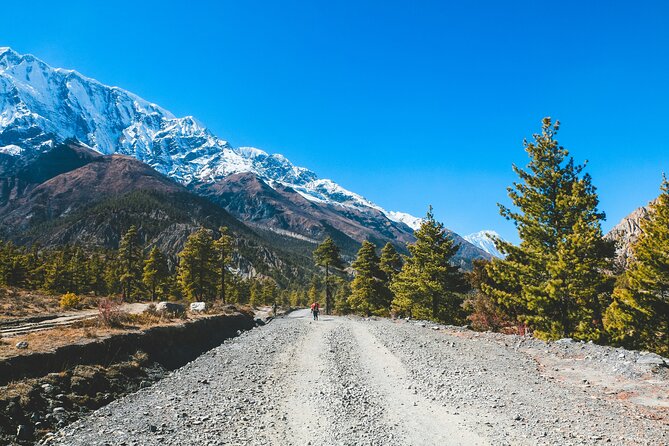
Reviewed · ANNAPURNA CIRCUIT TREK
12 days Annapurna Circuit Trek
Few treks pull off such variety in one loop: a string of villages, a high pass day, a hot springs reset, and then sunrise views from Poon Hill. This 12-day Annapurna Circuit trip is interesting because it’s set up to handle the hard parts (altitude and logistics) with an English-speaking, government-licensed guide and ACAP and TIMS permits taken care of.
I also like that the plan keeps you moving across different cultural zones, not just hiking from point A to point B. You’ll pass through places tied to Manang and Thakali settlements, and you get time to acclimatize in Manang instead of forcing everything to the pass. One consideration is that you should be ready for early starts and cold, dry air as you climb, especially on the day you go up for Thorong La in the pre-dawn hours.
Key things I’d bet you’ll care about
- Private feel for your group: Only your group participates, so you’re not stuck in a chaotic pack
- Altitude pacing includes a real Manang acclimatization day
- Hard day with a clear target: Thorong La pass, with an early wake-up schedule
- A hot spring day after the high pass: Tatopani helps your legs feel human again
- Permits and local taxes are handled: ACAP and TIMS included, so you travel lighter
- Optional porter: $20/day, up to 20 kg if you want help with loads
How the Annapurna Circuit fits a lot of Nepal into 12 days
The Annapurna Circuit has a reputation for good reason. In a single trek you get multiple “worlds” stacked on top of each other: river valleys, drier high country, and then the view payoff when you finally stand where the mountains feel close enough to touch.
This specific 12-day plan is built to keep your experience full without drowning you in paperwork. Pickup is offered, a mobile ticket is used, and most of your day-to-day decisions are handled by a licensed local guide team. That matters because trekking in Nepal is rarely hard because you cannot walk. It’s hard because you’re tired, cold, and trying to sort out practical stuff. This tour reduces that stress.
You also get a customized element. The trek is described as fully customizable to your needs, and there are group discounts. In plain terms: if your group has different pacing or priorities, you should be able to talk it through rather than being treated like a number.
More of the Annapurna Circuit:
- Annapurna Circuit Trek with Tilicho Lake
★ 5.0 · 368 reviews - Annapurna Circuit Trek
★ 5.0 · 94 reviews - Annapurna Circuit Trek
★ 5.0 · 67 reviews
Kathmandu to Dharapani: the day you stop thinking and start climbing
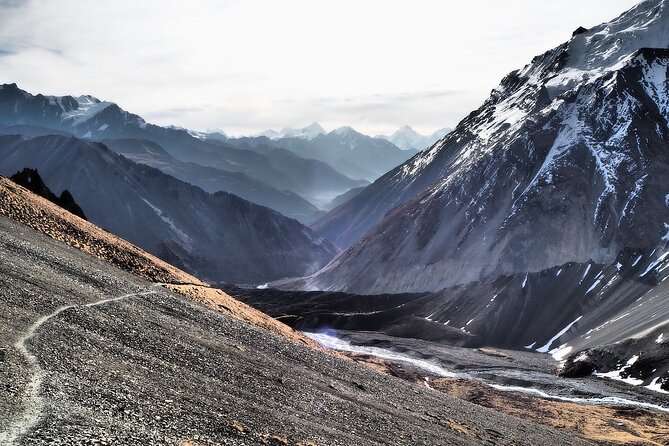
Day 1 is a transition day, and it’s a good one. You travel from Kathmandu to Besishar along the Trishuli River, then switch to a jeep to reach Dharapani for the night. The goal here is simple. You get out of the city, you shake off the travel fatigue, and you set up for the trek proper without wasting daylight.
Dharapani is your first taste of the Circuit rhythm: lodge check-in, an early dinner, and the kind of sleep that happens when you know tomorrow involves real walking. If you’re the type who wants time to settle in, this day gives you that buffer.
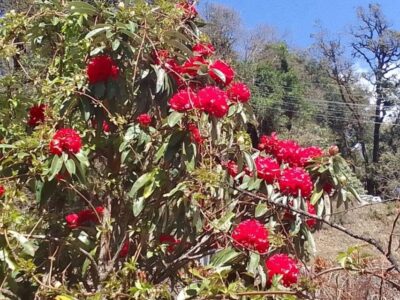
Day 2 moves you to Chame, the headquarters of the Manang District. As you gain altitude, the scenery and vegetation start to shift. The route is known for passing through rhododendron forests on the earlier stages, and the general feel is that the trail starts becoming more serious. You’ll be on the move for about a half-day to full-day stretch, with a total day listed at 12 hours.
Quick heads up on timing
The tour lists a start time of 12:15 am. That sounds extreme, but it likely refers to the earliest pickup or internal schedule timing. I’d treat it as a prompt to confirm the exact pickup time with the operator so you can plan sleep and packing without guesswork.
Chame to Upper Pisang to Manang: where the route starts rewarding your effort
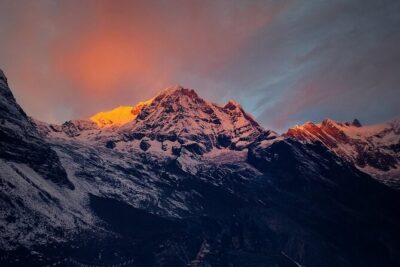
Days 3 and 4 are all about building altitude while still giving you good views. On Day 3 you trek to Upper Pisang (around 3,300 meters). You arrive with major mountain eye-candy as light hits the peaks early, and you also notice the weather turning sharper as elevation increases.
Day 4 continues to Manang with a stop at Geru, building toward some serious north-facing views. The plan specifically points to sight lines for Annapurna II, Annapurna III, Annapurna IV, Gangapurna, Tilicho, and Pisang Peak. Even if you never try to “memorize peaks,” it helps your brain to have something to look for while you’re climbing. Your legs do the work, and your eyes get the reward.
These days also matter because your body is learning the altitude slowly. If you rush, you end up paying for it later. If you follow the pacing, you increase your odds of arriving at the high pass days feeling capable rather than wrecked.
More to compare around Kathmandu
- Everest Base Camp Trek – 14 Days
★ 5.0 · 1,499 reviews - Everest Base Camp Trek
★ 5.0 · 842 reviews - Private Kathmandu Sightseeing Tour | UNESCO World Heritage sites
★ 5.0 · 756 reviews - Kathmandu: 7 UNESCO Sites with Lunch
★ 4.8 · 744 reviews
Manang acclimatization day (Ice Lake option): the smartest day on your calendar
Day 5 is an acclimatization day in Manang, at the base of Annapurna III. This is one of the most valuable pieces of the whole itinerary. In practical terms, it gives you time to adjust to thinner air while still being in a place where you can enjoy the views.
The plan mentions a possible stroll around Ice Lake. I like this kind of option because it’s not a forced “achievement day.” It’s a chance to move gently, drink plenty, and feel out your body. If you’ve ever wondered why some trekkers get through the pass while others stall, pacing plus smart acclimatization is usually a big part of the difference.
Manang also sets you up mentally. By this point, you’ve climbed high enough that you know the air is different. On an acclimatization day, you learn how it feels when you’re not constantly chasing the next downhill.
Yak Kharka and Thorong Phedi: the pre-pass grind
Days 6 and 7 are the build-up to Thorong La. Day 6 goes to Yak Kharka, passing through Tenki village and crossing streams, then climbing into the northwest toward the Jarsang Khola valley. This is where the walking often feels more exposed. The air gets drier and the terrain can feel more “high country” than “valley hike.”
Day 7 aims for Thorong Phedi, the foot of Thorong La pass. The itinerary describes a ridge ascent from Yak Kharka, a descent, then crossing the Marsyangdi River on a wooden bridge before continuing your climb toward Thorong Phedi.
This is a good day for realistic expectations. You’re not trying to set a speed record. You’re positioning yourself for tomorrow’s high pass. If you go out too fast, you’ll pay for it on the steep sections and on the mental focus required early in the morning.
Thorong La day and Muktinath: early wake-up, then a major payoff
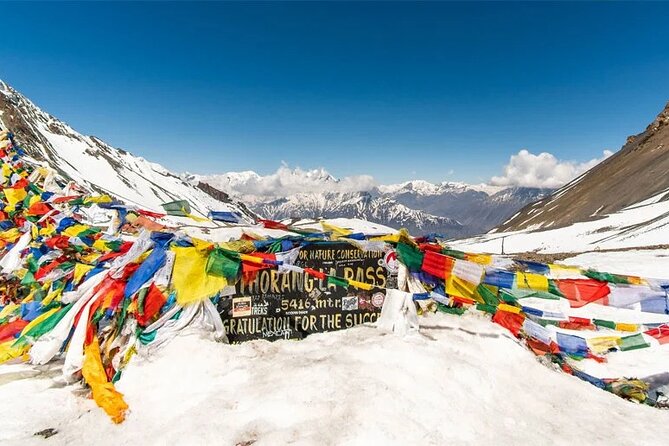
Day 8 is your big target. It’s listed as the day you cross Thorong La pass, one of the highest passes in the world. The schedule says you wake around three in the morning and walk up toward the summit.
A pre-dawn start is not an optional extra on this route. It’s typically how treks manage weather and visibility. That also means your success depends on planning your night the right way: eat, hydrate, get warm, and set everything you need within arm’s reach. Once you’re climbing in the dark or near-dark, you do not want to be digging through your bag for the one thing you forgot.
After reaching the pass summit, you move toward Muktinath for the stop that night. That combination, high pass achievement followed by a culturally significant destination, is one of the reasons the Annapurna Circuit is so memorable. Your body will feel it. Then you’ll have something more than scenery to connect to.
Tatopani hot springs and Ghorepani: recovery mode without losing the trek
Day 9 takes you from Muktinath to Tatopani by jeep for about three hours, then you rest at your lodge or visit the hot springs. This is your “reset day.” Even a short dip can make a noticeable difference if your lower legs are tired from the pass.
The tour keeps this day flexible. You’re not forced into another big walking push. You’re given a base where you can recover, eat well, and let your pace rebuild for the final part of the circuit.
Day 10 moves you to Ghorepani through ethnic Thakali settlements like Sikha and Chitre. The trek follows around the Kali Gandaki River area, then climbs up toward Ghorepani. I like this stage because it tends to feel less like a high-altitude endurance contest and more like steady hiking through lived-in villages. It’s still tough, but the mental strain often drops a bit after the pass.
Poon Hill sunrise and the ride to Pokhara: the easiest way to end strong
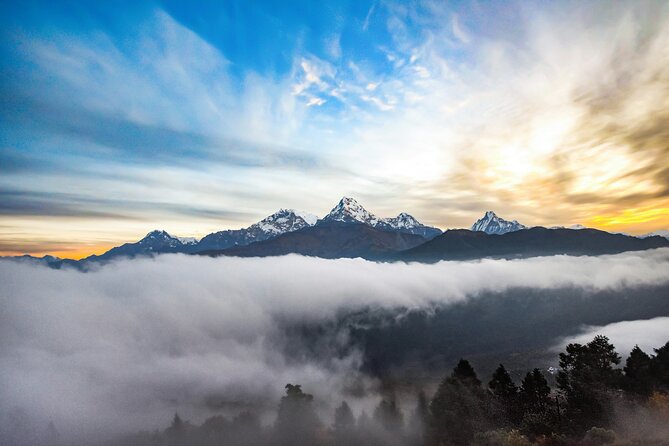
Day 11 is short on the clock and big on payoff. You go up to Poon Hill (3,210 meters) in the early morning for sunrise. The plan calls out sunrise across the Dhaulagiri and Annapurna range, including Machhapuchhre (Fishtail) and Annapurna. That wide-angle mountain view is one of Nepal’s classic moments, and it makes a great final emotional “wrap.”
After that, the plan has you trek from Ghorepani to Birethani and then take a bus to Pokhara. It’s long travel in the day total (listed as 12 hours), but it’s a different kind of effort. Your legs get less grinding, and your mind gets more room to process what you just did.
Day 12 finishes with breakfast in Pokhara, then a tourist bus back to Kathmandu. There’s also an optional 25-minute flight from Pokhara to Kathmandu for extra cost, not included in the package. I like having both. If you want to save time and reduce fatigue at the end, the flight can make sense.
Price and value: what $1,100 covers, and where your extra costs really are
At $1,100 per person for a 12-day trek, you’re paying for more than a route on paper. This price includes the core logistics that usually cost you time, stress, and sometimes money you did not plan for.
What’s included:
- Guided trekking with a government-licensed English-speaking guide
- Tea house or lodge accommodation with meals (breakfast, lunch, dinner during the trek)
- Transportation segments like Kathmandu to Dharapani (via public transportation), plus Muktinath to Tatopani and Nayapul to Pokhara, and then Pokhara to Kathmandu by tourist bus
- Permits and fees, including Annapurna Conservation Area Permit (ACAP) and TIMS card fee
- A Pokhara night with breakfast and a farewell dinner in Kathmandu
What’s not included:
- Beverages (alcoholic and non-alcoholic) and other personal spending
- Porters (optional) at $20/day with up to 20 kg carried
- Insurance of any kind for you
- Nepal visa purchased on arrival (prices listed for 15, 30, and 90 days)
- Any costs not listed as included, plus the optional Pokhara to Kathmandu flight
If you’re comparing deals, this is the part to watch. Many low-budget trek prices look cheap until you add permits, guide support, and the actual meal and lodge plan. Here, permits and most meals are built into the package. That’s a big value point because it lets you budget cleanly.
Guides, communication, and the small details that make a trek smoother
The operator is Magnificent Himalayan Treks, and the tour description emphasizes safety and experienced guidance. That aligns with what I saw highlighted in feedback from people who worked closely with the team.
Names that came up include Manit and Bhim Panta. People praised fast, responsive online consultation from Manit, plus Bhim Panta acting as a friendly host who handled the handoffs smoothly. The takeaway for you is not celebrity status. It’s reliability. When pre-trip questions are answered quickly and the team is organized on arrival and in the trek flow, you spend less energy worrying and more energy walking.
You also get practical extras:
- Pickup offered in Kathmandu
- Mobile ticket
- All guides meals, insurance, salary, lodging, and transportation covered
- Taxes handled, not tacked on later
One more thing I appreciate: the tour description says experienced local guides are part of the experience, not just a scheduling service. On a trek where the biggest risks are slow-moving problems like altitude and fatigue, a guide who can respond matters.
What you should prepare for on this moderate-fitness circuit
The tour specifically says travelers should have moderate physical fitness. That’s a fair target, but don’t treat it like a guarantee of easy walking. The daily time on the itinerary is listed mostly around 10 to 12 hours, including trekking and transit time.
So, I’d prepare for:
- Steady hikes on rugged paths most days
- Colder, drier conditions as you climb higher
- A mentally demanding pre-dawn day for Thorong La
- A long travel day to Pokhara after Poon Hill
Practical gear priorities, based on the kind of trek described, are warm layers, good traction shoes, and a plan for how you’ll keep hands and feet warm early in the morning. You’ll also want to think about water and snacks even if meals are included, because the body likes small fuel hits on long days.
If you worry about carrying your own load, the option for a porter is clearly stated. At $20/day for up to 20 kg, it can be a smart trade if you’re carrying extra camera gear or you just want more comfort.
Should you book this Annapurna Circuit trek?
I’d book this trip if you want a guided trek where the heavy admin work is handled for you. The best reasons to say yes are the included permits (ACAP and TIMS), the Manang acclimatization day, the clear Thorong La plan with an early start, and the hot springs stop in Tatopani that helps your legs recover.
I’d think twice if you know you struggle with very early mornings or if you want a fully self-directed trek with zero structure. This is a planned route with long day totals, and the magic comes from following the pacing, not improvising a new schedule every day.
If you’re aiming for value, this one makes sense because it bundles the essentials into the package, not as add-ons. Just confirm the exact pickup time around the listed start time, and consider a porter if you want to arrive at the pass day feeling focused rather than overloaded.
Latest Kathmandu write-ups
- Langtang Valley Trek★ 5.0 · 3 reviews
- Khopra Danda Trek★ 5.0 · 3 reviews
- Langtang Valley Trek from Kathmandu★ 5.0 · 3 reviews
- 5 night / 6 days Kathmandu Nagarkot Chitwan Pokhara tour★ 5.0 · 3 reviews
- Nepal Highlights Tour: 5 Nights 6 Days Kathmandu & Pokhara Tour★ 5.0 · 3 reviews
- Kathmandu Valley Private Day Tour★ 5.0 · 3 reviews
- Conquer the Himalayas: The Ultimate 16-Day Annapurna Circuit Trek★ 3.5 · 3 reviews
- Kathmandu Heritage Day Tour★ 5.0 · 3 reviews
Annapurna Circuit Trek, compared.
15-Day Private Annapurna Circuit Trek from Kathmandu
Read our review →
8 Days Private Guided Trekking in Annapurna Circuit with Pickup
Read our review →Browse the lists this tour appears in