
Reviewed · ANNAPURNA CIRCUIT TREK
Annapurna Circuit Trek in Nepal (9 Days)
A 9-day Annapurna Circuit trek is interesting because you go through big climate changes and cultural zones, all while your logistics are handled for you. I love the licensed, English-speaking guide setup and the 8 nights tea house accommodation that keeps your days focused on walking, not planning. I also like that pickup and transport start in Kathmandu, so you are moving toward the trail quickly.
One possible drawback is altitude timing. Even with a dedicated acclimatization day in Manang and a very early Thorong La crossing, you still need moderate fitness and you need to pace yourself when the air feels thin.
Key things worth knowing before you go
- Morning pickup and ground transport take you from Kathmandu to the trail area without you wrestling schedules.
- Tea house nights in twin sharing simplify where you sleep and eat each day.
- An acclimatization day in Manang gives your body a real chance to adjust.
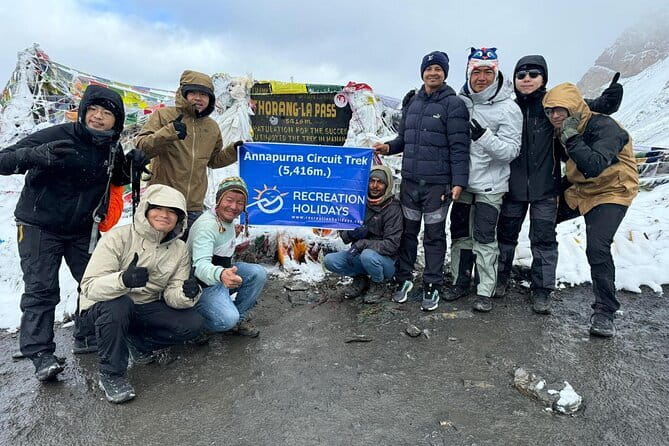
- Early Thorong La strategy starts around 3 AM for the 5,416m pass.
- All necessary permits and a first-aid kit are included, which matters in high-country trekking.
- Porter services are optional but extra cost if you want help carrying your load.
Why this Annapurna Circuit runs smoother than most treks
This Annapurna Circuit is set up for people who want the full Himalaya feel, but not the full-time job of logistics. You get a licensed, English-speaking guide and a first-aid medical kit, plus permits handled in advance. That combination matters when you are moving through small villages and crossing higher passes where small problems can become big problems.
The daily rhythm is also built around sensible pacing. You start with transit days that ease you into the trek, then you build time in Manang for acclimatization. By the time you’re dealing with the big day on Thorong La, you are not doing it fresh from day one. You will still feel altitude, but the schedule does not ignore it.
And Recreation Holidays emphasizes care and organization. In real customer feedback, the words that come up most are professionalism, clear communication, and genuine follow-through. That is what you want in the places where conditions can change quickly.
More of the Annapurna Circuit:
- Annapurna Circuit Trek with Tilicho Lake
★ 5.0 · 368 reviews - Annapurna Circuit Trek
★ 5.0 · 94 reviews - Annapurna Circuit Trek
★ 5.0 · 67 reviews
Value check: what your $880 includes, and what to budget for
At $880 per person, this trek is not cheap, but it is also not padded with random extras. The core value is that your big-ticket trekking components are included:
- 8 nights tea house accommodation in twin sharing
- Licensed English-speaking guide
- All necessary trekking permits
- Meals: 8 breakfasts, 8 dinners, 9 lunches
- Local transport: Kathmandu to Dharapani area and Muktinath to Pokhara
- Luggage storage during the trek
- Emergency evacuation support if your travel insurance covers it
What you should budget separately is mostly outside the trekking machine:
- Nepal entry visa
- International airfare
- Accommodation in Kathmandu and Pokhara
- Travel and medical insurance
- Optional porter services at $240 per porter, with a note that it is typically 1 porter for every 2 trekkers
If you are comparing options, focus on what is actually covered once you are in the mountains. If a trip advertises a low price but then tacks on guides, permits, and meals later, the math gets messy fast. Here, you get the main structure upfront.
Day 1 in Nepal: Kathmandu pickup to the trail zone
Your day starts early. You should expect pickup from your hotel in Kathmandu around 6 to 7 AM, then a scenic bus ride via Besisahar to Bhulbhule. After that, you transfer to a shared jeep for the next leg toward the trek area.
Why this day matters: the trek proper starts after you have already absorbed some movement. That reduces that awkward first-day feeling of being over-energized and rushing. It also gives you time to get your head straight on what to carry, what to access daily, and how to keep your layers manageable.
A small practical note: your meeting info shows Tribhuvan Airport as the start point with a 6:15 AM start time. In real life, you may feel more comfortable confirming pickup details in writing so you know exactly where the team will meet you.
Day 2 toward Chame: Tibetan villages and apple country
Today the trek takes you into cooler alpine regions, with big changes in scenery and temperature as you gain elevation. You walk through Tibetan villages including Bagarchhap and Danakyu, and you will see apple orchards along the way.
This is one of the nice “transition” days on the Circuit. The effort is real, but it is not the make-or-break pass day. You are building altitude gradually while still getting frequent human-scale details: village life, trail rhythms, and views that widen as you move.
Practical tip: if you are sensitive to cold, this is a good day to start dressing in layers that you can adjust during stops. The alpine air can feel suddenly different once the sun slips or clouds roll in.
More to compare around Kathmandu
- Everest Base Camp Trek – 14 Days
★ 5.0 · 1,499 reviews - Everest Base Camp Trek
★ 5.0 · 842 reviews - Private Kathmandu Sightseeing Tour | UNESCO World Heritage sites
★ 5.0 · 756 reviews - Kathmandu: 7 UNESCO Sites with Lunch
★ 4.8 · 744 reviews
Day 3 through forests and bridges to Paungda Danda
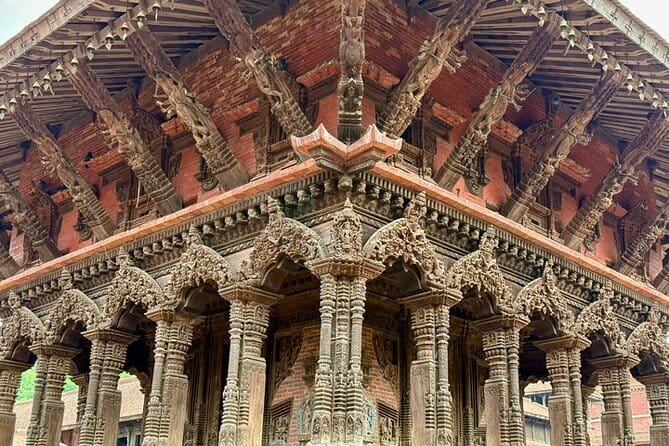
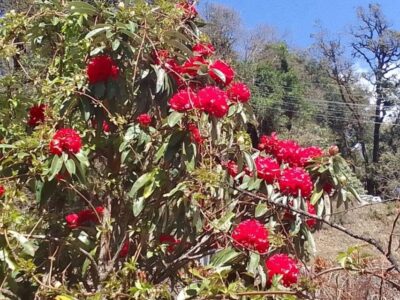
You leave Dharapani behind and step into a section with dense rhododendron and pine forests. There are also multiple suspension bridges, which adds variety and a bit of adrenaline, even if you are not thinking about the high-pass part yet.
Eventually you arrive at Paungda Danda, described as a majestic curved rock face. Whether you are a rock-formation fan or not, these moments break up the day so you do not feel like you are just walking for the sake of walking.
Consideration: forest trekking can mean less wind protection and more humidity. If your gear is slow-drying, plan for damp socks and take the time to manage moisture in your daypack.
Day 4 into Manang: flat starts, gradual climb, and big Annapurna views
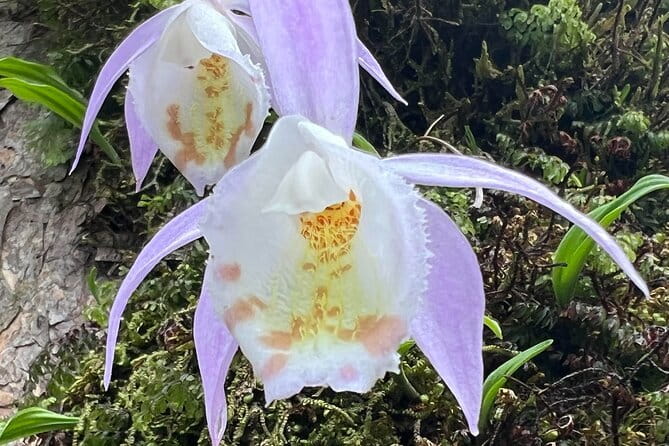
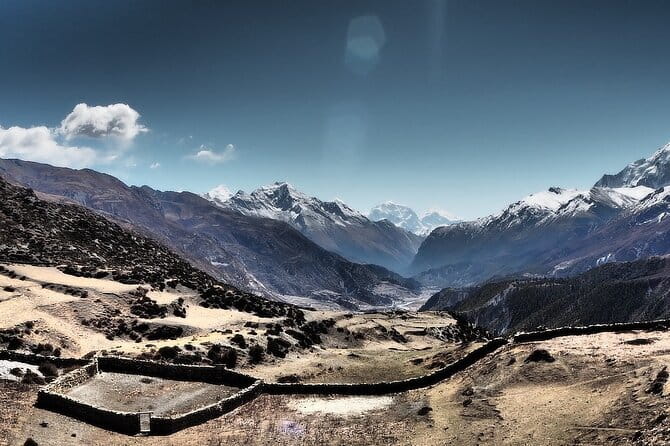
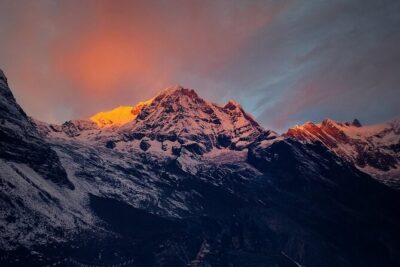
After breakfast you head toward Manang, one of the trek highlights. Today starts with flatter terrain, then shifts into a gradual ascent toward Humde. Along the way, you get panoramic views of Annapurna II, III, and I.
This is the kind of day that rewards a steady pace. When you are not constantly fighting the steepest climbs, it is easier to keep breathing controlled. And the views are not just dramatic, they also act like a moving orientation marker for the rest of the region.
Why I like this setup: it lets you arrive at Manang with enough energy to enjoy the village and take the acclimatization day seriously.
Day 5 in Manang: acclimatization day done in a useful way
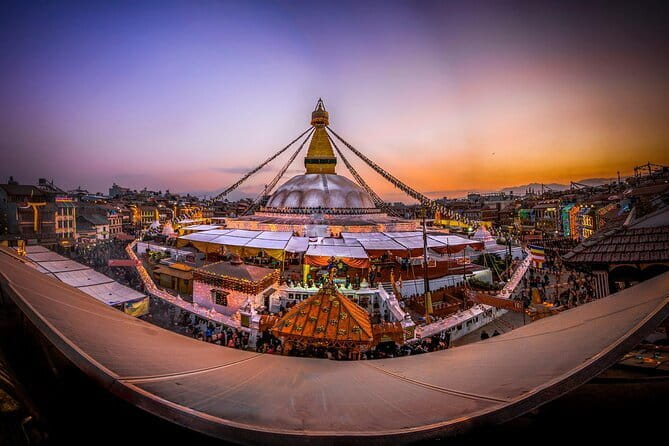
Manang is where you stop and let your body catch up. This day is reserved specifically for acclimatization, and you have options such as:
- exploring Manang village
- hiking up to glacial lakes at the base of Gangapurna
- visiting local monasteries
Even if you choose the easier option, having an entire day rather than a half-day makes a real difference. It is the difference between arriving at the pass week tired versus arriving prepared.
Practical advice: treat this day like training for how you will feel on Thorong La. Keep your pace moderate. Drink water regularly. Do not try to “win” the hike by going too fast. You want your body to feel better afterward, not punished.
Day 6 to Yak Kharka: steady ascent through farms and settlements
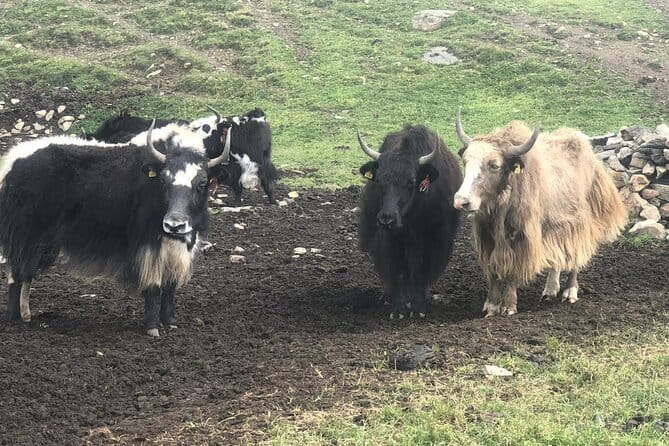
You start toward Yak Kharka, moving past local settlements and cultivated farmlands. The path is described as a steady but moderate ascent, and you still have time built in for acclimatization.
You will also cross a suspension bridge, which keeps the day from feeling like a straight climb. Days like this are often where people decide how heavy their pack feels at altitude. If you are carrying more than you planned, this is a good day to adjust your approach before the pass night.
Consideration: tea house life means you might be tempted to keep eating because you are cold or busy. Stick with consistent meals and avoid heavy, hard-to-digest choices if you tend to get stomach issues in altitude.
Day 7 to Thorong Phedi: a slower climb that sets you up for sunrise
Today you hike toward Thorong Phedi, which takes about 4 to 5 hours with a gradual incline. The altitude makes the pace slower, so you will likely spend more time than usual with your breathing and your footing. That is normal.
This day is not just a hike, it is staging. Thorong Phedi is where you position yourself for the big early-morning pass crossing.
Practical tip: use this day to confirm how you want your gear arranged for the early start. You will want the basics accessible, not buried. Keep a warm layer ready, because pre-dawn mornings can get cold fast even if daytime feels pleasant.
Day 8 over Thorong La at 5,416m: the 3 AM start and Muktinath
This is the trek’s most intense day. You start early, around 3 AM, to conquer Thorong La, the highest point on the Annapurna Circuit at 5,416 meters.
What makes this day special is not just the altitude number. It is the whole rhythm: the darkness, the slow climb, and then the summit moments when you finally get the panoramic views. After crossing, you continue toward Muktinath Temple.
One reality check you should take seriously: high altitude can hit different people in different ways. Even with guides and acclimatization, your job is to pace. Take breaks. Sip water. Keep your breathing steady. If you feel sick, it is better to speak up early than to “push through” and regret it later.
And yes, the payoff tends to feel emotional for a lot of people. In customer feedback, the pass crossing is often described as a life-changing moment, not just a checkbox.
Day 9 down to Pokhara: jeep or bus, Mustang Valley views, and real recovery
After a well-deserved rest, you travel from Muktinath to Pokhara by jeep or bus. The drive descends and includes scenic views of the lower Mustang Valley.
This final day is your transition back to normal life. You are not just finishing a trek, you are moving from high-country rhythm to lake-city comfort. Expect a mix of tired legs and relief.
Practical advice: plan for an easy evening in Pokhara after you arrive. Your body will probably feel fine by dinner time, but your coordination might still be a bit off. Hydrate and take it slow.
Guides, care, and what the small details mean for you
One thing I trust in this kind of trek is how the team behaves when conditions are not perfect. In feedback, Recreation Holidays gets credit for:
- professionalism from the start
- clear communication
- genuine care for safety and comfort
- follow-through that makes the trek feel organized
Those are not fluffy promises. On the Annapurna Circuit, “organized” means you know what is happening next, you have the right permits, and you are not guessing when weather or timing shifts.
You also get an assistant guide for groups of 8+, which typically helps with the flow of the day. That can mean quicker answers, more attention on pace, and fewer bottlenecks at shared tea houses.
Trek pace, altitude safety, and your best gear choices
This trek is described for people with moderate physical fitness. That is a helpful label, but it is not a guarantee of comfort. The altitude and the number of hiking hours you log each day still demand respect.
Here is how to make it work:
- Pace like you are protecting your lungs, not proving a point.
- Start early on pass day and accept the slow rhythm.
- Treat Manang as a real acclimatization day, not just a sightseeing stop.
- Plan your pack to be light enough that you do not feel punished every evening.
Porter support is optional. If you decide you want help carrying your load, porter services are available at $240 per porter with the note that it is 1 porter for every 2 trekkers. If you are carrying a lot of gear or you are not sure how your body handles long days, this is a reasonable option to consider.
Should you book this Annapurna Circuit Trek?
Yes, if you want an organized, guide-led Annapurna Circuit with real support and the basics handled for you. The included permits, first-aid kit, tea house accommodations, and meals reduce the stress that can turn a trek into a logistics puzzle. I also like that the schedule includes a Manang acclimatization day and positions you for the Thorong La crossing with an early start.
You might think twice if you know you hate early mornings, or if altitude has made you struggle before and you are not comfortable with a moderate fitness requirement. Also confirm what you prefer for porter help, since porters are not automatically included.
If you like your travel with clear communication, steady pacing, and a high chance of feeling safe while you chase big views, this is a strong fit.
FAQ
How long is the Annapurna Circuit Trek on this program?
It is listed as 9 days approximately.
Where does the trek start and when?
The start point is Tribhuvan Airport, Kathmandu, Nepal, with a start time of 6:15 am.
Is pickup offered in Kathmandu?
Yes. The itinerary notes pickup offered directly from your hotel in Kathmandu around 6 to 7 AM.
What kind of accommodation do you get during the trek?
You get 8 nights tea house accommodation, twin sharing.
Are meals included?
Yes. The package includes 8 breakfasts, 8 dinners, and 9 lunches during the trek.
Are trekking permits included?
Yes. All necessary trekking permits are included.
Is a guide included, and do they speak English?
Yes. A licensed, English-speaking guide is included. An assistant guide is included for groups of 8+.
Are porters included?
Porters are not included. Porter services are available for $240 per porter, with a note of 1 porter for every 2 trekkers.
Is emergency evacuation support included?
Yes. Emergency evacuation support is included, and it is covered by travel insurance.
What is not included in the price?
Not included are private transportation, porter services, Nepal entry visa, international airfare, accommodation in Kathmandu and Pokhara, extra baggage charges, and travel and medical insurance.
Latest Kathmandu write-ups
- Langtang Valley Trek★ 5.0 · 3 reviews
- Langtang Valley Trek from Kathmandu★ 5.0 · 3 reviews
- Khopra Danda Trek★ 5.0 · 3 reviews
- 5 night / 6 days Kathmandu Nagarkot Chitwan Pokhara tour★ 5.0 · 3 reviews
- Nepal Highlights Tour: 5 Nights 6 Days Kathmandu & Pokhara Tour★ 5.0 · 3 reviews
- Kathmandu Valley Private Day Tour★ 5.0 · 3 reviews
- Kathmandu Heritage Day Tour★ 5.0 · 3 reviews
- Conquer the Himalayas: The Ultimate 16-Day Annapurna Circuit Trek★ 3.5 · 3 reviews
Annapurna Circuit Trek, compared.
15-Day Private Annapurna Circuit Trek from Kathmandu
Read our review →
8 Days Private Guided Trekking in Annapurna Circuit with Pickup
Read our review →Browse the lists this tour appears in