
Reviewed · ANNAPURNA CIRCUIT TREK
Annapurna Circuit Trek
The Annapurna Circuit Trek is interesting because it stitches together big-mountain drama and real village life, from Kathmandu temples all the way to Thorong La and Tilicho Lake. I like that the schedule gives you real altitude time, including an acclimatization night in Manang, and I like that the package takes care of permits and the two flight legs so your trip planning stays sane. The consideration is that you still face long drive days plus some very high, cold walking, so you should come with solid fitness and patience for thin air.
I also like the way the route balances walking days with breathing space. You get the kind of “work today, recover tonight” rhythm that helps you stay focused on the trail instead of constantly guessing what the next day will ask of you. And since it’s set up as a private trekking experience, you are not sharing the trip rhythm with other parties.
One more thing I appreciate is how the guiding team shows up for practical problems, not just scenic moments. In past trek experiences with this operator, the guide Bhupal and his porters were praised for being attentive, and there was even a support story involving a second trip to carry loads when friends dealt with altitude sickness. That matters because Annapurna is not the place to pretend everything will be easy.
Key things you’ll notice on this trek
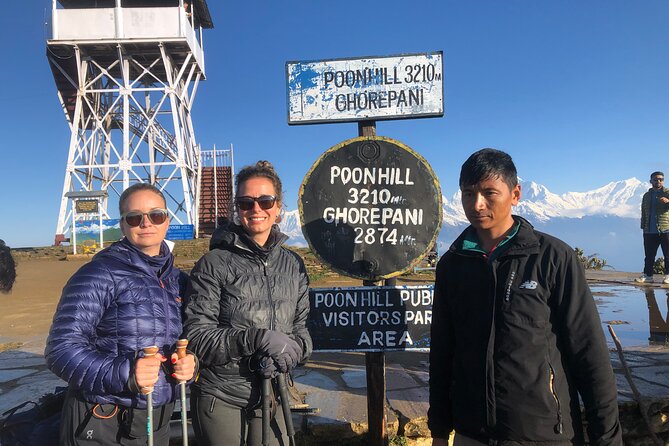
- Thorong La day includes an early start and real cold at Thorong Phedi, then a 5416 m summit moment with big views.
- Tilicho Lake is worked in on the “stone and loose trail” days, with fewer lodging options once you’re moving onward.
- Manang is more than a stop, it’s an acclimatization strategy with an extra night and helpful local options.
- Muktinath blends hiking with pilgrimage, and you can choose a vehicle or a trek route via Lubra.
- Flights remove the most time-crunching transport by taking you from Jomsom to Pokhara and then back to Kathmandu.
From Kathmandu temples to Thamel snacks, your trek begins in comfort
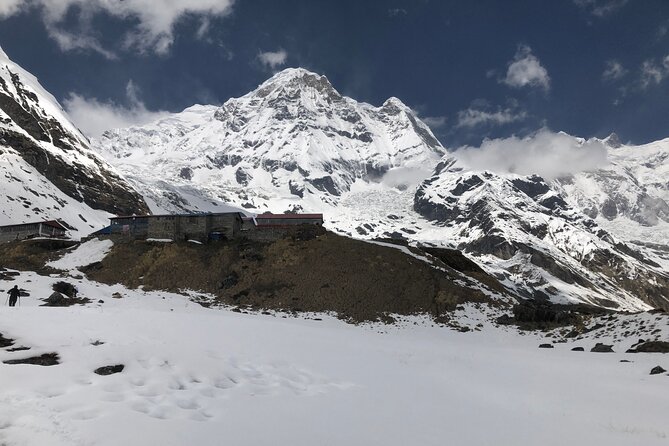
Your trip starts in Kathmandu, after you clear customs at Tribhuvan International Airport. You’ll be met by the tour representative and driven through the busy, narrow roads to your hotel. Then, you get a built-in easy win: the chance to stroll Thamel, where you can find both Nepali and Western meals without needing to plan your first day around finding supplies.
On the second day, you jump into Kathmandu’s historic sights. The itinerary includes Pashupatinath Temple, Buddha Stupa, and Kathmandu Durbar Square. These stops are useful even if you think you came for trekking. They reset your senses before you head out to altitude, and they also give you context for the cultures you’ll meet later on the trail, especially in places like Muktinath.
Practical note: Kathmandu walking is generally easier than trekking, but the city can still feel hectic. Think of this as your “get your head screwed on” day before the long road.
More of the Annapurna Circuit:
- Annapurna Circuit Trek with Tilicho Lake
★ 5.0 · 368 reviews - Annapurna Circuit Trek
★ 5.0 · 94 reviews - Annapurna Circuit Trek
★ 5.0 · 67 reviews
The long road to Besisahar and Pisang is part of the story
Days three and four are transport days, but they are not wasted time. The drive out of Kathmandu heads toward the Annapurna and Manaslu ranges, and you’ll see rivers like Trishuli and Marshyangdi. Roads are described as winding and bumpy, with narrow stretches before you reach places like Dumre and continue toward Besisahar, then onward to Pisang.
In real terms, this means two things for you:
- You’ll spend a chunk of the day in transit, so plan to treat it like a warm-up, not a vacation day.
- The first real mountain scenery starts early, so your motivation stays high even before trekking begins.
When you reach Pisang, the itinerary emphasizes getting to upper areas (after driving via Dharapani and Chame). You’ll also pass small settlements and get views of the Annapurna range, plus moments like a waterfall and a suspension bridge along the route. This is where you start seeing the rhythm of the Annapurna Circuit: rivers, bridges, and frequent glimpses of peaks in between villages.
Value angle: These pre-trek drive segments are included as part of your package, so you are not solving Nepal’s road puzzle on your own.
Pisang to Manang: picking the path and adjusting to altitude
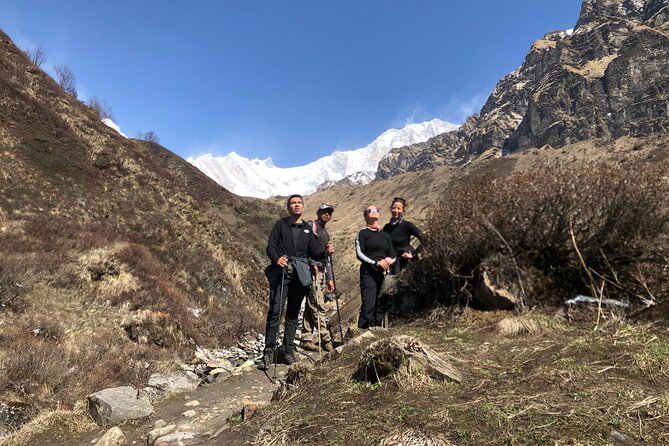
Once you start trekking, the route begins with a moderate ascent from Pisang toward Manang. The trek is described as moderate on the lower path but tougher on the higher route. You are also told there are two different trails between Pisang and Manang, and you get an actual recommendation: if conditions allow, choose the drier upper path to Manang, but switch to the lower trail if you feel symptoms of altitude sickness.
That advice is not just theoretical. It’s practical route management. You are telling your body, today, how hard it has to work. It also means you won’t be stuck feeling guilty if your body asks for a slower option.
The trek also passes through or alongside Buddhist-influenced village areas like Ghyaru, and when you reach Manang, you’re greeted with striking views of the Annapurna range, including peaks such as Annapurna, Pisang, Tilicho peak, Pisang peak, and Gangapurna.
What to watch: The itinerary sets you up for good pacing, but the Manang region still reaches high elevations. If you’re prone to altitude issues, take the “lower trail if symptoms” instruction seriously early, not after you feel miserable.
An extra day in Manang: acclimatization that actually helps
Day six is a key part of why this itinerary is built to work. You don’t just pass through Manang. You spend an additional day back in Manang to help your body adjust and reduce altitude-sickness risk.
Manang itself is also framed as a base for side trips. If you want extra variety, the itinerary mentions the popular trek to Ice Lake around 3900 m, plus a Chongkor view of the glacial lake. You can also visit nearby Gumbas and local monasteries. And there’s a practical stop tied to safety: you can visit the Himalayan Rescue Association clinic for information about altitude sickness.
Why this matters for you: Many treks say they allow acclimatization, but this one builds it into the schedule with an actual “stay put” day. That is often the difference between arriving tired but fine, versus arriving wrecked and struggling on the pass days.
More to compare around Kathmandu
- Everest Base Camp Trek – 14 Days
★ 5.0 · 1,499 reviews - Everest Base Camp Trek
★ 5.0 · 842 reviews - Private Kathmandu Sightseeing Tour | UNESCO World Heritage sites
★ 5.0 · 756 reviews - Kathmandu: 7 UNESCO Sites with Lunch
★ 4.8 · 744 reviews
Manang to Sri Kharka: dust, rugged trails, and monastery pauses
From Manang, you trek to Sri Kharka by walking through villages like Khangsar after descending toward a river and crossing it. The trail is described as dusty and rugged, with rugged footing that fits the Annapurna Circuit’s real-world feel.
You’ll also pass a monastery, plus views of Chulu and Gungang in the background. Then you reach Sri Kharka after about four to five hours and spend the night in a hotel setting.
This day is not about peak-bagging. It’s about keeping your rhythm steady while the terrain changes. And because it’s not a huge ascent day, it’s a good place to practice your own pace control: slow enough to keep breathing smooth, fast enough to arrive before you feel worn out.
Toward Tilicho Base Camp: 360-degree views with loose-stone fatigue
The trek to Tilicho Base Camp is described as easy because it isn’t steep, but exhausting because you’re walking on small trails over loose stones. You’re also warned the area is prone to landslides. That is an important heads-up, because loose rock days can wear your legs out faster than a steeper day would.
One of the best payoffs is the view: you get a 360-degree perspective of the mountain range. And once you move forward toward Tilicho, the itinerary states you won’t see hotels or teahouses on the route, which makes your base-camp arrival feel like a real milestone.
Sleep strategy: This is one of those days where you’ll want an early, calm evening. You arrive at Tilicho Base Camp with rooms reserved for the day and rest before the Lake hike the next morning.
Tilicho Lake: the early start, the emerald reward, then retracing
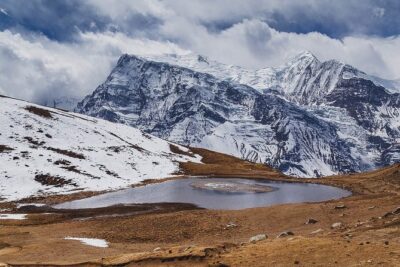
Tilicho Lake is where the trek becomes scenic in a different way. You start early, with the note that mornings have less wind. The first ascent is described as a little demanding, but then the reward is immediate: you reach a pristine Tilicho Lake setting with emerald water and glittering glaciers around it.
After exploring the lake and taking time to enjoy the views and photos, you retrace back to Sri Kharka for the night. That “go and return” approach matters. You are not spending your whole day chasing distance. You are spending it on the actual destination.
Real talk: Lake days can tempt you to linger too long, but the next segment depends on you arriving ready to walk again. Use your time at the lake, then get back to the steady routine.
Sri Kharka to Yak Kharka: barren stretches and wildlife chances
The day after Tilicho, you trek from Sri Kharka back through the Khangsar village area, then descend and cross a river before climbing into a more barren landscape where Yak Kharka sits. The itinerary mentions you might see wildlife like Blue Sheep if you are lucky.
You can also visit Tare Gumba, described as sacred for local people in the area. Then you reach Yak Kharka after a few miles of walking, where there are a few teahouses providing food and lodging.
This is a day that feels like stepping out of lushness and into high-altitude reality. The terrain gets quieter, and the walking becomes more about endurance than beauty alone. But those barren stretches also make the next pass day feel more meaningful.
The Thorong La build-up: Thorong Phedi and a cold rest stop
By day eleven, the itinerary frames this as the final stretch before the pass. You’re walking over 4500 m, so acclimatization has to translate into how you manage your effort.
The route to Thorong Phedi is described as isolated and lonely, in a glacier valley bordered by high mountains. Then you arrive at a rest stop that is typically cold. The instruction is clear: go straight to a tea house, get warm, and sleep early because the next day is hard.
This is a big shift day. The pass day is not just “long.” It’s long at altitude and in cold conditions, and the itinerary makes that clear without sugarcoating it.
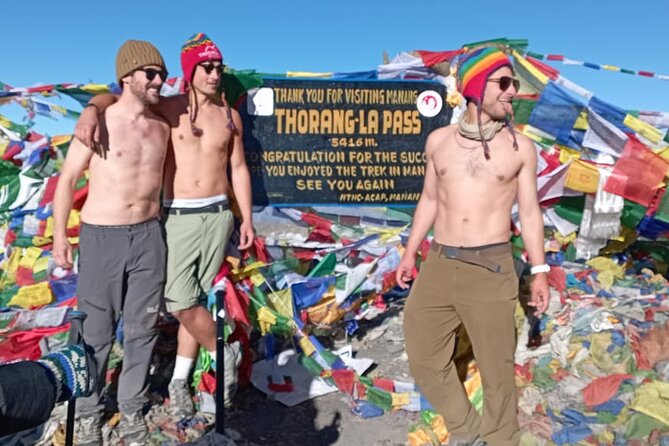
Thorong La pass day: early, steep, and a 5416 m skyline moment
The day eleven to twelve transition is about waking up before sunrise. You leave early because there is no wind in the morning, and that matters because high passes get windy fast. The trail is steep at first, then you reach High Camp after about an hour.
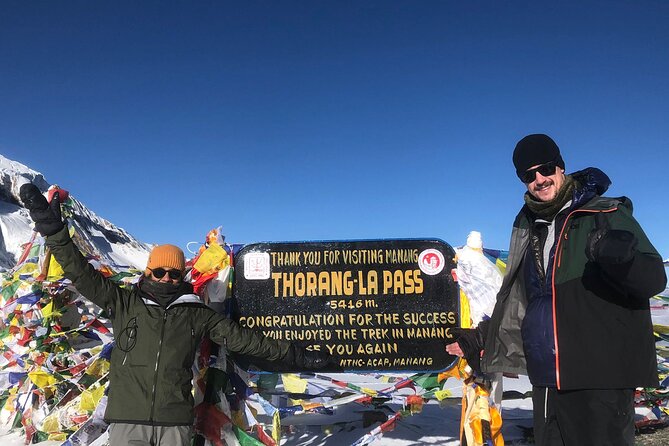
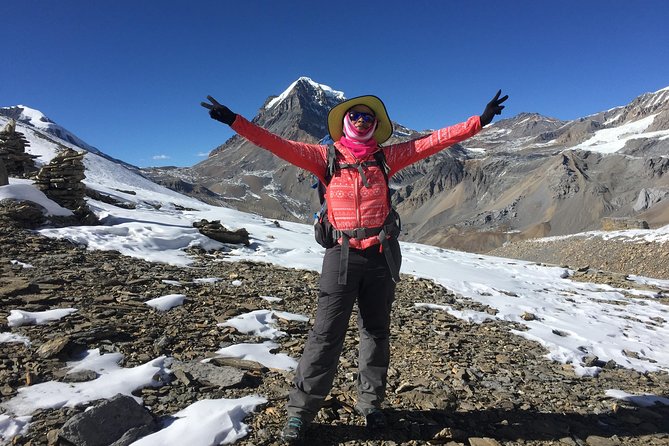
The final stretch to the summit of Thorong La includes difficult few hundred meters. Eventually you top out at 5416 m and are greeted with a breathtaking mountain vista. Dhaulagiri stands majestically above the pass, and the distant upper Mustang region can be seen as well.
After the pass, you continue onward to Muktinath, described as the day’s destination.
For you: This is the day to keep expectations simple. Don’t plan on speed. Plan on steady movement, staying hydrated, and treating the summit as a moment you earn, not something you can rush.
Muktinath and Lubra: blessings, pilgrimage vibes, and options for how you move
Day thirteen starts with an early visit to Muktinath Temple, a famous pilgrimage for both Hindus and Buddhists. You’ll get a short visit and then head toward Jomsom via either a vehicle or a trek route through Lubra.
The itinerary adds a useful detail: you can see the best view from the top of Lubra village, a view you wouldn’t get from the bus or jeep. After Lubra, you descend down to Kagbeni, described as the junction between upper and lower Mustang.
The road from Muktinath to Jomsom is described as well paved, which makes the transition day feel less chaotic than you might expect on a trekking route.
What to choose: If you care about views and don’t want to lose a day of hiking, the Lubra trek option can add meaning. If you feel the fatigue from the pass, using the vehicle option keeps you from turning one hard week into two.
Jomsom to Pokhara by flight: saving hours and dealing with weather
After arriving around the Jomsom side, the itinerary includes flying to Pokhara. This is one of the biggest time savers in the trip, and it also keeps you from adding extra walking days after Thorong La already took so much out of you.
The flight time is about 25 minutes. It passes through the Kaligandaki gorge and you land in Pokhara. There’s a practical caution: flights could be delayed if winds are strong and visibility is weak.
Once in Pokhara, you get time at the lakeside and an overnight in a hotel.
Why this is good value: You are not just paying for scenery. You’re paying to cut down transport friction at the end of a demanding trek.
Pokhara to Kathmandu: a travel day that still gets planned for you
On day fifteen, you return to Kathmandu via tourist bus, with a drive time that can take up to several hours depending on road conditions. When you arrive, you check into your hotel and then get a built-in last evening plan: a farewell supper at a traditional restaurant nearby, with the chance to join Nepal cultural events and buy souvenirs from local shops.
This finishing day is designed to help you decompress after the trek, not just move you from point A to point B.
Price and what $1,560 really buys (and what it doesn’t)
This trek is priced at $1,560 per person for about 15 days, and the included value is bigger than you might think at first glance. Your package includes:
- Air-conditioned vehicle for transfers
- All required permits for the trek
- Accommodation for the whole trip
- Professional and experienced certified guides and porters
- Flights from Jomsom to Pokhara and from Pokhara to Kathmandu
- Permits for UNESCO heritage site tours in Kathmandu
- Meals: breakfast for 14 days, plus lunch and dinner for 13 days each
What’s not included is also clear: personal expenses and tips.
Here’s how I think about value in a trek like this. Your biggest unavoidable costs are often the permits and the transport at either end. By including both flight legs and the permit pieces, you avoid the common trap of paying more later for the parts that matter most to timing. And with guides and porters included, you are paying for on-the-ground decision-making and load support during a long itinerary.
My practical check for you: If you are comfortable paying for convenience and safety planning, this price likely fits. If you want to DIY everything and take on permits and transport yourself, the package will feel more expensive. But the trek is long enough that most people prefer having the planning handled.
The guiding team and porter support you can feel on tough days
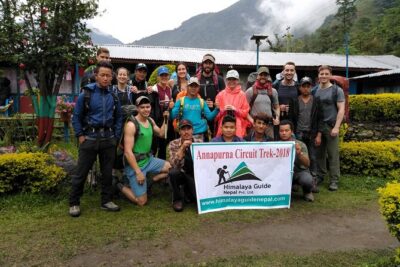
In the praises tied to this operator, one name stands out: Bhupal. The guide was described as amazing and attentive, with local knowledge that improved the experience. Porters were also praised as some of the best you could hope for, including help during altitude problems where they went back up again to carry loads for friends.
Even if your trek runs smoothly, porters and guides matter because the trail is not a theme park. The itinerary includes steep segments, loose rock days, and cold, isolated high passes. Good support is not a luxury. It’s part of staying functional.
For you, that means you should pay attention to how you communicate early in the trek. Ask questions before you hit the tough days. Use your guide for pacing decisions, especially around the switch to lower or higher paths where altitude symptoms can guide the trail choice.
Who should book this trek, and who should be cautious
This Annapurna Circuit trek is listed for people with moderate physical fitness, and it’s a private group experience, so it can suit a range of travel styles. It also includes some high-impact days, especially around Tilicho and Thorong La.
I think this works best if you:
- want a classic circuit with iconic moments like Thorong La and Muktinath
- care about adding Tilicho Lake rather than skipping it
- like having a plan with guides and porters handling the details
- can manage cold conditions and early starts
You might be cautious if you:
- struggle with altitude even on moderate treks
- dislike long drive days, since Kathmandu to Besisahar and onward includes bumpy, winding roads
- prefer completely flexible routing, because the itinerary has specific checkpoints and timing
Should you book this Annapurna Circuit Trek?
If your goal is the Annapurna Circuit in one organized package, with permits, guided support, porters, key flights, and real acclimatization built in, I think this is a strong choice. The itinerary’s biggest strength is that it takes altitude seriously, not just with theory but with an extra Manang day and clear pass-day instructions. The other big plus is that it avoids the worst end-of-trek logistics by flying from Jomsom to Pokhara and then back to Kathmandu.
Book it if you want a classic, high-touch route where you can focus on walking and watching the mountains change day by day. Skip it if you want total independence or if you are unsure about your ability to handle high altitude and cold pass conditions.
FAQ
What is the duration of the Annapurna Circuit Trek?
The trek is listed as about 15 days.
What is included in the price of $1,560 per person?
Your package includes air-conditioned vehicle transfers, required trek permits, accommodation throughout the trip, certified guides and porters, flights from Jomsom to Pokhara and from Pokhara to Kathmandu, Kathmandu UNESCO-related permits, and meals (breakfast for 14 days, lunch and dinner for 13 days each).
What transportation is included during the trip?
There is an included flight from Jomsom to Pokhara, and an included flight from Pokhara to Kathmandu. You also travel between Kathmandu and trekking start areas by vehicle and return to Kathmandu by tourist bus near the end.
Is Tilicho Lake included?
Yes. Tilicho Lake is included as a dedicated day trip from the Tilicho Lake area, with time to explore and then return to Sri Kharka for the night.
How does the itinerary handle altitude?
The itinerary includes an acclimatization day back in Manang, and it also advises adjusting your route between Pisang and Manang based on altitude symptoms. It also includes early starts and hydration reminders around the highest sections.
Is this trek private?
Yes. It is described as a private tour or activity, with only your group participating.
What is the cancellation policy?
Free cancellation is available if you cancel up to 24 hours in advance of the experience start time. If you cancel within 24 hours, the amount paid is not refunded.
Latest Kathmandu write-ups
- Langtang Valley Trek★ 5.0 · 3 reviews
- Khopra Danda Trek★ 5.0 · 3 reviews
- Langtang Valley Trek from Kathmandu★ 5.0 · 3 reviews
- 5 night / 6 days Kathmandu Nagarkot Chitwan Pokhara tour★ 5.0 · 3 reviews
- Nepal Highlights Tour: 5 Nights 6 Days Kathmandu & Pokhara Tour★ 5.0 · 3 reviews
- Kathmandu Valley Private Day Tour★ 5.0 · 3 reviews
- Conquer the Himalayas: The Ultimate 16-Day Annapurna Circuit Trek★ 3.5 · 3 reviews
- Kathmandu Heritage Day Tour★ 5.0 · 3 reviews
Annapurna Circuit Trek, compared.
15-Day Private Annapurna Circuit Trek from Kathmandu
Read our review →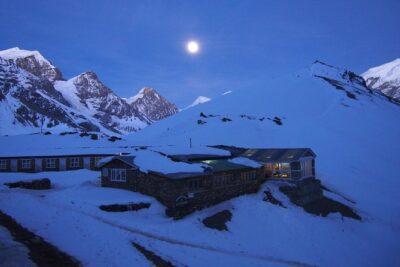
8 Days Private Guided Trekking in Annapurna Circuit with Pickup
Read our review →Browse the lists this tour appears in