Reviewed · HIKING & TREKKING
Everest Chola Pass Trek-17 Days
This Everest trek is interesting because it strings together big-name viewpoints in one logical route: Gokyo Ri, Chola Pass, and Kala Patthar. You get the drama of Everest, but you also pass through places that feel more lived-in and less like a single-file photo line.
I love two things about the way this trip is set up. First, you get a real guide-and-porter team, with an included ratio of 1 porter for 2 clients, plus practical support like duffle bag handling. Second, it builds in acclimatization time early in Namche so you are not just rushing upward and hoping for the best.
The main drawback to consider is effort. This route includes high passes and cold, so strong fitness matters, and you should be ready for long walking days and serious altitude (Chola Pass is 5,368m).
Quick takeaways
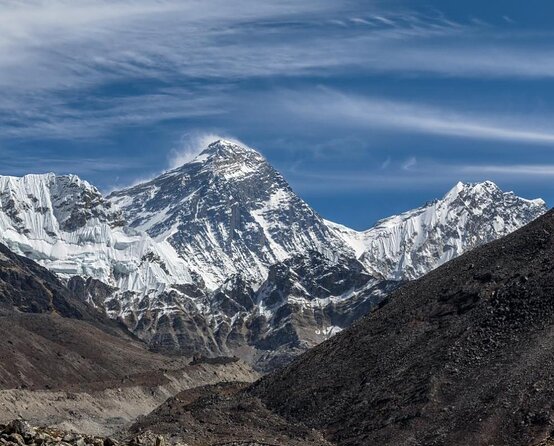
- Gokyo Ri plus Cho La plus Kala Patthar gives you multiple “wow” viewpoints, not just one.
- Chola Pass (5,368m) is a genuine high point, with big views of Everest and surrounding peaks.
- Support that people actually praise, including Ang Pemba for kindness and a smooth experience.
- Agency help feels hands-on too, with airport transfers and paperwork support linked to Bhagwat (founder).
- Permits and fees are included (TIMS and Khumbu Valley fees), so you are not juggling paperwork on the fly.
- A rare comfort moment shows up in Namche Bazaar, where wifi is available, which helps with messaging home.
Why This Everest Route Uses Gokyo Ri and Chola Pass
Most Everest treks chase one classic path. This one takes a different angle. It starts by working up toward the Khumbu region through Dudh Koshi and Sagarmatha National Park, then detours into the Gokyo Valley. After that, it crosses Chola Pass and continues on toward Everest Base Camp and the Kala Patthar viewpoint.
That route choice matters because it changes what you feel day-to-day. You spend time around glacial terrain and high lakes, then you hit a pass that gives you a sweeping sense of scale. Later, you reach Everest Base Camp and then go one step higher at Kala Patthar for close-up views.
It also means you are not just passing through Sherpa towns. You have multiple nights in different villages like Namche, Machhermo, Gokyo, and Dzongla. That matters when you want the trek to feel like a journey across a region, not a checklist of stops.
More to compare around Kathmandu
- Everest Base Camp Trek – 14 Days
★ 5.0 · 1,499 reviews - Everest Base Camp Trek
★ 5.0 · 842 reviews - Private Kathmandu Sightseeing Tour | UNESCO World Heritage sites
★ 5.0 · 756 reviews
Price and What You Really Get for $2,100
At $2,100 per person for about 17 days, you are paying for more than the hiking. You are paying for logistics that can get messy in Nepal’s mountains: domestic flights, permits, organized lodging, and a staffed support team.
Here is what you actually get in the package:
- Airport pickup and transfers in Kathmandu by private vehicle
- Two nights in a 3-star hotel in Kathmandu with breakfast
- Domestic flights to Lukla (including Kathmandu to Lukla, and Ramachap to Lukla as applicable)
- Meals during the trek (lunch, dinner, breakfast)
- TIMS permit and Khumbu Valley fees
- Lodges/tea houses on a twin sharing basis
- Guide plus porter support (1 porter for 2 clients)
- Travel and rescue arrangements, plus first aid kit access
- Duffle bag service (returned after the trek)
- Farewell dinner at an authentic Nepalese restaurant with cultural performance
What you do not get is also important. You handle your Nepal visa fee and your international flights. You also pay for personal spending in the mountains like phone charging, laundry, bottled water, and hot shower costs when offered. Weather delays can also create extra costs not covered if you get stuck longer than the scheduled plan.
Value check: if you have never organized an Everest trek before, this price can feel reasonable because the hardest parts are already bundled. If you already have your own guide and permits and you are comfortable handling your own domestic flights and lodging, then the “bundle” value shrinks. For most people, that support and planning is the point.
Before You Step Foot: Kathmandu, Your Permits, and Your Team
You start with arrival in Kathmandu at Tribhuvan International Airport. A representative from Himalayan Adventure Treks and Tours meets you and transfers you to your hotel. You also get time to meet other participants and the trek team in the evening.
Then comes the part that saves real stress: your permits and fees are managed in the package. You are covered for TIMS and Khumbu Valley fees, and that removes a big chunk of common travel friction.
Lodging in Kathmandu is also included for two nights at a 3-star hotel with breakfast. That’s not “extra luxury,” but it matters. Everest treks punish you with early mornings and altitude, so you want at least a couple of decent nights before the flying and hiking start.
One more practical detail: it’s listed as a private tour/activity, so you are not stuck with strangers changing your pace. Your group size is your group.
And based on prior feedback, the human factor is strong. People have specifically called out the guide Ang Pemba for being helpful and kind, and they have praised Bhagwat for steady support, paperwork help, and punctual airport handling.
Lukla Flight Day, Then Easy Miles to Phakding
The trek begins after a short flight to Lukla. The flight is described as less than 40 minutes, and the payoff is the views as you fly over valleys and forests. Then you land and start hiking for about 3 to 4 hours to Phakding.
This first walking day is not about toughness. It is about getting your legs moving and feeling the rhythm of trail life. You follow a path that runs with natural scenery, and you are still in an easier altitude band compared with later days.
A small but real tip: treat this day like a warm-up, not a competition. If you arrive stiff from travel, this is when you loosen up and get your pack adjusted.
A different sort of day out of Kathmandu:
- Kathmandu: 7 UNESCO Sites with Lunch
★ 4.8 · 744 reviews - Everest Base Camp Helicopter Tour landing at Everest View Hotel
★ 5.0 · 668 reviews - Half day cooking class in Thamel kathmandu
★ 5.0 · 607 reviews - Everest Base Camp Trekking
★ 5.0 · 485 reviews
Dudh Koshi to Namche Bazaar: Your First Real Altitude Test
Next you head to Namche Bazaar, walking from Phakding along the Dudh Koshi riverside. This stretch is pleasant, with forests of pine, oak, and rhododendron mentioned in the route descriptions.
Then comes the big stop: Namche Bazaar is where you pause to acclimatize. It’s also where the trek becomes more “settled,” with services, tea house life, and a strong Sherpa presence.
The included acclimatization day includes a hike to Hotel Everest View, where you get panoramic views across the Khumbu region. On the way, you can explore local community life. This is one of those days that feels like a break, but it is not a full rest. It is active acclimatization, which is exactly what you want before pushing higher.
In plain terms: this day helps you breathe better later.
From Dhole to Machhermo to Gokyo Lakes: Lakes, Cold Air, and Better Views
After Namche, you head away from the main Everest trail. You trek toward Dhole, then continue onward to Machhermo. This is where your day-to-day scenery becomes more glacial and dramatic.
You reach Machhermo after ascending to around 4,470m. The trek includes superb scenarios of mountains and glaciated areas. In the mountains, glaciated terrain changes your “feel,” you see less forest and more stone, ice, and big sky.
Then you move to the highlight region: Gokyo. The climb to Gokyo Lake (4,470m) is described as a rocky ascent. When you arrive, the lake views are a key moment, with mountains reflected in crystal-clear water.
If you have ever visited a high lake in the Alps, your brain will recognize the visual logic. But at this altitude and in this scale, it hits differently. You tend to stop and look more than you plan to.
Later, you go for a full excursion around Gokyo Valley and you get an overnight by the lakeside.
Gokyo Ri: One Sunrise-Style Payoff Without Pretending It’s Easy
The trip includes a climb to Gokyo Ri at 5,360m. That elevation matters. You are working hard for a viewpoint that is meant to show you a broad sweep of Everest region peaks.
From the top, the listed views include Everest, Makalu, Cho Oyu, and many other peaks. It’s a long-scope reward day. You are working with cold air and thinner oxygen, so the best strategy is steady pace and short breaks.
This is also a good day to think about how you travel emotionally. You are not just hiking. You are gaining perspective. In a route like this, that is the difference between “I did it” and “I understood it.”
Thagnag to Dzongla: Crossing Toward Chola
From Gokyo, you trek to Thagnag. The description includes passing through snowfields, with mountain and peak views, and some challenge built into the day.
Overnight in Thagnag sets you up for the big crossing later: the Chola Pass day.
You’ll also feel the cold more here. That’s not just weather talk. Cold changes how your body uses energy. It can also affect how you drink water and how often you need to stop.
Chola Pass Day to Dzongla: The Moment the Trek Becomes a Test
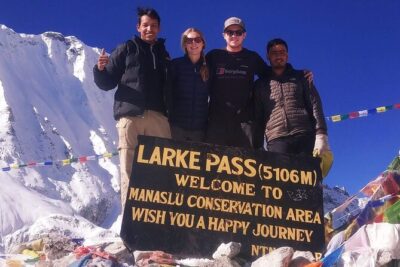
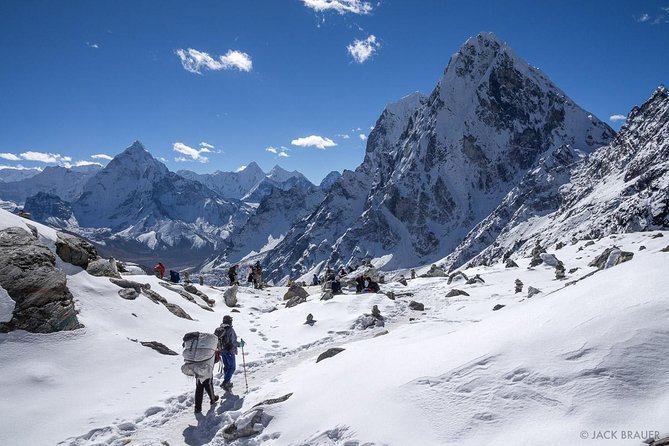
This is the standout day in the whole route, because it includes both climbing to Chola Pass (5,368m) and descending to Dzongla.
The pass is described as a key segment. From the top, you can get views of Everest, Ama Dablam, Cho Oyu, Lhotse, Nuptse, Makalu, Cholaste, Tawache, Gyachung Kang, and more. It’s a big-view day that makes your route feel like the center of the entire Himalayan stage.
The tradeoff is obvious: steep effort, thin air, and a day that asks for focus. This is not the day to get sloppy with pacing. You want to move consistently and listen to how your body responds.
Then you reach Dzongla and explore the surrounding area in the evening before your overnight stay.
Lobuche to Gorakshep to Everest Base Camp: The World’s Wall, Up Close
From Dzongla, you continue toward Khumbu Glacier, with eye-stacking views of Tawache and Cholaste. The cold in Lobuche is mentioned as extreme, and you can feel the altitude in a more physical way. Your breathing, your sleep, and your appetite all get slightly weird in these zones. That is normal for this altitude, but it still deserves respect.
Next you trek from Lobuche to Gorakshep, and then you visit Everest Base Camp. This is the classic moment: the foothill feeling of the world’s highest mountain. The experience is described as hard to put into words, because it is not just about seeing Everest, it is about standing at the base of a mountaineering machine.
You then descend back to Gorakshep for overnight.
Practical note: at Gorakshep, your comfort comes from planning. Keep warm layers dry, drink water, and do not wait until you are already chilled to start acting.
Kala Patthar to Pangboche: The Close-Up View That Changes Your Memory
After Base Camp area time, you head to Kalapatthar. This is where the views shift from wide to close-up.
The route description calls out gigantic views of mountains and glaciers around you and a close-up view of Everest, Amadablam, and Pumori. Then the trek continues to a settlement of Pangboche, where you can explore local village life.
This leg is a favorite for a reason: it gives you a different relationship with the mountains than the pass day. Pass days are about scale and geography. Kala Patthar is about presence, you feel like the peaks are right there, not off in the distance.
Returning Through Namche to Lukla: The Trek Winds Down, Not the Beauty
After Pangboche, you trek toward Namche Bazaar again. The description emphasizes the distance of the mountains, and the feeling of always watching.
When you arrive in Namche, there is a practical detail worth noting: wifi is available. This is the day you can send updates, message family, and get a few photos uploaded if you are online enough to care.
Later you head to Lukla. The trail is described as sandy at times with strenuous walking, plus picture-worthy views. You get time to explore Lukla Bazaar and shop local items. There is also mention of celebrating with special drinks, which sounds small, but after days in cold and effort, a simple ritual helps you mark the finish.
Then you fly back to Kathmandu in the morning. The flight is described as short and scenic, with glimpses of snowy mountains through a private window of the plane.
In the evening, you have a farewell dinner at an authentic Nepalese restaurant with cultural performance. It’s a nice wrap because it reminds you this is a living region, not just a hiking route.
Lodging, Meals, and Comfort Reality Check
This trek uses lodges/tea houses during the mountain days on a twin sharing basis. That usually means simple rooms, shared facilities, and basic comfort. You should not book expecting hotel-level amenities.
Meals are included during the trek: lunch, dinner, and breakfast. Vegetarian option is available if you request it during booking. If you have dietary needs, tell the operator early so your choices are not a last-minute scramble.
Hot showers, battery charging, and bottle or boiled water costs are listed as personal expenses. In other words, plan to budget for small costs that add up.
The included duffle bag system can help. By using the duffle bag and having it handled by porters, you can keep your daypack lighter.
Who Should Book This Everest Chola Pass Trek
This trek is a great fit if you want:
- Big viewpoints across Gokyo Ri, Chola Pass, Everest Base Camp, and Kala Patthar
- A route that includes more than one famous section, so you have variety instead of repetition
- A structured support setup with an experienced guide and porter ratio
- A private group experience so your pace is your own
It might not be your best match if:
- You are not confident in your fitness level. The route includes steep high work and pass crossing.
- You dislike cold weather and long hiking days.
- You want a trip where delays will never cost money. Weather can affect flights, and extra mountain costs are noted as not included if you get stuck longer than scheduled.
Should You Book This Everest Chola Pass Trek?
If you want Everest, but you also want route variety and genuine “high country” drama, I would say yes. The added value is not only the famous sites, it is the way the trek is structured around altitude management, with acclimatization time in Namche and a full set of glacier and lake days.
The human side seems to be a real strength here. The specific praise for guides like Ang Pemba, plus the airport support linked to Bhagwat, suggests you will not be left guessing at the last moment.
One final decision tip: be honest with yourself about your ability to handle altitude and cold. If you are prepared, this trek can feel like you are moving through the Everest region with a purpose, not just trying to survive a route.
FAQ
What is the duration of the Everest Chola Pass Trek?
It is approximately 17 days.
Where does the tour start and what time?
It starts at Tribhuvan Airport in Kathmandu, Nepal, with a start time listed as 6:00 am.
Does the price include airport transfers in Kathmandu?
Yes. Pickup from the airport and transfer to the hotel by private vehicle is included.
Are flights to and from Lukla included?
Yes. Flights from Kathmandu to Lukla and also involving Ramachap to Lukla are included, plus the return flights back to Kathmandu.
What permits or fees are included?
TIMS permit and Khumbu Valley fees are included.
What kind of lodging should I expect during the trek?
All accommodations in lodges or tea houses are included during the trek on a twin sharing basis.
Does the trip include meals?
Yes. During the trek, lunch, dinner, and breakfast are included. Meals in Kathmandu are not included.
Is a vegetarian option available?
Yes. Vegetarian options are available if you advise the operator at the time of booking.
Is there a guide and porter support?
Yes. An experienced guide is included, and porters are included with the note of 1 porter for 2 clients.
Can I get a full refund if I cancel?
Free cancellation is offered if you cancel up to 24 hours in advance for a full refund.
Latest Kathmandu write-ups
- Langtang Valley Trek★ 5.0 · 3 reviews
- Khopra Danda Trek★ 5.0 · 3 reviews
- Langtang Valley Trek from Kathmandu★ 5.0 · 3 reviews
- 5 night / 6 days Kathmandu Nagarkot Chitwan Pokhara tour★ 5.0 · 3 reviews
- Nepal Highlights Tour: 5 Nights 6 Days Kathmandu & Pokhara Tour★ 5.0 · 3 reviews
- Kathmandu Valley Private Day Tour★ 5.0 · 3 reviews
- Conquer the Himalayas: The Ultimate 16-Day Annapurna Circuit Trek★ 3.5 · 3 reviews
- Kathmandu Heritage Day Tour★ 5.0 · 3 reviews
Hiking & Trekking, compared.