Reviewed · HIKING & TREKKING
Khopra Danda Trek
Khopra Danda is interesting because it trades the usual Annapurna crowds for a quieter ridge walk with big views, including fishtail and the Annapurna range from above the Kaligandaki Gorge. I like that the route is built around real hiking days through forests and villages, and you get focused high points like Khopra Danda and the lake at Khayer. One thing to consider is the trek is not a gentle stroll, especially with a long day to Khayer Lake.
You also start well cared for, with a Kathmandu hotel transfer, a guide gear check, and an early 6:15 am start time set up for the trekking flow. After that, the trip keeps things practical with Pokhara transport and teahouse stays rather than complicated logistics.
If you’re comfortable with cold mornings, basic mountain lodging, and spending time on your feet, you’ll get plenty out of this one. If you want a trek that feels short on walking, you may find the longer ridge and lake days tough.
Quick hits to know
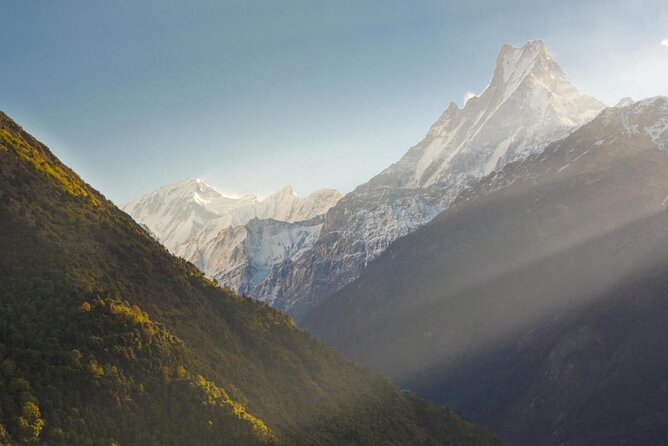
- Less-crowded feeling: quieter trail choices, with huge Himalayan payoff.
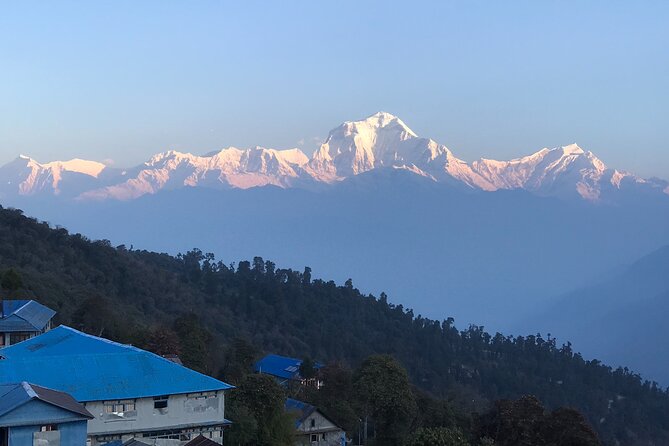
- Khopra ridge panorama: strong views toward Dhaulagiri, Tukuche, Nilgiri, and Annapurna peaks.
- Wildlife chances: you might spot musk deer, ghoral, Himalayan thar, and even Danfe (pheasant).
- Forest-to-ridge rhythm: rhododendron and oak woods, then steep climbs to tea houses.
- Khayer Lake effort: a long push for high views from a sacred-feeling lake setting.
- Poon Hill sunrise timing: early hike for morning light over multiple 8,000-meter peaks.
Khopra Danda: the quiet Annapurna fix with fishtail in the mix
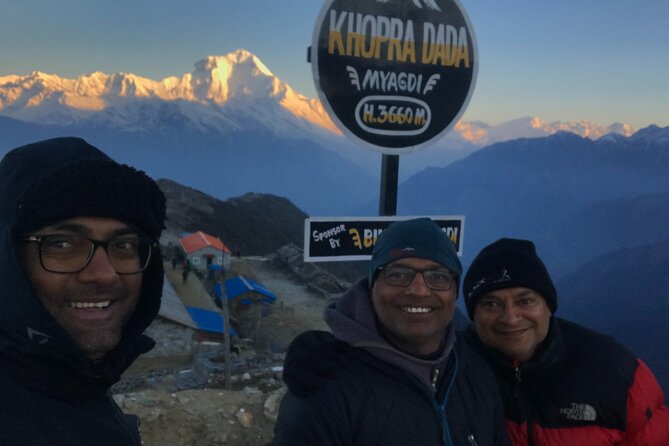
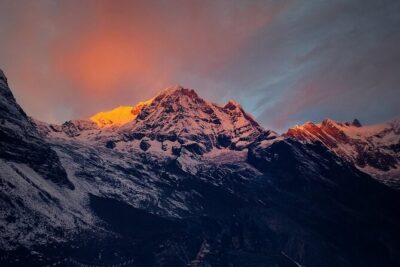
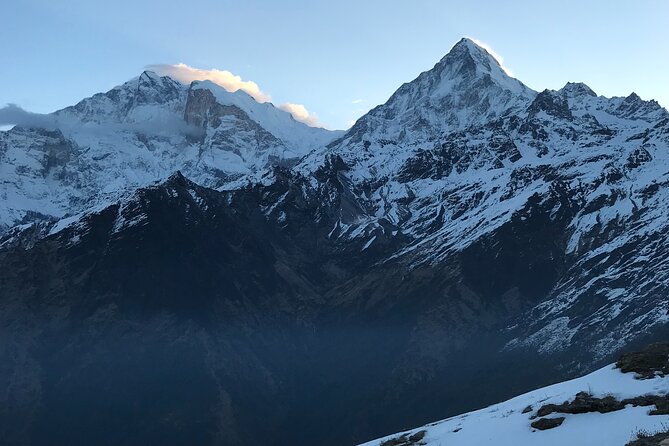
This trek works for me because it gives you the Annapurna wow-factor without trying to cram you onto the busiest trails. You’re on a route that feels calmer most days, yet you still get those classic high-mountain views, including the fishtail look and the long Annapurna range.
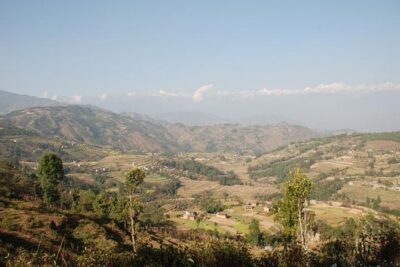
The best part is how the scenery changes as you climb. You start in village life, move through rhododendron and oak forests, then shift to ridge walking where the sky opens wide and the mountains look close enough to point at.
More to compare around Kathmandu
- Everest Base Camp Trek – 14 Days
★ 5.0 · 1,499 reviews - Everest Base Camp Trek
★ 5.0 · 842 reviews - Private Kathmandu Sightseeing Tour | UNESCO World Heritage sites
★ 5.0 · 756 reviews
Getting set up in Kathmandu and Pokhara, then starting early
Day 1 is all about getting organized, not moving fast. You arrive at Tribhuvan International Airport, then Beyond the Limits staff pick you up and transfer you to your Kathmandu hotel. You’ll meet your guide and team, get a trek briefing, and have your gear checked. You also get a trek map and documents, which sounds small, but it makes you feel steady before you ever hit a trail.
Then you move to Pokhara with a scenic drive that runs about six hours. You’ll spend time in Pokhara Lakeside, and this is a good reset day. Pokhara also sets you up for the trekking rhythm, because you arrive feeling human, not jet-lagged and confused.
The trek start time is listed as 6:15 am, so plan your mornings around an early start. In the mountains, that matters because weather can change fast, and daylight is your friend.
Ghandruk to Tadapani: a jeep detour and forest walking right away
On the way to Ghandruk village, you’ll take a jeep because part of the main road has blacktop work happening. When you get off the jeep, you walk about 45 minutes to reach Ghandruk. It’s a small detour, but it also gives you a more authentic arrival than a straight transfer.
From Ghandruk, you continue toward Tadapani over about three hours. That’s followed by an overnight stay in a tea house in Tadapani. You’ll still be in the Annapurna foothills here, which means forests and village textures, not just altitude.
What to watch for: the day’s effort is manageable, but you’re already learning how quickly weather can shift in Nepal. Even when the walk is “only” a few hours, dress like you’ll need layers.
Rhododendron to Deurali ridge and Dobato: where the trail gets steeper
The next stretch is where the trek starts feeling like a trek. You’ll spend much of your time walking through rhododendron and oak forests, and you might spot musk deer and red fox if you get lucky. Then the path climbs toward the Deurali ridge, and you’ll keep following a relatively steep trail to reach Dobato.
This day runs about six to seven hours total. If you’re the type who likes to stop often for photos, build that into your timing, because the climb is real. A smart move is to keep your stops short and steady, since tea house mornings and evenings can be cold and you don’t want to arrive wiped out.
You’ll spend the night at a tea house in Dobato. That’s valuable because it positions you well for the next ridge and pass-style walking.
A different sort of day out of Kathmandu:
- Kathmandu: 7 UNESCO Sites with Lunch
★ 4.8 · 744 reviews - Everest Base Camp Helicopter Tour landing at Everest View Hotel
★ 5.0 · 668 reviews - Half day cooking class in Thamel kathmandu
★ 5.0 · 607 reviews - Everest Base Camp Trekking
★ 5.0 · 485 reviews
Dobato to Khopra ridge: forest descents, pastures, and Kaligandaki Gorge drama
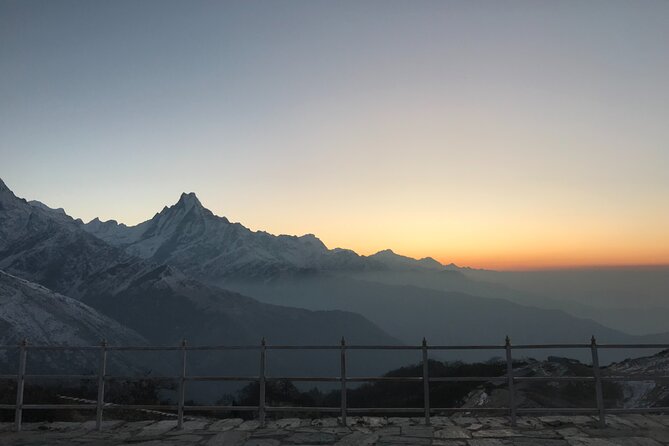
After Dobato, the route moves with a pattern that keeps it interesting: down, then up again. You walk down through woods, reach Bayli Kharka, then descend through forests to Chistebung pastures. From there, you trek for about two hours and then climb above the tree line to reach Khopra Danda.
On the way, you might see wildlife such as musk deer, ghoral, Danfe (pheasant), Himalayan thar, and other mountain critters. The views start building too, especially when you look above the horizon toward Dhaulagiri, Damphus Peak, Tukuche Peak, Nilgiri, and Annapurna I and South.
The Khopra ridge also gives you a view of Kaligandaki Gorge, described as the deepest gorge in the world. Even if you’ve seen photos before, the scale can still surprise you when you’re standing above it.
You’ll sleep at a tea house on the ridge. This is one of those nights where the cold can sneak in early, so keep your warm layers accessible.
The whole-uphill day to Khopra Danda: expect your legs to negotiate
Day 6 is described as whole uphill to Khopra Danda, roughly a four-hour day. That’s short on paper, but “short” in trekking terms still means sustained climbing and breath work.
This is also another chance for big looks across the Annapurna skyline. The route offers sight lines toward Dhaulagiri, Damphus Peak, Tukuche Peak, Nilgiri, and Annapurna South, plus the Kaligandaki Gorge view again from the ridge.
If you like treks that give you a feeling of arrival, this is a great day. You climb, you crest, and you settle in at the ridge tea house with that classic high-mountain stillness.
Khayer Lake: the long day that pays off with high, quiet views
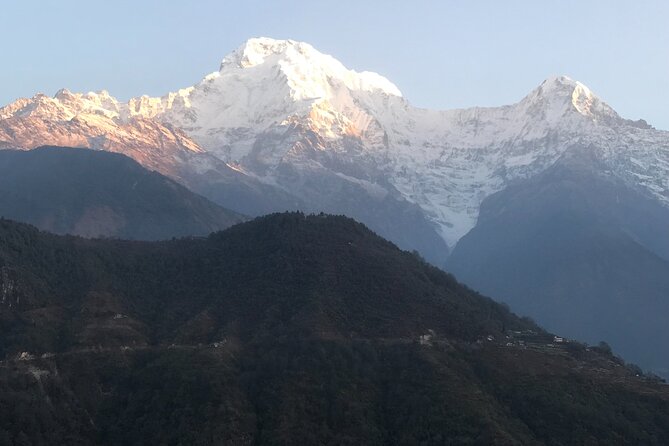
This is the day that can decide whether the trek feels magical or simply exhausting. You’ll have breakfast at your tea house and then set out for Khayar Lake. The walk to the lake takes more than five hours, and the full day is listed at about 12 hours.
You ascend to Holy Khayar Lake, which sits surrounded by mountains. From the lake area you can get views of Annapurna South, Dhaulagiri, and Nilgiri, among others. The lake also has a sacred-feeling vibe because it’s treated as important by local culture, and the setting naturally makes you slow down.
On the way, there is a tea house along the trail, but it opens only in peak season. That means you should not count on a mid-route break for hot drinks outside the main travel window.
Plan to pace yourself. If you go out too fast, you’ll feel it on the return to Khopra Danda. Bring enough snacks and water planning, since the mountain schedule is not a city schedule.
Swanta descent and Ghorepani culture: villages instead of just peaks
After the high day, you shift into descent and village exploration. On day 8, you descend to Swanta village. The route drops about an hour to Upper Chistebung village, then continues down across potato and barley farms and through villages. You reach Swanta and can spend the rest of the day exploring Magar people and their lifestyle.
This is a nice contrast to the ridge days. It helps your brain switch gears from “watch your footing” to “talk to people, notice daily life.” Even a short village stop can make the whole trek feel less like a climb and more like a journey.
Then day 9 heads toward Ghorepani via a trail through green forests. You can catch glimpses of the Annapurna range along the way. Once in Ghorepani, you can spend time with village life and sleep in a tea house.
This part of the route works well if you enjoy smaller cultural moments rather than ticking off landmarks. It also gives you a chance to rest your body before the early sunrise climb.
Poon Hill sunrise and the private jeep back to Pokhara
Day 10 starts with a hike early in the morning to Poon Hill for sunrise. You’ll see a wide view of major peaks, including Annapurna I (8091 m), Annapurna South (7219 m), Annapurna III (7855 m), Machhapuchhre (6993 m), Dhaulagiri (8167 m), Tukuche Peak (6920 m), Nilgiri (6940 m), and more.
This is the kind of sunrise that makes cold feet feel worth it. The light changes quickly, so if you’re slow deciding where to stand, you’ll miss the best color shift.
After enjoying the view, you trek down to Hille. Then you take a private jeep drive back to Pokhara via Nayapul. That jeep part is a genuine quality-of-life upgrade. It spares you extra downhill fatigue and lets you enjoy Pokhara instead of limping into town.
Back in Pokhara, you check into a hotel and get time for a little downtime.
Kathmandu wrap-up: Thamel, shopping, and farewell dinner
On day 11 you return toward Kathmandu. You’ll have breakfast in Pokhara, then visit a few places for sightseeing. After that, you drive back to Kathmandu, with time for shopping for handicrafts and souvenirs around Thamel.
You also get a farewell dinner and certificate distribution. The certificate piece might sound small, but it’s a nice way to mark the completion with your guide and team.
Price and value at $1,299 per person: what’s included, what’s not
At $1,299 per person for roughly 11 days, the value comes from how much is bundled for you. This price covers the essentials that usually add up fast on your own: a trekking guide, teahouse or lodge accommodation on the mountain days, and the permits for the Annapurna region, including Annapurna Conservation and TIMs Permit.
You also get a lot of built-in logistics support. That includes pick up from the airport on arrival day, hotel nights in Kathmandu (listed as Royal suite Hotel or similar for three nights), and a Pokhara hotel stay for two nights with breakfast. Transport is also included via a tourist bus to and from Pokhara.
Meals are part of the deal too, with breakfast included for the full set of days listed, plus lunch on many trekking days and dinner on some days. Drinks are not included, so you should budget for water, tea, and any extras you like in the evenings.
What’s not included is also important for your planning. You’ll pay for international airfare, Nepal visa fees, and all drinks and personal expenses. Emergency evacuation and medical costs are not covered in the package price. If you’re thinking about this like a true “comfort plus safety” purchase, buy travel insurance that covers evacuation, because the mountains are not a place to gamble.
How hard is it, really? A moderate fitness trek with one big test day
The listed fitness level is moderate, which is fair, but you should look at the daily structure. Several days run around five to seven hours, with a mix of forest walking, climbing, and ridge sections.
Then there’s the one big test: Khayer Lake day, listed at 12 hours with more than five hours of ascent to the lake. That day is the one you prepare for with leg strength, stamina, and the ability to keep going even when you feel slow.
A good rule: if you can comfortably handle steep stair-like climbing for 45 to 60 minutes at a time on training hikes, you’ll be in good shape for the ridge days. If you’re only used to flat walking, start practicing hills now.
Tea houses, food, and nights in the high air
You’ll spend multiple nights in mountain teahouses. These are basic by design, and the exact comfort can vary from place to place. Still, the trip is built around them, so expect simple rooms, shared dining spaces, and food that keeps you fueled for the next day.
What you should bring mentally: you’re not buying luxury. You’re buying location, warmth when the sun drops, and the chance to sleep in the mountains close to your route.
Your best comfort tool is layers. Even when days feel mild, mornings and nights can feel much colder.
Weather, timing, and the value of clear guide support
The experience requires good weather. In the Himalayas, that’s not a minor footnote, it’s the main factor in whether the trek runs smoothly.
This is where the Beyond the Limits team support matters. In feedback, their organization and communication stand out as super clear and reliable, with warm, hardworking guides and personal attention. The company owner Saroj Neupane is also mentioned by name in multiple accounts, and that matters because leadership trickles down into how schedules feel on the ground.
You’ll get gear checks and briefings early, which helps you avoid the classic mistake of bringing the wrong socks, skipping a warm layer, or underestimating cold tea house nights.
Should you book Khopra Danda with Beyond The Limits?
I’d book this trek if you want less crowd pressure, big Annapurna and fishtail views, and a route that mixes ridge walking with real village time. It’s also a great match if you like wildlife-tinged hikes and don’t mind teahouses that are more functional than fancy.
Don’t book it if your ideal trek has mostly short days and minimal altitude effort. The Khayer Lake day is long, and the ridge walking needs steady pacing.
Also, choose this one with confidence if you value a package that handles permits, permits like Annapurna Conservation and TIMs, guides, and core transport steps. For a hike that can be logistically messy if you DIY it, that kind of structure can be worth a lot more than the trekking days themselves.
FAQ
What area does the Khopra Danda trek start from?
The experience is based in Kathmandu, Nepal, and it includes transport to Pokhara before the trekking begins.
Does the package include airport pickup?
Yes. You get pickup from Tribhuvan International Airport on your arrival day.
How long is the trek?
It is listed as 11 days approximately.
Is this a private tour?
Yes. It is a private tour/activity, so only your group participates.
What fitness level do I need?
The experience notes a moderate physical fitness level.
Are trekking permits included?
Yes. Annapurna Conservation and TIMs permits are included.
What meals are included, and are drinks included?
Breakfast is included, and the package also includes lunch and dinner on the days listed in the included section. Drinks are not included.
What happens if weather is poor?
The experience requires good weather. If it is canceled due to poor weather, you will be offered a different date or a full refund.
Latest Kathmandu write-ups
- Langtang Valley Trek★ 5.0 · 3 reviews
- Khopra Danda Trek★ 5.0 · 3 reviews
- Langtang Valley Trek from Kathmandu★ 5.0 · 3 reviews
- 5 night / 6 days Kathmandu Nagarkot Chitwan Pokhara tour★ 5.0 · 3 reviews
- Nepal Highlights Tour: 5 Nights 6 Days Kathmandu & Pokhara Tour★ 5.0 · 3 reviews
- Kathmandu Valley Private Day Tour★ 5.0 · 3 reviews
- Conquer the Himalayas: The Ultimate 16-Day Annapurna Circuit Trek★ 3.5 · 3 reviews
- Kathmandu Heritage Day Tour★ 5.0 · 3 reviews
Hiking & Trekking, compared.